Review · MATCHA EXPERIENCES
Traditional Tea Ceremony with Matcha and Sweets in Kyoto
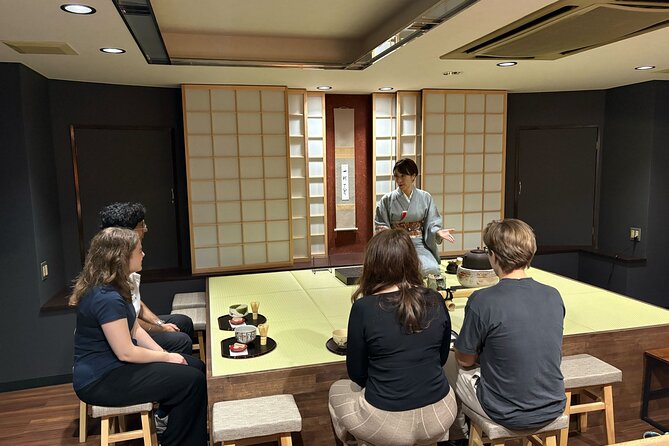
Kyoto’s tea ceremony becomes much easier to appreciate when you can watch the movements up close, hear why they matter, and then make your own bowl. This one-hour experience in Gion uses chair seating, so you can focus on the ritual instead of worrying about sitting on the floor.
I like the clear mix of cultural explanation and hands-on practice. I also like the chance to taste traditional sweets and use premium matcha from a family-run farm, rather than simply watching a demonstration.
The short format is convenient, but it also means this is an introduction, not an exhaustive study of chanoyu. If you want a long, highly formal ceremony, this relaxed version may feel brief.
Key points at a glance
- Chair seating in Gion: You can take part without needing to sit on the floor.
- A tea master leads the session: Instructors named in the feedback include Mitsune and Yuki, with a focus on both technique and philosophy.
- You make your own matcha: The second half gives you a practical role in preparing and whisking the tea.
- Traditional sweets are part of the lesson: The sweets come from long-established artisans and help explain how tea is enjoyed.
- Small group size: The experience accepts a maximum of 13 people, keeping the demonstration fairly close.
- Easy one-hour commitment: At $22.86 per person, it fits neatly into a day of sightseeing around Gion.
A gentle introduction to chanoyu in Gion
The meeting point is at 1 Yamatocho, Higashiyama Ward, in the Gion Tanakaya Building, postal code 605-0802. That places the experience in one of Kyoto’s best-known historic areas, where a tea lesson fits naturally into a day of temples, traditional streets, and old wooden architecture.
The activity begins with an explanation of Japanese tea culture and the history of the ceremony. You will hear about chanoyu, often translated as the way of tea, and the Zen ideas that helped shape its calm, attentive spirit.
This opening matters because the ceremony can seem mysterious if you only watch the gestures. Why is the bowl handled in a particular way? Why do small movements receive so much care? The teaching gives those actions a purpose, so you are not simply looking at a set of elegant motions without context.
The tone is intended to be welcoming rather than stern. That makes it a sensible first tea ceremony for you if formal Japanese customs feel unfamiliar. You do not need to arrive with prior knowledge of tea schools, Japanese etiquette, or Zen practice.
More Matcha Experiences in Kyoto
- Kyoto: Tea Ceremony Meditation – Make Matcha with Tea Master
★ 4.8 · 406 reviews - Kyoto: Kimono Tea Ceremony with Matcha and Sweet
★ 4.9 · 249 reviews - Kyoto: Arashiyama Bamboo, Temple, Matcha, Monkeys & secret spots
★ 5.0 · 219 reviews
Watching a tea master work
The first main part is a demonstration performed by an experienced tea master. You will see the controlled preparation of matcha and the graceful rhythm of chanoyu at close range.
The value here is in the small details. Tea ceremony is not just about drinking powdered green tea. It brings together movement, timing, hospitality, seasonal awareness, and respect between the person preparing the tea and the person receiving it.
The session also introduces omotenashi, the Japanese idea of thoughtful hospitality. That concept helps explain why the ceremony pays attention to presentation, order, and the needs of the person receiving the tea.
The instructors bring different personal strengths. Mitsune is praised for making the history and customs easy to follow, while Yuki is noted for her insight into the ceremony’s philosophy and her visible connection to its meaning. The exact instructor for your session is not guaranteed, but both names give you a sense of the teaching style on offer: practical, warm, and tied to the ideas behind the ritual.
A possible limitation is that the demonstration is part of a short experience. You will see authentic techniques and hear their meaning, but you should not expect to master every rule or movement in one hour.
Traditional sweets before the matcha
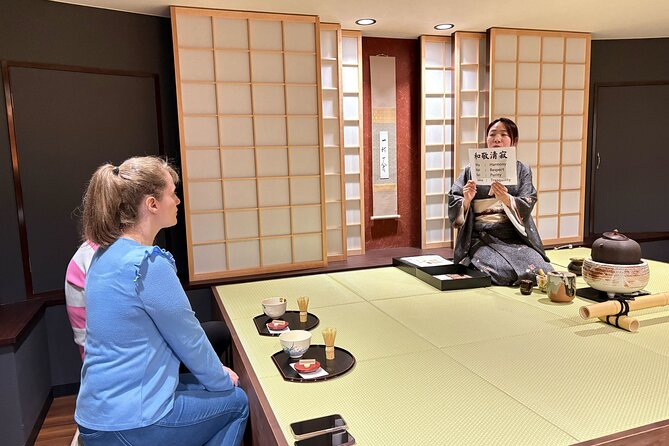
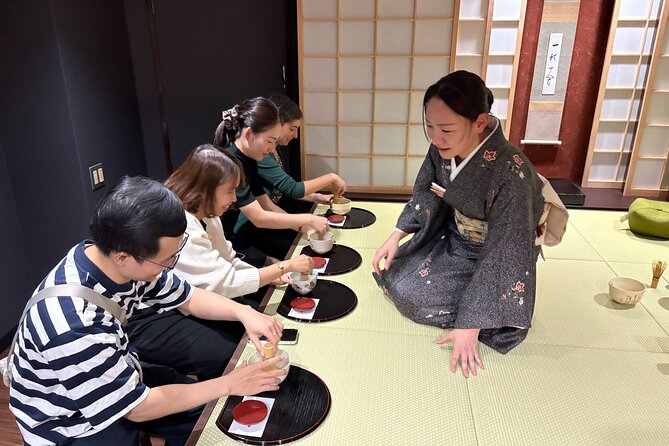
In the second half, you will taste carefully selected Japanese sweets made by long-established artisans. These are not just a snack added to the booking. Sweets are traditionally served with matcha because their sweetness balances the tea’s strong, grassy bitterness.
This pairing gives you a more complete sense of how matcha is enjoyed. Take a small bite of the sweet first, then taste the tea. The contrast helps you notice flavors that may be harder to appreciate if you drink the matcha alone.
The sweets also connect the session to Kyoto’s wider food culture. Long-established makers often preserve methods and styles that are closely tied to local custom, and the presentation of the sweet is part of the ceremony’s visual appeal.
Do not expect a full meal. The sweets are a tasting element within a cultural activity, so you should plan separate food if you need lunch or a substantial snack afterward.
Whisking your own bowl of matcha
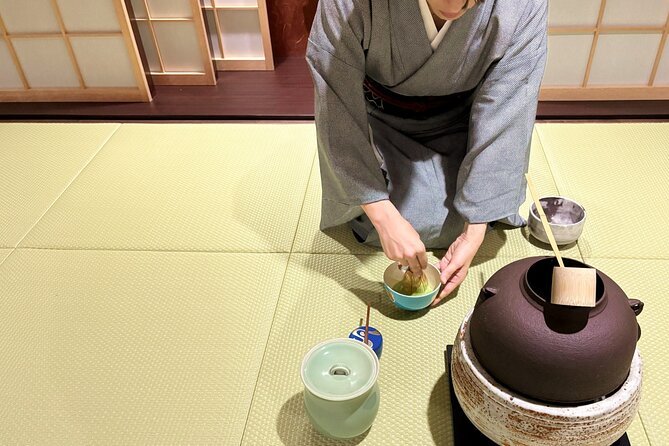
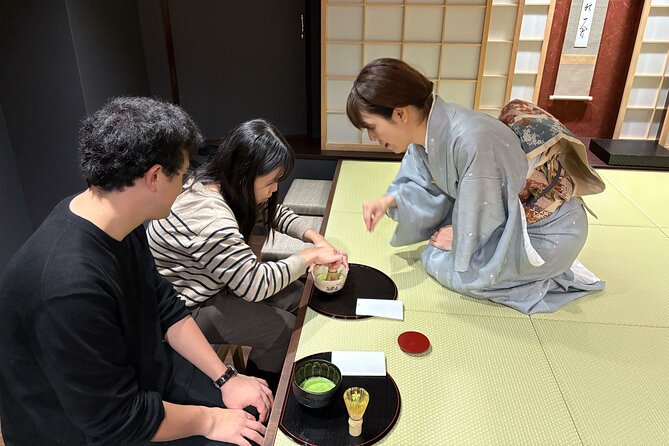
After watching the tea master, you get to prepare your own bowl of matcha. The tea used here comes from a family-run farm, and the hands-on section lets you move from observer to participant.
You will learn the basic process of making the tea and use a whisk to create the froth. This is the part that many first-time participants find most useful because it turns an abstract lesson into something you can feel in your hands.
Your bowl may not look as polished as the tea master’s. That is part of the point. The session gives you a chance to try the motions without the pressure of performing a formal ceremony.
The practical lesson also gives you a better understanding of matcha itself. Powdered tea is whisked directly into water rather than steeped and strained, so you consume the tea leaf. That produces a fuller texture and a flavor that can be more intense than ordinary brewed green tea.
The experience does not promise that you will receive a detailed lesson in every whisking technique. Instead, it offers a well-paced first attempt, paired with enough explanation to make the ritual understandable.
More Tea and Sweets Making in Kyoto
- Kyoto: Japanese Traditional Sweets Making and Tea Ceremony
★ 4.4 · 314 reviews - Kyoto: Traditional Tea Ceremony with Matcha & Sweets in Gion
★ 4.9 · 27 reviews - 2 Types of Japanese Sweets making and Tea Ceremony
★ 4.6 · 17 reviews - Kyoto near Fushimiinari Wagashi making&Small Group Tea Ceremony
★ 5.0 · 14 reviews
Why the chair seating matters
Traditional tea ceremonies may involve sitting on tatami mats, sometimes in a kneeling position. That can be uncomfortable for anyone with limited mobility or for those simply unaccustomed to floor seating.
This experience uses chairs. That small design choice makes the activity easier to enjoy, especially if you have knee, hip, or back concerns. You can give your attention to the tea master, the sweets, and the explanation rather than wondering how long you can stay comfortable.
Chair seating also makes the session more approachable for families and mixed-age groups, although the available information does not specify a minimum age or child policy. If you need a particular seating arrangement, it is sensible to confirm details before booking.
The setting aims to reflect Kyoto’s traditional elegance while keeping the atmosphere relaxed. You get the shape and spirit of a tea ceremony without needing to take on every formal physical demand associated with some versions.
A small group and a useful final Q&A
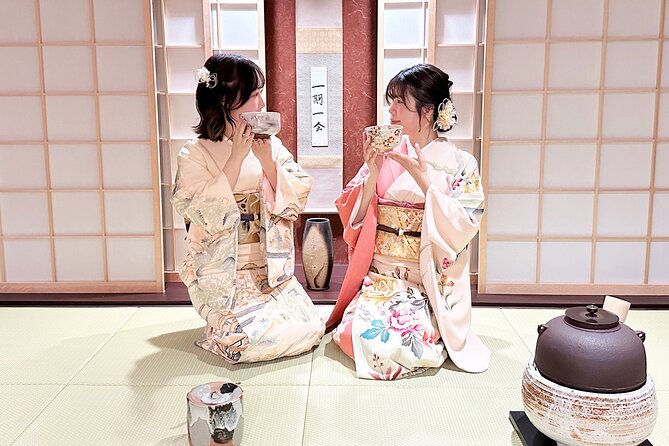
The maximum group size is 13 people. That is not a private lesson, but it is small enough for the demonstration to remain visible and for the explanation to feel more personal than a large auditorium presentation.
A group of this size can also affect the hands-on section. You may need to follow instructions at the same pace as everyone else, but the short format helps keep the session moving.
The experience ends with a question-and-answer period. I consider this an important part of the hour because tea ceremony raises practical questions that a prepared talk may not cover.
You can use the Q&A to ask about the meaning of gestures, the history of matcha, Zen influence, sweets, or the spirit of hospitality. It is also the best moment to clear up anything that seemed subtle during the demonstration.
The activity ends back at the meeting point, so you do not need to arrange a separate return transfer. The location is near public transportation, which makes it easy to connect with the rest of your Kyoto plans.
What the $22.86 price includes in practical terms
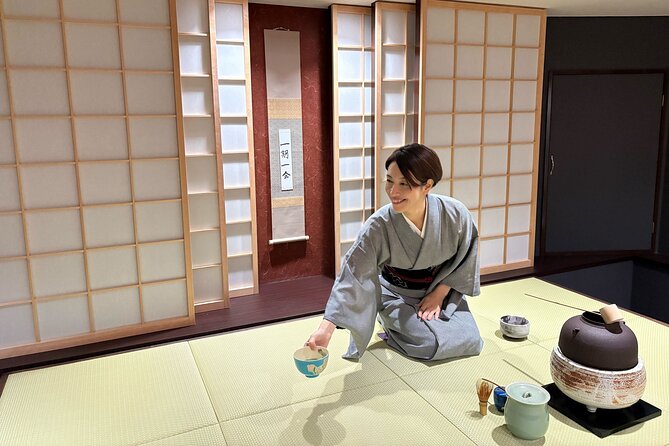
At $22.86 per person, this is priced as an affordable cultural activity rather than a luxury tea service. The value comes from the combination of a guided explanation, a tea master’s demonstration, traditional sweets, premium matcha, and your own preparation attempt.
If you only want to taste matcha, you can find simpler options elsewhere. This experience makes more sense if you want to understand why the tea is prepared in a particular way and how the ceremony connects to Japanese ideas of hospitality and Zen.
The one-hour length is another part of the value. Kyoto days fill quickly, and this session does not require you to give up half a day. You can schedule it alongside sightseeing in Gion and still have time for temples, shopping, or an evening meal.
The tradeoff is depth. At this price and duration, you receive a clear introduction, not an advanced tea-school lesson or a long private ceremony. I would see it as a strong first meeting with the tradition, especially if you are curious but unsure about committing to a more formal version.
Who will appreciate this experience most
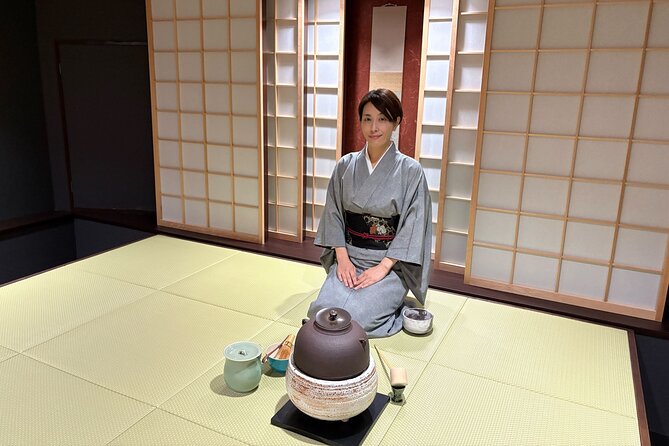
I would recommend it to you if this is your first visit to Japan and you want a cultural activity with clear guidance. The explanations help you understand what you are seeing, while the hands-on portion keeps the hour from becoming a passive lecture.
It also suits returning visitors who want a quieter activity in Gion. You may have already seen Kyoto’s major temples, but tea ceremony offers a different way to connect with the city’s cultural life.
This is a good choice if you have limited mobility or dislike floor seating. The chairs remove one of the main physical barriers associated with traditional ceremonies.
It should also work well for you if you enjoy food and drink experiences but want more than a tasting. The sweets and matcha are tied to a wider lesson about etiquette, attention, and hospitality.
You may want something else if you are seeking an extended, highly formal ceremony with detailed instruction in a particular tea school. The short duration and friendly tone are strengths for beginners, but they naturally limit how far the lesson can go.
Timing, booking, and cancellation details
The activity lasts about one hour and uses a mobile ticket. Confirmation is provided when you book, and the meeting point is near public transportation.
The group can include up to 13 people. That gives you a more focused setting than a large tour, though it is not the same as one-on-one instruction.
You can cancel for a full refund up to 24 hours before the start time. Cancellations made less than 24 hours before the activity, along with late changes, are not accepted for a refund. The cut-off follows Kyoto local time, so keep that in mind when arranging a busy day.
Should you book this Kyoto tea ceremony?
Book it if you want a friendly, well-priced introduction to matcha and chanoyu, especially with the comfort of chair seating. The combination of tea history, Zen ideas, a tea master’s demonstration, traditional sweets, hands-on whisking, and a final Q&A gives you more context than a simple matcha tasting.
I especially like it for a first or second day in Kyoto, when you are still learning how local customs fit together. The Gion location, one-hour schedule, and modest price make it easy to add to a larger day.
Skip it only if you already have extensive tea ceremony training or want a long, formal ritual with no modern adjustments. For most curious visitors, this is a practical way to slow down, taste good matcha, and leave with a clearer understanding of one of Japan’s most carefully observed arts.
FAQ
Where does the tea ceremony take place?
It takes place at 1 Yamatocho, Higashiyama Ward, Kyoto, in the Gion Tanakaya Building, postal code 605-0802. The activity ends at the same meeting point.
How long does the experience last?
The experience lasts approximately one hour.
Is the tea ceremony suitable for someone who cannot sit on the floor?
Yes. The experience uses chairs, making it easier for people who are unfamiliar with floor seating or have limited mobility.
Will I make my own matcha?
Yes. After watching the tea master, you will prepare and whisk your own bowl of matcha.
What else is included besides matcha?
You will learn about tea history, Zen influence, chanoyu, and omotenashi. You will also taste traditional sweets from long-established artisans and take part in a final Q&A.
How large is the group?
The activity has a maximum of 13 participants.
Can I cancel for a refund?
You can cancel at least 24 hours before the start time for a full refund. Cancellations and changes made less than 24 hours before the start time are not accepted for a refund.
More Tea Ceremonies in Kyoto
- Kyoto: Tea Ceremony in a Traditional Tea House in Kiyomizu
★ 4.9 · 3,519 reviews - Kyoto: Tea Ceremony Ju-An at Jotokuji Temple
★ 4.9 · 3,207 reviews - Kyoto: 45-Minute Tea Ceremony Lesson Experience
★ 4.3 · 2,378 reviews - Kyoto: Table-Style Tea Ceremony at a Kyo-Machiya
★ 4.9 · 1,211 reviews
Fresh tea listings around Kyoto
- Traditional Tea Ceremony in Kyoto★ 4.5 · 3 reviews
- Kyoto: Authentic Tea Ceremony in a Small Group★ 5.0 · 7 reviews
- Uji Walking Tour – Byodo-in temple and Tea Ceremony from Kyoto★ 3.5 · 3 reviews
- Tea Ceremony Experience in Traditional Kyoto Townhouse★ 5.0 · 19 reviews
- Tea Ceremony in 150 Years Old Townhouse with Tables and Chairs★ 5.0 · 22 reviews
- Tea ceremony at Kyoto’s Zen Temple Teahouse★ 5.0 · 2 reviews
- Sencha-do the Japanese Tea Ceremony Workshop in Kyoto★ 5.0 · 21 reviews
- Silent Beauty of Kyoto Zen Walk and Tea Experience★ 5.0 · 2 reviews
Matcha Experiences, compared.
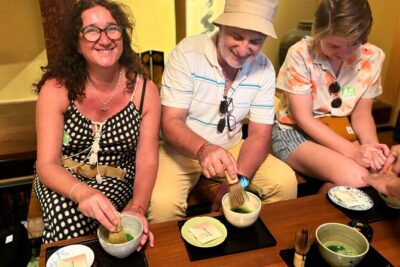
World Heritage Kyoto & Nara Uji Authentic Matcha Experience
Read our review →
Matcha Making Class in Tokyo with Authentic Japanese Sweets Set
Read our review →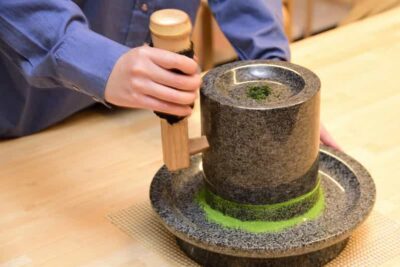
Kyoto: Tea Museum Tickets and Matcha Grinding Experience
Read our review →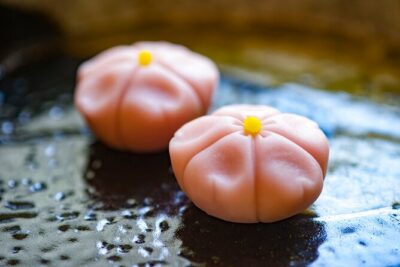
Matcha Making Class in Osaka with Authentic Japanese Sweets Set
Read our review →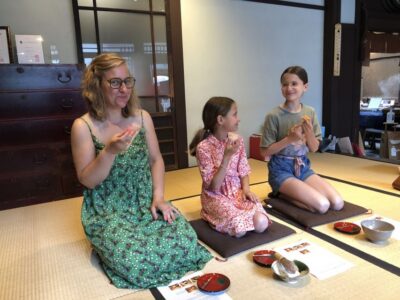
Kyoto: Tea Ceremony Meditation – Make Matcha with Tea Master
Read our review →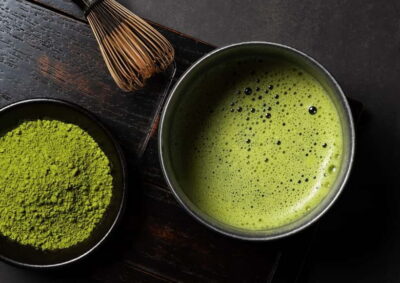
Tokyo: Matcha Making Experience with Mochi Sweets in Asakusa
Read our review →
Kyoto: Kimono Tea Ceremony with Matcha and Sweet
Read our review →