
Review · MATCHA EXPERIENCES
Asakusa Cultural Walk & Matcha Making Tour
Asakusa is at its best when you do more than snap a photo of Sensoji’s red gate. This small-group cultural walk adds rickshaw travel, street snacks, a matcha-making lesson, and a hands-on okonomiyaki lunch, giving you several ways to meet the old neighborhood.
I like the personal scale, with no more than seven people, and I like the mix of looking, tasting, and doing. Guides including Aoi, Mai, Yuki, and Mihori are praised for clear English, useful cultural explanations, photos, and help with restaurant reservations. The main drawback is food flexibility: gluten-free requests cannot be handled, and allergy-free meals are not guaranteed.
Key points at a glance
- Rickshaw ride through Asakusa: See the older district from the street instead of only walking between major sights.
- Traditional sweets on Nakamise Street: Sample Japanese snacks while learning how the shopping approach to Sensoji works.
- Sensoji and Asakusa Shrine: Learn temple and shrine customs, including prayer, fortune-telling, and incense rituals.
- Hands-on matcha session: Make and taste matcha rather than simply ordering a cup.
- Cook-your-own lunch: Prepare okonomiyaki or monja-yaki at a traditional restaurant, with one drink included.
- Seven-person limit: A small group leaves room for questions and gives the guide a chance to adjust the pace.
Why this Asakusa tour works so well
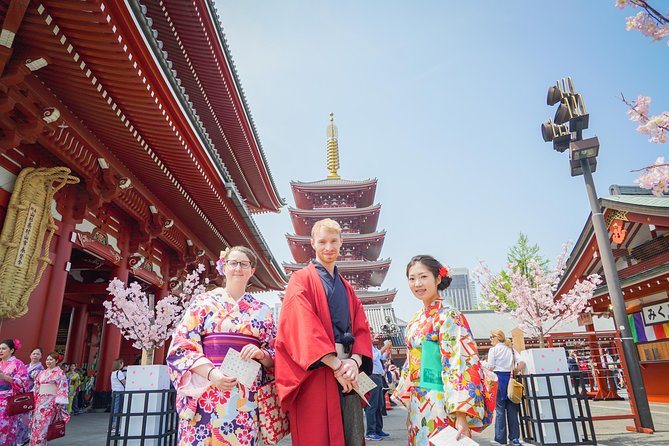
This is not a tour built around one grand sight. It is a compact introduction to several parts of Japanese culture: religious customs, local sweets, tea, neighborhood shopping, and casual cooking.
That variety is the main strength. If you are visiting Tokyo for the first time, the tour gives you a useful base in about three hours. You get enough background to understand what you are seeing, then enough food and hands-on activity to keep the morning from feeling like a string of lectures.
The schedule begins at 11:00 am by the Kaminarimon Police Box, at 1-chōme-3-1 Asakusa. The activity returns to this same meeting point. It is near public transportation, and a mobile ticket makes arrival simple.
The price is $90.86 per person. That is not a cheap walk, but the fee covers food samples, lunch, one drink, the guide, matcha making, tour photos, and the rickshaw portion. If you would otherwise pay for a separate food tour and a cultural activity, the combined value is reasonable. You are paying for access, explanation, and organization as much as for the food itself.
More Matcha Experiences in Tokyo
- Matcha Making Class in Tokyo with Authentic Japanese Sweets Set
★ 5.0 · 744 reviews - Tokyo: Matcha Making Experience with Mochi Sweets in Asakusa
★ 4.9 · 388 reviews - Tokyo: Matcha and Kimono Experience
★ 4.7 · 219 reviews
Starting at Kaminarimon and Nakamise Street
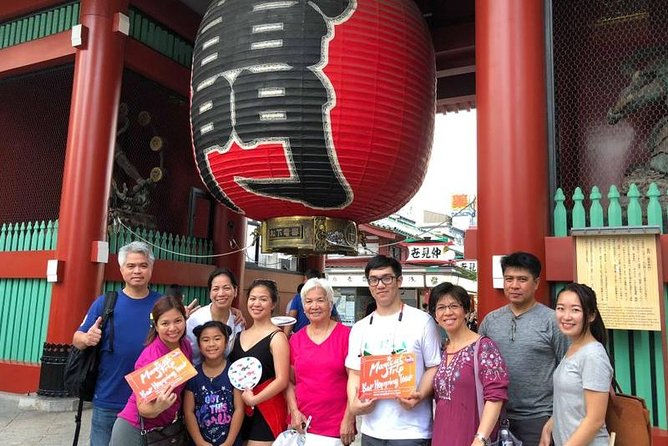
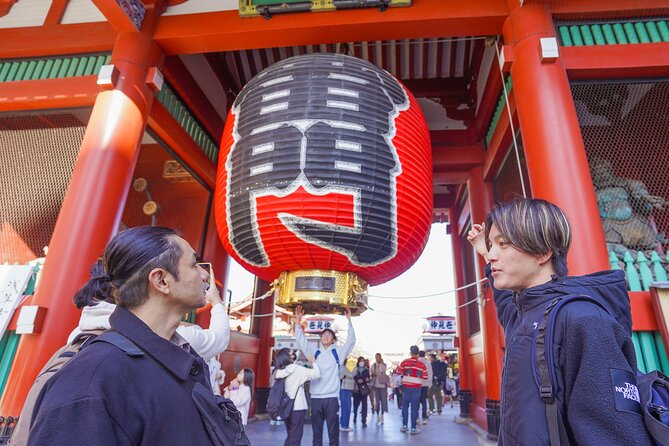
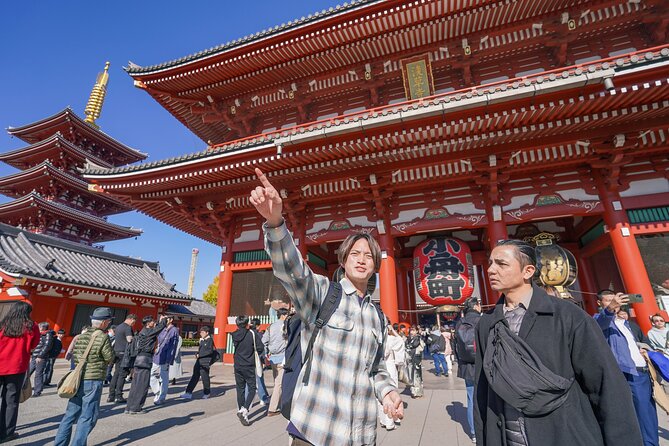
The first major stop is Kaminarimon, the large gate associated with Sensoji. The red structure and giant lantern provide the classic Asakusa photo, but the useful part of having a guide is learning how the approach functions as more than a picture stop.
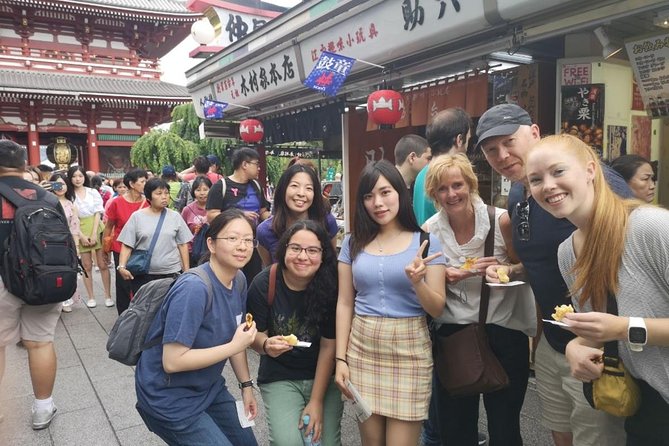
From Kaminarimon, you move along Nakamise Shopping Street. This is the main shopping route toward Sensoji, lined with shops selling souvenirs, sweets, and traditional goods. You have about 20 minutes here and sample Japanese treats along the way.
I would treat this as a tasting and orientation stop rather than a serious shopping session. The time is short, so you may want to note shops you would like to revisit later. Some tours also allow enough room to buy souvenirs, but the guide controls the pace because the group still has several stops ahead.
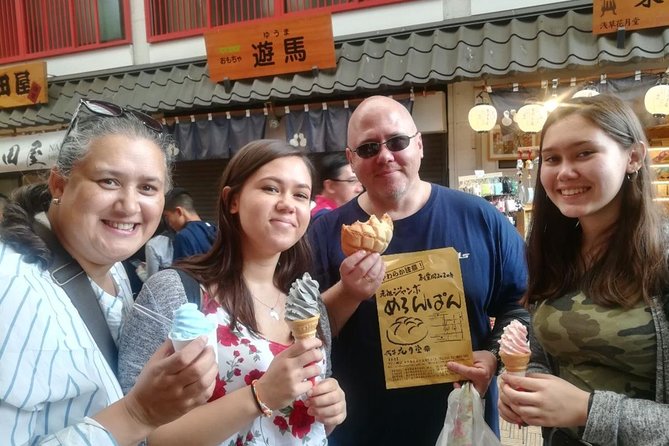
The snacks are useful because food gives you a quick way into local customs. Instead of hearing only about Japanese traditions, you handle and taste something connected to the neighborhood. If you have teenagers with you, this break also adds energy before the temple visit.
Seeing Sensoji beyond the photo stop
Sensoji is the central sight of the walk. The tour allows about 30 minutes at the temple, where the guide explains what people do when they arrive.
You can learn the basic temple rituals, including prayer, fortune-telling, and the use of incense. One custom involves fanning incense smoke toward yourself because it is believed to have healing powers. The guide can also explain how to toss a coin and pray, helping you participate respectfully instead of copying the person in front of you.
The temple visit is one place where the guide’s quality matters a lot. Several guides, including Aoi, Mai, Yuki, and Mihori, receive praise for explaining Japanese culture in clear English. Some visitors found the historical explanation lighter than expected, so if Sensoji’s past is your main interest, come with a few questions ready.
Crowds can also affect this part of the morning. Sensoji and Nakamise are popular, and late May was particularly busy for one group. A crowd does not ruin the stop, but it can make photos, movement, and quiet observation harder.
A quieter look at Asakusa Shrine
Asakusa Shrine sits next to Sensoji, but it offers a different religious setting. The tour gives you around 30 minutes to explore it.
Having both a Buddhist temple and a Shinto shrine in the same morning helps you see that Japanese religious life is not one single tradition. The guide can point out differences in customs and explain what you are looking at. This is a small but valuable distinction for first-time visitors.
The shrine stop also breaks up the larger crowds around the temple. Do not expect a long private visit or an academic history lesson. Think of it as a guided introduction that gives you enough context to notice details you might otherwise pass by.
Same city, a very different cup:
- Kimono Tea Ceremony at Tokyo, Asakusa Maikoya
★ 5.0 · 638 reviews - Tokyo: Traditional Tea Ceremony with a Tea Master
★ 5.0 · 528 reviews - Dynamic Tokyo: Tokyo Tower, Tea Experience, Bay Cruise Day Tour
★ 4.5 · 521 reviews - Tea Ceremony Workshop in Tokyo by the Experienced Instrucor
★ 5.0 · 189 reviews
The matcha-making experience
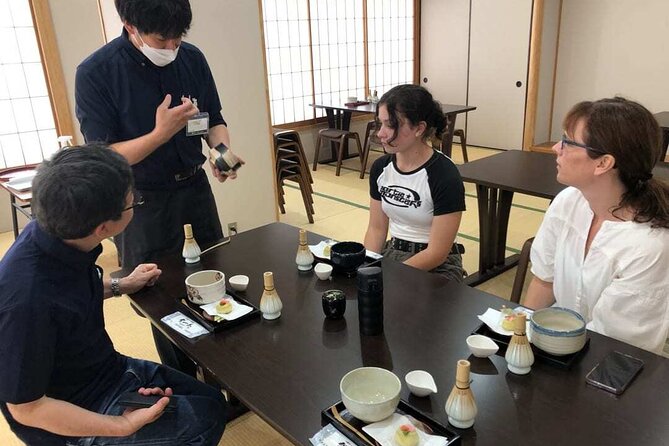
The matcha session is the most unusual part of the tour for many people. You do not simply drink prepared tea. You learn about matcha making and take part in preparing and tasting it.
The activity adds a practical side to the cultural explanation. You can ask questions while doing something with your hands, and the pace is easier to follow than a formal talk. It also gives the group a change of mood after the temple and shopping streets.
Several guides are praised for making this portion enjoyable and easy to understand. Mai, in particular, is described as leading an authentic tea ceremony, while other guides are credited with explaining the tea process and matcha culture clearly.
Keep your expectations sensible. This is a short tour activity, not a full-day tea school. Its value is the chance to try a traditional preparation with guidance, then connect it to the wider customs you have seen around Asakusa.
Kappabashi and the cook-your-own lunch
The tour also heads toward Kappabashi Kitchen Street, an area associated with kitchen shops and restaurant supplies. The supplied schedule gives less detail about the time spent there than it does for Nakamise, Sensoji, and Asakusa Shrine, so the exact amount of browsing may vary.
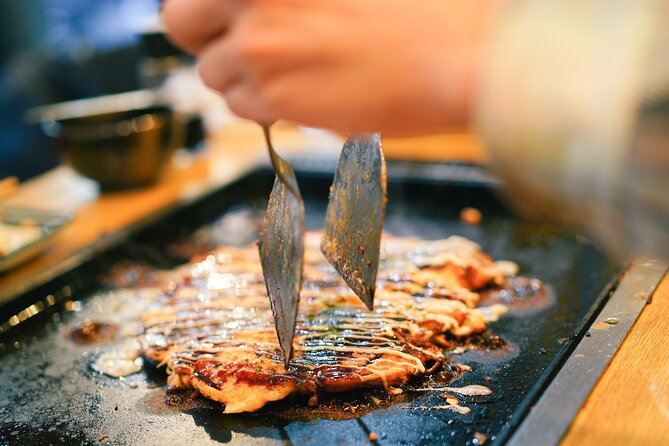
The final food stop is a traditional restaurant. You make okonomiyaki, a savory pancake, or monja-yaki, depending on the arrangement for the day. Lunch includes one drink. Vegetarian food is available, but the tour cannot accommodate vegan or gluten-free menus.
This is not just lunch served to you. You cook your own food on a griddle at the table, which makes the final stop lively and social. Some groups have had an upstairs restaurant area to themselves, though you should not assume that will happen every time.
The hands-on meal works especially well for families and teenagers. You have a clear task, the meal feels local, and the guide can help with instructions or translation. One guide, Hana, was also praised for helping with reservations and translation, which can be useful if you want to return to a restaurant later.
Food is also the area where you need to plan carefully. Kitchens are not operated by MagicalTrip, so allergy-free preparation cannot be guaranteed. Substitutions may not be possible at every stop. If you have a serious allergy or strict dietary need, this tour may not be a safe choice.
What the small group changes
The maximum group size is seven, and that is a real advantage in Asakusa. Narrow shopping streets and crowded temple grounds are easier to manage when you are not following a large flag through the neighborhood.
A small group also gives you more access to the guide. You can ask about customs, Tokyo restaurants, shopping, or practical details for the rest of your trip. Some departures have had only two people, creating a private-tour feel, though you should book for the stated seven-person maximum rather than count on that outcome.
The guides are a major part of the experience. Aoi is praised for warmth, information, and taking photos. Yuki is noted for strong English and cultural explanations. Mai is described as friendly and well informed about the area, while Mihori is praised for temple background, street-food suggestions, and cultural insight.
The tour includes photos, which is a nice bonus when you are busy eating or taking part in the tea and cooking activities. Still, the quality and number of photos can depend on the guide and the pace of the group.
Timing, weather, and practical comfort
The tour begins at 11:00 am and lasts about three hours. That timing works well if you want a morning introduction before spending more time in Asakusa on your own. It also puts lunch near the end, rather than asking you to manage a full meal immediately after breakfast.
You will walk, stand, eat, and move through busy public areas. Comfortable shoes are sensible, though the supplied information does not state a required dress code. Summer in Japan can be very hot and humid, so bring water and wear a hat to reduce the risk of heat illness.
The rickshaw segment adds a welcome change from walking. It lets you see part of the district while seated and gives you a different view of the streets. The experience remains a walking tour overall, so do not book it expecting a fully vehicle-based sightseeing trip.
Most people can participate, and the meeting point is near public transportation. Confirmation arrives at booking, and the mobile ticket is convenient for a Tokyo day when you may already be carrying maps, train information, and restaurant details.
Who should book it
I would recommend this tour to first-time Tokyo visitors who want a guided introduction without giving up half a day. It suits families, couples, and small groups who like food and simple cultural activities more than long museum visits.
It is also a good choice for anyone nervous about temple etiquette or ordering at a Japanese restaurant. The guide can explain how to pray, how to approach the food, and what you are tasting. That practical help can make the rest of your Tokyo visit feel easier.
You may want another type of tour if you already know Asakusa well, want extended historical detail, or need strict dietary control. The temple explanations are useful but not exhaustive, and the food arrangements cannot promise gluten-free, vegan, or allergy-safe meals.
Cancellation and overall value
Free cancellation is available until 24 hours before the 11:00 am start time. Cancellations or changes made less than 24 hours ahead are not refunded or accepted. One past departure was canceled the day before because of sudden venue problems, so it is sensible not to place an essential same-day plan immediately after this activity.
With a 4.9 rating from 245 reviews and a 98 percent recommendation rate, the experience has a strong record. The most consistent praise goes to the guides, the matcha activity, and the cook-your-own lunch. Those are the parts that make this more than a standard temple walk.
Should you book the Asakusa Cultural Walk?
Book it if you want a compact, friendly introduction to old Tokyo with food built into the schedule. The combination of Sensoji, Asakusa Shrine, sweets, matcha, and okonomiyaki gives you a lot in three hours without making the day feel overplanned.
Skip it if you need a fully historical tour, a vegan or gluten-free food plan, or a guaranteed private experience. For most first-time visitors who want cultural context and a meal they help prepare, the $90.86 price is fair, especially with a seven-person limit and several included tastings.
FAQ
How long does the Asakusa Cultural Walk and Matcha Making Tour last?
The tour lasts approximately three hours.
What time does the tour begin?
The tour begins at 11:00 am local time.
Where does the tour start?
It starts at the Kaminarimon Police Box at 1-chōme-3-1 Asakusa, Taito City, Tokyo 111-0032, Japan.
Where does the tour finish?
The activity ends back at the meeting point.
What food is included?
The tour includes Japanese snacks and sweets, plus lunch of okonomiyaki or monja-yaki and one drink.
Is vegetarian food available?
Yes, a vegetarian menu is available.
Can the tour accommodate vegan or gluten-free diets?
The tour cannot accommodate gluten-free requests and does not offer a vegan menu. Allergy-free preparation and dietary substitutions cannot be guaranteed.
How many people can join the tour?
The tour has a maximum of seven participants.
Can I cancel for a full refund?
Yes, you can cancel at least 24 hours before the experience start time for a full refund. Cancellations or changes made less than 24 hours before the start are not accepted or refunded.
More Walking Tours in Tokyo
- London: Kensington Palace Afternoon Tea & Guided Walk
★ 4.6 · 341 reviews - Notting Hill Walking Tour with Cream Tea
★ 5.0 · 319 reviews - Kyoto Tea Ceremony & Kiyomizu-dera Temple Walking Tour
★ 5.0 · 115 reviews - Antalya: Old Town Walking Tour with Turkish Tea and Baklava
★ 4.8 · 101 reviews
Fresh tea listings around Tokyo
- Authentic Japanese tea tasting: sencha, matcha and gyokuro★ 5.0 · 12 reviews
- At an Antique Shop, Tea Ceremony and Japanese Sweets Forming★ 5.0 · 5 reviews
- Mochi Matcha Gluten Free Japanese Sweets Class near Shibuya area★ 5.0 · 26 reviews
- Tokyo: Two Types of Japanese Sweets Making and Tea Ceremony★ 4.6 · 26 reviews
- Japanese Matcha Tea Ceremony and Kimono Experience in Hanayaka★ 5.0 · 26 reviews
- Matcha Experience with of Japanese Tea Tasting in Tokyo★ 5.0 · 31 reviews
- Tokyo: Tea Ceremony Experience in Asakusa★ 5.0 · 36 reviews
- Tokyo:Genuine Tea Ceremony, Kimono Dressing, and Photography★ 5.0 · 33 reviews
Matcha Experiences, compared.
World Heritage Kyoto & Nara Uji Authentic Matcha Experience
Read our review →
Matcha Making Class in Tokyo with Authentic Japanese Sweets Set
Read our review →
Kyoto: Tea Museum Tickets and Matcha Grinding Experience
Read our review →
Matcha Making Class in Osaka with Authentic Japanese Sweets Set
Read our review →
Kyoto: Tea Ceremony Meditation – Make Matcha with Tea Master
Read our review →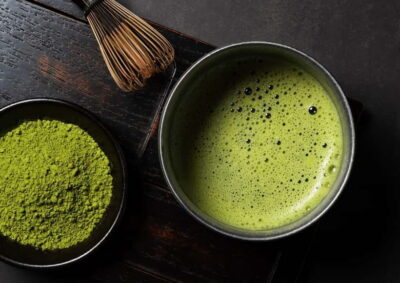
Tokyo: Matcha Making Experience with Mochi Sweets in Asakusa
Read our review →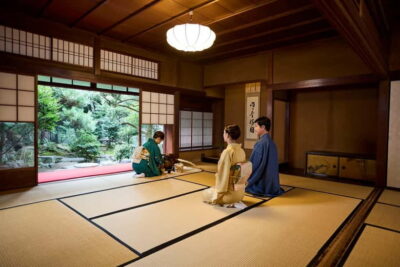
Kyoto: Kimono Tea Ceremony with Matcha and Sweet
Read our review →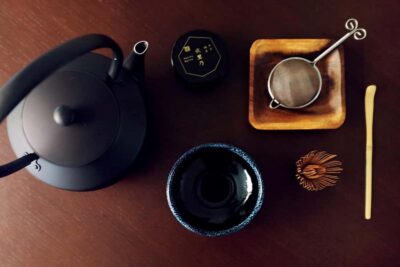
Browse the lists this tour appears in