
Review · MATCHA EXPERIENCES
Matcha Making Class in Osaka with Authentic Japanese Sweets Set
The best part of this Osaka class is that you do not just drink matcha, you make the tea yourself. An English-speaking host explains the background of matcha, demonstrates each step, and helps you correct your technique. Short quizzes and visual aids keep the cultural lesson lively rather than solemn.
I like the small maximum group of six, which gives you room to ask questions and receive hands-on help. I also like the practical focus: you leave knowing how to prepare matcha at home, not just how to pose with a bowl and whisk. The main drawback is finding the building, which can take longer than expected, so allow extra time before your start.
Key details before you book
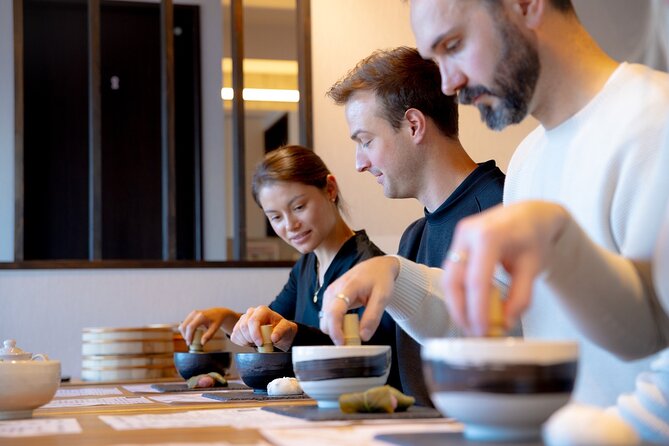
- Small class of six or fewer: Expect a more personal lesson, with time for the host to watch your whisking and answer questions.
- English-speaking instruction: Hosts including Momo, Fuko, Yui, and Matty have guided sessions with clear explanations and an easygoing style.
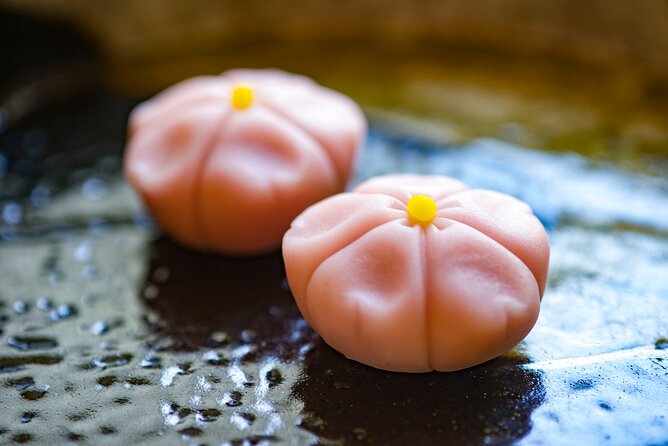
- Matcha plus Japanese sweets: Your tea break includes sweets chosen to balance matcha’s strong, slightly bitter flavor.
- About one hour: This fits neatly into a morning or afternoon in Osaka without taking over your sightseeing day.
- Central Osaka location: The class meets at 1-chōme-16-20 Higashishinsaibashi, near public transportation.
- Home-making tips: The lesson is useful for beginners who want to reproduce the drink after returning home.
What this Osaka matcha class actually offers
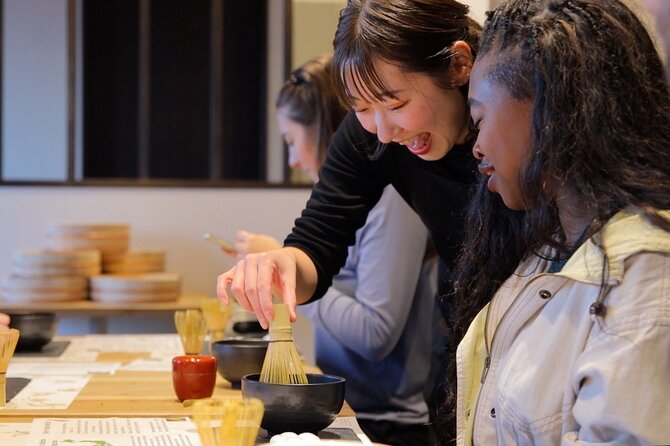
This is a short cultural workshop, not a long formal tea ceremony. That distinction matters. You get an introduction to matcha, learn some of the customs around serving it, and prepare your own tea in a relaxed setting.
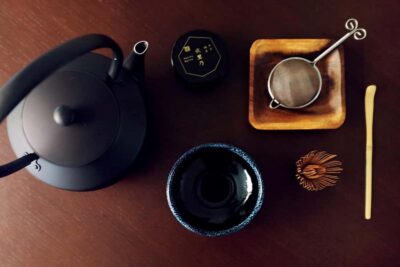
The class is designed for complete beginners. You do not need previous experience with a bamboo whisk, matcha powder, or Japanese tea customs. The tools and ingredients are prepared for you, so you can focus on the lesson instead of wondering what to buy or how much powder to use.
The tone is casual and interactive. Hosts use explanations, visuals, and small quizzes to cover matcha’s background and production. Fuko, for example, has used a quiz to help make the information easier to remember. That approach suits you if you want cultural context but do not want a lecture.
The class also works well for people who already drink matcha. You may know the flavor from cafés and sweets but still be unsure how to prepare it properly. Here, the point is to learn the basic method and understand what makes a good cup.
More Matcha Experiences in Osaka
- Osaka: Matcha Making Experience with Japanese Sweets
★ 5.0 · 146 reviews - Osaka Temple Cool Foot Bath & Matcha Experience〈45min〉
★ 4.9 · 82 reviews - Osaka Temple Head Spa &Matcha Facial – Refresh & Glow〈90min〉
★ 5.0 · 24 reviews
Starting at Higashishinsaibashi
Your meeting point is Matcha Making Osaka, at 1-chōme-16-20 Higashishinsaibashi in Chuo Ward. The area is near public transportation, making it a sensible stop during a day in central Osaka.
Give yourself extra time to find the exact entrance. The building can be less obvious than expected, and one participant needed much longer than planned to locate it. Another useful tip is to check the activity’s short video guidance before setting out, especially if you are not familiar with Japanese building entrances.
This is not a hotel pickup service. You make your own way to the meeting point, and the class ends there as well. That keeps the price low, but you need to plan the walk or train ride yourself.
The provider name shown with the booking may refer to Sushi Making Tokyo Cooking Class in Japan, even though this class takes place in Osaka. That mismatch is worth checking on your confirmation so you have the correct address and activity details in hand.
The first lesson: matcha, history, and tea customs
The class begins with an explanation of matcha and where it comes from. You learn about the tea itself, how it is produced, and its place in Japanese tea culture.
This section gives the drink some context without asking you to study a long timeline. The hosts use clear English, simple visuals, and questions to keep you involved. Momo, Fuko, Yui, and Matty have each been praised for making the lesson friendly and easy to follow.
You also hear about the customs connected with preparing and drinking matcha. This is helpful because the whisking technique makes more sense when you understand that the drink is part of a wider Japanese tea tradition, not simply powdered green tea in a bowl.
The lesson should appeal to you if you like knowing why a cultural practice works the way it does. It may feel brief if you want a full study of tea ceremony, regional tea farms, or advanced preparation methods. Those subjects are outside the one-hour format.
Whisking your own bowl
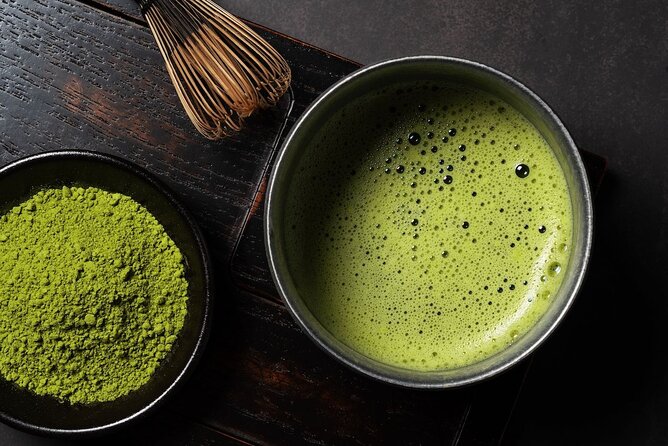
After the introduction, you prepare matcha yourself. The instructor walks you through the process and watches for common mistakes. This hands-on section is the heart of the class.
You work with the provided tools and ingredients, rather than watching a demonstration from the sidelines. That makes the experience more useful once you return home. Your first bowl may not look perfect, but the host can show you how to improve your technique.
The instructors keep the mood light. Matty has been noted for making the activity fun and interactive, while Yui has been described as easy to understand. The teaching style appears to focus on helping you feel comfortable rather than making you perform a formal ritual perfectly.
You can ask questions as you go. This is where the six-person limit matters. In a large workshop, a host might demonstrate once and move on. With a small group, you have a better chance of receiving direct correction when your whisking needs work.
Do not expect to leave with a full tea set or a supply of matcha. The included benefit is the class itself, with matcha and Japanese sweets. The lasting value is the technique and confidence to try it again at home.
Same city, a very different cup:
- Osaka: Tea Ceremony Experience
★ 4.9 · 1,426 reviews - Tea Ceremony Experience in Osaka Doutonbori
★ 5.0 · 754 reviews - Osaka: Tea Ceremony, Calligraphy, and Kimono Experience
★ 4.9 · 130 reviews - Osaka: Japanese Traditional Sweets Making and Tea Ceremony
★ 4.7 · 118 reviews
Matcha with Japanese sweets
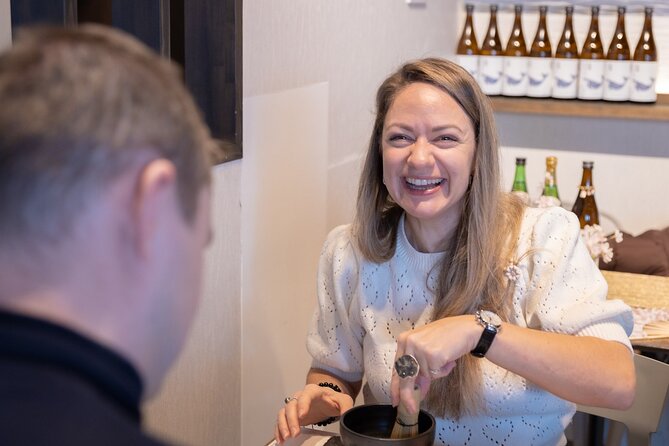
Once the tea is prepared, you drink it with Japanese sweets. The pairing is more than a snack added at the end. Matcha has a strong, vegetal flavor and can be pleasantly bitter, while a sweet helps balance the palate.
The sweets give you a chance to notice how Japanese confectionery works with tea. You are not simply tasting matcha on its own. You are experiencing the basic rhythm of a Japanese tea break: prepare the drink, serve it with something sweet, and take a quiet moment to enjoy both.
The exact sweets are not specified, so do not book this expecting a particular confection. The activity includes Japanese sweets as a set, but the selection may vary. If you have dietary restrictions, ask the provider before booking because the available information does not list substitutions or allergen details.
This final tasting also gives you time to take photographs. The class is calm and compact, making it a pleasant change from a full day of Osaka streets, shops, and food stops.
Why the one-hour format works
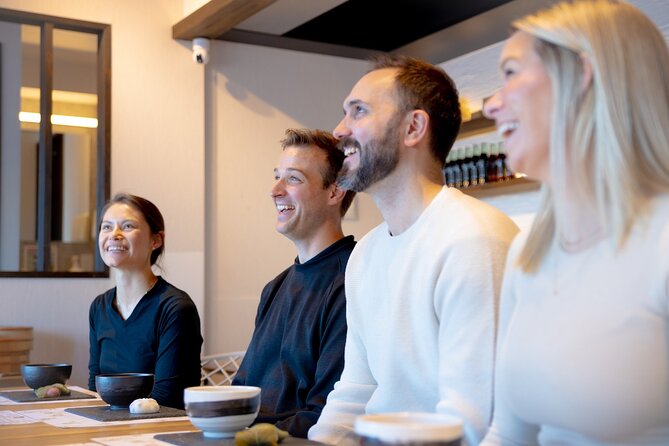
At about one hour, this class is easy to fit into an Osaka itinerary. You can choose a morning or afternoon session, which gives you more control over the rest of your day.
I see this timing as a strength for first-time visitors. You get a real cultural activity without giving up half a day. It can fit before lunch, between sightseeing stops, or during an afternoon break.
The short format does mean the class stays at an introductory level. You learn the basic background, preparation, and customs, but you will not cover every detail of Japanese tea culture. If you want a long, highly formal ceremony with extensive etiquette, this is not the right choice.
For most people, the compact schedule is a fair trade. You receive the key elements, hands-on instruction, a sweet pairing, and a useful skill without a heavy time commitment.
Small-group teaching and English support
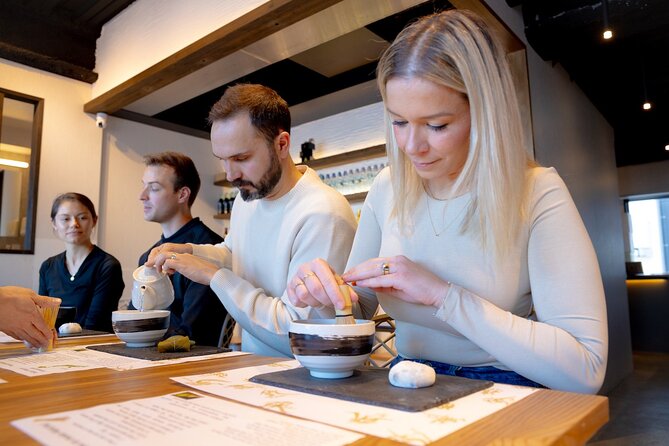
The maximum group size is six. That is one of the strongest practical features of the experience. A small class feels less exposed if you are nervous about making mistakes, and it gives the host more time to answer questions.
The instructors speak English and teach in a beginner-friendly way. The class has been led by hosts including Momo, Fuko, Yui, and Matty, each with a warm and energetic approach. The use of quizzes and visual material is particularly useful if you remember ideas better by seeing and doing rather than listening.
This setup suits solo visitors, couples, families, and small groups of friends. A solo visitor can join without needing to assemble a group, while friends can share the activity without booking a private lesson.
The class is also a good pick for people who do not already love matcha. You still learn about the drink and taste it in a setting where the sweets soften its sharper flavor. The activity is educational enough to be worthwhile even if you are unsure about the taste.
Is $21.89 good value?
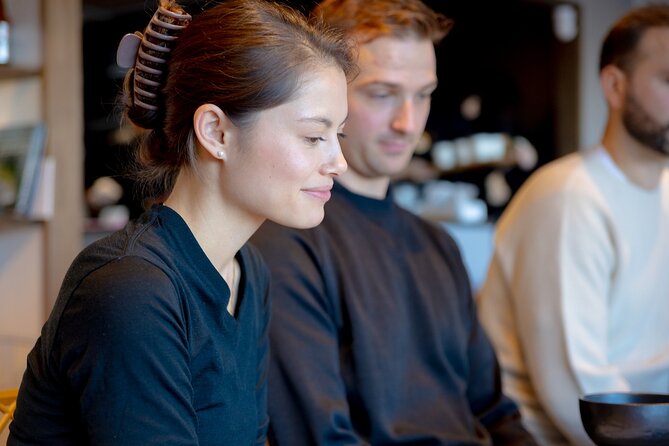
At $21.89 per person, this is a reasonably priced cultural activity in Osaka. The fee covers the instructor, matcha, Japanese sweets, and use of the prepared tools and ingredients.
The value comes from the combination of explanation and participation. You are not paying only for a cup of tea. You receive instruction on the drink’s background, a guided preparation session, a tasting, and practical advice for making matcha at home.
The class is especially good value if you have been curious about matcha but would not know how to begin. Buying a whisk, powder, and sweets separately might still leave you unsure about technique. Here, you can try the process under guidance before deciding how much you want to pursue it.
The price does not include transportation or hotel pickup. Since you must reach Higashishinsaibashi yourself, add the cost and time of getting there. Even with that small extra effort, the one-hour format and included tasting make the activity a modest addition to an Osaka trip.
Who should book it
I would suggest this class to you if you:
- Want a short cultural activity with real participation
- Like matcha or want to understand it better
- Prefer casual instruction to a formal ceremony
- Are visiting Osaka solo or with a small group
- Want English-speaking guidance
- Hope to make matcha at home after your trip
- Need an activity that fits a morning or afternoon schedule
It is also a smart choice for food-focused trips. Osaka is famous for hearty meals and busy dining streets, so a quiet tea session creates a useful change of pace.
You might skip it if you have already taken several matcha workshops and want advanced instruction. You might also prefer another activity if your main goal is a long, traditional tea ceremony with detailed etiquette and historic setting. This class is more approachable and practical than formal.
Booking and cancellation points
Confirmation is provided at the time of booking, and a mobile ticket is available. The activity allows service animals and is near public transportation.
Free cancellation is available if you cancel at least 24 hours before the scheduled start time. Cancellations made less than 24 hours ahead, along with late changes, are not refunded. The cut-off follows Osaka local time, so check the clock carefully if you are changing plans during an international trip.
The activity has a 5.0 rating from 509 reviews and a 100 percent recommendation figure. It has also received TripAdvisor’s Best of the Best award twice. Those numbers support the class’s strong reputation, but the practical details matter more for your decision: the location can take effort to find, the class is introductory, and the group is capped at six.
Should you book this matcha class?
Book it if you want an easy, hands-on introduction to Japanese tea rather than a long formal ceremony. The English-speaking hosts, small group, visual teaching, home preparation tips, and sweets make it a well-rounded one-hour activity.
I especially like it for first-time matcha drinkers and visitors who have bought matcha in Japan but never learned how to prepare it. Just allow extra time to find the Higashishinsaibashi meeting point, and keep your expectations focused on a friendly introduction rather than advanced tea training.
FAQ
How long does the matcha class last?
The activity lasts approximately one hour.
What is the price per person?
The listed price is $21.89 per person.
Where does the class meet?
The meeting point is Matcha Making Osaka, 1-chōme-16-20 Higashishinsaibashi, Chuo Ward, Osaka, 542-0083, Japan.
Where does the activity end?
The class ends back at the meeting point.
Is the class taught in English?
Yes. An English-speaking instructor leads the class.
What is included in the price?
The price includes the English-speaking instructor, matcha, Japanese sweets, and the tools and ingredients prepared for the activity.
How many people can join the class?
The maximum group size is six travelers.
Can I cancel for a full refund?
Yes, if you cancel at least 24 hours before the scheduled start time. Cancellations made less than 24 hours before the start, and late changes, are not refunded.
More Tea and Sweets Making in Osaka
- Matcha Making Class in Tokyo with Authentic Japanese Sweets Set
★ 5.0 · 744 reviews - Tokyo: Matcha Making Experience with Mochi Sweets in Asakusa
★ 4.9 · 388 reviews - Kyoto: Japanese Traditional Sweets Making and Tea Ceremony
★ 4.4 · 314 reviews - Make Traditional Nerikiri Sweets & Matcha experience in Shibuya
★ 5.0 · 130 reviews
Fresh tea listings around Osaka
- Osaka Temple Head Spa &Matcha Facial – Refresh & Glow〈90min〉★ 5.0 · 24 reviews
- Premium Kimono Dressing, Tea Ceremony, Calligraphy, Samurai show★ 5.0 · 18 reviews
- Samurai dress-up and shows, plus Tea Ceremony & Calligraphy★ 5.0 · 27 reviews
- Osaka; Japanese Tea ceremony experience, Macha and Sencha★ 4.9 · 29 reviews
- Osaka: Private Tea Ceremony and Calligraphy Experience★ 5.0 · 50 reviews
- Samurai Show, Tea Ceremony, Japanese Traditional Activities★ 5.0 · 56 reviews
- Osaka Temple Cool Foot Bath & Matcha Experience〈45min〉★ 4.9 · 82 reviews
- Osaka: Tea Ceremony, Calligraphy, and Kimono Experience★ 4.9 · 130 reviews
Matcha Experiences, compared.
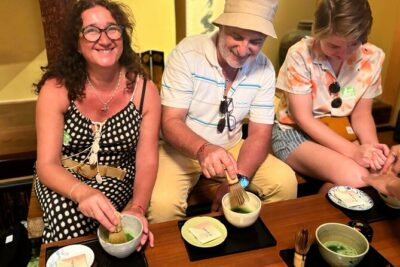
World Heritage Kyoto & Nara Uji Authentic Matcha Experience
Read our review →
Matcha Making Class in Tokyo with Authentic Japanese Sweets Set
Read our review →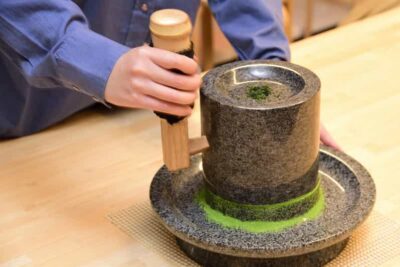
Kyoto: Tea Museum Tickets and Matcha Grinding Experience
Read our review →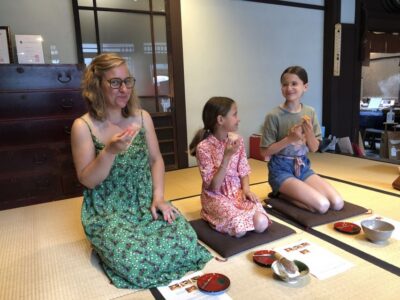
Kyoto: Tea Ceremony Meditation – Make Matcha with Tea Master
Read our review →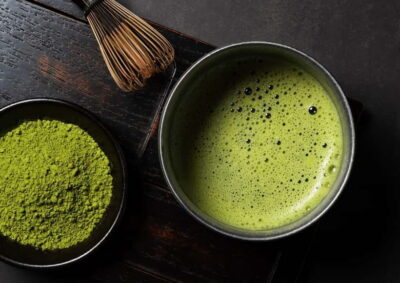
Tokyo: Matcha Making Experience with Mochi Sweets in Asakusa
Read our review →
Kyoto: Kimono Tea Ceremony with Matcha and Sweet
Read our review →
Browse the lists this tour appears in