
Review · TEA CEREMONY EXPERIENCES
Tea Ceremony Experience in Osaka Doutonbori
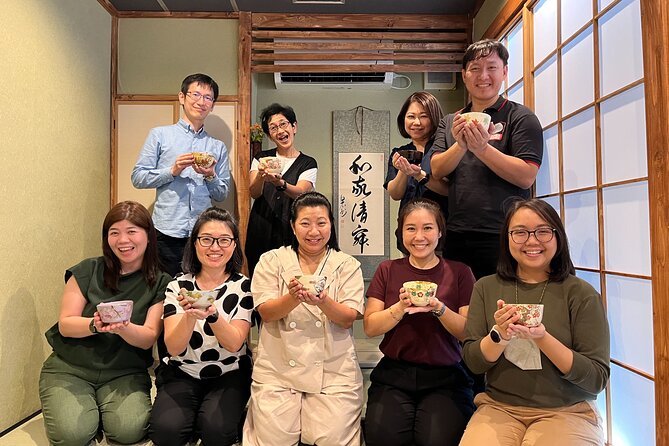
Osaka’s neon and noise fall away surprisingly fast once you sit down for this small-group tea ceremony near Dotonbori. In about 45 minutes, you learn the etiquette, watch the host prepare matcha, enjoy a Japanese sweet, and make your own bowl.
I like the hands-on format, and I like the calm, friendly teaching style associated with hosts such as Kazu, Mai, and Soda. The price is also fair at $20.69, especially for a first taste of Japanese tea culture. The main consideration is timing: this is a compact introduction, not a long formal ceremony, and children under five may not be accepted.
Key points at a glance
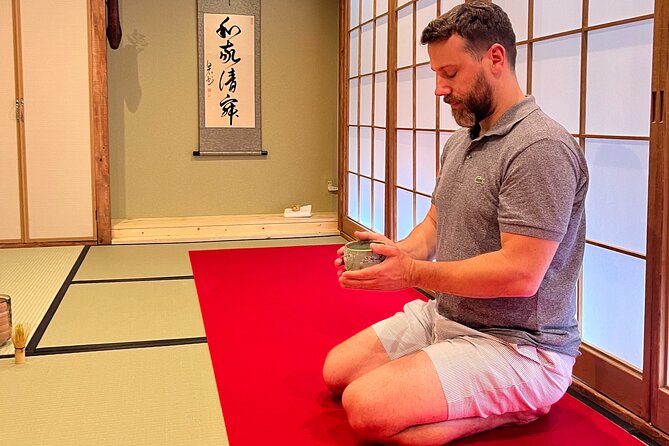
- You make your own matcha: Watch the host first, then whisk and drink your own tea.
- Dotonbori location: The ceremony takes place at Tea Ceremony Osaka The Osaka, close to central Osaka sights.
- Small-group setting: The maximum is 15 people, with many sessions described as much smaller.
- Clear cultural context: Learn about tea etiquette, its history, the tools, and the proper way to serve and drink matcha.
- Family-friendly option: Children can receive caffeine-free matcha milk instead of regular matcha.
- Short and good-value format: The experience lasts about 45 minutes and ends where it begins.
A quiet room near Dotonbori’s bright streets
The location is part of the appeal. The tea room is at Tea Ceremony Osaka The Osaka, on the second floor of Dotonbori Building at 1-chome Higashi-5-26 in Chuo Ward. You are right in central Osaka, close to the famous restaurants, signs, and canal-side energy of Dotonbori, yet the ceremony offers a sharp change of pace.
That contrast gives the activity its character. You can spend the morning shopping and eating around Dotonbori, then step upstairs for a calm lesson in manners and movement. Or you can use it as a gentle break after a busy day of sightseeing.
Take care with the address. The correct location includes Higashi, written as 東, in 1-chome Higashi-5-26. The supplied directions warn that using 1-5-26 without Higashi can lead you to the wrong place on Google Maps. Search for Tea Ceremony Osaka The Osaka in the Google Maps app rather than relying blindly on the map link.
The activity starts and ends at the same meeting point. It is near public transportation, though the precise station and walking time are not provided, so allow a little time to find the building and second-floor entrance.
More Tea Ceremonies in Osaka
- Osaka: Tea Ceremony Experience
★ 4.9 · 1,426 reviews - Osaka: Tea Ceremony, Calligraphy, and Kimono Experience
★ 4.9 · 130 reviews - Osaka: Japanese Traditional Sweets Making and Tea Ceremony
★ 4.7 · 118 reviews
What happens during the 45-minute ceremony
The experience follows a sensible order. First, your instructor introduces Japanese tea ceremony and explains why the practice matters. You learn about its history, customs, tools, and etiquette before being asked to copy the movements.
Next, you watch the host prepare matcha. This demonstration is more than a drink-making lesson. The motions, order, and handling of each item show how much attention Japanese tea culture gives to preparation and to the person being served.
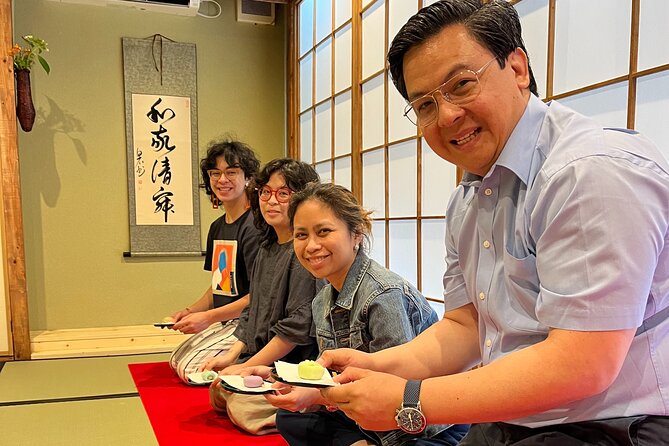
You then receive matcha and a traditional Japanese sweet. The sweet is an important part of the experience, not just an extra snack. Its sweetness balances the grassy, slightly bitter taste of the tea and helps you understand why the two are served together.
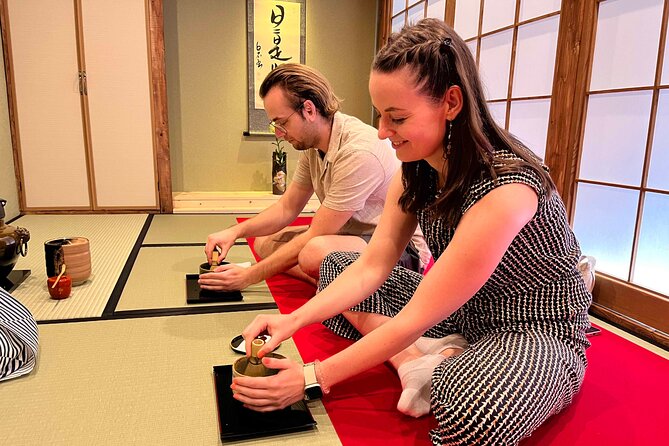
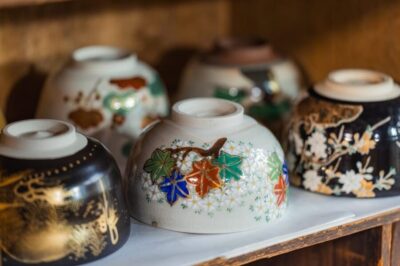
The final step is the most interactive. You make your own matcha, using the tools and method shown by the instructor. You also learn the proper way to serve and drink it. That practical part helps the etiquette stick, since you are not only watching a ritual from across the room.
Some sessions may run closer to an hour, based on the way the experience is described by past participants, but the stated duration is approximately 45 minutes. I would keep your schedule reasonably flexible, especially if you want time for questions or photographs afterward.
The history and meaning behind the movements
Tea ceremony in Japan developed into an art form during the 16th century. This class uses that background to explain why a simple bowl of tea can carry so much meaning.
The instruction includes the role of tea ceremony among the samurai class, including its use as a setting for discussion and strategy. You also learn how the ceremony created a setting where participants could meet as equals. Those details make the practice easier to understand. It is not simply about whisking green powder into hot water.
The ceremony also teaches attention. You notice how the bowl is handled, how the tea is prepared, and how the drink is received. Even in a short class, those details show the value placed on courtesy, care, and presence.
The tone is informal enough for first-time visitors. You are not expected to arrive with prior knowledge of Japanese customs. The instructors explain the process in English, and past sessions with Kazu, Mai, and Soda have been described as warm, patient, and engaging. The exact instructor depends on the date and session, so do not book solely for one named host.
Meeting Kazu, Mai, or Soda
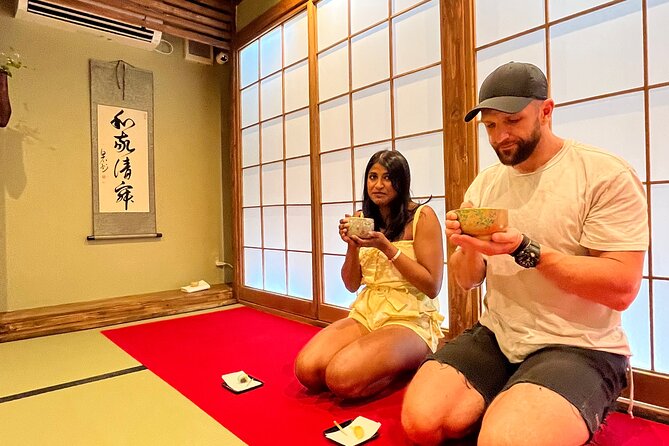
The instructors are a major part of the experience. The teacher is described as having more than a decade of experience, and the class includes explanation as well as demonstration.
Kazu is associated with a relaxed approach, light humor, and playful sound effects during the foot-shuffling movements. Mai is praised for explaining the history, preparation, and drinking customs in a clear way. Soda has led sessions that combine background information with a calm, hands-on lesson.
Those details matter because tea ceremony can seem intimidating if it is presented as a strict performance. Here, the teaching style appears designed to make beginners comfortable. You can ask questions, follow along, and make your own tea without feeling that every small mistake ruins the ritual.
The language support is another advantage. One session describes the tea master as speaking very good English, and the activity is clearly intended for an international audience. Still, if you want to ask a detailed question about matcha shops or local recommendations, a translation app may help. A clear, short question works best.
Same city, a very different cup:
- Matcha Making Class in Osaka with Authentic Japanese Sweets Set
★ 5.0 · 509 reviews - Osaka: Matcha Making Experience with Japanese Sweets
★ 5.0 · 146 reviews - Osaka Temple Cool Foot Bath & Matcha Experience〈45min〉
★ 4.9 · 82 reviews - Samurai Show, Tea Ceremony, Japanese Traditional Activities
★ 5.0 · 56 reviews
Matcha, sweets, and the children’s option
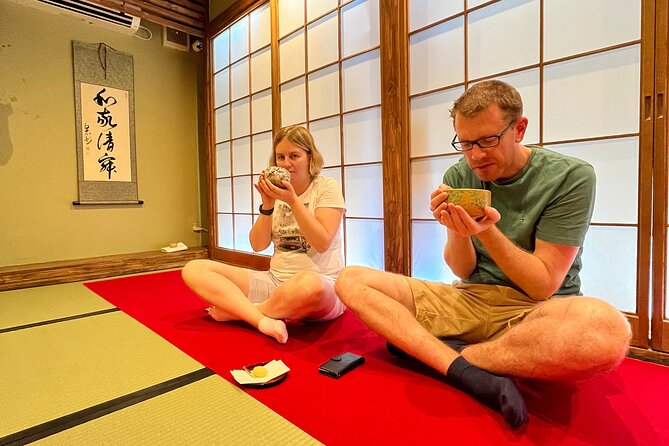
The standard drink is matcha green tea, prepared and served in the traditional way. You taste tea made by the host, then prepare your own. That comparison is useful: the instructor’s bowl gives you a model, while your own bowl lets you notice how technique affects the result.
A Japanese sweet is included. The exact sweet may vary, and the experience notes seasonal Japanese sweets, so you might receive something different depending on the time of year. The sweet provides a pleasant counterpoint to matcha’s sharper flavor.
Families should pay attention to the drink option. Children can receive caffeine-free matcha milk rather than regular matcha. That makes the class easier to share as a family, particularly when younger children want to take part in the whisking and serving.
Children under five require advance contact, and they may not be allowed to enter even when accompanied by an adult with a ticket. The regular plan is not automatically suitable for this age group. If you are traveling with a child under five, contact the provider before booking rather than assuming the caffeine-free option solves the age restriction.
Why the small group matters
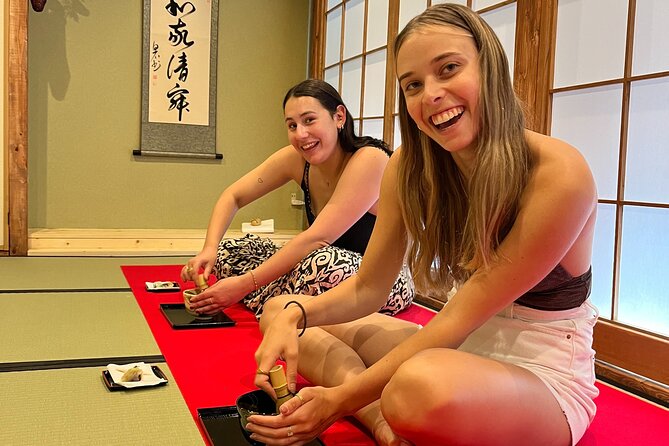
The maximum group size is 15, but several sessions have been described as much smaller, including groups of six and even two couples. Group size can change by date, so you should not expect a private class unless you book a private arrangement.
A smaller group improves the practical part. The teacher has more time to watch how you hold the whisk, answer questions, and explain the correct way to receive the bowl. It also makes the room feel quieter, which suits a ceremony built around careful movement.
The class is still a shared plan, meaning you take part with other people. That is useful if you want a social activity rather than a private lesson. It also keeps the price low. At $20.69 per person, you receive instruction, a demonstration, matcha, sweets, and a hands-on activity without paying for a long formal performance.
The tradeoff is that a group of 15 would feel less personal than a session with six people. If personal attention is your top priority, ask about the expected group size when possible. The small-group design is promising, but the maximum allows for a fuller room.
What makes the experience authentic
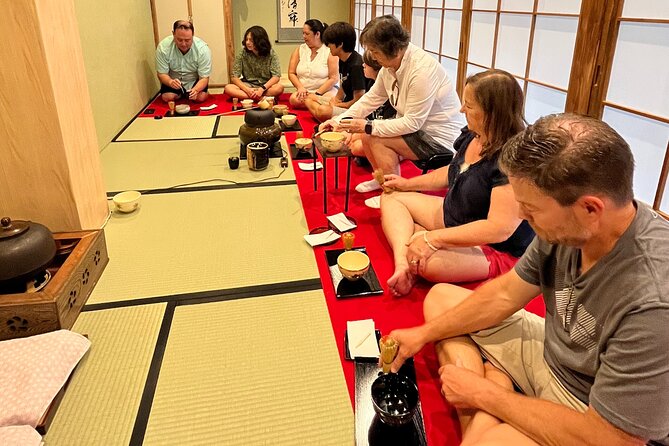
This is not a costume session or a staged photo stop. You do not need to change into traditional clothing. Instead, the focus is on the actual structure of the ceremony: the tools, the sequence, the movements, the tea, and the sweet.
That makes the experience a good fit if you want something practical. You leave knowing how matcha is made and how it is served, rather than simply having watched a cultural display.
It is also a gentle introduction rather than an advanced study of tea ceremony. The short format cannot cover every school, rule, or variation in Japanese tea practice. If you already have serious experience with tea ceremony, you may want a longer or more specialized class. For most first-time visitors, the balance of explanation and participation should be enough.
The setting adds another authentic touch. The room is in central Dotonbori, not in a distant rural retreat. You experience a traditional practice within modern Osaka, then step back into the city when the session ends. That contrast is one of the best reasons to choose this activity over a generic matcha tasting.
Who should book this Osaka tea experience
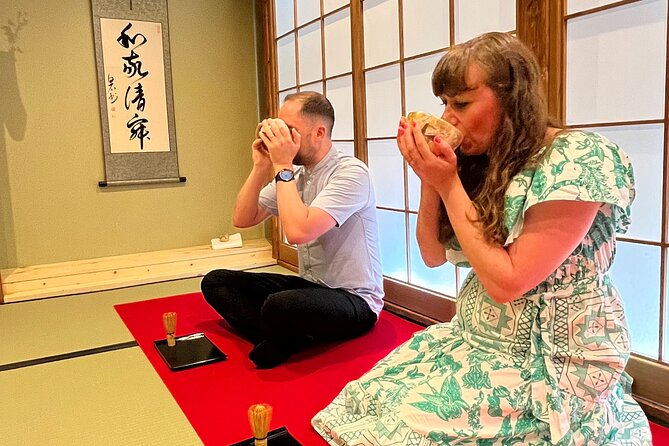
I would recommend it for first-time visitors to Japan who want an approachable cultural activity. The instructor explains the basic customs, and you get to practice rather than sit quietly through a demonstration.
It also suits families with children old enough to join the regular plan. The caffeine-free matcha milk helps, though you should confirm arrangements for children under five.
Couples and solo visitors can both enjoy it. The shared format makes it easy to join without arranging a private group, while the central location makes it simple to fit into a day in Osaka.
This is especially useful near the end of a Japan trip. One session was used as a final-day activity, and that timing makes sense. After seeing temples, eating local food, and rushing between major sights, a quiet tea lesson gives you time to think about the customs behind what you have seen.
I would be less likely to recommend it if you want a full-length, highly formal tea ceremony in traditional dress. That is not what this offers. You get an informal, educational lesson with a hands-on matcha activity.
Practical value at $20.69
The price is one of the strongest points. At $20.69, the class costs less than many longer guided activities, yet includes a host-led demonstration, cultural instruction, a sweet, tea made by the host, and your own attempt at preparation.
The value comes from participation. A simple cup of matcha would cost far less, but that would not teach you the etiquette or let you handle the tools. A museum visit might explain tea culture, but it would not give you the physical practice.
The 45-minute length keeps the cost and commitment manageable. You can fit it between meals, shopping, or other Dotonbori plans. The downside is that the short schedule leaves little room for a slow, elaborate ceremony. Think of it as a well-organized introduction, not a full afternoon devoted to tea.
Free cancellation is available if you cancel at least 24 hours before the local start time. Changes or cancellations inside that window are not accepted for a refund, so check your Osaka plans before reserving.
Tips for getting the most from the class
Arrive with the correct address saved in your phone. The Higashi detail is important, and the provider specifically warns against using the shortened 1-5-26 address.
Read or watch a little about tea ceremony before you arrive if you enjoy cultural context. You do not need prior knowledge, but knowing that the movements express courtesy and attention will help you notice more during the demonstration.
Keep your schedule open for a little longer than 45 minutes. The advertised duration is approximate, and questions or a fuller session may add time.
If you are sensitive to caffeine, ask about the drink before the class begins. The stated children’s option is caffeine-free matcha milk, while the standard activity includes matcha green tea.
Wear something comfortable for sitting and moving through the ceremony’s gestures. The activity does not require traditional clothing, and you do not need to change outfits.
Finally, take part fully. The most useful part is not the first bowl made by the host. It is your own attempt, even if your whisking technique is imperfect. The lesson is meant to show you how the process works, not test you.
Should you book it?
Book this tea ceremony if you want a short, affordable, hands-on introduction to Japanese culture in central Osaka. The combination of history, etiquette, demonstration, sweets, and self-made matcha gives you more than a basic tasting.
The best reasons to choose it are the small-group format, the friendly English instruction, and the chance to step from Dotonbori’s busy streets into a quieter setting. Kazu, Mai, and Soda each bring a warm teaching style, though your exact host will depend on the session.
Skip it if you are seeking formal attire, a long ceremony, or advanced study. For everyone else, especially families, first-time visitors, and anyone with a free hour near Dotonbori, the $20.69 price makes this an easy cultural addition to an Osaka day.
FAQ
How long does the tea ceremony experience last?
The stated duration is approximately 45 minutes. Some descriptions of the activity refer to an experience closer to one hour, so allow a little extra time if your schedule is tight.
Where does the activity start and finish?
It starts and ends at Tea Ceremony Osaka The Osaka, on the second floor of Dotonbori Building at 1-chome Higashi-5-26, Chuo Ward, Osaka, postal code 542-0077.
What will I do during the ceremony?
You learn about Japanese tea culture, history, traditions, tools, and etiquette. You watch the host prepare tea, enjoy matcha with a Japanese sweet, and make and drink your own matcha.
Is the experience suitable for children?
The activity is family-friendly, and children can receive caffeine-free matcha milk. Children under five require advance contact and may not be allowed to join the regular plan.
How many people can join the class?
The maximum group size is 15 people. The shared plan is designed for a class with other participants, and group sizes can be smaller depending on the session.
Can I cancel for a refund?
You can cancel at least 24 hours before the local start time for a full refund. Cancellations or changes made less than 24 hours before the start time are not accepted for a refund.
Fresh tea listings around Osaka
- Osaka Temple Head Spa &Matcha Facial – Refresh & Glow〈90min〉★ 5.0 · 24 reviews
- Premium Kimono Dressing, Tea Ceremony, Calligraphy, Samurai show★ 5.0 · 18 reviews
- Samurai dress-up and shows, plus Tea Ceremony & Calligraphy★ 5.0 · 27 reviews
- Osaka; Japanese Tea ceremony experience, Macha and Sencha★ 4.9 · 29 reviews
- Osaka: Private Tea Ceremony and Calligraphy Experience★ 5.0 · 50 reviews
- Samurai Show, Tea Ceremony, Japanese Traditional Activities★ 5.0 · 56 reviews
- Osaka Temple Cool Foot Bath & Matcha Experience〈45min〉★ 4.9 · 82 reviews
- Osaka: Japanese Traditional Sweets Making and Tea Ceremony★ 4.7 · 118 reviews
Tea Ceremony Experiences, compared.
Kyoto: Tea Ceremony in a Traditional Tea House in Kiyomizu
Read our review →
Kyoto: 45-Minute Tea Ceremony Lesson Experience
Read our review →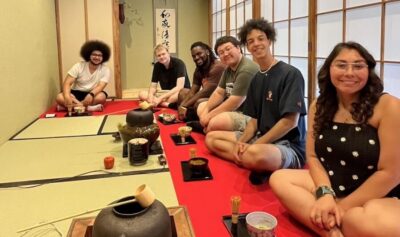
Kyoto: Table-Style Tea Ceremony at a Kyo-Machiya
Read our review →
Browse the lists this tour appears in