
Review · TEA CEREMONY EXPERIENCES
Kyoto: Tea Ceremony in a Traditional Tea House in Kiyomizu
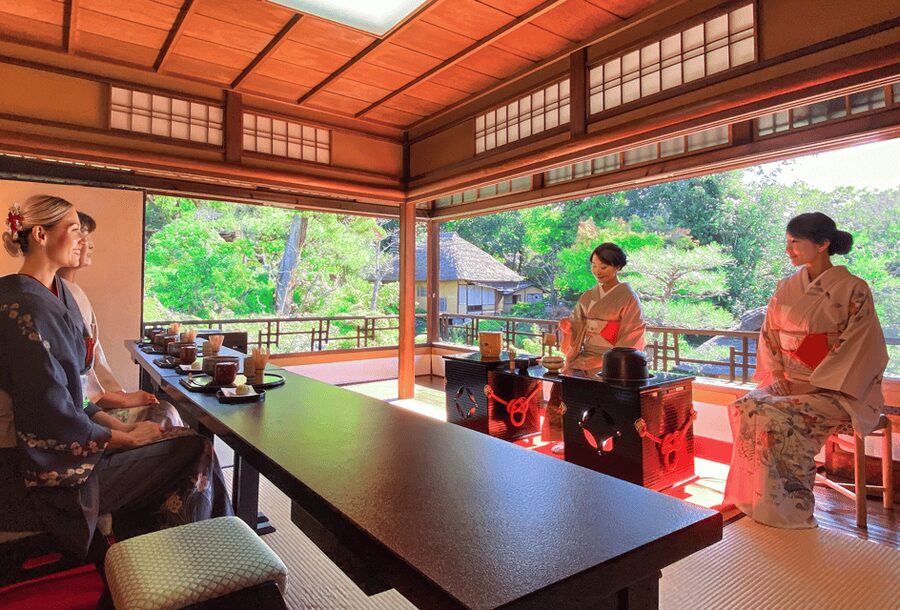
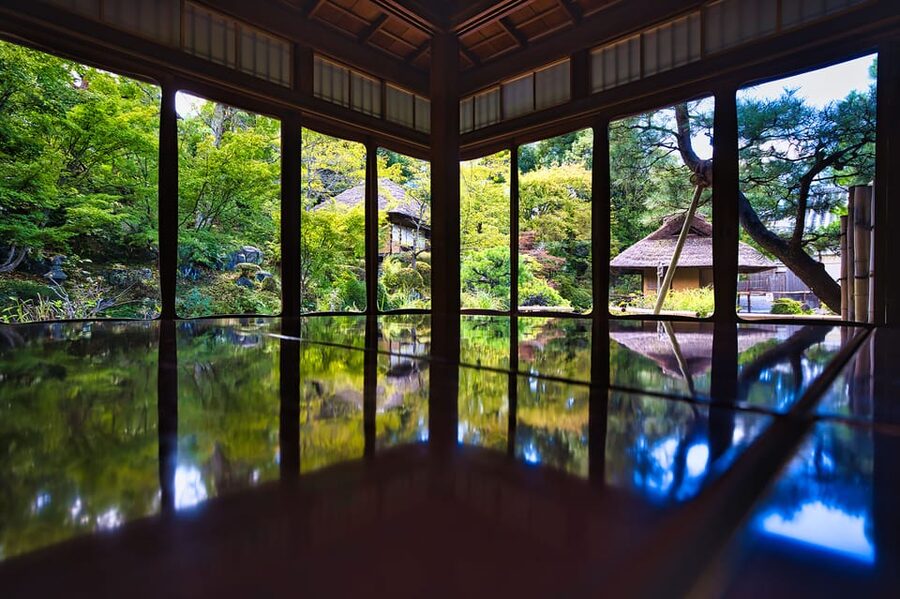
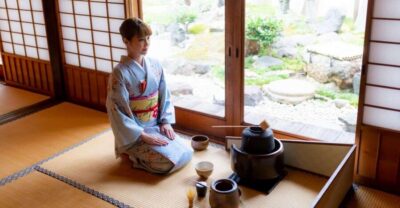
Kyoto’s best tea experience may be the one that gives you time to watch, learn, and make the tea yourself. At Sakaguchian, a traditional tea house tucked behind Sannenzaka, you look into a garden designed by Ogawa Jihei VII while a tea master prepares matcha with calm, exact movements.
I especially like the small-group feel and the chance to whisk your own bowl after watching the formal demonstration. The garden view gives the ceremony a peaceful setting, even though you are only steps from one of Kyoto’s busiest sightseeing streets. The main consideration is price: at $49 for 45 minutes, this is not a bargain snack stop, and the short session offers an introduction rather than full training in tea ceremony.
Key points to know
- A quiet garden behind Sannenzaka: Enter through a large gate near Kiyomizu-Dera, then look for the white gate leading to Sakaguchian.
- Two bowls of matcha are included: One is prepared for you by the tea master, and one you make yourself.
- A graceful live demonstration: You see the careful movements and etiquette before trying the basic steps.
- English instruction: The host explains the ceremony, its meaning, and the 500-year tradition behind it.
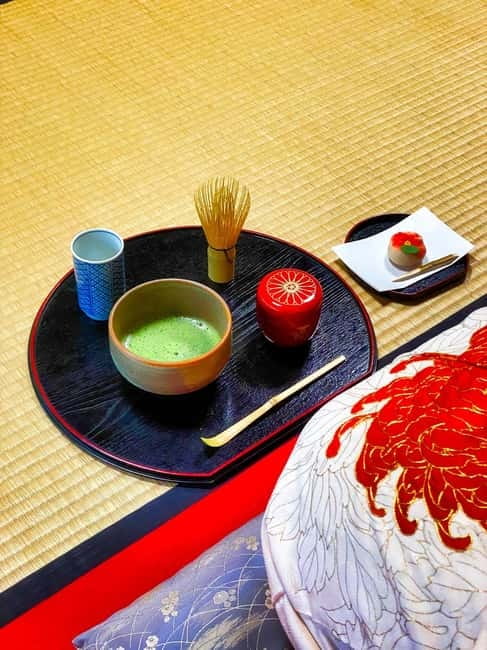
- A traditional sweet and photo are included: The sweet balances the bitter tea, and you can pose against the garden.
- No kimono rental: Come in ordinary clothes, and leave large bags and luggage behind.
A peaceful room just off Kyoto’s busiest walking route
Sannenzaka is one of Kyoto’s classic sightseeing lanes, leading toward Kiyomizu-Dera with old wooden buildings, souvenir shops, and plenty of foot traffic. The tea house sits close to that action, but the mood changes quickly once you pass through its gate.
Finding the entrance takes a little care. Walk down Sanneizaka near Kiyomizu-Dera for about 50 meters, then enter the large gate on the right. You can see the Japanese garden from there. After walking about 10 meters straight ahead, pass through the white gate on the left to reach Sakaguchian.
This tucked-away entrance is easy to miss, so allow extra time rather than arriving at the last second. One useful visual clue is the long lane with lanterns leading toward the property. If you take a taxi, ask the driver to head toward Kodaiji Temple and get out at the intersection of Sanneizaka and Ishin-no-michi. The Japanese address is Kyoto-shi Higashiyama-ku Kiyomizu 3-334.
Once inside, you trade the noise of the street for a room looking onto a carefully maintained garden. The contrast is part of the pleasure. You are not traveling far from the main sights, yet the setting feels removed from them.
More Tea Ceremonies in Kyoto
- Kyoto: Tea Ceremony Ju-An at Jotokuji Temple
★ 4.9 · 3,207 reviews - Kyoto: 45-Minute Tea Ceremony Lesson Experience
★ 4.3 · 2,378 reviews - Kyoto: Table-Style Tea Ceremony at a Kyo-Machiya
★ 4.9 · 1,211 reviews
The garden gives the ceremony its setting
The garden was created by Ogawa Jihei VII, a well-known Japanese garden designer. You do not spend the whole visit walking through it, but you sit with it as a backdrop while the ceremony takes place.
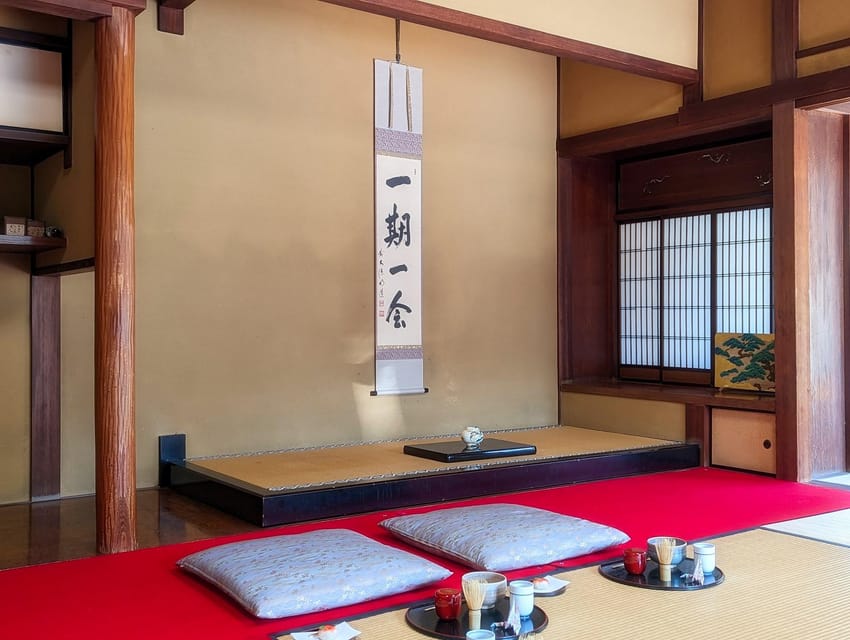
That matters because Japanese tea ceremony is not only about drinking matcha. The room, garden, utensils, movements, season, and quiet attention all belong to the experience. Even in a short introduction, the garden helps you understand why the setting is treated with such care.
The view is especially effective during the demonstration. Instead of watching a tea master against a plain wall, you see the measured preparation framed by greenery and traditional architecture. The setting also gives you a good place for the included photograph at the end.
The garden is a major reason to choose this experience over a basic matcha-making class in a modern room. If you mainly want to learn a recipe, you can find cheaper options. If you want the preparation, setting, and ceremony together, this visit offers more.
A brief introduction to 500 years of tea tradition
The session begins with an explanation of the tea ceremony and the building. Your English-speaking host sets out the basic ideas before the formal preparation starts.
You learn about the ceremony’s 500-year history and the meaning behind its actions. The introductory talk is brief, which suits a 45-minute activity, but it gives you enough context to notice details that might otherwise pass by. You begin to see the ceremony as a form of hospitality and discipline, not just a stylish way to serve green tea.
The quality of the explanation can shape the whole visit. Several hosts have been singled out for clear English, energy, and patience. One host named May was particularly warm and easy to follow, while another guide was described as theatrical and entertaining. Those touches help when the ritual itself feels unfamiliar.
I would not book this expecting a long academic lecture. The focus is practical and accessible. You learn the main ideas, watch the movements, and then take part. If you have a strong interest in Japanese history, you may wish the background section lasted longer. For most people, the brisk introduction leaves enough time for the ceremony and hands-on practice.
Watching the tea master work
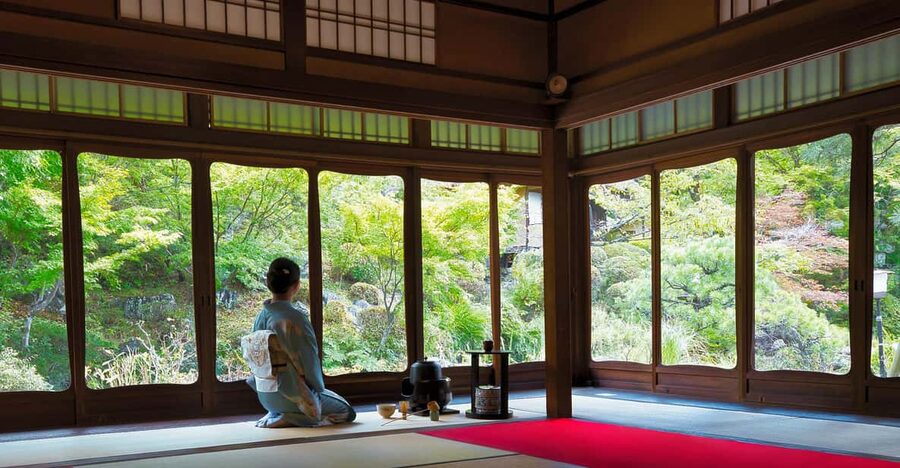
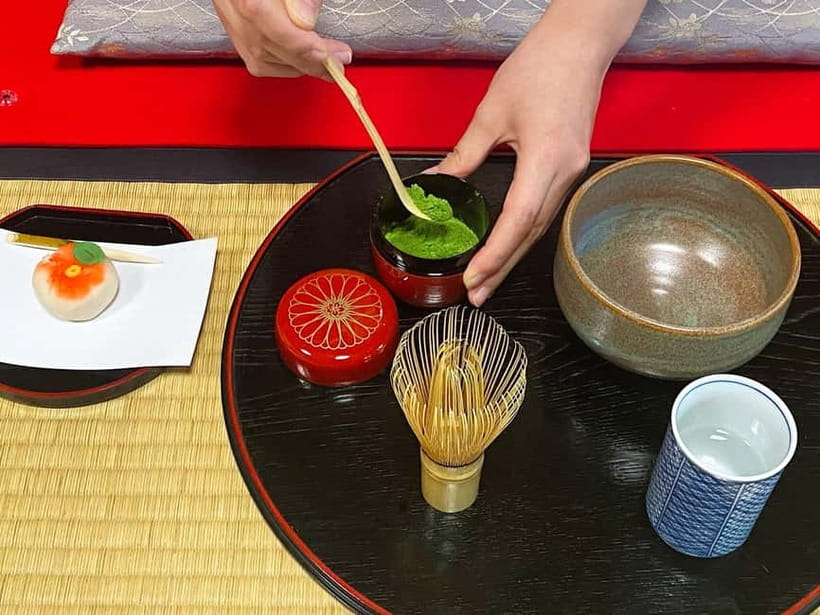
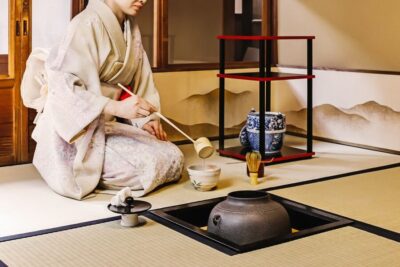
The tea master’s demonstration is the heart of the session. She prepares matcha with deliberate movements, showing how the bowl, whisk, scoop, and tea are handled.
You do not need prior experience. The point is to watch the sequence and understand the care behind it. The process may look simple from a distance, but the formal gestures reveal years of practice. The tea master’s movements are graceful and controlled, and the demonstration gives you a clear model to follow.
This is also the quietest part of the activity. Try not to treat it like a stage show where you can wander around for a better angle. One useful piece of etiquette is to remain seated and attentive while the ceremony is happening. That small act of respect protects the atmosphere for everyone in the group.
The tea master then serves you a bowl of matcha. This first cup lets you taste the tea prepared by a professional before you make your own. Matcha can be bitter when poorly balanced, but the cup served here is designed to be smooth enough for first-time drinkers. Even people who normally avoid matcha may find the experience changes their view of it.
Same city, a very different cup:
- Kimono Tea Ceremony at Kyoto Maikoya, NISHIKI
★ 5.0 · 911 reviews - Kyoto: Kimono Tea Ceremony at Orizuruya Gion
★ 4.9 · 618 reviews - Kyoto: Tea Ceremony in 100-year-old Kyo-Machiya Townhouse
★ 4.8 · 546 reviews - Kyoto: Tea Ceremony Experience
★ 4.8 · 511 reviews
Making your own matcha
After watching the demonstration, you get to prepare a bowl yourself. The host or tea master guides you through the basic method and offers tips for making a good cup.
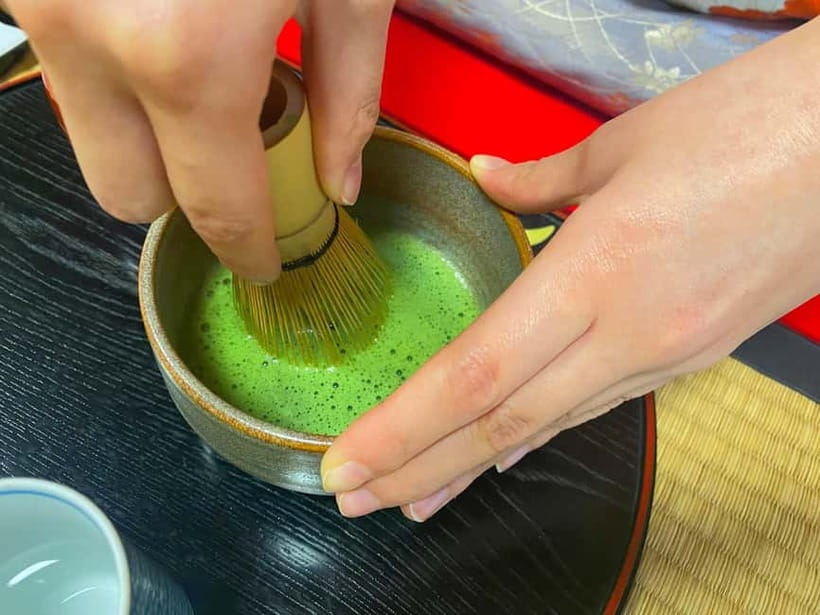
You use the bamboo whisk to combine the powdered tea and water. The aim is not to perform every formal movement perfectly. It is to understand the rhythm and feel of preparing matcha by hand. You can follow the instructions, whisk the tea, and then drink what you made.
This hands-on part makes the $49 price easier to assess. A demonstration alone would feel passive, especially in a 45-minute session. Making the tea gives you a skill you can repeat at home, even if you will not recreate the full setting.
The experience also shows why matcha preparation is more demanding than stirring powder into hot water. The amount of water, the whisking motion, and the texture all affect the final bowl. You receive practical guidance on how to make smoother matcha, rather than simply being handed a cup.
You get two cups in total: one prepared by the tea master and one made by you. That comparison is useful. You can taste the difference between a professional preparation and your own first attempt without feeling that the class is only a performance.
The sweet, the photo, and the final pause
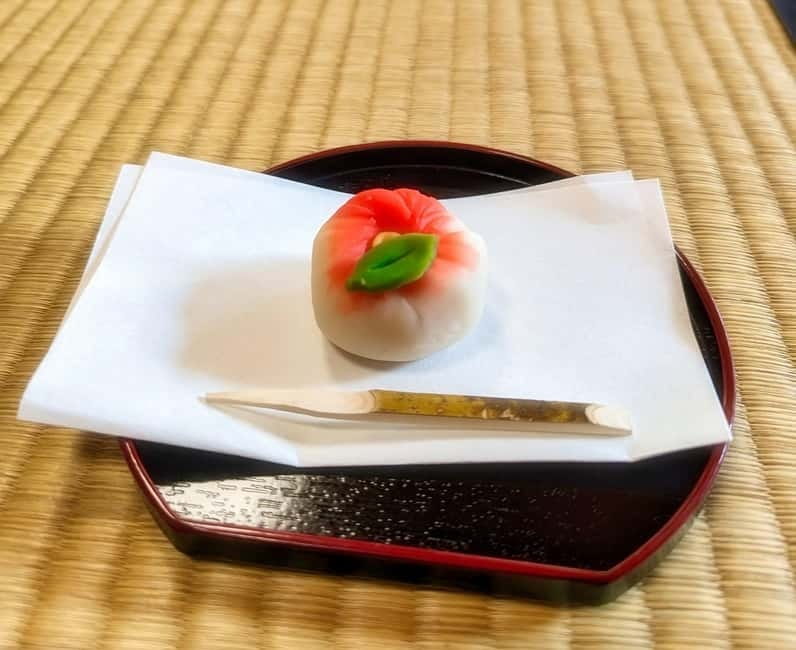
A traditional Japanese sweet accompanies the tea. Its sweetness helps balance matcha’s earthy, slightly bitter taste, and it adds another small piece of Japanese food culture to the session.
Do not expect a full meal. This is a customary sweet served with tea, not a snack break or dessert course. If you are hungry after visiting Kiyomizu-Dera, eat beforehand or plan another stop in the area.
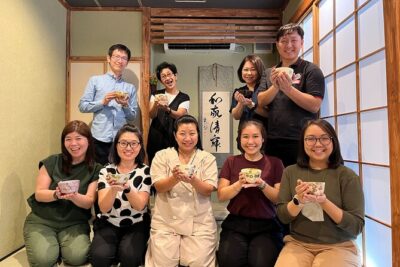
At the end, you can pose for a group photograph with the garden behind you. The photo is included, so you do not need to arrange an extra purchase for a keepsake. It is a simple touch, but useful after a quiet experience that can otherwise blur into the rest of a busy Kyoto day.
The photograph also works best if you treat it as a record of the setting rather than a formal costume portrait. Kimono rental is not included, and this activity does not require you to dress up. That can be a plus if you want a less staged experience and do not want to spend time changing clothes.
How the 45-minute length affects the visit
Forty-five minutes is enough to cover the welcome, garden introduction, history, demonstration, two bowls of matcha, sweet, and photo. It also makes the activity easy to fit between Kiyomizu-Dera, Kodai-ji, and the nearby Higashiyama streets.
The short format keeps the pace focused. You are unlikely to spend a long stretch waiting for the next part to begin. On the other hand, the visit does not leave much room for a long question-and-answer session or a detailed study of tea utensils.
I see this as an introduction for curious visitors, not a full tea school lesson. You get the atmosphere and the basic practice without giving up half a day of sightseeing. If you want a slower, more formal ceremony with extensive instruction, look for a longer specialist session. If you want a well-organized first encounter, 45 minutes works well.
Groups have been as small as eight people and around ten in some sessions. That size is still personal enough to follow the demonstration and take part, though it is not a private ceremony. Small-group size can vary, so do not assume you will have the room to yourself.
Is $49 a fair price?
At $49 per person, this experience costs more than simply ordering matcha at a tea shop. You are paying for the setting, English guidance, the tea master’s demonstration, two bowls of tea, a sweet, and the garden photo.
The value is strongest if you care about context and participation. You see a formal preparation, learn why the actions matter, and make the tea yourself. The historic house and garden also give you a sense of place that a café cannot provide.
The value is weaker if your only goal is to taste matcha. You could spend much less on a bowl elsewhere. You may also feel the price is high if you expect a full-length ceremony or kimono rental, since neither is part of the package.
I would compare it with the cost of other organized activities in Kyoto rather than with the price of a drink. For a first visit to Japan, this can be a sensible cultural stop because it is short, easy to pair with the major Higashiyama sights, and conducted in English. For repeat visitors who already know tea ceremony, it may feel basic unless the garden setting is your main reason for going.
Who will enjoy Sakaguchian most?
This activity suits you if you want a clear introduction to Japanese culture without committing to a long formal course. Couples, first-time visitors, and families with older children can all fit comfortably into the format.
Children under seven are not permitted. Older children can enjoy it if they are able to sit quietly during the demonstration and follow the instructions while making tea. Families with children aged nine and thirteen have found the activity manageable, but the ritual still asks for patience.
I also recommend it for anyone who wants a calm break during a busy Kyoto day. The location near Kiyomizu-Dera makes it easy to combine with sightseeing, while the garden offers a change of pace from the crowded lanes outside.
It may not suit you if you dislike matcha, have no interest in ceremony, or want a private experience. It is also not practical if you are carrying luggage or large bags, which are not allowed.
Useful planning advice before you go
Book a time that leaves room to find the entrance. The address is close to famous sights, but the gate and white entrance can be easy to overlook in the narrow streets.
Plan to arrive without large bags. The restriction is important because Sannenzaka is already a busy walking area, and the tea room is designed for a quiet seated activity.
Wear ordinary comfortable clothes. You do not need a kimono, and none is supplied. The lack of costume can make the visit feel more focused on the tea and garden rather than on taking staged pictures.
The ceremony runs rain or shine. That is not a problem for the indoor portion, and rainy weather may even make the garden view feel more subdued. Still, bring suitable clothing for the walk from Kiyomizu-Dera or the taxi drop-off.
English is the stated instruction language. The clear explanations and patient teaching make the activity approachable even if you know little about matcha or Japanese customs.
Should you book this Kyoto tea ceremony?
Book it if you want a short, polished introduction to tea ceremony with a real demonstration, hands-on matcha preparation, and a beautiful garden near Kiyomizu-Dera. The combination is hard to fit into an ordinary café visit.
Skip it if $49 feels too high for a 45-minute activity, if you want kimono photographs, or if you are seeking advanced instruction. The session is an introduction, not an in-depth course.
For most first-time visitors, I think the setting and participation justify the cost. You leave with more than a cup of tea: you understand the basic care behind its preparation, you have made your own bowl, and you have had a quiet moment in one of Kyoto’s most crowded sightseeing districts.
FAQ
How long does the tea ceremony last?
The activity lasts 45 minutes.
What is included in the price?
The experience includes the tea ceremony, two cups of matcha, traditional Japanese sweets, and a photo.
Is kimono rental included?
No. Kimono rental is not included.
Is the activity offered in English?
Yes. The stated instruction language is English.
Where is the meeting point?
The tea house is at Sakaguchian in Sannenzaka near Kiyomizu-Dera. Walk about 50 meters down Sanneizaka, enter the large gate on the right, continue about 10 meters, and use the white gate on the left.
Can young children attend?
Children under seven are not suitable for this activity. Older children can attend if they meet the activity’s expectations for the session.
Fresh tea listings around Kyoto
- Kyoto Fushimiinari:Wagashi Making & Small Group Tea Ceremony★ 5.0 · 14 reviews
- 2 Types of Japanese Sweets making and Tea Ceremony★ 4.6 · 17 reviews
- Kyoto Hidden Riverside Zen Mediation and Uji Matcha Experience★ 5.0 · 9 reviews
- Whisk Your Own Matcha: A Zen Matcha Experience at Temple★ 3.6 · 7 reviews
- Kyoto: Nighttime Zen Meditation and Matcha Tea Experience★ 5.0 · 7 reviews
- Matcha Grinding Experience and Walking Tour in Uji Kyoto★ 5.0 · 26 reviews
- Kyoto Matcha Green Tea Tour★ 4.7 · 28 reviews
- Kyoto: Traditional Tea Ceremony with Matcha & Sweets in Gion★ 4.9 · 27 reviews
Tea Ceremony Experiences, compared.
Kyoto: 45-Minute Tea Ceremony Lesson Experience
Read our review →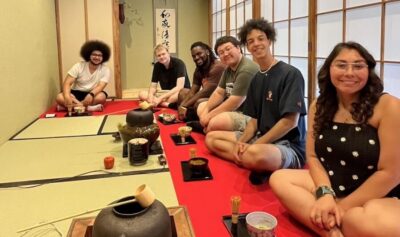
Kyoto: Table-Style Tea Ceremony at a Kyo-Machiya
Read our review →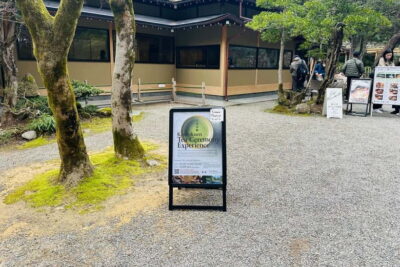
Browse the lists this tour appears in