
Review · TEA CEREMONY EXPERIENCES
Kyoto: Tea Ceremony in 100-year-old Kyo-Machiya Townhouse
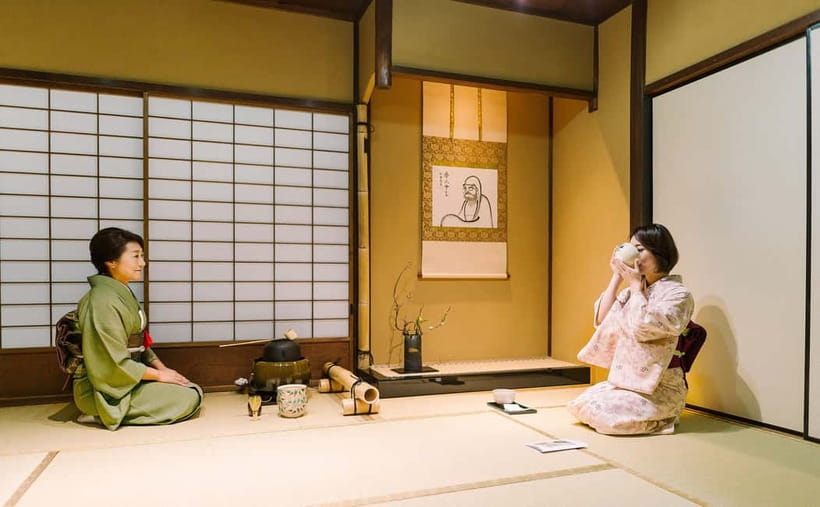
Kyoto’s tea ceremony is less about drinking a cup of matcha than learning how every movement carries meaning. In a 100-year-old machiya townhouse, you watch a tea master prepare the first bowl, learn how to greet the room and handle the tea bowl, then make your own matcha under careful guidance. It is a calm, hands-on introduction rather than a performance you simply watch.
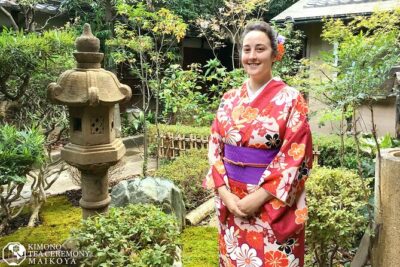
I like the clear explanations of history and etiquette, and I like that you actually whisk your own tea. The option to wear a kimono afterward is another strong point, especially if you want photos around Kyoto rather than a quick costume fitting. The main drawback is timing: the kimono plan takes several hours, includes travel between two locations, and the outfit must be returned to the Gojo shop by 5:30 PM.
Key points at a glance
- Tea making, not just tea watching: You prepare your own matcha after seeing the master serve the first bowl.
- A genuine machiya setting: Tatami, paper screens, wooden details, and a quiet room make the ceremony feel rooted in Kyoto life.
- Useful English support: The tea master may speak Japanese while an interpreter explains the history, gestures, and etiquette in English. Hosts named Lim, Ling, and Maki have led recent sessions.
- Kimono time adds flexibility: Choose a casual kimono, then stroll around Kyoto before returning it to the Gojo shop by 5:30 PM.
- Comfort is handled sensibly: You may sit on the floor or use a small chair, but bring socks and wear something that works with traditional footwear.
- A good value at $31: The tea-only option is reasonably priced for a 50-minute cultural lesson, while hair, makeup, formal kimono, and townhouse extras cost more.
What the Kyoto tea ceremony really offers
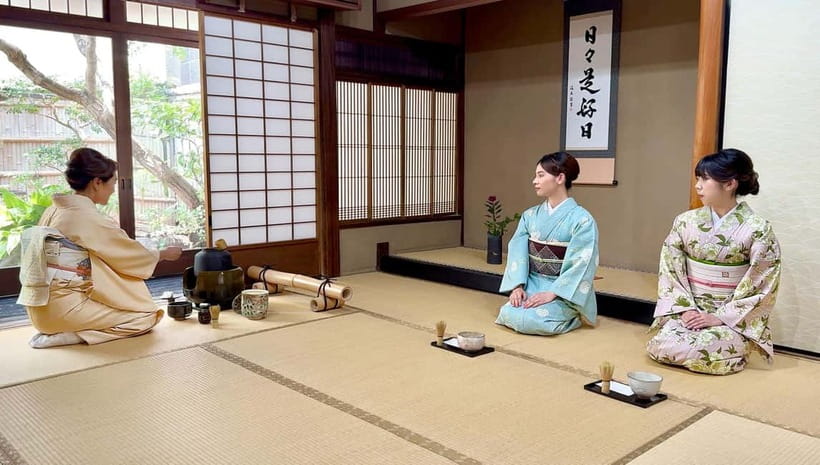
Many first-time visitors expect a quick matcha demonstration. This is more useful than that. The session explains the background of Japanese tea, shows you the order of the ritual, and gives you a chance to take part.
The ceremony begins with an introduction to tea in Japan. Tea arrived from China about 1,200 years ago, and the presentation connects that early history with the form known today as the Japanese Way of Tea. You also hear about the social and cultural setting in which tea gatherings developed.
That context matters. Without it, the careful bows, the turning of a tea bowl, and the precise movements can seem mysterious. With it, you begin to see tea as a practice of hospitality, attention, and respect.
The experience takes place near Kyoto Gosho, the Kyoto Imperial Palace. This area was long tied to the imperial court and aristocracy, where tea gatherings, poetry, and artistic discussion formed part of refined court life. The former residence of Nijō Yoshimoto, a 14th-century court noble and important figure in linked-verse poetry, is nearby.
You are not touring the palace itself, but the setting gives the ceremony useful context. You are in a part of Kyoto associated with court culture, not in a modern hotel room dressed up for visitors.
More Tea Ceremonies in Kyoto
- Kyoto: Tea Ceremony in a Traditional Tea House in Kiyomizu
★ 4.9 · 3,519 reviews - Kyoto: Tea Ceremony Ju-An at Jotokuji Temple
★ 4.9 · 3,207 reviews - Kyoto: 45-Minute Tea Ceremony Lesson Experience
★ 4.3 · 2,378 reviews
Inside the 100-year-old machiya
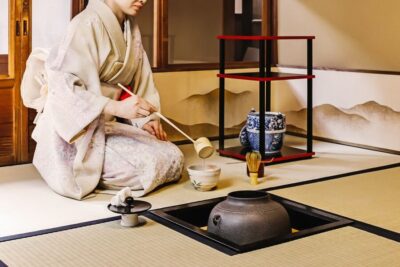
The townhouse is a major part of the experience. A machiya is a traditional Kyoto townhome, built for both living and work. Here, the atmosphere comes from the wooden entrance, tatami flooring, paper screens, and quiet proportions of the room.
The room size can vary with the group. Sessions may include up to 20 people, so you should not assume an intimate private ceremony. A larger group can make the event feel less personal, but the format is designed for beginners and includes time for questions.
You can sit on the floor in the traditional way, or use a small chair. That choice is important. Tea ceremony rooms are beautiful, but remaining on the floor for nearly an hour is not comfortable for everyone. If your knees or hips complain, use the chair without hesitation.
The rules are simple and sensible. Keep the room quiet, do not use flash photography, and avoid food or drinks other than what is provided. You may be able to take regular photos, but the ceremony asks for attention rather than constant phone activity.
Bring socks. Sandals and flip-flops are not allowed, and socks also make the tatami setting more comfortable and appropriate.
Watching the master prepare the first bowl
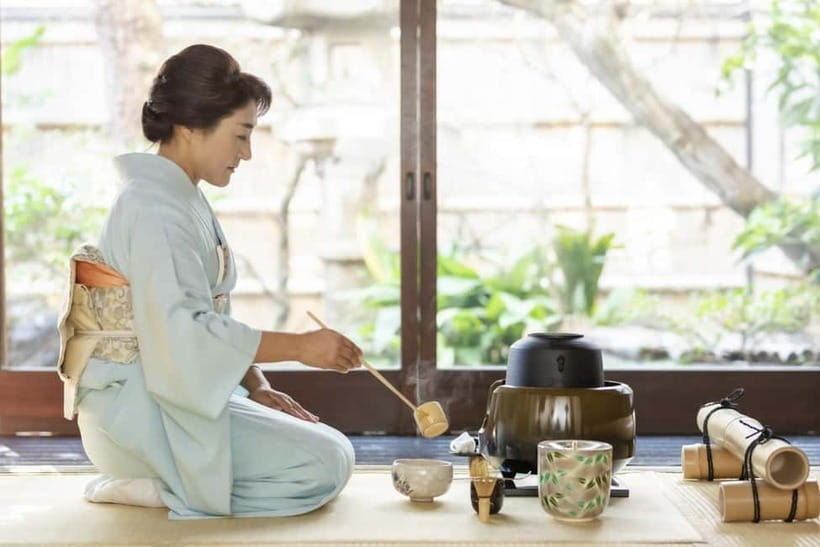
The tea master brings the required utensils into the room and prepares the first tea for a guest. This is the moment when the ceremony shifts from explanation to demonstration.
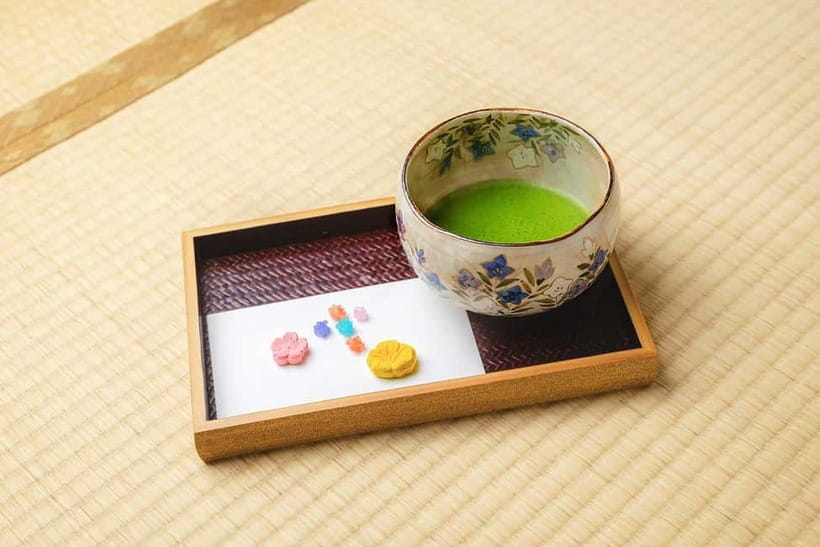
You learn how to bow, which greetings to use, how to receive the sweets, and how to drink the tea. The tea bowl is not treated as an ordinary cup. You are shown how to observe it and appreciate its shape and decoration.
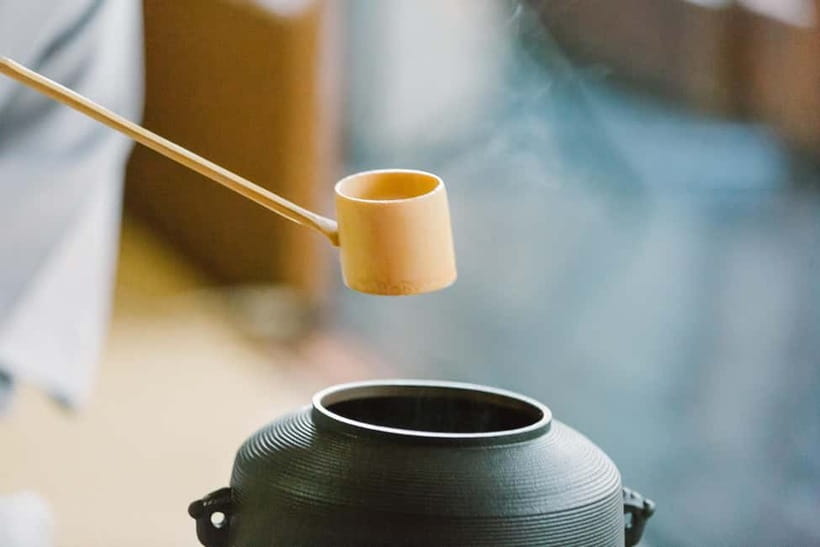
The pace is deliberate. A tea ceremony is built from small actions, and the master’s movements show how much care goes into arranging the utensils, handling the whisk, and presenting the bowl.
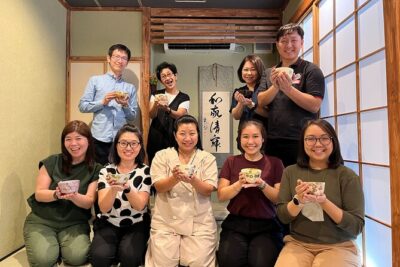
English interpretation is provided, with instruction in English and Japanese. The tea master may conduct the ritual in Japanese while an interpreter explains what is happening. The quality of interpretation can vary slightly by session, but the format is intended to make the ceremony easy to follow. Hosts identified as Lim, Ling, and Maki have been praised for clear explanations, warmth, and calm guidance.
If you have questions, save them for the end. There is time to ask about the tea, customs, gestures, or the wider history of the ceremony.
Making your own matcha
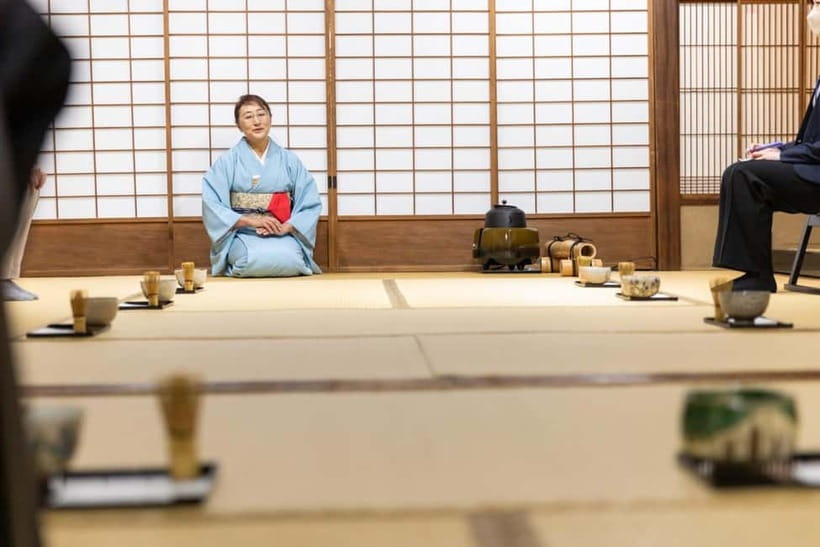
The best part for many people is the practical lesson. After watching the master, you prepare your own tea under supervision.
You are not expected to produce a perfect bowl on the first attempt. The point is to understand the process: handling the utensils, whisking the matcha, and serving yourself with the correct movements. A guide or interpreter helps you follow along.
The matcha is served with a traditional Japanese sweet. The sweet is not an incidental snack. Its sweetness balances the bitter, grassy taste of the tea and forms part of the ceremony’s rhythm.
The quality of the tea has been a strong point of the experience. If you normally associate matcha with sweet café drinks, this is a chance to taste it in a more traditional form. It is more direct, less sugary, and likely to be an acquired taste for some people.
I like that the practical lesson follows the formal demonstration. You first see the ceremony done correctly, then try it yourself while the steps are fresh. That makes the experience more memorable than a talk followed by a souvenir photo.
Same city, a very different cup:
- Kyoto: Table-Style Tea Ceremony at a Kyo-Machiya
★ 4.9 · 1,211 reviews - Kimono Tea Ceremony at Kyoto Maikoya, NISHIKI
★ 5.0 · 911 reviews - Kyoto: Kimono Tea Ceremony at Orizuruya Gion
★ 4.9 · 618 reviews - Kyoto: Tea Ceremony Experience
★ 4.8 · 511 reviews
Choosing the kimono option
The kimono plan begins at the Yumeyakata Gojo Shop. Arrive at the starting time printed on your voucher to choose your clothing from a range of colors, patterns, and sizes.
The tea ceremony does not begin immediately. It starts two hours after the selected kimono appointment. For example, an 11:00 AM kimono start leads to a 1:00 PM tea ceremony. That gap allows time for dressing and for you to make your way to Yumeyakata Oike Bettei, the machiya townhouse.
Transportation between the Gojo shop and the townhouse is not included. You must handle that journey yourself, so allow enough time. Do not treat the two-hour gap as spare sightseeing time unless you have checked the route and dressing schedule carefully.
The standard plan includes a casual kimono. Women can add hairstyling, makeup, a hair accessory, and an upgrade to a formal houmongi kimono. These extras are useful if the clothing itself is a major reason for booking.
The dressing process is part of the fun, but a kimono is not simply a robe you throw on. There are several layers and fitted ties, and movement is more restricted than in ordinary clothing. On a hot day, walking around Kyoto in one can be uncomfortable. Plan a shorter route, drink water before the ceremony, and avoid packing the day with long walks.
After the tea ceremony, you may stroll around Kyoto in the kimono. You must return it to the Gojo shop by 5:30 PM on the same day. That deadline makes the kimono package best for a morning or early afternoon booking, not a late start.
The optional machiya tour
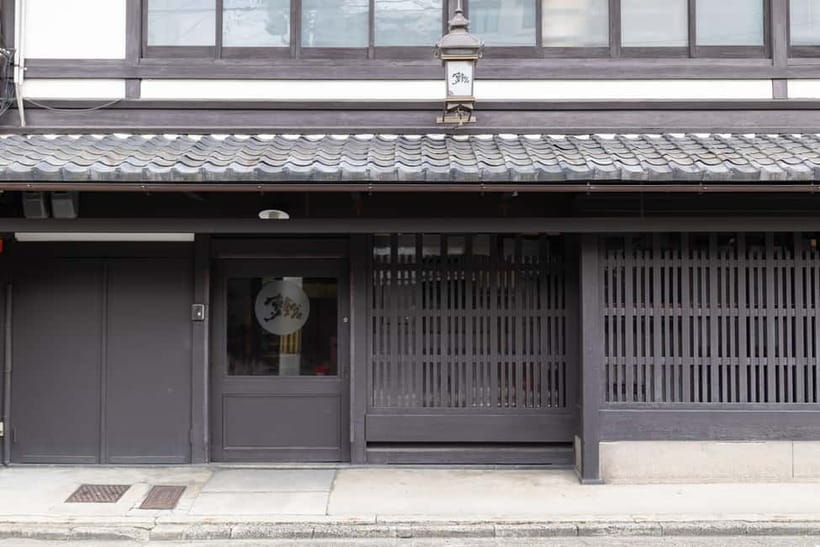
If you select the add-on, the tea ceremony is followed by a 30-minute machiya session. It includes a 20-minute tour and about 10 minutes for photos.
The tour explains the townhouse’s architecture, history, cultural role, and less obvious functions. This is worthwhile because the building is not just a scenic backdrop. Machiya design reflects how Kyoto families lived and worked in narrow urban homes.
The extra photo time can be especially appealing if you are wearing a kimono. The gardens and traditional details provide a setting for pictures, and the experience may include props such as a katana and umbrella. Professional photos and videos are not included, so bring your own phone or camera.
This add-on lengthens the experience but does not turn it into a full museum visit. Think of it as a focused introduction to the house, with time to look around and take pictures after the formal ceremony.
How long the experience takes
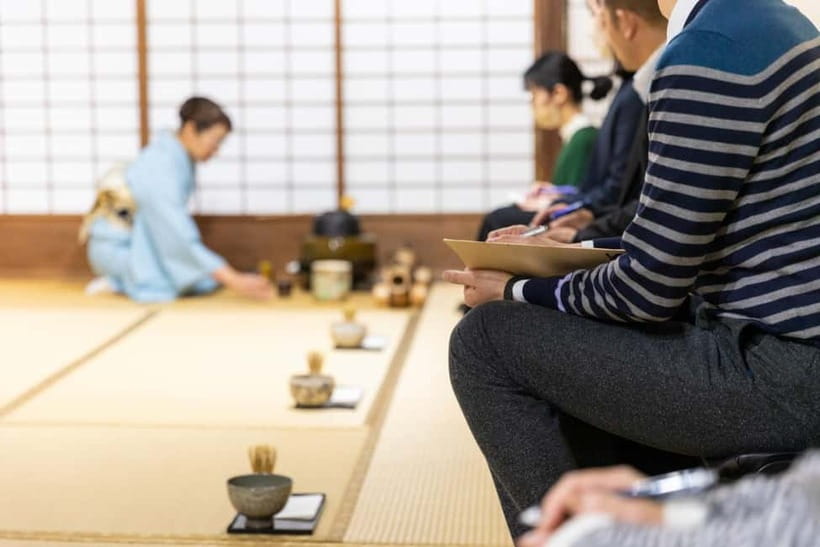
The tea-only session lasts about 50 minutes. You should arrive at Oike Bettei 5 to 10 minutes before the start time shown on your voucher.
The kimono version can take up to three hours, depending on the selected services. You begin at the Gojo shop, choose and put on the kimono, travel to the townhouse, attend the tea ceremony, and then have time to walk around Kyoto before returning the clothing.
Late arrival is possible, but the session will not be extended. That is another reason to allow extra time for transport and finding the correct meeting point. The meeting point varies by option, so check your voucher carefully before setting out.
The group format can hold up to 20 people. If you want a private, highly personal tea lesson, this is not the right assumption. If you want a structured introduction with enough room for questions and participation, the group format keeps the price reasonable.
Is $31 good value?
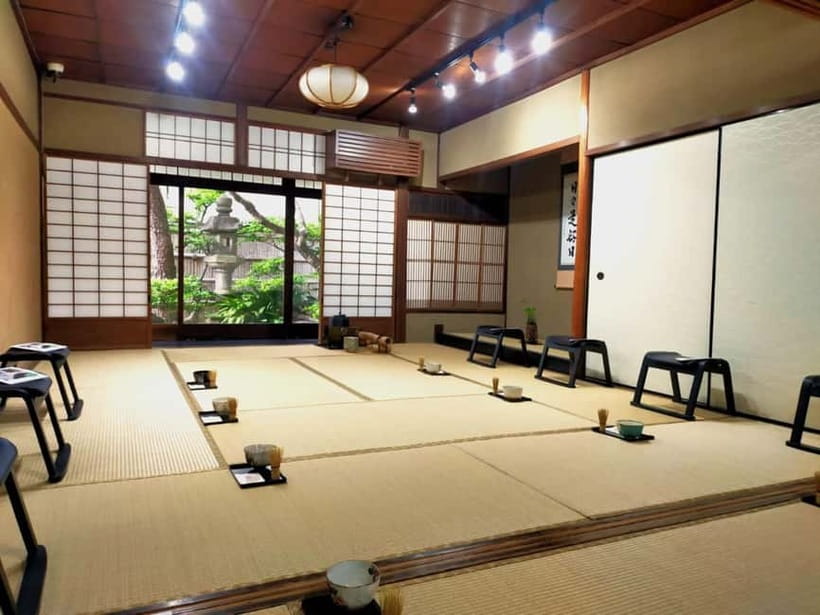
At about $31 per person, the tea-only experience offers solid value. You receive a guided lesson, matcha, a traditional sweet, a written leaflet, an English-supported tea master, and access to a historic townhouse setting.
You are paying for instruction and atmosphere, not a full meal or a long sightseeing tour. The 50-minute format works well between visits to the Imperial Palace area, museums, or central Kyoto sights.
The kimono option changes the calculation. Dressing, travel, the ceremony, and time to walk around Kyoto make it a much longer outing, but the clothing, hairstyling, makeup, formal kimono upgrade, and machiya session may add cost. Since the exact add-on prices are not provided here, compare the final total before booking.
I would choose the tea-only plan if you mainly want cultural understanding and a quiet break in a traditional room. I would choose the kimono plan if photos, clothing, and a half-day Kyoto activity matter just as much as the tea itself.
Who should book it
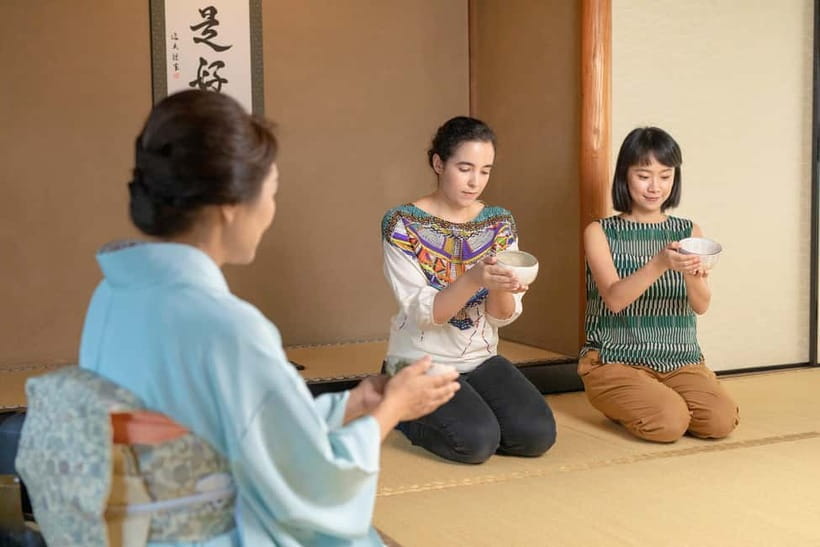
This suits adults, couples, families with children aged 10 and older, and anyone who wants a first introduction to Japanese tea without committing to a highly formal or advanced ceremony.
It is especially good for you if:
- You want to learn the meaning behind tea etiquette.
- You enjoy hands-on activities rather than simple demonstrations.
- You want a traditional setting near Kyoto Imperial Palace.
- You are curious about wearing a kimono around Kyoto.
- You appreciate a calm activity after busy temple visits.
- You want the option to ask questions in English.
Children under 10 are not suitable for the session because the room must remain quiet. Pregnant people, wheelchair users, people over 200 centimeters or 95 kilograms, visually impaired people, and babies under one year are also listed as unsuitable for this activity.
The quiet rules are real. This is not a loud family show or a casual café workshop. Disruptive behavior may result in being asked to leave, so choose another activity if your group needs freedom to move and talk.
Practical tips for a smoother visit
Book the tea-only session if your Kyoto schedule is tight. It is simple: arrive shortly before the start time, learn the ceremony, prepare matcha, and leave with a better understanding of the ritual.
For the kimono plan, start early enough to enjoy the clothing without watching the clock. Remember that the ceremony begins two hours after the kimono appointment, and the clothing must be back at the Gojo shop by 5:30 PM.
Wear socks and avoid sandals. Choose comfortable clothing underneath the kimono, especially in warm weather. Since you will walk between locations and possibly around Kyoto afterward, comfortable shoes matter.
If taking photos is important, consider the machiya add-on. The extra 10 minutes for photos gives you a more relaxed chance to use the house and garden, rather than trying to take pictures during the formal ceremony.
The experience is available in English and Japanese. Interpretation is part of the format, but the tea master may speak Japanese during the actual demonstration. Listen closely to the interpreter, then watch the gestures themselves. Much of the ceremony can be understood visually.
Should you book this Kyoto tea ceremony?
I would book it if you want a well-priced, hands-on introduction to Japanese tea in a genuine old townhouse. The strongest reasons are the clear cultural background, the chance to prepare your own matcha, the traditional setting, and the option to add a kimono for a longer Kyoto outing.
Choose the tea-only version if you value simplicity. Choose the kimono and machiya extras if you want photos, architecture, and a fuller afternoon activity. Just plan around the shop transfer, the 5:30 PM return time, group size, and the need for quiet behavior.
For a first tea ceremony in Kyoto, this gives you enough structure to understand what you are seeing without requiring prior knowledge or perfect etiquette. At roughly $31 for the basic session, it is an easy cultural addition to a Kyoto itinerary.
FAQ
How long does the tea ceremony last?
The tea-only experience lasts about 50 minutes. Options that include kimono rental and additional services can take from about 50 minutes up to three hours.
Where does the tea ceremony take place?
The ceremony takes place at Yumeyakata Oike Bettei, a traditional machiya townhouse near Kyoto Imperial Palace. The tea-only meeting point is the townhouse, while the kimono option begins at the Yumeyakata Gojo Shop.
Can I make my own matcha?
Yes. After the tea master demonstrates the ceremony and prepares the first tea, you prepare your own matcha under supervision.
Is the experience available in English?
Yes. The activity is offered in English and Japanese, with a tea master and interpreter included.
Can I wear a kimono around Kyoto afterward?
Yes, if you choose the kimono rental option. You may walk around Kyoto after the ceremony, but you must return the kimono to the Yumeyakata Gojo Shop by 5:30 PM on the same day.
Do I need to sit on the floor?
No. You may sit on the floor or use a small chair. Bring socks, and do not wear sandals or flip-flops.
Fresh tea listings around Kyoto
- Cycling Tour at Uji’s Matcha Green Tea Fields and Heritage★ 5.0 · 10 reviews
- Authentic Tea Ceremony & Sushi in The Museum of Kyoto★ 5.0 · 3 reviews
- Kyoto Hidden Riverside Zen Mediation and Uji Matcha Experience★ 5.0 · 9 reviews
- Whisk Your Own Matcha: A Zen Matcha Experience at Temple★ 3.6 · 7 reviews
- Kyoto: Nighttime Zen Meditation and Matcha Tea Experience★ 5.0 · 7 reviews
- Kyoto Fushimiinari:Wagashi Making & Small Group Tea Ceremony★ 5.0 · 14 reviews
- 2 Types of Japanese Sweets making and Tea Ceremony★ 4.6 · 17 reviews
- Matcha Grinding Experience and Walking Tour in Uji Kyoto★ 5.0 · 26 reviews
Tea Ceremony Experiences, compared.
Kyoto: Tea Ceremony in a Traditional Tea House in Kiyomizu
Read our review →
Kyoto: 45-Minute Tea Ceremony Lesson Experience
Read our review →
Kyoto: Table-Style Tea Ceremony at a Kyo-Machiya
Read our review →
Browse the lists this tour appears in