
Review · TEA CEREMONY EXPERIENCES
Kyoto: Tea Ceremony Experience
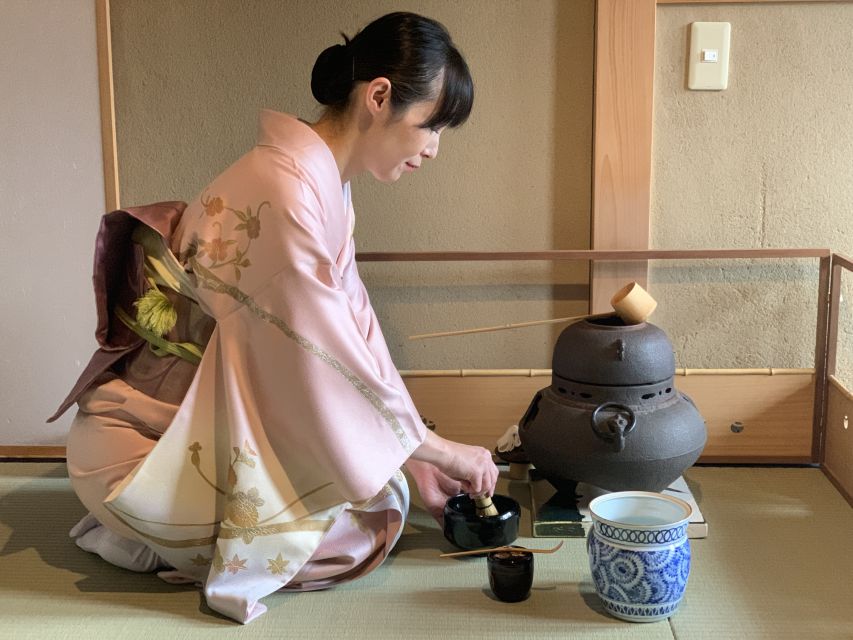
Kyoto’s tea ceremony is less about drinking a cup of green tea than watching a series of small, careful actions become a lesson in respect, harmony, and attention. In this 45-minute session, you see a formal demonstration, taste a seasonal sweet, and make your own frothy matcha with help from your host.
I like the hands-on whisking because it turns a quiet cultural lesson into something you can take part in. I also like the setting: a traditional machiya in Higashiyama, within easy walking distance of Kiyomizu-dera and Gion. The main drawback is practical rather than cultural: you may sit on the floor for much of the session, and the tea rooms are upstairs unless you book the wheelchair-accessible Garden Teahouse.
Key points at a glance
- A 45-minute introduction to matcha: You learn about tea utensils, room design, ceremony steps, and the role of seasonal sweets.
- You make your own bowl: The host guides you as you whisk Kyoto-grown matcha into a foamy drink.
- A traditional Higashiyama setting: The tea room sits down an alley near Ninenzaka, close to several major sights.
- Clear English instruction: Hosts such as Ikuko have explained the ceremony in calm, fluent English, with time for questions.
- Small-group and private options: A private booking is required if you plan to bring an interpreter or an infant under age three.
- Good value at $32: You get a cultural demonstration, a lesson, matcha, sweets, utensils, and personal guidance without spending half a day.
What this Kyoto tea ceremony actually offers
Many visitors arrive in Kyoto wanting more than temples and photographs. A tea ceremony gives you a closer look at the quiet rules behind Japanese hospitality. The appeal here is not a long formal course for aspiring tea masters. It is a compact introduction that explains what you are seeing and lets you try part of the process yourself.
The activity takes place at Camellia Tea Ceremony in the Higashiyama district. The meeting point is down a narrow alley branching from Ninenzaka’s main street. Head toward the Park Hyatt hotel, find the Studio Ghibli store opposite it, and look for the alley just to the left. This last detail matters. The entrance is not on the main road, so following the directions carefully will save you from wandering through the crowded lanes of Higashiyama.
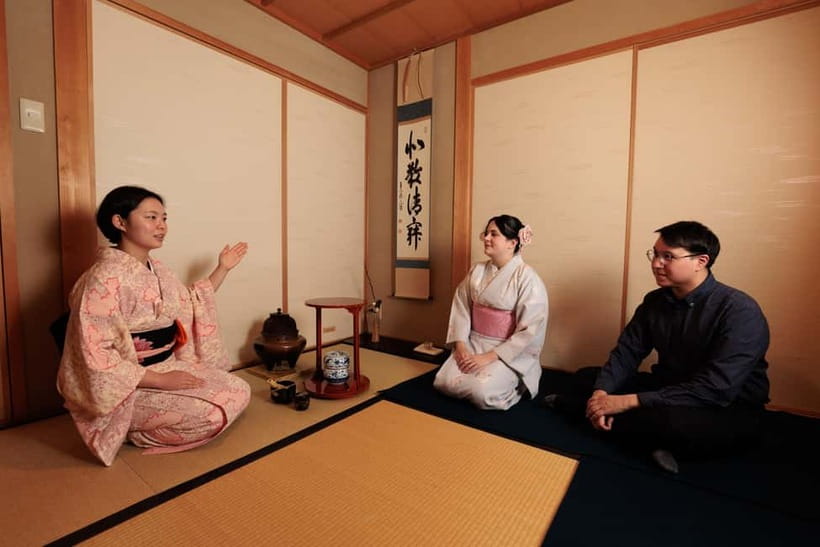
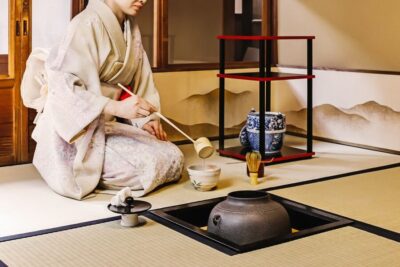
Inside, the host introduces the world of matcha before the ceremony begins. You learn about the tea-making tools, the order of the movements, and the way the room’s decoration affects the occasion. The explanation also gives you a basic sense of the three main tea ceremony schools, so you are not simply watching a series of unfamiliar gestures.
This early explanation is one of the best parts for first-time visitors. Without it, a tea ceremony can look beautiful but mysterious. With it, you begin to understand why the host handles each utensil with care and why the room itself matters.
More Tea Ceremonies in Kyoto
- Kyoto: Tea Ceremony in a Traditional Tea House in Kiyomizu
★ 4.9 · 3,519 reviews - Kyoto: Tea Ceremony Ju-An at Jotokuji Temple
★ 4.9 · 3,207 reviews - Kyoto: 45-Minute Tea Ceremony Lesson Experience
★ 4.3 · 2,378 reviews
The machiya setting in Higashiyama
The location makes this easy to add to a full day of sightseeing. The teahouse is a short walk from Kiyomizu-dera, Kodai-ji, Yasaka-jinja, Maruyama Park, Chion-in, and the Gion district. You can pair the ceremony with temple visits and time around Ninenzaka without arranging a separate cross-town trip.
The setting is a traditional machiya, a style of Kyoto townhouse associated with narrow frontage and deeper interiors. The activity information does not promise an elaborate historical house tour, so I would come for the tea room rather than expect a museum visit. Still, being in a traditional space adds useful context to the ceremony.
The narrow alley can be hard to spot at first. Clear directions are especially useful here, and the entrance has a sign. Staff may also come to the door to guide you inside. Give yourself a little extra time, particularly if you are arriving from a temple or moving through Ninenzaka’s busy lanes.
The teahouse is also well placed for a walk afterward. From the area, you can continue through Gion toward central Kyoto in about 25 minutes on foot. Buses run along Higashi Oji, about 10 minutes away, for those who would rather not walk.
The opening lesson: utensils, layout, and etiquette
The session starts with a short introduction to matcha and the tea ceremony. Your host explains the utensils used to prepare and serve the tea, then outlines the ceremony’s sequence. You also learn why the room’s decoration and layout are not random background details.
That explanation helps you notice the ceremony’s visual order. The tools are placed with purpose, and the host’s movements are measured rather than rushed. You are not expected to memorize every rule. The goal is to give you enough context to understand the gestures and appreciate the care behind them.
The English instruction is a real strength. Ikuko has led the session with clear explanations and patient help, and other hosts have been praised for friendly, fluent English. You can ask about matcha, Japanese culture, or the differences among the three tea ceremony schools.
The tone is informal enough for questions, but the demonstration still feels calm and precise. That balance suits most people better than a highly strict ceremony would. You get an introduction to the tradition without feeling that you need prior knowledge or perfect etiquette.
Watching the ceremony with a seasonal sweet
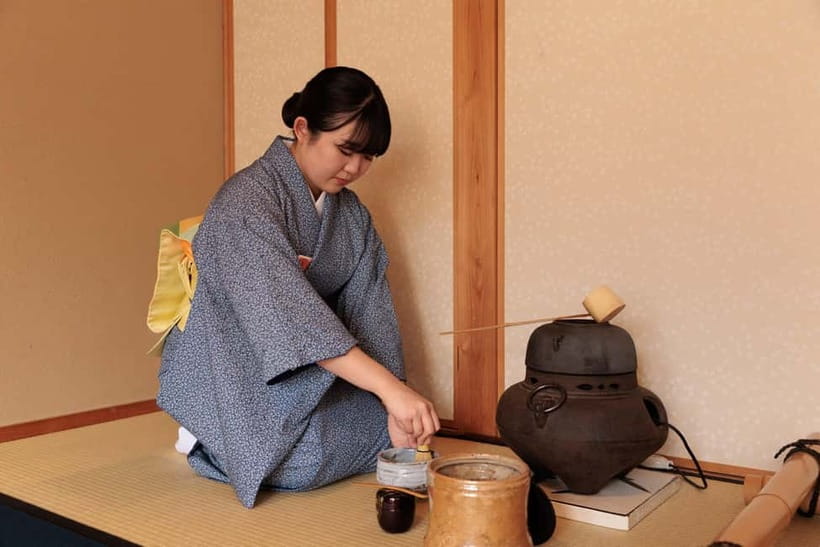
After the introduction, the host performs the tea ceremony. The demonstration lasts around 10 minutes, according to the activity details provided by one participant, and gives you time to watch the sequence without turning the session into a lecture.
You receive a traditional seasonal sweet alongside the matcha. This pairing is important. The sweet provides a contrast to matcha’s earthy, bitter flavor, and it gives you a small taste of how the tea is traditionally enjoyed. The sweets change with the season, so the exact item is not fixed.
This is the most tranquil part of the experience. The room grows quiet, and the host’s deliberate movements give you a chance to slow down after a morning of temples, buses, and crowded shopping streets. I would not book this expecting a large tasting menu or a full meal. The sweet is a small accompaniment, and meals are not included.
The host remains available for questions, which keeps the experience from becoming a performance you simply watch from the sidelines. You can ask about the ceremony’s symbolism, the history of matcha in Kyoto, or the tools being used.
Same city, a very different cup:
- Kyoto: Table-Style Tea Ceremony at a Kyo-Machiya
★ 4.9 · 1,211 reviews - Kimono Tea Ceremony at Kyoto Maikoya, NISHIKI
★ 5.0 · 911 reviews - Kyoto: Kimono Tea Ceremony at Orizuruya Gion
★ 4.9 · 618 reviews - Kyoto: Tea Ceremony in 100-year-old Kyo-Machiya Townhouse
★ 4.8 · 546 reviews
Making your own bowl of matcha
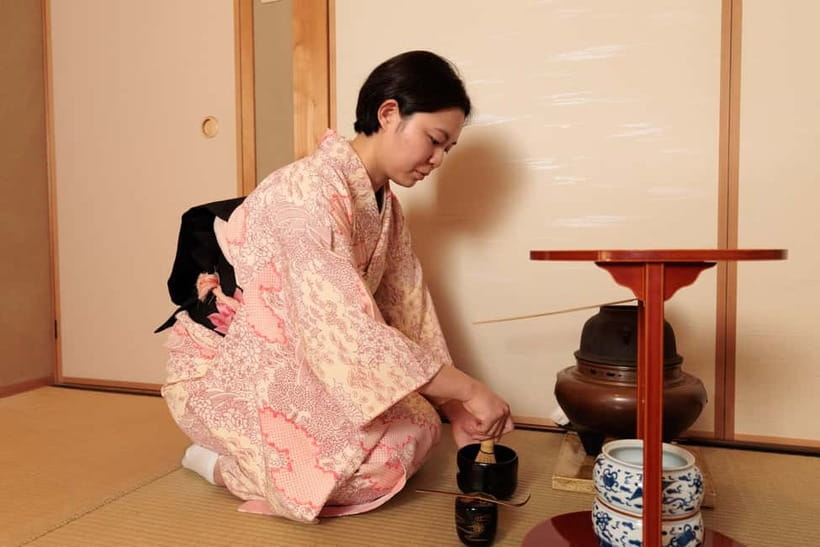
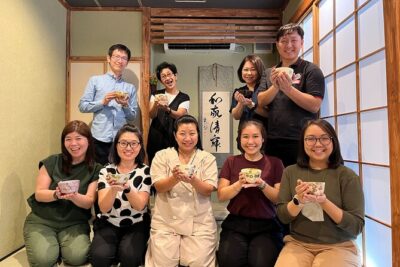
The practical highlight comes next. With guidance from your host, you prepare and whisk your own bowl of matcha. This is not training to become a tea master, and you do not learn every movement of the full formal ceremony. Instead, you learn the basic process of making a foamy bowl and then drink what you prepared.
That distinction is worth knowing before you book. One part of the session is a demonstration of the formal ceremony. Your hands-on portion focuses on making the tea, not reproducing the entire ritual from start to finish. For a 45-minute activity, this is a sensible choice. You get to participate without rushing through a long list of complex procedures.
Your host helps you create the foam, so you do not need to worry about producing a perfect bowl on your first try. The experience is friendly for beginners, including people tasting matcha for the first time. If you are used to sweetened tea, expect matcha to taste more bitter and earthy. The seasonal sweet helps balance it.
For tea lovers, this part offers a closer look at the physical work behind a drink that is often treated as a simple café item. You feel the difference between ordering matcha and preparing it with a bamboo whisk under instruction.
How much cultural insight fits into 45 minutes
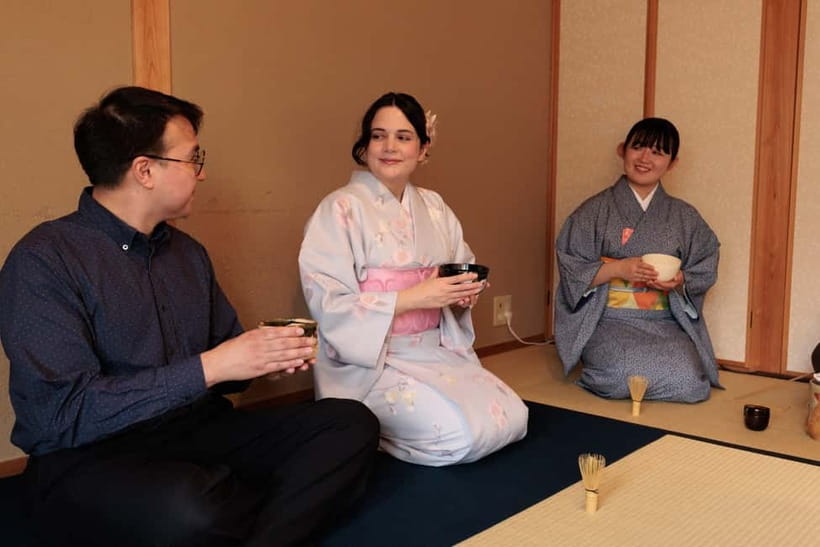
At $32 per person, the price is reasonable if you want a focused cultural activity rather than a long class. The fee includes matcha, a seasonal sweet, tea-making utensils, and a personal English-speaking instructor or host. You are paying for the setting, explanation, demonstration, and guided participation, not just for a cup of tea.
The 45-minute length is also a strength for a busy Kyoto schedule. You can fit it between temple visits or use it as a calm break during a day in Higashiyama. A longer ceremony might offer more detail, but it would also require more time and patience, especially for visitors who are new to the subject.
The experience has received a 4.8 out of 5 rating from 511 bookings, and the most consistent praise centers on the hosts’ explanations, kindness, and ability to make the ceremony feel peaceful without making it stiff. That pattern matches the design of the activity: the host teaches, demonstrates, answers questions, and then helps you prepare tea.
The value is strongest for first-time visitors to Japan, families with older children, couples, and anyone who wants cultural context without committing to a full-day workshop. If you already study tea ceremony or want to learn the complete formal procedure, this will feel more like an introduction than an advanced lesson.
Floor seating, photos, and kimono planning
You should plan for some floor sitting. One participant found the position uncomfortable after about 40 minutes, especially around the knees and lower body. The hosts understand that not everyone can sit formally and encourage you to make yourself comfortable. Chairs and tables are available for people who have difficulty sitting on the floor.
The tea rooms are upstairs. The Garden Teahouse is wheelchair accessible, so anyone with mobility concerns should choose that option when booking. It is better to arrange this in advance rather than assume the standard room will meet your needs.
Non-flash still photography is allowed during the workshop. Video recording is not permitted. This gives you a chance to take a few respectful photographs of the setting and your tea, but you should not plan to film the ceremony.
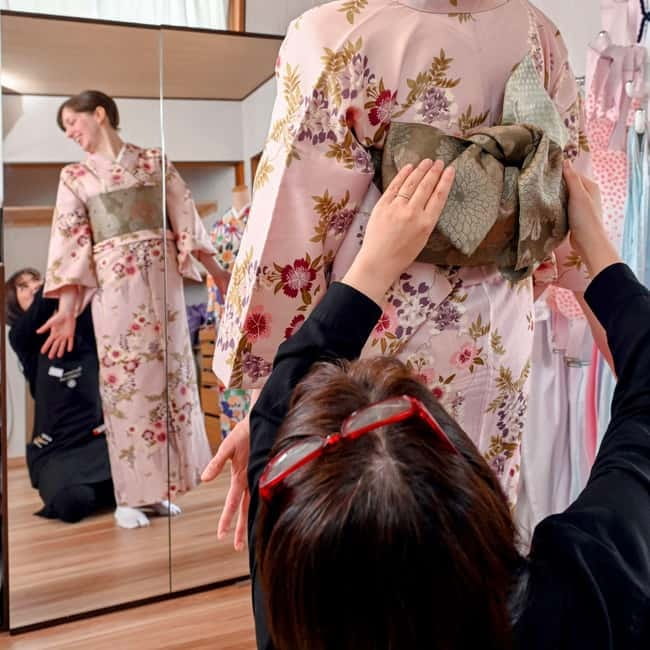
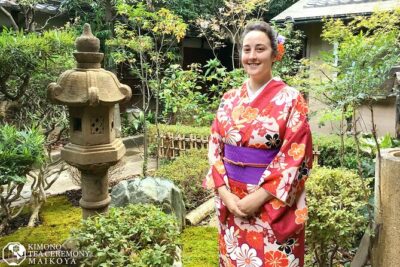
Kimono rental is not included. A rental shop is located next door or around the corner, depending on the arrangement, and several people have paired a kimono rental with the ceremony. If you want to wear one, arrange it before the tea session so you are not hurried. This can add a visual and cultural element, but the ceremony itself does not require traditional dress.
If you are coming with an interpreter, book a private ceremony so the interpretation does not interrupt other participants. The same applies if you are bringing a baby or infant under three years old. The provider asks those families to book a private ceremony at the Garden Teahouse.
Planning the rest of your Higashiyama day
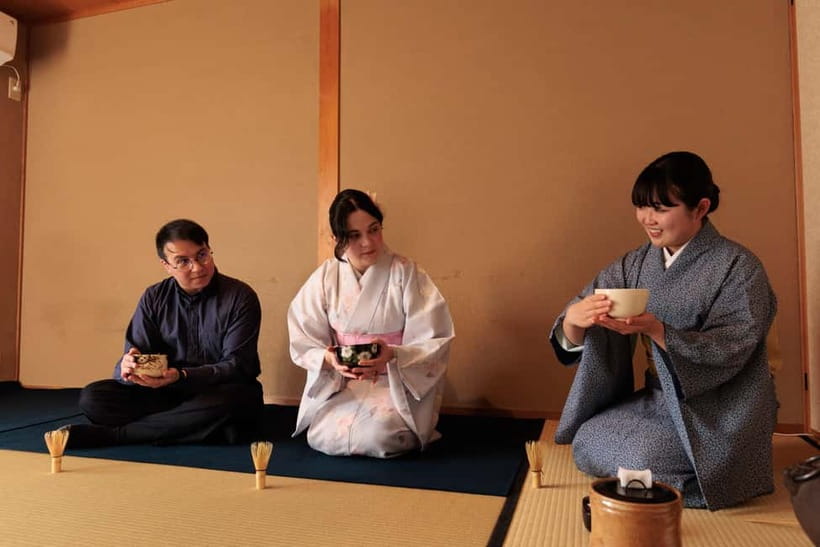
I would place this activity in the middle of a Higashiyama day rather than make it your only reason to visit the area. Start with Kiyomizu-dera, walk down through the Ninenzaka streets, attend the tea ceremony, and then continue toward Kodai-ji or Gion.
The timing works well because the ceremony provides a quiet pause in a district known for steep lanes, shops, and heavy foot traffic. It also gives you something to do beyond looking at historic buildings. You begin to understand one of the cultural practices that shaped the atmosphere of Kyoto.
Public transportation does not take you directly to the alley. Buses run along Higashi Oji, about a 10-minute walk from the teahouse. Central Kyoto is about a 25-minute walk through Gion if you have comfortable shoes and time to spare.
The activity offers private or small-group formats. A small group keeps the cost down and still leaves room for questions. A private session is the better choice if you need an interpreter, are traveling with a young infant, want more direct conversation, or prefer to set your own pace.
Who should book this experience?
Book it if you want a clear, approachable introduction to Japanese tea ceremony. It is especially useful if you have wondered why matcha is prepared with such care, or if you want a cultural activity that is shorter and quieter than a major sightseeing stop.
You will also appreciate it if you enjoy learning through demonstration. The host does not simply hand you tea and sweets. You see the ceremony, hear what each part means, and then prepare your own bowl.
I would think twice if you dislike floor seating, have very limited time in Kyoto, or expect a full formal ceremony that you can perform yourself. The standard tea rooms are upstairs, and the activity does not include meals, hotel transport, or kimono rental.
For most visitors, the combination of location, price, English instruction, and hands-on preparation makes this a strong small-scale experience. The calm setting and patient hosts are the real reason to book, while the proximity to Kyoto’s major sights makes the logistics easy.
Final verdict: a smart 45-minute Kyoto cultural stop
I recommend the Camellia Tea Ceremony for anyone who wants more than a quick matcha drink but less than an intensive tea course. At $32, you receive a thoughtful introduction, seasonal sweets, a demonstration, and the chance to whisk your own tea in a traditional Higashiyama setting.
Book it as part of a day around Kiyomizu-dera and Ninenzaka. Choose a private session for an interpreter, a child under three, or extra flexibility. If you can manage the floor seating and understand that this is an introduction rather than complete tea-master training, it offers a peaceful and worthwhile look at one of Kyoto’s defining traditions.
FAQ
How long does the Kyoto tea ceremony experience last?
The experience lasts 45 minutes.
How much does the tea ceremony cost?
The listed price is $32 per person.
Is the experience conducted in English?
Yes. The instructor and host language is English.
What is included in the booking?
Matcha, a traditional seasonal sweet, tea-making utensils, and a personal instructor or host are included.
Where does the tea ceremony take place?
It takes place at a traditional machiya in Kyoto’s Higashiyama district, down an alley branching from Ninenzaka. The easiest landmark is the Park Hyatt hotel. Opposite it is a Studio Ghibli store, and the alley is just to the left.
Can I make my own matcha?
Yes. After watching the demonstration, you make and whisk your own bowl of matcha with guidance from the host.
Is photography allowed?
Non-flash still photography is allowed. Video recording is not permitted.
Are chairs available, and is the venue wheelchair accessible?
Chairs and tables are available for people who have difficulty sitting on the floor. The Garden Teahouse is wheelchair accessible, while the standard tea rooms are upstairs.
Fresh tea listings around Kyoto
- Cycling Tour at Uji’s Matcha Green Tea Fields and Heritage★ 5.0 · 10 reviews
- Authentic Tea Ceremony & Sushi in The Museum of Kyoto★ 5.0 · 3 reviews
- Kyoto Hidden Riverside Zen Mediation and Uji Matcha Experience★ 5.0 · 9 reviews
- Whisk Your Own Matcha: A Zen Matcha Experience at Temple★ 3.6 · 7 reviews
- Kyoto: Nighttime Zen Meditation and Matcha Tea Experience★ 5.0 · 7 reviews
- Kyoto Fushimiinari:Wagashi Making & Small Group Tea Ceremony★ 5.0 · 14 reviews
- 2 Types of Japanese Sweets making and Tea Ceremony★ 4.6 · 17 reviews
- Matcha Grinding Experience and Walking Tour in Uji Kyoto★ 5.0 · 26 reviews
Tea Ceremony Experiences, compared.
Kyoto: Tea Ceremony in a Traditional Tea House in Kiyomizu
Read our review →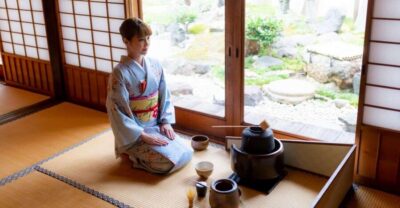
Kyoto: 45-Minute Tea Ceremony Lesson Experience
Read our review →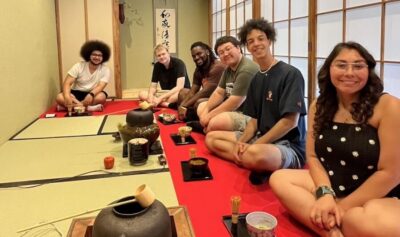
Kyoto: Table-Style Tea Ceremony at a Kyo-Machiya
Read our review →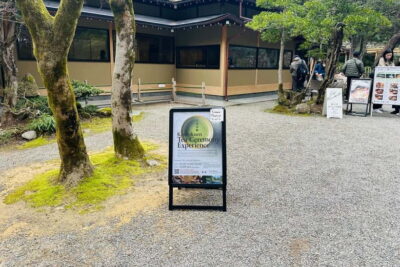
Browse the lists this tour appears in