
Review · KIMONO & TEA CEREMONY
Kimono Tea Ceremony at Kyoto Maikoya, NISHIKI
The best part of this Kyoto experience happens before the tea is even poured: you choose a kimono, have it fitted properly, and settle into the look with simple hairstyling and accessories. Then your host leads you through a traditional tea ritual on tatami mats, explaining what each movement means and letting you make your own matcha.
I like the hands-on format and the convenient Nishiki location. You are not just watching someone prepare tea. You learn the steps, handle the utensils, and drink the matcha with wagashi sweets. I also like the warm, practical welcome, including help with dressing, hair, photographs, and questions. Hosts such as Sono have been praised for making the history easy to follow.
The main consideration is the group size. Although bookings through one platform are limited to two people, the ceremony itself may include a larger group, sometimes around 8 to 12 people. That can make the room less private, though it also gives the experience a friendly international feel.
Key points to know before you book
- Kimono dressing comes first: Staff help you choose and put on a traditional kimono, with simple hairstyling for women.
- You make your own matcha: The host explains the utensils and guides you through the preparation step by step.
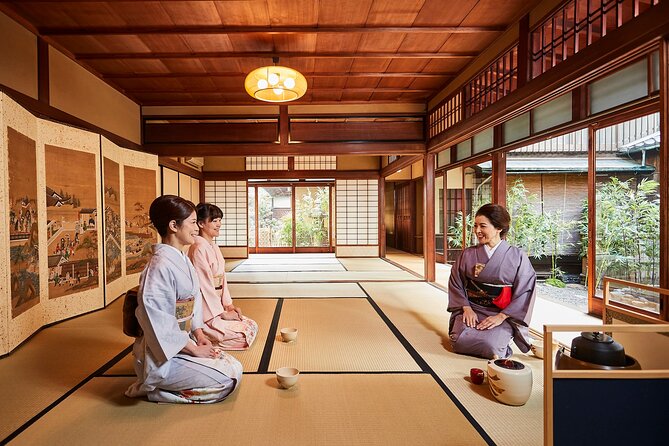
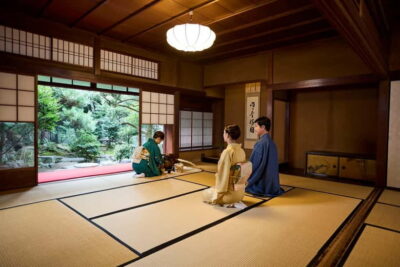
- The ceremony takes place on tatami: You sit in the Japanese style while learning the customs, history, and meaning behind the ritual.
- Nishiki keeps the outing easy: The meeting point is in central Kyoto and close to public transportation.
- The experience lasts about 90 minutes: Morning and afternoon times make it easy to fit around sightseeing.
- Children under seven cannot enter: Every person in your party must meet the age requirement.
Choosing a Kimono in Central Kyoto
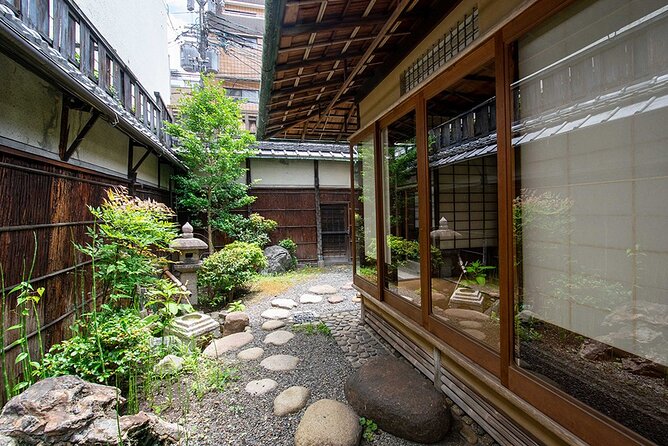
Your appointment begins at Kimono Tea Ceremony MAIKOYA Nishiki, at 329 Ebiyacho on Gokomachi-dori, Sanjo sagaru. You make your own way there, so allow time to find the address and arrive ready for the dressing process. Hotel pickup and transportation are not included.
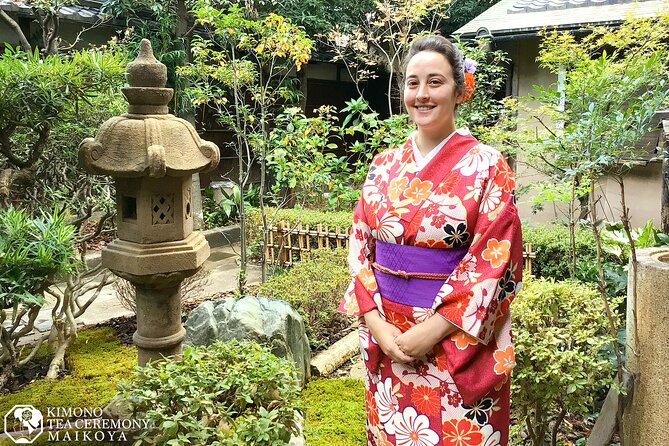
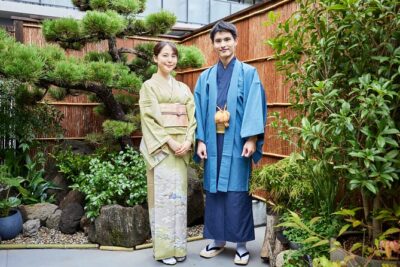
The kimono selection is a big part of the appeal. Staff help you choose from the available designs and then dress you properly, rather than simply handing you a robe to put on over your clothes. This matters because the finished look is part of the cultural experience, not just a costume for a quick photograph.
The dressing process also gives you a chance to slow down. Kyoto sightseeing can become a steady march between temples, shops, and train stations. Here, you pause while the staff arrange the clothing and accessories. Women receive a simple hairstyle, often finished with decorative flowers or other hair pieces. A small purse is available for valuables, which is useful because a kimono does not offer convenient pockets.
You should expect the clothing to feel more fitted and structured than everyday clothes. The experience is designed for sitting and taking part in the ceremony, but you may not find it as relaxed as wearing a loose shirt and trousers. If you are sensitive to tight clothing or prefer a quick activity, the dressing stage may feel long. If you enjoy photographs and traditional details, it is one of the strongest parts of the visit.
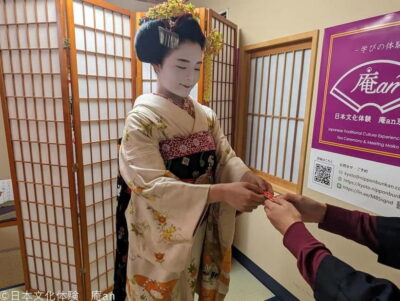
There is also time for photographs, including in a garden area. Staff may help take pictures, so you do not need to rely only on selfies. Bring a little patience during this stage, since the staff must prepare several people and keep the ceremony on schedule.
More Kimono and Tea Ceremonies in Kyoto
- Kyoto: Kimono Tea Ceremony at Orizuruya Gion
★ 4.9 · 618 reviews - KYOTO Tea Ceremony with kimono near by Imamiya Jinjya Shrine
★ 5.0 · 343 reviews - Kyoto: Kimono and Tea Ceremony Experience at Cultural Asset
★ 4.3 · 306 reviews
Sitting on Tatami for the Tea Ceremony
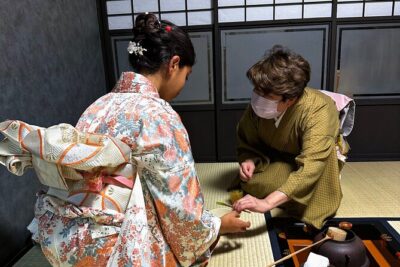
Once you are dressed, you take a seat on tatami flooring in a traditionally decorated tea room. The ceremony is not presented as a silent performance that you simply observe. Your host explains the background and guides you through the purpose of the room, the utensils, and the order of the actions.
The tea ceremony is built around care, attention, and respect. A bowl is not just a container, and the movements are not random. The host helps you understand why the preparation is performed in a careful way, giving the ritual more meaning than a simple cup of green tea.
The session is also a useful introduction for anyone who has seen tea ceremonies in photographs but found them hard to understand. You learn by watching the host first and then following the instructions. The explanations cover the customs and history connected with the ceremony, along with details about Kyoto and the origins of tea traditions.
Hosts are an important part of the experience. Sono, named in one especially positive account, is described as funny and welcoming while still explaining the process clearly. Other hosts are praised for their easy-to-follow presentations and friendly manner. Since the exact host can vary, expect a guided cultural lesson rather than a performance by one fixed person.
Some sessions may include a brief meditation element. This is not listed as a separate part of every booking, so you should treat it as a possible addition rather than a guarantee. When included, it adds a quiet pause before or during the tea lesson.
Making Matcha Instead of Just Watching
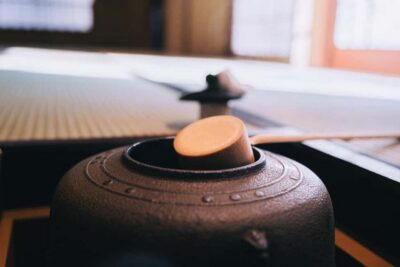
The most interactive section comes when you prepare your own matcha. Your host introduces the utensils and shows you how to mix the powdered green tea. You then follow the method yourself, with guidance available as you work.
This hands-on step gives the ceremony a practical edge. You leave with a better sense of the effort behind the smooth, foamy drink served in a tea room. It also makes the activity work well for families with older children, couples, and anyone who prefers doing something rather than sitting through a lecture.
The tea is served with wagashi, the small Japanese sweets traditionally paired with matcha. The sweetness balances the tea’s earthy, slightly bitter flavor. The portion is a snack, not a meal, so plan to eat elsewhere if you are hungry.
Matcha has a distinct taste, and not everyone enjoys it on the first sip. The sweets help, but you should not book this expecting a sweet café drink. The point is to learn the preparation and the custom of serving it, as well as to taste the tea itself.
Why the Nishiki Location Works Well
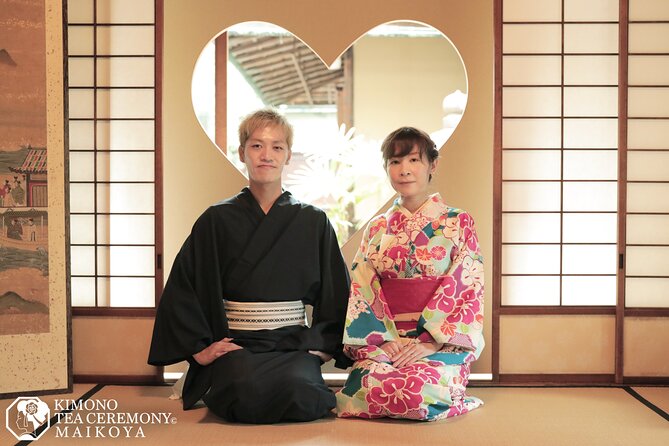
Maikoya Nishiki is in central Kyoto, near public transportation and the Nishiki area. That makes this a practical addition to a day spent around downtown Kyoto. You can combine it with shopping, food stops, or a walk through the surrounding streets, though the tea ceremony itself ends back at the meeting point.
The central location also helps if you are working with a tight schedule. At about one hour and 30 minutes, the experience is long enough to include dressing, photographs, instruction, tea preparation, and sweets without taking up half a day. Morning and afternoon options give you flexibility around temples or other reservations.
The tradeoff is that this is an urban venue, not a secluded countryside tea house. The focus is on access and a complete cultural introduction in one place. If you want a private ceremony in a historic villa or a highly formal tea gathering, this may feel more visitor-friendly and less ceremonial. If you want a manageable first taste of the tradition, the location and timing work in its favor.
More Tea Ceremonies in Kyoto
- Kyoto: Tea Ceremony in a Traditional Tea House in Kiyomizu
★ 4.9 · 3,519 reviews - Kyoto: Tea Ceremony Ju-An at Jotokuji Temple
★ 4.9 · 3,207 reviews - Kyoto: 45-Minute Tea Ceremony Lesson Experience
★ 4.3 · 2,378 reviews - Kyoto: Table-Style Tea Ceremony at a Kyo-Machiya
★ 4.9 · 1,211 reviews
Understanding the Group Size
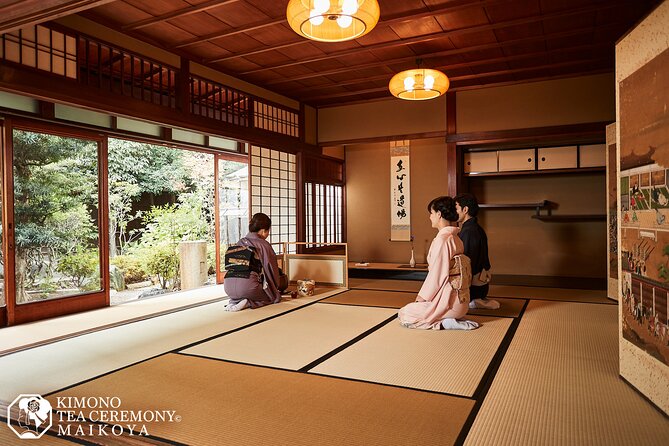
The booking information creates an important distinction. You can reserve a maximum of two people through Viator, but the activity provider may accept bookings from other sites, and the ceremony can include more participants. The stated maximum on the activity information is two travelers, yet accounts of the actual ceremony describe groups of roughly 8 to 12 people.
In practical terms, do not assume that booking for two guarantees a private appointment. You may share the tea room with people from several countries. That can reduce the quiet, intimate feeling of the ceremony, especially during photographs and questions.
On the other hand, a mixed group can make the experience more social. You are learning the same custom alongside people from different backgrounds, which suits the welcoming, introductory nature of the activity. If privacy is essential, confirm the current group arrangement before paying.
The dressing stage may also feel organized around a schedule. Staff need to prepare everyone, so there is a system to the process. That is not necessarily a flaw, but it means this is a polished cultural activity rather than an unhurried private appointment.
Is the $65.66 Price Good Value?
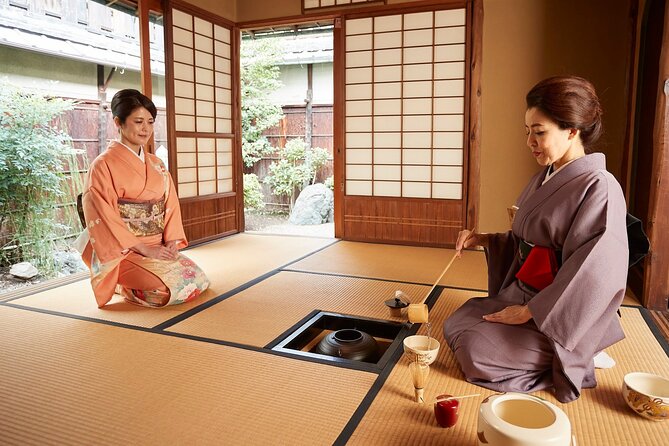
At $65.66 per person, the price covers more than a tea tasting. You receive the kimono costume, dressing assistance, simple hairstyling, green tea, utensils, wagashi snacks, and the guided ceremony. You also get access to a traditional setting and time for photographs.
I consider that a fair price if you would otherwise pay separately for kimono rental and a tea ceremony. Combining both saves you the trouble of finding a rental shop, changing locations, and returning clothing before your next activity. The staff support is also important. Putting on a kimono correctly is not as simple as slipping on a jacket, especially if you want the finished appearance to look right.
The value is weaker if your main goal is simply to drink matcha. You can find tea more cheaply elsewhere, and the snack is small. You are paying for the cultural explanation, clothing, hairstyling, setting, and guided participation.
The price also makes sense for a first visit to Kyoto when you want one compact activity that covers several aspects of Japanese culture. It is less suited to someone who already has extensive experience with tea ceremony and kimono dressing, unless you particularly want another setting or a second chance to practice the ritual.
Who Will Enjoy This Most?
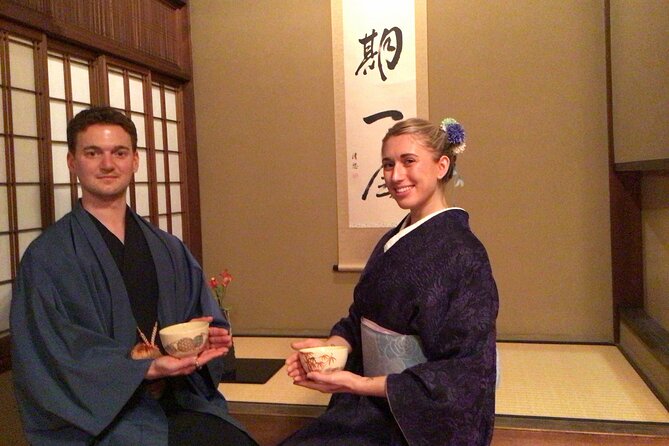
I would recommend this experience to first-time visitors who want a clear introduction without committing to a full day of cultural activities. You get enough explanation to understand the basics, and you take part rather than simply watching.
It also suits:
- Couples who want photographs in traditional clothing
- Families with children aged seven and older
- Solo visitors who enjoy small cultural classes
- Anyone interested in Kyoto customs, tea, or Japanese clothing
- People who want a morning or afternoon activity near central Kyoto
The experience may not suit you if you dislike sitting on the floor. The ceremony takes place on tatami, and the Japanese sitting position may be uncomfortable for some people. The activity also requires a little patience during dressing and photographs.
Children under seven cannot enter the venue. If one person in your party is younger than seven, the reservation cannot be made for the group. Keep that rule in mind before booking adjoining activities or arranging childcare.
Timing, Weather, and Cancellation Details
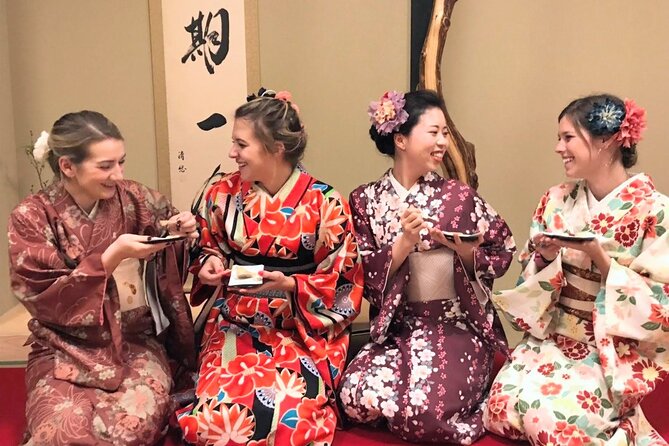
You can choose a morning or afternoon start, which makes it easy to fit the ceremony around sightseeing. The full activity lasts approximately 90 minutes and ends at the same place where it begins.
Confirmation is provided when you book, and the venue is near public transportation. You are responsible for reaching the meeting point because pickup and drop-off are not included.
Free cancellation is available up to 24 hours before the start time for a full refund. Cancellations or changes made within 24 hours are not accepted for a refund. The stated cut-off uses local Kyoto time.
The experience requires good weather. If poor weather causes the provider to cancel, you can choose another date or receive a full refund. Since the ceremony is indoors, the weather rule may relate to the wider operation or the outdoor photo area, so check your confirmation if conditions look poor.
Should You Book the Kimono Tea Ceremony?
Book it if you want a friendly, well-organized introduction to two recognizable parts of Japanese culture in one visit. The combination of kimono dressing, hairstyling, photographs, matcha preparation, wagashi, and clear explanations gives you plenty for the 90-minute price.
I especially like that you make the tea yourself. That small action changes the experience from a staged photo stop into a lesson you can remember and repeat. The central Nishiki location and flexible timing are also strong advantages.
Think twice if you want a private or highly formal ceremony. Group size can vary, and the setting is designed for an accessible cultural introduction rather than a rarefied tea gathering. For most first-time visitors to Kyoto, though, the activity offers a practical way to learn, dress up, and take home more than a few good photographs.
FAQ
Where does the Kimono Tea Ceremony take place?
It takes place at Kimono Tea Ceremony MAIKOYA Nishiki, located at 329 Ebiyacho, Gokomachi-dori Sanjo sagaru, in Kyoto. The activity ends at the same meeting point.
How long does the experience last?
The experience lasts approximately 1 hour and 30 minutes, including kimono dressing, hairstyling, photographs, the tea lesson, matcha preparation, and sweets.
What is included in the price?
The price includes a kimono costume, simple hairstyling, green tea, tea utensils, and snacks consisting of wagashi sweets. Transportation and hotel pickup are not included.
Can I choose a morning or afternoon time?
Yes. The experience offers morning and afternoon timing options.
Can children join the ceremony?
Children under seven cannot enter the tea ceremony venue. If your party includes a child under seven, you cannot make a reservation for this experience.
Will the ceremony be private?
You should not assume it will be private. A booking through Viator is limited to two people, but the provider accepts bookings through other sites, and the ceremony may include additional participants. Group size can be around 8 to 12 people.
What is the cancellation policy?
You can cancel up to 24 hours before the experience starts for a full refund. Cancellations or changes made less than 24 hours before the start time are not refunded. If poor weather causes the provider to cancel, you will be offered another date or a full refund.
Fresh tea listings around Kyoto
- Kyoto: Nighttime Zen Meditation and Matcha Tea Experience★ 5.0 · 7 reviews
- Kyoto Fushimiinari:Wagashi Making & Small Group Tea Ceremony★ 5.0 · 14 reviews
- 2 Types of Japanese Sweets making and Tea Ceremony★ 4.6 · 17 reviews
- Kyoto Hidden Riverside Zen Mediation and Uji Matcha Experience★ 5.0 · 9 reviews
- Whisk Your Own Matcha: A Zen Matcha Experience at Temple★ 3.6 · 7 reviews
- Matcha Grinding Experience and Walking Tour in Uji Kyoto★ 5.0 · 26 reviews
- Kyoto Matcha Green Tea Tour★ 4.7 · 28 reviews
- Kyoto: Traditional Tea Ceremony with Matcha & Sweets in Gion★ 4.9 · 27 reviews
Kimono & Tea Ceremony, compared.
KYOTO Tea Ceremony with kimono near by Imamiya Jinjya Shrine
Read our review →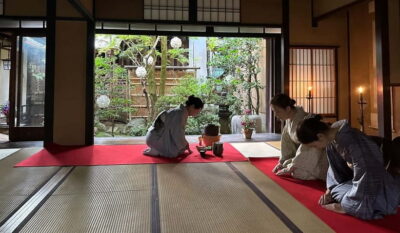
Kyoto: Kimono and Tea Ceremony Experience at Cultural Asset
Read our review →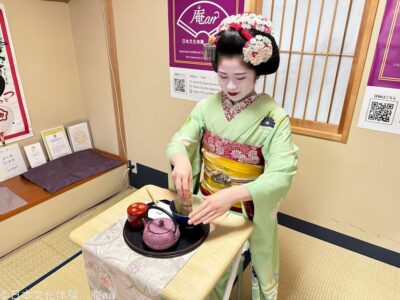
Kyoto: Kimono Tea Ceremony with Matcha and Sweet
Read our review →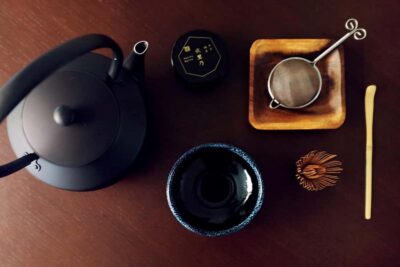
Browse the lists this tour appears in