
Review · KIMONO & TEA CEREMONY
Kyoto: Kimono and Tea Ceremony Experience at Cultural Asset
Tondaya gives you something many Kyoto activities cannot: a chance to enter a 140-year-old machiya and take part in traditions inside the building itself. You dress in a silk kimono, see the house and gardens, then watch a tea master prepare matcha in a room shaped by old Kyoto life.
I like the generous time for photographs and the staff’s warm, patient approach. I also like that the tea ceremony is explained instead of treated as a silent photo opportunity. The setting feels far more meaningful than a rented studio.
The main drawback is crowding during standard group sessions. The ceremony can lose some calm when people arrive late, whisper, film, or need chairs, so a private booking is worth considering if you want quiet and more personal attention.
Key points to know before you book
- A real machiya setting: Tondaya is a nationally registered cultural property with traditional woodwork, gardens, and historic objects.
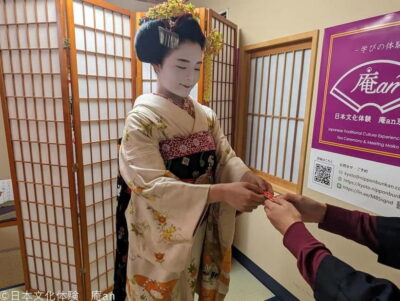
- Silk kimono dressing: Staff help you choose and put on a high-quality kimono, with time afterward for photographs.
- Tea ceremony with context: A seasoned tea master demonstrates the ritual and explains what is happening.
- Group size affects the mood: Standard sessions may feel crowded, while a private option offers a calmer visit.
- Bring socks: Bare feet are not allowed, and stockings are discouraged.
- Budget about $222 per person: The price is high, but it covers the setting, kimono dressing, house visit, and ceremony rather than a simple costume rental.
Entering Tondaya, an old Kyoto townhouse
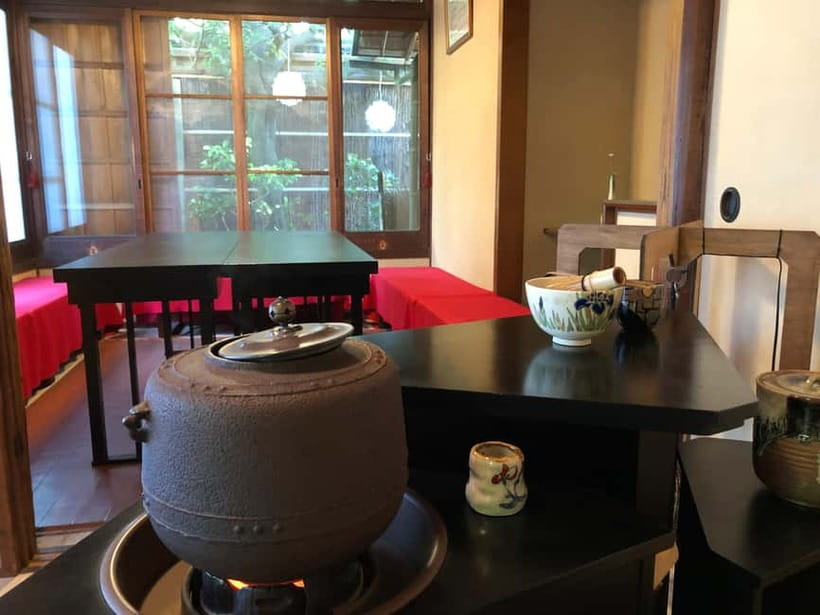
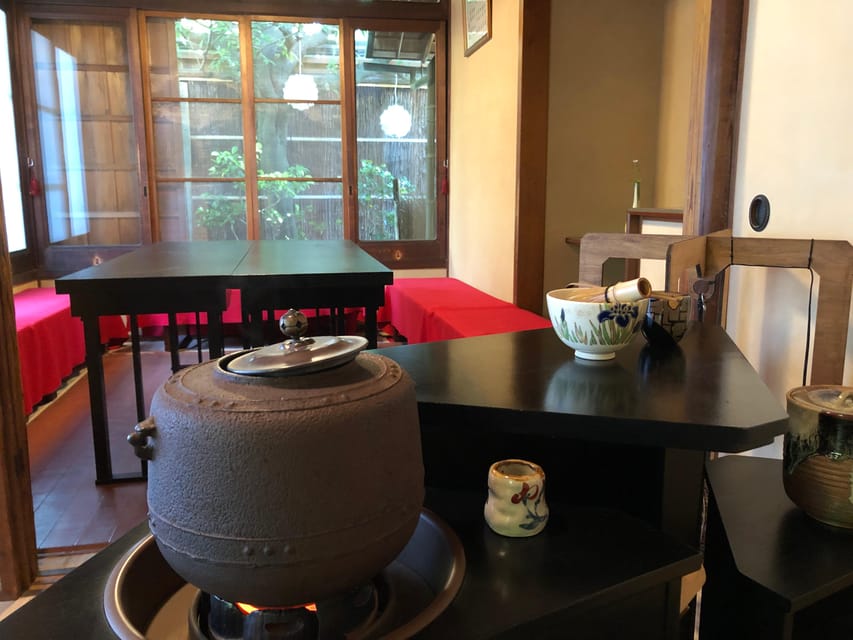
Your visit begins at Tondaya, located at 697 Ishiyakuchicho in Kyoto’s Kamigyo Ward. This is not a modern attraction built to look old. It is a traditional machiya, a narrow Kyoto townhouse with carefully made wooden details, inner gardens, and rooms that preserve the feel of an earlier city.
That setting is the main reason to choose this activity. You are not simply putting on a kimono in a plain changing room. You are moving through an actual historic property, with photographs and objects that give the building a sense of daily life and family tradition.
The house tour adds useful context. Staff explain the building, its cultural importance, and some of the traditional arts connected with it. English ability varies from one staff member to another, so explanations may come through direct English, Japanese, or a translation device. I would not book this expecting a long academic lecture, but you should receive enough guidance to understand what you are seeing.
The atmosphere can shift depending on the day. Some sessions feel calm and personal. Others include several groups moving through the house at once. The property remains attractive, but crowded rooms make it harder to appreciate the woodwork and gardens quietly.
More Kimono and Tea Ceremonies in Kyoto
- Kimono Tea Ceremony at Kyoto Maikoya, NISHIKI
★ 5.0 · 911 reviews - Kyoto: Kimono Tea Ceremony at Orizuruya Gion
★ 4.9 · 618 reviews - KYOTO Tea Ceremony with kimono near by Imamiya Jinjya Shrine
★ 5.0 · 343 reviews
Kimono dressing in about five minutes
The kimono portion starts in a dedicated dressing room. Staff help you select a garment and fit it properly, with the dressing itself described as taking about five minutes. That speed is useful if you have limited time, though it also means this is not a full lesson in how to dress yourself.
The kimonos are made of silk and photograph beautifully against the old house. You should expect the available styles and sizes to vary. Taller participants may receive larger garments in simpler solid colors, while smaller sizes may offer more printed designs. One visitor found the fit less than ideal, so tell the staff if the robe feels loose, tight, or awkward before leaving the dressing area.
You will not be able to take photographs while being dressed or undressed. That is sensible for privacy and helps the staff work quickly. Once you are ready, the house and gardens provide plenty of places for your own photographs.
I like that the hosts often help with pictures. You can ask them to take photos, and the building supplies a much better background than a plain rental shop. Give yourself time to pose in different rooms and garden areas instead of rushing through a few phone snapshots.
The experience focuses on wearing the kimono, not on hair styling or makeup. Those services are not included. You should also wear a top that is not tight around the neck, since the collar and neckline are part of the finished look.
There is one practical warning that matters more than it sounds: do not arrive in a wet T-shirt. Staff cannot dress you while it is wet, so bring a dry shirt if you expect to be coming from a hot walk or rainy outing. The activity also requires socks. Bring your own, and avoid stockings.
A tea ceremony in a traditional room
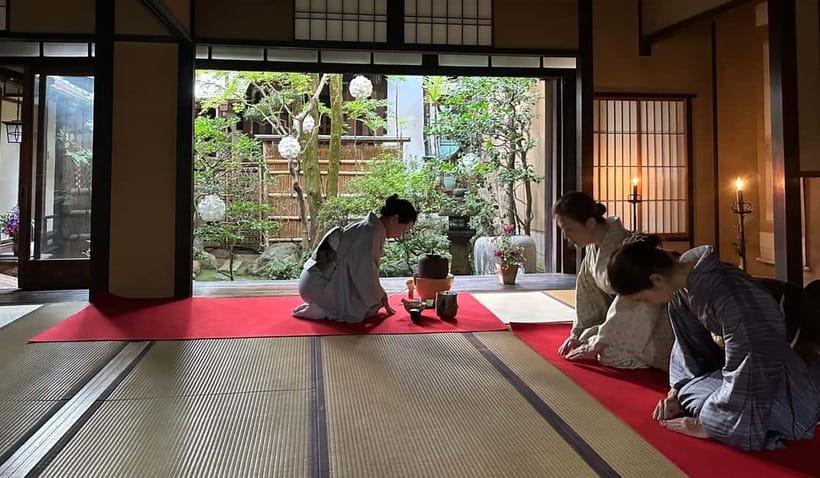
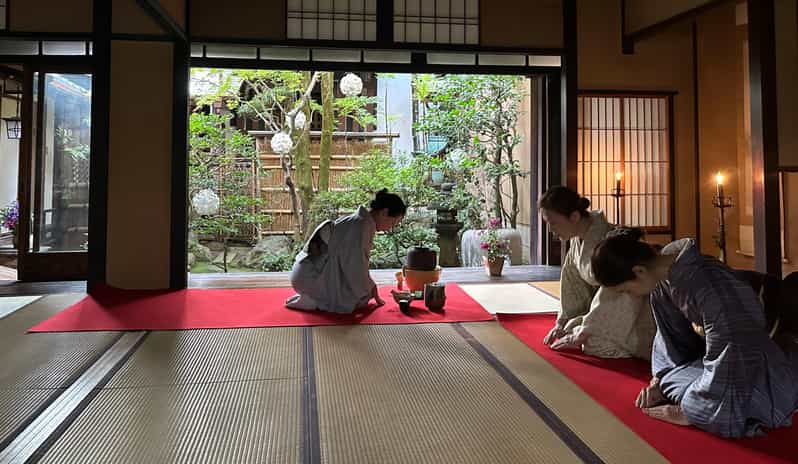
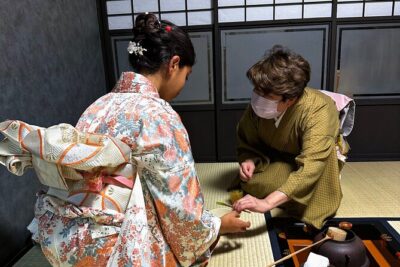
After dressing, you attend a Japanese tea ceremony led by a seasoned tea master. The ceremony is usually simple and carefully paced, with the host explaining the movements, the utensils, and the meaning behind the ritual.
This is a demonstration and cultural lesson rather than a hands-on tea workshop. You may not get to whisk the matcha yourself. One participant specifically wished for the chance to mix the tea, so book this for the chance to watch and learn, not for a full cooking-style activity.
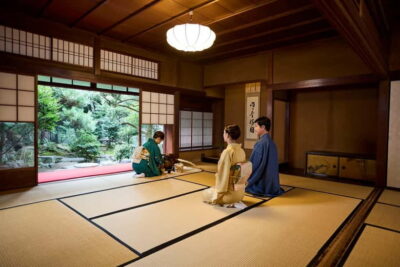
The best part is the setting. Tea ceremony is often presented in a plain room designed for visitors, but here you sit inside a historic machiya. The old walls, floor seating, and quiet details make the ritual easier to understand as a part of Japanese culture rather than a staged performance.
You may sit on the floor, though a few small chairs are available. If kneeling or sitting low is difficult for you, ask about a chair when you arrive. The ceremony is fairly brief, which many people appreciate, but some participants may feel the explanation is too short for the price.
Please treat this part of the visit with care. Turn off your phone or put it away. Do not speak over the tea master, and wait for the appropriate time to take photographs. The ceremony depends on stillness, and other people’s careless filming can affect the whole room.
Language is the most variable part of the activity. Some hosts explain the ceremony clearly in English. Others have limited English and use a translation app or device. Staff are generally willing to help, but you should allow extra patience and avoid expecting every detail to be delivered in fluent English.
Photographing the gardens and old rooms
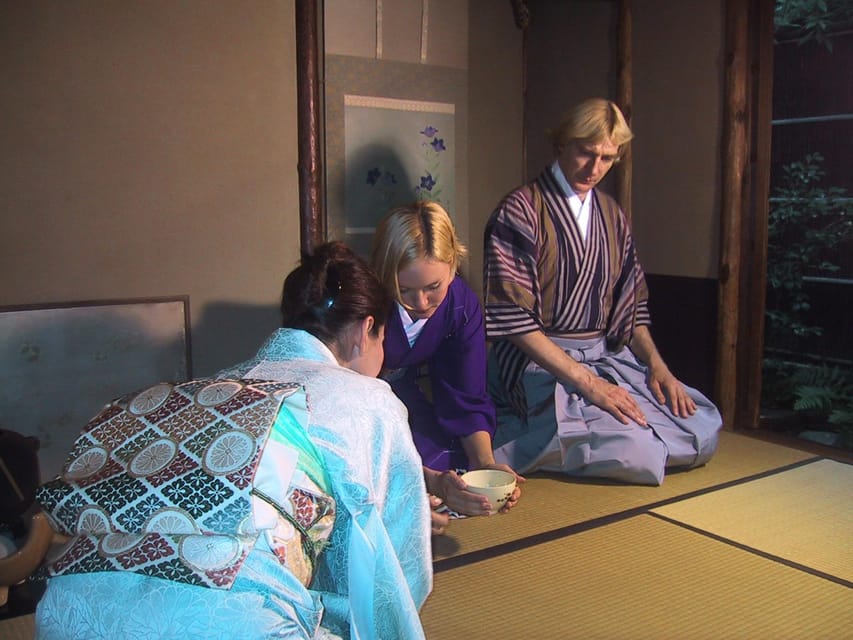
The photo time is one of the strongest reasons to book this experience. The kimono, woodwork, gardens, and traditional rooms work together in a way that gives your photographs a real sense of place.
You have time to take your own pictures after the ceremony and house visit. Staff can also take photos for you, which helps couples and solo visitors avoid relying only on selfies. The atmosphere can be especially attractive when the house is quiet.
Do not expect every picture to look private. During busy sessions, other participants may appear in the background, and several groups may be waiting for the same attractive corner. If you want a more relaxed photo session, choose the private option if available for your date.
The setting is also useful for families and friends who want a shared memory without spending a full day at a formal cultural performance. The activity keeps the schedule fairly compact, with total duration listed from 90 minutes to four hours depending on the selected format and timing.
More Tea Ceremonies in Kyoto
- Kyoto: Tea Ceremony in a Traditional Tea House in Kiyomizu
★ 4.9 · 3,519 reviews - Kyoto: Tea Ceremony Ju-An at Jotokuji Temple
★ 4.9 · 3,207 reviews - Kyoto: 45-Minute Tea Ceremony Lesson Experience
★ 4.3 · 2,378 reviews - Kyoto: Table-Style Tea Ceremony at a Kyo-Machiya
★ 4.9 · 1,211 reviews
Group sessions, private visits, and the pace of the day
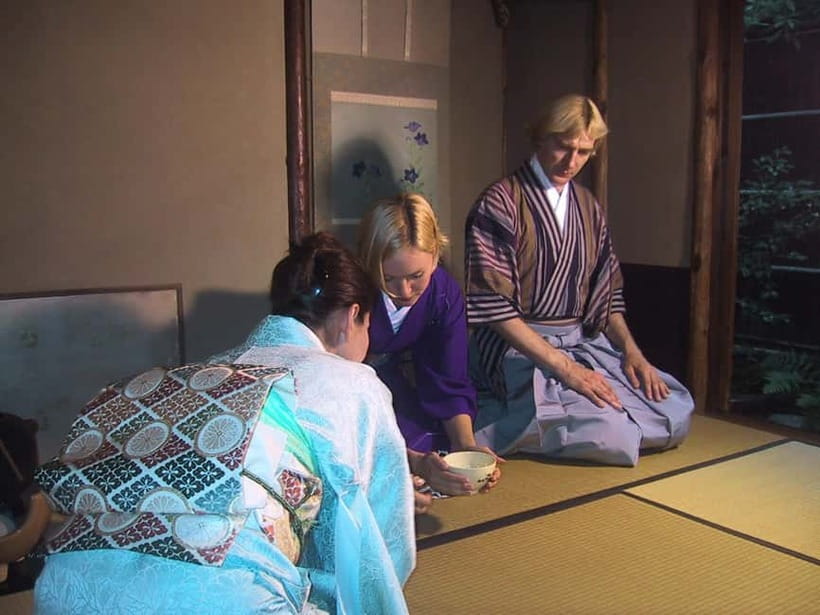
The standard experience is conducted with other participants. That detail matters. The tea ceremony may include a sizable group, and you may need to wait while others are dressed, photographed, or guided through the property.
A group can bring energy and make the activity feel less formal, but it can also create noise. Some sessions have been described as chaotic, with late arrivals, people asking for chairs during the ceremony, or visitors continuing to use their phones. None of this reflects the hosts’ effort, but it can change the mood.
I would choose the private option if you value quiet, have a special celebration, want more time for questions, or care strongly about photographs without other people nearby. A private session also makes it easier to ask about the kimono, tea utensils, and building without worrying about holding up a group.
The private option costs more, so it is not automatically the best value for every visitor. If your main goal is to wear a kimono and take attractive photographs in a historic house, the standard session may be enough. If the ceremony itself is the main reason you are booking, the smaller setting is more appealing.
Arrive on time. Early arrival may help you get settled, but do not assume staff can begin the full experience well before your scheduled time. The dressing process and group flow depend on the booking schedule.
What the $222 price really covers
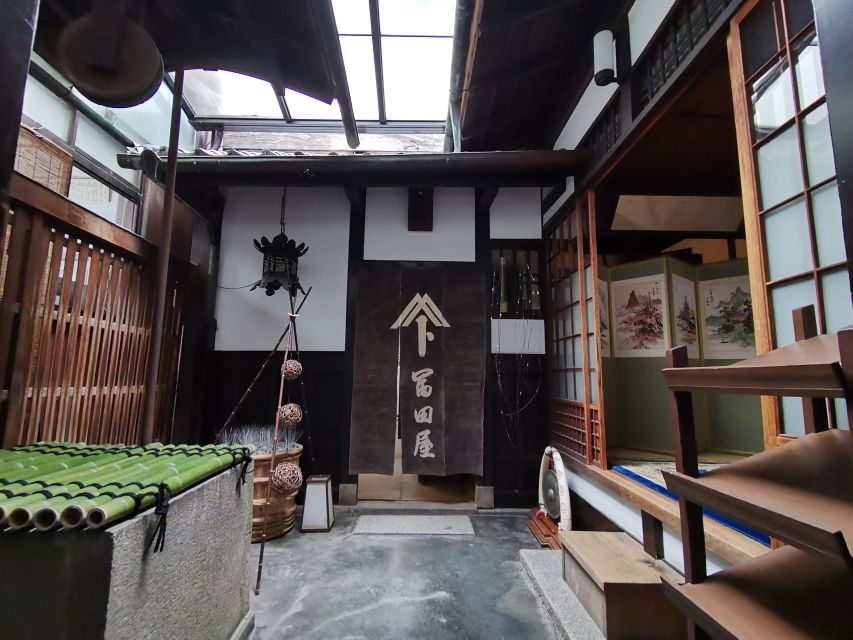
At about $222 per person, this is an expensive short activity. You are paying much more than you would for a basic kimono rental, but the comparison is not quite fair.
The fee includes entrance to Tondaya, kimono dressing, and the tea ceremony. It also buys access to a historic townhouse that you could not normally explore as part of an ordinary sightseeing walk. Staff attention, photography help, and the house tour add to the value.
Still, you should keep your expectations realistic. The activity does not include hair styling or makeup. The ceremony may be shared with a group, English explanations may vary, and the kimono selection may not offer your preferred color or pattern. At this price, those limitations may bother you if you expect a private, highly polished fashion shoot.
I see the price as reasonable for someone who values the building and the cultural setting as much as the costume. It is harder to justify if you mainly want a kimono for quick photographs. In that case, compare the cost with a regular rental shop before booking.
The experience offers free cancellation up to 24 hours before the start time, and you can reserve now while paying later. Those terms help if your Kyoto schedule is still changing.
Who will enjoy this Kyoto experience most
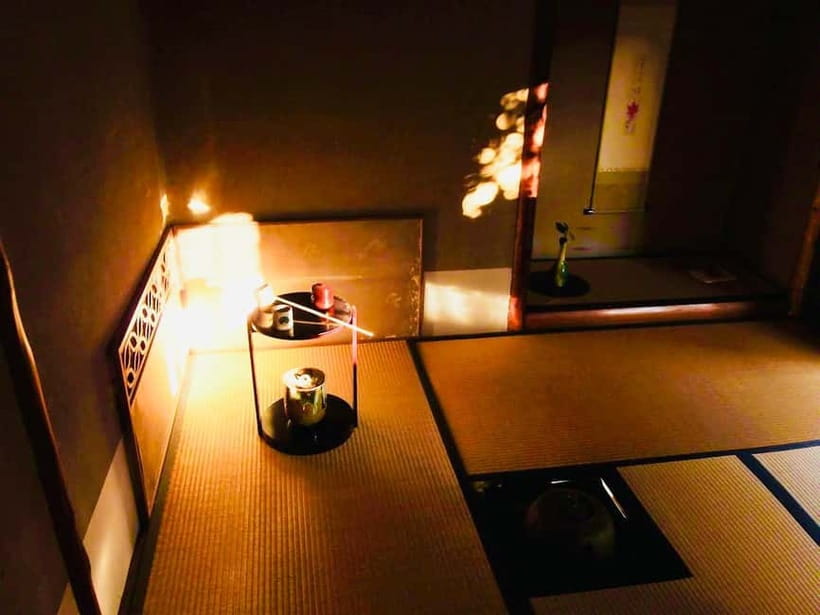
I would recommend Tondaya to couples, families, and first-time visitors who want several traditional activities in one place. You get the kimono, townhouse, gardens, house tour, and tea ceremony without arranging each part separately.
It also suits anyone who values atmosphere over speed. The property is the star, and the best moments come when you pause to look at the timber details, garden views, and historic objects instead of treating the visit as a quick costume stop.
This is less suitable for someone seeking a fully private tea ceremony, a detailed kimono history lesson, or a hands-on matcha workshop. The amount of explanation depends on the staff member and the language support available, and the regular group format can feel busy.
Visitors who do not like sitting on the floor should ask about a small chair. People with limited time should check the selected start time and duration carefully, since the experience can run anywhere from 90 minutes to four hours.
Practical advice for a smoother visit
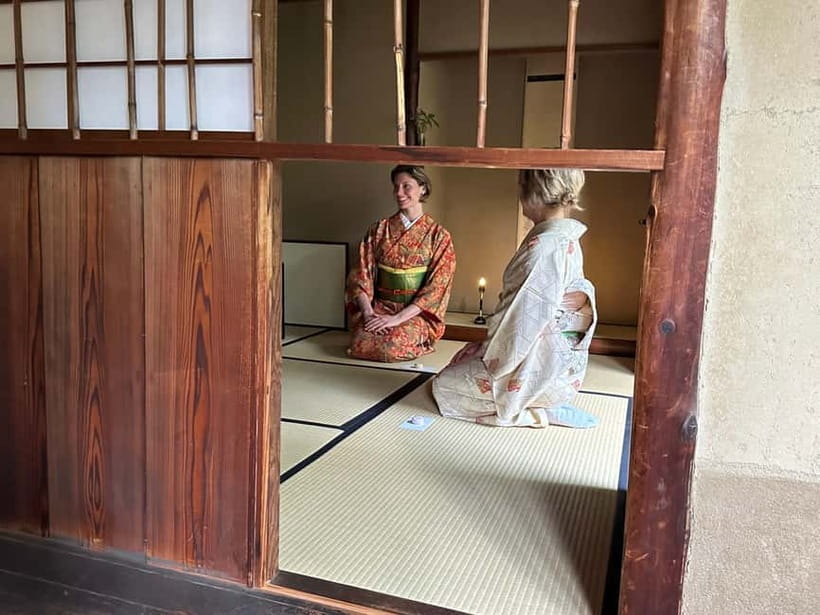
Wear loose clothing, especially around the neck, and bring clean socks. Do not wear stockings, and do not arrive with a wet T-shirt. These small preparations make the dressing process easier.
Keep your phone available for photographs outside the dressing process, but put it away during the ceremony. You will have dedicated opportunities for pictures, and respectful behavior makes the experience better for everyone in the room.
If you are tall or have a particular preference for color and pattern, ask what sizes and styles are available at the start. Larger kimonos may be more limited in design. If the first fit does not feel right, speak up politely before the ceremony begins.
Build in patience. A group session may include waiting, and staff may need to communicate through a translation device. The hosts are working across languages and managing several traditional activities at once.
Should you book Tondaya?
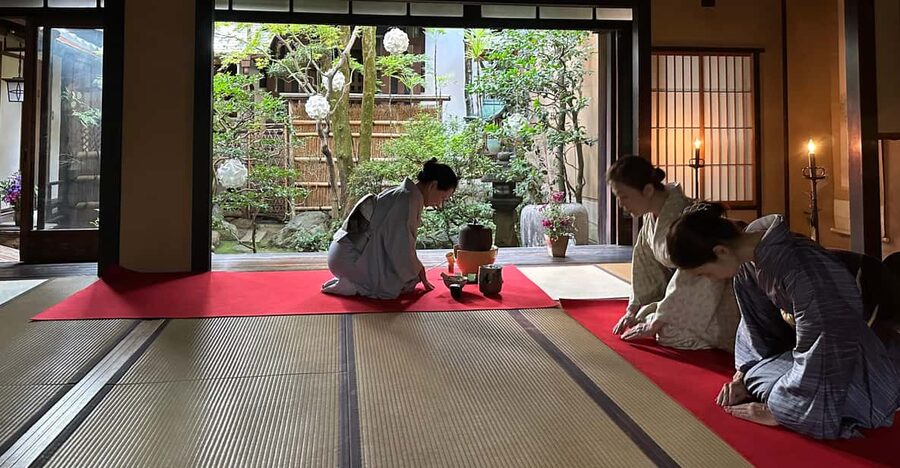
Book this experience if you want to wear a silk kimono inside a genuine old Kyoto townhouse, take photographs in traditional rooms and gardens, and watch a tea ceremony with some explanation. The welcoming staff, beautiful property, and chance to slow down for an hour or more make it a memorable choice.
Skip it if you want a silent private ceremony, extensive instruction, or guaranteed access to elaborate kimono patterns. For the best version of the visit, choose a private session, arrive prepared with socks and dry clothing, and treat the tea ceremony as a quiet cultural event rather than a photo shoot.
The price is substantial, but the setting gives it a stronger reason to exist than a standard rental appointment. For many people, Tondaya will be worth the cost because the house, not just the clothing, becomes part of the memory.
FAQ
Where does the kimono and tea ceremony experience take place?
It takes place at Tondaya, Nishijin Japanese Cultural Experience Museum, at 697 Ishiyakuchicho in Kyoto’s Kamigyo Ward.
How long does the experience last?
The listed duration ranges from 90 minutes to four hours. The exact length depends on the selected experience and available start time.
Is the tea ceremony private?
A standard booking may include other participants. A private experience is available for those who prefer a more personal setting.
Are kimono dressing and the tea ceremony included?
Yes. The entrance fee, kimono dressing, and tea ceremony are included.
Do I need to bring anything?
Bring socks. Bare feet are not allowed, and you are asked not to wear stockings.
Are hair styling and makeup included?
No. Hair styling and makeup are not included in the activity.
Is the experience available in English?
English and Japanese are offered. Not every staff member speaks English fluently, so a translation device may be used when needed.
Can I cancel for a refund?
You can cancel up to 24 hours in advance for a full refund. You can also reserve now and pay later.
Fresh tea listings around Kyoto
- Cycling Tour at Uji’s Matcha Green Tea Fields and Heritage★ 5.0 · 10 reviews
- Authentic Tea Ceremony & Sushi in The Museum of Kyoto★ 5.0 · 3 reviews
- Kyoto: Nighttime Zen Meditation and Matcha Tea Experience★ 5.0 · 7 reviews
- Kyoto Fushimiinari:Wagashi Making & Small Group Tea Ceremony★ 5.0 · 14 reviews
- 2 Types of Japanese Sweets making and Tea Ceremony★ 4.6 · 17 reviews
- Kyoto Hidden Riverside Zen Mediation and Uji Matcha Experience★ 5.0 · 9 reviews
- Whisk Your Own Matcha: A Zen Matcha Experience at Temple★ 3.6 · 7 reviews
- Matcha Grinding Experience and Walking Tour in Uji Kyoto★ 5.0 · 26 reviews
Kimono & Tea Ceremony, compared.
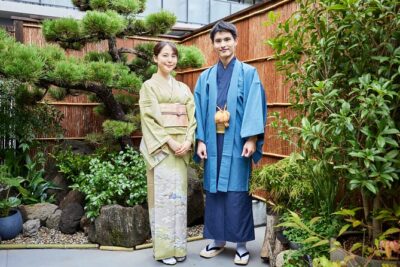
KYOTO Tea Ceremony with kimono near by Imamiya Jinjya Shrine
Read our review →
Kyoto: Kimono Tea Ceremony with Matcha and Sweet
Read our review →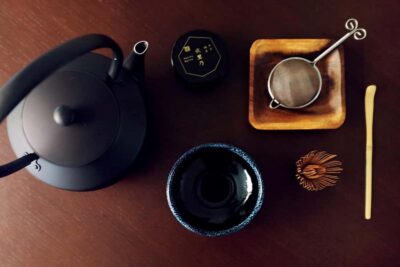
Browse the lists this tour appears in