
Review · KIMONO & TEA CEREMONY
Kyoto: Tea Ceremony with Maiko
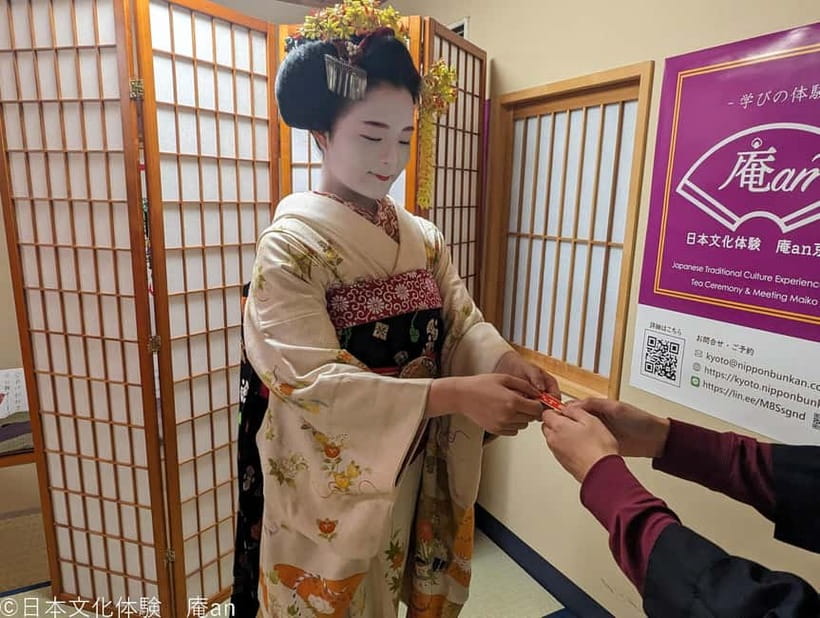
The main attraction here is simple: you can meet a Maiko up close without spending half a day searching Kyoto’s Gion streets. She demonstrates how to prepare matcha, answers questions about her life, and poses for a photo before giving you a small Senjafuda lucky charm.
I like the short 45-minute format and the easy location, just a minute from Gojo Station and close to Kyoto Station. I also like that you do more than watch. You whisk your own tea, taste two Ohigashi sweets, and speak directly with the performer. The trade-off is that this is held in a building, not an ochaya or traditional Japanese house, and English support may be limited unless you request it.
Key points to know before booking
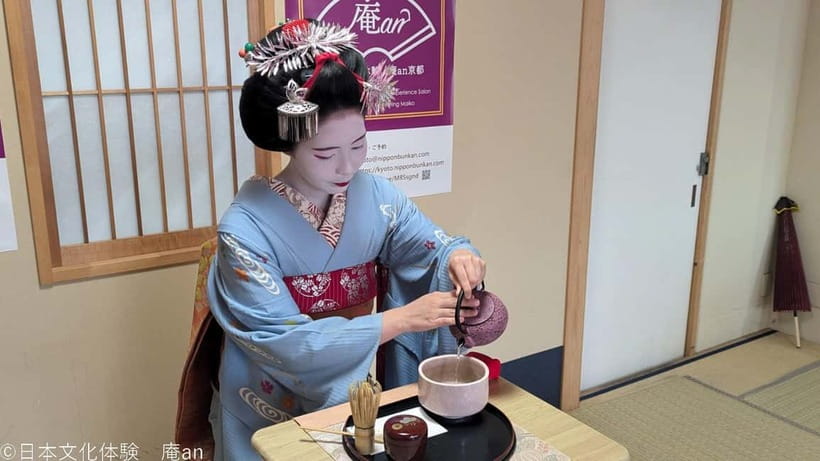
- A Maiko leads the tea experience: Depending on the date, a Geiko may host instead.
- You make your own matcha: The demonstration is followed by your chance to whisk and drink the tea.
- Questions are part of the program: You can ask about the Maiko’s daily life and path toward becoming a Geiko.
- The location saves time: Exit 1 at Gojo Station is about a one-minute walk away.
- Your booking includes a keepsake: You receive a Senjafuda charm and take a commemorative photo.
- The setting is practical, not historic: The venue is in a building with stairs and a relaxed atmosphere.
Meeting a Maiko without spending the day in Gion
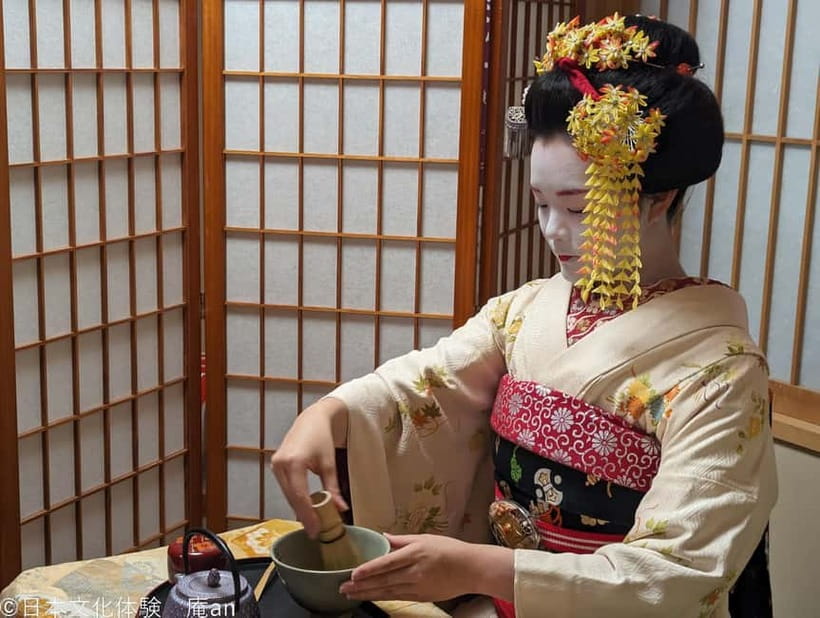
Kyoto offers plenty of chances to see women dressed as Maiko, but seeing one at close range and learning about her life is another matter. This experience gives you a scheduled meeting, a tea lesson, a question period, and a photo in less than an hour.
That makes it a useful choice if your Kyoto schedule is tight. You can fit it between sightseeing in central Kyoto, shopping, or a visit to Kyoto Station. At $28 per person, it also costs much less than a full meal or a longer cultural program.
The experience is not presented as a private meeting in a historic teahouse. The venue is in a building, and the room has a relaxed, practical feel. That may disappoint you if you expect tatami floors, an old wooden townhouse, or the formal atmosphere associated with a Kyoto ochaya.
I see the setting as a fair trade for the price and location. You are paying for direct contact, instruction, and conversation rather than elaborate surroundings. The focus stays on the Maiko herself.
More Kimono and Tea Ceremonies in Kyoto
- Kimono Tea Ceremony at Kyoto Maikoya, NISHIKI
★ 5.0 · 911 reviews - Kyoto: Kimono Tea Ceremony at Orizuruya Gion
★ 4.9 · 618 reviews - KYOTO Tea Ceremony with kimono near by Imamiya Jinjya Shrine
★ 5.0 · 343 reviews
What happens during the 45-minute program
The schedule is compact and easy to follow. The main activity runs for about 30 minutes, followed by the photo and gift before you leave the room at around 45 minutes.
Greeting and introduction
The program begins with a greeting from the Maiko. Depending on the date, a Geiko may lead instead, so check the details of your chosen time if meeting a Maiko specifically matters to you.
This opening helps set the tone. You are not expected to know formal tea rules or prepare in advance. Staff explain how the session works, and the atmosphere is meant to be friendly rather than stiff.
The working language is Japanese. English translation is provided as much as possible, but you should contact the operator if you want English help added. That point matters because the question period is one of the strongest parts of the experience. Without translation, you may not get as much from the conversation.
Demonstration and matcha preparation
The Maiko shows you how to make matcha and explains how to drink it. Then you prepare your own cup. This hands-on step gives the session more value than a simple performance because you take part in the ritual rather than only watching it.
You receive matcha with two small dried Japanese sweets called Ohigashi. These sweets are designed to be eaten with tea and offer a taste of traditional tea-room hospitality in a small serving.
Do not expect a full meal or a long lesson in tea history. The format is an introduction. In the available time, you learn the basic motion of whisking matcha and get a practical sense of the care involved in serving it.
That short lesson suits first-time visitors. You do not need previous experience, special clothing, or preparation. The activity is approachable, and the instructions are meant to help you make your own tea without worry.
More Tea Ceremonies in Kyoto
- Kyoto: Tea Ceremony in a Traditional Tea House in Kiyomizu
★ 4.9 · 3,519 reviews - Kyoto: Tea Ceremony Ju-An at Jotokuji Temple
★ 4.9 · 3,207 reviews - Kyoto: 45-Minute Tea Ceremony Lesson Experience
★ 4.3 · 2,378 reviews - Kyoto: Table-Style Tea Ceremony at a Kyo-Machiya
★ 4.9 · 1,211 reviews
The question period is the real conversation
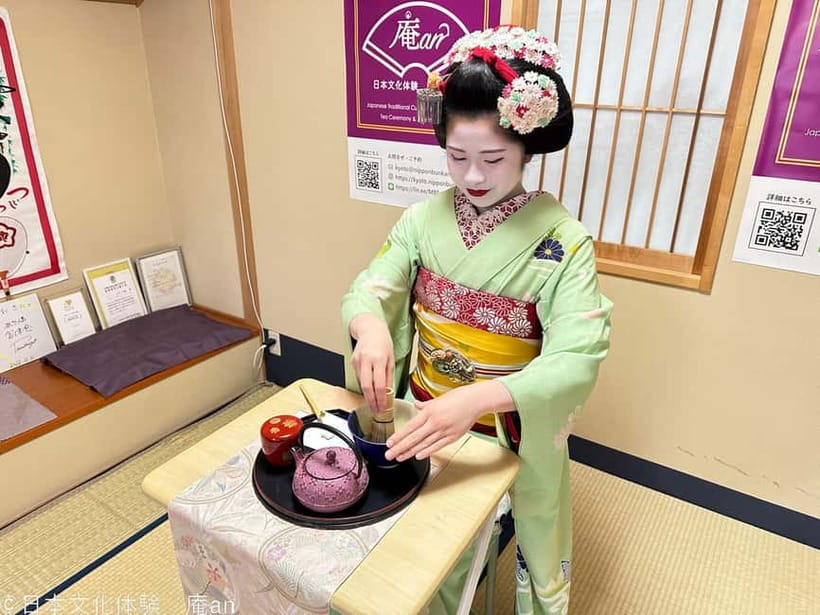
After the tea, you can ask questions about the Maiko’s life and work. This gives the experience a human side that a staged photo encounter cannot provide.
You might ask about daily life, training, or the path from Maiko to Geiko. One useful point to understand is that Maiko are apprentices, while Geiko are established performers. The program gives you a chance to ask about that world directly, within the time available.
The quality of this section depends partly on translation. The Maiko speaks Japanese, and English support is offered as much as possible. If you need interpretation, ask for it before the activity rather than assuming every question will be translated in full.
Several sessions have been especially praised for thoughtful answers and helpful staff. In one experience, the Maiko named Masaya answered questions confidently in Japanese while an interpreter made sure the group understood. That is the kind of support that can turn a pleasant photo stop into a more meaningful cultural meeting.
The question period also gives you a better sense of the person behind the makeup, kimono, and hairstyle. You are not simply watching a Kyoto image. You can hear about the demands of the role and the route toward becoming a Geiko.
A photo and the Senjafuda keepsake
Near the end, you can take a commemorative photo beside the Maiko. This is a close-up photo opportunity, not a distant stage performance. It is a practical benefit for anyone hoping to return home with a clear memory of the meeting.
The activity also includes a Senjafuda, a small lucky charm presented by the Maiko. The gift is included in the $28 price, so there is no need to plan for an extra purchase at the end.
The photo and charm come after the tea and questions. Because the Maiko leaves after this part, arrive ready and keep the schedule in mind. The event will not wait for late arrivals, and a late arrival does not qualify for a refund.
How much value do you get for $28?
At $28 per person, this is priced as a short cultural introduction rather than a premium private encounter. The value is strongest if you want three things in one stop: a matcha activity, direct conversation with a Maiko or Geiko, and a photo.
The location adds to the value. Gojo Station is on the Karasuma subway line, and the meeting point is about a one-minute walk from Exit 1. The entrance faces Gojo-dori. The activity is also close enough to Kyoto Station to suit a busy day, although you should still allow time to find the exact entrance.
One helpful location tip is to leave through Exit 1, walk straight, cross a small street, and continue until you reach the building above the Carnival supermarket. The venue is upstairs. The entrance can be easy to miss if you are only looking for a traditional-style storefront.
The price is less attractive if you want a formal tea ceremony in a historic house. That is not what you are buying here. You are buying access, instruction, conversation, and a small keepsake in a compact format.
Children who need their own seat pay the same fee as one adult. Children under two who sit on a parent’s lap are free. That makes the cost worth checking carefully for families, especially if more than one child needs a separate place.
The practical setting and stairs
The venue is not an ochaya and is not a traditional Japanese house. It is in a building with a relaxed atmosphere and friendly staff. You will need to use stairs because the building has no elevator.
For many people, that will be a minor issue. Still, anyone who has difficulty with stairs should consider it before booking. The location is convenient, but convenience at street level does not mean the venue is step-free.
The room is described as a good size, with activities that are easy to follow. The program may also be held alongside people having lunch or dinner, so do not assume you are booking an entirely private session.
This is a social setting, not a silent meditation. That can work in your favor if you like asking questions and meeting other people. If you want a private tea ceremony with no other activity around you, choose a different type of booking.
Timing, language, and cancellation rules
The activity lasts 45 minutes, though the main program finishes at roughly the 30-minute mark before the photo, gift, and room departure. Check the available starting times when booking.
Operating hours are 10:00 AM to 5:00 PM. Reservations received after 5:00 PM are handled the next day. Arrive early enough to find the entrance and climb the stairs, since the event cannot be held for late arrivals.
The stated cancellation policy allows a full refund when you cancel at least eight days in advance. Changes to the date or time within seven days of booking incur a fee, and cancellations for any reason may also involve a charge. The operator does not cover your travel costs if the booking is canceled.
The experience is listed with Japanese as the language. English translation is available as much as possible if requested. I would treat this as helpful support rather than a guarantee of full, continuous interpretation.
Who will enjoy this Kyoto experience most?
This suits you if you want a direct introduction to Maiko culture without committing to an expensive evening program. It is also a good fit if you have limited time, are curious about matcha, or want a structured cultural activity near a subway station.
First-time visitors to Japan should find the format easy to follow. You do not need to know tea ceremony etiquette, and the staff explain what to do. The chance to make your own tea keeps the activity from feeling like a passive show.
It also works for photographers and families who want a clear photo opportunity. Remember, though, that children needing their own seat pay the full per-person price.
I would be more cautious if you are searching for a historic setting, a fully English-led experience, or a private appointment. The building is modern and practical, translation is not described as guaranteed, and the activity may include other people.
You should also check the date if meeting a Maiko is essential. A Geiko may host instead. Both are part of Kyoto’s traditional entertainment world, but they are not the same role.
Should you book the Maiko tea ceremony?
Book it if you want an affordable, time-efficient introduction to Kyoto’s Maiko culture. The strongest parts are the close meeting, the chance to ask questions, the simple matcha lesson, and the photo with a Senjafuda gift.
I would especially choose it for a short Kyoto visit or a day when you are already near Gojo or Kyoto Station. The activity gives you a personal encounter without requiring a full evening or a large budget.
Skip it if the setting matters more to you than the meeting itself. This is not a traditional teahouse experience, and the stairs and limited English support may be inconvenient. For most visitors who want a friendly cultural stop with real participation, $28 is a sensible price.
FAQ
How long does the Maiko tea ceremony last?
The experience lasts 45 minutes. The main program ends at about 30 minutes, followed by the photo, Senjafuda presentation, and room departure.
Where is the meeting point?
The venue is about a one-minute walk from Exit 1 of Gojo Station on the Kyoto Subway Karasuma Line. The entrance faces Gojo-dori.
Is the experience always hosted by a Maiko?
No. Depending on the event date, the host may be a Maiko or a Geiko.
Is English translation available?
The activity is conducted in Japanese, and English translation is provided as much as possible when requested. Contact the operator if you would like to add English support.
What is included in the price?
The $28 price includes the tea ceremony with a Maiko or Geiko, matcha, two dried Japanese sweets, a photo opportunity, and a Senjafuda gift.
Is the venue accessible by elevator?
No. The building has no elevator, and you need to use stairs to reach the venue.
Fresh tea listings around Kyoto
- Cycling Tour at Uji’s Matcha Green Tea Fields and Heritage★ 5.0 · 10 reviews
- Authentic Tea Ceremony & Sushi in The Museum of Kyoto★ 5.0 · 3 reviews
- Kyoto Hidden Riverside Zen Mediation and Uji Matcha Experience★ 5.0 · 9 reviews
- Whisk Your Own Matcha: A Zen Matcha Experience at Temple★ 3.6 · 7 reviews
- Kyoto: Nighttime Zen Meditation and Matcha Tea Experience★ 5.0 · 7 reviews
- Kyoto Fushimiinari:Wagashi Making & Small Group Tea Ceremony★ 5.0 · 14 reviews
- 2 Types of Japanese Sweets making and Tea Ceremony★ 4.6 · 17 reviews
- Matcha Grinding Experience and Walking Tour in Uji Kyoto★ 5.0 · 26 reviews
Kimono & Tea Ceremony, compared.
KYOTO Tea Ceremony with kimono near by Imamiya Jinjya Shrine
Read our review →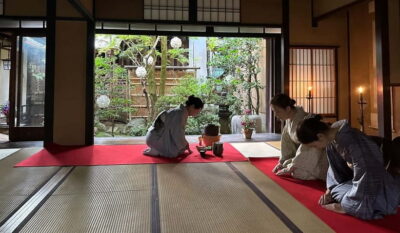
Kyoto: Kimono and Tea Ceremony Experience at Cultural Asset
Read our review →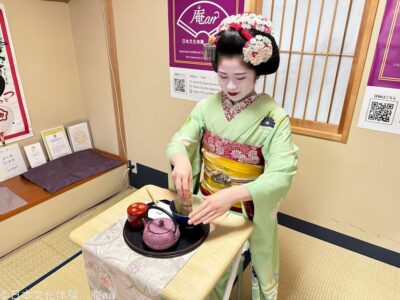
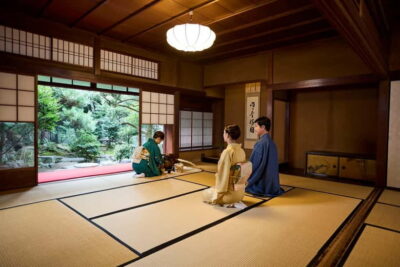
Kyoto: Kimono Tea Ceremony with Matcha and Sweet
Read our review →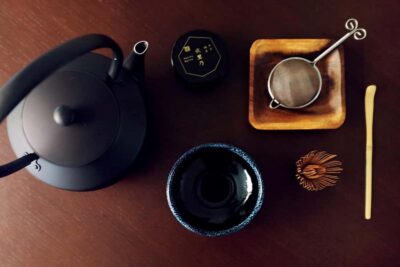
Browse the lists this tour appears in