
Review · MATCHA EXPERIENCES
Tokyo: Matcha Making Experience with Mochi Sweets in Asakusa
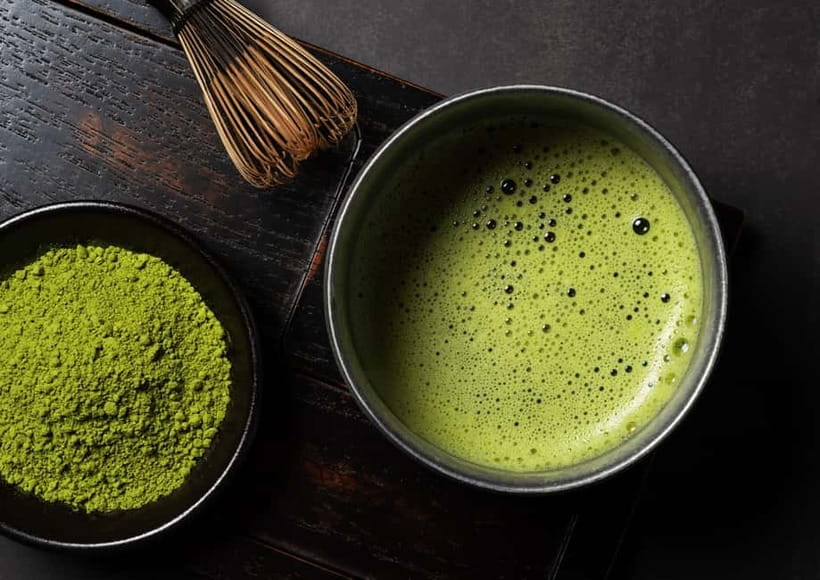
The best part of this Asakusa activity is that you do not just watch a tea demonstration. You learn the story of matcha, answer a lighthearted quiz, then whisk your own bowl with a bamboo tool and traditional method. It turns a familiar green drink into something you understand and can make at home.
I like the friendly, funny teaching style, especially from instructors such as Mana, Ken, Hayato, Hiyo, and Yui. I also like the seated format, clear English, and mochi sweets served with the tea. The main consideration is time: one hour gives you a smart introduction, not a full formal tea ceremony.
Key points
- Hands-on preparation: You whisk your own matcha instead of only watching someone else make it.
- A playful history lesson: A quiz makes the background and customs easier to remember.
- English-speaking instructors: Staff explain the steps clearly and keep the mood relaxed.
- Mochi with matcha: Traditional Japanese sweets balance the tea’s earthy, slightly bitter taste.
- Easy Asakusa location: The class is one minute from Asakusa Station and close to Tokyo Skytree.
- Good for solo visitors and families: The shared class setup makes it easy to meet others, while children can take part.
Making Matcha, Not Just Drinking It
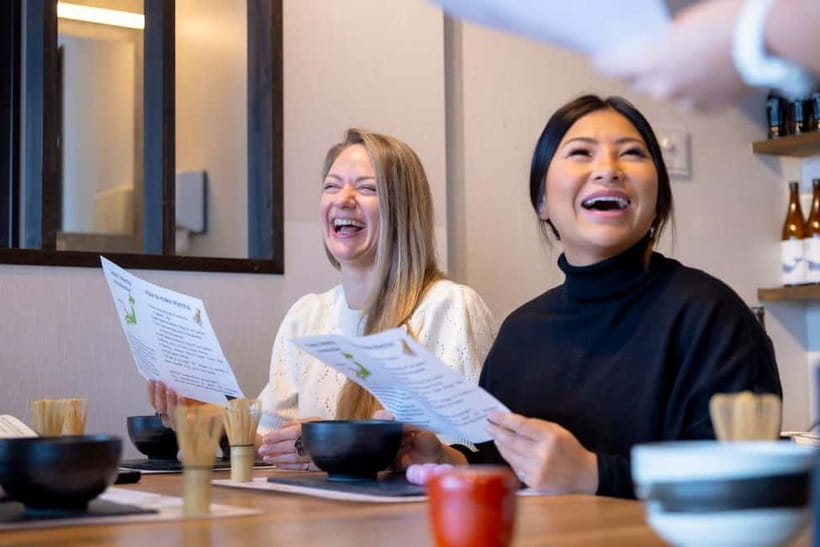
Many Tokyo food activities give you a taste and a quick explanation. This one asks you to do the important work yourself. You learn how matcha is prepared, handle the tools, and whisk the powder into a smooth drink.
That difference matters. When you whisk your own tea, you notice the movement, texture, and foam in a way you do not when a staff member does everything for you. You also leave with a practical skill. Several instructors explain the process clearly enough that you can try making matcha at home.
The class is held in a seated setting, which keeps the hour comfortable and easy to follow. You do not need prior knowledge, and you do not need to arrive already interested in Japanese tea. The format works for a first taste of matcha culture, as well as for someone who already drinks it.
The activity is presented by Matcha Making Tokyo, under Sushi Making Japan, and is offered through Food Activity Japan. It is designed as a friendly cultural class rather than a solemn ceremony. That makes it less intimidating, but also means you should not expect a long, formal tea ritual.
More Matcha Experiences in Tokyo
- Matcha Making Class in Tokyo with Authentic Japanese Sweets Set
★ 5.0 · 744 reviews - Asakusa Cultural Walk & Matcha Making Tour
★ 5.0 · 245 reviews - Tokyo: Matcha and Kimono Experience
★ 4.7 · 219 reviews
A Short History Lesson With a Quiz
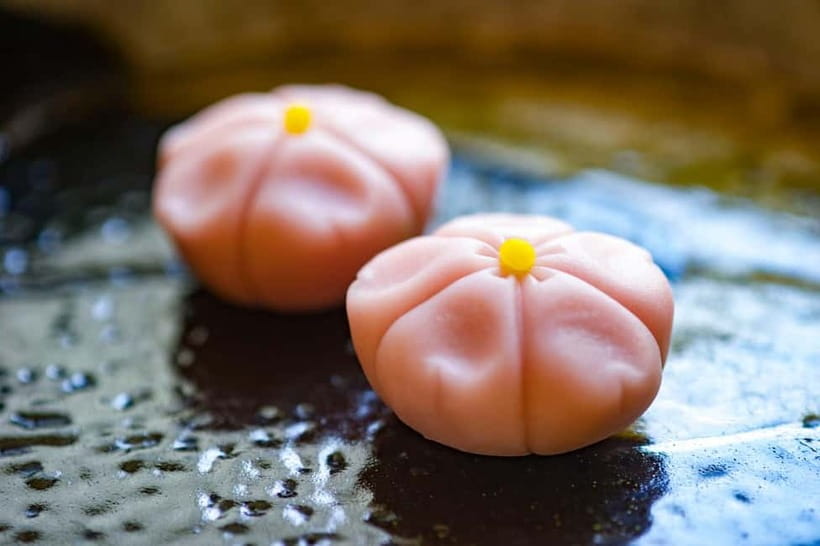
The session begins with an introduction to matcha and its place in Japanese culture. Instead of giving you a long lecture, the instructors use an interactive quiz. This is a small but clever choice. It keeps children involved, gives solo visitors an easy way to join the group, and makes the information stick.
The quiz covers the background and customs connected with matcha. You get a sense of why the drink is prepared in a particular way and how etiquette fits into the experience. The teaching is lighthearted, with instructors using humor to keep the room relaxed.
Names that appear among the teaching team include Mana, Ken, Hayato, Hiyo, Yui, Honoka, Midori, Rino, and others. The exact instructor depends on the session, but the pattern is clear: the class relies on warm, energetic hosts who speak English and invite questions.
I especially like this approach for families. Children can follow the quiz and take part in the preparation without being expected to sit silently through a formal presentation. Adults get useful cultural context without losing half the hour to a lecture.
Whisking With Traditional Tools
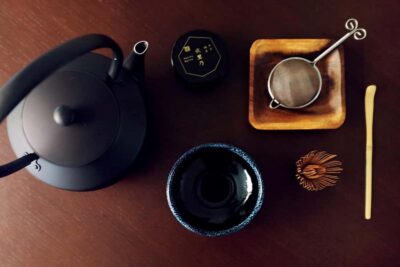
After the introduction, the class moves to the practical part. You receive the ingredients and use traditional matcha-making tools, including the bamboo whisk. The instructor demonstrates the technique, then you follow along.
This is where the activity earns its price. You are not merely given a prepared cup. You control the process, learn the basic motion, and see how the powder changes when mixed with water. The staff guide you through the steps and help you correct your technique if needed.
Do not worry about producing a perfect bowl on your first attempt. The point is to learn the method and enjoy the process. The instructors keep the mood encouraging, and the class is built for beginners.
The drink is served without sugar. That is worth knowing before you book. Matcha has a distinct earthy and slightly bitter taste, and the experience lets you taste it in the traditional style rather than turning it into a sweet café drink.
For matcha lovers, this is the most satisfying part of the hour. You can pay attention to the flavor and preparation. For newcomers, the sweets served afterward help make the taste more approachable.
Mochi Sweets Bring the Tea Into Balance
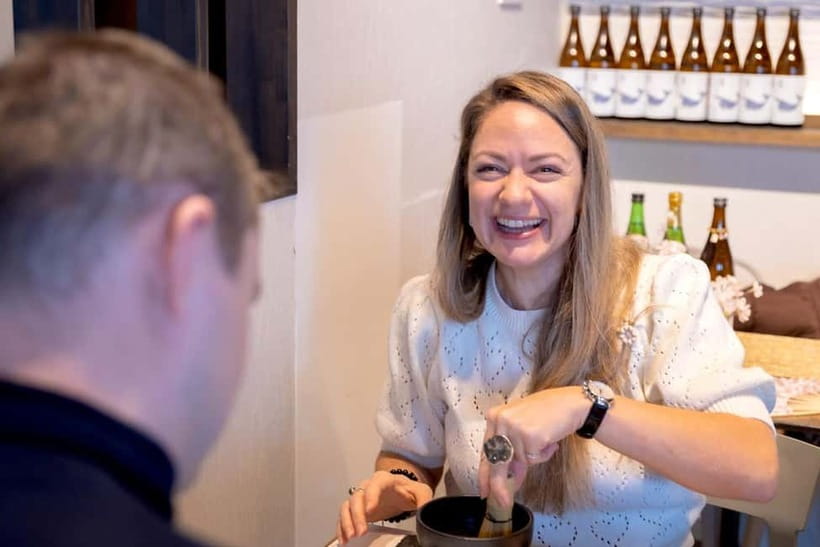
Once your matcha is ready, you drink it with Japanese sweets. The sweets are an important part of the experience, not an afterthought. Their sweetness pairs well with matcha’s stronger flavor and gives you a better sense of how the combination works.
Mochi adds a pleasant texture and a distinctly Japanese touch. The exact sweets are supplied as part of the class, so the selection can depend on the session. What you can count on is a small tasting built around the tea, rather than a full meal.
This is not a cooking class in the broad sense. You are not preparing a large menu or spending hours in a kitchen. The included cooking class is focused on the preparation of matcha, with ingredients, instruction, tasting, and sweets included.
I see that as a strength for a busy Tokyo itinerary. You get a cultural food experience without giving up half a day. If you want a substantial meal or a more advanced Japanese cooking lesson, you will need another activity afterward.
More Tea and Sweets Making in Tokyo
- Make Traditional Nerikiri Sweets & Matcha experience in Shibuya
★ 5.0 · 130 reviews - Sweets Making and Kimono Tea Ceremony at Tokyo Maikoya
★ 5.0 · 57 reviews - Japanese Traditional Sweets making and Tea Ceremony
★ 4.7 · 50 reviews - Mochi Matcha Gluten Free Japanese Sweets Class near Shibuya area
★ 5.0 · 26 reviews
Why Asakusa Makes the Setting Work
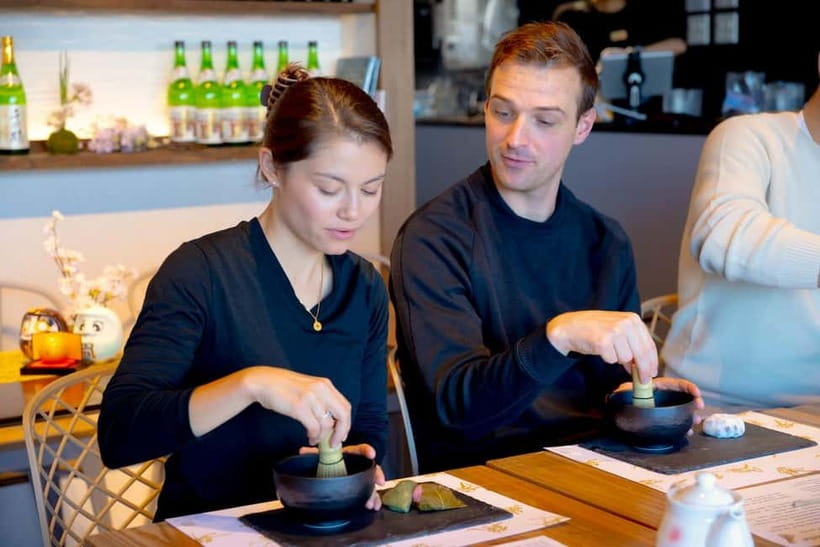
Asakusa is a sensible place for this class. It is one of Tokyo’s best areas for connecting present-day sightseeing with older Japanese customs. You can fit the activity between visits to nearby sights, then continue exploring the district on foot.
The meeting point is the Relink KAMINARIMON building, on the sixth floor, about one minute from Asakusa Station. The location is close to Tokyo Skytree, so it is easy to combine the class with sightseeing in that part of the city.
The short walk from the station matters. Tokyo can be tiring, especially when you are changing lines or crossing large streets. A meeting point this close keeps the activity simple to reach, though you should allow time to find the correct building and floor.
The class gives you a reason to pause in Asakusa rather than rushing from one landmark to the next. After the session, you can continue with your day feeling that you have done something participatory, not just taken photographs.
A Seated Hour That Fits Real Tokyo Schedules
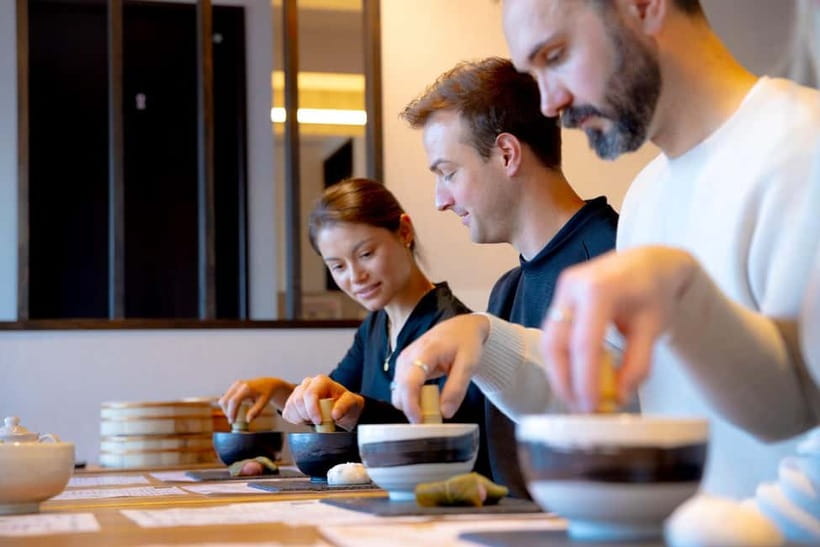
The activity lasts one hour. That is long enough to cover matcha’s background, the quiz, the demonstration, your own preparation, and the tasting. It is short enough to fit before or after another booking.
I like the seated format for practical reasons. You can focus on the explanations and tools without worrying about kneeling. One instructor specifically presents the session as an easy option for people who cannot adopt the traditional kneeling position.
The class also works well for mixed-age groups. A 74-year-old parent and a 23-year-old adult child can both take part, and children have a clear role rather than being expected to watch from the side. Solo visitors are welcome too. The shared setting gives you a natural chance to meet people from other countries.
The short length does have a limit. You will get an introduction, not a detailed study of every school of tea, regional matcha production, or ceremony tradition. Think of it as a practical first lesson with tasting, not specialist training.
English Instruction and the Human Touch
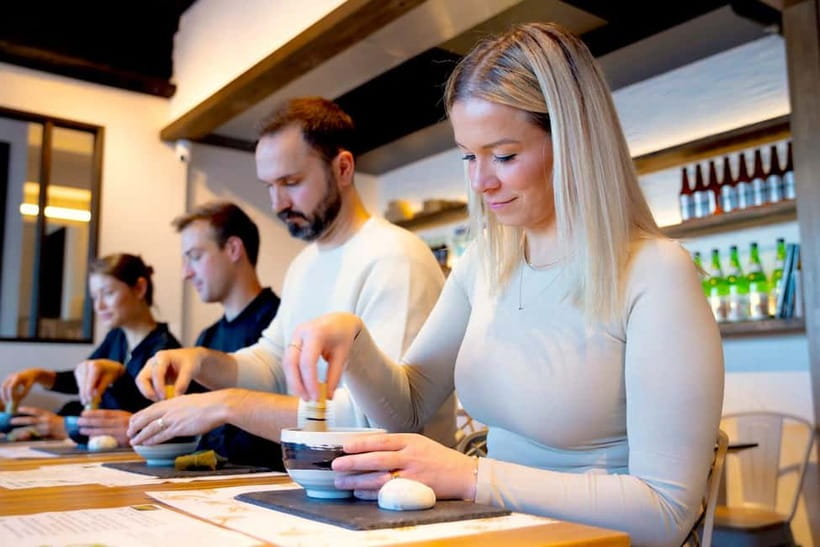
Language can make or break a cultural class. Here, the instruction is in English, and the teaching team is used to helping international visitors. The key terms and techniques are explained in a direct way, and the activity does not require you to read Japanese.
The instructors are frequently praised for being funny, patient, and welcoming. Mana is described as energetic and engaging. Ken is singled out for making the class interactive. Hayato combines the history of matcha with preparation and etiquette. Hiyo, Yui, Midori, Honoka, Rino, and other staff are also part of the teaching team named in feedback about the sessions.
That does not mean every class will have the same personality. Your instructor may be different from the person you have heard about. Still, the format clearly depends on approachable local staff rather than a recorded demonstration.
This is especially useful if you have questions. You can ask about preparation, tea customs, or the tools while you are using them. The staff do more than pass out ingredients, and that personal contact gives the hour its character.
What the 22 Dollar Price Buys You
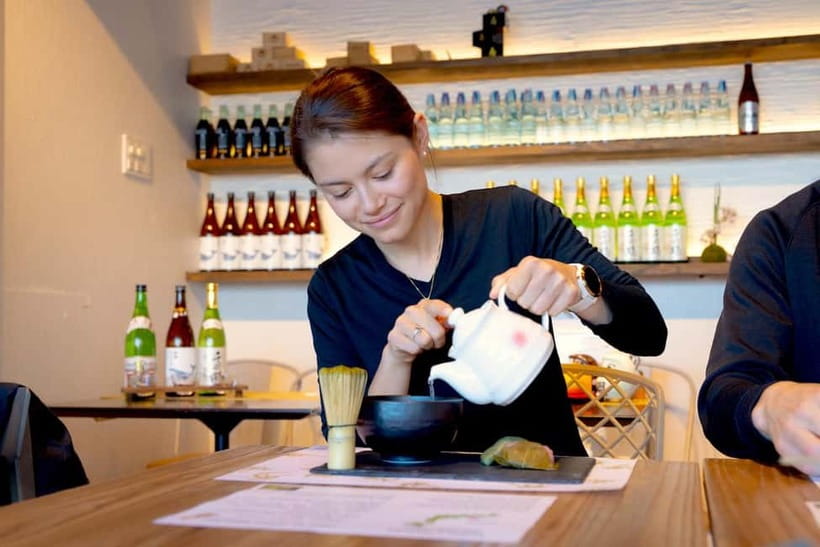
At $22 per person, this is a reasonably priced Tokyo activity. You receive a one-hour class, the ingredients, an instructor, your own prepared matcha, and Japanese sweets. There is no hotel pickup, but the meeting point is close to Asakusa Station, so you are not paying for transport bundled into the experience.
The value comes from the combination of instruction and participation. A simple cup of matcha costs less elsewhere, but it would not teach you how to prepare it or explain the customs around it. On the other hand, this is not the right choice if you measure value by quantity of food or length of activity.
I would consider it good value for a first visit to Japan, a family seeking a low-effort cultural activity, or a solo visitor who wants something social without committing to a long group tour. It is also a useful option for a rainy day or a moment when you need to sit down.
After class, there may be an opportunity to buy matcha-making equipment. Treat that as optional. You do not need to buy anything to get the main benefit of the activity.
Who Should Book This Class?
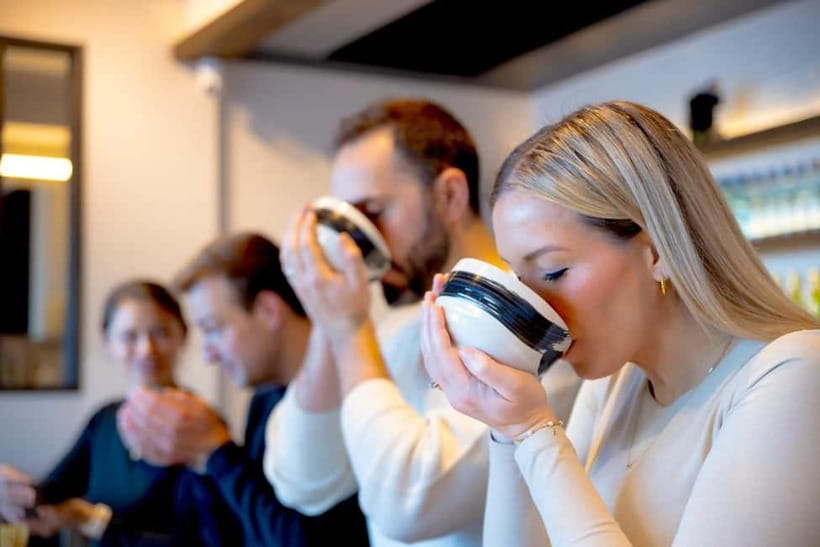
I would recommend it to you if you want a hands-on introduction to Japanese tea culture in a short, accessible format. Matcha fans will appreciate learning the proper preparation, while beginners can try the drink with sweets and clear guidance.
Families should find the quiz and whisking activity easier to manage than a quiet formal ceremony. Solo visitors can join without needing to bring a partner. The class also suits older adults because it is seated and does not require kneeling.
You may want to skip it if you have already taken a detailed tea ceremony class and want something more advanced. You should also choose another activity if your main goal is a full Japanese meal or a long cooking workshop.
Keep your schedule sensible. The class itself lasts one hour, but you should include time to reach the sixth-floor meeting point and continue to your next stop. Its location makes it easy to pair with Asakusa sightseeing or a visit near Tokyo Skytree.
Booking Details That Matter
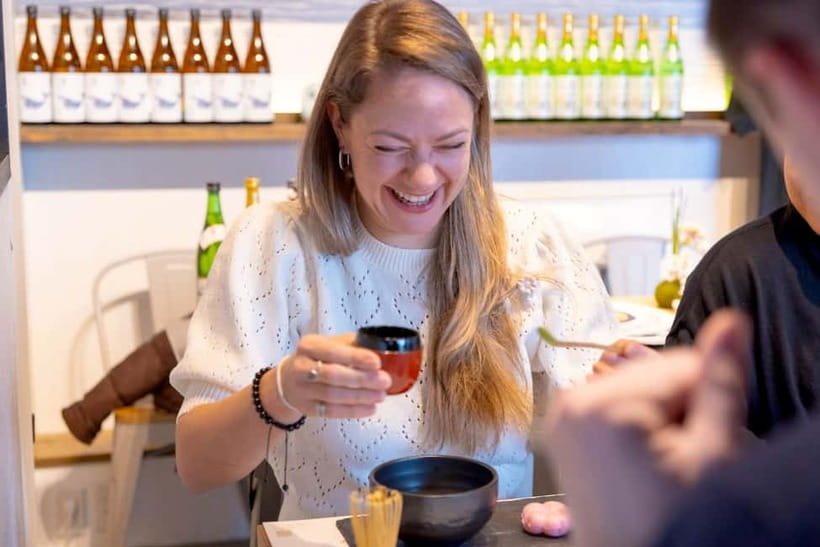
The activity costs $22 per person, and you can reserve now and pay later, which helps if your Tokyo plans are still changing. You can cancel up to 24 hours in advance for a full refund.
Check the available starting times before booking, since the exact schedule is not fixed in the information provided. The instructor language is English, and solo visitors and groups are both accepted.
The meeting point is:
- Relink KAMINARIMON building, sixth floor
- About one minute from Asakusa Station
- Coordinates: 35.710774, 139.7956532
Hotel pickup and drop-off are not included. Plan to arrive at the building rather than expecting a vehicle or escort from your hotel.
Should You Book the Matcha Experience?
Book it if you want to make something, taste something, and learn a little during a single hour in Asakusa. The strongest reasons are the hands-on whisking, the friendly English-speaking instructors, the mochi pairing, and the easy seated setup.
Do not book it expecting a formal, extended tea ceremony or a filling meal. This is a compact introduction with a relaxed personality. For $22, it offers a useful skill, a local food tradition, and an easy break from sightseeing. If that sounds like the right size of experience for your Tokyo day, it is a smart choice.
FAQ
How long does the matcha-making activity last?
The activity lasts one hour.
Where does the class meet?
It meets at the Relink KAMINARIMON building on the sixth floor, about one minute from Asakusa Station. The coordinates are 35.710774, 139.7956532.
Is the class taught in English?
Yes. The instructor language is English, and English-speaking local staff lead the session.
Do I need previous matcha-making experience?
No. The class is suitable for beginners, and the instructor guides you through the preparation.
Are ingredients and instruction included?
Yes. The cooking class, ingredients, and instructor are included.
Are Japanese sweets included?
Yes. The experience includes Japanese sweets served with the matcha.
Can I cancel for a refund?
You can cancel up to 24 hours in advance for a full refund. You can also reserve now and pay later.
Fresh tea listings around Tokyo
- Authentic Japanese tea tasting: sencha, matcha and gyokuro★ 5.0 · 12 reviews
- At an Antique Shop, Tea Ceremony and Japanese Sweets Forming★ 5.0 · 5 reviews
- Mochi Matcha Gluten Free Japanese Sweets Class near Shibuya area★ 5.0 · 26 reviews
- Japanese Matcha Tea Ceremony and Kimono Experience in Hanayaka★ 5.0 · 26 reviews
- Tokyo: Two Types of Japanese Sweets Making and Tea Ceremony★ 4.6 · 26 reviews
- Matcha Experience with of Japanese Tea Tasting in Tokyo★ 5.0 · 31 reviews
- EDOCCO Tea House–A Quick Dive into Japanese Traditional Culture★ 5.0 · 34 reviews
- Tokyo: Tea Ceremony Experience in Asakusa★ 5.0 · 36 reviews
Matcha Experiences, compared.
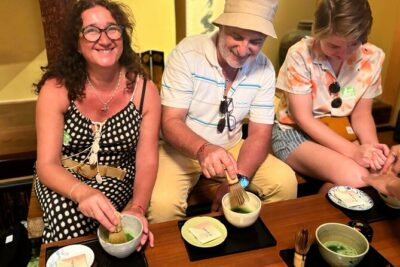
World Heritage Kyoto & Nara Uji Authentic Matcha Experience
Read our review →
Matcha Making Class in Tokyo with Authentic Japanese Sweets Set
Read our review →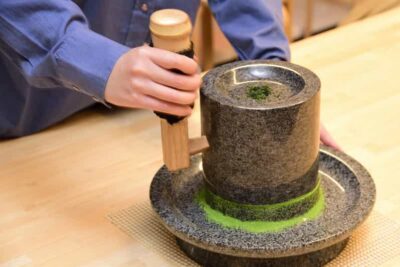
Kyoto: Tea Museum Tickets and Matcha Grinding Experience
Read our review →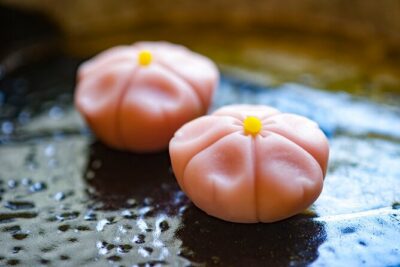
Matcha Making Class in Osaka with Authentic Japanese Sweets Set
Read our review →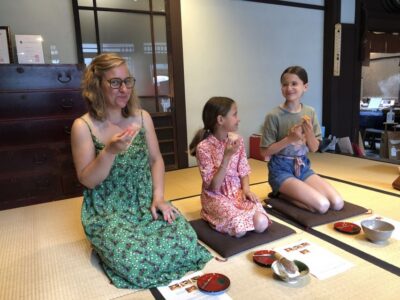
Kyoto: Tea Ceremony Meditation – Make Matcha with Tea Master
Read our review →
Kyoto: Kimono Tea Ceremony with Matcha and Sweet
Read our review →
Browse the lists this tour appears in