
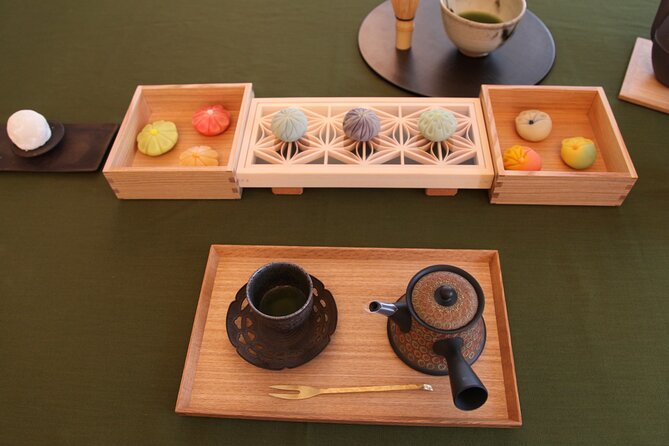
Review · MATCHA EXPERIENCES
Make Traditional Nerikiri Sweets & Matcha experience in Shibuya
Making Japanese sweets by hand is a fine way to slow down in Tokyo. In this small class, Hana guides you through four nerikiri sweets, from sample designs to one original creation, then serves matcha in a relaxed table-style tea ceremony. You get a close look at a local home, too.
I like the tiny group size, capped at four, and the convenient Omotesando location. I also like that you leave with practical skills, not just photographs. The main consideration is that this is a short, focused workshop rather than a formal tea ceremony or a broad cooking lesson.
Key points to know
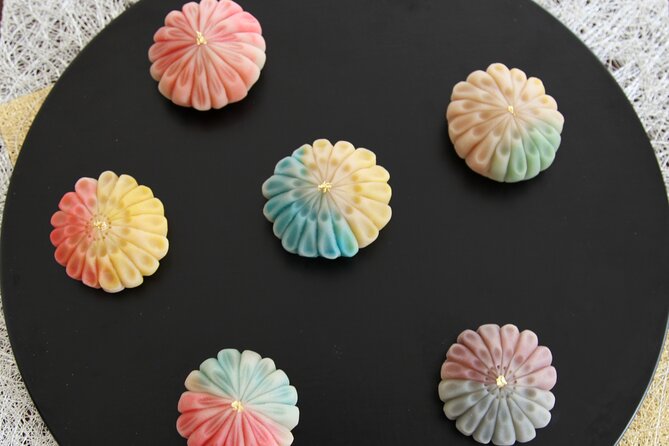
- Four sweets to shape: Make three designs from examples, then invent your own.
- A real local setting: Hana welcomes you into her home, just a short walk from the meeting point.
- Matcha included: Finish with freshly prepared matcha and selected Japanese sweets.
- Excellent for families: Children as young as seven appear to enjoy the careful, creative work.
- Easy central location: The meeting point is about three minutes from Omotesando Station.
- Small and personal: The class accepts a maximum of four people.
Why nerikiri makes a memorable Tokyo activity
Nerikiri is the elegant Japanese sweet often shaped like flowers, seasonal plants, or playful characters. Its beauty comes from small details: a pinch of color, a petal pressed into place, or a carefully formed edge. It looks like work for a trained confectioner, but Hana breaks the process into manageable steps.
That is the appeal of this class. You are not simply watching a demonstration while someone else does the difficult work. You handle the bean paste, sugar, and other ingredients yourself, then shape the sweets with guidance. The goal is not perfect results. It is learning how a simple set of ingredients becomes something decorative and edible.
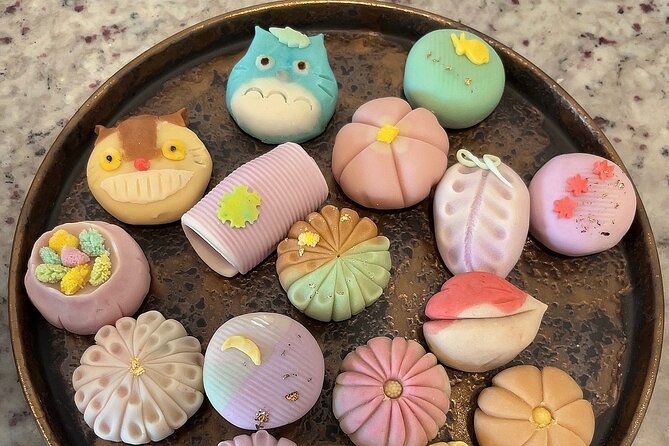
I especially like the balance between imitation and freedom. You first choose from sample designs and make three different shapes. This gives you a clear model to follow. For the fourth sweet, you create an original design. Children have made pieces inspired by Pikachu, Hello Kitty, Totoro, flowers, pumpkins, cherries, and other personal ideas. Adults can take the same approach, or stick to a more traditional floral shape.
Everything you make can be taken home. That gives the class a useful afterlife: you can try the technique again, show family what you learned, or simply save the sweets for later. Nerikiri is not the easiest Japanese food to recreate without instruction, so the hands-on practice adds real value.
More Matcha Experiences in Tokyo
- Matcha Making Class in Tokyo with Authentic Japanese Sweets Set
★ 5.0 · 744 reviews - Tokyo: Matcha Making Experience with Mochi Sweets in Asakusa
★ 4.9 · 388 reviews - Asakusa Cultural Walk & Matcha Making Tour
★ 5.0 · 245 reviews
Meeting Hana near Omotesando
The official meeting point is at 5-chōme-2-21 Jingūmae, near CHUMS Omotesando. More specifically, you meet across from CHUMS Omotesando, in front of the brown building. Hana then walks with you for about 30 seconds to her home.
This short transfer matters. You are not trying to locate an unfamiliar apartment alone, and the activity begins in one of Tokyo’s easiest areas for sightseeing and shopping. Omotesando Station is about a three-minute walk away, and Shibuya and Harajuku are both within walking distance.
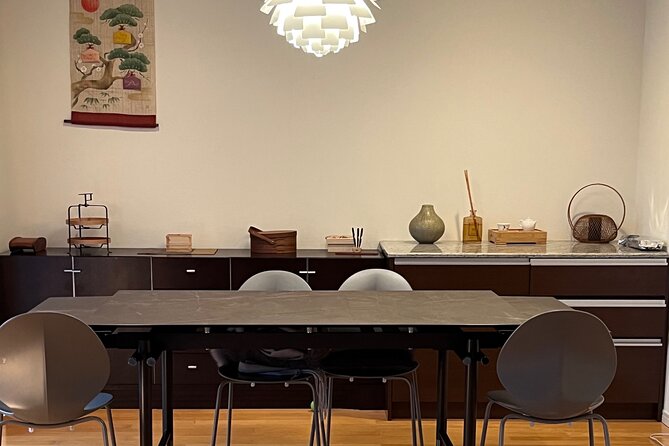
The home setting is one of the class’s more unusual features. You see how an inner-city Tokyo resident lives, rather than spending the entire lesson in a commercial studio. That makes the experience feel more personal and gives you a small look at everyday life in central Tokyo.
At the same time, a home class is different from a large purpose-built cooking school. The space and pace are likely to feel intimate. With a maximum of four people, Hana can give individual help, which is useful when you are trying to shape a tiny flower or add a fine detail.
The first three nerikiri designs
The class begins with a choice of sample designs. Hana demonstrates the basic technique, then helps you reproduce three different shapes. The exact designs can vary, but the examples mentioned in the class include flowers and character-inspired sweets.
This first stage is where clear instruction matters most. Nerikiri can seem complicated because the finished pieces look so precise. Hana’s teaching style, as reflected in the experience, focuses on breaking the work into simple actions. She has been praised for explaining difficult-looking designs in a way that children and first-time makers can follow.
You should expect to work slowly. The point is not to rush through four sweets. You are learning how to handle the paste, blend or place colors, shape the outer layer, and add the final details. If your first piece looks a little lopsided, that is part of the fun. Small imperfections make the finished sweet your own.
Families have found this section especially useful. A seven-year-old child enjoyed the class with help from Hana, while older children and teenagers have also made detailed designs. Hana’s patient manner is a strong reason this works across age groups. She can help a child without taking over the parent’s own project.
Your original sweet is the creative highlight
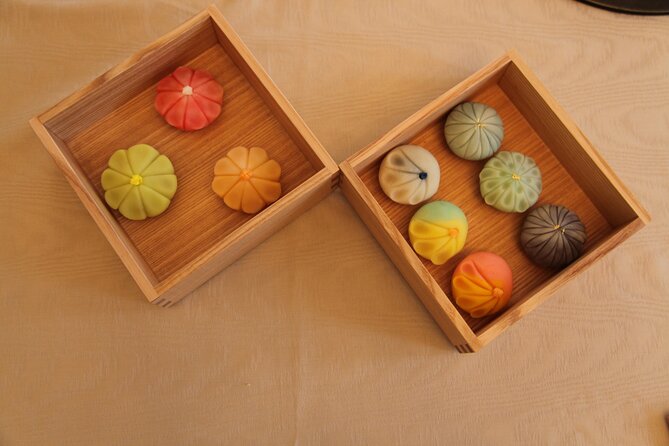
After the three guided designs, you make a fourth sweet of your own. This is the point where the workshop shifts from following instructions to making choices.
You decide on the shape, colors, and details. The finished result could be a traditional flower, an animal, a cartoon character, or something entirely personal. One useful feature of the class is that Hana can offer suggestions while leaving the creative decision with you.
I like this part because it keeps the experience from feeling like a craft demonstration. You have already learned the basic method, so the final sweet shows what you can do with it. It also gives children a clear sense of ownership. A handmade character can be more memorable than a packaged souvenir, even if the ears are not quite symmetrical.
The work is delicate, so you should not expect professional pastry-shop precision in 90 minutes. That is not a weakness. The class is about learning the process and enjoying the making. Anyone who needs a perfect result with no mess or trial and error may prefer simply buying nerikiri in a department-store food hall.
More Tea and Sweets Making in Tokyo
- Sweets Making and Kimono Tea Ceremony at Tokyo Maikoya
★ 5.0 · 57 reviews - Japanese Traditional Sweets making and Tea Ceremony
★ 4.7 · 50 reviews - Mochi Matcha Gluten Free Japanese Sweets Class near Shibuya area
★ 5.0 · 26 reviews - Tokyo: Two Types of Japanese Sweets Making and Tea Ceremony
★ 4.6 · 26 reviews
Matcha and a relaxed tea lesson
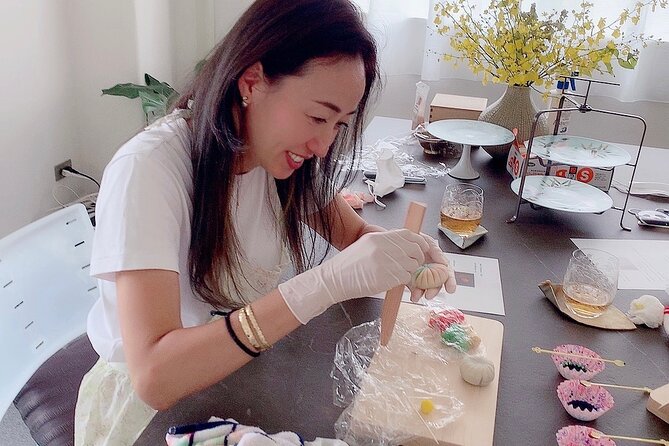
Once the sweets are made, Hana prepares matcha and serves it with selected Japanese sweets from different parts of Japan. The tea portion is described as a table-style tea ceremony, so you get an introduction to matcha etiquette without the formality of a full traditional tea-school performance.
This is a good pairing. Nerikiri is sweet, while matcha has a more assertive, lightly bitter taste. Together, they show how Japanese sweets are designed to accompany tea, not just to be eaten alone. You also learn how matcha is prepared and take part in the process.
The tea section gives the class a calmer finish. After the concentration needed for shaping the sweets, you sit down, taste what you made, and learn about the customs around the drink. The experience is cultural without becoming stiff or overly ceremonial.
If you have never tried matcha, this is a gentle introduction. If you already know the drink, the value comes from the setting and the connection with the sweets. The tea ceremony is not a separate, lengthy lesson, so book this class for an accessible taste of the tradition rather than an advanced study of tea schools or ritual procedure.
What the $60 price includes
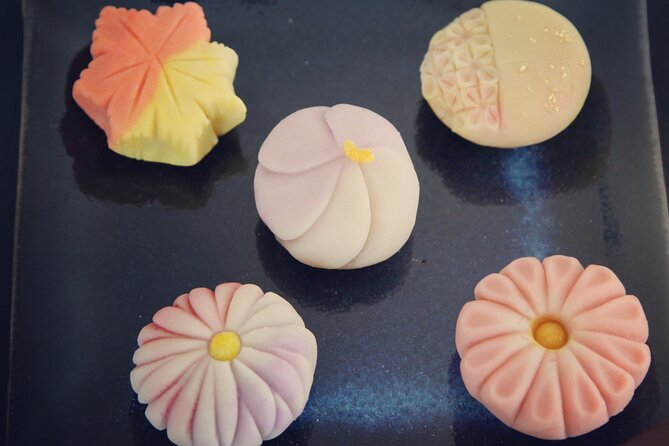
At about $60 per person, the class is not the cheapest food activity in Tokyo. It is also more than the cost of buying several sweets. The value comes from the combination of instruction, ingredients, four handmade pieces, matcha, additional Japanese sweets, and a small-group setting.
The four pieces matter. You are not paying for a single decoration that takes ten minutes to make. You get three guided attempts and one original design, which gives you time to improve as you go. The skills are also repeatable at home, at least in principle, so the class offers more than a one-time tasting.
The maximum group size of four strengthens the value. In a large class, you might spend much of the session watching a teacher or waiting for help. Here, Hana can focus on each person’s shaping and design. That is particularly useful for families, mixed-age groups, and anyone who feels awkward with detailed handwork.
The price makes the most sense if you value personal instruction and cultural context. If you only want to taste matcha or buy a beautiful sweet, cheaper options are available across Tokyo. If you want to understand how the sweet is made and take part in the process, the cost is reasonable for a 90-minute private-feeling lesson.
Why the timing works well in Harajuku
Classes are scheduled at 9:00 AM, 1:00 PM, and 3:30 PM. The early start is a smart choice for a sightseeing day because many shops open around 11:00 AM. You can finish the class while the shopping streets are still waking up, then continue into Harajuku or Omotesando.
The 1:00 PM slot works well as a calm break from morning sightseeing. You can visit Meiji Shrine or explore the area first, then spend the afternoon making sweets. The 3:30 PM option suits a later start, though you will have less time for shopping afterward.
The activity lasts about one hour and 30 minutes and ends back at the meeting point. From there, you can easily continue to Meiji Shrine, Takeshita Street, or Shibuya Crossing. The location makes this more useful than a workshop far outside central Tokyo, since you do not lose much sightseeing time getting there.
Omotesando itself is stylish and polished, while nearby Harajuku offers a younger, more playful mood. Shibuya is close enough for an evening visit. Plan your route around the class rather than treating it as an isolated appointment, and the workshop can fit neatly into a full day.
Families, dietary needs, and the pace of the class
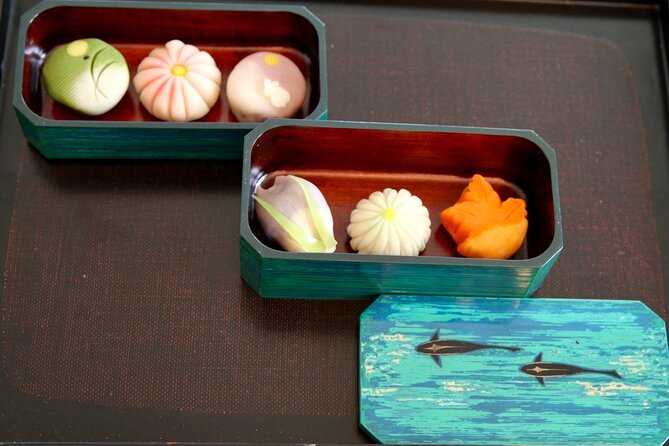
This activity suits a wide range of ages, from young children to seniors. The detailed work gives children something active to do, while the tea portion adds a cultural lesson for adults. Parents can work on their own sweets while Hana assists children who need an extra hand.
The class is also suitable for vegans and vegetarians. Since food ingredients can matter for religious or personal reasons, tell the provider about any specific needs before the class. A past booking included a request to replace alcohol-containing ingredients, and Hana contacted the participant about the issue. That suggests communication is useful, but you should still confirm your own requirements in advance.
The pace is generally unhurried. Several details from the experience point to time for individual work rather than a rushed assembly line. That is good for beginners, but it also means the session depends on everyone arriving on time and staying engaged. You will get more from it if you are happy to concentrate on careful handwork instead of racing toward the finished sweets.
A few practical drawbacks to consider
The activity takes place in a home, not a formal attraction. That is part of its charm, but visitors who want a grand tea-house setting may find it modest. The tea ceremony is table-style and introductory, not a full traditional ceremony with an extended sequence of formal movements.
The workshop is also focused on nerikiri. You will not learn a broad range of Japanese desserts or prepare a full meal. The class is a good match for someone interested in one beautiful confection and its connection to matcha.
Finally, the sweets are delicate. If you need a polished souvenir with an exact appearance, buy finished nerikiri instead. If you enjoy making something with your hands, the uneven edges and personal touches are exactly what make the result worthwhile.
Free cancellation is available if you cancel at least 24 hours before the local start time. Changes or cancellations inside that window are not accepted for a refund, so keep the policy in mind when arranging a busy Tokyo itinerary.
Who should book this Omotesando class?
I would choose this for a first visit to Tokyo when you want one quiet, personal activity between busy sightseeing stops. It is also a strong pick for families, grandparents with children, couples, and anyone who likes food, design, or Japanese customs.
Hana’s warm, patient teaching is central to the experience. She speaks English and Japanese, and she often offers practical suggestions for places to visit during the rest of your trip. That local conversation can be as useful as the sweets, especially if this is your first time in Tokyo.
You should skip it if you dislike detailed craft work, do not enjoy sweet foods, or want a formal tea ceremony in a historic setting. For everyone else, the combination of four handmade nerikiri, matcha, and a short visit to a local home offers strong value in a central part of the city.
FAQ
How long does the nerikiri and matcha experience last?
The activity lasts approximately one hour and 30 minutes.
Where do I meet the instructor?
You meet at 5-chōme-2-21 Jingūmae, Shibuya, Tokyo 150-0001, near CHUMS Omotesando and in front of the brown building. Hana walks with you about 30 seconds to her home.
How many people can join the class?
The activity has a maximum of four participants.
How many sweets will I make?
You make four sweets in total. You choose three designs from sample examples, then create one original design of your own.
Is matcha included?
Yes. After making the sweets, you enjoy freshly prepared matcha with selected Japanese sweets.
Is the class suitable for vegans, vegetarians, and children?
The class is suitable for vegans and vegetarians and is designed for all ages, including children and seniors. Specific ingredient concerns should be raised before the class.
Should you book it?
Book this class if you want a small, hands-on cultural activity that fits neatly into a Harajuku, Omotesando, or Shibuya day. The strongest reasons are the four sweets, the personal guidance from Hana, the local-home setting, and the chance to make something you can try again later.
At $60, it is best viewed as an instruction-led experience rather than a snack stop. You pay for time, attention, ingredients, matcha, and a creative souvenir. For a calm break from Tokyo’s crowded streets, that is a fair trade.
Fresh tea listings around Tokyo
- Authentic Japanese tea tasting: sencha, matcha and gyokuro★ 5.0 · 12 reviews
- At an Antique Shop, Tea Ceremony and Japanese Sweets Forming★ 5.0 · 5 reviews
- Mochi Matcha Gluten Free Japanese Sweets Class near Shibuya area★ 5.0 · 26 reviews
- Tokyo: Two Types of Japanese Sweets Making and Tea Ceremony★ 4.6 · 26 reviews
- Japanese Matcha Tea Ceremony and Kimono Experience in Hanayaka★ 5.0 · 26 reviews
- Matcha Experience with of Japanese Tea Tasting in Tokyo★ 5.0 · 31 reviews
- EDOCCO Tea House–A Quick Dive into Japanese Traditional Culture★ 5.0 · 34 reviews
- Tokyo: Tea Ceremony Experience in Asakusa★ 5.0 · 36 reviews
Matcha Experiences, compared.
World Heritage Kyoto & Nara Uji Authentic Matcha Experience
Read our review →
Matcha Making Class in Tokyo with Authentic Japanese Sweets Set
Read our review →
Kyoto: Tea Museum Tickets and Matcha Grinding Experience
Read our review →
Matcha Making Class in Osaka with Authentic Japanese Sweets Set
Read our review →
Kyoto: Tea Ceremony Meditation – Make Matcha with Tea Master
Read our review →
Tokyo: Matcha Making Experience with Mochi Sweets in Asakusa
Read our review →
Kyoto: Kimono Tea Ceremony with Matcha and Sweet
Read our review →
Browse the lists this tour appears in