
Review · TEA CEREMONY EXPERIENCES
Kyoto near Fushimiinari Wagashi making&Small Group Tea Ceremony
The best part of this Kyoto experience is its balance: you make a sticky Japanese sweet in a real home kitchen, then carry it into a quiet tea ceremony in a tatami room. Making wagashi yourself gives the formal ceremony a personal touch, while the small group keeps the lesson easy to follow. I also like that the house sits about a 10-minute walk from Fushimi Inari Shrine, so you can pair the class with Kyoto’s famous orange gates.
I especially like the English-speaking licensed guide interpreters, who explain not only what to do, but why each step matters. I also appreciate the option of using a chair instead of sitting on the tatami floor. The main consideration is caffeine: you receive two bowls of matcha, so this may not suit you if you avoid it.
Key points at a glance
- Make your own wagashi: This is a hands-on kitchen lesson, not a demonstration from the sidelines.
- Two bowls of matcha included: You watch a ceremonial preparation, then whisk a bowl yourself.
- Small group of up to eight: The size allows time for questions and personal instruction.
- Local house near Fushimi Inari: The session takes place in an authentic Japanese-style room, close to one of Kyoto’s major sights.
- Chairs can be arranged: You need not sit on the tatami floor if kneeling is uncomfortable.
- Short, focused format: The experience lasts about 1 hour and 15 minutes and begins at 9:45 a.m.
A Kyoto tea ceremony with something to do
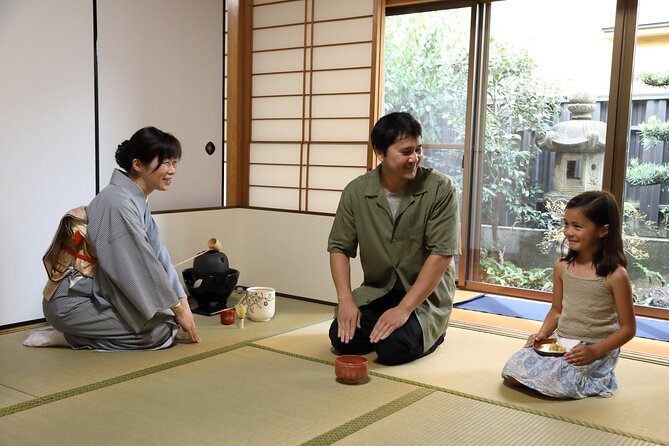
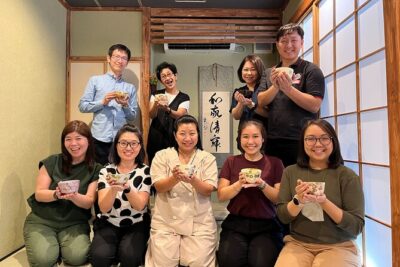
Many tea ceremonies ask you to sit quietly and watch. This one gives you a job first. You enter the house and head to the kitchen, where an English-speaking host shows you how to make one type of wagashi, a traditional Japanese sweet.
That small change matters. You are not simply handed a confection and told to admire it. You work with the ingredients, shape the sweet, and see why the texture can become a little sticky. The finished wagashi then returns with you to the tea room, where you eat it during the ceremony.
I like this rhythm because it moves from informal to formal. The kitchen feels practical and social. The tatami room asks you to slow down and pay attention. You get a taste of Japanese hospitality without having to commit half a day to a full cultural course.
The session is held at a local house at 38-4 Fukakusa Watamoricho in Fushimi Ward. It ends at the same place, and the full experience lasts about 75 minutes. That makes it easy to fit before or after a visit to Fushimi Inari Taisha.
More Tea and Sweets Making in Kyoto
- Kyoto: Japanese Traditional Sweets Making and Tea Ceremony
★ 4.4 · 314 reviews - Kyoto: Traditional Tea Ceremony with Matcha & Sweets in Gion
★ 4.9 · 27 reviews - 2 Types of Japanese Sweets making and Tea Ceremony
★ 4.6 · 17 reviews
Making wagashi in the home kitchen
The class begins with the sweet-making lesson. The host guides you through one kind of wagashi, and you prepare it yourself. The information does not specify the exact sweet offered on every date, so you should expect the recipe to vary rather than arrive with a fixed menu in mind.
The practical value here is clear. Wagashi is closely tied to the tea ceremony because its sweetness balances the bitter, grassy taste of matcha. By making the sweet first, you understand its place in the ceremony instead of treating it as a decorative snack.
The process can get sticky. That is part of the fun, but it is worth knowing if you prefer polished demonstrations with no hands-on mess. I would choose comfortable clothing and avoid bringing anything that needs to stay spotless.
The class also gives you a useful souvenir that costs nothing extra: a skill you can repeat at home. The instructor explains how to prepare the wagashi, and the experience is designed so you can later make it for friends. You may not reproduce the exact Kyoto setting in your own kitchen, but you can carry the basic technique home.
Walking through the garden to the tatami room
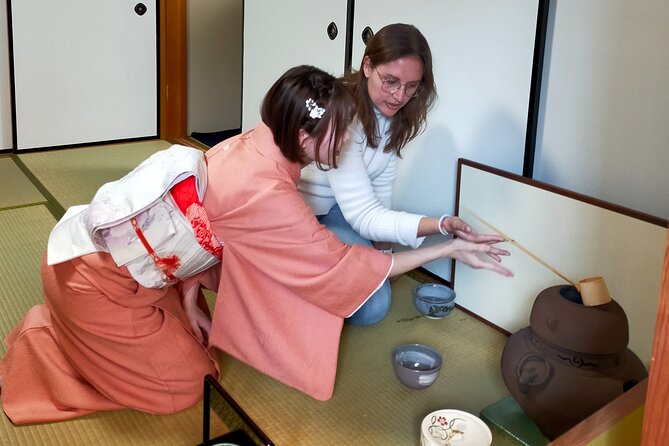
After the kitchen lesson, the host explains how to take part in the tea ceremony. When the weather allows, you walk through a small garden before entering the Japanese-style room. This short transition is important because it marks a change in pace.
Tea ceremony is formal, but the setting is not presented as a museum display. The stated aim is to make you feel like you have been invited to a friend’s home for tea. That mix of rules and welcome makes the ceremony approachable for first-time visitors.
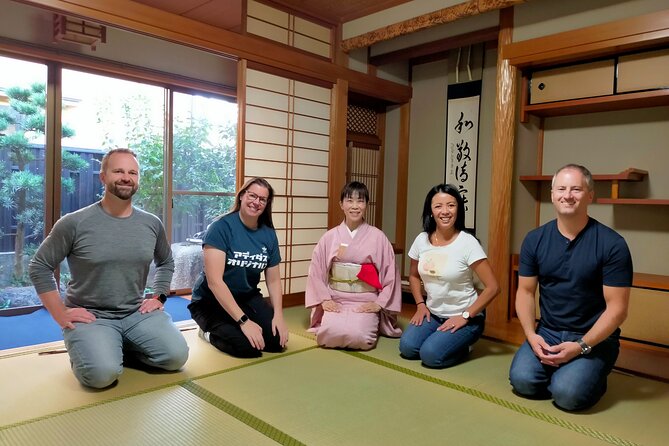
You sit on tatami while the instructor explains the history of the ceremony and the meaning of the hanging scroll. These details help you read the room. The scroll is not just wall decoration, and the placement of objects is not random. You get enough context to understand what you are seeing without turning the 75-minute class into a long lecture.
The garden walk depends on weather. If it rains, the outdoor portion may not happen, and the activity requires suitable weather. The provider offers a different date or a full refund if poor weather forces cancellation.
Learning how to drink matcha
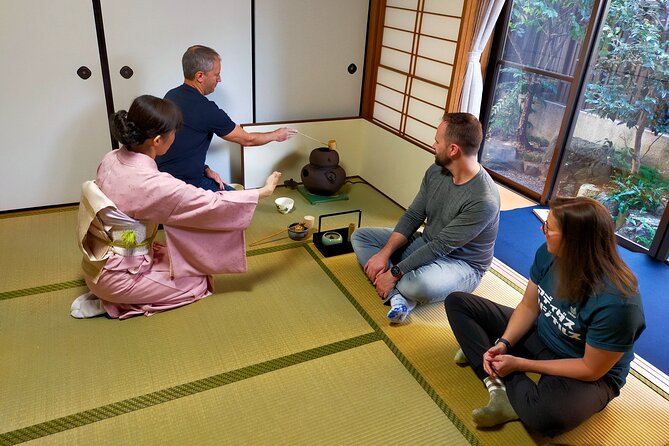
The instructor first demonstrates how to drink a bowl of matcha. You then enjoy the wagashi you made earlier. This order is traditional and practical: the sweet prepares your palate for the tea’s bitterness.
Next, the host demonstrates the ceremonial preparation of matcha. You watch the movements before trying them yourself. The experience includes two bowls of matcha in total, along with Japanese traditional confectioneries.
You do not need to arrive knowing tea ceremony etiquette. The instructor explains how to attend, and the English-speaking guides are licensed guide interpreters. That is a useful distinction. You are not left to copy movements without knowing what they mean.
The ceremony still has rules. You will need to pay attention, follow the instructor’s lead, and treat the room respectfully. If you want a casual drink and quick photo opportunity, this may feel too structured. If you enjoy learning the reason behind a custom, the structure gives the session its purpose.
Preparing your own bowl is the most satisfying part for many people. The host shows the correct method, then gives you the chance to whisk matcha yourself. You leave knowing how to serve it to friends, which makes the lesson more useful than a purely observational ceremony.
More Tea Ceremonies in Kyoto
- Kyoto: Tea Ceremony in a Traditional Tea House in Kiyomizu
★ 4.9 · 3,519 reviews - Kyoto: Tea Ceremony Ju-An at Jotokuji Temple
★ 4.9 · 3,207 reviews - Kyoto: 45-Minute Tea Ceremony Lesson Experience
★ 4.3 · 2,378 reviews - Kyoto: Table-Style Tea Ceremony at a Kyo-Machiya
★ 4.9 · 1,211 reviews
Why the small group makes a difference
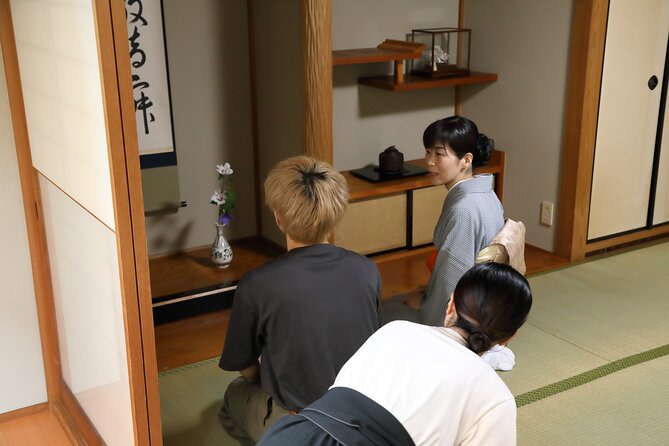
The maximum group size is eight people. That is small enough for the instructor to watch the wagashi preparation and matcha practice, rather than delivering every step from across the room.
A small group also helps with questions. Tea ceremony has unfamiliar movements, and you may not want to interrupt a large presentation to ask where to place your hands or how to handle the bowl. Here, the format should feel more like a lesson than a show.
The atmosphere may vary with the people booked for your session. The experience is not private, so you will share the kitchen and tea room with others. Still, eight people is a sensible limit for a house-based activity.
The English-language instruction is another strong point. The instructors are licensed guide interpreters, and the experience is built for people who do not already understand Japanese tea customs. You get cultural explanation alongside physical instruction.
A convenient stop near Fushimi Inari
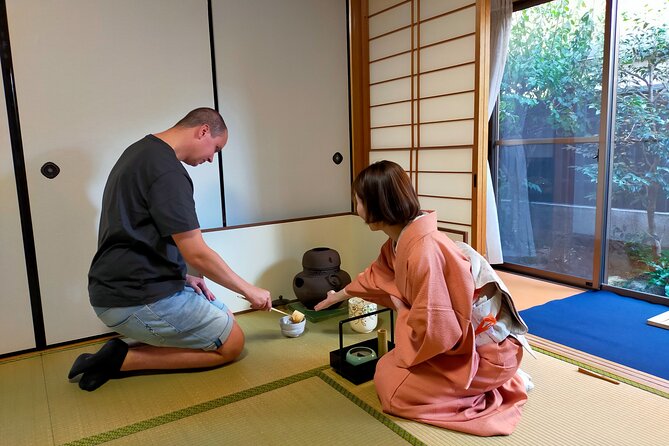
The meeting point is in Fukakusa, in Kyoto’s Fushimi Ward, near public transportation. The house is about a 10-minute walk from Fushimi Inari Taisha, according to the experience details.
That location makes the timing useful. The start time is 9:45 a.m., and the session ends back at the meeting point around 11 a.m. You can then continue to Fushimi Inari, or visit the shrine first and attend the class afterward if your plans allow. The experience itself begins at the specified house, so hotel pickup is not included.
I would allow extra time to find the address, especially if you are walking from the station or navigating Kyoto for the first time. The meeting point is a local house rather than a large attraction entrance, so arriving early is sensible.
Fushimi Inari is one of Kyoto’s best-known sights, with its long paths of orange torii gates. The tea class does not include a shrine tour, guided walk, or transportation between sights. Its value comes from being a compact cultural activity you can combine with the shrine on your own.
Tatami etiquette and comfort
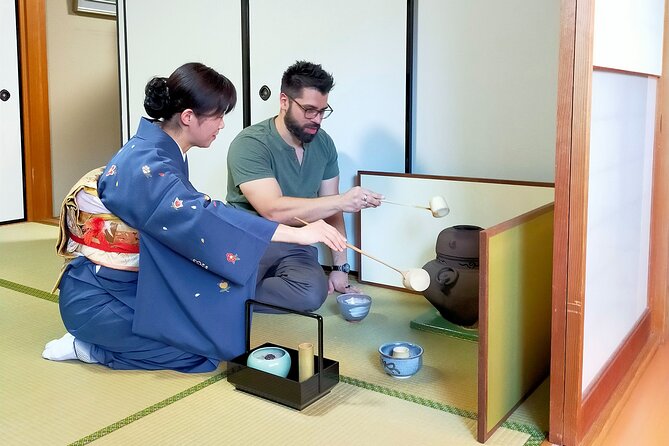
You must wear socks or bring a pair with you. Bare feet are not allowed in the room. Easy-to-remove shoes are also recommended because you will enter a Japanese-style home and room.
Tatami seating can be uncomfortable if you have trouble kneeling or sitting on the floor. The provider can prepare chairs instead, but you need to state how many chairs are required when you reserve. Do not assume you can decide at the last moment.
The experience is not suitable for children aged seven or younger. Children aged eight to twelve must attend with at least one adult. This age rule matters because the session includes a formal room, food preparation, and hot tea.
The activity is also not recommended for anyone who does not take caffeine. You receive two bowls of matcha, so this is more than a symbolic taste.
Is $52.26 a fair price?
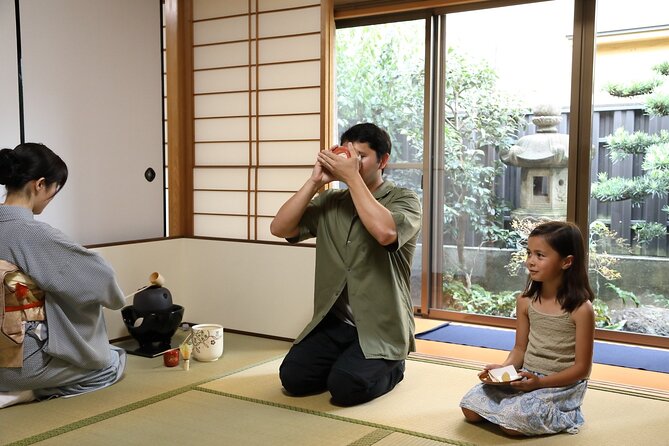
At $52.26 per person, this is not the cheapest way to drink tea in Kyoto. You are paying for more than a bowl of matcha, though. The price includes the wagashi lesson, ingredients, two bowls of matcha, traditional confectioneries, instruction in English, and all fees and taxes.
I see the strongest value in the combination of activities. A short tea ceremony alone might feel finished once the demonstration ends. A cooking class alone might lack cultural context. Here, the sweet-making lesson explains what you eat, and the tea ceremony explains how it fits into Japanese hospitality.
The 75-minute length also works in the price’s favor if you have a busy Kyoto schedule. You get a focused activity without losing an entire morning. The tradeoff is that the class teaches one type of wagashi and gives you an introduction to tea ceremony, not an extensive cooking course or full study of chanoyu.
There is no hotel pickup, and gratuity is not included. You will need to reach the house yourself and decide if you want to tip. The price feels reasonable for a small group, local setting, English instruction, and hands-on preparation, especially if you value skills and cultural context over a simple tasting.
Who will enjoy this experience most?
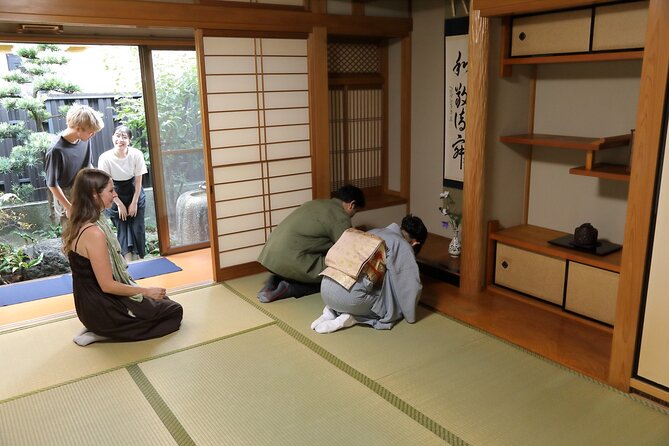
I would recommend this class to first-time Kyoto visitors who want a gentle introduction to Japanese customs. You get enough explanation to understand the ceremony, but the activity remains relaxed and manageable.
It also suits families with older children. Kids aged eight and above can take part under the stated conditions, and the wagashi lesson gives them something active to do. Younger children cannot join, so families should check ages carefully before booking.
This is a good match for anyone who likes food, crafts, and small cultural lessons. You make something with your hands, eat it, and then learn how to prepare matcha. That sequence gives the session a clear sense of purpose.
I would be more cautious if you dislike caffeine, cannot sit on tatami even with a chair, or want a private experience. The group can include up to eight people, and the ceremony follows formal steps. The option of chairs helps with comfort, but it does not turn the class into a free-form café visit.
The activity is also a good choice if you are staying near Fushimi Inari or planning to visit the shrine. Its location gives you a simple way to add a local house experience to a major sightseeing stop.
Booking and cancellation details
Reservations are normally made for two or more people. If you are visiting alone, you can contact the provider, since a solo booking may be arranged.
Confirmation is provided when you book. The experience is available with a mobile ticket, and you should bring socks and wear shoes that come off easily. If you need chairs, include that request during booking.
Free cancellation is available up to 24 hours before the 9:45 a.m. start time for a full refund. Cancellations or changes made within 24 hours are not refunded or accepted. Weather-related cancellations can result in a different date or a full refund.
Should you book the Fushimi Inari wagashi and tea ceremony?
Book it if you want a short, personal introduction to Japanese sweets and tea rather than a grand performance. The strongest reasons are the hands-on wagashi lesson, the chance to prepare your own matcha, the small group, and the local home setting near Fushimi Inari.
Skip it if you avoid caffeine, dislike formal etiquette, or want a longer cooking class with several recipes. For everyone else, $52.26 buys a useful cultural experience with a clear takeaway: you can make a traditional sweet, prepare matcha, and understand a little more about why the tea ceremony happens the way it does.
FAQ
Where does the wagashi and tea ceremony take place?
The experience takes place at 38-4 Fukakusa Watamoricho, Fushimi Ward, Kyoto, 612-0022, Japan.
How long does the experience last?
The activity lasts approximately 1 hour and 15 minutes.
What time does it start?
The scheduled start time is 9:45 a.m.
Is the activity near Fushimi Inari Shrine?
Yes. The experience is about a 10-minute walk from Fushimi Inari Taisha Shrine.
How many people can join the session?
The maximum group size is eight people.
Is the instruction given in English?
Yes. An English-speaking instructor leads the session, and the instructors are licensed guide interpreters.
What will I make during the class?
You will make one kind of wagashi, a traditional Japanese sweet. The exact type is not specified in the activity details.
How much matcha will I receive?
The experience includes two bowls of matcha. You will watch a ceremonial preparation and have the opportunity to prepare a bowl yourself.
Can I sit on a chair instead of the tatami floor?
Yes. Chairs can be prepared if requested when you make your reservation. You should state how many chairs you need.
Are children allowed to participate?
Children aged eight to twelve must attend with at least one adult. Children aged seven or younger cannot participate.
Do I need to wear socks?
Yes. You must wear or bring socks because bare feet are not allowed in the room.
Can I cancel for a refund?
Yes. You can cancel up to 24 hours before the start time for a full refund. Cancellations made less than 24 hours before the activity are not refunded.
Fresh tea listings around Kyoto
- Kyoto: Authentic Tea Ceremony in a Small Group★ 5.0 · 7 reviews
- Uji Walking Tour – Byodo-in temple and Tea Ceremony from Kyoto★ 3.5 · 3 reviews
- Traditional Tea Ceremony in Kyoto★ 4.5 · 3 reviews
- Tea Ceremony Experience in Traditional Kyoto Townhouse★ 5.0 · 19 reviews
- Tea Ceremony in 150 Years Old Townhouse with Tables and Chairs★ 5.0 · 22 reviews
- Tea ceremony at Kyoto’s Zen Temple Teahouse★ 5.0 · 2 reviews
- Sencha-do the Japanese Tea Ceremony Workshop in Kyoto★ 5.0 · 21 reviews
- Silent Beauty of Kyoto Zen Walk and Tea Experience★ 5.0 · 2 reviews
Tea Ceremony Experiences, compared.
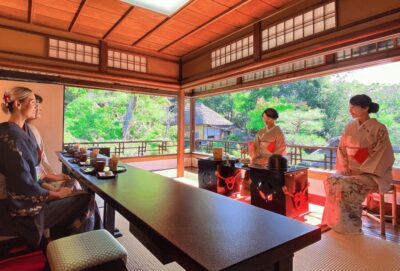
Kyoto: Tea Ceremony in a Traditional Tea House in Kiyomizu
Read our review →
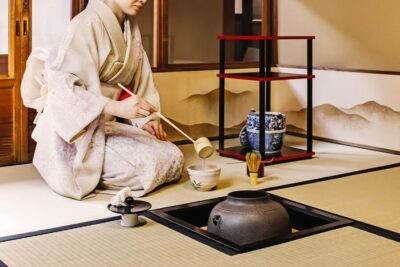
Kyoto: 45-Minute Tea Ceremony Lesson Experience
Read our review →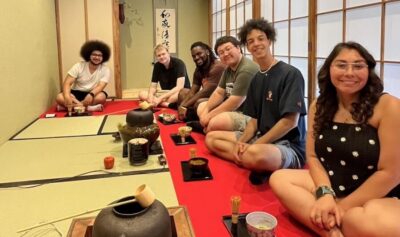
Kyoto: Table-Style Tea Ceremony at a Kyo-Machiya
Read our review →
Browse the lists this tour appears in