
Review · TEA CEREMONY EXPERIENCES
2 Types of Japanese Sweets making and Tea Ceremony
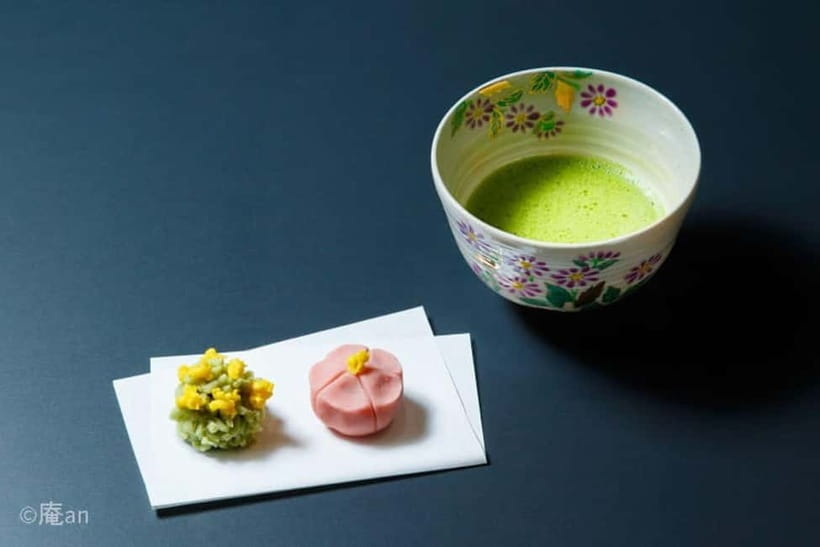
The most interesting part of this Kyoto experience is that you make three different Japanese treats, not just one. You shape delicate nerikiri from white or red bean paste, press traditional wasanbon sugar into dried sweets called ohigashi, then prepare your own bowl of matcha.
I like the use of bean paste from long-established Kyoto shops, and I like the seasonal designs, which give the sweets a clear connection to the time of year. The $28 price is also fair for 125 minutes of hands-on work. The main consideration is that the tea portion is casual and instructional, not a formal, highly ceremonial tea performance.
At a glance: what you will make and learn
- Three hands-on activities: Make ohigashi, two seasonal nerikiri sweets, and your own matcha.
- Kyoto ingredients: Use white and red bean paste from established Kyoto makers and traditional wasanbon sugar.
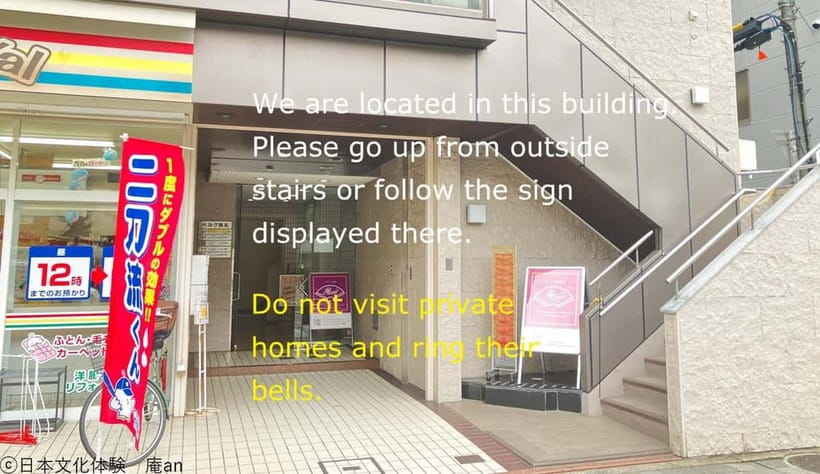
- A convenient location: Reach the venue in about one minute from Exit 1 of Gojo Station.
- Seasonal craftsmanship: Shape a flower-style nerikiri and a kinton nerikiri, with designs changing by season.
- Casual tea instruction: Watch a matcha grinding demonstration before preparing tea yourself.
- A useful language note: The instructor teaches in Japanese, with English translation provided as much as possible.
Three Japanese sweets in one 125-minute session
This is a compact introduction to several sides of Japanese confectionery. You are not simply watching a professional prepare sweets while you take pictures. You handle the ingredients and make the finished pieces yourself, with instruction along the way.
The program begins with an explanation of traditional Japanese sweets. That opening matters because Japanese sweets can look simple while depending on careful shaping, texture, color, and seasonal symbolism. A plain-looking bean-paste sweet may represent a flower, a leaf, or another sign of the season.
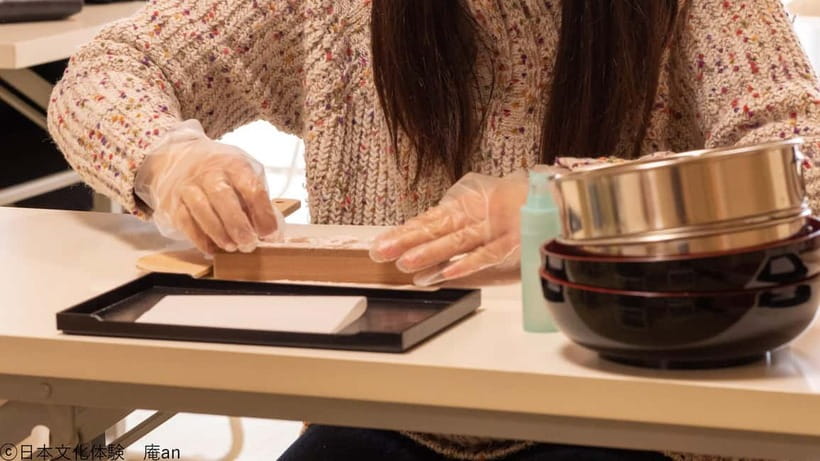
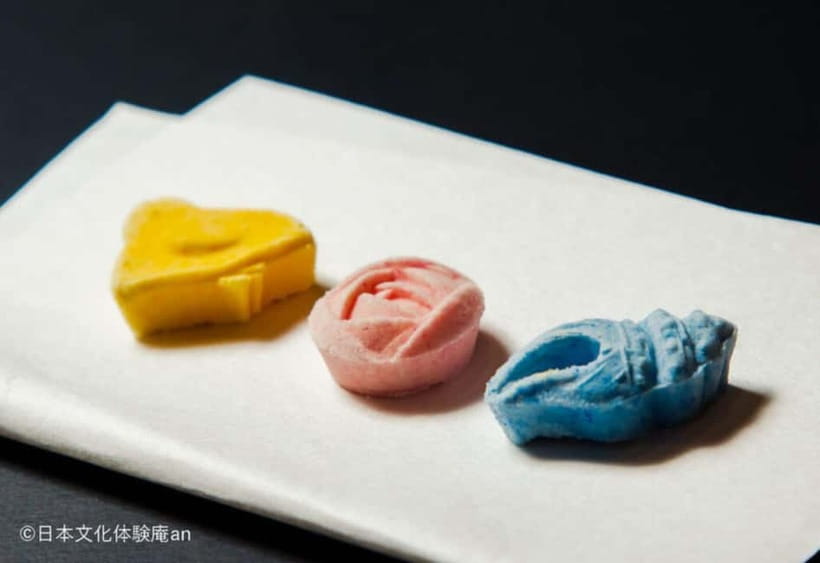
You then make ohigashi, a dried sweet made from wasanbon. Wasanbon is a fine traditional Japanese sugar prized for its delicate sweetness and smooth texture. This part gives you a useful contrast with nerikiri. Ohigashi is firm and dry, while nerikiri is soft and pliable.
After the first sweet, there is a short break before the fresh confectionery work begins. The schedule allows about 30 minutes for the initial ohigashi portion, followed by a break and then the nerikiri section. The pacing is sensible for beginners. You have time to listen, copy the steps, and fix small mistakes without racing through the work.
More Tea and Sweets Making in Kyoto
- Kyoto: Japanese Traditional Sweets Making and Tea Ceremony
★ 4.4 · 314 reviews - Kyoto: Traditional Tea Ceremony with Matcha & Sweets in Gion
★ 4.9 · 27 reviews - Kyoto Fushimiinari:Wagashi Making & Small Group Tea Ceremony
★ 5.0 · 14 reviews
Shaping seasonal nerikiri with Kyoto bean paste
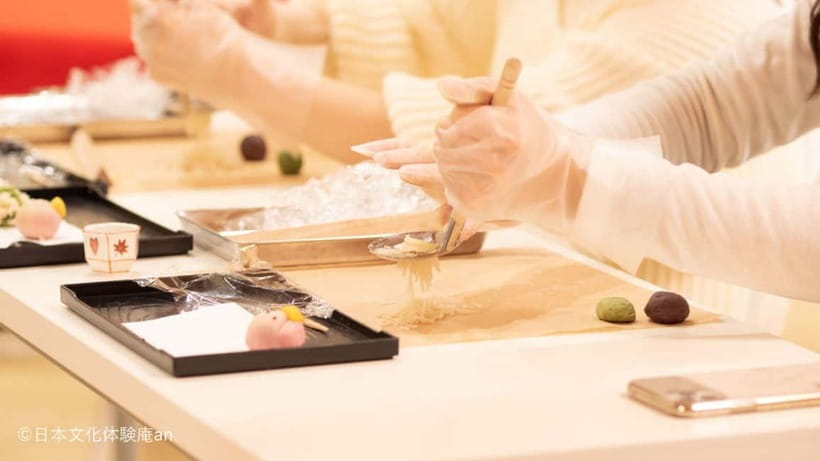
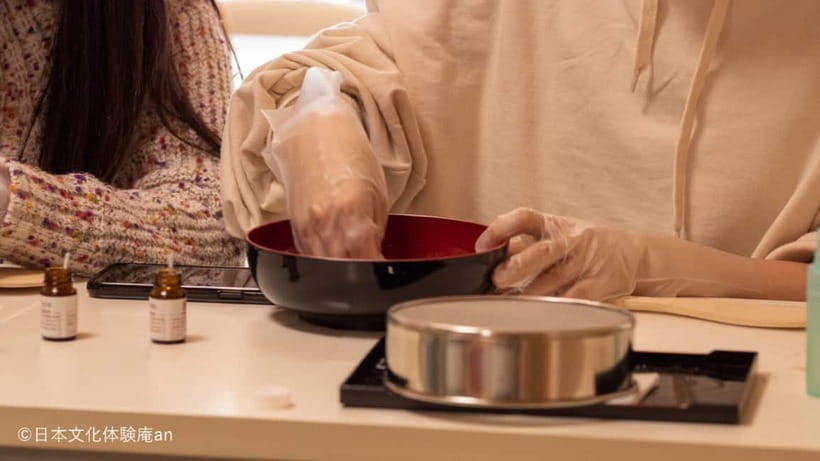
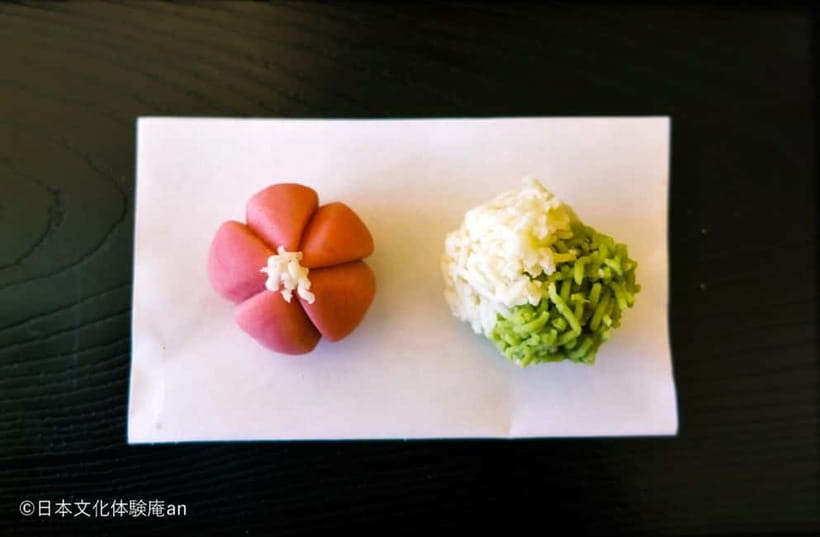
Nerikiri is the star of the food portion. It is a soft Japanese sweet made with bean paste, often shaped into flowers or other seasonal forms. Here, you make two types: a flower-shaped nerikiri and a kinton nerikiri.
The exact designs change with the season. That gives the activity more character than a fixed craft class because what you make reflects the calendar. Japanese sweets traditionally change throughout the year, so the shapes and colors can offer a small lesson in how seasonal ideas appear in everyday food.
The workshop uses white and red bean paste produced by long-established Kyoto shops. That is an important detail for anyone who cares about taste. The ingredients are not presented as generic craft material. You are working with the central filling used in many Japanese sweets, and the quality of the paste affects both flavor and texture.
You should expect a careful, hands-on process rather than a free-form cooking class. The goal is to follow traditional forms, especially when creating the flower and kinton shapes. You may find the shaping easier after watching the instructor demonstrate each step.
The activity is suitable for people who enjoy crafts, food, or photography. The finished sweets are small and visually neat, making picture time near the end a natural part of the session. If you want to add color, there is an extra charge of 200 yen. A take-out box costs another 100 yen, so bring a little extra cash if you want to preserve your creations rather than eat them during the visit.
The matcha portion: useful, relaxed, and not a formal ceremony
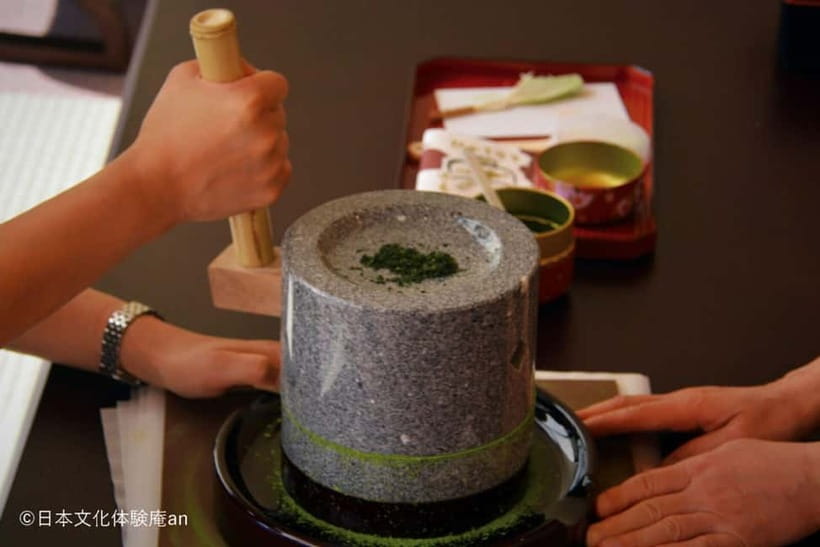
After the sweets, the instructor explains tea and demonstrates how matcha is ground. You then prepare your own matcha and take part in a casual tea experience.
This is where expectations matter most. The activity is called a tea ceremony experience, but the format is more of an introduction and guided preparation than a full formal ceremony. You learn about the tea, watch the demonstration, and make a cup yourself. That makes it approachable, especially if you have never handled matcha before.
The matcha is a special single-origin tea. You get to see how the powder is prepared before whisking your own bowl. For many people, this is more useful than only watching a tea master perform a polished ritual. You leave with a basic sense of the process, rather than just a few photographs.
Still, I would not book this expecting a quiet, intimate tea-room ceremony with elaborate etiquette. The room can feel more like a classroom, particularly if the group is noisy. One visitor found the setting too clinical and less personal than expected, while another felt the explanation was helpful and clear. Both points are worth holding in mind.
The best way to approach this portion is as a friendly cultural lesson. You will learn what matcha preparation involves and get to drink tea you made yourself. If the formal gestures and atmosphere of a traditional tea ceremony are your main reason for booking, you may want a more specialized tea event.
What the 125-minute schedule feels like
The timing is laid out in clear stages:
- At the start, you receive an explanation of Japanese sweets and make ohigashi.
- Around 20 minutes, there is a break.
- Around 30 minutes, you begin the flower-shaped nerikiri.
- You then make the kinton nerikiri.
- Around 85 minutes, another break begins.
- Around 95 minutes, the tea explanation and matcha grinding demonstration start.
- The tea experience is followed by picture time.
- Around 115 minutes, the main experience ends.
- The final minutes are set aside for eating and drinking before leaving at 125 minutes.
This structure gives you three different rhythms. The ohigashi portion is about pressing and forming. Nerikiri requires more delicate shaping. The matcha section slows things down and shifts from making sweets to observing and preparing tea.
The breaks are helpful. Sweet-making requires attention, and two hours of continuous instruction could become tiring. You also have a chance to look at what you have made before moving on.
The schedule is firm. The venue cannot hold the event for late arrivals, regardless of the reason. Plan to reach Gojo Station early, especially if you are unfamiliar with Kyoto’s subway exits. The entrance faces Gojo-dori, and the meeting point is one minute from Exit 1 of Gojo Station on the Karasuma Line.
More Tea Ceremonies in Kyoto
- Kyoto: Tea Ceremony in a Traditional Tea House in Kiyomizu
★ 4.9 · 3,519 reviews - Kyoto: Tea Ceremony Ju-An at Jotokuji Temple
★ 4.9 · 3,207 reviews - Kyoto: 45-Minute Tea Ceremony Lesson Experience
★ 4.3 · 2,378 reviews - Kyoto: Table-Style Tea Ceremony at a Kyo-Machiya
★ 4.9 · 1,211 reviews
English help and the role of the instructor
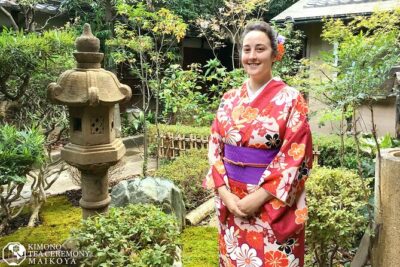
The official teaching language is Japanese, but English translation is provided as much as possible. This can vary in smoothness depending on the instructor and the group. Maiko received especially warm praise for being attentive and informative, and another participant found the instructor friendly, enthusiastic, and able to communicate well in English.
That makes this a practical option for English-speaking visitors, but you should not assume every explanation will be delivered in fluent English from start to finish. If you want to add English support, contact the venue in advance.
The activity depends on watching demonstrations as well as listening. Even with limited English, you may be able to follow the physical steps, but detailed cultural explanations could be harder to catch. A translation app may be useful for specific questions, though the provider asks you to contact them if you need language support.
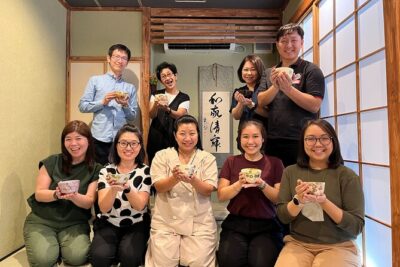
Group atmosphere can affect the experience. A quiet group will make the explanations and shaping work easier to follow. A loud group may make the room feel less intimate. This is a shared activity, not a private lesson.
Is $28 a good value in Kyoto?
At $28 per person, the price is reasonable for the amount of structured activity. You receive three connected experiences over 125 minutes: two kinds of confectionery work and matcha preparation. Many short cultural activities charge nearly as much for one demonstration or one simple food-making task.
The value is strongest if you like doing things with your hands. You get more than a tasting, and you can compare the dry texture of ohigashi with the soft texture of nerikiri. The tea portion adds another layer without requiring a full day or a major trip outside central Kyoto.
Budget for small extras. Adding color costs 200 yen, a sweets take-out box costs 100 yen, and a completion certificate costs 300 yen. None is required, but the take-out box may be worthwhile if you do not want to eat everything immediately.
The price does not buy a private setting or a highly formal tea ceremony. You are paying for access, ingredients, guidance, and several activities in one sitting. That is good value for a first look at Japanese sweets and matcha, as long as you understand the format.
Who should book this experience?
I would recommend it to first-time visitors who want an easy introduction to Japanese food culture. It suits couples, families with older children, solo visitors, and anyone who prefers a scheduled activity with clear instruction.
It is also a good rainy-day choice. The work takes place indoors, and the central Gojo location makes it easy to pair with other Kyoto plans. You can spend the morning or afternoon in the Gojo area without committing to a long excursion.
Food lovers will appreciate the Kyoto bean paste and seasonal focus. Craft-minded people may enjoy the shaping more than the tasting. Matcha beginners will benefit from preparing their own tea instead of simply drinking a cup served by someone else.
I would be more cautious if you want a silent, traditional tea-room atmosphere. The room may feel instructional rather than intimate, and the program includes several participants working through the same steps. It is also not ideal for anyone who strongly dislikes sweets or prefers a purely historical presentation.
Children under two who sit on a parent’s lap can attend free of charge. The activity is listed as wheelchair accessible, but the building has no elevator and each venue requires stairs. Contact the provider before booking if stairs are a concern, since the accessibility information needs to be checked against your specific needs.
Practical details before you go
The venue operates from 10:00 to 17:00. Reservations received after 17:00 are processed the next day, so do not expect an evening response.
Arrive early. The event will not wait for late arrivals, and the provider does not compensate transportation costs if you miss it. If you cancel within the permitted period, you can receive a full refund by canceling up to 24 hours in advance. Changes made after a cancellation fee has started may incur an additional specified fee.
Only paying participants may enter the experience. This matters if someone in your group plans to accompany you without making sweets or drinking tea.
The meeting point is particularly simple to find: use Exit 1 of Gojo Station, walk about one minute, and look for the entrance facing the main street, Gojo-dori. You can also keep the venue map open on your phone before leaving the station.
Should you book the sweets and matcha workshop?
Book it if you want hands-on Kyoto food culture at a fair price. The strongest part is the combination of ohigashi, two seasonal nerikiri, and matcha in one 125-minute visit. The Kyoto bean paste, wasanbon sugar, and changing seasonal shapes give the activity more substance than a generic sweets class.
Go in expecting a casual lesson, not a formal ceremony. English help is available as much as possible, but Japanese is the main teaching language, and the group setting can sometimes feel classroom-like. If that tradeoff works for you, this is an efficient and enjoyable way to make something, learn a little, and taste the results near central Kyoto.
FAQ
How long does the Japanese sweets and tea experience last?
The full experience lasts 125 minutes. The schedule includes sweets preparation, breaks, matcha instruction, tea preparation, picture time, and final eating and drinking time.
Where does the activity meet?
It meets one minute from Exit 1 of Gojo Station on the Subway Karasuma Line. The entrance faces Gojo-dori.
What sweets will I make?
You will make wasanbon ohigashi, a flower-shaped nerikiri, and a kinton nerikiri. The nerikiri designs match the season.
Is English instruction available?
The instructor teaches in Japanese, and English translation is provided as much as possible. Contact the provider in advance if you would like to request additional English support.
Is this a formal tea ceremony?
It is a casual tea experience. You receive an explanation of tea, watch a matcha grinding demonstration, and prepare your own matcha. It is not presented as a fully formal, traditional tea ceremony.
Can I cancel for a refund?
You can cancel up to 24 hours in advance for a full refund. Cancellation or reservation changes made after a fee has been incurred may result in additional charges.
Fresh tea listings around Kyoto
- Cycling Tour at Uji’s Matcha Green Tea Fields and Heritage★ 5.0 · 10 reviews
- Authentic Tea Ceremony & Sushi in The Museum of Kyoto★ 5.0 · 3 reviews
- Kyoto: Nighttime Zen Meditation and Matcha Tea Experience★ 5.0 · 7 reviews
- Kyoto Fushimiinari:Wagashi Making & Small Group Tea Ceremony★ 5.0 · 14 reviews
- Kyoto Hidden Riverside Zen Mediation and Uji Matcha Experience★ 5.0 · 9 reviews
- Whisk Your Own Matcha: A Zen Matcha Experience at Temple★ 3.6 · 7 reviews
- Matcha Grinding Experience and Walking Tour in Uji Kyoto★ 5.0 · 26 reviews
- Kyoto: Traditional Tea Ceremony with Matcha & Sweets in Gion★ 4.9 · 27 reviews
Tea Ceremony Experiences, compared.
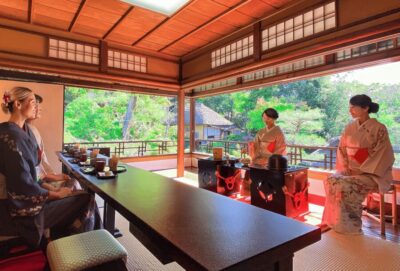
Kyoto: Tea Ceremony in a Traditional Tea House in Kiyomizu
Read our review →
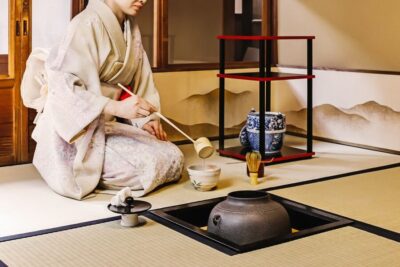
Kyoto: 45-Minute Tea Ceremony Lesson Experience
Read our review →
Kyoto: Table-Style Tea Ceremony at a Kyo-Machiya
Read our review →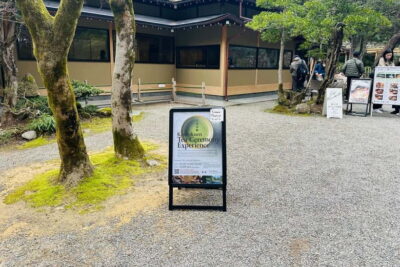
Browse the lists this tour appears in