
Review · MATCHA EXPERIENCES
Kyoto: Arashiyama Bamboo, Temple, Matcha, Monkeys & secret spots
Arashiyama is more than a bamboo photo stop. This five-hour walking tour connects the famous grove with a private garden, a major Zen temple, the Katsura River, and Monkey Park Iwatayama. It gives you a clear route through a district that can feel scattered when you explore it alone.
I like the small group of no more than 12 and the way the tour mixes quiet gardens with lively streets. I also like the useful human touches: guides such as Toru, Karim, Tom, and Francis explain local customs, suggest food, take group photos, and sometimes help with directions after the tour. The main drawback is the amount of walking, especially the steep 15 to 20-minute climb to the monkey park.
Key points at a glance
- Bamboo forest with more context: Learn how bamboo grows and how it is used, rather than simply stopping for photographs.
- Okochi Sanso Garden and matcha: Enter a private villa garden and rest in a former tea house with a warming bowl of matcha.
- Tenryu-ji included: See the temple buildings, garden, pond, and koi without arranging a separate ticket.
- A relaxed small-group pace: The maximum group size is 12, leaving room for questions and personal assistance.
- Monkey Park finish: The included ticket leads to a steep hill climb and broad views over Kyoto.
- Good value at $89.54: Three admission tickets and a guide make the price reasonable, though lunch and shopping are extra.
Why this Arashiyama walk works so well
Many people arrive in Arashiyama, walk through the bamboo, take a few pictures, and leave. That misses the point of the district. The best parts are spread across gardens, temple grounds, river scenery, small shops, and a hillside above the city.
This tour gives you a practical route through those sights. You do not have to work out which lane leads to Okochi Sanso, how to fit Tenryu-ji into the same morning, or where to find the entrance to the monkey park. Your guide also fills the gaps between stops with stories about Kyoto, Japanese customs, food, gardens, and temple life.
The experience is best understood as a guided walking circuit, not a sightseeing bus tour. You move on foot for most of the five hours, with time to stop, listen, take photos, and ask questions. The pace is generally described as relaxed, but relaxed does not mean easy. You cover a lot of ground.
More Matcha Experiences in Kyoto
- Kyoto: Tea Ceremony Meditation – Make Matcha with Tea Master
★ 4.8 · 406 reviews - Kyoto: Kimono Tea Ceremony with Matcha and Sweet
★ 4.9 · 249 reviews - Kyoto Matcha Green Tea Tour
★ 4.7 · 28 reviews
Starting in the bamboo grove and Kameyama Park
The tour begins near Sagatenryuji Kurumamichicho, close to the main Arashiyama sights and public transportation. Arrive 15 minutes early. The operator does not accept late arrivals, and a missed start does not qualify for a refund.
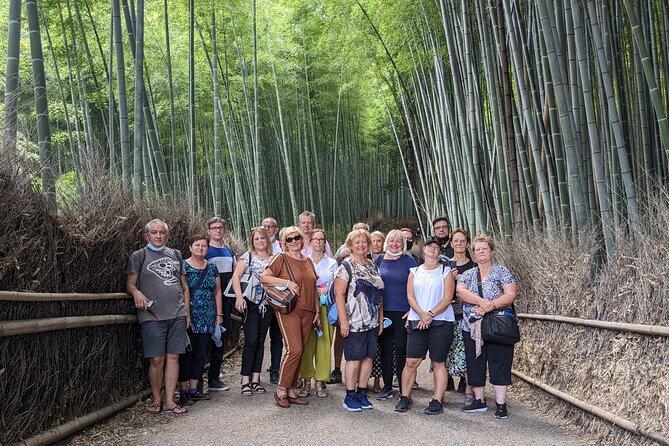
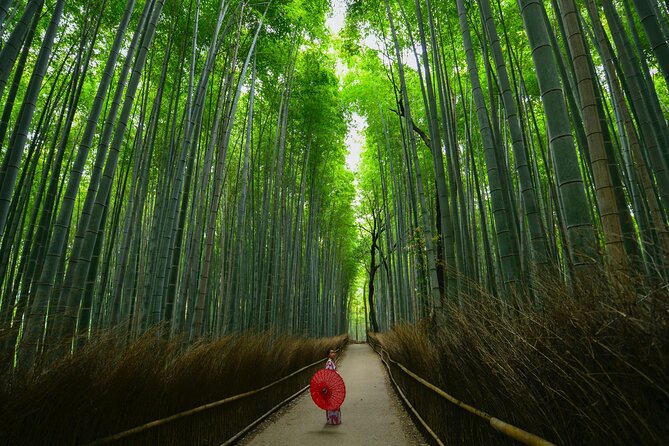
The first section takes you through Arashiyama Park and the bamboo grove, then toward the top of the Kameyama area. The bamboo is striking, but the guide adds value by explaining how it grows and what is made from it. That turns a quick photograph into a better understanding of a material that has long been part of Japanese daily life.
The park section also gives you a little more breathing room than the most crowded part of the grove. Your guide can point out quieter paths and photo positions, though no route can guarantee an empty bamboo forest. Arashiyama is one of Kyoto’s most popular districts.
The climb toward the park top is not the hardest part of the day, but it sets the tone. Wear shoes with a firm sole and expect steps, slopes, and uneven surfaces. If you want a gentle, mostly flat outing, this is not the right choice.
Okochi Sanso Garden and the matcha pause
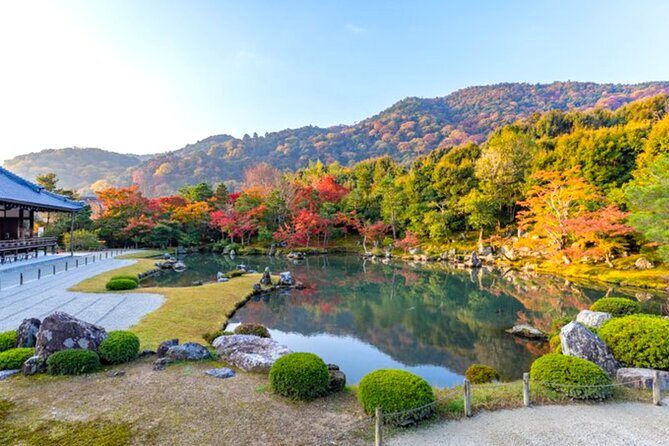
Okochi Sanso Garden is one of the tour’s strongest stops. This private garden, once connected with actor Denjiro Okochi, offers carefully arranged paths and views across the wooded hills. The experience is quieter and more reflective than the bamboo grove.
You have about 45 minutes here, enough time to walk rather than rush from one viewpoint to another. The garden is especially appealing in autumn, when the leaves add color to the paths and distant hills. In any season, the design encourages you to slow down and notice the relationship between buildings, plants, stones, and views.
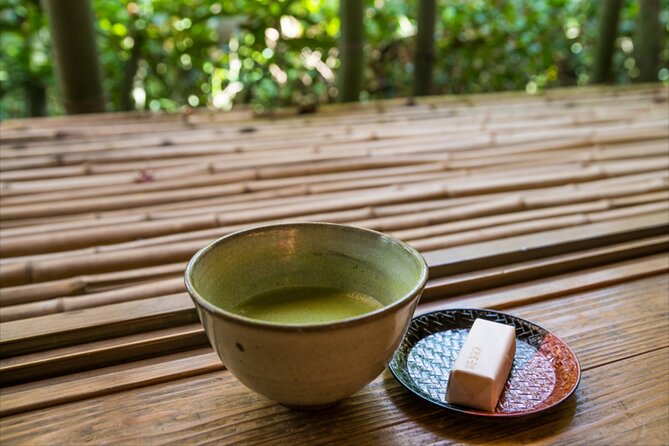
The included beverage is served in a former tea house used as a rest area. A warming bowl of matcha gives this stop a welcome pause after the first section of walking. It is not a full tea ceremony, so do not book this expecting a formal demonstration. Think of it as a quiet garden visit with a traditional drink and time to sit.
This is also where the tour feels most different from a standard Arashiyama checklist. The bamboo grove is famous, but Okochi Sanso gives you a calmer sense of place. I would particularly value this stop on a busy Kyoto day, when half an hour of quiet can make the rest of the itinerary more enjoyable.
Tenryu-ji Temple, koi, gardens, and Zen design
From Okochi Sanso, the route continues to Tenryu-ji, one of Kyoto’s best-known temples. Your included admission covers both indoor and outdoor areas, so you can see more than the temple gate and central garden.
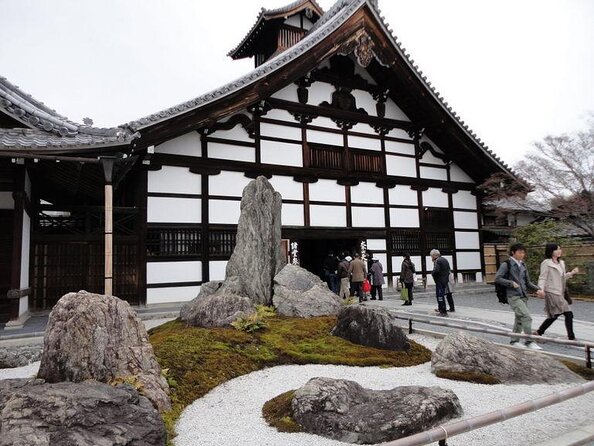
The temple visit combines architecture with a pond garden and koi. Your guide explains the setting and helps you notice details that are easy to pass without context. The emphasis is not only on famous names and dates, but also on how temple buildings, water, trees, and open space work together.
Tenryu-ji can feel busy, especially around the main approach. The guided visit helps you use your time well, although you should still expect other people around the grounds. The schedule allows about 45 minutes, which is enough for a meaningful introduction but not a slow, solitary study of every building.
Families may like this stop because there are visual details to keep younger visitors interested, including the koi and the garden. Guides have also been praised for pointing out small wildlife and giving children something specific to look for. Adults who want a long art or architectural lecture may find the time a little short, but the overview works well as part of a wider Arashiyama day.
Same city, a very different cup:
- Kyoto: Tea Ceremony in a Traditional Tea House in Kiyomizu
★ 4.9 · 3,519 reviews - Kyoto: Tea Ceremony Ju-An at Jotokuji Temple
★ 4.9 · 3,207 reviews - Kyoto: 45-Minute Tea Ceremony Lesson Experience
★ 4.3 · 2,378 reviews - Kyoto: Table-Style Tea Ceremony at a Kyo-Machiya
★ 4.9 · 1,211 reviews
Arashiyama shopping street and useful local help
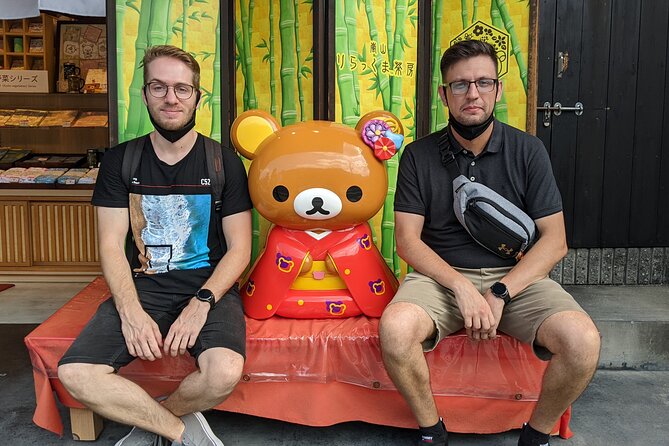
The shopping section lasts about an hour and gives you room to browse at your own pace. This is where the tour becomes less formal. You can stop at shops, ask for translation help, and get advice about food or souvenirs.
Lunch is not included, and this part of the route is a sensible time to buy a snack or plan a meal. Guides have helped people find local foods, including the custard-filled fish-shaped pastry known as taiyaki. They have also recommended restaurants and helped people locate specific items to buy in Japan.
Do not assume every shop stop is guided in detail. The point is assistance, not a group shopping program. If you have a particular food or souvenir in mind, tell your guide early. A small group makes that sort of personal request easier than it would be on a large coach tour.
The shopping street can also be the busiest and most commercial part of the experience. If your ideal Kyoto visit means only quiet temple grounds, you may find this hour less appealing. I see it as a useful contrast. Arashiyama is both a historic district and a major visitor destination, and the shops show that modern side clearly.
Togetsukyo Bridge and the Katsura River
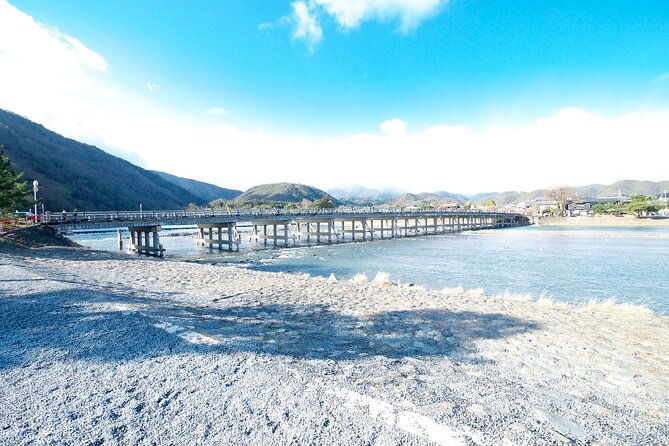
The stop at Togetsukyo Bridge is short, about 15 minutes, but it earns its place. The bridge crosses the Katsura River and gives you one of Arashiyama’s clearest broad views.
This is a straightforward photo stop. Your guide can help organize the group and point out the best general viewpoints, but you will not have long to wander. Use the time for photographs and a quick look at the river, wooded slopes, and bridge itself.
The bridge is especially attractive when the surrounding hills change color, but the view is worthwhile in other seasons too. Since this stop involves little physical effort, it gives you a brief reset before the final hill walk.
Monkey Park Iwatayama: a worthwhile but serious climb
The tour officially ends at the entrance to Arashiyama Monkey Park Iwatayama. Your guide gives you the ticket and instructions, then leaves you to make the uphill walk on your own. You can stay as long as you like and leave the park whenever you choose.
This arrangement is important to understand before booking. The monkey park is included, but the guide does not necessarily accompany you to the top. You are responsible for the final visit after the guided portion ends.
The climb takes about 15 to 20 minutes on a steep path. In hot weather, it can feel much longer, especially after several hours of walking. Bring water, sun protection, and comfortable shoes. The route may be manageable for most people in reasonable physical condition, but it is not suitable for anyone looking for a flat finish.
At the top, you can watch the monkeys and take in views over Kyoto. The monkeys are a major draw for families and children, and the park adds wildlife to a day otherwise focused on temples, gardens, and streets. Feeding rules and food choices matter, and one guide advised choosing apples rather than peanuts for the afternoon visit. Follow the park’s instructions and keep your attention on the animals.
The park may not be everyone’s favorite stop. Some people care more about the view than the monkeys, and the climb can be tiring in summer temperatures around 33 degrees Celsius. Still, the combination of animals and city views makes the effort worthwhile for many people.
Guides make the difference
The tour depends heavily on the guide. The strongest part of the experience is not simply getting admission to three sites. It is having someone connect them and answer the small questions that arise as you walk.
Toru is praised for humor, historical explanations, and lively personal stories. Karim is noted for his patience, local suggestions, and care with older members of the group. Tom is valued for explaining gardens, architecture, Japanese history, and culture. Francis is described as friendly and clear when discussing bamboo and shrines.
Guide assignments can change, so you should not book expecting a particular person. The consistent promise is an English-language guide, with French, German, or Spanish possible only if confirmed before booking. Japanese may also be available, but a preferred language other than English is not guaranteed on a shared tour.
A good guide also helps control the pace. Several guides have been especially attentive to children, older people, and visitors who need a little extra time. This matters because a five-hour walk can become unpleasant if the group is pushed too hard.
Price, group size, and what you receive
At $89.54 per person, the price is fair for a half-day guided walk in Kyoto. It includes the guide fee, Okochi Sanso Garden, Tenryu-ji, and Monkey Park Iwatayama. Buying those admissions separately would not provide the route planning, translation help, or local explanations.
The value is strongest if you want structure. You get several major sights in one outing and avoid spending part of your day comparing maps or finding entrances. It is also good value for first-time visitors who want an introduction to Arashiyama without booking a private guide.
The price is less attractive if you prefer to move slowly, linger in one garden, or choose every stop yourself. The shopping hour and scheduled temple visit may feel restrictive to independent explorers. Lunch, drinks beyond the included matcha, souvenirs, and transport to and from the area are not included.
The tour has a maximum of 12 people, which is small enough for questions but not private. A single person can book, yet the departure requires at least two participants. If that minimum is not reached, the session may be canceled with a rescheduling option or full refund.
Who should book this walk?
I would recommend it to first-time Kyoto visitors who want Arashiyama explained rather than simply photographed. It suits couples, families with active children, and adults who appreciate gardens, temples, local food tips, and a guide who can make the connections clear.
It is also a good match for people who feel overwhelmed by planning Kyoto. The route gathers the main Arashiyama sights into one manageable plan, and the guides often help with restaurant suggestions, purchases, translation, and onward directions.
I would hesitate to recommend it to anyone with limited mobility, difficulty on steep paths, or little tolerance for heat. It is also a poor fit if you want a private experience or a quiet day with no commercial stops. The monkey park climb is the key test. If that sounds unpleasant, you can still enjoy much of the tour, but you may not want to finish at Iwatayama.
Book at least a day ahead if you want flexibility. Free cancellation is available up to 24 hours before the start time. Poor weather or failure to reach the minimum group size can also lead to a new date or full refund.
Should you book the Arashiyama tour?
Book this tour if you want a guided introduction to the whole Arashiyama district, not only the bamboo grove. The private garden, matcha stop, Tenryu-ji, shopping street, bridge, and monkey park create a varied day, and the small group leaves room for personal questions.
Skip it if you want a short photo outing, a private guide, or a mostly flat route. For the right person, $89.54 buys a well-planned half-day and three included admissions. Just arrive early, wear proper shoes, prepare for the monkey park climb, and remember that the guide’s portion ends before you reach the top.
FAQ
How long does the Arashiyama tour take?
The tour lasts approximately five hours. The actual duration can be about 30 minutes shorter or longer.
Is this a private tour?
No. It is a shared walking tour with a maximum of 12 people.
Is the bamboo forest included?
Yes. The route explores the bamboo grove and the Kameyama area of Arashiyama Park.
Is matcha included?
A beverage is served in a former tea house at Okochi Sanso Garden. The tour description identifies it as a warming bowl of matcha.
Which admission tickets are included?
The Okochi Sanso Garden entrance, Tenryu-ji entrance, and Monkey Park Iwatayama entrance are included.
Does the guide go to the top of Monkey Park?
The tour officially ends at Monkey Park Iwatayama. The guide gives you the ticket and instructions, then you make the 15 to 20-minute uphill walk on your own.
How difficult is the walking?
The tour is a walking experience with several hours on foot. The Monkey Park section includes a steep 15 to 20-minute climb, so comfortable shoes and reasonable physical condition are important.
Can I cancel for a full refund?
You can cancel at least 24 hours before the start time for a full refund. Cancellations or changes made less than 24 hours before the start time are not refunded.
Fresh tea listings around Kyoto
- Cycling Tour at Uji’s Matcha Green Tea Fields and Heritage★ 5.0 · 10 reviews
- Authentic Tea Ceremony & Sushi in The Museum of Kyoto★ 5.0 · 3 reviews
- Kyoto Fushimiinari:Wagashi Making & Small Group Tea Ceremony★ 5.0 · 14 reviews
- 2 Types of Japanese Sweets making and Tea Ceremony★ 4.6 · 17 reviews
- Kyoto Hidden Riverside Zen Mediation and Uji Matcha Experience★ 5.0 · 9 reviews
- Whisk Your Own Matcha: A Zen Matcha Experience at Temple★ 3.6 · 7 reviews
- Kyoto: Nighttime Zen Meditation and Matcha Tea Experience★ 5.0 · 7 reviews
- Matcha Grinding Experience and Walking Tour in Uji Kyoto★ 5.0 · 26 reviews
Matcha Experiences, compared.
World Heritage Kyoto & Nara Uji Authentic Matcha Experience
Read our review →
Matcha Making Class in Tokyo with Authentic Japanese Sweets Set
Read our review →
Kyoto: Tea Museum Tickets and Matcha Grinding Experience
Read our review →
Matcha Making Class in Osaka with Authentic Japanese Sweets Set
Read our review →
Kyoto: Tea Ceremony Meditation – Make Matcha with Tea Master
Read our review →
Tokyo: Matcha Making Experience with Mochi Sweets in Asakusa
Read our review →
Kyoto: Kimono Tea Ceremony with Matcha and Sweet
Read our review →
Browse the lists this tour appears in