
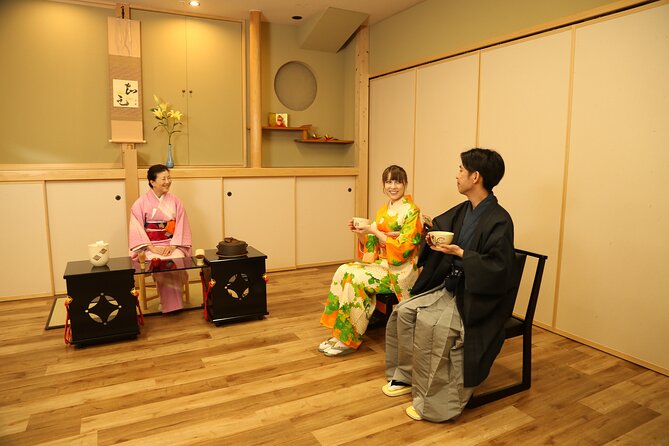
Review · TEA CEREMONY EXPERIENCES
Practicing Zen through Japanese Tea Ceremony
A Japanese tea ceremony gives you something Tokyo rarely does: 75 minutes of quiet attention. A bilingual tea master prepares matcha, explains the meaning of the ritual, and pairs the slightly bitter tea with traditional wagashi sweets. You then make tea yourself, following the same basic process.
I like the hands-on second ceremony, which turns a formal display into a practical lesson. I also like the focus on objects often missed in museums, including hanging scrolls and tea utensils. The main consideration is setting: one review describes a basement room in an office building, so this is more about the ceremony than a beautiful traditional teahouse.
Key points to know before booking
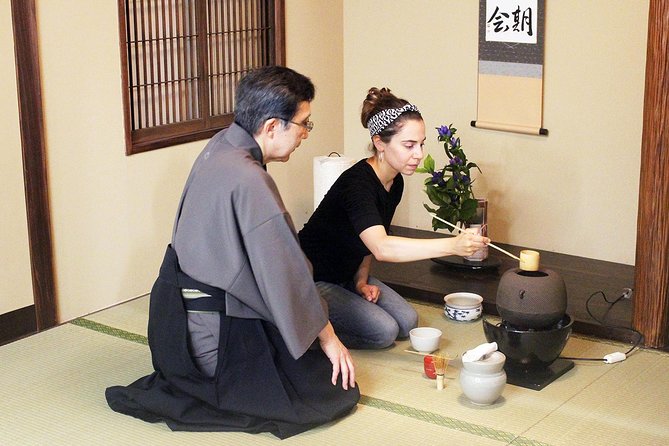
- You make your own matcha: After watching the tea master, you prepare a second bowl with step-by-step guidance.
- Zen is part of the lesson: The session explains the link between tea, mindfulness, respect, and Japanese aesthetics.
- Wagashi comes with the tea: Traditional sweets are selected to suit ceremonial matcha.
- Guides may include Miyuki or Yuuko: Both received specific praise for their warm teaching style, though your assigned tea master may be different.
- The setting is practical, not grand: The meeting point is Kikai Shinkō Kaikan in Shibakōen, and the room may feel more like a working venue than a historic tea house.
A quiet pause in central Tokyo
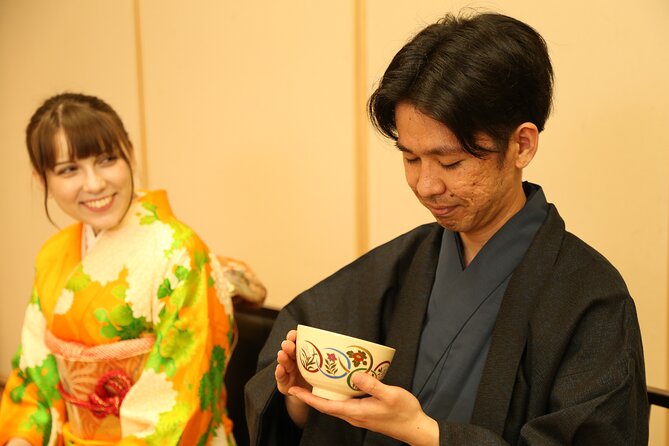
Tokyo can fill every minute of a trip. Trains, shrines, department stores, neon streets, and crowded sidewalks keep you moving. This tea ceremony offers a useful change of pace without requiring a full day away from the city.
The session is designed to recreate the atmosphere and formal steps of a traditional tea ceremony. You watch the tea master prepare matcha and sweets, listen to explanations of the ritual, and then take part yourself. That combination matters. A performance alone can leave you admiring the motions from a distance. Here, you get a chance to understand the sequence by doing it.
The experience lasts about one hour and 15 minutes. That is long enough to explain the background and allow hands-on practice, but short enough to fit into a busy Tokyo schedule. I would place it between larger sightseeing plans rather than treat it as a full afternoon activity.
The mood is calm, polite, and focused. One of the strongest points from the feedback is the sense of relaxation. A short meditation may also be included, and one participant particularly appreciated that quiet pause. Still, keep your expectations in check: the main subject is tea ceremony. The Zen material supports the ritual, but it is not a full meditation class or a long philosophical workshop.
More Tea and Calligraphy Workshops in Japan
- Tokyo: Practicing Zen with a Japanese Tea Ceremony
★ 4.7 · 105 reviews - Experience all of Japanese culture and Japanese food experience classes “origami, udon, Japanese food, green tea, calligraphy” in 4 hours
★ 5.0 · 105 reviews - Tokyo Morning Japanese Tea and Meditation Experience in Japan
★ 5.0 · 2 reviews
Meeting the tea master at Kikai Shinkō Kaikan
You meet at Kikai Shinkō Kaikan, 3-chōme-5-8 Shibakōen, Minato City, Tokyo 105-0011. The activity ends at the same place, and the venue is near public transportation.
The location is useful for planning, but it is not presented as a historic tea house or temple. One review describes the room as a basement space inside an office building. That setting may feel plain compared with the graceful wooden rooms often associated with tea ceremony. If an atmospheric building is your top priority, this is a real drawback.
On the other hand, a simple venue keeps the focus on the teaching. You are not paying mainly for gardens, architecture, or a famous address. You are paying for an explained and participatory ceremony. The meeting point also makes the activity easy to combine with other plans in Tokyo.
The group can reach a maximum of 28 people. That is not a tiny private lesson, and the feel may change depending on the number booked. A larger group can make the demonstration easier to watch than the hands-on portion, though the format is built around each person trying the process. Group discounts are available, which may help if you are booking for several people.
Watching the formal matcha preparation
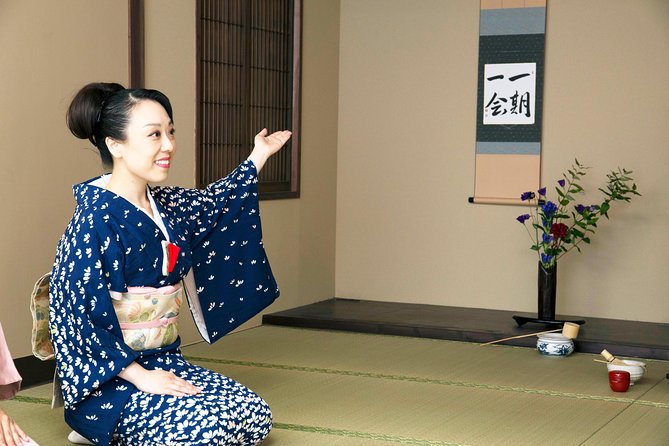
The first main part is the tea master’s demonstration. A licensed bilingual tea master prepares authentic matcha and traditional Japanese sweet confections. The tea master leading the performance has at least five years of experience.
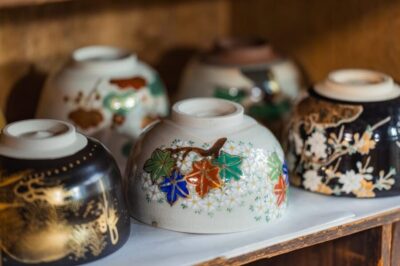
You are guided through the meaning behind the actions rather than simply watching a series of careful movements. The explanations cover the tea ceremony itself, its connection with Zen practice, and the role of items used in the room. You also learn about Japanese hanging scrolls and tea utensils, details that give the ritual a wider cultural setting.
This is where the experience works best for first-time visitors. Tea ceremony can seem slow or mysterious if nobody explains why each object and movement matters. The English guidance helps you read the ceremony as a form of hospitality, not just a method for making green tea.
The matcha is paired with wagashi. These sweets are not an extra snack added at random. Their sweetness helps balance the strong, grassy flavor of matcha. The pairing also shows how Japanese dining pays attention to contrast, order, and presentation.
You will likely notice that the ceremony values restraint. The focus is not on a large menu or elaborate entertainment. It is on a small number of carefully handled items and the attention given to receiving them.
Making your own tea, step by step
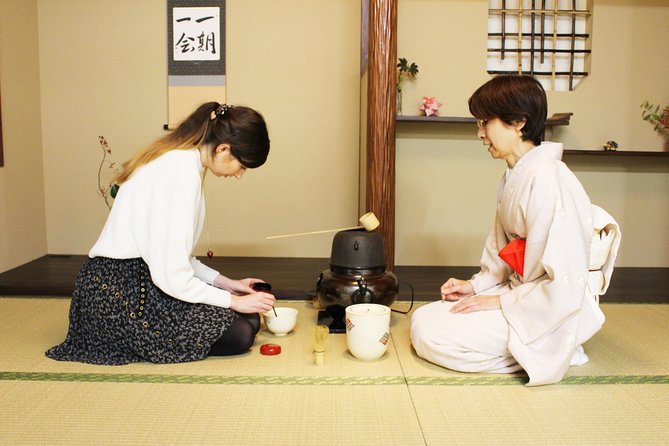
The most useful part comes after the demonstration. You prepare tea yourself, following the ceremonial process with instruction from the tea master. This second ceremony is included in the price, and it is an important reason to choose this experience over a simple demonstration.
When you handle the tea utensils and repeat the actions, the ritual becomes easier to understand. You are not expected to arrive with special training. The point is to follow the guidance, notice the order of the steps, and take part respectfully.
One participant specifically enjoyed making tea for other people in the group. That detail gives the session a social side, even though the overall mood is quiet. You are not only learning how to prepare matcha for yourself. You may also practice the host’s role and think about the care involved in serving another person.
This hands-on section should appeal to families, couples, and first-time visitors who want more than a lecture. It can also suit anyone who likes learning through practice. If you prefer to sit back and watch, the demonstration still gives you the main cultural context, but the second ceremony is the part that makes the booking feel active.
More Tea Ceremonies in Tokyo
- Kimono Tea Ceremony at Tokyo, Asakusa Maikoya
★ 5.0 · 638 reviews - Tokyo: Traditional Tea Ceremony with a Tea Master
★ 5.0 · 528 reviews - Tea Ceremony Workshop in Tokyo by the Experienced Instrucor
★ 5.0 · 189 reviews - Asakusa: Kimono Tea Ceremony with Matcha and Sweet
★ 4.9 · 153 reviews
What the Zen connection really means
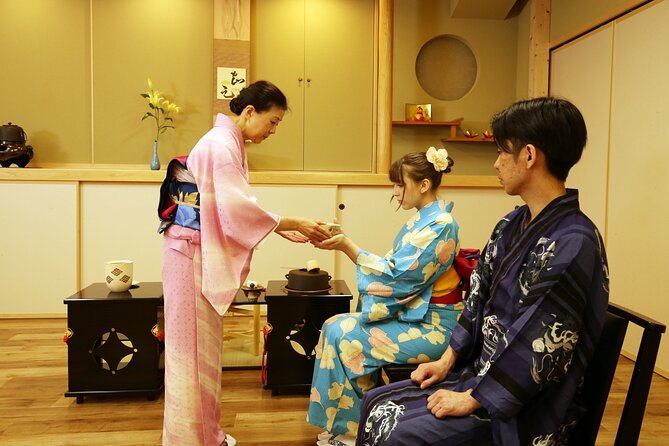
The title places Zen at the center, but the experience appears to treat Zen as a way of understanding tea ceremony rather than as a separate religious course. You learn about calm attention, respect, and the meaning behind the ritual while taking part in the preparation.
That distinction is important. One review found the session more focused on tea ceremony than on Zen theory or practice. I would book this if you want an introduction to the Zen ideas reflected in Japanese hospitality and aesthetics. I would not book it expecting an extended meditation retreat, formal Zen instruction, or a detailed study of Buddhist philosophy.
The brief meditation mentioned in the feedback may add a quiet moment, but it should not be the main reason you reserve. The strongest value lies in seeing how mindfulness is expressed through ordinary actions: preparing a drink, handling tools, receiving a sweet, and giving attention to another person.
The lesson also connects tea to Japanese aesthetics. The scroll, utensils, sweets, and movements are treated as parts of one setting. You begin to see why a tea ceremony is not simply about taste. It is also about time, space, manners, and the relationship between host and guest.
The value of $64.50
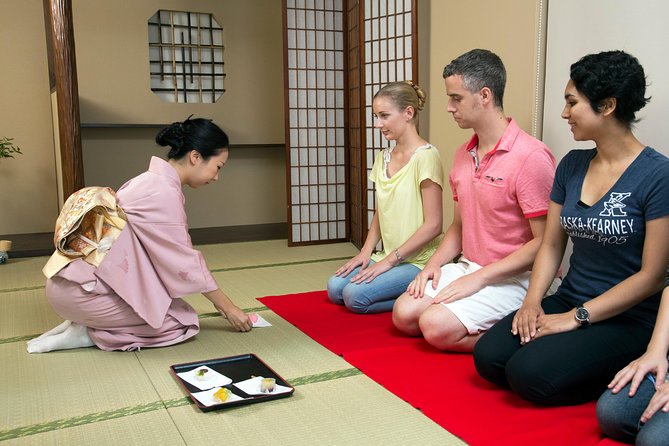
At $64.50 per person, this is not the cheapest way to taste matcha in Tokyo. You could find a drink and sweet for much less. The price makes more sense when you count the bilingual instruction, the tea master’s performance, the sweets, the cultural explanation, and your own guided preparation.
I see the value in the teaching rather than the food quantity. You receive authentic matcha and traditional confections, but this is not a meal and should not replace lunch. Extra food and beverages are not included.
The price is fair for a compact cultural lesson, especially if you want a structured activity and English explanations. It is less compelling if you only want a quick cup of matcha or expect a grand historic setting.
Group discounts can improve the deal for families or friends. The maximum group size is 28, so ask yourself how much personal attention you need. A private ceremony would offer a different level of intimacy, but this format gives you the chance to share the process with others.
The guides and teaching style
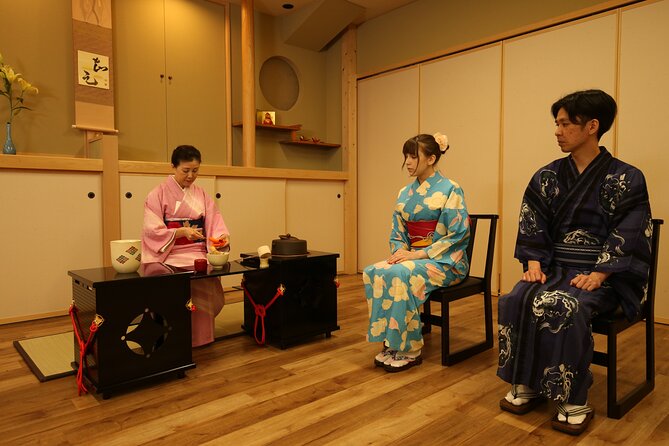
The guide matters greatly in a ceremony built on quiet instruction. Miyuki received warm praise for creating a comfortable and welcoming session. Yuuko was also singled out for a friendly welcome and for explaining the historical and cultural value of tea.
Those names help you understand the teaching style, but they do not guarantee who will lead your session. The included guide is a bilingual licensed tea master, and the performance is led by someone with at least five years of experience.
The best approach is to arrive ready to listen and follow the instructions. Tea ceremony includes manners that may be unfamiliar, and the guide is there to explain them without making the experience feel intimidating. You do not need to know the customs in advance.
The activity is also suitable if your group has different levels of interest. Someone fascinated by Japanese culture can focus on the history, utensils, and scrolls. Someone less familiar with the subject can simply enjoy the matcha, sweets, and calm pace.
Timing, transport, and booking details
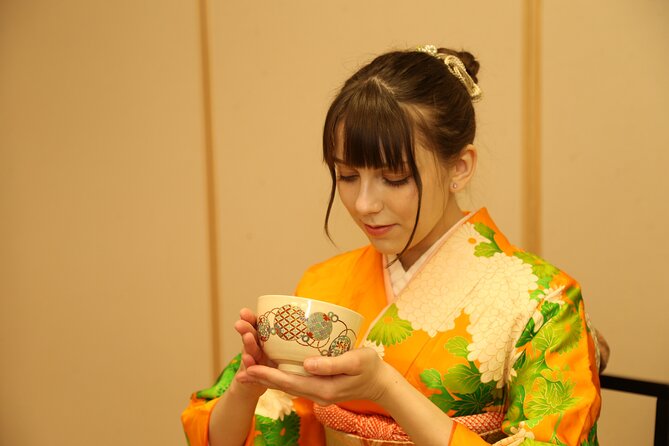
Plan for approximately 75 minutes at the meeting point. Since there is no pickup or drop-off service, you need to make your own way to Kikai Shinkō Kaikan. The location is near public transportation, and the activity returns to that same meeting point.
A mobile ticket is available, which is convenient if you are moving around Tokyo with your phone. Confirmation arrives within 48 hours of booking, subject to availability. Since the activity is booked an average of eight days in advance, reserving ahead is sensible, especially if you need a particular date.
Free cancellation is available if you cancel at least 24 hours before the start time. Changes or cancellations made within 24 hours are not accepted for a refund, and the cutoff follows local Tokyo time.
I would avoid placing this directly after an activity where you may arrive rushed. The ceremony depends on attention and quiet. Give yourself enough time to reach the office building and find the meeting point without hurrying.
Who should book this tea ceremony
This is a good match for you if:
- You want a guided introduction to Japanese tea ceremony.
- You prefer a cultural activity that lasts less than 90 minutes.
- You want to prepare matcha instead of only watching.
- You appreciate calm experiences during a fast city trip.
- You want English explanations of Zen ideas, utensils, scrolls, and hospitality.
- You are booking for a small group and can use the group discount.
You may want another option if you need a historic teahouse, a garden setting, or an extensive Zen lesson. The office-building location is practical rather than scenic, and the room may not deliver the visual atmosphere you imagine from films or traditional architecture.
I also would not choose this as a food tour. The sweets and tea are part of the ceremony, not a substantial tasting menu. Think of them as carefully matched elements in a cultural lesson.
Should you book it?
Book this experience if you want to slow down, learn the basic logic of tea ceremony, and make matcha under a tea master’s direction. The demonstration, wagashi pairing, explanations of scrolls and utensils, and hands-on second ceremony give you more than a quick cultural photo stop.
The main tradeoff is clear: strong instruction and participation, modest setting. If the room is a basement office space, you will not get the beauty of a temple garden or historic teahouse. But if you care most about understanding the ritual and trying it yourself, the setting may matter less.
At $64.50, I consider it a reasonable choice for a focused Tokyo activity, especially for first-time visitors to Japan, couples, families, and groups using the discount. Book it for the calm, the teaching, and the chance to practice. Skip it only if your priority is grand architecture, a full meal, or a serious Zen retreat.
FAQ
Where does the tea ceremony take place?
It takes place at Kikai Shinkō Kaikan, 3-chōme-5-8 Shibakōen, Minato City, Tokyo 105-0011, Japan.
How long does the activity last?
The experience lasts approximately 1 hour and 15 minutes.
Does the activity include transportation?
No. Pickup and drop-off services are not included. You make your own way to the meeting point, which is near public transportation.
Where does the activity end?
The activity ends back at the meeting point.
How much does the experience cost?
The listed price is $64.50 per person. Group discounts are available.
Is matcha included?
Yes. Authentic matcha green tea is included.
Are Japanese sweets included?
Yes. Traditional Japanese sweet confections are included and are selected to pair with ceremonial matcha.
Can I make tea myself?
Yes. After the tea master performs the ceremony, you prepare a second tea ceremony yourself with instruction.
Is the activity offered in English?
Yes. The bilingual licensed tea master explains the tea ceremony, Zen practices, Japanese hanging scrolls, and tea utensils in English.
How many people can join the activity?
The activity can have a maximum of 28 participants.
Can I cancel for a refund?
Yes, if you cancel at least 24 hours before the experience start time. Cancellations or changes made less than 24 hours before the start time are not accepted for a refund.
More Tea and Calligraphy Workshops in Tokyo
- Japan’s Customs of Ikebana Art, Tea Ceremony & Kimono Welcome
★ 5.0 · 2 reviews - Kyoto: Tea Ceremony Meditation – Make Matcha with Tea Master
★ 4.8 · 406 reviews - Osaka: Tea Ceremony, Calligraphy, and Kimono Experience
★ 4.9 · 130 reviews - An Amazing set of Cultural experience: Kimono, Tea Ceremony and Calligraphy
★ 5.0 · 69 reviews
Fresh tea listings around Tokyo
- Yokohama : Tea Ceremony with Sweets and Souvenir★ 5.0 · 5 reviews
- Walking Tour: Yanaka,Nezu& Sendagi: Tea Ceremony & Old Tokyo★ 5.0 · 3 reviews
- Private Mochi・Matcha sweets Making Class Near Shibuya Area★ 5.0 · 22 reviews
- Private Kimono and tea ceremony at local home near Tokyo Disney★ 5.0 · 6 reviews
- 2 Hours Mochi &Nerikiri Making & Matcha Class in Bunkyo★ 5.0 · 21 reviews
- Kimono and Tea Ceremony in Asakusa Private Food Tour With Guide★ 5.0 · 4 reviews
- Tokyo: Tea Ceremony & Japanese Sweets Making★ 5.0 · 10 reviews
- Tokyo Sweets Tour: Hidden Gems & Matcha at an Old Tea House★ 5.0 · 6 reviews
Tea Ceremony Experiences, compared.
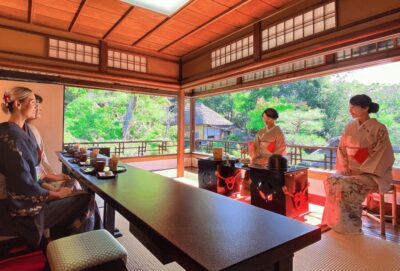
Kyoto: Tea Ceremony in a Traditional Tea House in Kiyomizu
Read our review →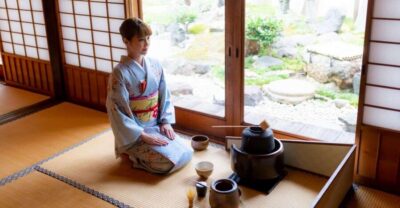
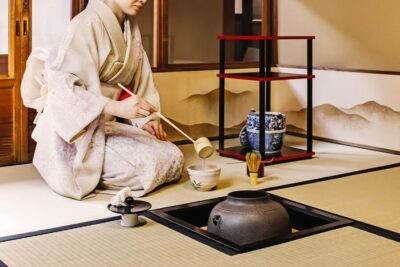
Kyoto: 45-Minute Tea Ceremony Lesson Experience
Read our review →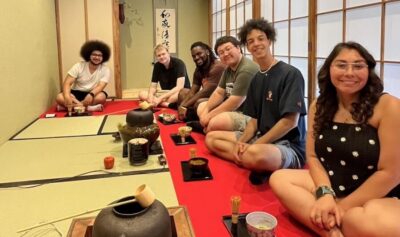
Kyoto: Table-Style Tea Ceremony at a Kyo-Machiya
Read our review →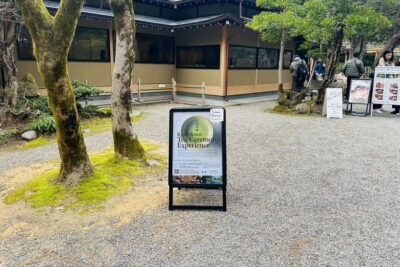
Browse the lists this tour appears in