
Review · TEA & CALLIGRAPHY WORKSHOPS
Tokyo Morning Japanese Tea and Meditation Experience in Japan
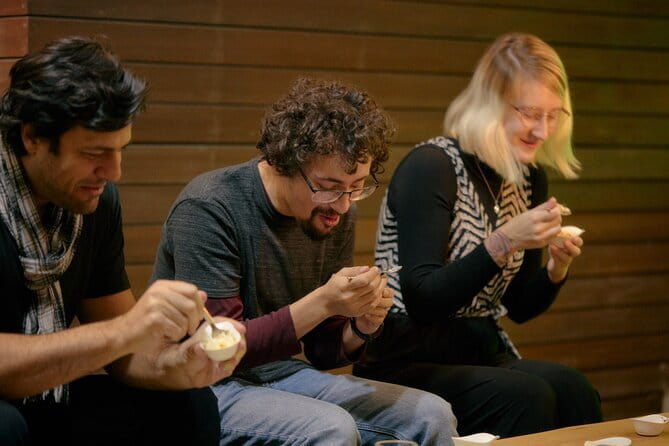
The unusual part of this one-hour Tokyo tea experience is that you do not simply sit back while someone pours matcha. You use one sencha from Shizuoka’s Ryuso, or Dragon Claw, area to make five different tea menus, including ice-brewed tea, edible tea leaves, and roasted leaves. It is part tea lesson, part hands-on food activity, and part quiet morning ritual.
I like the small maximum group of five, which gives the English-speaking guide room to explain the process and help you work through each preparation. I also like the early start, since 7:30 or 9:00 a.m. leaves most of your day free. The main consideration is the short length: this is a focused introduction, not a long tea ceremony or a full tour of Tokyo’s tea culture.
Key points at a glance
- Five tea menus from one sencha: Compare several ways to brew and eat tea rather than focusing only on hot-water preparation.
- A rare Shizuoka origin: The tea comes from the Ryuso, or Dragon Claw, area, giving the session a clear sense of place.
- You do the work yourself: Brew, taste, roast, and prepare the tea instead of receiving a finished demonstration only.
- A calm start in central Tokyo: The morning schedule offers a peaceful activity before a full day of sightseeing.
- Very small group: The experience accepts no more than five people, with English guidance available.
- Tea leaves to take home: A souvenir portion of tea leaves is included.
Why this is more than a standard tea tasting

Many visitors first meet Japanese tea through matcha. That is understandable, since matcha is famous and easy to find in Japan. This activity takes another route. It focuses on sencha, the loose-leaf green tea that is brewed in water, then shows you how much more you can do with the leaves.
The key idea is simple: one tea can change character depending on how you prepare it. Hot water is only one option. Here, you use cold or iced water, taste the leaves themselves, and roast them as part of the session. The point is not to rush through five samples. You are asked to notice the tea with your eyes, nose, mouth, and hands.
I find that approach useful because it turns tea from a passive drink into a small study in texture and flavor. You may notice how cold brewing changes the experience, or how roasting brings out a different scent. The supplied details do not name each of the five menus, so you should expect a guided sequence rather than a fixed restaurant-style menu with five clearly advertised dishes.
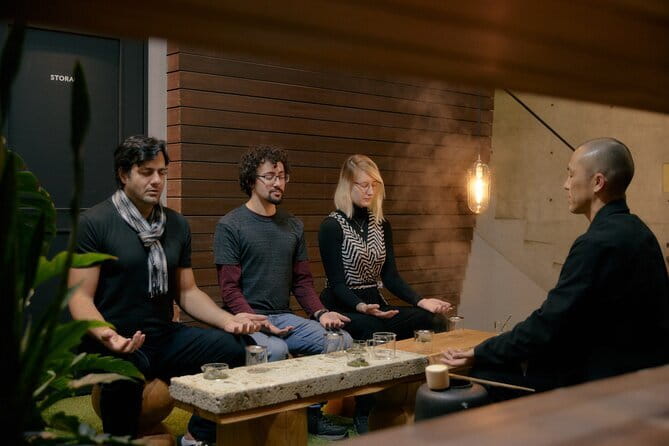
The session also has a meditation element. That does not mean you should expect a long formal meditation class. Instead, the brewing and tasting are meant to slow your attention. In the middle of Tokyo, the act of measuring, preparing, and tasting can give you a quiet hour before the day becomes crowded with plans.
More Tea and Calligraphy Workshops in Japan
Starting early near Sendagaya
You meet at Shun Sudo WallArt, at 3-chōme-55-18 Sendagaya in Shibuya, Tokyo. The experience returns to this same meeting point, so you do not need to arrange a separate pickup or find your way to another ending location.
There are two morning departures: 7:30 a.m. and 9:00 a.m. I would choose the earlier time if you enjoy starting the day quietly or want to fit major sightseeing into the rest of your schedule. The 9:00 a.m. option is kinder to anyone who has had a late arrival or needs a little more time to reach Sendagaya.
The meeting point is near public transportation, but private transportation is not included. You are responsible for getting there. Since the activity is short and begins at a set time, allow enough time to locate the address rather than arriving at the last minute.
The early schedule is one of the strongest practical features here. A one-hour activity can fit before a museum, shopping, neighborhood walk, or other morning plan. You should still check your own route carefully, since the supplied information does not give a hotel pickup service or transportation from central Tokyo stations.
Using one Shizuoka tea in five ways
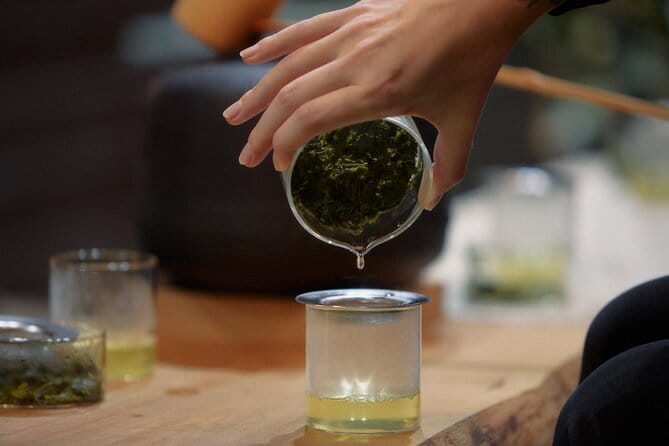
The tea comes from a single origin in Shizuoka Prefecture, from a less familiar area called Ryuso, or Dragon Claw. That detail gives the session a useful focus. Instead of sampling unrelated teas and trying to remember which was which, you follow one set of leaves through several preparations.
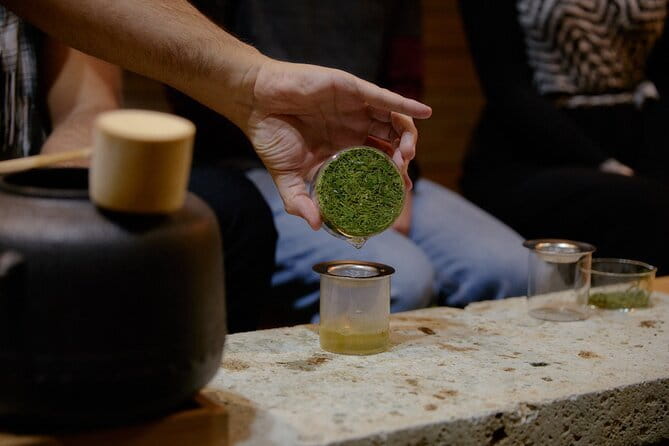
You will create and taste five menus using those leaves. The stated examples include brewing the tea with ice water, eating the tea leaves, and roasting them. The remaining preparations are part of the five-menu sequence, but their exact names are not provided, so it would be wrong to promise specific recipes.
This is also where the activity differs from a normal tasting counter. The instructor does not simply prepare every cup and hand it to you. You are expected to brew and cook the tea yourself, with guidance in English. That makes the session more active and gives you a better chance of remembering the techniques after you leave.
The hands-on format may not suit someone who wants a polished, silent tea ceremony. It is more practical than ceremonial. You will likely spend part of the hour listening, part preparing, and part tasting. The value comes from taking part, not from watching an expert perform every step.
The meditation value of a simple routine
The experience describes itself as a morning meditation using tea. I would treat that as a mood and method rather than a promise of a formal spiritual lesson. The quiet attention comes from the process: preparing the leaves, watching the water, tasting carefully, and noticing how a single ingredient changes.
That can be especially welcome after a busy arrival in Tokyo. The city offers endless noise, movement, signs, trains, and choices. This session gives you one small task at a time. You do not need prior knowledge of Japanese tea to take part, since the English-speaking guide explains what to do.
The activity also connects the drink to its growing region. The tea is presented as coming from the Ryuso area of Shizuoka, and the experience refers to the work of tea farmers and the craft of picking leaves. That context matters. You are not just sampling a generic green tea bought anywhere in Japan. You are learning about a particular origin and how preparation affects what you taste.
Still, keep the scale in mind. One hour cannot cover every detail of Japanese tea production, regional styles, farming methods, and ceremony traditions. If you want a long historical lecture or a formal tea ceremony in traditional dress, this is probably not the right choice. If you want a clear, practical introduction to sencha, it makes more sense.
More Tea and Calligraphy Workshops in Tokyo:
- Japan’s Customs of Ikebana Art, Tea Ceremony & Kimono Welcome
★ 5.0 · 2 reviews - Kyoto: Tea Ceremony Meditation – Make Matcha with Tea Master
★ 4.8 · 406 reviews - Osaka: Tea Ceremony, Calligraphy, and Kimono Experience
★ 4.9 · 130 reviews - An Amazing set of Cultural experience: Kimono, Tea Ceremony and Calligraphy
★ 5.0 · 69 reviews
Why the five-person limit matters
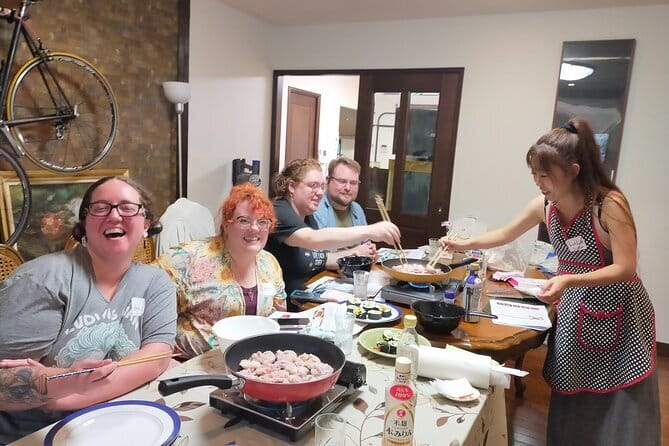
The maximum group size is five people. That is a real advantage for an activity that asks you to prepare food and drink yourself. You should have more room to follow the steps, ask questions, and compare what you taste with the people beside you.
A small group also supports the calm tone. A large class could make a meditation-style activity feel hurried or noisy. With only a few participants, the guide can watch how you brew and offer help when needed.
The tradeoff is that dates and spaces may fill quickly. The experience is booked, on average, 36 days ahead, which suggests that you should not assume you can decide at the last moment, especially if you have only a short stay in Tokyo. That booking pattern does not guarantee every date will sell out, but it is a useful reason to reserve before your trip.
An English guide is available. The information does not provide the guide’s name, so do not book expecting a named host. The important practical point is that the instructions are intended to be available in English, which makes the hands-on steps easier to follow.
The value of the $39.25 price
At $39.25 per person, this is priced above a simple cup of tea but below many longer Tokyo activities. You are paying for a guided lesson, several preparations from one tea, the chance to make the items yourself, and a tea-leaf souvenir.
The value is strongest if you are curious about Japanese food culture and want an activity rather than a quick tasting. Five preparations in an hour gives you a compact way to compare techniques. You also leave with a better idea of how sencha differs from matcha and how tea leaves can be used beyond drinking.
The value is weaker if you mainly want a large quantity of food, a long ceremony, or a broad tour of Tokyo. The included food is described as snacks, not a meal. You should plan breakfast separately if you need something substantial.
I would also judge the price by the group size. A maximum of five creates a more personal setting than a large public demonstration. For someone who enjoys learning by doing, that small-group format helps justify the cost. For someone who only wants to drink tea, a café will be cheaper and more flexible.
Who should book this morning activity
I would recommend it most strongly to people who enjoy Japanese food, regional products, and small cultural lessons. It suits a solo visitor, a couple, or a small group that wants a calm start to the day.
It is also a good choice if you have already seen the most familiar side of Japanese culture. After temples, shopping streets, and major sights, a sencha session offers a narrower subject with more attention to process.
Families may find the hands-on format interesting, though the supplied information does not give a minimum age or details about child pricing. Anyone booking with children should confirm that the pace and preparation steps are suitable.
The activity may be less suitable if you dislike early starts, have limited mobility around the meeting point, or need a full meal. Service animals are allowed, and the activity is near public transportation. No private transport is included.
Booking, cancellation, and timing tips
Confirmation is provided at the time of booking, and the ticket is mobile, so you can keep the booking on your phone. I would save the address and start time before leaving your hotel, since a short activity can be difficult to join late.
Free cancellation is available if you cancel at least 24 hours before the local start time. Cancellations or changes made within 24 hours are not accepted and are not refunded. That policy is reasonable for a five-person activity, but it means you should avoid booking the session on a day when your Tokyo plans are uncertain.
The experience ends where it begins. There is no private transfer afterward, so you can continue from Sendagaya using public transportation or make your own way to the next stop.
What you take away besides tea leaves
The included tea-leaf souvenir is a small but useful addition. It gives you something connected to the lesson rather than a generic Tokyo gift. You may also leave with a practical sense of how cold brewing, roasting, and eating the leaves change the experience.
The strongest educational point is the attention to tea production and picking. The session connects the finished drink to the people and place behind it, including the farmers who grow and harvest the leaves in Shizuoka.
Do not expect to become a tea expert in one hour. You will, however, get a clear introduction to a side of Japanese tea that many first-time visitors miss. The activity teaches by letting you handle the ingredient, not only by giving you facts.
Should you book it?
Book this experience if you want an active, small-group introduction to sencha and like the idea of making five tea preparations yourself. The early time, English guidance, central Tokyo meeting point, and included souvenir make it easy to fit into a sightseeing day.
Skip it if you want a formal matcha ceremony, a full breakfast, or a longer lesson in Japanese tea history. At $39.25, the price makes the most sense for someone who values participation and careful tasting. For curious food lovers, it offers a thoughtful hour and a useful change of pace from Tokyo’s major sights.
FAQ
Where does the tea experience begin?
It begins at Shun Sudo WallArt, 3-chōme-55-18 Sendagaya, Shibuya, Tokyo 151-0051, Japan.
Where does the activity end?
The experience ends back at the meeting point.
How long does the experience last?
It lasts approximately one hour.
What time does the experience start?
There are two start times each day, 7:30 a.m. and 9:00 a.m.
Is an English-speaking guide available?
Yes, guide service is available in English.
How many people can join?
The activity has a maximum of five participants.
What kind of tea will I use?
You will use one type of Japanese green tea, sencha, from the Ryuso, or Dragon Claw, area of Shizuoka Prefecture.
What will I do during the session?
You will create and taste five menus using the tea leaves. The activities include ice-water brewing, eating tea leaves, and roasting tea leaves.
Is a souvenir included?
Yes, tea leaves are included as a souvenir.
Is transportation included?
No. Private transportation is not included, though the meeting point is near public transportation.
Can I cancel for a refund?
Yes, you can receive a full refund if you cancel at least 24 hours before the local start time. Changes or cancellations made less than 24 hours before the start time are not accepted or refunded.
More Morning Experiences in Tokyo
- Magnetic Island: Guided Bus Tour with Morning Tea
★ 4.8 · 129 reviews - Half Day Sea Kayak Tour from Batemans Bay with Morning Tea
★ 5.0 · 99 reviews - Hiroshima: Morning Hiking Tour with Open-air Tea Ceremony
★ 4.8 · 58 reviews - Sydney Harbour: 2-Hour Morning Yacht Cruise with Morning Tea
★ 4.8 · 42 reviews
Fresh tea listings around Tokyo
- Yokohama : Tea Ceremony with Sweets and Souvenir★ 5.0 · 5 reviews
- Walking Tour: Yanaka,Nezu& Sendagi: Tea Ceremony & Old Tokyo★ 5.0 · 3 reviews
- Private Mochi・Matcha sweets Making Class Near Shibuya Area★ 5.0 · 22 reviews
- Private Kimono and tea ceremony at local home near Tokyo Disney★ 5.0 · 6 reviews
- 2 Hours Mochi &Nerikiri Making & Matcha Class in Bunkyo★ 5.0 · 21 reviews
- Tokyo Sweets Tour: Hidden Gems & Matcha at an Old Tea House★ 5.0 · 6 reviews
- Kimono and Tea Ceremony in Asakusa Private Food Tour With Guide★ 5.0 · 4 reviews
- Tokyo: Tea Ceremony & Japanese Sweets Making★ 5.0 · 10 reviews
Tea & Calligraphy Workshops, compared.
Kyoto: Tea Ceremony Meditation – Make Matcha with Tea Master
Read our review →
Osaka: Tea Ceremony, Calligraphy, and Kimono Experience
Read our review →
Tokyo: Practicing Zen with a Japanese Tea Ceremony
Read our review →
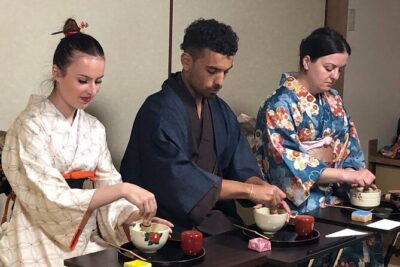
An Amazing set of Cultural experience: Kimono, Tea Ceremony and Calligraphy
Read our review →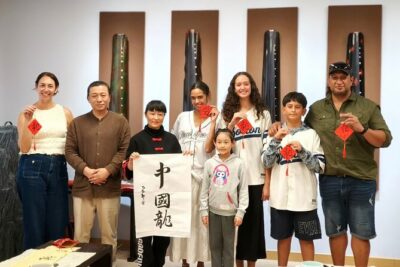
Beijing Culture: Tea Ceremony, Heritage Instrument & Calligraphy
Read our review →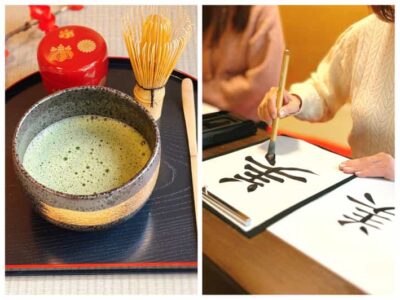
Osaka: Private Tea Ceremony and Calligraphy Experience
Read our review →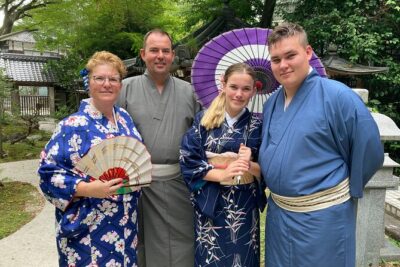
Cultural Activities :Kimono, tea ceremony, Calligraphy and Amulet
Read our review →Browse the lists this tour appears in