
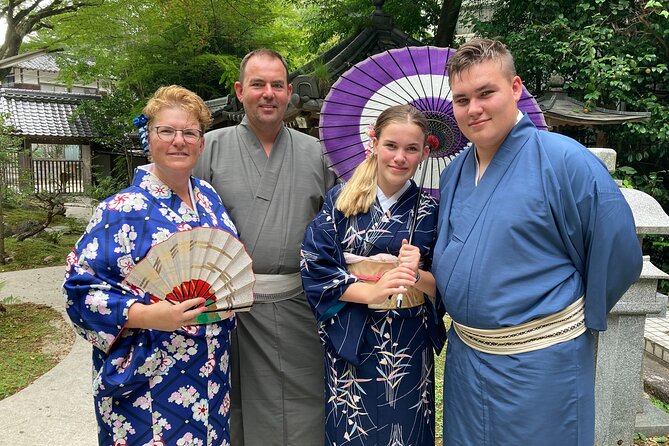
Review · KIMONO & TEA CEREMONY
Cultural Activities :Kimono, tea ceremony, Calligraphy and Amulet
Miyajima is best known for its giant torii gate and sacred shrine, but this experience takes you into a quieter corner of the island’s religious life. At about two hours, it packs kimono dressing, calligraphy, a tea ceremony, and amulet making into one visit at Tokuju-ji Temple, a Soto Zen temple founded roughly 300 years ago.
I like two things right away: you get to wear a kimono during all three activities, and the lessons are hands-on rather than a quick photo stop. The teachers also take pictures as you work and send them by email. The only catch is the price, $171.73 per person, which is high for a two-hour activity, so it makes the most sense if you value personal instruction and a keepsake experience.
Key points to know before you book
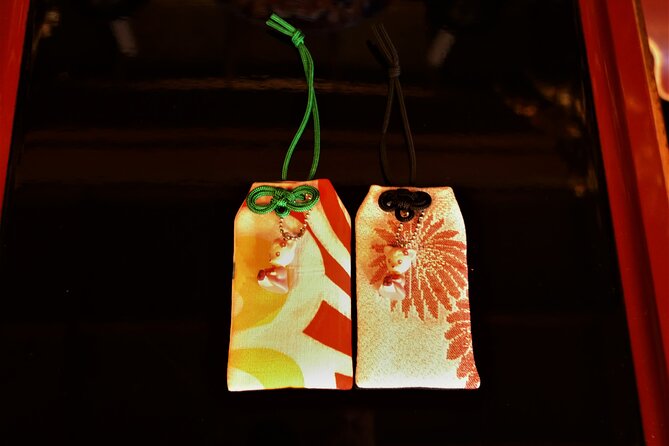
- Three activities in about two hours: You move through calligraphy, tea ceremony, and amulet making in one compact session.
- A real temple setting: Tokuju-ji is about 300 years old and honors Kinseki Jizo, a Buddha figure associated with protection for children and pregnancy.
- Kimono included: You wear a provided kimono and traditional apron during the lessons.
- Small groups: The maximum is 10 people, though the group may be smaller on your date.
- Photos are part of the experience: Teachers photograph you during the activities and send the images by email.
- Easy age range: Children from age 6 can take part, but anyone under 18 must be accompanied by an adult.
Tokuju-ji Temple gives the afternoon a sense of place
The meeting point is Okeiko Japan Miyajima, at 741-1 Miyajimacho in Hatsukaichi. The activity ends at the same place, making it easy to fit into a day on Miyajima without arranging a second pickup.
Tokuju-ji Temple was founded about three centuries ago and belongs to the Soto Zen school. Its main Buddha is Kinseki Jizo, connected with protection for children and pregnancy. The temple’s story tells of an older couple who prayed to Jizo for a child, later had a healthy son, and built the temple in gratitude.
That story gives the amulet activity more meaning than a simple craft project. You are not only cutting, tying, or decorating a souvenir. You are learning about a form of religious protection linked to the temple itself.
Miyajima’s religious sites can be a little confusing because Shinto and Buddhist traditions have shared the island for centuries. The temple notes that many local temples have ties to Itsukushima Shrine, so you may notice elements that feel connected to shrine practice as well. The setting helps explain why Japanese religious life does not always fit neatly into separate boxes.
The temple visit listed in the schedule is about 20 minutes, while the whole experience lasts approximately two hours. In practical terms, the temple is the setting for the lessons, not a long guided temple tour. If you want an extended explanation of the building or a full Miyajima sightseeing program, this is not that kind of outing.
More Tea and Calligraphy Workshops in Japan
- Kyoto: Tea Ceremony Meditation – Make Matcha with Tea Master
★ 4.8 · 406 reviews - Osaka: Tea Ceremony, Calligraphy, and Kimono Experience
★ 4.9 · 130 reviews - Experience all of Japanese culture and Japanese food experience classes “origami, udon, Japanese food, green tea, calligraphy” in 4 hours
★ 5.0 · 105 reviews
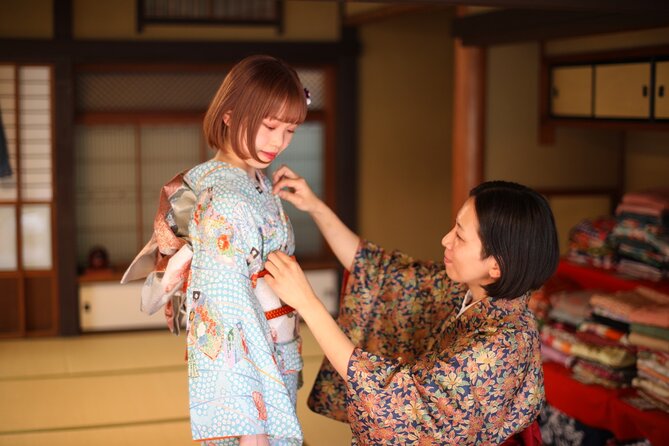
Putting on a kimono makes every lesson feel different
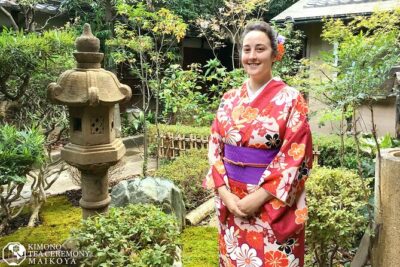
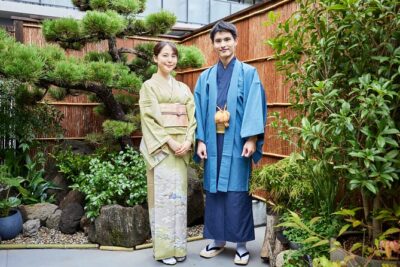
The provided kimono is more than a costume for one photograph. You wear it during the activities, along with a traditional apron, so the clothing becomes part of the session from start to finish.
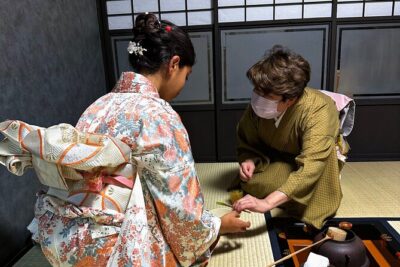
That matters because Japanese tea preparation and calligraphy are tied to posture, movement, and careful handling. Sitting and working in traditional clothing gives you a small sense of how formal these activities can feel. You are not simply watching a demonstration from a chair in ordinary street clothes.
The clothing also makes the photos more memorable. Teachers take photographs during the lessons and send them to you by email, so you do not have to ask a companion to document every step. This is especially useful if you are visiting alone or if everyone in your group wants to be in the pictures.
The practical tradeoff is that a kimono can make movement less casual. This is a short, structured cultural session, not a free-flowing workshop where you wander around at your own pace. Still, the clothing is one of the clearest reasons this experience feels more substantial than a standard photo rental.
Calligraphy gives you a souvenir you made yourself
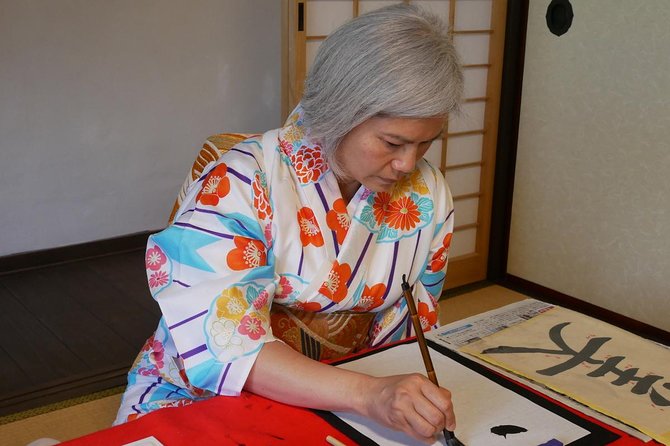
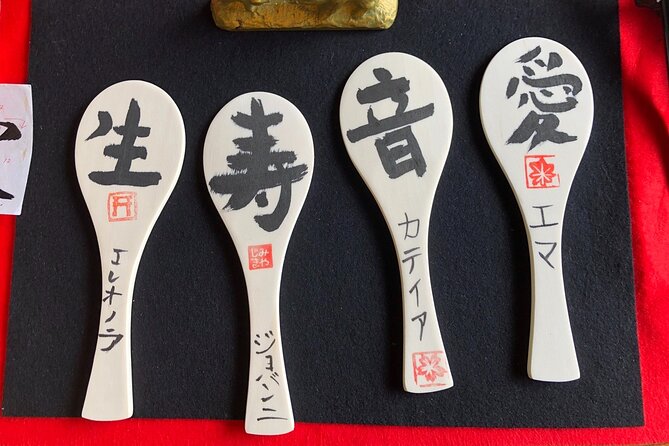
The calligraphy lesson focuses on writing your name in Japanese. That is a smart choice for a short session because you leave with something personal rather than practicing random characters with no connection to you.
Your teacher guides you through the forms and the way the brush is handled. The value is not perfect penmanship. It is learning why the strokes are made in a certain order and seeing how your name can be represented in Japanese writing.
I would approach this part with patience. Calligraphy rewards slow movement, and a first attempt may look less polished than the sample in front of you. That is part of the point. You get to see how much control is required to produce a clean character.
For families, this may be the easiest activity to compare afterward. Children can recognize their own names, and adults have a natural souvenir to keep. The minimum age is 6, so the activity is open to younger children who can follow instructions and sit through a short lesson.
The main limitation is time. With roughly half an hour devoted to each activity, you should expect an introduction and guided practice, not an advanced calligraphy class. If your main goal is to study Japanese writing in depth, you will need a longer workshop elsewhere.
The tea ceremony is about rhythm, not just matcha
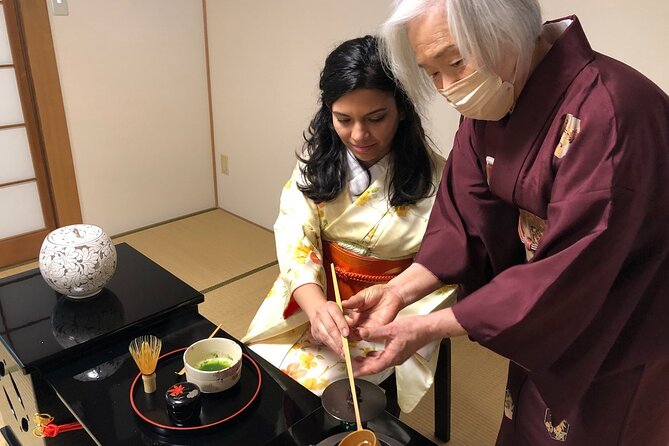
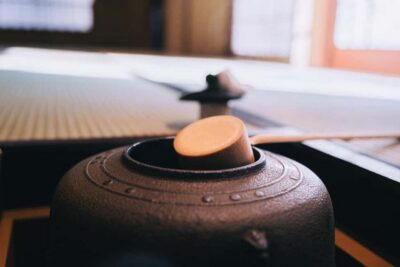
The tea ceremony portion teaches you how to prepare matcha and perform the basic steps of the ceremony. You will likely notice that the experience feels slower and more deliberate than ordinary tea service.
The charm comes from the sequence: preparing the tea, handling the utensils, and paying attention to each movement. Even in a short lesson, you can see that the ceremony is built around care and order rather than speed.
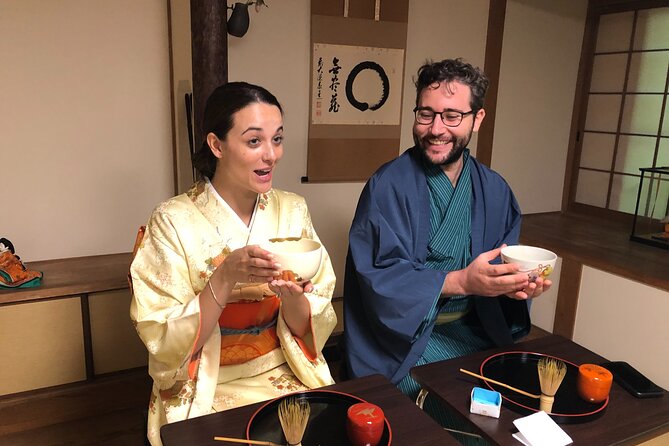
This is also where the kimono adds the most atmosphere. Wearing traditional clothing while preparing matcha in a temple setting makes the activity feel connected to its surroundings. You are not just sampling a drink. You are learning a small set of actions with social and cultural meaning.
The tea ceremony may be less comfortable for anyone who dislikes formal instruction or sitting in one place. The experience is designed to teach you the basic process, not to let you casually experiment. That structure is useful for first-time visitors, but it may feel brief if tea ceremony is your main reason for booking.
If you have never tried matcha, this is a gentle introduction. You will come away with a better idea of why preparation matters and why the ceremony is treated as a shared occasion rather than a quick beverage break.
More Tea Ceremonies in Japan:
- Kyoto: Tea Ceremony in a Traditional Tea House in Kiyomizu
★ 4.9 · 3,519 reviews - Kyoto: Tea Ceremony Ju-An at Jotokuji Temple
★ 4.9 · 3,207 reviews - Kyoto: 45-Minute Tea Ceremony Lesson Experience
★ 4.3 · 2,378 reviews - Osaka: Tea Ceremony Experience
★ 4.9 · 1,426 reviews
Amulet making is the most unusual part
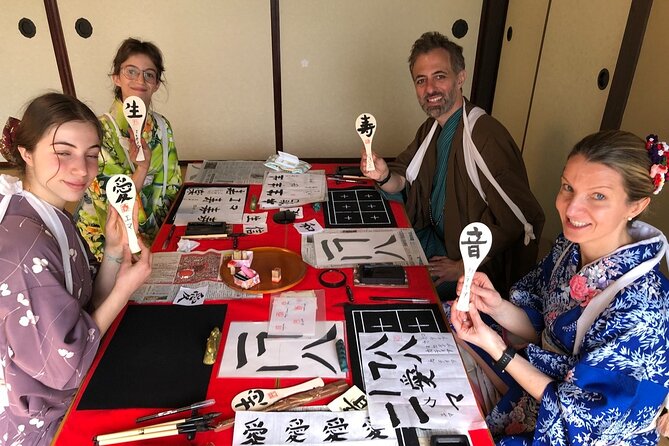
Amulet making is the activity that sets this experience apart from many introductory Japanese culture programs. Calligraphy and tea ceremonies are fairly common offerings. Making an amulet connected with a temple is less usual.
The class explains what goes into making an amulet and how these objects relate to Japanese religious practice. Because the temple’s central figure is Kinseki Jizo, the activity has a direct link to the place where you are learning.
I like this part because it gives you a better question to ask than simply What did I buy? You can think about what the amulet represents, who might carry one, and why people seek protection or good fortune from a religious site.
The amulet is also a useful choice for anyone who wants a souvenir with a story. A mass-produced charm from a shop can be attractive, but making one during a lesson gives it a personal connection to your visit.
As with calligraphy, this is a short introduction. Do not expect a long lecture on Buddhist belief or a detailed study of temple crafts. The session gives you a practical look at one tradition, then moves on to the next activity.
Small groups keep the lessons personal
The experience accepts a maximum of 10 people. That is a sensible limit for activities that involve clothing, calligraphy tools, tea utensils, and individual guidance.
A small group also makes it easier for the teachers to take photos of each person. The staff can watch your movements, answer questions, and help you correct a step without making the session feel like a large class.
The group may be smaller than the advertised maximum. One booking ended up as a private session, which can happen when demand is light. You should not assume you will have a private class, but a group of 10 or fewer is still manageable.
The teachers are described as personable and gracious, and the program is taught by women who share their customs directly with you. Their role is important because the experience depends less on sightseeing commentary and more on friendly instruction.
You do not need previous knowledge of Japanese culture. The activities are made for beginners, and most people can participate. Children must be with an adult, and the minimum age is 6.
How the two hours fit into a Miyajima day
Plan to meet at Okeiko Japan Miyajima and allow about two hours for the full experience. The lessons take place at the temple, and you return to the same meeting point when finished.
A likely flow is:
- Kimono and apron dressing
- Calligraphy practice, including writing your name in Japanese
- Tea ceremony instruction and matcha preparation
- Amulet-making lesson
- Photos during the activities, sent later by email
The exact order can vary, but each activity takes roughly half an hour. The temple portion is listed as about 20 minutes, so the program gives you a taste of the site without taking over your entire Miyajima visit.
This timing works well if you want to combine the experience with other island sights. You can place it between visits to Miyajima’s major religious and historic attractions, though the provided information does not give a fixed start time or detailed route from the ferry area. The meeting point is near public transportation, but you should follow the directions sent after booking and allow time to find Okeiko Japan.
The mobile ticket is useful when you are moving around Japan and do not want to carry printed paperwork. Confirmation is provided at booking.
Is $171.73 a fair price?
At $171.73 per person, this is not a bargain activity. You are paying for several things at once: clothing, instruction in three cultural practices, a temple setting, a small group, and photos taken during the session.
The price looks better if you would otherwise book separate kimono rental, calligraphy, and tea activities. Combining them saves time and gives the lessons a shared setting. It also helps if your Miyajima schedule is tight and you want more than a quick photo in traditional dress.
The value is weaker if you mainly want to wear a kimono for a few pictures. A shorter rental or photo experience would likely suit that goal better, though this activity includes instruction and the amulet lesson as well.
I would also consider how much you care about an authentic, guided introduction. The hosts explain the customs and give you something to make, rather than simply handing you props. That makes the cost easier to justify for first-time visitors who want a focused cultural encounter.
The experience is booked, on average, 52 days in advance. That suggests you should not wait until the day before if your Miyajima schedule is fixed, especially if you need a particular date or time.
Who will enjoy this most?
I would recommend it to first-time visitors to Japan who want a clear introduction to several traditions without spending a full day in a classroom. It also suits couples, families with children age 6 or older, and anyone who likes taking home a handmade souvenir.
It is a good fit for cruise passengers and people with limited time. One participant arrived from a cruise ship and still had time to find the location and complete the session. The compact format gives you a cultural activity without requiring a full-day commitment.
It also works well for people who enjoy photographs but want more substance than a costume rental. You receive pictures of yourself taking part in the lessons, not just posing in a garden.
I would hesitate if you dislike structured activities, sitting through demonstrations, or wearing formal clothing. The program moves from one lesson to the next, so you do not have much free time to explore the temple at your own pace.
Booking and cancellation details
You can cancel for a full refund up to 24 hours before the local start time. Cancellations made less than 24 hours ahead are not refunded, and changes inside that window are not accepted.
Most people can participate, and the activity is near public transportation. The minimum age is 6, children need an accompanying adult, and the group limit is 10. Since the session is held at a temple and involves several traditional activities, follow the instructions given by the staff during the visit.
Should you book this Miyajima cultural experience?
Book it if you want three genuine beginner-friendly activities in one place, especially if wearing a kimono and making an amulet appeal to you. The temple setting, personal instruction, and emailed photos give the session more weight than a simple dress-up stop.
Skip it if your priority is low cost, a long temple tour, or advanced study of any one tradition. At $171.73, the experience needs to be a meaningful part of your Miyajima day, not an afterthought.
For most visitors who want a compact and personal introduction to Japanese customs, I think the combination is worthwhile. The calligraphy gives you a personal keepsake, the tea ceremony shows you the value of careful ritual, and the amulet connects the lesson to Tokuju-ji’s religious setting.
FAQ
Where does the experience take place?
It takes place at Okeiko Japan Miyajima, 741-1 Miyajimacho, Hatsukaichi, Hiroshima 739-0588, Japan. The lessons are held at Tokuju-ji Temple.
How long does the activity last?
The full experience lasts approximately two hours. Each of the three main activities takes roughly half an hour.
What activities are included?
You learn Japanese calligraphy, take part in a tea ceremony, and make an amulet.
Is a kimono provided?
Yes. You wear a provided kimono and traditional apron during the lessons.
Will photos be taken?
Yes. The teachers take photos during the lessons and send them to you by email.
What is the group size?
The activity has a maximum of 10 participants.
What is the minimum age?
The minimum age is 6. Children must be accompanied by an adult.
Does the activity begin and end at the same place?
Yes. The activity ends back at the meeting point.
Is the experience near public transportation?
Yes. The meeting point is listed as being near public transportation.
Can I cancel for a full refund?
Yes, if you cancel at least 24 hours before the experience start time. Cancellations made less than 24 hours ahead are not refunded.
More Kimono and Tea Ceremonies in Japan
- Kimono Tea Ceremony at Kyoto Maikoya, NISHIKI
★ 5.0 · 911 reviews - Kimono Tea Ceremony at Tokyo, Asakusa Maikoya
★ 5.0 · 638 reviews - Kyoto: Kimono Tea Ceremony at Orizuruya Gion
★ 4.9 · 618 reviews - KYOTO Tea Ceremony with kimono near by Imamiya Jinjya Shrine
★ 5.0 · 343 reviews
Fresh tea listings around Japan
- Cycling Tour at Uji’s Matcha Green Tea Fields and Heritage★ 5.0 · 10 reviews
- Authentic Japanese tea tasting: sencha, matcha and gyokuro★ 5.0 · 12 reviews
- Asakusa Cultural Walk & Matcha Making Tour★ 4.5 · 7 reviews
- Authentic Tea Ceremony & Sushi in The Museum of Kyoto★ 5.0 · 3 reviews
- At an Antique Shop, Tea Ceremony and Japanese Sweets Forming★ 5.0 · 5 reviews
- Authentic Japanese Tea Ceremony Experience in Kamakura★ 4.5 · 8 reviews
- Japanese Sweets Making & Tea Ceremony in Yokohama, suburban Tokyo★ 5.0 · 4 reviews
- Matcha tasting for all five senses at Hotel Yokohama★ 5.0 · 7 reviews
Kimono & Tea Ceremony, compared.
KYOTO Tea Ceremony with kimono near by Imamiya Jinjya Shrine
Read our review →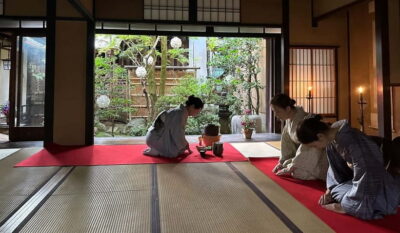
Kyoto: Kimono and Tea Ceremony Experience at Cultural Asset
Read our review →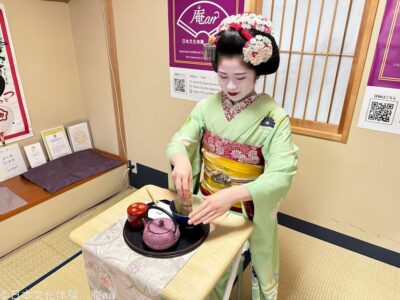
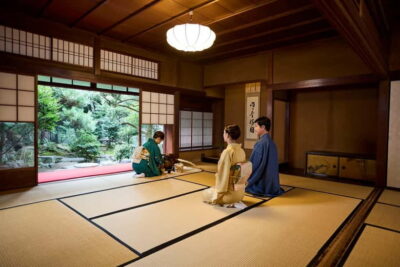
Kyoto: Kimono Tea Ceremony with Matcha and Sweet
Read our review →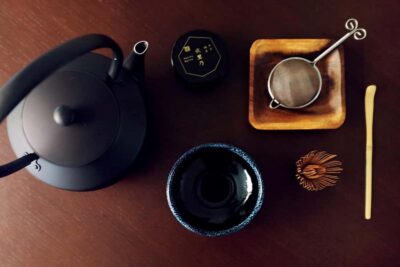
Browse the lists this tour appears in