
Review · MATCHA EXPERIENCES
Kyoto tea town for matcha lovers
Uji is the place to go when you want matcha to be more than a sweet on a café menu. This five-hour walk connects tea shops, tea fields, shrines, and a traditional ceremony, giving you a fuller picture of how tea fits into daily life and Japanese culture.
I like the small group, capped at seven, and I like the hands-on work of grinding your own matcha. Guide Terumi is often praised for her patience, thoughtful pacing, and willingness to answer questions. The main drawback is the price, $157.65 per person, plus the fact that a long walk in summer heat can wear you down.
Key points at a glance
- A full half-day in Uji: Expect five to five and a half hours of walking, tasting, learning, and tea preparation.
- Hands-on matcha making: You grind tea powder with a stone mill rather than simply watching someone else prepare it.
- Historic tea stops: Tsuen Main Branch, a tea shop with more than 850 years of history, is part of the route.
- More than tea sweets: The experience includes tea dishes for lunch, different tea tastings, and a traditional tea ceremony.
- A small group with personal attention: The maximum group size is seven, useful when you want to ask questions or take your time.
- A cultural walk through Uji: Uji Shrine and other old shrines add context to the town beyond its famous matcha shops.
Why Uji makes a good matcha day trip
Uji has a close connection with Japanese tea, and this experience uses the town itself as the classroom. You are not parked in one shop for a single tasting. You walk between shrines, tea businesses, local shops, fields, and tea houses while learning how the pieces fit together.
That matters because matcha can seem simple when you only see the final bowl. The tour helps you understand the work behind it, from tea growing and processing to grinding and whisking. You also get to taste matcha in several forms, including sweets and tea-based dishes.
The town adds plenty of visual variety. Uji is a historic district with old religious sites and long-running tea businesses. A short shrine visit can break up the food stops, while the tea shops show how the local trade has adapted to modern tastes without losing its older customs.
I would choose this experience for a first visit to Uji if tea is a main reason for your trip. It gives you a plan for the day and a guide who can explain details that are easy to miss when you walk around on your own.
More Matcha Experiences in Uji:
- Kyoto: Tea Museum Tickets and Matcha Grinding Experience
★ 4.9 · 739 reviews - Slow Cycling Tour at Uji’s Matcha Green Tea Fields and Heritage
★ 5.0 · 25 reviews - Kyoto Matcha Green Tea Tour
★ 4.5 · 23 reviews
Starting at Uji Station at 9:30 am
The meeting point is Uji Station, and the start time is 9:30 am. That early start works well for a half-day outing because it leaves room for further sightseeing afterward. The activity ends back at the meeting point, so you do not need to arrange a separate return location.
Uji is near public transportation, which makes the station a practical meeting point. Still, allow enough time to find the correct part of the station and arrive ready to walk. The exact route between stops may vary, but the day includes several outdoor sections and visits to businesses and cultural sites.
The group limit of seven is one of the best practical features. A small group makes it easier to hear explanations, ask about tea preparation, and keep a comfortable pace. It also helps during the hands-on parts, where individual attention is more useful than a large demonstration.
Wear comfortable shoes and bring water, especially if you visit in June or another warm month. One participant found the walking hot in June, and Uji’s outdoor portions may feel tiring when the sun is strong.
Uji Shrine and the town’s older side
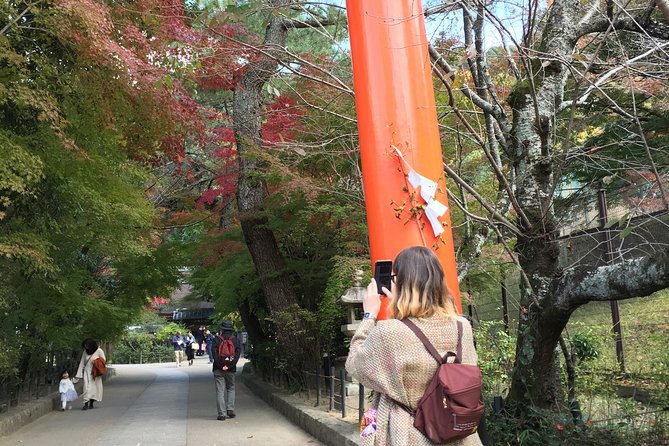
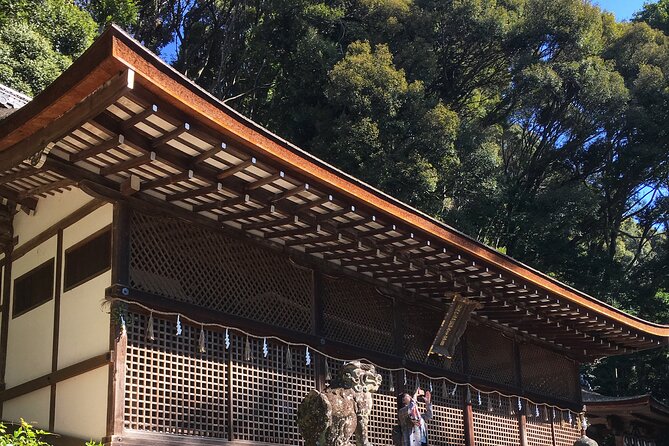
The itinerary begins with Uji Shrine, where you spend about 20 minutes. Admission is free. This is not a long temple-and-shrine tour, but the stop gives you a useful sense of Uji as a historic town rather than only a place to buy green tea.
A guide can explain the connection between the shrine, the town, and local customs in a way that a quick independent visit may not. Terumi is especially well regarded for sharing background about temples, tea, pottery, and Japanese culture, so this portion is likely to be more than a quick photo stop.
The short length is also a benefit. If you are mainly interested in tea, you will not lose half the morning to a lengthy shrine lecture. If you want more time at the shrine, you can consider returning after the tour ends.
A visit to Tsuen Main Branch, one of Uji’s oldest tea shops

Tsuen Main Branch is described as more than 850 years old. You spend about 10 minutes there, with an opportunity to taste matcha rice cake skewers made with matcha powder.
The stop shows how Uji tea appears in everyday food. Matcha rice cake is a small taste, not a full meal, but it gives you a direct comparison between powdered tea as a drink and powdered tea as an ingredient. The food stops are among the most appealing parts of this outing if you enjoy Japanese sweets.
Ten minutes is brief, so do not expect a long shopping session or a detailed tea tasting at this one stop alone. The value comes from the larger sequence. You see an old tea business, taste one of its specialties, and then continue to other parts of the tea-making story.
If you plan to buy tea or sweets, ask Terumi for help with names and choices. One person even had the guide return to a tea shop afterward to interpret during a purchase. That kind of help can be useful when packaging and tea descriptions are difficult to understand.
More tea experiences around Uji if you are still choosing
- Uji: Green Tea Tour with Byodoin and Koshoji Temple Visits
★ 4.8 · 72 reviews - Uji: UNESCO Heritage & Tea Ceremony Walking Tour
★ 4.6 · 54 reviews - Uji and Wazuka Matcha Farm Half Day Private Guided Tour
★ 5.0 · 21 reviews - Uji Tea Ceremony and UNESCO Heritage Walking Tour
★ 5.0 · 20 reviews
Tea fields and the people behind the cup
The experience includes a visit to tea fields and a stop connected with an old tea farm in Uji. These visits give the tour an important outdoor and local side. You are not only looking at finished tins of matcha in a shop. You get a better sense of where the tea begins and how different people contribute to its production.
The supplied details do not specify the exact farm, the season of the fields, or how long you spend there. Keep that in mind if you are expecting a full agricultural tour. The focus is broader: tea production, local businesses, food, and cultural practice in one morning and early afternoon.
The small group should make it easier to pause for questions. You can ask about how matcha differs from other teas, how it is prepared, or why Uji is so closely tied to tea. The day is strongest when you treat it as a conversation and cultural lesson, not just a checklist of photo stops.
Lunch with tea dishes
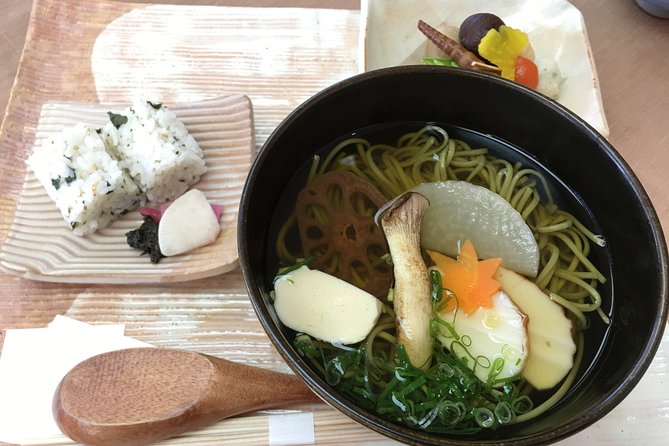
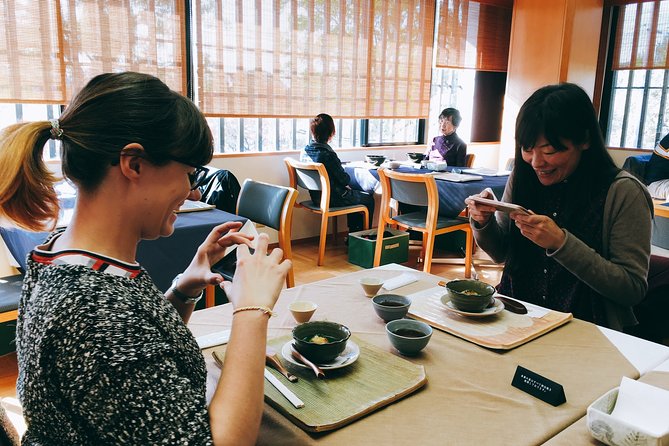
Lunch is planned at a famous tea house, where you enjoy tea dishes. This is a useful part of the schedule because it shows matcha and tea in savory food, not only in cakes, ice cream, or sweet drinks.
The information provided does not list the exact menu, portion size, or whether dietary requests can be accommodated. If you have allergies or strict dietary needs, ask before booking or contact the operator after receiving confirmation. Do not assume that every dish will be familiar or that substitutions are available.
Lunch also gives your feet a break after the morning walking. The timing helps the day feel like a proper cultural outing rather than a series of rushed tastings. Still, five hours passes quickly, so this is not the tour for someone who wants a long, leisurely restaurant meal with plenty of free time.
Grinding your own matcha with a stone mill
The hands-on matcha workshop is one of the most memorable elements. You grind tea leaves into powder with a traditional stone mill, then use the matcha you made as part of the tea experience.
This step gives you a physical sense of the work involved. Matcha is often presented as an elegant finished drink, but grinding it yourself makes the process slower and more tangible. You can see why preparation has long been treated as a careful practice rather than a quick kitchen task.
The workshop also suits families. One family described the mix of matcha making, tea farms, local shops, and ceremony as a highlight. Children and adults who enjoy trying things for themselves will likely get more from this than from a lecture alone.
Expect the process to be deliberate. That is the point, but it means the workshop may feel too slow if you want to race through several attractions. I would take the time to notice the texture, the motion of the mill, and the difference between making powder and whisking it into a drink.
A traditional tea ceremony in a tea house
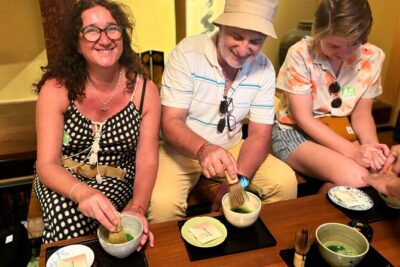
The tea ceremony is the cultural centerpiece. You visit a traditional tea house and learn about the practice of preparing and serving matcha in a formal setting.
This experience can be valuable even if you are already familiar with matcha cafés. A ceremony is not simply a stronger version of a green tea tasting. It places attention on movement, order, hospitality, utensils, and the relationship between host and guest.
The guide’s role matters here. Terumi is praised for explaining tea ceremony customs clearly and for answering questions without making the experience feel stiff. You can expect an introduction to the practice rather than being left to guess what each gesture means.
The ceremony is also a good reason to choose this tour over a basic Uji food walk. You taste tea, but you also learn why its preparation carries cultural meaning. If your interest is only in buying matcha powder, this portion may feel less important. If you want context, it adds real value.
What the guide adds to the day
The guide is Terumi, and the strongest descriptions of the experience focus on her warmth, patience, local knowledge, and thoughtful planning. She is said to adjust the pace, take photographs along the way, and answer questions about tea, shrines, pottery, and local customs.
That personal help is particularly useful in Uji. The town has enough tea shops that you can easily spend time browsing without knowing what makes one product different from another. A guide can connect the products to the production process and help with communication in shops.
The small group makes this guide-led format work better. With up to seven people, you can ask about a tea tool, stop for a picture, or clarify a ceremony detail without holding up a large crowd. The experience is less suitable if you prefer complete independence and long stretches of solo wandering.
Is $157.65 a fair price?
At $157.65 per person, this is not a budget walk. The value depends on how many parts of the experience you would otherwise arrange separately.
You are paying for about five to five and a half hours with a guide, a planned route through Uji, shrine and tea-shop visits, tastings, tea dishes, tea-field access, a matcha-making workshop, and a traditional ceremony. The group size also matters. A private guide would normally cost more, while a large group tour would likely offer less personal attention.
I would call the price reasonable for a serious tea fan who wants structure and interpretation. It is harder to justify if you only want to stroll through Uji, take pictures, and buy a few matcha sweets. Independent visitors can see the town at a lower cost, but they may not get the same explanation, hands-on preparation, or help in local shops.
The high satisfaction level is consistent across the available comments, with a 5.0 rating from 16 reviews and 100 percent recommending it. The sample is small, so I would not treat that as a guarantee, but the praise is notably consistent about Terumi, the personal attention, the tea ceremony, and the matcha workshop.
Who should book this Uji experience?
I would choose this for:
- People who already love matcha and want to understand its production and customs
- First-time visitors to Uji who prefer a planned route
- Families who enjoy hands-on cultural activities
- Food-focused visitors who want sweets, tea dishes, and tastings
- Anyone who wants a small group rather than a large bus-style outing
- Visitors interested in shrines, pottery, tea houses, and local traditions as well as food
I would think twice if you dislike walking, struggle in warm weather, or want lots of free time for shopping. The tour requires moderate physical fitness, and the day combines several outdoor sections with scheduled stops.
Free cancellation is available up to 24 hours before the 9:30 am start for a full refund. Changes made within 24 hours are not accepted, and poor weather or too few bookings can lead to a different date or a full refund.
Should you book it?
Book this tour if matcha is a real interest, not just a flavor you occasionally order. The strongest parts are the stone-mill workshop, the tea ceremony, the tea-field visit, and the chance to connect Uji’s shrines and shops with the wider culture of tea.
The cost is high for a half-day, and the summer heat is worth taking seriously. But for a small group, a personal guide, several tastings, lunch, hands-on preparation, and a traditional ceremony, the experience offers more than a simple sightseeing walk. If you want to understand why Uji matters to Japanese tea, this is a well-shaped way to spend the morning.
FAQ
Where does the Uji matcha tour begin?
The tour begins at Uji Station in Uji, Japan. The listed address is Japan, 611-0021, Kyoto府宇治市宇治宇文字17, with the meeting point at Uji Station.
What time does the tour start?
The start time is 9:30 am.
How long does the experience last?
The activity lasts approximately five to five and a half hours.
Where does the tour end?
The tour ends back at the meeting point.
How many people can join the tour?
The maximum group size is seven travelers.
What will I do during the experience?
You will visit Uji Shrine, an old tea shop called Tsuen Main Branch, tea fields, tea houses, and historic shrines. The experience also includes matcha tastings, tea dishes for lunch, a matcha-making workshop, and a traditional Japanese tea ceremony.
Is this tour suitable for people with limited fitness?
Participants should have a moderate level of physical fitness. The experience includes walking around Uji and outdoor stops.
Can I cancel for a full refund?
Yes. You can cancel at least 24 hours before the experience start time for a full refund. Cancellations or changes made less than 24 hours before the start are not refunded or accepted.
Fresh tea listings around Uji
- Uji: Private immersion into Kyoto’s tea and reglious culture★ 5.0 · 17 reviews
- Kyoto Matcha Green Tea Tour★ 4.5 · 23 reviews
- Uji Tea Ceremony and UNESCO Heritage Walking Tour★ 5.0 · 20 reviews
- Utilising upcycled Matcha! Creating matcha incense (Uji, Kyoto)★ 5.0 · 6 reviews
- Uji and Wazuka Matcha Farm Half Day Private Guided Tour★ 5.0 · 21 reviews
- 7 Hours Private Guided Tour Uji and Wazuka Matcha Farm★ 5.0 · 2 reviews
- Half Day Matcha Tour in Uji, home of culture, with a local★ 4.8 · 14 reviews
- Kyoto: Tea Museum and Tsuen Teahouse Guided Tour★ 5.0 · 2 reviews
Matcha Experiences, compared.
World Heritage Kyoto & Nara Uji Authentic Matcha Experience
Read our review →
Matcha Making Class in Tokyo with Authentic Japanese Sweets Set
Read our review →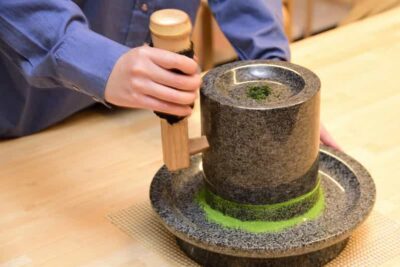
Kyoto: Tea Museum Tickets and Matcha Grinding Experience
Read our review →
Matcha Making Class in Osaka with Authentic Japanese Sweets Set
Read our review →
Kyoto: Tea Ceremony Meditation – Make Matcha with Tea Master
Read our review →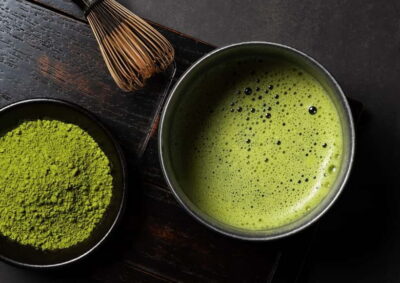
Tokyo: Matcha Making Experience with Mochi Sweets in Asakusa
Read our review →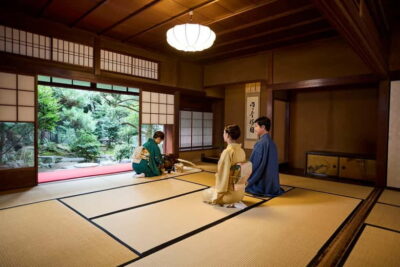
Kyoto: Kimono Tea Ceremony with Matcha and Sweet
Read our review →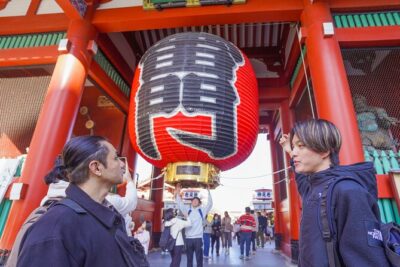
Browse the lists this tour appears in