
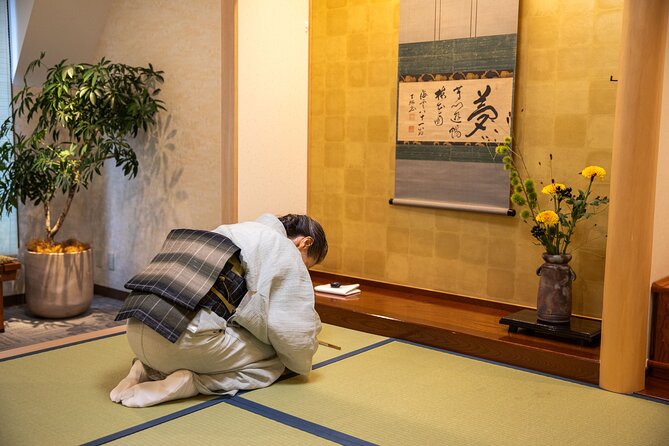
Review · TEA CEREMONY EXPERIENCES
Tokyo: Casual Japanese Tea Ceremony Experience
The best part of this Tokyo experience is that it makes Japanese tea culture approachable. You sit in a relaxed lounge, learn why each step matters, whisk your own matcha, and taste a traditional sweet without needing to know formal etiquette in advance.
I like the small maximum of eight people, which leaves room for questions. I also like the clear hands-on format: you do not simply watch a host prepare tea, you make your own bowl and enjoy it at your own pace. The main consideration is that this is a casual introduction, not a full formal tea ceremony with kimono and strict ritual.
Key points
- You make your own matcha: Learn to whisk powdered green tea rather than only observing a demonstration.
- The setting is relaxed: Questions and photos are welcome, making this a friendly first encounter with tea culture.
- The group is capped at eight: The small size should allow more personal attention than a large cultural show.
- Midori may lead the teaching: Her calm, kind approach has been especially praised by name.
- The meeting point is in Asakusa: Start and finish at Tokyo Tourist Lounge, a convenient base near public transportation.
- Kimono rental is not included: Dress for comfort and treat this as a casual cultural workshop.
A gentle introduction to the way of tea
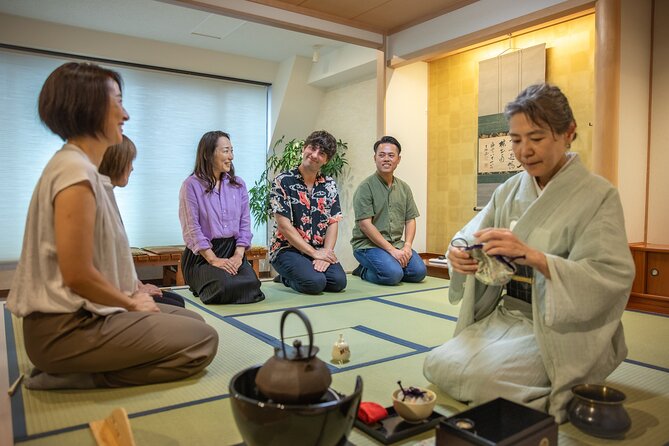
Japanese tea ceremony can look intimidating from the outside. There are careful movements, prescribed manners, special tools, and a quiet formality that can leave a first-time visitor wondering where to put their hands.
This experience removes much of that pressure. The focus is on understanding the spirit behind the ceremony, not on testing your ability to perform every movement perfectly. Your host explains the meaning of the steps, from pouring water to presenting the tea, then gives you a chance to try the process yourself.
That makes the one-hour format useful during a busy Tokyo stay. You get a real taste of the tradition without giving up half a day. At $25 per person, the price is also reasonable for a guided cultural activity that includes instruction, matcha, and Japanese sweets.
I would think of this as a practical first lesson. It gives you enough background to notice tea customs later in your Japan trip, while keeping the mood light enough for children, first-time visitors, and anyone who worries about making a cultural mistake.
More Tea Ceremonies in Tokyo
- Kimono Tea Ceremony at Tokyo, Asakusa Maikoya
★ 5.0 · 638 reviews - Tokyo: Traditional Tea Ceremony with a Tea Master
★ 5.0 · 528 reviews - Tea Ceremony Workshop in Tokyo by the Experienced Instrucor
★ 5.0 · 189 reviews
Starting at Tokyo Tourist Lounge in Asakusa
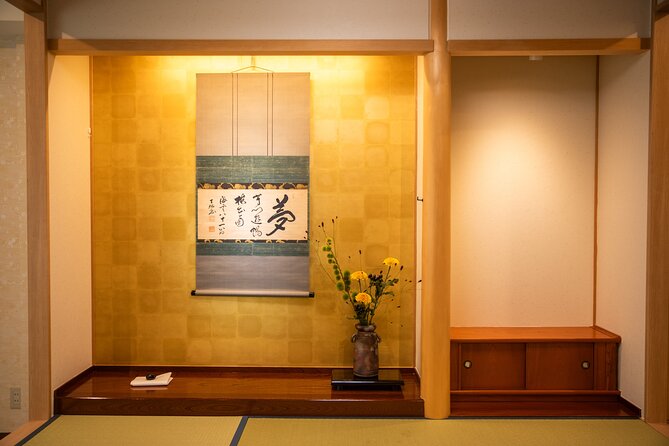
The experience begins at Tokyo Tourist Lounge Asakusa, on the fifth floor at 2-18-15 Kaminarimon, Taito City, Tokyo 111-0034. The activity returns to this same meeting point when the hour is over.
Asakusa is a fitting part of Tokyo for a cultural introduction. The area is well connected by public transportation and is one of the city’s familiar sightseeing districts. Since the meeting point is indoors at a tourist lounge, you are not being asked to find a remote tea house or navigate a complicated series of transfers.
You should allow enough time to locate the building and reach the fifth floor. The supplied details do not state a recommended arrival time, so check your booking confirmation for the exact start time and meeting instructions.
The activity is confirmed at booking, which helps when you are arranging a tight Tokyo schedule. It also accepts mobile tickets, so you can keep your confirmation on your phone rather than printing paperwork.
Learning why each tea step matters
Once the session starts, the host introduces the basic ideas behind Japanese tea culture. The point is not simply to drink green tea. The host explains how the preparation, presentation, and shared moment express harmony and hospitality.
You will hear about the meaning of each part of the process, including pouring the water and presenting the tea. This explanation is what gives the activity its value. Without it, whisking powdered tea can feel like a short craft exercise. With it, you begin to see how small movements can show care and attention.
The teaching is designed for people who may not speak Japanese. The format helps reduce the worry of facing unfamiliar etiquette or a language barrier. You can ask questions as they come up instead of trying to decode a silent ceremony from across the room.
The experience has received especially strong praise for its detailed explanation of the ceremony’s history and process. If Midori is leading your session, you may find her gentle teaching style particularly welcoming. Her name has been singled out for kindness and clear instruction.
Whisking your own bowl of matcha
The hands-on portion is the heart of the activity. You learn how to whisk powdered green tea into a prepared bowl of matcha, rather than simply receiving a cup from the host.
This gives you a better sense of the work involved. Matcha is not prepared like a standard teabag. The powder is mixed with water and whisked to create the drink’s familiar texture. Your host guides you through the process, so you do not need prior experience or special skill.
You can expect some variation in the finished bowl. Your matcha may be lighter, thicker, or foamier than the host’s preparation. That is part of the fun, and the relaxed atmosphere means you can focus on learning instead of getting every movement right.
The lesson also gives you a useful point of comparison for other matcha you may drink in Japan. You will understand more about how the powder is prepared and why the whisk matters. Even if you never make matcha again, the experience adds context to a drink that can otherwise seem unfamiliar or bitter.
Same city, a very different cup:
- Matcha Making Class in Tokyo with Authentic Japanese Sweets Set
★ 5.0 · 744 reviews - Dynamic Tokyo: Tokyo Tower, Tea Experience, Bay Cruise Day Tour
★ 4.5 · 521 reviews - Tokyo: Matcha Making Experience with Mochi Sweets in Asakusa
★ 4.9 · 388 reviews - Asakusa Cultural Walk & Matcha Making Tour
★ 5.0 · 245 reviews
Tasting Japanese sweets with the tea
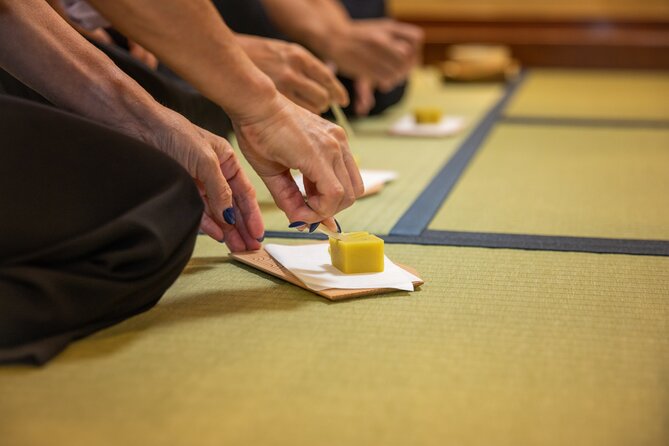
The matcha is paired with an authentic Japanese sweet. This is more than a small extra snack. Traditional sweets often balance the strong, earthy taste of matcha, helping you appreciate the drink in a more complete way.
You savor the sweet and tea at your own pace, with the host explaining how they fit into the experience. The details provided do not identify the exact sweet served, so you should not book this expecting a particular confection or flavor.
The pairing also provides a simple lesson in balance. Matcha has a distinct taste that may surprise you if you are used to sweetened tea. The Japanese sweet gives your palate a different starting point, making the tea easier to appreciate.
Coffee and/or tea are included in the activity details. Since the central experience is the preparation and tasting of matcha, you should treat the inclusion as part of the tea service rather than expect a broad café menu.
A casual setting instead of a formal ceremony
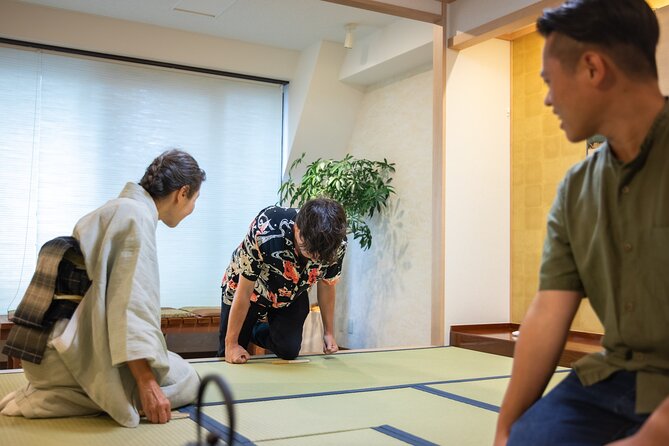
This is not a formal tea ceremony with full dress, strict silence, and a highly traditional room. That difference matters.
A formal ceremony can be rewarding, but it asks you to follow rules that may feel difficult if you do not know the customs. This casual version gives you the cultural explanation first, then lets you take part without fear of a serious mistake.
You can ask questions and take photos. Those permissions make the session more comfortable for curious visitors who want to remember the tools, the tea, or their own preparation. Still, use ordinary courtesy. Listen when the host is explaining a step, and avoid letting photography distract from the lesson.
Kimono wearing and rental are not included. If dressing in traditional clothing is the main reason you want to attend a tea ceremony, this is probably not the right choice. If you want to learn about matcha and tea etiquette without the extra cost or time of costume rental, the casual format is a better fit.
Why the eight-person limit matters
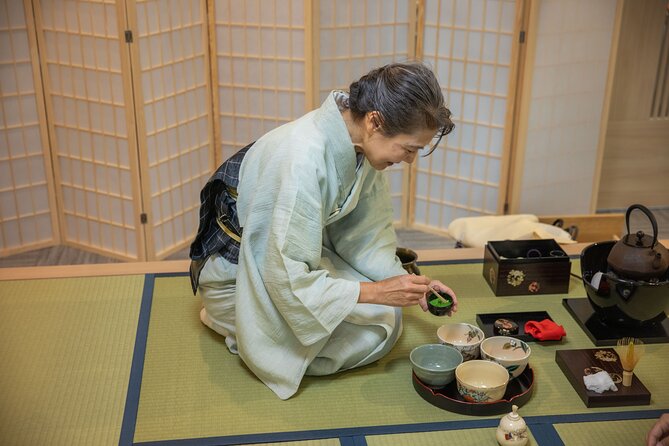
The group maximum is eight people. For a one-hour lesson, that is a useful limit. A much larger group could turn the hands-on portion into a demonstration where you wait for your turn or struggle to ask questions.
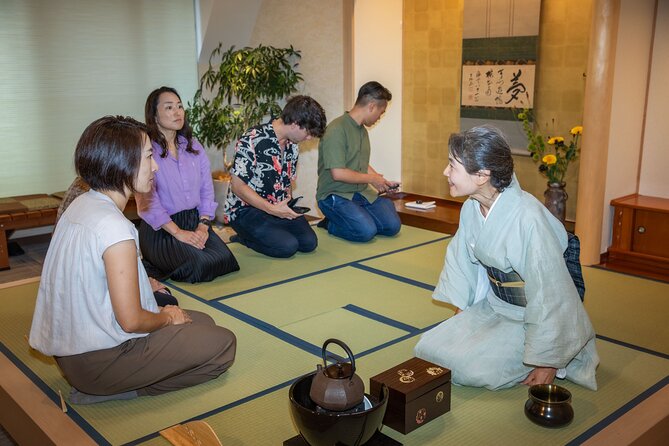
With up to eight people, the host has a better chance to watch your technique and explain the process clearly. You still should not expect a private lesson, since the experience is shared, but the group is intimate enough to keep the atmosphere personal.
The small-group setting also suits mixed levels of interest. One person may want historical background, while another mainly wants to taste matcha. The host can explain the ceremony while allowing each person to take part at a comfortable pace.
The experience is recommended by 96 percent of participants and carries a 4.9 rating from 74 reviews. Those figures suggest a dependable activity, though they should not change your expectations about the format. This is a short, casual cultural class, not an elaborate ceremonial performance.
How the one-hour schedule works
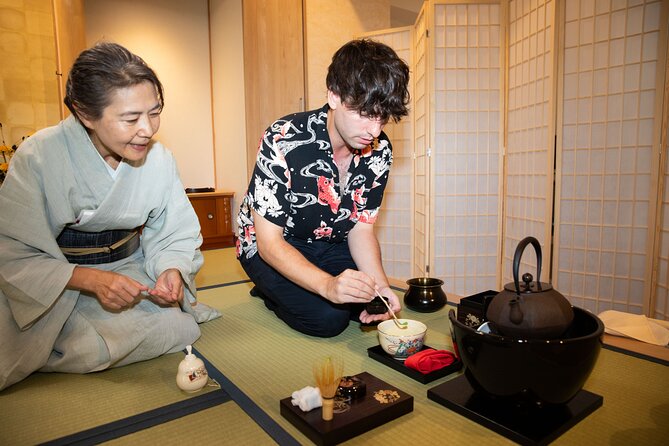
The session lasts about one hour, so the pace should be focused. You will not spend the morning moving between several locations. Instead, the time is concentrated on explanation, demonstration, preparation, tasting, and questions.
A typical flow looks like this:
- You arrive at Tokyo Tourist Lounge Asakusa and check in with your mobile ticket.
- The host introduces tea culture and the purpose behind the ceremony’s main steps.
- You watch or receive guidance on preparing powdered green tea.
- You whisk your own bowl of matcha.
- You enjoy the tea with a traditional Japanese sweet.
- You ask questions, take photos, and finish back at the meeting point.
The exact order may vary, and the provided details do not promise a fixed minute-by-minute schedule. The important point is that the activity balances explanation with participation. You get cultural context, then a chance to use it.
One hour is long enough to learn the basics without becoming tiring. It also fits neatly before lunch, after sightseeing in Asakusa, or between other Tokyo plans.
Value at $25 per person
At $25, this is priced as an accessible cultural activity rather than a luxury ceremony. You pay for a host’s instruction, the matcha experience, the sweet, and the chance to participate in a small group.
The value depends on what you want. If you only want to drink a cup of matcha, you can find cheaper options in Tokyo. If you want someone to explain the meaning of the ritual and guide you through making the tea, the added cost is easier to justify.
I especially like that the price does not appear to depend on kimono rental or a long photo session. You are paying for the central activity itself. Keep in mind that kimono wearing and rental are not included, so add another experience separately if traditional clothing is important to you.
The experience also offers a low-risk way to try Japanese culture. You do not need to commit to a lengthy ceremony, a full-day class, or specialized clothing. For many people, that balance makes the price fair.
Who will enjoy this tea experience
I would recommend this activity to first-time visitors who want a clear, friendly introduction to matcha. It also suits repeat visitors who have seen Tokyo’s major sights and want one quiet hour focused on a living cultural practice.
Families and small groups may appreciate the relaxed tone. The ability to ask questions helps children and adults understand what they are doing, rather than simply copying movements without context.
It is also a good choice if you are uneasy about formal etiquette. The host’s role is to explain the customs and make the process approachable. You can take photos and participate without worrying that one small mistake will spoil the ceremony.
This may not satisfy you if you want a fully traditional performance, a historic tea house, a garden setting, or a kimono experience. None of those features are promised. You should choose it for the instruction, the matcha preparation, and the easygoing small-group setting.
Booking and cancellation details to keep in mind
You receive confirmation at the time of booking, and the experience uses a mobile ticket. The meeting point is near public transportation, and the activity ends where it begins.
Free cancellation is available if you cancel at least 24 hours before the local start time. Cancel within 24 hours, or request changes during that period, and you should not expect a refund. This policy is worth noting if your Tokyo plans may shift.
The activity is provided by Localized Walking & Food Tours. Since the group can reach eight people, book ahead if you want a particular time during a busy visit, though no specific availability guarantee is provided.
Should you book this casual tea ceremony?
Book it if you want a short, hands-on lesson rather than a formal spectacle. The combination of matcha preparation, Japanese sweets, clear explanations, and a group limit of eight gives you a useful introduction at a moderate price.
I would especially choose it early in a Japan trip. The lesson can make later tea experiences, matcha shops, and ceremonial details easier to understand. It is also a calm break from Tokyo sightseeing.
Skip it if kimono rental, a formal setting, or a long traditional ceremony is essential to your plans. For everyone else, this is a friendly way to learn the basics, ask honest questions, and leave with a better sense of why Japanese tea is treated as much more than a drink.
FAQ
How long does the Japanese tea ceremony experience last?
The activity lasts approximately one hour.
Where does the experience begin?
It begins at Tokyo Tourist Lounge Asakusa, 5F, 2-18-15 Kaminarimon, Taito City, Tokyo 111-0034, Japan.
Where does the activity end?
The experience ends back at the same meeting point.
How many people can join the activity?
The group has a maximum of eight participants.
Is a mobile ticket available?
Yes. The experience includes a mobile ticket.
Is kimono rental included?
No. Wearing a kimono and kimono rental are not included.
Can I ask questions and take photos?
Yes. The casual format allows you to ask questions and take photos during the session.
What is the cancellation policy?
You can cancel for a full refund if you cancel at least 24 hours before the local start time. Cancellations or changes made within 24 hours are not accepted for a refund.
Fresh tea listings around Tokyo
- Authentic Japanese tea tasting: sencha, matcha and gyokuro★ 5.0 · 12 reviews
- At an Antique Shop, Tea Ceremony and Japanese Sweets Forming★ 5.0 · 5 reviews
- Mochi Matcha Gluten Free Japanese Sweets Class near Shibuya area★ 5.0 · 26 reviews
- Tokyo: Two Types of Japanese Sweets Making and Tea Ceremony★ 4.6 · 26 reviews
- Japanese Matcha Tea Ceremony and Kimono Experience in Hanayaka★ 5.0 · 26 reviews
- Matcha Experience with of Japanese Tea Tasting in Tokyo★ 5.0 · 31 reviews
- Tokyo:Genuine Tea Ceremony, Kimono Dressing, and Photography★ 5.0 · 33 reviews
- EDOCCO Tea House–A Quick Dive into Japanese Traditional Culture★ 5.0 · 34 reviews
Tea Ceremony Experiences, compared.
Kyoto: Tea Ceremony in a Traditional Tea House in Kiyomizu
Read our review →
Kyoto: 45-Minute Tea Ceremony Lesson Experience
Read our review →
Kyoto: Table-Style Tea Ceremony at a Kyo-Machiya
Read our review →
Browse the lists this tour appears in