
Review · MATCHA EXPERIENCES
Kyoto: Shakyo & Matcha in Historic Temple Garden
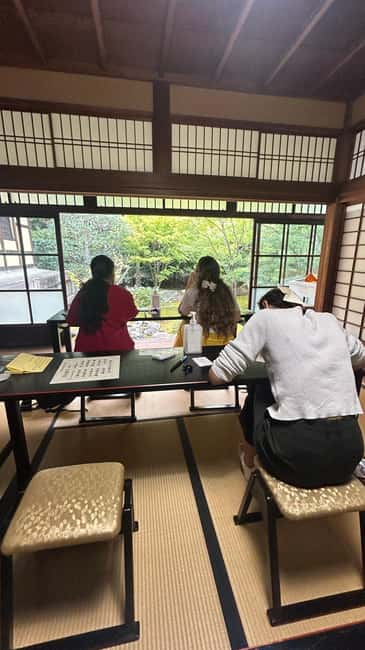
Sennyu-ji gives you a rare chance to experience Kyoto through shakyo, the quiet practice of copying Buddhist sutras by hand. I like the gentle rhythm of brush, paper, incense, birdsong, and garden views. I also like that matcha and seasonal wagashi follow the writing session, turning a simple tea break into part of the cultural experience.
The main thing to consider is the sitting. Shakyo usually takes 60 to 90 minutes, and you need to remain quiet and focused in a historic temple setting. Children under 10, wheelchair users, and people with mobility impairments cannot take part, and large bags, strollers, and pets are not allowed.
Key points at a glance
- A 60 to 90-minute shakyo session: Copy a Buddhist sutra with the provided brush, paper, and ink.
- Sennyu-ji temple setting: Visit an Important Cultural Property and learn about its place in Kyoto’s Buddhist past.
- Matcha with seasonal wagashi: Enjoy freshly prepared green tea and a Japanese sweet after the writing session.
- Small English-speaking group: The group is limited to 10 people, allowing a quieter atmosphere and room for questions.
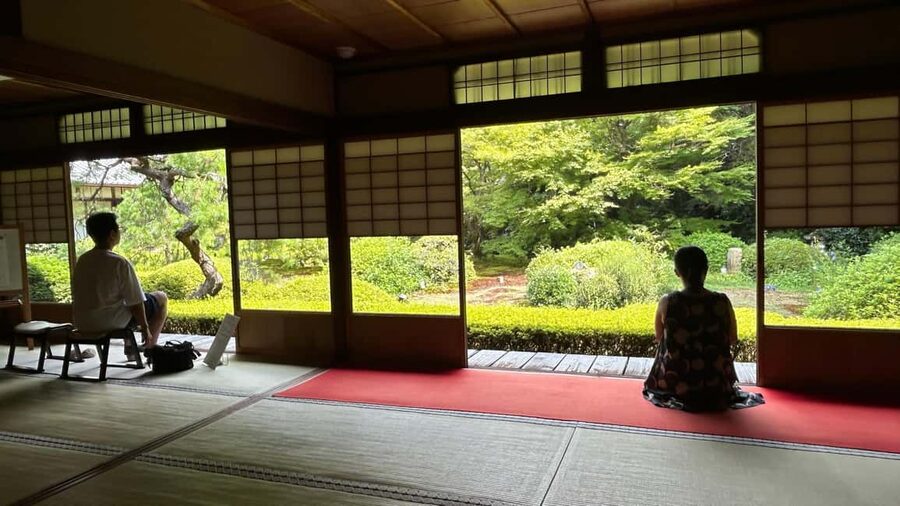
- A calm garden view: Look across a carefully designed Japanese garden while you drink your tea.
- Easy station meeting point: Meet at the East Gate of Keihan Tofukuji Station, then walk about 15 minutes each way.
Why this Kyoto experience feels different
Kyoto offers plenty of temples to photograph, but this outing asks you to do something instead of simply looking. You sit down, take a brush, and copy Buddhist writing at a pace that leaves little room for checking your phone or rushing toward the next sight.
That change of pace is the point. A packed Kyoto schedule can involve trains, crowds, shrine gates, gardens, and long walks. Shakyo gives you a quiet block of time in the middle of all that activity. I like it for people who want a cultural experience that is hands-on without being physically demanding in the usual sightseeing sense.
The setting adds much of the appeal. You work in a peaceful temple space with the scent of incense and the natural sounds of birds nearby. The atmosphere is not entertainment-driven. It depends on your willingness to be still, pay attention, and respect the place.
Afterward, matcha and wagashi provide a neat second act. You can think over the experience while looking at the garden, and you get a small taste of two familiar Japanese traditions in one visit. The tea is freshly prepared, while the sweet changes with the season.
More Matcha Experiences in Kyoto
- Kyoto: Tea Ceremony Meditation – Make Matcha with Tea Master
★ 4.8 · 406 reviews - Kyoto: Kimono Tea Ceremony with Matcha and Sweet
★ 4.9 · 249 reviews - Kyoto: Arashiyama Bamboo, Temple, Matcha, Monkeys & secret spots
★ 5.0 · 219 reviews
From Tofukuji Station to Sennyu-ji
Your meeting point is the East Gate of Keihan Tofukuji Station. Look for the guide with a yellow fluorescent band on their bag. That detail matters because a railway station has several exits and plenty of passing people, so identifying the guide quickly saves time.
From the station, you walk for about 15 minutes to Sennyu-ji. The walk is part of the outing rather than dead time, but you should wear comfortable shoes. You also need to arrive with only what you can carry easily. Luggage, large bags, baby strollers, and baby carriages are not permitted.
The route brings you from a working transport hub into a quieter temple area. The contrast helps set the tone for the session. You are not being rushed straight from a bus into a lecture. You have a short walk to leave the noise of the station behind and prepare for a more formal place.
The return walk also takes about 15 minutes. Since the total activity lasts 150 minutes, the two walks fit into a compact half-day plan. You might schedule it before another Kyoto sight in the same general part of the city, but the exact amount of time you need afterward depends on how quickly you walk and how long you linger around the station.
Sennyu-ji and the value of a guided visit
Sennyu-ji is presented as a historic temple designated an Important Cultural Property. That status gives the visit weight, but the real benefit of the guide is interpretation. Without context, a temple garden and a sutra-copying exercise can be attractive yet difficult to understand. The English-speaking guide explains Buddhist culture, Kyoto’s past, and the temple’s place within Japan’s heritage.
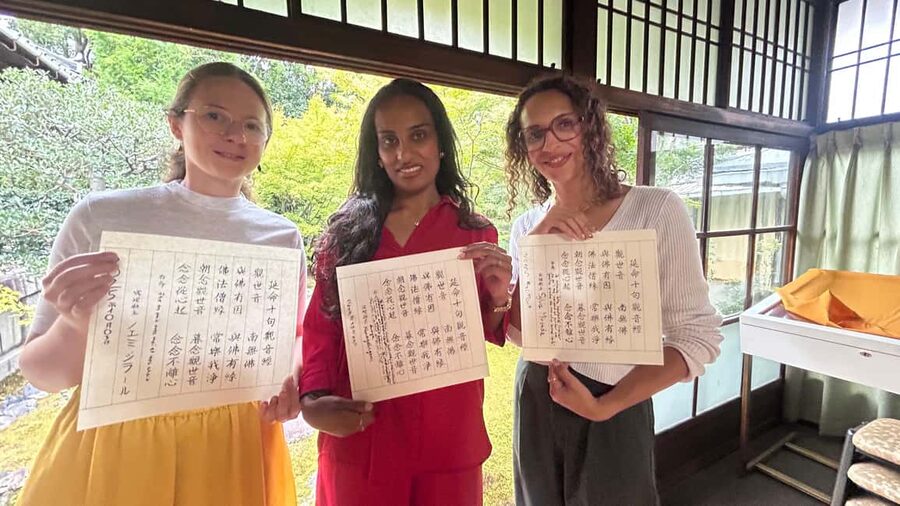
The group is limited to 10 participants. That is a useful size for this kind of activity. A much larger group could make the quiet room feel crowded and make questions harder to ask. A small group also supports the reflective mood, since the session does not feel like a standard stop on a large sightseeing circuit.
The visit includes a guided tour, sightseeing, scenic views, and time for the shakyo class. You should not expect a long, exhaustive temple tour. The focus is narrower and more personal: understand the place, take part in a traditional practice, and spend time in the garden setting.
Photography may be limited inside some temple areas. This is a fair trade for preserving the atmosphere. Bring your camera if you like, but do not assume that every interior or moment of the session can be photographed. The experience works best if you treat the temple as a sacred place first and a photo opportunity second.
Shakyo: what the 60 to 90 minutes are like
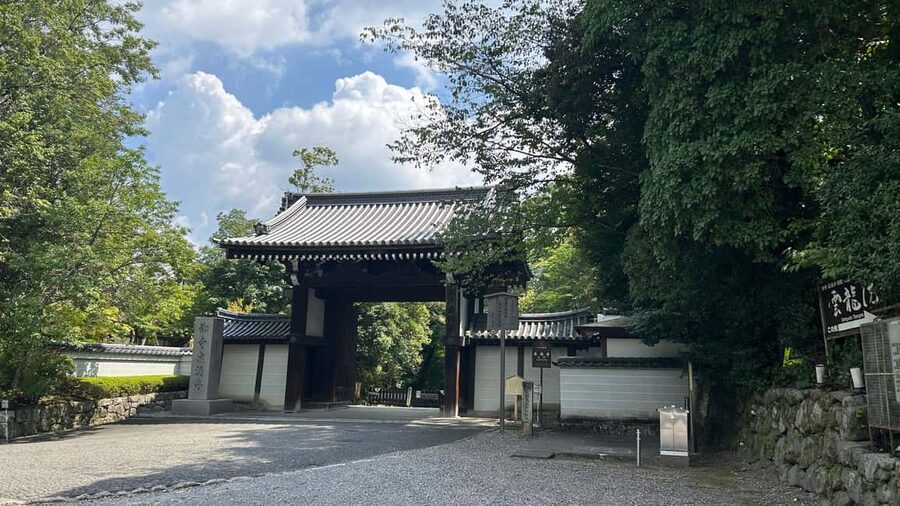
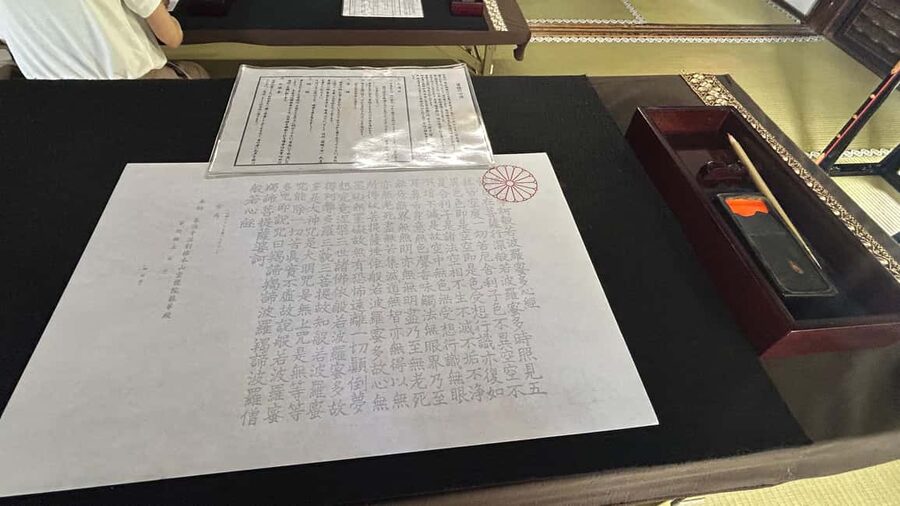
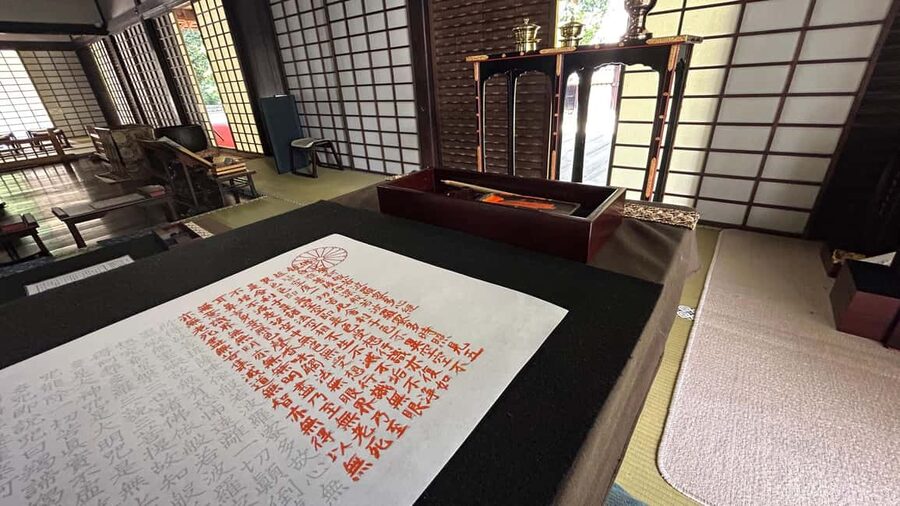
Shakyo means copying a Buddhist sutra. The activity uses brushes, paper, and ink supplied by the organizers, so you do not need to bring special tools or previous calligraphy experience. The important part is not producing perfect handwriting. It is the slow, careful act of placing each stroke on the page.
The session generally lasts 60 to 90 minutes, depending on your writing speed. That range is worth noting when planning your day. Someone who writes slowly may need the full time, while someone who moves more quickly may finish sooner. The session is not a quick demonstration followed by a photo. It is the central part of the experience.
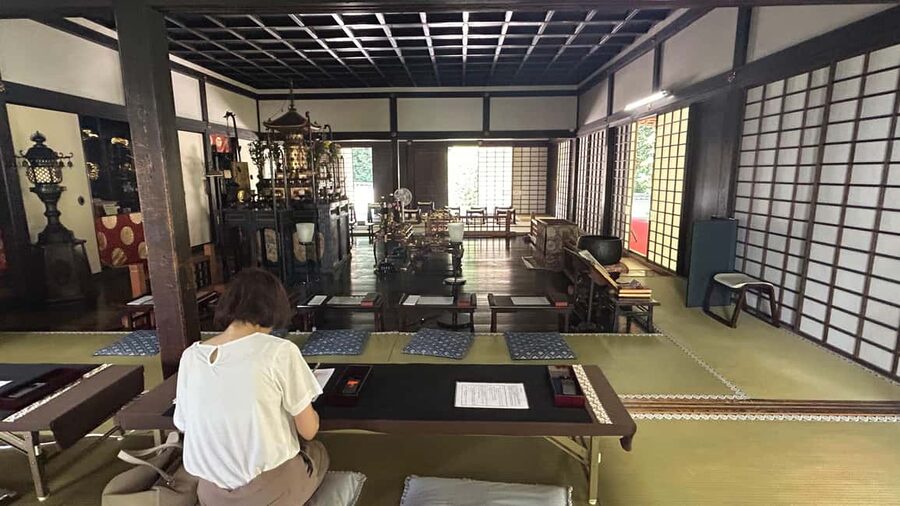
You sit quietly in a cozy temple space. Incense provides a gentle scent, while birdsong and other natural sounds fill the pauses. These details may sound small, but they explain why the activity feels more like meditation than a craft class.
You should wear clothing that is comfortable for sitting quietly. The instructions do not specify a particular sitting position, but the general advice is practical: choose clothes that will not distract you during a long period of concentration. This is not the place for a rushed, uncomfortable outfit.
I especially like the way shakyo gives you a clear task. You are not asked to understand every Buddhist idea before beginning. You simply follow the writing, pay attention to the brush, and let the pace slow down. The result is a stronger sense of participation than you get from walking past a temple hall and reading a short sign.
At the same time, this is not for everyone. If you need constant movement, conversation, or a busy schedule, 60 to 90 minutes of quiet writing may feel long. The activity rewards patience. It also asks you to accept that the temple experience is not being shaped around quick entertainment.
Same city, a very different cup:
- Kyoto: Tea Ceremony in a Traditional Tea House in Kiyomizu
★ 4.9 · 3,519 reviews - Kyoto: Tea Ceremony Ju-An at Jotokuji Temple
★ 4.9 · 3,207 reviews - Kyoto: 45-Minute Tea Ceremony Lesson Experience
★ 4.3 · 2,378 reviews - Kyoto: Table-Style Tea Ceremony at a Kyo-Machiya
★ 4.9 · 1,211 reviews
Matcha, wagashi, and the garden view
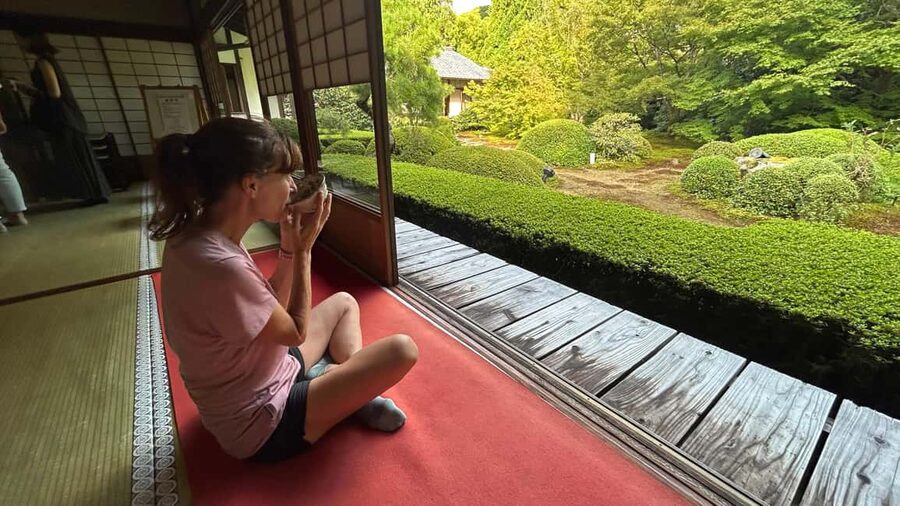
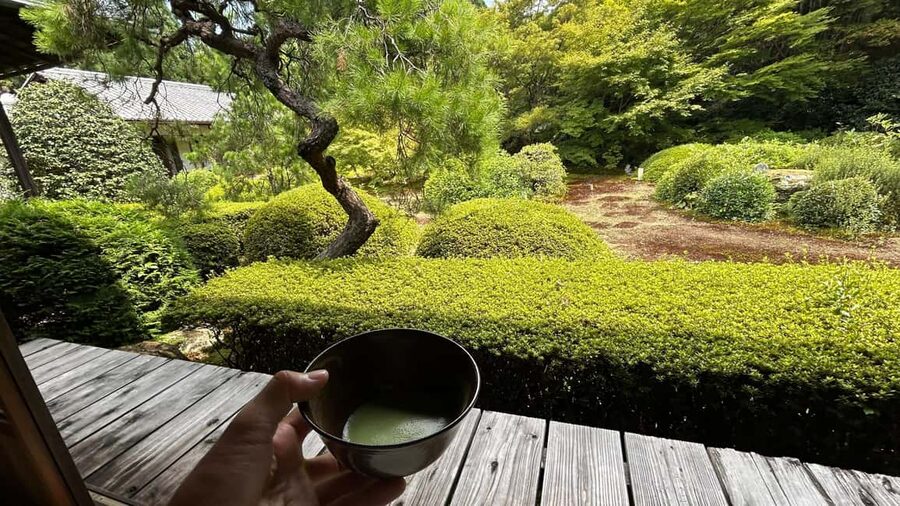
Once the writing ends, you receive freshly prepared matcha green tea and seasonal wagashi. Wagashi are traditional Japanese sweets, often made with attention to shape, color, and season. The specific sweet may vary, so you should expect a changing seasonal offering rather than one fixed item.
The tea and sweet are not just refreshments added to fill out the schedule. They provide a natural pause after the concentration of shakyo. You can shift from brush and ink to taste, texture, and the view outside.
The garden is designed to suggest harmony and calm. You can look across it while drinking the matcha, which makes the tea service feel connected to the temple setting rather than separated into a café stop. The garden may be one of the strongest parts of the experience for anyone who wants time to sit and observe.
I would not book this outing solely for a large garden tour. The supplied details emphasize a beautiful garden view during the tea service, not an extended walk through every section. Think of the garden as a quiet frame for the tea and reflection.
The seasonal element also gives the experience a small connection to the time of year. Since the wagashi can change, the exact presentation is not guaranteed. That uncertainty is part of traditional seasonal food, but anyone with strict dietary needs should confirm details before booking because no dietary information is provided.
What you get for $35
At $35 per person, the price is reasonable if you value participation and guidance rather than admission alone. Your fee covers the shakyo session, all writing materials, matcha, seasonal wagashi, temple admission, and an English-speaking guided visit.
You are paying for about two and a half hours of structured time, including the walk to and from Tofukuji Station. The main value comes from access to a quiet temple activity that can be difficult to arrange on your own. You also avoid having to find the temple, understand the practice without help, or organize the tea service separately.
The small group improves the value. With no more than 10 people, the experience is less likely to feel like a mass tour. You have a better chance of hearing the explanation clearly and asking a question about the temple or Buddhist practice.
I would compare this price with what you want from Kyoto. If you mainly want to see as many sights as possible, $35 may seem better spent on a conventional attraction. If you want a thoughtful cultural activity that slows your day, the combination of admission, materials, tea, sweet, and guidance makes the cost easy to justify.
There is also some flexibility in booking. You can reserve now and pay later, and cancellation is free up to 24 hours before the start time for a full refund. That is useful when your Kyoto schedule may shift because of weather, train plans, or simple fatigue.
Who should book this experience
This outing suits adults and older children who can sit quietly and take part in a reflective activity. It is especially good for you if you have already seen several temples and want to understand Buddhist culture through direct participation rather than another quick visit.
It also works well for a packed trip. One French participant described it as a way to slow down after a schedule full of exciting activities and long trips. That is exactly how I would use it: place this outing between more active days, or schedule it when you need an hour of calm.
The English-speaking guide is another reason to choose it. The historical and cultural explanation gives the activity a framework, and the guide can help you understand why shakyo, matcha, wagashi, and the garden belong together in this setting. One participant also found the guide helpful with ideas for planning the rest of the day, though that kind of extra advice should be treated as a pleasant possibility rather than a promised part of the program.
You should skip it if you are traveling with a child under 10, using a wheelchair, or dealing with a mobility impairment. The experience is not suitable for wheelchair users, and electric wheelchairs are specifically excluded. Baby strollers and large bags are also not allowed.
Practical details that affect your day
The activity is conducted in English and is limited to 10 people. Check the available start times before booking because the exact departure time is not given here.
Wear comfortable clothing and shoes. You will walk 15 minutes each way and spend much of the temple visit sitting quietly. Leave luggage at your accommodation or another suitable storage point, since large bags cannot come along.
Plan to be respectful inside the temple. Keep your voice low, follow photography instructions, and avoid treating the shakyo session as a casual photo shoot. The setting depends on calm, and your behavior helps protect that for everyone in the room.
The four available ratings supplied for this activity are all five out of five. The strongest themes are relaxation, the calm and professional manner of the guide, the traditional garden, the matcha and sweet, and the historical background. Those points fit the design of the experience: it is made for slowing down, not for collecting a long list of sights.
Should you book the Sennyu-ji shakyo experience?
I would book this for a quieter Kyoto day, especially if you want a meaningful activity rather than another temple photo stop. The combination of sutra copying, garden views, matcha, wagashi, and cultural explanation offers good value at $35.
Go in knowing that the session is genuinely quiet and can last up to 90 minutes. If you are comfortable sitting, concentrating, and following temple etiquette, this is a memorable way to connect with Kyoto’s traditions. If you prefer fast sightseeing or need accessible facilities, choose another activity.
FAQ
Where does the experience begin?
Meet at the East Gate of Keihan Tofukuji Station. Look for the guide with a yellow fluorescent band on their bag.
How long does the activity last?
The full experience lasts 150 minutes, including the walks between Tofukuji Station and Sennyu-ji.
How long is the shakyo session?
The sutra-copying session usually takes 60 to 90 minutes, depending on your writing speed.
Are the shakyo materials provided?
Yes. Brushes, paper, and ink are provided for the session.
Is matcha included?
Yes. The activity includes freshly prepared matcha green tea and seasonal wagashi. The specific sweet may vary with the season.
Is the tour conducted in English?
Yes. The experience includes a live English-speaking guide.
Who cannot take part?
The activity is not suitable for children under 10, people with mobility impairments, or wheelchair users. Pets, baby strollers, baby carriages, luggage, large bags, and electric wheelchairs are not allowed.
More History Tours in Kyoto
- Cycling Tour at Uji’s Matcha Green Tea Fields and Heritage
★ 5.0 · 10 reviews - World Heritage Kyoto & Nara Uji Authentic Matcha Experience
★ 5.0 · 1,573 reviews - Beijing Culture: Tea Ceremony, Heritage Instrument & Calligraphy
★ 5.0 · 57 reviews - Uji: UNESCO Heritage & Tea Ceremony Walking Tour
★ 4.6 · 54 reviews
Fresh tea listings around Kyoto
- Uji Walking Tour – Byodo-in temple and Tea Ceremony from Kyoto★ 3.5 · 3 reviews
- Traditional Tea Ceremony in Kyoto★ 4.5 · 3 reviews
- Kyoto: Authentic Tea Ceremony in a Small Group★ 5.0 · 7 reviews
- Tea Ceremony Experience in Traditional Kyoto Townhouse★ 5.0 · 19 reviews
- Tea Ceremony in 150 Years Old Townhouse with Tables and Chairs★ 5.0 · 22 reviews
- Tea ceremony at Kyoto’s Zen Temple Teahouse★ 5.0 · 2 reviews
- Sencha-do the Japanese Tea Ceremony Workshop in Kyoto★ 5.0 · 21 reviews
- Silent Beauty of Kyoto Zen Walk and Tea Experience★ 5.0 · 2 reviews
Matcha Experiences, compared.
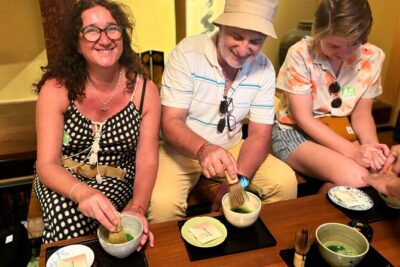
World Heritage Kyoto & Nara Uji Authentic Matcha Experience
Read our review →
Matcha Making Class in Tokyo with Authentic Japanese Sweets Set
Read our review →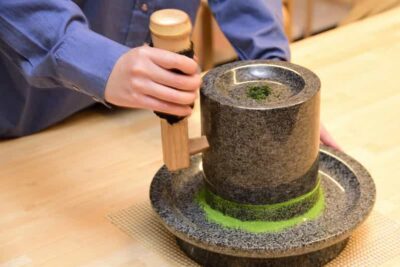
Kyoto: Tea Museum Tickets and Matcha Grinding Experience
Read our review →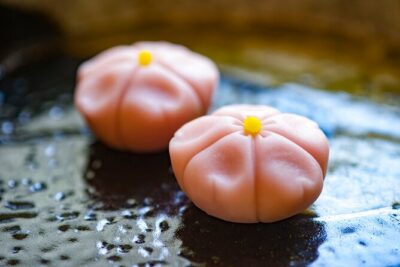
Matcha Making Class in Osaka with Authentic Japanese Sweets Set
Read our review →
Kyoto: Tea Ceremony Meditation – Make Matcha with Tea Master
Read our review →
Tokyo: Matcha Making Experience with Mochi Sweets in Asakusa
Read our review →
Kyoto: Kimono Tea Ceremony with Matcha and Sweet
Read our review →
Browse the lists this tour appears in