
Review · TEA CEREMONY EXPERIENCES
Japanese Sweets Making & Tea Ceremony in Yokohama, suburban Tokyo
Making Japanese sweets by hand, then serving one with matcha in a tatami room, gives this Yokohama workshop a clear sense of place. You are not just watching a ceremony. You are learning the small actions that make it work, from shaping wagashi to whisking tea.
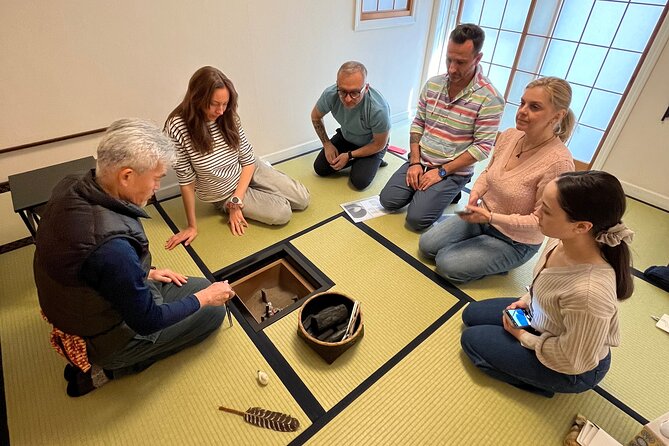
I like the private-home setting and the small maximum of four people. I also like the unusual charcoal procedure, when water is heated with charcoal, something even many Japanese people rarely see. The main consideration is travel time: this takes place near Azamino Station in Yokohama, not central Tokyo, and you need socks for the tatami room.
Key points at a glance
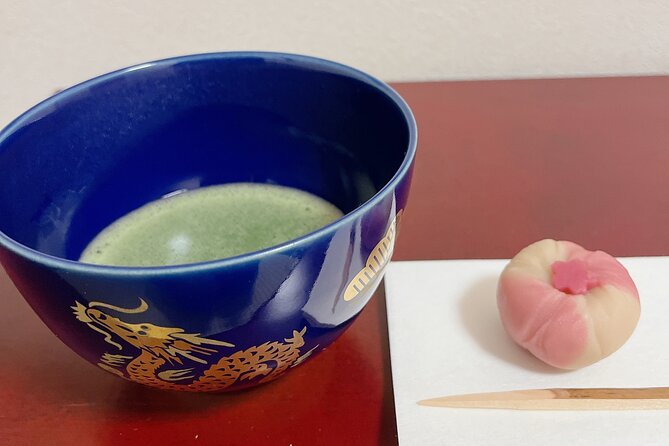
- Five wagashi pieces to shape yourself: You make five Japanese sweets, eat two during the class, and take four home.
- Seasonal sweets chosen by the tea master: The type may be nerikiri, gyuhi, manjyu, or another seasonal style.
- A real private-home setting: The tea ceremony takes place in a traditional tatami room rather than a large tourist venue.
- Two cups of matcha: One is prepared for you, and you whisk the second yourself.
- Rare charcoal procedure: You watch the tea master add charcoal to heat the water.
- Small class near Azamino Station: The group limit is four, with a 1:30 pm start and roughly three-hour duration.
Why this Yokohama class feels different
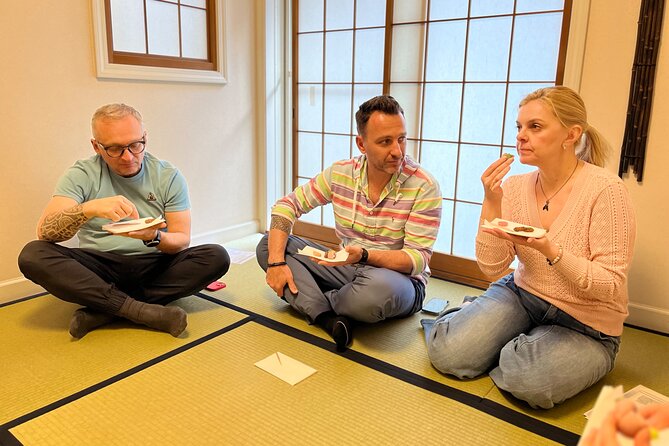
Many visitors encounter Japanese tea ceremony as a formal demonstration. Here, the class adds a hands-on sweets lesson first, so you understand the food served with the tea. That order matters. Wagashi is not just a pretty dessert. Its sweetness balances the bitter, grassy taste of matcha, and its shape often reflects the season.
The setting also changes the mood. You meet at Azamino Station and go to a private home, where the tea ceremony takes place on tatami. This is a more personal format than a large cultural show. The maximum group size is four, so you should have room to ask questions and follow the movements without being lost in a crowd.
Ikuyo-san is the tea master named in the experience details and the personal accounts. She has practiced tea ceremony since childhood and is described as a certified teacher. Her approach appears especially suitable for beginners, including families. One account specifically notes that two 13-year-old boys enjoyed making the sweets and tea, while another describes the atmosphere as relaxed and welcoming.
That does not mean the class is casual in every sense. Japanese tea ceremony has rules, posture, gestures, and a careful order. The useful balance here is that you learn those customs without needing prior experience.
More Tea Ceremonies in Japan:
- Kyoto: Tea Ceremony in a Traditional Tea House in Kiyomizu
★ 4.9 · 3,519 reviews - Kyoto: Tea Ceremony Ju-An at Jotokuji Temple
★ 4.9 · 3,207 reviews - Kyoto: 45-Minute Tea Ceremony Lesson Experience
★ 4.3 · 2,378 reviews
Meeting at Azamino Station in Yokohama
The meeting point is Azamino Station, at 2 Chome Azamino in Yokohama’s Aoba Ward. The class begins at 1:30 pm and ends back at the meeting point. Pickup is offered, though the supplied details do not specify the pickup area or exact arrangement, so confirm that before booking if you need door-to-door transport.
The station is near public transportation, which makes this practical as a half-day outing from the Tokyo area. Still, allow time to reach suburban Yokohama. This is not a central Tokyo activity that you can squeeze between visits in Asakusa and Shibuya.
The timing works well for a slower afternoon. You can arrive at Azamino, attend the class, and still have the evening ahead of you. The experience also notes that the Shin-Yokohama Ramen Museum is about 15 minutes from Azamino Station. That can make a good pairing, though you should check your route and opening plans separately.
Wear or carry socks. You must have socks to enter the tatami room for the ceremony. You do not need to bring supplies for the wagashi lesson, as ingredients are provided.
Shaping five seasonal wagashi
The first part lasts about an hour and a half. You learn how to work with the dough and form five wagashi pieces. The exact sweet depends on the season and the tea master’s choice.
Possible styles include nerikiri, gyuhi, and manjyu. Nerikiri is known for molded designs and seasonal forms. Gyuhi is a soft mochi-style sweet. Manjyu is another traditional Japanese confection, often made with a filling inside a steamed outer layer. The class description does not promise one particular type, so book this for the process rather than a specific recipe.
This is the most hands-on part of the afternoon. You are not simply given a sweet to place beside the tea. You shape the sweets yourself, which helps you notice the texture, precision, and care behind Japanese confectionery.
You make five pieces in total. One is reserved for the tea ceremony, while the remaining four go home with you. That is a nice practical touch. The class does not end with a quick taste and nothing to remember. You leave with four handmade sweets, though the information does not state how they are packaged or how long they keep.
The sweets also give the tea ceremony a clearer purpose. In the formal portion, you eat one of your own creations before drinking matcha. That sequence lets you experience the traditional pairing directly.
Watching the charcoal procedure
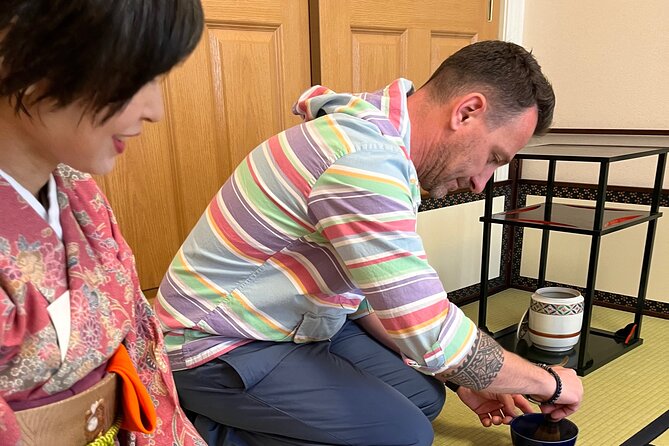
After the sweets lesson, the tea master demonstrates how to act as a guest in a Japanese tea ceremony. You sit in the tatami room and watch the ceremony unfold, including the charcoal procedure.
The charcoal procedure involves adding charcoal to boil the water. This is a less common sight for visitors, and the class notes that it is rare even for Japanese people. It adds a practical layer to the ceremony. You see that the tea is not produced by an invisible kitchen process. Heat, water, utensils, movement, and timing all matter.
The demonstration is also where you learn how to behave as a guest. The supplied information does not list every gesture or rule, but you can ask questions about the ceremony and its background. That makes this more useful than a silent performance, especially if you want to understand why guests move or drink in a certain way.
Keep in mind that the ceremony requires sitting in a traditional tatami room. The class specifically asks you to bring socks. If you are uncomfortable with floor seating, contact the provider before booking, since the supplied details do not explain alternate seating.
More Tea and Sweets Making in Japan:
- Matcha Making Class in Tokyo with Authentic Japanese Sweets Set
★ 5.0 · 744 reviews - Matcha Making Class in Osaka with Authentic Japanese Sweets Set
★ 5.0 · 509 reviews - Tokyo: Matcha Making Experience with Mochi Sweets in Asakusa
★ 4.9 · 388 reviews - Kyoto: Japanese Traditional Sweets Making and Tea Ceremony
★ 4.4 · 314 reviews
Drinking matcha and eating the sweets
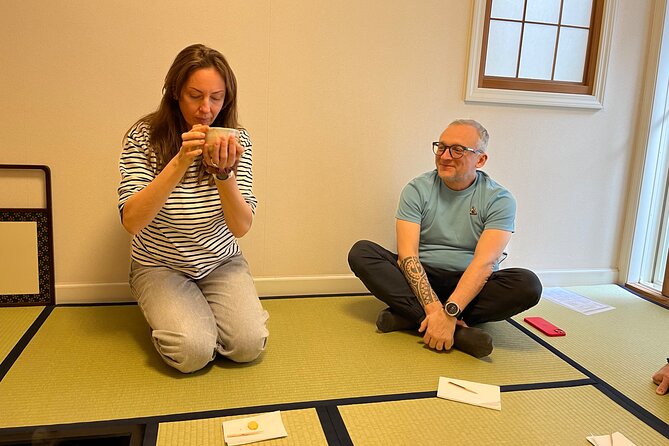
During the demonstration, you eat one wagashi and receive matcha prepared by the tea master. Later, you make a bowl of matcha yourself and eat another sweet. In all, you drink two cups of matcha and eat two pieces of wagashi during the activity.
The second cup is the key learning moment. You get to whisk the green tea yourself instead of leaving the work entirely to the teacher. The experience also prepares wagashi and dried Japanese sweets for you, so the class includes more than the pieces you made during the first session.
Matcha has a strong, bitter taste that may surprise you if you normally drink sweetened green tea. The wagashi provides the sweet counterpoint. You will understand the pairing better after making the sweets, because you have seen how much attention goes into their texture and shape.
The tea master also explains the history of Japanese tea ceremony. You can ask questions, which is helpful if you are new to the customs or unsure about what you are seeing. The class is designed for beginners, not people who already know the etiquette.
What the private-home setting adds
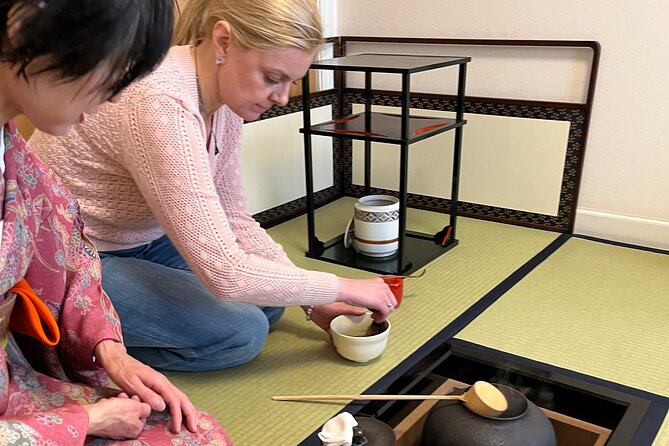
A private home creates a more direct connection with the instructor. The class is limited to four people, so the tone should be more personal than a large group activity. You can ask about the tea ceremony, the sweets, and the meaning behind the steps without trying to catch a guide’s attention from the back of a room.
The personal accounts also suggest that Ikuyo-san’s manner helps first-time participants relax. One person arrived nervous about the ceremony and found her bright welcome reassuring. Another described the atmosphere as warm and easy for someone with no previous knowledge. That matters because tea ceremony can look intimidating at first, with its quiet movements and formal setting.
Families may find the sweets lesson easier for children to enjoy than a ceremony alone. The hands-on work gives younger participants something active to do, and the class has already worked well for 13-year-old children. Still, the activity includes sitting in a tatami room and following a traditional demonstration, so it suits children who can manage a calm three-hour session.
The small setting does come with a tradeoff. A private home may feel less like a polished attraction and more like an individual lesson. If you want a large cultural show with many performers or a broad menu of activities, this is not that kind of outing.
Is $97.55 a fair price?
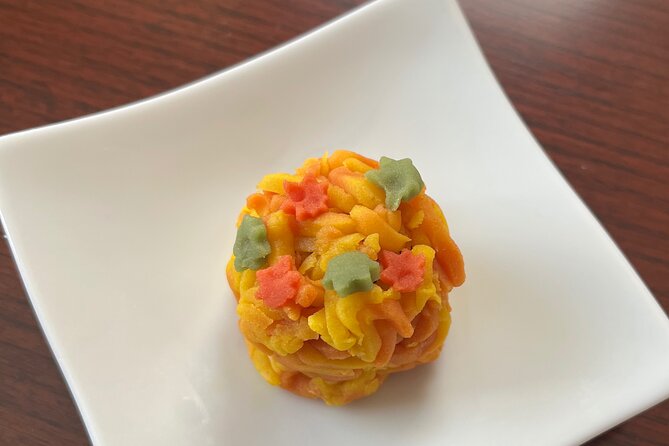
At $97.55 per person, this is not a budget snack stop. The value rests in the combination of two activities, the small group size, the private-home setting, the instruction, the matcha, and the sweets you take home.
You are making five wagashi, drinking two cups of matcha, watching a charcoal procedure, learning guest etiquette, and hearing about tea ceremony customs. Four of the sweets remain with you. Ingredient costs are included, as is the green tea.
The price makes more sense if you want a focused cultural lesson rather than a quick photo opportunity. It is also a better fit for someone who values direct instruction and a small group. If you only want to taste matcha or try one Japanese dessert, you can likely find cheaper options elsewhere.
There is no promise of a particular wagashi style, and the class lasts about three hours. That is good value for a visitor who wants time to learn, but it may feel long if you prefer short activities or have little interest in tea ceremony.
Free cancellation is available up to 24 hours before the 1:30 pm start time. Cancellations or changes made less than 24 hours before the activity are not accepted for a refund.
Who should book this experience?
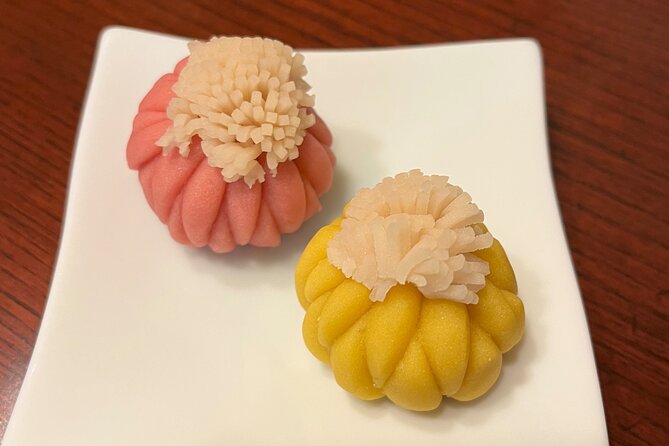
I would choose this class if you want a close look at two linked Japanese traditions. It is especially suitable for:
- First-time visitors who want an introduction without prior knowledge
- Couples or friends who enjoy learning by doing
- Families with older children interested in food and culture
- People who want a quiet activity away from central Tokyo
- Anyone curious about tea ceremony etiquette and matcha preparation
It is less suitable if you want a fast-paced sightseeing tour, a central Tokyo location, or a guaranteed recipe. It is also worth thinking about the tatami seating and the need to wear socks.
The combination works because wagashi and tea ceremony belong together. You learn the sweet, see how it is served, watch the water being heated, and then prepare matcha yourself. Each part gives context to the next.
A practical afternoon plan
Plan to arrive at Azamino Station before 1:30 pm, with enough time to find the meeting point. The class ends at the same place after about three hours, so expect to finish around 4:30 pm, subject to the exact pace of the session.
Bring socks, but no wagashi equipment. Keep your afternoon fairly open, since the activity is not designed as a quick drop-in lesson. If you want to visit the Shin-Yokohama Ramen Museum afterward, the experience places it about 15 minutes from Azamino Station, making it a possible second stop.
Do not forget that the class is in Yokohama’s Aoba Ward, even though it is marketed for people staying around Tokyo. Check your route before the day of the class, especially if you are combining it with another reservation.
Should you book the wagashi and tea ceremony class?
Book it if you want personal instruction, seasonal sweets, and a real tatami-room ceremony in one afternoon. The private-home format, four-person limit, rare charcoal procedure, and chance to whisk your own matcha make it more substantial than a simple tasting.
Skip it if your schedule is tight, you dislike floor seating, or you only want a quick introduction. For the right person, $97.55 buys a thoughtful three-hour lesson, two cups of matcha, two sweets to eat, and four handmade wagashi to take home.
FAQ
Where does the class start?
It starts at Azamino Station, 2 Chome Azamino, Aoba Ward, Yokohama, Kanagawa 225-0011, Japan.
What time does the activity begin?
The start time is 1:30 pm.
How long does the workshop last?
The full experience takes about three hours.
Where does the activity end?
It ends back at the meeting point.
How many people can join?
The activity has a maximum of four travelers.
Do I need prior tea ceremony experience?
No prior experience is stated as a requirement. The class teaches you how to be a guest and allows you to ask questions about the ceremony.
What should I bring?
Bring socks to enter the traditional tatami room. Ingredients and matcha are provided.
How many wagashi do I make?
You make five pieces of wagashi during the class.
How many wagashi do I take home?
You eat one piece during the tea ceremony and take the remaining four pieces home.
How much matcha do I drink?
You drink two cups. The tea master prepares one, and you make one yourself.
Is pickup available?
Pickup is offered, but the supplied details do not specify the pickup area or exact arrangements.
Can I cancel for a full refund?
Yes. You can cancel at least 24 hours before the local start time for a full refund. Changes or cancellations made less than 24 hours before the start are not accepted for a refund.
Fresh tea listings around Japan
- Matcha tasting for all five senses at Hotel Yokohama★ 5.0 · 7 reviews
- Yokohama: Sushi & Gyoza Cooking with Matcha Experience★ 5.0 · 4 reviews
- Kyoto Hidden Riverside Zen Mediation and Uji Matcha Experience★ 5.0 · 9 reviews
- Kyoto: Nighttime Zen Meditation and Matcha Tea Experience★ 5.0 · 7 reviews
- 2 Types of Japanese Sweets making and Tea Ceremony★ 4.6 · 17 reviews
- Kyoto Fushimiinari:Wagashi Making & Small Group Tea Ceremony★ 5.0 · 14 reviews
- Slow Cycling Tour at Uji’s Matcha Green Tea Fields and Heritage★ 5.0 · 25 reviews
- Whisk Your Own Matcha: A Zen Matcha Experience at Temple★ 3.6 · 7 reviews
Tea Ceremony Experiences, compared.
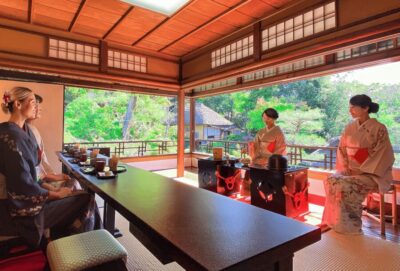
Kyoto: Tea Ceremony in a Traditional Tea House in Kiyomizu
Read our review →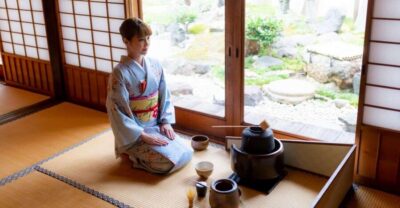
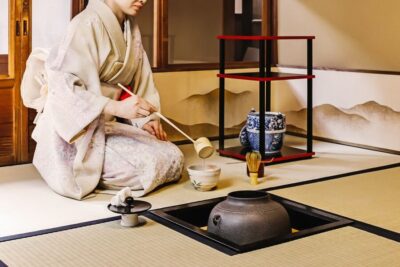
Kyoto: 45-Minute Tea Ceremony Lesson Experience
Read our review →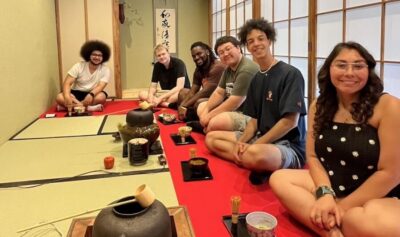
Kyoto: Table-Style Tea Ceremony at a Kyo-Machiya
Read our review →
Browse the lists this tour appears in