Review · KIMONO & TEA CEREMONY
Kyoto: Kimono Tea Ceremony with Matcha and Sweet
Kyoto’s kimono tea ceremony gives you two memorable Japanese experiences in one sitting. You choose your outfit, learn how the tea ritual works, and prepare your own bowl of matcha while a tea master explains the meaning behind each movement. It is polished and visitor-friendly, but still tied to real Japanese customs.
I like the careful kimono fitting and the seasonal wagashi, which changes in color, shape, and flavor. I also like that the English guidance covers more than the recipe for tea: you learn the tools, manners, and Zen ideas of harmony, respect, purity, and tranquility. One consideration is that you prepare your own matcha rather than simply receiving tea from the master, so anyone expecting a highly formal, silent ceremony may find this more like a cultural lesson with hands-on practice.
Key points at a glance
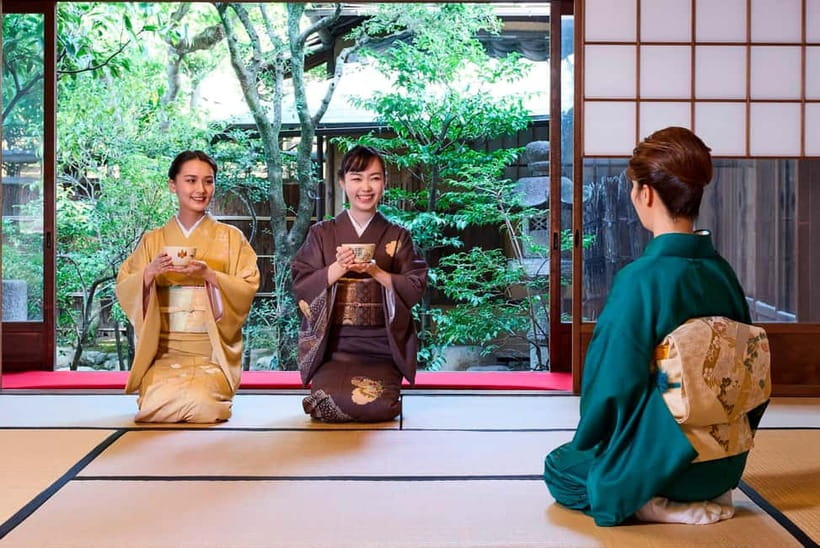
- Kimono choice comes first: Staff help you select and put on a kimono, with hair styling included for women with long hair.
- You make the matcha yourself: A tea master demonstrates the process, then guides you through whisking premium matcha.
- Seasonal wagashi add variety: The Japanese sweets change with the season, so the small treat is part of the cultural lesson.
- English guidance is built in: The ceremony covers its history, utensils, etiquette, and Zen principles in clear English.
- Comfort is flexible: Tatami seating is customary, but bamboo chairs can be requested in advance.
- Plan for 90 to 120 minutes: The experience begins with dressing, and the group may include around 12 to 14 people.
Choosing a kimono before the tea begins
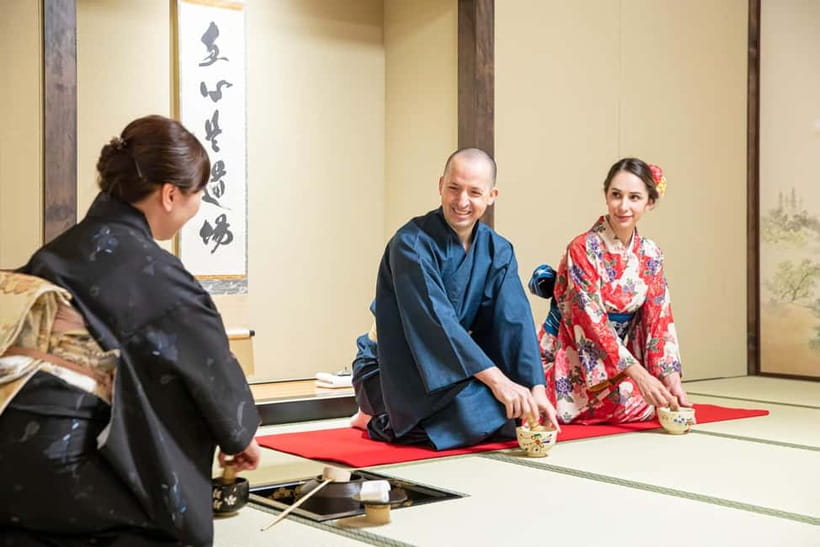
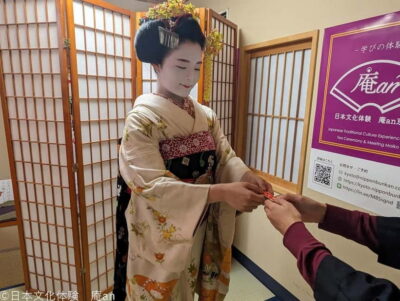
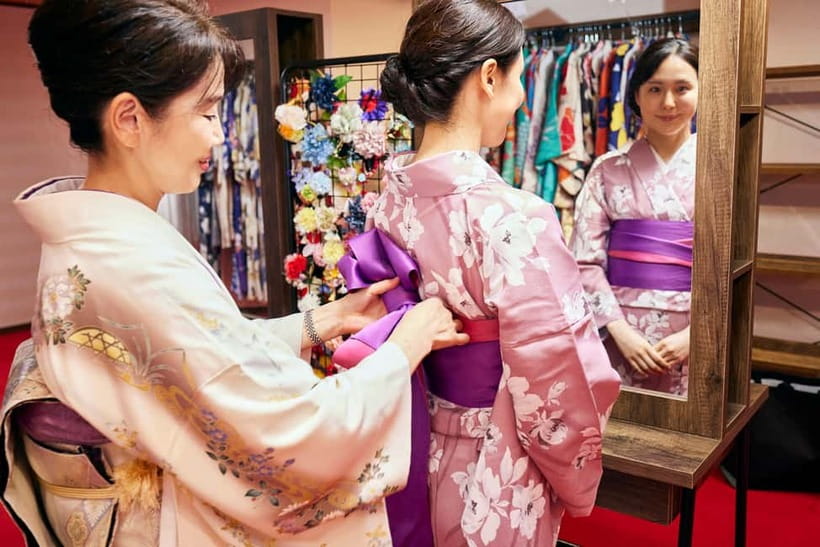
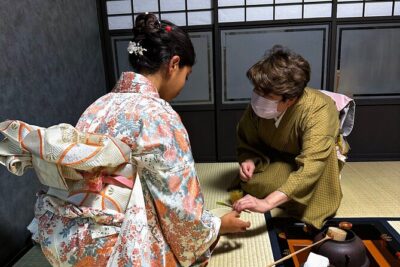
The experience starts with clothing, not tea. Staff help you choose from a range of kimonos, sizes, and obi belts, then dress you for the ceremony. That opening matters because the clothing changes the way the rest of the experience feels. You are not simply watching a demonstration in street clothes. You are taking part in a custom where appearance, posture, and careful movement all have a place.
For women with long hair, hair styling is included. Several participants have especially liked choosing flowers or other hair details, and the staff take care with the final look. You also receive kimono socks, according to the experience details shared by the venue.
I would allow a little patience during this stage. The dressing is part of the activity, but it is not a leisurely salon appointment. One person found the fitting fairly quick and wished for more time to apply makeup first. If photographs matter to you, arrive prepared and do your makeup before the session starts.
The staff take photos during the experience, and you should have time to pose before or after the ceremony. Some people also use nearby photo opportunities, and one participant recommended a professional selfie location down the road. The kimono may be available to wear for a period after the ceremony, with one account specifying up to two hours, but confirm the exact arrangement when you arrive.
More Kimono and Tea Ceremonies in Kyoto
- Kimono Tea Ceremony at Kyoto Maikoya, NISHIKI
★ 5.0 · 911 reviews - Kyoto: Kimono Tea Ceremony at Orizuruya Gion
★ 4.9 · 618 reviews - KYOTO Tea Ceremony with kimono near by Imamiya Jinjya Shrine
★ 5.0 · 343 reviews
Entering the tea room on tatami
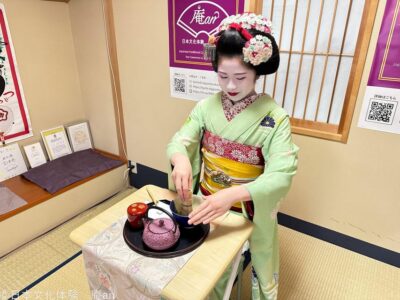
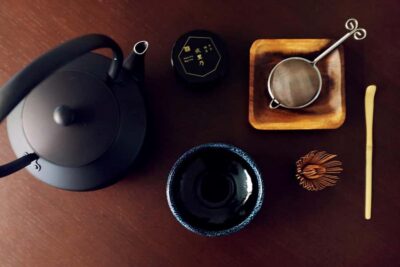
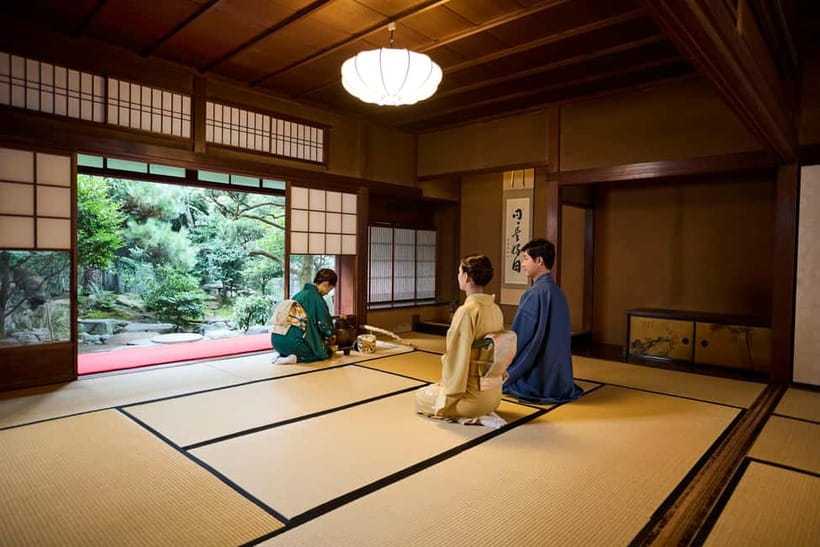
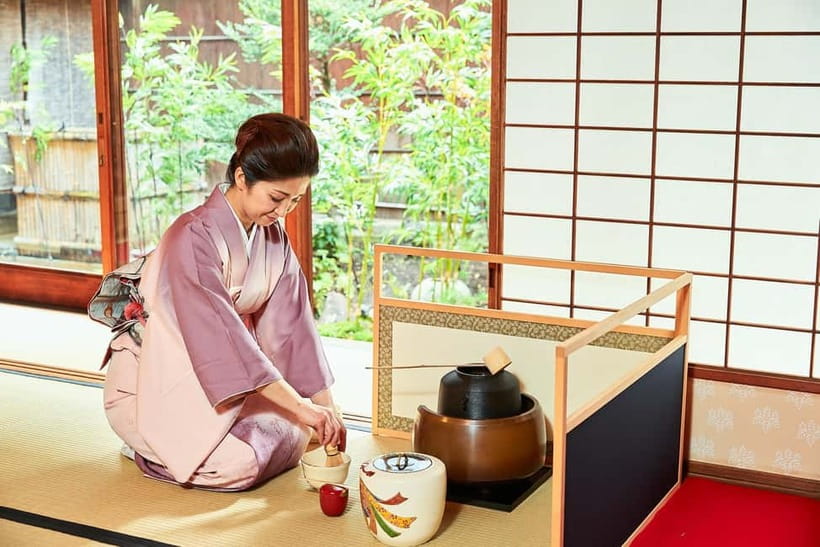
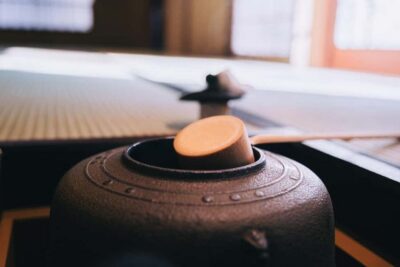
Once dressed, you move into a traditional tea room where the utensils are arranged for the ritual. The setting is part of the lesson. The bowl, whisk, scoop, container, and other tools are not just decorative objects. Each has a role, and the tea master explains how they fit into the ceremony.
Tatami seating is customary, but you are not expected to suffer through uncomfortable kneeling. Bamboo chairs are available if requested in advance. That is a useful detail for anyone with stiff knees, limited flexibility, or simply little experience sitting on the floor.
The ceremony is designed for visitors, so you do not need prior knowledge of Japanese etiquette. You watch the tea master first, then follow instructions. The pace gives you time to understand what is happening instead of guessing when to bow, how to handle the bowl, or when to drink.
The group size is worth noting. The session may combine bookings from different sites and can have around 12 to 14 participants. That is large enough to feel social rather than private. At the same time, some time slots have been much smaller, including one reported group of four. If a small setting matters to you, ask about the expected group size before booking rather than assuming every session will be intimate.
Learning the four ideas behind the ritual
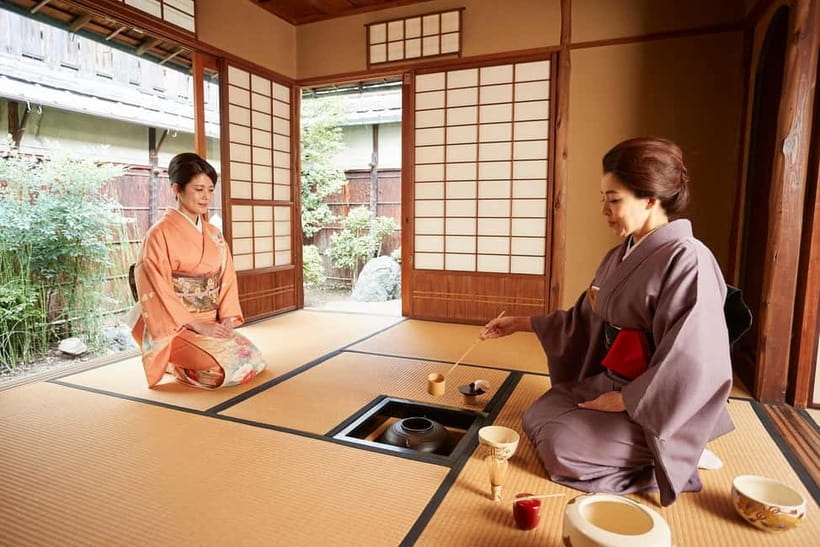
The best part of this experience is the explanation of why the tea ceremony is done so carefully. The tea master introduces four Zen principles:
- Wa, harmony: The host, participants, room, and utensils work together.
- Kei, respect: You show consideration through your movements and treatment of the tools.
- Sei, purity: Cleanliness and order help prepare the mind for the ceremony.
- Jaku, tranquility: The finished ritual creates a calm pause in a busy day.
These ideas keep the activity from becoming mere dress-up. The kimono gets your attention, but the tea ceremony gives the experience its purpose. I find this useful for understanding why the host handles objects slowly, why the room is arranged so precisely, and why the process values concentration over speed.
The English instruction also covers the background of the ceremony, its tools, and its etiquette. Guides such as Maki and Megumi have led sessions praised for their patient explanations and clear delivery. The exact tea master may vary, but English instruction is part of the experience.
If you have a strong interest in Japanese culture, the educational side gives the activity more weight. If you mainly want photographs, you still get that benefit, but the ceremony will ask you to pay attention and participate rather than pose for the whole session.
Making your own bowl of matcha
After watching the demonstration, you prepare your own matcha. The tea master guides you through the steps, using high-quality matcha powder and a traditional whisk. This is hands-on, but not difficult. You are shown how to combine the powder and water and how to whisk it into a frothy drink.
That practical turn is important. You leave with a better sense of how much effort can be hidden in a small bowl of tea. The process also gives you something to do, which helps keep the session engaging for couples, families with older children, and first-time visitors.
The hands-on format has one clear tradeoff. This is not solely a formal ceremony in which you sit quietly while an expert prepares and serves your tea. You make the matcha yourself. I see that as a strength if you want participation, but a limitation if you are seeking the most austere or traditional presentation possible.
The tea itself can be strong and earthy, as good matcha often is. The wagashi served alongside it provides a sweet counterpoint. You do not need to be a matcha fan before booking, but you should be open to a flavor that is more bitter and grassy than the sweetened green tea common outside Japan.
More Matcha Experiences in Kyoto
- Kyoto: Tea Ceremony Meditation – Make Matcha with Tea Master
★ 4.8 · 406 reviews - Kyoto: Arashiyama Bamboo, Temple, Matcha, Monkeys & secret spots
★ 5.0 · 219 reviews - Kyoto Matcha Green Tea Tour
★ 4.7 · 28 reviews - Kyoto: Traditional Tea Ceremony with Matcha & Sweets in Gion
★ 4.9 · 27 reviews
Seasonal wagashi and the small details
The wagashi is one of the most appealing details here. These Japanese sweets change with the seasons in flavor, color, and design. The serving is small, but it helps explain how Japanese food can reflect the calendar and the setting.
I like that the sweet is not treated as an afterthought. It gives you a traditional accompaniment for the matcha and shows how the ceremony balances bitter tea with a carefully made dessert. The exact sweet is not fixed, so you should expect variation rather than a particular flavor or shape.
The room, clothing, sweets, and utensils work together to create a focused experience. You are not only hearing about Japanese customs. You are seeing them in the arrangement of the room, feeling them in the clothing, and practicing them while handling the bowl and whisk.
How long the visit takes and what to wear
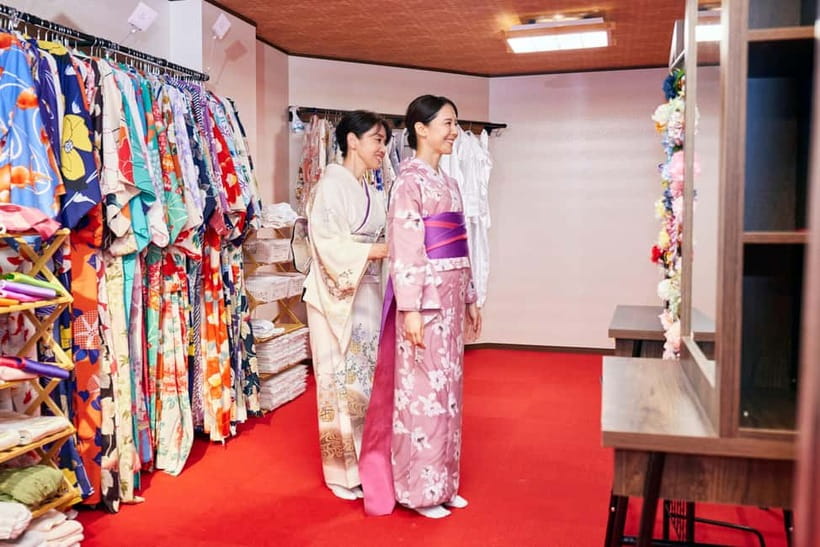
The advertised duration is 90 minutes, while the practical guidance says to allow roughly 90 to 120 minutes. Dressing comes first, so do not schedule a tight appointment immediately afterward. The extra time can also be useful for photographs in the kimono.
Wear something that makes changing easy. The information provided does not set a specific dress code, but comfortable clothing underneath is sensible because the kimono is fitted over it. You may be sitting on tatami unless you request a chair, and the clothing can feel structured once tied with the obi.
Children under seven cannot join. For families, the age rule is simple, but the activity still suits older children best if they can sit quietly, listen to instructions, and handle the cultural setting respectfully.
Transportation to the venue is not included. You will need to arrange your own way there and back, so allow time to find the location and arrive before the dressing begins. No transport service is part of the $66 price.
Is $66 a fair price?
At $66 per person, this is not the cheapest way to spend an hour and a half in Kyoto. You are paying for several linked services: kimono dressing, hair styling for eligible women, the tea room, English instruction, the tea master, matcha preparation, wagashi, and staff assistance.
I think the price is fair if you want both cultural context and photographs. Renting a kimono alone would give you the visual experience, while a tea lesson alone would leave out the clothing and preparation. Here, the two parts support each other.
The value is weaker if you only want a private, highly formal tea ceremony. The group can reach 12 to 14 people, and the hands-on format is more accessible than ceremonial. You may also feel slightly overdressed while preparing the tea, as one participant did. That is not a serious problem, but it explains the character of the activity: welcoming, guided, and participatory rather than solemn and exclusive.
The free cancellation policy allows cancellation up to 24 hours before the experience for a full refund. You can also reserve now and pay later, which is useful when your Kyoto schedule is still shifting.
Who will enjoy this Kyoto tea ceremony?
I would recommend it most strongly to first-time visitors who want a clear introduction to Japanese customs without needing to know the rules in advance. The English guidance makes the ceremony easy to follow, and the staff are used to helping people from different backgrounds.
It also works well for couples looking for a shared cultural activity, families with children seven and older, and anyone who wants memorable photos with a purpose behind them. The kimono selection and hair styling make it feel special, while the tea lesson gives you something more substantial than a costume session.
You might choose another experience if you want a quiet private ceremony, a long kimono walk through Kyoto, or a full cooking workshop. This activity centers on the room, the ritual, and your own preparation of matcha. It is not a sightseeing tour and does not include transportation.
The strongest feature is the staff attention. The hosts are described as warm, patient, orderly, and careful with the clothing. Guides who speak slowly and invite participation are especially helpful in a mixed group. That matters because tea etiquette can seem mysterious if instructions are rushed.
Should you book it?
Book this experience if you want to wear a real kimono, learn the meaning behind the tea ritual, and make matcha yourself. The seasonal wagashi, English explanation, and chance for photographs give you plenty to remember, while the Zen principles add context beyond the usual tourist photo stop.
Think twice if your ideal tea ceremony is private, very formal, and mostly performed by the master. The group size can vary, the ceremony lasts closer to two hours in some cases, and you take an active role rather than simply watching.
For most visitors, I think the balance works. It is friendly enough for a first encounter with Japanese tea culture, yet detailed enough to explain why the ceremony looks and feels the way it does. At $66, it is a sensible choice for a structured Kyoto cultural experience that combines clothing, food, instruction, and participation in one visit.
FAQ
How long does the Kyoto kimono tea ceremony last?
The stated duration is 90 minutes, but you should allow approximately 90 to 120 minutes because the experience begins with kimono dressing.
What is included in the price?
The price includes kimono dressing, a traditional tea ceremony led by a tea master, hands-on matcha preparation, Japanese sweets, bilingual staff assistance, and hair styling for women with long hair.
Is the tea ceremony conducted in English?
Yes. English instruction is provided, and the tea master explains the ceremony, tools, history, etiquette, and Zen principles in English.
Do I get to choose my kimono?
Yes. You choose a kimono, and staff assist with the dressing process. You can also select an obi, and hair styling is available for women with long hair.
Can I sit on a chair instead of the tatami floor?
Yes. Bamboo chairs are available for people who prefer not to sit on tatami mats, but you should request one in advance.
Are children allowed to join?
Children under seven are not allowed to participate.
How many people are in each session?
Because bookings from different sites may be combined, a session can have about 12 to 14 participants. The actual size can vary, and some sessions may be smaller.
Is transportation to the venue included?
No. Transportation to and from the venue is not included, so you must arrange your own transport.
Can I cancel the booking?
Yes. You can cancel up to 24 hours in advance for a full refund. A reserve-now, pay-later option is also available.
More Tea Ceremonies in Kyoto
- Kyoto: Tea Ceremony in a Traditional Tea House in Kiyomizu
★ 4.9 · 3,519 reviews - Kyoto: Tea Ceremony Ju-An at Jotokuji Temple
★ 4.9 · 3,207 reviews - Kyoto: 45-Minute Tea Ceremony Lesson Experience
★ 4.3 · 2,378 reviews - Kyoto: Table-Style Tea Ceremony at a Kyo-Machiya
★ 4.9 · 1,211 reviews
Fresh tea listings around Kyoto
- Traditional Tea Ceremony in Kyoto★ 4.5 · 3 reviews
- Kyoto: Authentic Tea Ceremony in a Small Group★ 5.0 · 7 reviews
- Uji Walking Tour – Byodo-in temple and Tea Ceremony from Kyoto★ 3.5 · 3 reviews
- Tea Ceremony in 150 Years Old Townhouse with Tables and Chairs★ 5.0 · 22 reviews
- Tea ceremony at Kyoto’s Zen Temple Teahouse★ 5.0 · 2 reviews
- Tea Ceremony Experience in Traditional Kyoto Townhouse★ 5.0 · 19 reviews
- Sencha-do the Japanese Tea Ceremony Workshop in Kyoto★ 5.0 · 21 reviews
- Silent Beauty of Kyoto Zen Walk and Tea Experience★ 5.0 · 2 reviews
Kimono & Tea Ceremony, compared.
KYOTO Tea Ceremony with kimono near by Imamiya Jinjya Shrine
Read our review →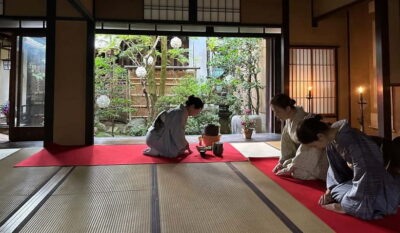
Kyoto: Kimono and Tea Ceremony Experience at Cultural Asset
Read our review →