
Review · TEA CEREMONY EXPERIENCES
Tokyo: Tea Ceremony & Japanese Sweets Making
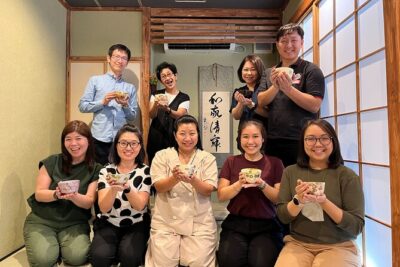
A bowl of matcha is easy to order in Tokyo. Learning to prepare it yourself is more memorable. In this one-hour workshop, a tea master demonstrates Otemae, explains the steps in clear English, and guides you through making your own tea and seasonal Japanese sweet.
I like the small maximum of 10 people, which should make it easier to follow the movements and ask questions. I also like the hands-on pairing of matcha with a sweet you shape yourself. The main drawback is the short running time, so this is an introduction rather than a full study of Japanese tea culture.
Key points at a glance
- Watch Otemae before making tea: See the formal preparation demonstrated by a tea master with more than 10 years of experience.
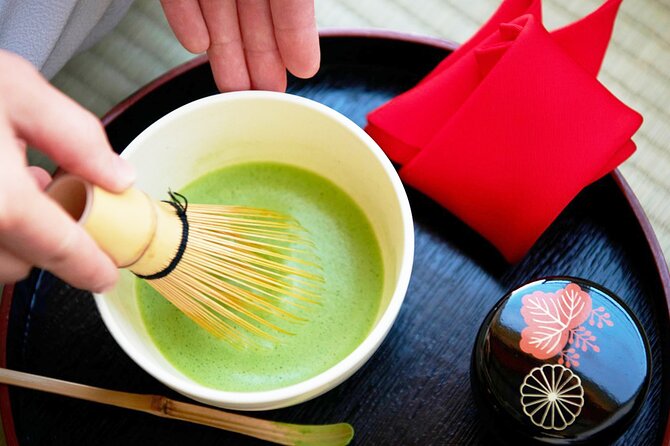
- Whisk your own matcha: Prepare the tea yourself, then taste its strong, grassy flavor.
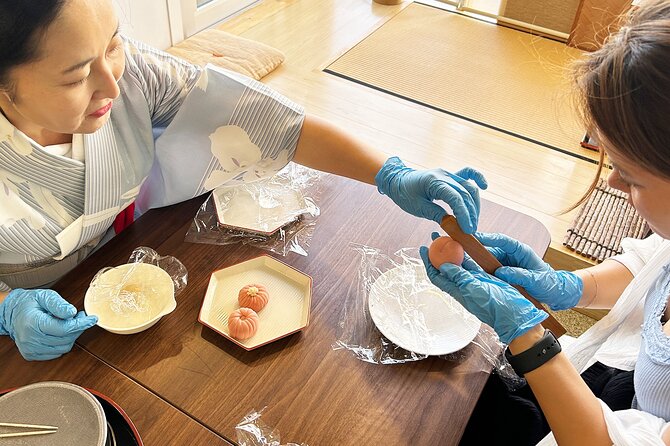
- Make a seasonal Japanese sweet: Your sweet is not just served on a plate, you take part in creating it.
- English guidance throughout: The host explains the activity in clear English.
- Small group setting: The class is limited to a maximum of 10 people.
- Convenient one-hour format: A useful choice for a short gap in a Tokyo sightseeing day.
A quiet hour with matcha and handmade sweets
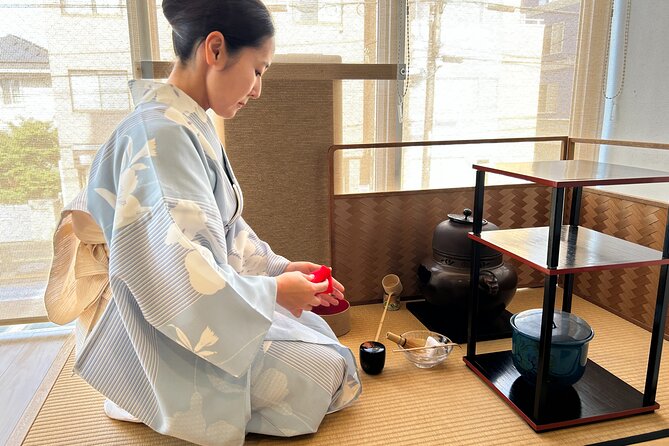
This experience focuses on doing, not simply watching. You begin with a traditional tea ceremony demonstration called Otemae. The formal movements give you a look at the care behind Japanese tea preparation before you try the process yourself.
A tea master with more than 10 years of experience leads the session. That matters because matcha can seem simple from the outside: powder, hot water, whisk. The demonstration shows that the order, motion, and handling all have a purpose.
You then prepare your own matcha. The activity is guided in English, so you can follow the instructions without needing prior knowledge of Japanese tea customs. You will not be left to guess how to use the tools or how to whisk the tea.
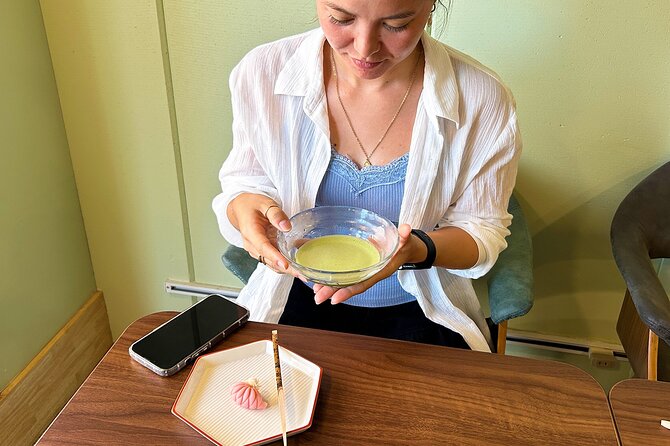
The final part brings the tea and sweet together. You make a seasonal Japanese sweet yourself, then enjoy it with the matcha. This creates a better sense of how the two are meant to work as a pair. The sweet helps balance matcha’s firm, grassy taste, while the tea keeps the tasting from becoming simply a sugar break.
More Tea and Sweets Making in Tokyo
- Matcha Making Class in Tokyo with Authentic Japanese Sweets Set
★ 5.0 · 744 reviews - Tokyo: Matcha Making Experience with Mochi Sweets in Asakusa
★ 4.9 · 388 reviews - Make Traditional Nerikiri Sweets & Matcha experience in Shibuya
★ 5.0 · 130 reviews
Watching the Otemae demonstration
The Otemae demonstration is the most formal part of the hour. Rather than rushing straight into your own bowl, you first get to see the process performed by an experienced tea master.
Pay attention to the sequence. The value is not only in seeing tea whisked, but in noticing the calm pace and careful handling. A traditional tea ceremony is built around presentation and attention, and this demonstration gives you a short, clear introduction to those ideas.
I like this order because it makes the hands-on part easier. You see the motions once, then attempt them yourself. For a first-time visitor, that is more useful than being handed a whisk with no context.
Keep your expectations sensible. The class lasts about one hour, so the demonstration cannot cover every school, rule, or historical detail connected with tea ceremony. It is best viewed as a practical introduction rather than an advanced cultural course.
Still, the format suits a first meeting with matcha. You get a real demonstration, then a chance to participate. That balance is one of the strongest reasons to choose this activity over a simple tea tasting.
Making your own bowl of matcha
After watching the tea master, you prepare matcha yourself. This is where the experience becomes personal. You can feel the texture of the tea powder, handle the equipment, and see how your whisking affects the finished drink.
Matcha has a distinctive flavor. It is concentrated, earthy, and slightly bitter, with a texture that differs from ordinary steeped tea. Preparing it yourself helps you understand why the drink is enjoyed in small amounts and why a sweet is served alongside it.
The host guides you through the process in English. That is especially useful if you have never made matcha before or are unsure how much motion is needed. The goal is not to produce a perfect bowl on the first attempt. The point is to learn the basic method and taste the result.
You should also expect some variation from bowl to bowl. A beginner may whisk differently from the tea master, and that is part of the activity. This is a workshop, not a performance where you sit back and receive a finished product.
I would choose this class if you like short activities that let you use your hands. It gives you something to remember beyond a photograph, and the lesson can help you recognize the care involved when you order matcha elsewhere in Japan.
Crafting a seasonal Japanese sweet
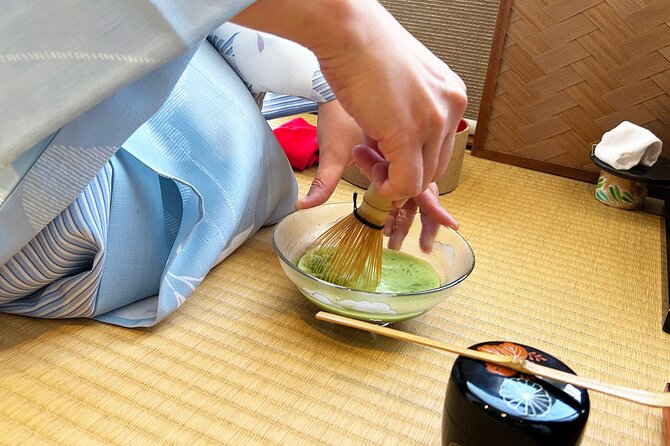
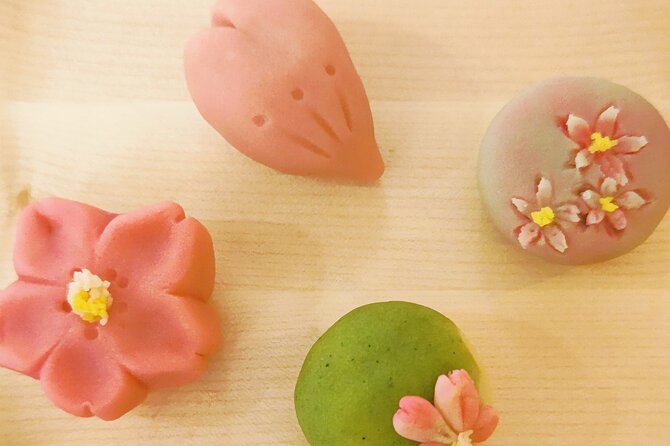
The sweet-making section adds a second skill to the class. Instead of receiving a standard confection, you create a seasonal Japanese sweet yourself and design it as part of the activity.
The word seasonal matters here. Japanese sweets often reflect the time of year through shape, appearance, or presentation. The exact sweet is not specified in the available details, so you should not book expecting one particular recipe or design. What you can count on is the chance to make a sweet connected to Japanese tradition and enjoy it with your matcha.
This part may appeal to anyone who prefers food activities with a creative element. Children and adults can both find it satisfying to shape something with their own hands, though the activity is described for a maximum of 10 people rather than a specific age group.
The sweet also serves a practical purpose. Matcha has a strong taste, and a Japanese confection provides contrast. Tasting both together makes the tea ceremony feel like a complete experience instead of a lesson about one drink.
A short workshop cannot turn you into a wagashi maker. You will not leave with a full set of recipes or a professional technique. But you will gain a clearer sense of how Japanese sweets are designed and why they are often served with tea.
More Tea Ceremonies in Tokyo
- Kimono Tea Ceremony at Tokyo, Asakusa Maikoya
★ 5.0 · 638 reviews - Tokyo: Traditional Tea Ceremony with a Tea Master
★ 5.0 · 528 reviews - Tea Ceremony Workshop in Tokyo by the Experienced Instrucor
★ 5.0 · 189 reviews - Asakusa: Kimono Tea Ceremony with Matcha and Sweet
★ 4.9 · 153 reviews
Why the small group matters
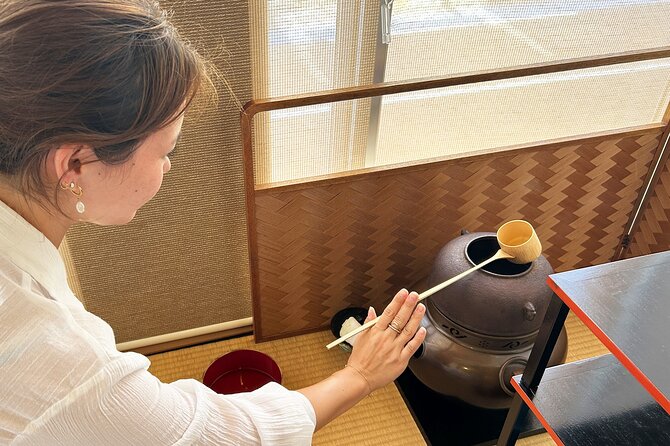
The class allows no more than 10 participants. That is a useful limit for an activity based on demonstration and practice.
In a very large group, it can be difficult to see the host’s hands or get help when your tea does not look quite right. A group of 10 or fewer should give you a better view of the Otemae demonstration and a reasonable chance to follow along with the matcha and sweet-making steps.
The small size may also make the session feel calmer. Tea ceremony is not a loud or hurried activity, and a packed room would work against that mood. The available information does not promise a private class, so you should expect to share the session with other participants.
The 90 percent recommendation rate and 4.8 rating from 10 reviews suggest that the format has worked well for most people who have booked it. The sample is small, so I would treat those figures as encouraging rather than conclusive. The strongest praise focuses on the combination of a traditional ceremony, a friendly instructor, matcha preparation, and dessert making.
Location in Hakusan and what the address means
The meeting point is at 文京区白山のダイエット和食付きパーソナルトレーニングジムVaLerio LuanaJapan, at 1-26-17 Hakusan Hills, 2nd floor, Hakusan, Bunkyo City, Tokyo 113-0001.
The venue name includes a personal training gym, which may surprise you if you are picturing a tea house. The supplied details identify this as the starting location, so check the full address carefully before setting out. The activity is near public transportation, which makes it practical to reach from other parts of Tokyo.
The session ends back at the meeting point. That makes planning easier. You do not need to arrange a separate pickup or work out where the activity finishes before continuing with your day.
Because the experience lasts about an hour, you can fit it between other plans. I would still allow extra time to find the building and reach the second floor. The exact station name and walking directions are not provided, so use the confirmed meeting address and allow a little breathing room rather than arriving at the last minute.
What the $32.58 price buys you
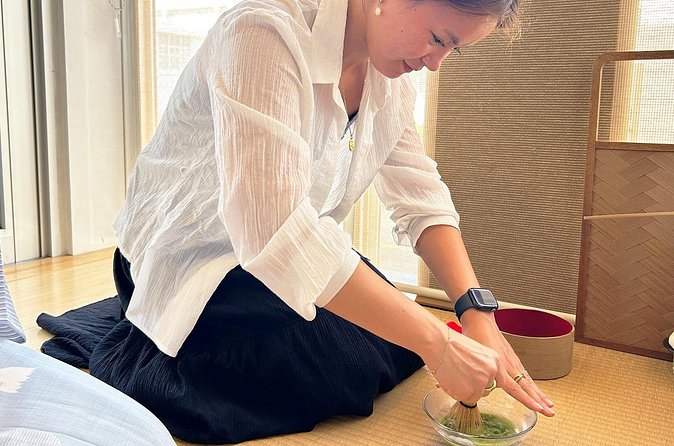
At $32.58 per person, this is priced as a short cultural workshop rather than a full meal or a long guided tour. The value comes from the instruction and participation: you watch a tea master, prepare matcha, make a seasonal sweet, and taste both during one compact session.
If you only want to drink matcha, you can spend less at a cafe. That comparison misses the main benefit here. You are paying for access to a structured demonstration, English guidance, and the chance to make the tea and sweet yourself.
The price looks strongest for visitors who want a focused cultural activity without giving up half a day. One hour is enough to add something different to a busy Tokyo schedule, and the return to the starting point keeps the logistics simple.
The value is less clear if you already have extensive tea ceremony experience or want a long, scholarly explanation of Japanese tea traditions. This class is aimed at newcomers and casual learners. Its strength is a clear introduction with hands-on practice, not depth over several hours.
Who will enjoy this workshop most
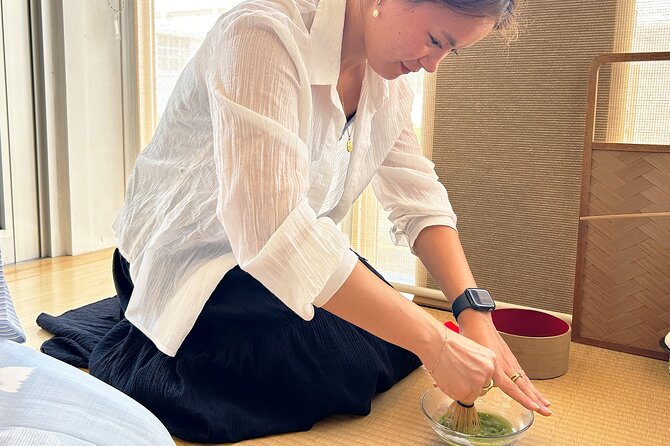
I would recommend this activity to first-time matcha drinkers, food lovers, couples, families with an interest in Japanese sweets, and anyone looking for a calm break from sightseeing.
It also works well for people who prefer a small group and direct instruction. You do not need to know Japanese tea etiquette before arriving. The host explains the process in English, and the format lets you watch before you try.
This is a good fit if you want an activity that feels connected to Japan without requiring a full day. It suits a morning or afternoon gap, especially because you return to the same location after the class.
You may want to choose something else if you need a long ceremony, a private instructor, a detailed history lesson, or a full meal. None of those are promised here. The experience is short, practical, and centered on making and tasting.
Small details that help you plan
Confirmation is provided when you book, and mobile tickets are accepted. The activity has free cancellation if you cancel at least 24 hours before the local start time.
Cancellations made less than 24 hours before the start are not refunded, and changes inside that period are not accepted. This is worth noting if your Tokyo schedule is still shifting.
The maximum group size is 10 people. The exact name of the tea master is not provided, so you should not expect to book a named instructor. What is specified is more useful for judging the class itself: the host has more than 10 years of tea experience and teaches in clear English.
The activity is near public transportation, but the supplied details do not name a particular station or give a walking time. Use the complete Hakusan address when checking your route.
Should you book the Hakusan matcha workshop?
Book it if you want a short, hands-on introduction to Japanese tea ceremony rather than a long formal lesson. The combination of Otemae, self-prepared matcha, seasonal sweet making, and English instruction gives you more to do than a basic tea tasting.
The $32.58 cost is reasonable for an hour of guided cultural practice, especially with a group capped at 10 people. The strong 4.8 rating and 90 percent recommendation are encouraging, though they come from only 10 reviews.
Skip it if you want a large traditional tea-house setting, an extensive cultural lecture, or a full afternoon devoted to tea. For everyone else, this is a tidy way to add a little ceremony, craft, and flavor to a Tokyo itinerary.
FAQ
How long does the Tokyo tea ceremony and sweets activity last?
The activity lasts approximately one hour.
Where does the activity begin?
It begins at 文京区白山のダイエット和食付きパーソナルトレーニングジムVaLerio LuanaJapan, 1-26-17 Hakusan Hills, 2nd floor, Hakusan, Bunkyo City, Tokyo 113-0001.
Where does the activity finish?
The activity ends back at the meeting point.
Is the experience taught in English?
Yes. An expert host provides guidance in clear English.
How many people can join the activity?
The maximum group size is 10 participants.
Can I cancel for a full refund?
Yes, if you cancel at least 24 hours before the experience start time. Cancellations made less than 24 hours before the start are not refunded.
Fresh tea listings around Tokyo
- Yokohama : Tea Ceremony with Sweets and Souvenir★ 5.0 · 5 reviews
- Walking Tour: Yanaka,Nezu& Sendagi: Tea Ceremony & Old Tokyo★ 5.0 · 3 reviews
- Private Mochi・Matcha sweets Making Class Near Shibuya Area★ 5.0 · 22 reviews
- Private Kimono and tea ceremony at local home near Tokyo Disney★ 5.0 · 6 reviews
- 2 Hours Mochi &Nerikiri Making & Matcha Class in Bunkyo★ 5.0 · 21 reviews
- Tokyo Sweets Tour: Hidden Gems & Matcha at an Old Tea House★ 5.0 · 6 reviews
- Kimono and Tea Ceremony in Asakusa Private Food Tour With Guide★ 5.0 · 4 reviews
- Tokyo: Matcha Tea Ceremony Experience at Japanese room in Shibuya★ 5.0 · 11 reviews
Tea Ceremony Experiences, compared.
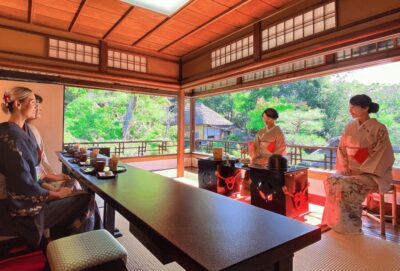
Kyoto: Tea Ceremony in a Traditional Tea House in Kiyomizu
Read our review →
Kyoto: 45-Minute Tea Ceremony Lesson Experience
Read our review →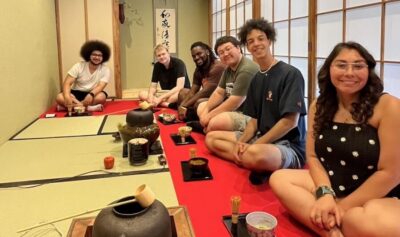
Kyoto: Table-Style Tea Ceremony at a Kyo-Machiya
Read our review →
Browse the lists this tour appears in