
Review · MATCHA EXPERIENCES
Tokyo: Matcha Tea Ceremony Experience at Japanese room in Shibuya
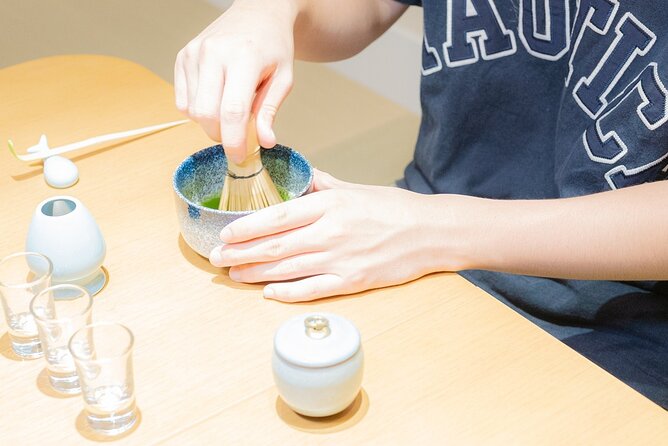
Making your own bowl of matcha is the heart of this one-hour Shibuya experience. You learn the basic manners, whisk the tea yourself, and taste several Japanese teas in a quiet Japanese room. It is a practical way to meet an old tradition without committing to a long, formal ceremony.
I like the hands-on format and the small group limit of eight. I also like the chance to compare matcha with teas such as hojicha, rather than treating Japanese tea as one single flavor. The main drawback is the short length: you get a friendly introduction, not a full study of tea ceremony practice.
Key points at a glance
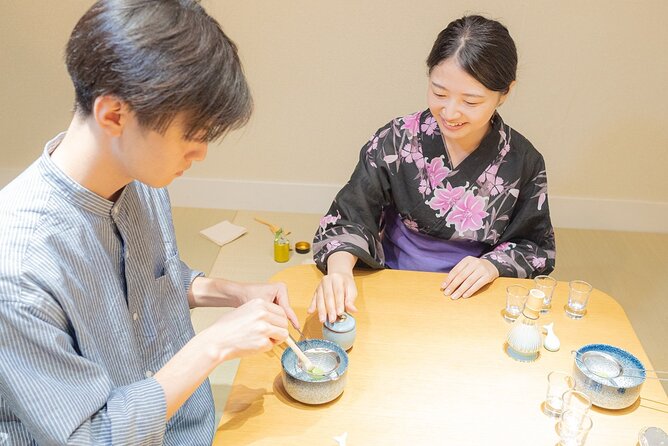
- Whisk your own matcha: An instructor guides you through the basic preparation, so you are not only watching.
- Taste three additional teas: The tasting gives you a useful comparison of Japanese tea styles, including hojicha.
- Learn simple ceremony manners: You are introduced to etiquette and the meaning behind the movements.
- Small group setting: The experience has a maximum of eight people, allowing room for questions.
- Beginner-friendly instruction: Taku, So-Wa, Ryota, and other instructors are described as warm and clear in their explanations.
- Easy one-hour cultural stop: The activity begins and ends at 2-chōme-14-13 Shibuya and is near public transportation.
A calm tea lesson in the middle of Shibuya
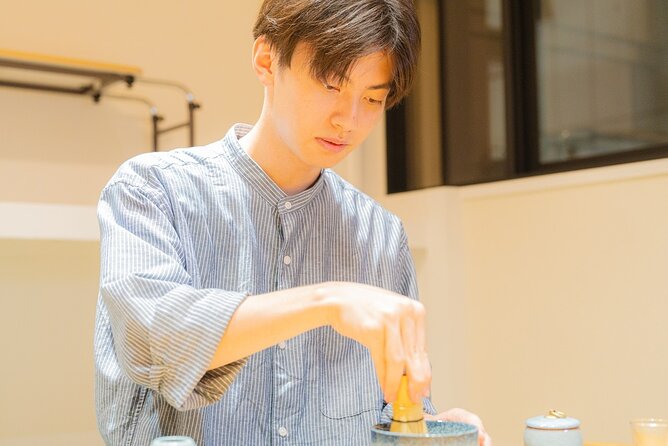
Shibuya is famous for bright signs, crowded crossings, and fast-moving city life. This experience offers a useful change of pace: you step into a Japanese room and focus on the small actions involved in making and serving tea.
The setting matters. A tea ceremony is not just a drink demonstration. It places value on careful movement, attention, respect, and the relationship between host and guest. You will not master all of that in an hour, but you can see how these ideas shape the ceremony.
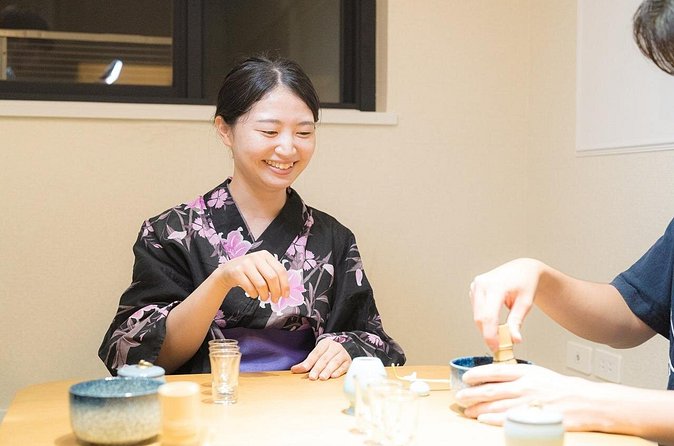
The atmosphere is intended to be relaxed rather than intimidating. That is important if you have never handled a bamboo whisk or are unsure which gestures are expected. The instructor explains the basic etiquette step by step, making this a good first encounter with the custom.
You should think of the session as a cultural lesson with tea at its center, not as a theatrical show. You take part, ask questions, and taste the results. That gives you something useful to carry into the rest of your time in Japan, especially if you later visit a tea shop or encounter matcha on a menu.
More Matcha Experiences in Tokyo
- Matcha Making Class in Tokyo with Authentic Japanese Sweets Set
★ 5.0 · 744 reviews - Tokyo: Matcha Making Experience with Mochi Sweets in Asakusa
★ 4.9 · 388 reviews - Asakusa Cultural Walk & Matcha Making Tour
★ 5.0 · 245 reviews
What happens during the one-hour session
The experience begins at 2-chōme-14-13 Shibuya, Tokyo 150-0002, and ends at the same meeting point. The supplied information does not give a detailed minute-by-minute schedule, so the exact order may vary. Still, the main parts are clear.
First comes an introduction to the tea ceremony and its basic manners. You learn how the ceremony is approached and why movements are done with care. This explanation is a valuable part of the session because without it, whisking matcha can feel like a craft lesson with no cultural setting.
The instructor then shows you how to prepare matcha. You make your own bowl under guidance, rather than simply receiving one that has already been prepared. This is where the class becomes practical. You can see the tools, follow the technique, and adjust your movements with help.
The method is beginner-friendly. You do not need previous tea knowledge, and the instructor is there to explain the essential steps. If you are nervous about doing something incorrectly, the relaxed tone should make it easier to participate.
Traditional sweets may accompany the matcha. They provide a useful contrast to the tea’s flavor and are part of the pleasure of the ceremony. The available information does not promise a specific sweet, so do not book this expecting a fixed dessert menu.
The session also includes a tasting of different Japanese teas. Several descriptions refer to three additional teas, giving you a chance to compare flavors and preparation styles. Hojicha has received special attention as a memorable discovery for some participants, so this is a good opportunity to try a roasted tea if you have only had matcha before.
Why making your own matcha matters
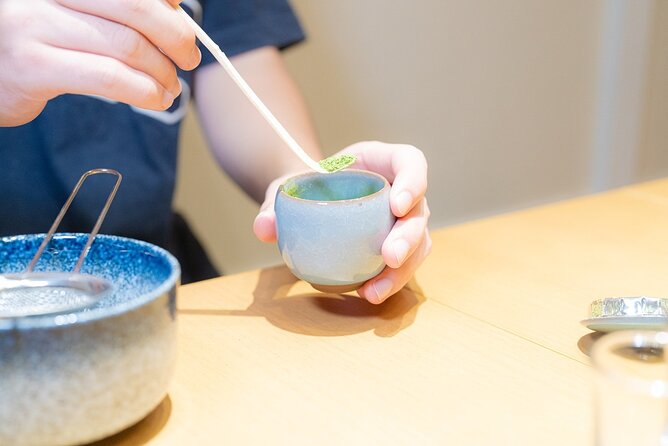
A prepared cup can be pleasant, but making your own matcha gives you a clearer sense of the process. You handle the tools, follow the instructor’s movements, and see how much care goes into a small bowl of tea.
The point is not to produce a perfect cup on your first try. It is to understand the rhythm of the preparation. The whisking, the attention to the bowl, and the manner of serving all slow you down. That slower pace is a large part of the appeal.
I also like that the activity lets you taste the tea after preparing it yourself. You are not learning in the abstract. The lesson ends with a drink you have made, which makes the ceremony easier to remember.
Matcha can taste grassy, bitter, or pleasantly rounded depending on the preparation. The experience does not promise a particular flavor profile, and personal taste will vary. If you usually prefer sweet drinks, the traditional sweet may help balance the matcha, but you should still expect an earthy tea rather than a sugary beverage.
The tea tasting gives the class extra value
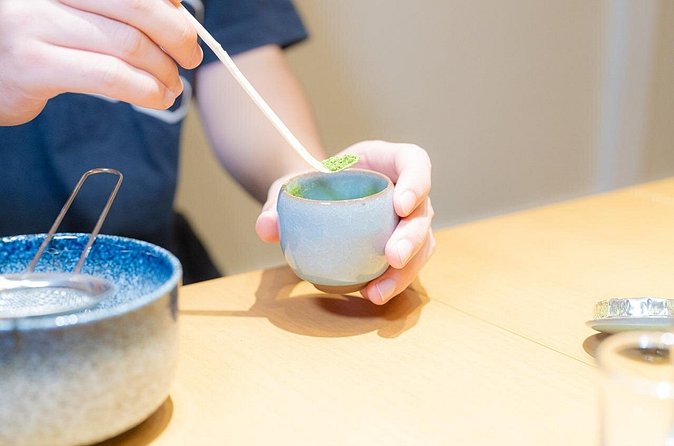
The additional tea tasting is one of the strongest reasons to choose this activity over a simple matcha-making class. You get a wider view of Japanese tea and can compare the differences instead of judging matcha in isolation.
Hojicha is especially worth noting. It is a roasted tea with a different character from matcha, and it can be an easier introduction for people who find powdered green tea strong. The instructors explain the teas and their traditions, so you gain context along with the tasting.
The activity has also included three other teas beyond the matcha. The exact selection is not specified, so the experience may change. What remains useful is the comparison itself: you can pay attention to aroma, bitterness, sweetness, roast, and texture.
For a first-time tea drinker, this makes the hour more rewarding. You are not simply told that Japanese tea has many forms. You taste those differences directly. For someone already interested in tea, the lesson may be a pleasant introduction, though it is not presented as an advanced tasting course.
More Tea Ceremonies in Tokyo
- Kimono Tea Ceremony at Tokyo, Asakusa Maikoya
★ 5.0 · 638 reviews - Tokyo: Traditional Tea Ceremony with a Tea Master
★ 5.0 · 528 reviews - Tea Ceremony Workshop in Tokyo by the Experienced Instrucor
★ 5.0 · 189 reviews - Asakusa: Kimono Tea Ceremony with Matcha and Sweet
★ 4.9 · 153 reviews
Instructors who make questions welcome
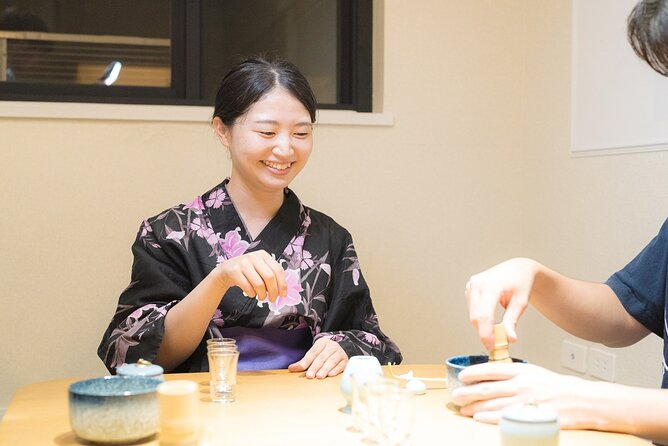
The instructors named in the experience include Taku, So-Wa, and Ryota. Taku is specifically associated with explanations of matcha and hojicha, while So-Wa has covered the history of Japanese tea ceremony and wider Japanese culture. Ryota is also praised for making the matcha lesson enjoyable.
The important point for you is access to a real person who can explain the customs in plain language. Tea ceremony has many details that can seem mysterious from the outside. A friendly instructor helps connect the gestures to their purpose.
You should feel free to ask questions during the class. The small maximum of eight people is helpful here. In a large demonstration, it is easy to remain silent at the back. With fewer people, you have a better chance to receive direct guidance while preparing your tea.
Instructor quality can vary from one date to another, so the named teachers should not be treated as a guarantee for every session. Still, the available feedback consistently highlights friendly instruction, clear answers, and useful explanations of both tea and Japanese culture.
What the Japanese room adds
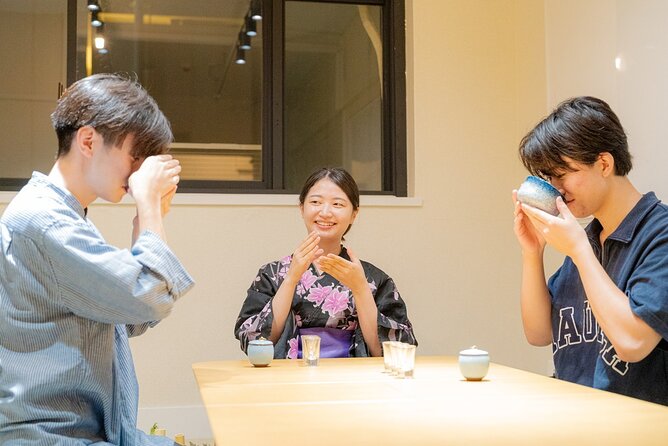
The Japanese room provides a fitting setting for the lesson without requiring you to travel far from Shibuya. You get a more focused atmosphere than you would in a busy café, where the sounds and pace might distract from the ceremony.
The room is not described in detail, so you should not expect a particular design, garden view, or elaborate historic building. Its value is simpler: it creates a proper space for quiet attention and formal tea preparation.
That setting also helps you understand the difference between a modern matcha drink and the ceremony tradition behind it. Matcha is now common in cafés around the world, often served sweet or mixed into desserts. Here, you see the tea as part of a set of manners and actions, not just an ingredient.
The experience does not claim to recreate a full formal tea gathering. That is a fair limitation. In one hour, the instructor must balance explanation, practice, and tasting. You receive an accessible sample of the tradition rather than its complete study.
Price, time, and group size
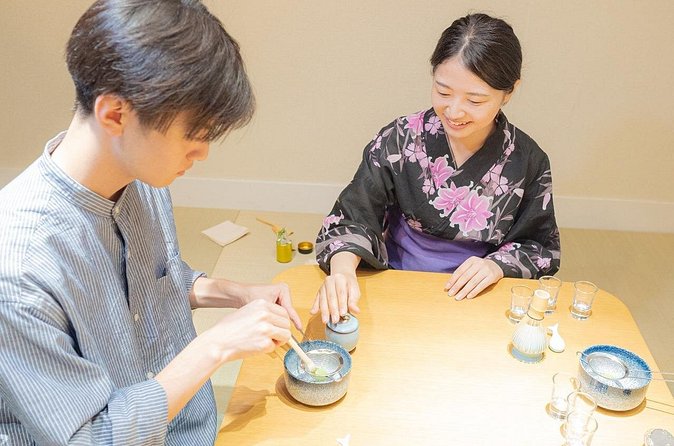
At $32.58 per person, this is reasonably priced for a one-hour cultural activity in central Tokyo. The value comes from the combination of instruction, hands-on matcha preparation, traditional sweets, and several tea tastings.
A cheaper café visit might give you a matcha drink, but it would not normally include etiquette, background, guided preparation, and comparisons with other Japanese teas. A longer private ceremony would likely offer more depth, but this class keeps the cost and time commitment lower.
The one-hour length makes the activity easy to fit into a full Tokyo day. You can place it between other plans in Shibuya without giving up half a day. The tradeoff is that the lesson moves quickly. If you want detailed instruction on tea utensils, schools of ceremony, or the history of every gesture, you will need a longer or more specialized experience.
The maximum group size of eight is another value point. It does not make the class private, but it should keep the group small enough for hands-on guidance. If everyone asks questions and needs help with whisking, the hour may feel full rather than leisurely.
Getting to the meeting point
The meeting point is 2-chōme-14-13 Shibuya, Tokyo 150-0002, Japan. The activity is near public transportation, which makes it practical for a day based in Shibuya or for a stop between other Tokyo districts.
Your mobile ticket should be ready when you arrive. The details provided do not specify a particular station exit, exact walking time, or a separate end point, so check the booking information carefully before setting out.
Because the activity starts and finishes at the same place, you do not need to plan for a separate drop-off. That makes the next part of your day easier, especially if you have restaurant reservations, shopping plans, or another timed attraction.
Allow a little extra time to locate the meeting point. Shibuya’s streets can be confusing, and an early arrival is preferable to rushing into a quiet tea lesson after a last-minute search.
Who will enjoy this experience most
I would recommend this class to a first-time visitor who wants a manageable introduction to Japanese culture. You get enough explanation to understand the basic idea, but you do not need to arrive with any knowledge of tea ceremony.
It also suits tea drinkers who want to compare matcha with other Japanese teas. The tasting of hojicha and several additional teas gives you more variety than a single-cup workshop.
Families and small groups may appreciate the relaxed style, though the supplied information does not specify a minimum age or child arrangements. If you are booking for children, confirm those details before paying.
This may not be the right choice if you want a long, highly formal ceremony or a private experience. The class is limited to eight people, but it is still a shared activity. It is best viewed as a friendly introduction, not an expert-level lesson.
It also may not suit you if you dislike unsweetened tea or are looking mainly for a meal. Traditional sweets are part of the experience, but the focus is tea, etiquette, and cultural explanation.
Booking and cancellation details
Confirmation is provided when you book, and the experience offers free cancellation if you cancel at least 24 hours before the local start time. Cancellations or changes made less than 24 hours before the start are not accepted for a refund.
That policy is fairly manageable for a planned activity, but Tokyo schedules can shift. If you are uncertain about your day, keep the 24-hour cut-off in mind before reserving.
The activity has had five or more bookings in the past month and is recommended by 100 percent of the available rating sample, with a displayed rating of 5 from 11 reviews. Those figures suggest strong demand and satisfaction, but the small number means I would treat them as encouraging rather than final proof for every date.
Should you book the Shibuya matcha class?
Book it if you want to do more than photograph a bowl of matcha. You will prepare the tea yourself, learn basic manners, taste several Japanese teas, and get a clear introduction to the ideas behind the ceremony.
The best reasons to choose it are the hands-on format, the small group cap, and the extra tasting. The chance to try hojicha is especially useful if you are curious about Japanese tea but unsure whether powdered matcha will suit you.
Skip it if you want a long formal ceremony, an advanced tea lesson, or a private room reserved only for your party. For everyone else, the $32.58 price and one-hour schedule make this a sensible cultural stop in Shibuya, especially on a first Tokyo visit.
FAQ
How long does the tea ceremony experience last?
The activity lasts approximately one hour.
Where does the experience begin?
It begins at 2-chōme-14-13 Shibuya, Tokyo 150-0002, Japan.
Where does the activity end?
The experience ends back at the meeting point.
How many people can join the experience?
The activity has a maximum of eight travelers.
Do I make my own matcha?
Yes. You prepare your own bowl of matcha with step-by-step guidance from the instructor.
Will I taste teas besides matcha?
Yes. The experience includes a tasting of different Japanese teas. Descriptions of the session refer to three additional teas, including options such as hojicha.
Can I cancel for a full refund?
Yes, if you cancel at least 24 hours before the experience start time. Cancellations or changes made less than 24 hours before the start are not refunded or accepted.
Fresh tea listings around Tokyo
- Yokohama : Tea Ceremony with Sweets and Souvenir★ 5.0 · 5 reviews
- Walking Tour: Yanaka,Nezu& Sendagi: Tea Ceremony & Old Tokyo★ 5.0 · 3 reviews
- Private Mochi・Matcha sweets Making Class Near Shibuya Area★ 5.0 · 22 reviews
- Private Kimono and tea ceremony at local home near Tokyo Disney★ 5.0 · 6 reviews
- 2 Hours Mochi &Nerikiri Making & Matcha Class in Bunkyo★ 5.0 · 21 reviews
- Kimono and Tea Ceremony in Asakusa Private Food Tour With Guide★ 5.0 · 4 reviews
- Tokyo: Tea Ceremony & Japanese Sweets Making★ 5.0 · 10 reviews
- Tokyo Sweets Tour: Hidden Gems & Matcha at an Old Tea House★ 5.0 · 6 reviews
Matcha Experiences, compared.
World Heritage Kyoto & Nara Uji Authentic Matcha Experience
Read our review →
Matcha Making Class in Tokyo with Authentic Japanese Sweets Set
Read our review →
Kyoto: Tea Museum Tickets and Matcha Grinding Experience
Read our review →
Matcha Making Class in Osaka with Authentic Japanese Sweets Set
Read our review →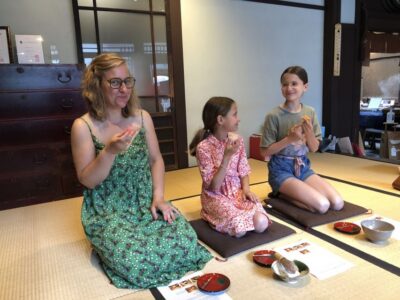
Kyoto: Tea Ceremony Meditation – Make Matcha with Tea Master
Read our review →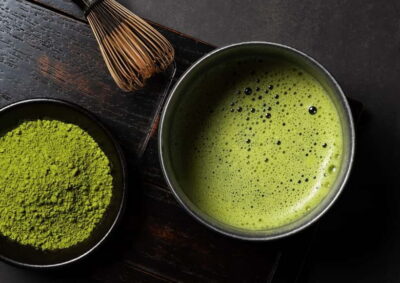
Tokyo: Matcha Making Experience with Mochi Sweets in Asakusa
Read our review →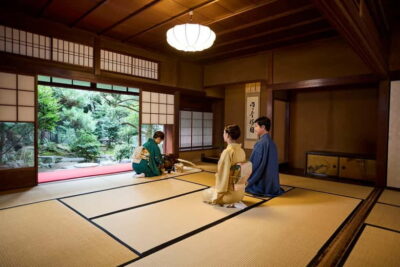
Kyoto: Kimono Tea Ceremony with Matcha and Sweet
Read our review →
Browse the lists this tour appears in