
Review · KIMONO & TEA CEREMONY
Full-Day Tour from Kanazawa: Samurai, Matcha, Gardens and Geisha
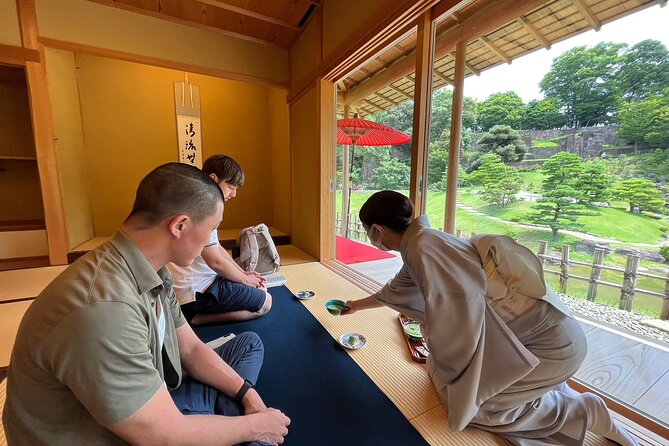
Kanazawa is easiest to understand on foot, and this tour gives you a full day of its old quarters, formal gardens, castle grounds, and tea districts. The best moment may be the quiet matcha stop at Gyokusen-an, where you sit with wagashi sweets and look toward an old garden instead of simply ticking off another sight.
I like the way the route links samurai life with geisha culture, rather than treating them as separate postcard attractions. I also like the small maximum of 15 people, which gives guides such as Mike, Garrett, Lee, and Akari room to answer questions and adjust the pace. The catch is simple: this is a serious walking day, often around 10 to 12 kilometers, and there is no regular public transport built into the route.
The day at a glance
- Two samurai homes in the Ashigaru Museum: See how lower-ranking samurai families lived, not just how elite warriors are shown in films.
- Matcha beside a historic garden: Gyokusen-an includes tea, wagashi sweets, and time to sit down during a busy day.
- Kanazawa’s major sights in one route: The walk connects Nagamachi, Oyama Shrine, Kanazawa Castle, Kenrokuen, and the eastern tea districts.
- A preserved geisha house: Ochaya Shima gives you a look inside the rooms, decorations, and instruments used in the traditional entertainment world.
- A full day with a small group: The maximum is 15 people, with an English-speaking guide and a one-hour lunch break.
- A proper walking workout: Comfortable shoes, water, and weather-ready clothing are essential.
Why this route works for a first day in Kanazawa
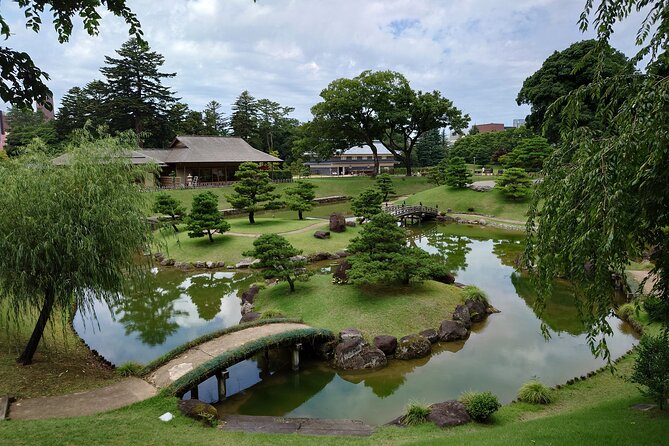
Kanazawa can feel scattered on a map. The castle, Kenrokuen Garden, Nagamachi samurai quarter, and Higashi Chaya District are not all beside the station, yet they fit together naturally when you walk between them. This tour handles that planning for you.
You begin at Kanazawa Station at 9:00 a.m. and finish back there. The route lasts about nine hours, including a one-hour lunch break. In practical terms, you get a full day of sightseeing, but not nine straight hours of guided movement.
The current rating is 4.9 from 68 reviews, with 97 percent recommending the experience. The strongest praise goes to the guides, especially their ability to explain Kanazawa’s past while keeping the day friendly and flexible. Garrett is repeatedly singled out for his grasp of Japanese culture and local history. Mike is praised for humor and clear explanations, while Lee is noted for pacing the day well.
That guide quality matters here. The buildings and gardens are attractive on their own, but the connections between them are what make Kanazawa memorable. You want someone to explain why this city became an important alternative to Kyoto, how samurai society was organized, and what happened inside the tea houses you see from the street.
More Kimono and Tea Ceremonies in Japan:
- Kimono Tea Ceremony at Kyoto Maikoya, NISHIKI
★ 5.0 · 911 reviews - Kimono Tea Ceremony at Tokyo, Asakusa Maikoya
★ 5.0 · 638 reviews - Kyoto: Kimono Tea Ceremony at Orizuruya Gion
★ 4.9 · 618 reviews
Ashigaru Museum and the samurai quarter
The first stop is the Ashigaru Museum, where you enter two homes once occupied by ashigaru families. Ashigaru were low-ranking samurai, so these houses provide a useful counterpoint to grand castles and wealthy estates.
I like this opening because it starts with ordinary life. You see the domestic side of the warrior class, including the modest scale of homes associated with families below the top ranks. Admission is free, and about an hour is planned here.
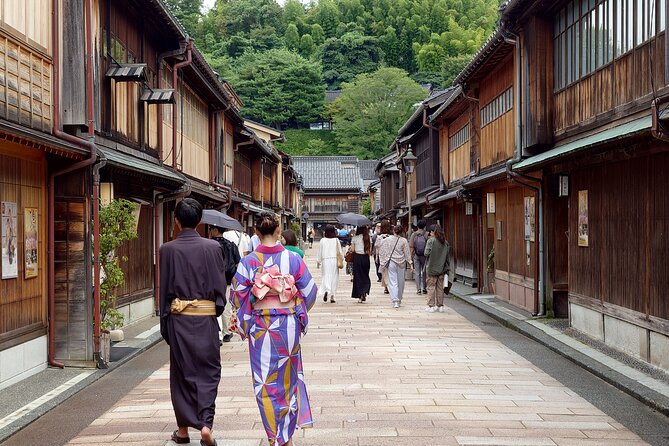
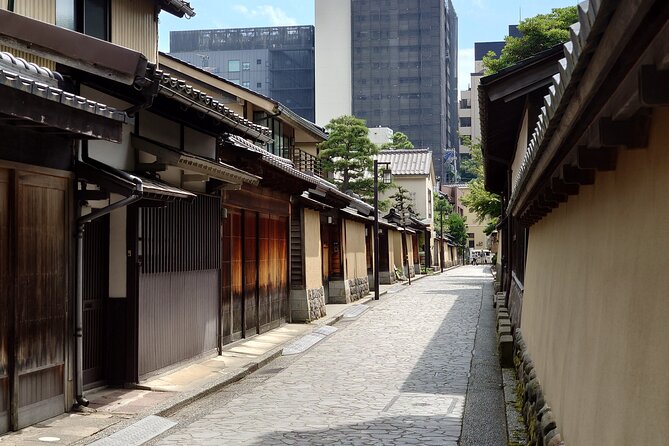
From the museum, you continue into Nagamachi, the former samurai district. Its streets retain a handsome, old-fashioned appearance, with walls and lanes that make the area feel distinct from modern Kanazawa. This is a place where a guide can help you picture the neighborhood as a working district rather than a set built for tourists.
The one drawback is pace. An hour at the museum followed by another hour in Nagamachi may feel slow if you mainly want photographs. If you enjoy social history, though, this is one of the most useful parts of the day because it gives context to the city’s later sights.
Oyama Shrine and the road to the castle
The route then leaves Nagamachi and reaches Oyama Shrine. Its entrance gate is unusual for Japan because it uses brick, an unexpected material in a shrine setting. That detail makes the stop more than a brief pause on the way to Kanazawa Castle.
About 40 minutes are planned here. Your guide can help you notice the mix of design influences and explain how the shrine fits into Kanazawa’s local story. The stop is free, so you are paying for the explanation and the carefully chosen route rather than an admission ticket.
The walk onward takes you toward Kanazawa Castle. The transition is useful: you move from residential samurai streets to the grander public world of castle power. It also begins to show why a walking tour works better than a bus for this itinerary. You see the changes in streets, walls, gates, and open spaces as they happen.
Matcha and wagashi at Gyokusen-an
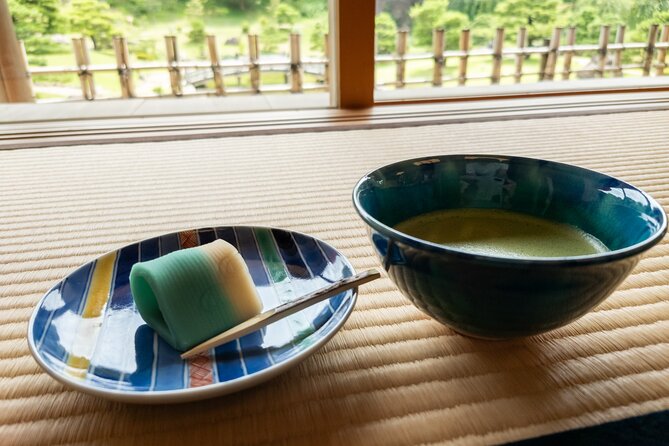
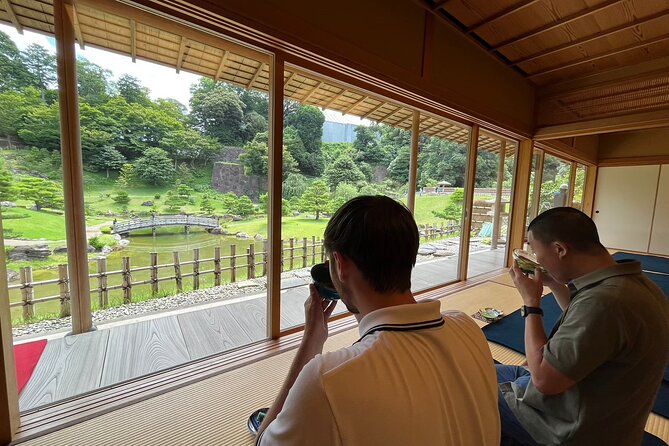
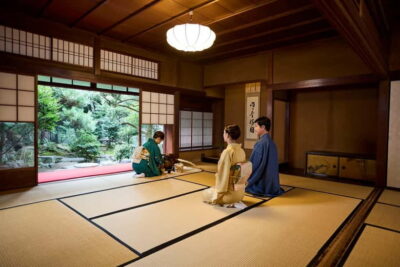
Gyokusen-an is the day’s most welcome pause. You sit inside a traditional tea house, drink matcha, and eat wagashi sweets while looking toward an old garden. Admission is included, as are the tea and sweets.
This is not simply a snack stop. The setting gives you a practical introduction to the Japanese tea tradition, where the room, garden view, utensils, and small sweet all matter. You do not need to be a tea expert to enjoy it. The hour allocated here also gives your feet a break before the gardens and eastern tea districts.
The matcha experience is one of the most frequently praised parts of the day, and I can see why. It offers a quiet change of rhythm after the samurai quarter. You are not rushing through another display case or standing beside a busy road. You are sitting in a place designed for attention.
Lunch is separate and not included. During the one-hour break, you choose your own restaurant, with recommendations from the guide. That arrangement gives you flexibility, though it means the final cost of the day will be higher than the tour price alone.
More Matcha Experiences in Japan:
- World Heritage Kyoto & Nara Uji Authentic Matcha Experience
★ 5.0 · 1,573 reviews - Matcha Making Class in Tokyo with Authentic Japanese Sweets Set
★ 5.0 · 744 reviews - Kyoto: Tea Museum Tickets and Matcha Grinding Experience
★ 4.9 · 739 reviews - Matcha Making Class in Osaka with Authentic Japanese Sweets Set
★ 5.0 · 509 reviews
Kanazawa Castle and Kenrokuen Garden
The castle portion is relatively short, about 20 minutes, but it provides a strong visual link between the earlier neighborhoods and the city’s ruling families. You walk through the grounds and see the scale of the restored buildings across broad lawns.
Do not expect a long indoor castle tour here. The value is in the grounds, the restored architecture, and the guide’s explanation. The castle admission is listed as free for this route.
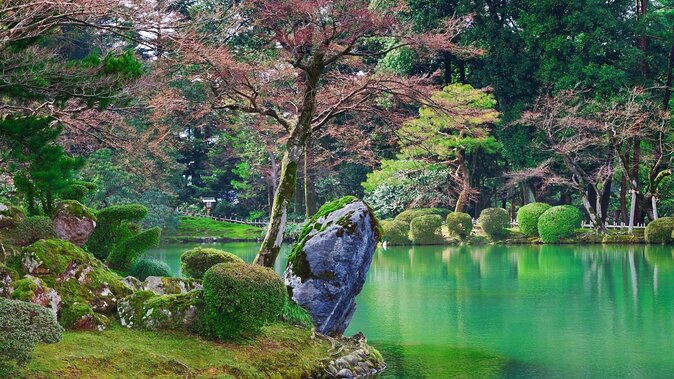
Kenrokuen Garden follows, with about 90 minutes inside. This is the longest sightseeing stop and one of the day’s main rewards. Kenrokuen is built around classic Japanese garden ideas, with ponds, trees, teahouses, carefully shaped views, and paths that reveal new scenes as you walk.
You can enjoy it quietly, but do not assume the entire garden will feel quiet. It is one of Kanazawa’s major sights, and the pace of the group may be shaped by the day’s schedule. Still, guided access helps you focus on the design rather than wandering without a plan.
Admission is included. Depending on the season, you might see cherry blossoms or other seasonal features, but the tour information does not promise a particular display. Bring weather protection, since much of your time here is outdoors.
Higashi Chaya and Ochaya Shima
The route then reaches Higashi Chaya District, one of Kanazawa’s best-known tea quarters. The streets are lined with traditional tea houses, eateries, and craft shops. You have about an hour of free time here, so this is the part of the day where you can browse at your own speed.
The district is attractive, but it can also be the most commercial-feeling stop. That is not necessarily a flaw. Shops and restaurants are part of the area’s present life, while the historic facades preserve its older character. I would use the free time for a careful walk rather than trying to buy something quickly.
Next comes Ochaya Shima, a preserved tea house once used by geisha and their wealthy patrons. The admission is included, and the visit lasts about 30 minutes. Inside, colorful walls and musical instruments help explain the polished world of traditional entertainment.
This stop adds something the street views cannot. You see how the interiors were arranged and get a better sense of the money, performance, and social rules connected with a chaya. It is a compact visit, but it gives the geisha district more meaning.
Kazuemachi and the walk back
The final district is Kazuemachi Chayagai, reached on the walk back toward Kanazawa Station. It is less crowded than Higashi Chaya, and geisha still entertain customers there. You might see a geisha, but no sighting is guaranteed, so treat that as a possibility rather than the purpose of the stop.
The area is given about 30 minutes. Its quieter character makes a good closing note after the larger garden and tea district. You finish by the station, which is convenient if you are catching a train or continuing to a hotel nearby.
Remember that the tour ends where it starts. If you are carrying shopping bags or a daypack, you will have them with you for the entire walk. Pack lightly.
How much walking should you expect?
This is the key decision point. The route is described as a walking tour, and past participants have covered roughly 10 to 12 kilometers, with one estimate close to 10 miles. The terrain is manageable for most people, but the distance adds up because you walk between every major stop.
There are chances to sit at the museum, tea house, garden, and other sights. The tour does not, however, offer a standard public transport option for the longer stretches. One person specifically wished for a bus alternative after becoming tired during the second half.
I would book it if you are comfortable spending most of a day on your feet. If you are older, have limited stamina, or are visiting during hot weather, consider your walking ability honestly. One 70-year-old couple completed the route, but that does not make it easy for everyone.
Wear comfortable shoes and carry water. Rain is possible in Kanazawa, and the tour requires good weather. It has gone ahead in wet conditions, including rain and even some hail, but poor weather can lead to a different date or a full refund.
What the $151.30 price includes
At $151.30 per person, this is not a cheap orientation walk. The value comes from the number of major sights connected in one day, the English-speaking guide, the included Kenrokuen admission, the preserved geisha-house entry, and the matcha and wagashi experience.
You also save the effort of working out the best order for attractions that are spread around the city. A private guide would cost much more, while a self-guided day would cost less but would require your own research and navigation. The small-group limit of 15 keeps it more personal than a large coach excursion.
Lunch is not included, and neither are extra purchases in the tea districts. Add those costs when planning your day. Still, the price is reasonable for visitors who want one well-organized introduction instead of paying separate admission fees and arranging several independent visits.
The tour also provides a useful first look, not a complete study of Kanazawa. You may want extra time at Kenrokuen, Higashi Chaya, or the castle if one of those becomes your favorite. This itinerary gives you a broad foundation.
Who should book this Kanazawa walking tour?
You should consider it if you are visiting Kanazawa for the first time and want the main historic districts explained in English. It suits curious adults, couples, families with older children, and anyone who prefers local history and architecture to a shopping-only day.
It is especially useful for people who want both famous sights and smaller details. The ashigaru homes, brick gate at Oyama Shrine, matcha setting, preserved chaya, and quieter Kazuemachi quarter give the day variety.
You may want another plan if you dislike structured sightseeing, need frequent transport, or prefer to spend several hours in one museum. The tour moves steadily, even when the guide adjusts the pace. Group size helps, but it does not remove the distance.
Guides vary, and names associated with this experience include Mike, Akari, Fadir, Garrett, Daniel, Lee, and Mohamed. The consistently strong feedback about their explanations is important because the guide is central to the experience. Ask questions as you go. This route rewards curiosity.
Should you book it?
Book this tour if you want a clear, active introduction to Kanazawa and can comfortably walk 10 to 12 kilometers. The route combines samurai homes, castle grounds, Japan’s garden tradition, matcha, and geisha culture in a way that is difficult to arrange as neatly on your own.
Skip it if you need transport between stops or want a relaxed day with long breaks. For most first-time visitors who have only one full day in Kanazawa, I think the combination of included admissions, a small group, and strong guiding makes the $151.30 worthwhile. Just bring good shoes, protect yourself from the weather, and leave room in your schedule for lunch.
FAQ
Where does the tour start?
It starts at Kanazawa Station at 9:00 a.m.
Where does the tour end?
The activity ends back at Kanazawa Station, the meeting point.
How long does the tour last?
The tour takes about nine hours, including a one-hour lunch break.
Is lunch included?
No. You choose your own restaurant during the one-hour lunch break, and the guide can provide recommendations.
How much walking is involved?
The route is entirely on foot and may cover about 10 to 12 kilometers. Some past participants estimated close to 10 miles.
What is the maximum group size?
The tour has a maximum of 15 travelers.
What is included in the price?
The price includes matcha and wagashi sweets at a tea house, entry to Kenrokuen Garden, entry to the preserved Shima geisha house, and an English-speaking guide.
Is the tour suitable in bad weather?
The experience requires good weather. If poor weather causes cancellation, you are offered another date or a full refund.
Can I cancel for a full refund?
Yes. You can cancel at least 24 hours before the start time for a full refund. Cancellations or changes made less than 24 hours before the start time are not accepted for a refund.
More Full-Day Trips in Japan
- Tokyo: Full-Day Tour w/Tea Experience,Buffet Lunch & Cruise
★ 4.9 · 151 reviews - Kanazawa: Samurai, Matcha, Gardens and Geisha Full-Day Tour
★ 4.9 · 75 reviews - Hampton Court Guided Tour. Full day Access & High Tea
★ 5.0 · 270 reviews - From Colombo: Kandy, Pinnawala and Tea Factory Full-Day Trip
★ 4.4 · 99 reviews
Fresh tea listings around Japan
- Cycling Tour at Uji’s Matcha Green Tea Fields and Heritage★ 5.0 · 10 reviews
- Authentic Japanese tea tasting: sencha, matcha and gyokuro★ 5.0 · 12 reviews
- Asakusa Cultural Walk & Matcha Making Tour★ 4.5 · 7 reviews
- Authentic Tea Ceremony & Sushi in The Museum of Kyoto★ 5.0 · 3 reviews
- At an Antique Shop, Tea Ceremony and Japanese Sweets Forming★ 5.0 · 5 reviews
- Authentic Japanese Tea Ceremony Experience in Kamakura★ 4.5 · 8 reviews
- Japanese Sweets Making & Tea Ceremony in Yokohama, suburban Tokyo★ 5.0 · 4 reviews
- Matcha tasting for all five senses at Hotel Yokohama★ 5.0 · 7 reviews
Kimono & Tea Ceremony, compared.
KYOTO Tea Ceremony with kimono near by Imamiya Jinjya Shrine
Read our review →
Kyoto: Kimono and Tea Ceremony Experience at Cultural Asset
Read our review →
Kyoto: Kimono Tea Ceremony with Matcha and Sweet
Read our review →
Browse the lists this tour appears in