
Review · KIMONO & TEA CEREMONY
Kanazawa: Samurai, Matcha, Gardens and Geisha Full-Day Tour
Kanazawa packs old Japan into one very walkable day. You move from low-ranking samurai homes to a castle garden, then on to tea houses where geisha traditions still shape the city’s identity. The route is full, but it gives you the story behind the buildings instead of leaving you to admire them without context.
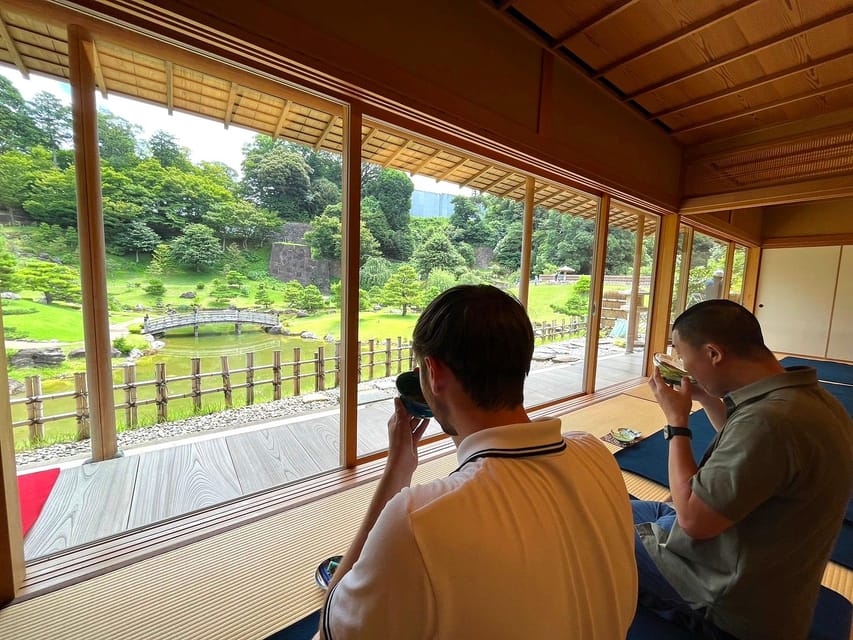
I like the matcha stop at Gyokusen-an, where kimono-clad staff serve tea and wagashi beside a garden and castle walls. I also like the walking route through side streets, because it lets you see ordinary residences and small temples between the headline sights. The catch is simple: this is a long day on foot, often around 12 kilometers and, for some people, more than 27,000 steps.
Key points to know before booking
- Kanazawa in one day: Cover the samurai district, castle grounds, Kenroku-en, Higashi-chaya, and Shima without arranging separate admission or transport.
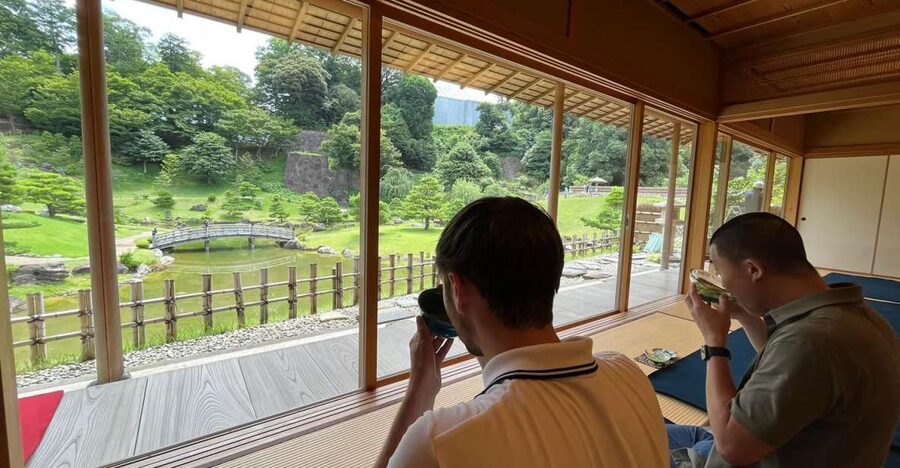
- A proper matcha pause: Learn how to drink matcha while eating artistic wagashi in a traditional tea setting.
- Excellent guide support: Guides including Mike, Akari, Gareth, Daniel, Lee, and Mohammed have been praised for clear history, patience, humor, and flexibility.
- A serious walking commitment: Expect several hours outside, uneven streets, changing weather, and a route that can reach roughly 12 kilometers.
- Two different tea traditions: Compare the formal tea experience at Gyokusen-an with the architecture and history of the Shima geisha house.
- Lunch is your responsibility: Your guide can point you toward food, and Omicho Market is one practical option, but the meal is not included.
Why this is a strong first look at Kanazawa
Kanazawa is an excellent choice if you want traditional Japan without spending the day in a major city crowd. Its old districts are not museum pieces arranged in one fenced compound. They are spread across a functioning city, connected by narrow lanes, gardens, shrines, castle grounds, and local neighborhoods.
This tour makes sense because the city’s history is easier to understand as a sequence. You begin with the samurai class, see how the ruling family shaped the castle and garden, then finish with the merchant and entertainment culture of the tea districts. The guide supplies the links between those places.
The experience costs $156 per person. That is not a bargain walking tour, but the price includes the guide, entry to Kenroku-en, entry to Shima, and the matcha experience. For a first visit, I think the value is fair if you want structure and historical explanation. You would spend less planning each stop yourself, but you would also need to organize admissions, map the route, and learn the context on your own.
The tour is offered in English. Guide quality matters here, and the named guides have different styles. Mike is described as funny, patient, and generous with questions. Akari is lively and flexible. Gareth is particularly good at explaining history without overloading the day with facts. Daniel has been praised for working patiently with children. Your exact guide depends on the date, but the repeated strength is clear: the guide is a major part of the experience.
More Kimono and Tea Ceremonies in Japan:
- Kimono Tea Ceremony at Kyoto Maikoya, NISHIKI
★ 5.0 · 911 reviews - Kimono Tea Ceremony at Tokyo, Asakusa Maikoya
★ 5.0 · 638 reviews - Kyoto: Kimono Tea Ceremony at Orizuruya Gion
★ 4.9 · 618 reviews
Meeting the guide beneath Kanazawa Station’s sumo wrestlers
Start outside the Shinkansen ticket gates, in front of the information center. Look for the four large sumo wrestlers near the East Entrance. If you are already outside the gates, walk into the station through the East Entrance and the meeting point should be immediately inside.
Look for a guide wearing a Snow Monkey Resorts tour tag. The activity begins at 9:00 AM according to the meeting instructions, though you should check the selected date for the confirmed starting time.
Before you set off, take a moment to look at Tsuzumi-mon, the large modern gate outside the station. Its design borrows from traditional Japanese forms, but it is a recent symbol of Kanazawa. It is a fitting first sight: this city respects its past while making room for the present.
Nagamachi shows the samurai life behind the legend
The walk toward Nagamachi uses side streets rather than a direct dash through the city. You pass local homes and occasional wooden temples before reaching a smaller neighborhood once associated with lower-ranking samurai.
That detail matters. Samurai life was not limited to grand estates and polished armor. The modest residences give you a better sense of how ordinary members of the warrior class lived. You may enter preserved homes and see compact rooms, traditional construction, and the practical side of a social system often presented only through castles and famous warlords.
The main Nagamachi Samurai District has a crooked street and restored residences. You get guided time here, followed by some free time to look at local crafts and wares. I like this balance. You receive an explanation of the district, then have a chance to stop for a shop or detail that catches your eye.
Do not treat this as a quick photo stop. The value is in the comparison between the grand idea of the samurai and the smaller homes where many samurai actually lived. Comfortable shoes are essential, and slippery footwear is a poor choice in wet or snowy weather.
Oyama Shrine mixes Japanese and Western design
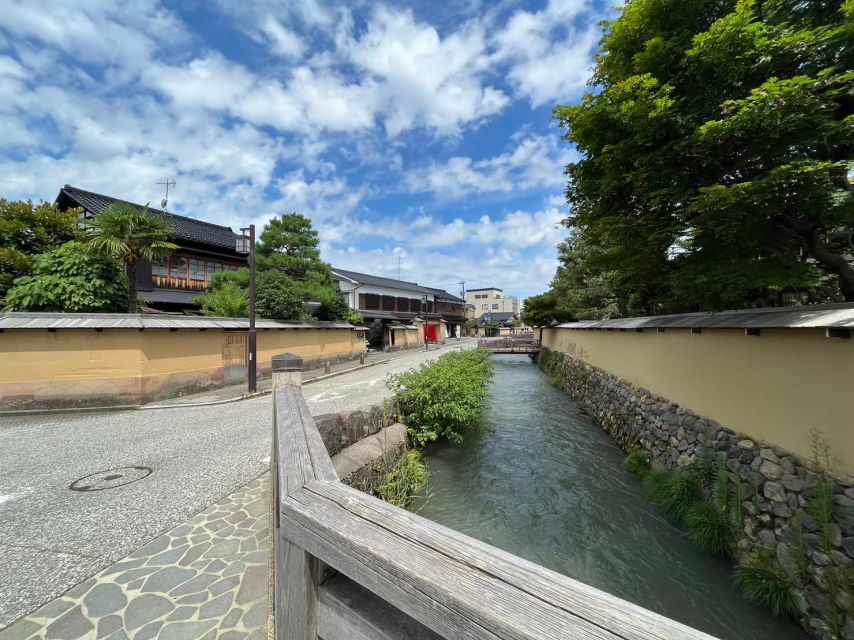
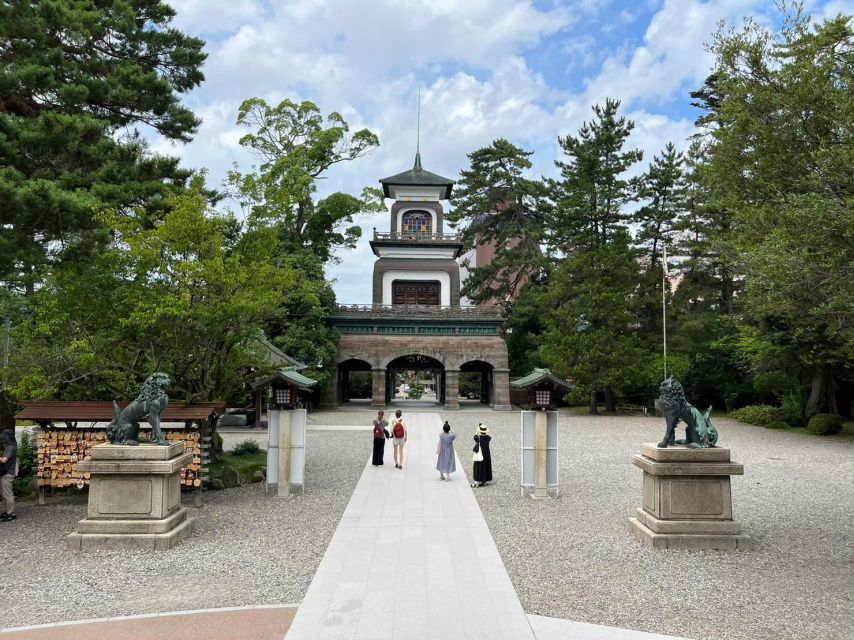
Oyama Shrine is a short stop, but it gives the day a useful change of pace. Its gate and architecture combine Japanese and Western elements, reflecting the period when Japan was changing rapidly in the nineteenth century.
The stained glass is the feature to watch for. It is an unusual detail in a shrine setting and shows how Kanazawa’s religious architecture can differ from the familiar temple and shrine images found elsewhere in Japan.
Behind the shrine, the route continues past a koi pond and small garden. A path leads to a large wooden bridge, then through an impressive gate into the Kanazawa Castle grounds. This transition is one of the tour’s best visual sequences: a quiet shrine garden gives way to defensive walls, bridges, and broad castle spaces.
More Matcha Experiences in Japan:
- World Heritage Kyoto & Nara Uji Authentic Matcha Experience
★ 5.0 · 1,573 reviews - Matcha Making Class in Tokyo with Authentic Japanese Sweets Set
★ 5.0 · 744 reviews - Kyoto: Tea Museum Tickets and Matcha Grinding Experience
★ 4.9 · 739 reviews - Matcha Making Class in Osaka with Authentic Japanese Sweets Set
★ 5.0 · 509 reviews
Matcha at Gyokusen-an is the day’s calmest half hour
At Gyokusen-an tea house, you pause beside a garden at the base of the castle’s large stone walls. The interior is traditionally Japanese, with the quiet formality you expect from a tea setting.
Kimono-clad staff serve matcha and artistic wagashi sweets. Your guide explains the proper way to drink the tea, so you are not left guessing which gesture matters and which does not. This is not presented as a full-length formal tea ceremony, but it is more meaningful than simply ordering green tea in a café.
I especially like this stop because it gives your feet a break and changes the rhythm of the day. Kanazawa can be wet, snowy, or humid, and the tea house provides a sheltered pause before the next major walk.
The location can change if a special event is taking place at Gyokusen-an. In that case, the matcha tasting moves elsewhere. The tea experience remains part of the tour, but the exact setting may not be the one described here.
Lunch follows nearby and is not included in the price. Ask your guide for suggestions. Omicho Market has been a popular lunch choice on this route, and it can be a practical place to find local food, but the tour details do not promise a particular restaurant or market stop. Bring enough time and money for lunch rather than assuming the day’s included food ends with the wagashi.
Kanazawa Castle explains the city’s power
The castle portion is partly restored rather than a complete original complex. That is important if you are expecting a vast intact fortress. Still, the grounds, gates, bridges, stone walls, and open spaces help explain the political importance of Kanazawa.
Your guide adds the background that makes the architecture useful. You learn how the castle was linked to the ruling lord, why the grounds were arranged as they were, and how the city grew around this center of authority.
The castle is not treated as an isolated attraction. You walk through it on the way to Kenroku-en, so the two sites work together. The walls give you the military and political setting. The garden shows the cultivated, refined side of the same ruling domain.
Kenroku-en rewards slow looking
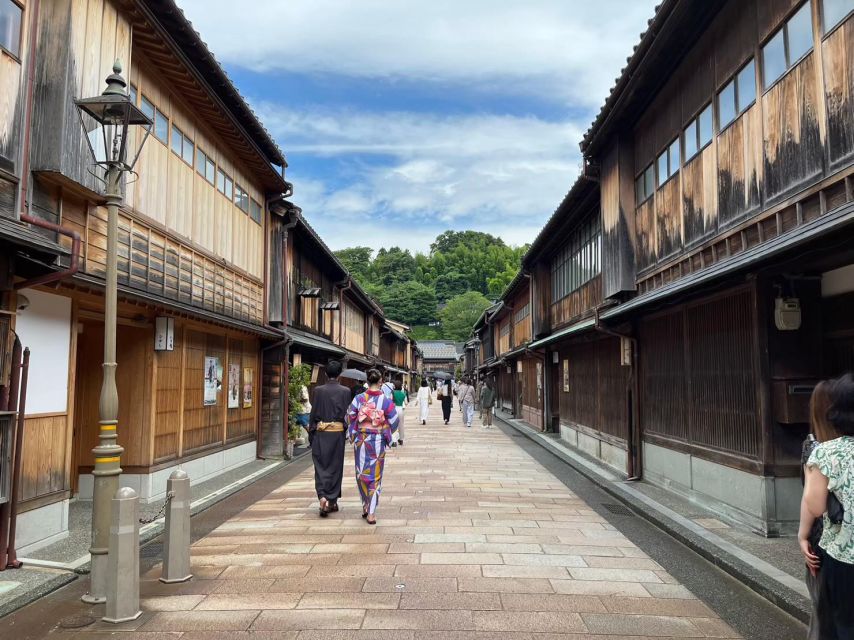
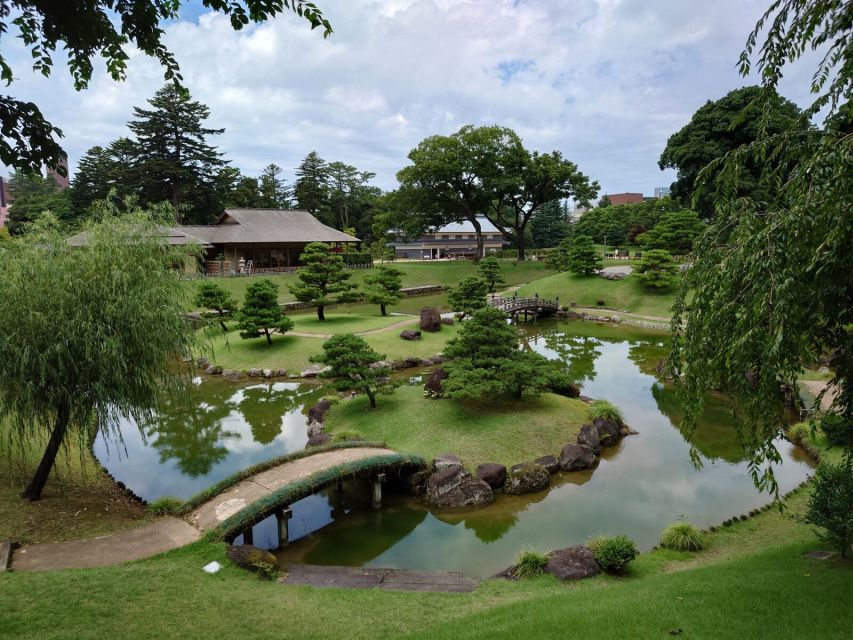
Kenroku-en is often listed among Japan’s finest gardens, and it earns its place through balance rather than one single spectacle. The garden was created over more than 200 years under the lords of Kanazawa Castle.
A guide can point out how the garden combines features that are usually hard to maintain together, such as spacious views, secluded corners, water, paths, and carefully placed plantings. You will get about an hour and a half here, enough time to walk rather than simply take one photograph and leave.
Weather can change the mood completely. Rain and mist can soften the castle walls and garden views, while snow brings a quieter, more dramatic look. Do not assume bad weather ruins the stop, but do prepare for it. An umbrella or raincoat is sensible, and winter visitors need warm clothing, warm shoes, and soles that grip icy sidewalks.
There is a practical drawback. The garden is a walking attraction with slopes, paths, and outdoor exposure. If you want a relaxed garden visit with long sitting periods, this tour may feel brisk. If you enjoy learning how a garden was designed while moving through it, the time is well used.
Higashi-chaya brings the tea districts to life
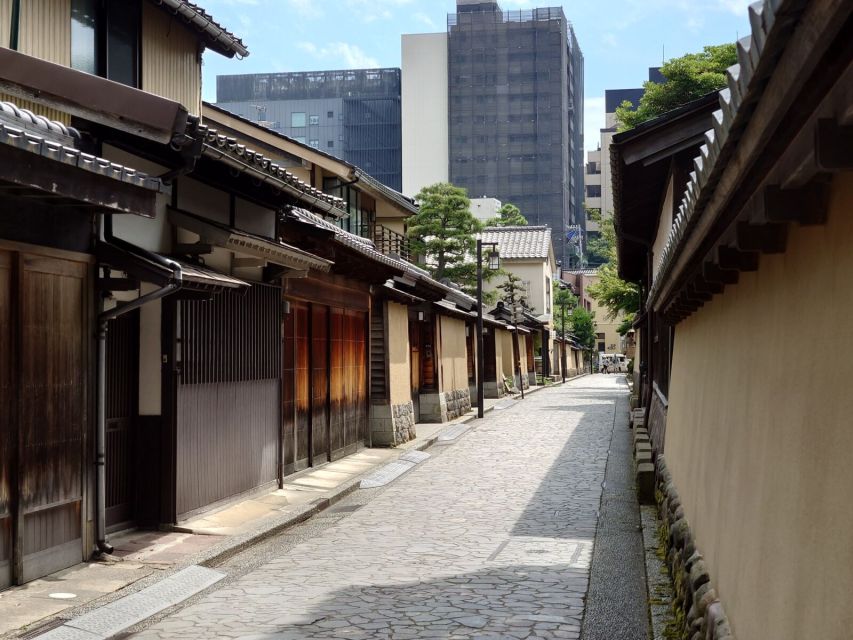
Higashi-chaya is one of Kanazawa’s defining districts. Its streets are lined with tall, two-story wooden tea houses, including buildings painted red, a design detail strongly associated with Kanazawa.
The word tea house can mislead first-time visitors. These districts were connected to music, performance, hospitality, and geisha culture, not simply to drinking tea. Your guide explains how the houses functioned and why the architecture was designed for this type of entertainment.
You have guided time and free time here. Forty minutes is enough to see the main streets and enter shops, but it is not enough to inspect every lane or browse at length. Keep an eye on your meeting time. The tour allows personal exploration, but the group still needs to move together.
This is one place where the guide’s cultural background adds real value. Without context, you might see attractive wooden façades and assume they are simply old restaurants. With explanation, you begin to understand the social world behind them.
Shima gives you an inside look at a geisha house
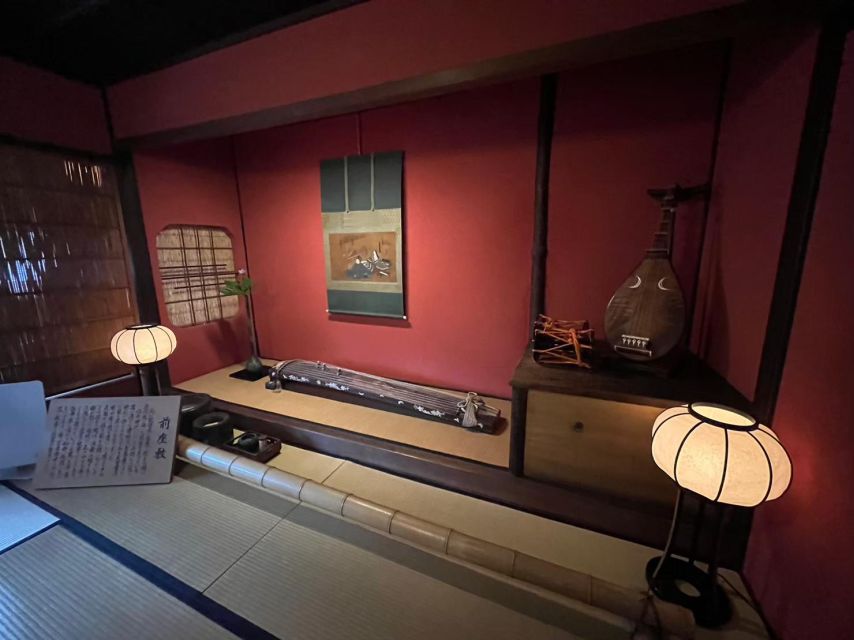
The visit to Shima is one of the strongest reasons to choose this tour over a simple city walk. Shima is a preserved geisha tea house and a heritage site with classic architecture.
Inside, you can see how the rooms and layout supported the traditional entertainment culture of the tea districts. The stop lasts about an hour, giving you more time than the quick exterior views in Higashi-chaya.
This is also where the tour’s two tea-related experiences come together. Gyokusen-an shows the etiquette and calm of matcha service. Shima shows the setting and social world of the geisha tea house. They are related, but they are not the same thing, and seeing both makes the day more rounded.
The building is historic, so expect a traditional interior rather than a modern, highly accessible attraction. Wear socks, as requested in the tour information, and choose clothing that is comfortable for a full day of walking and entering older buildings.
The return walk through Kazue-machi
After Higashi-chaya and Shima, you return toward Kanazawa Station on foot. The route passes through Kazue-machi, a maze of backstreets beside the river area.
This final section is useful because it avoids ending with the most obvious tourist street. You get one last look at the city’s quieter lanes and wooden buildings before returning to the station.
The tour ends where it begins. That makes it convenient if you are catching a train afterward, but allow extra time. A long walking day can finish later than expected if the group stops for questions or if weather slows the pace. Guides have sometimes helped with train tickets and onward travel questions, but that is personal assistance rather than a promised service.
How hard is the walking?
Take the walking warning seriously. The published route includes several hours outdoors, and some outings have reached about 12 kilometers or more than 27,000 steps.
The day includes urban pavement, side streets, garden paths, castle grounds, bridges, and possibly wet or icy surfaces. It is not a mountain hike, but distance is the challenge. I would not choose this tour if you need frequent transport, dislike being outside in poor weather, or want a slow day with only two or three sights.
Wear broken-in walking shoes. In winter, use shoes with good grip. In rain, carry a compact umbrella or raincoat. Kanazawa can be cold, with winter temperatures below 10 degrees Celsius and mornings or evenings close to freezing.
The pace appears flexible enough for questions, photographs, children, and occasional stops. Daniel, for example, has been praised for his patience with children, while other guides have adjusted the route pace for the group. Still, flexibility does not remove the distance.
Who gets the best value from this tour?
I would recommend it to a first-time visitor who wants Kanazawa’s main historic districts explained in one day. It also suits anyone arriving by train, since the meeting and finish point are at Kanazawa Station.
Families can do it if children are used to long walks. The historical variety helps, since the day does not ask you to stare at one type of building for eight hours. Older adults should judge the distance honestly and consider the weather before booking.
History and architecture fans will get the most from the guide’s explanations. The tour covers samurai society, nineteenth-century change, castle power, garden design, tea culture, and geisha houses. It is less suitable if you prefer to wander alone, shop at length, or spend most of the day at one garden.
At $156, the tour earns its price through admissions and access to a guide across a full day. The cost is harder to justify if you plan to visit only one or two of these places independently. It is easier to justify if you value a clear route, English explanations, and the chance to see the city’s major historic areas without wasting time on navigation.
Cancellation is free up to 24 hours before the activity, and you can reserve now and pay later. Those terms help if your Japan schedule is still moving, but they do not change the need to check the weather and prepare for the walk.
Should you book it?
Book this Kanazawa tour if you want a full cultural overview and are ready for a long day outside. The combination of samurai residences, castle grounds, Kenroku-en, matcha, Higashi-chaya, and Shima is hard to assemble smoothly on your own in one day.
Skip it if your priority is a short, easy outing or independent wandering. The walking is substantial, lunch costs extra, and the day follows a set route.
For most first visits, I think it is a strong use of one day in Kanazawa. Wear serious walking shoes, bring rain protection, leave room for lunch, and arrive ready to ask questions. The city supplies the beautiful buildings. A good guide, such as Mike, Akari, Gareth, Daniel, Lee, or Mohammed, helps you understand why they matter.
FAQ
Where does the Kanazawa tour start?
Meet outside the Shinkansen ticket gates, in front of the information center, near the four large sumo wrestlers. From outside the station, enter through the East Entrance and look immediately inside.
What time does the tour start?
The meeting instructions state a 9:00 AM start. Check availability for the confirmed starting time on your chosen date.
Is lunch included?
No. Lunch is not included. You can ask your guide for recommendations along the route.
How much walking is involved?
Expect several hours of walking outdoors. Some outings have covered about 12 kilometers or more than 27,000 steps.
What happens in winter?
Winter temperatures can fall below 10 degrees Celsius, with mornings and evenings near or below freezing. Snow and ice may appear on roads and sidewalks, so bring warm clothing and footwear with good grip.
Is the matcha experience always held at Gyokusen-an?
Gyokusen-an is the planned tea house setting, but special events can require the matcha tasting to move to another location. The matcha experience remains included.
More Full-Day Trips in Japan
- Tokyo: Full-Day Tour w/Tea Experience,Buffet Lunch & Cruise
★ 4.9 · 151 reviews - Full-Day Tour from Kanazawa: Samurai, Matcha, Gardens and Geisha
★ 5.0 · 68 reviews - Hampton Court Guided Tour. Full day Access & High Tea
★ 5.0 · 270 reviews - From Colombo: Kandy, Pinnawala and Tea Factory Full-Day Trip
★ 4.4 · 99 reviews
Fresh tea listings around Japan
- Cycling Tour at Uji’s Matcha Green Tea Fields and Heritage★ 5.0 · 10 reviews
- Authentic Japanese tea tasting: sencha, matcha and gyokuro★ 5.0 · 12 reviews
- Asakusa Cultural Walk & Matcha Making Tour★ 4.5 · 7 reviews
- Authentic Tea Ceremony & Sushi in The Museum of Kyoto★ 5.0 · 3 reviews
- At an Antique Shop, Tea Ceremony and Japanese Sweets Forming★ 5.0 · 5 reviews
- Authentic Japanese Tea Ceremony Experience in Kamakura★ 4.5 · 8 reviews
- Yokohama: Sushi & Gyoza Cooking with Matcha Experience★ 5.0 · 4 reviews
- Japanese Sweets Making & Tea Ceremony in Yokohama, suburban Tokyo★ 5.0 · 4 reviews
Kimono & Tea Ceremony, compared.
KYOTO Tea Ceremony with kimono near by Imamiya Jinjya Shrine
Read our review →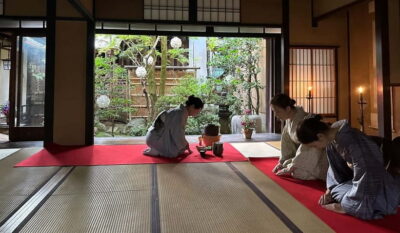
Kyoto: Kimono and Tea Ceremony Experience at Cultural Asset
Read our review →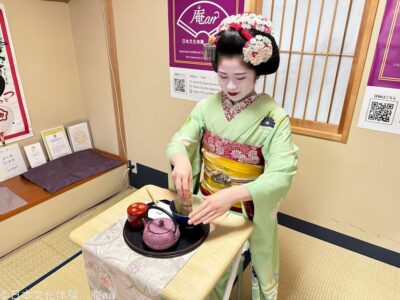
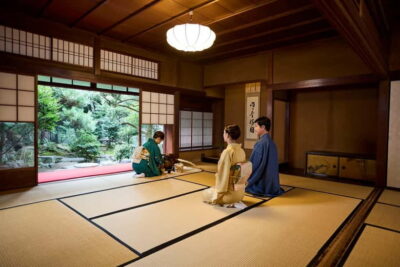
Kyoto: Kimono Tea Ceremony with Matcha and Sweet
Read our review →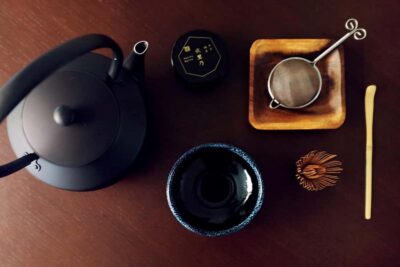
Browse the lists this tour appears in