
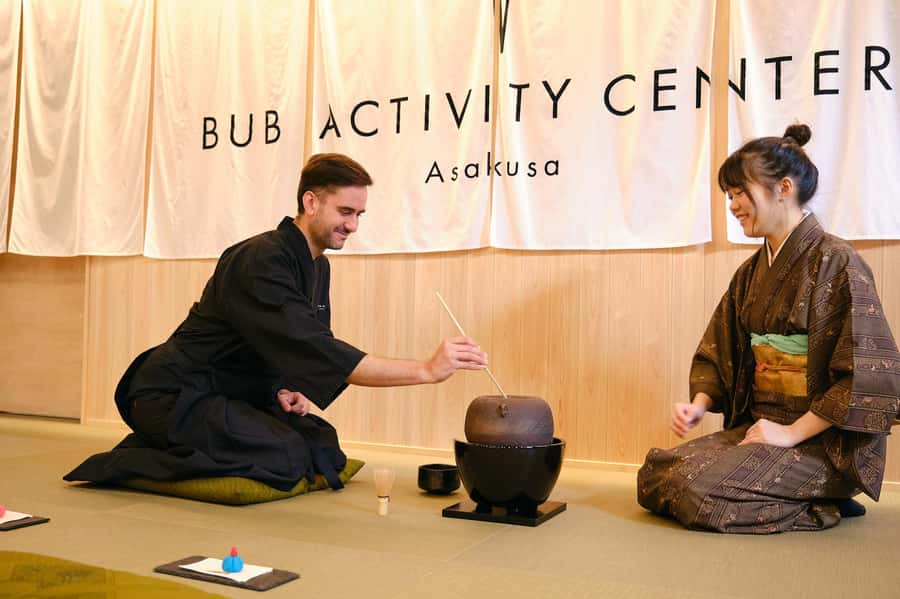
Review · TEA CEREMONY EXPERIENCES
Tokyo, Asakusa: Tea Ceremony and Sweets Making Class
The best part of this Asakusa experience is the chance to slow down in a kimono while making the sweets you will eat with your matcha. You are not just watching a formal ceremony from the side. You shape nerikiri wagashi yourself, then whisk tea with an English-speaking expert.
I like the hands-on sweet-making, since you choose the colors and forms of each piece. I also like the small, calm setting, which gives you time for a real conversation instead of a quick photo stop. The main consideration is the short one-hour schedule. At $67, it offers several activities, but each one moves at a tidy pace.
Key points
- Kimono dressing comes first: Staff help you select and put on a traditional kimono so you can take part in the ceremony properly.
- You make your own nerikiri wagashi: Choose colors and shapes, then enjoy the vegetable-based sweets with matcha.
- The experience runs for one hour: It takes place from 3:30 to 4:30 p.m., making it easy to fit around an Asakusa sightseeing day.
- The tea session is personal: An English-speaking tea expert guides the matcha preparation and answers questions about Japanese culture.
- The ingredients suit vegan and halal customers: The sweet colorings and ingredients are vegetable-based.
- The meeting point needs careful attention: Take the elevator to the fifth floor of the Heiwa Building, beside the Lawson store.
Putting on a Kimono in Asakusa
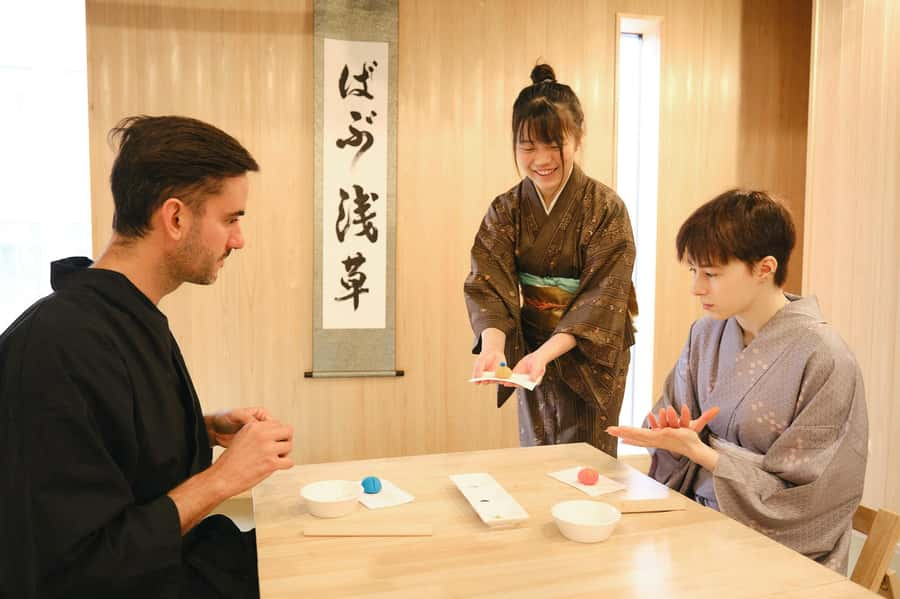
Your visit begins at the Heiwa Building, where staff help you choose from a collection of traditional kimonos. You do not need prior experience, and you will be assisted with the dressing process, including the practical details that make the outfit comfortable enough for the ceremony.
That opening matters. A kimono is not simply a costume for a photograph. Its layers, fit, and formal appearance set the tone for the tea gathering. Having staff dress you also means you can focus on the experience instead of trying to work out how the clothing is arranged.
You will want to allow a few extra minutes to find the building. The instruction is specific: take the elevator to the fifth floor of the Heiwa Building. The elevator is next to the Lawson store, in the same building as a karaoke venue and near ramen. If you are unsure, contact BUB Activity Center rather than wandering around the neighborhood.
The venue is in Asakusa, one of Tokyo’s best-known areas for traditional culture. This activity itself does not include transportation or sightseeing outside the building, so plan your route before the 3:30 p.m. start.
More Tea and Sweets Making in Tokyo
- Matcha Making Class in Tokyo with Authentic Japanese Sweets Set
★ 5.0 · 744 reviews - Tokyo: Matcha Making Experience with Mochi Sweets in Asakusa
★ 4.9 · 388 reviews - Make Traditional Nerikiri Sweets & Matcha experience in Shibuya
★ 5.0 · 130 reviews
Shaping Nerikiri Wagashi by Hand
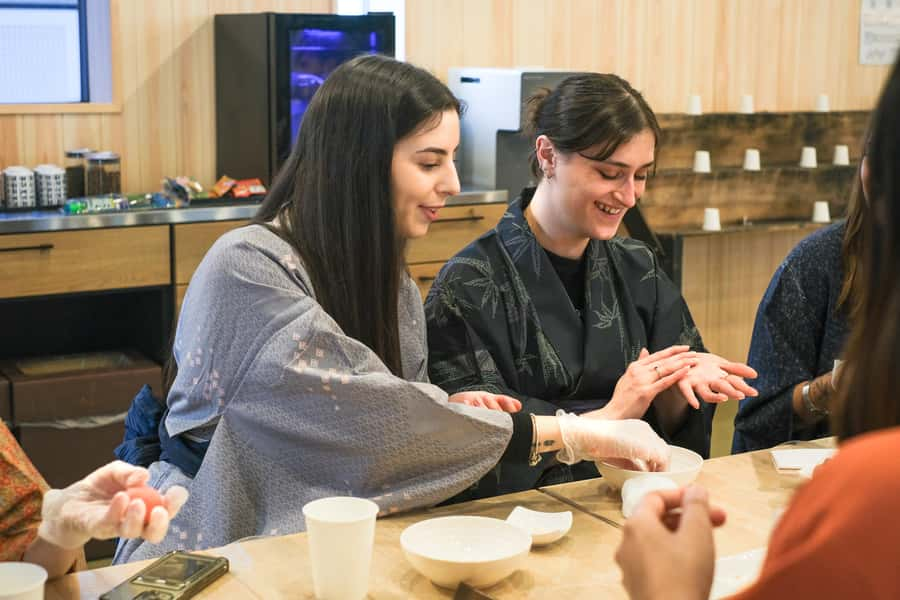
Once dressed, you make nerikiri wagashi, the delicate Japanese sweets often served with tea. The important point here is that you are not merely given a finished sweet. You select colors and shapes and form each piece into a small work of edible art.
Nerikiri is well suited to a short class because the creative choices are simple to understand, yet the finished result can look refined. You can concentrate on color, shape, and neatness without needing previous cooking or craft skills. The activity also gives you something personal to photograph while wearing the kimono.
The supplied information does not specify the exact designs available on the day, so you should expect guided choices rather than a completely open-ended pastry workshop. That is not a serious weakness, but it is worth knowing if you are hoping for advanced confectionery instruction.
The sweets use vegetable-based ingredients and colorings. That makes this a useful pick for vegan and halal customers, although the experience is not presented as a full meal. Your wagashi is included, but other food is not.
Preparing Matcha with a Tea Expert
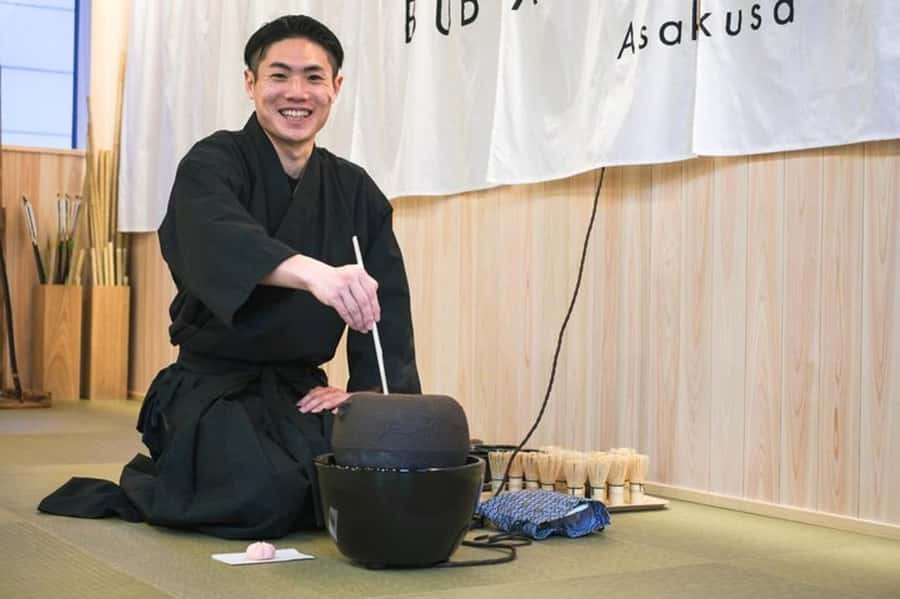
The final part is a matcha-making session led by an English-speaking tea expert. You will be shown how to whisk and enjoy the tea, then have time for an intimate conversation about Japanese culture.
This is where the experience moves beyond dressing up and taking pictures. Matcha preparation gives you a simple physical task, but the slower rhythm also creates room for questions. You can ask about the meaning of the ceremony, the role of the sweets, or the way tea is enjoyed in Japan. The guide’s English support is especially useful here, since the value of the session depends on understanding what you are doing.
Do not expect a long formal lecture. The total activity lasts from 3:30 to 4:30 p.m., and that hour includes dressing, sweets making, the tea ceremony, and conversation. The format is better suited to a focused cultural introduction than to a detailed study of tea schools or Japanese history.
You will enjoy this part most if you treat the matcha preparation as a calm shared activity, not as a performance that must be done perfectly. No prior experience is required, so mistakes are part of the process.
Photos, Conversation, and a Calm Pace
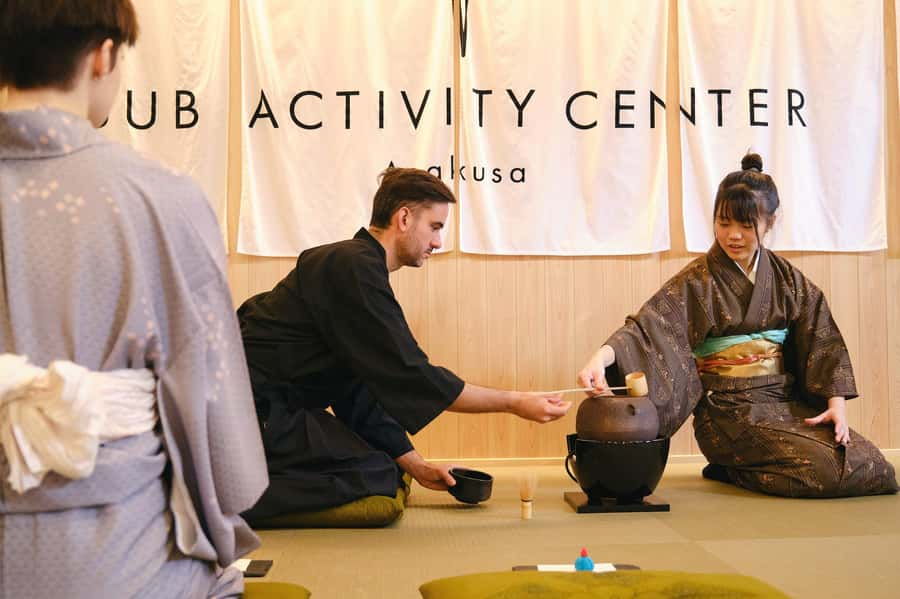
The kimono and handmade sweets naturally create photo opportunities. You can capture images of the finished wagashi, the tea, and yourself in traditional dress. The experience specifically includes the chance to preserve elegant memories through photography, though it does not state that a professional photographer is provided.
That distinction is useful. Bring a phone or camera if you want your own pictures, and ask the staff what photography is appropriate inside the venue. You should not assume that a separate photo package or edited portrait session is included.
The setting is designed to avoid crowds and a rushed atmosphere. That makes a difference in Tokyo, where many cultural activities can feel tightly scheduled. Here, the emphasis is on a quiet tea ceremony and direct conversation with the expert.
Still, no crowds does not mean unlimited time. One hour is enough for an introduction, but not enough for every possible kimono photo, an elaborate sweet-making lesson, and a long cultural discussion. If you want a leisurely afternoon with lots of photographs, you may find the schedule compact.
More Tea Ceremonies in Tokyo
- Kimono Tea Ceremony at Tokyo, Asakusa Maikoya
★ 5.0 · 638 reviews - Tokyo: Traditional Tea Ceremony with a Tea Master
★ 5.0 · 528 reviews - Tea Ceremony Workshop in Tokyo by the Experienced Instrucor
★ 5.0 · 189 reviews - Asakusa: Kimono Tea Ceremony with Matcha and Sweet
★ 4.9 · 153 reviews
What $67 Gets You
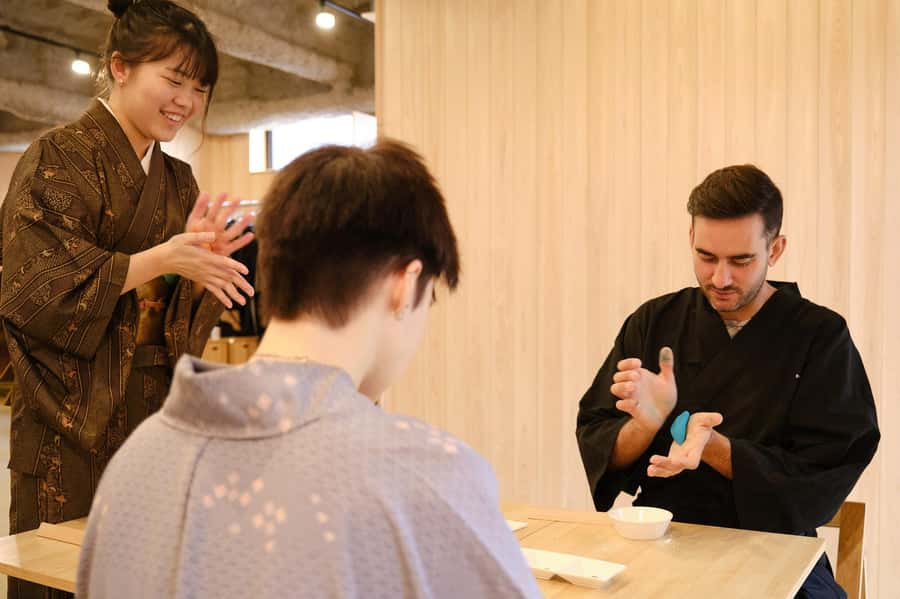
At $67 per person, the price covers several connected parts of the experience:
- Kimono dressing
- Nerikiri wagashi making
- Matcha tea ceremony
- An English-speaking expert guide
The value comes from the combination. A basic tea tasting would give you the drink, while a kimono rental would give you the clothing. This activity joins the two with a hands-on sweet-making lesson and cultural conversation.
I consider the price reasonable for someone who wants a structured introduction to Japanese tea culture in a private-feeling setting. You are paying for instruction, staff assistance, materials, and the chance to take part rather than simply observe.
The value is less clear if you mainly want a long kimono rental or a full meal. Transportation to the venue is not included, and wagashi is the only food included. You should also remember that the one-hour duration limits how much detail the guide can cover.
The booking terms add some flexibility. You can reserve now and pay later, and cancellation is allowed up to 24 hours before the activity for a full refund. That helps if your Tokyo schedule is still shifting.
Who Will Enjoy This One-Hour Class?
This experience suits first-time visitors who want a manageable introduction to Japanese customs. It is also a good match for couples, solo visitors, and anyone who prefers a quiet indoor activity with a creative element.
You do not need to know how to prepare matcha or make wagashi. The staff assist with the kimono, and the tea expert guides the ceremony. That makes the class approachable even if you have never worn traditional Japanese clothing or handled matcha before.
Families may want to check the booking details for their specific group, since no age guidance is provided. The same applies to mobility needs. The available information confirms an elevator to the fifth floor, but it does not give further accessibility details.
This is not the right choice if you want a full-day cultural program, transport from your hotel, or a large meal. It is a short, focused activity. Plan it as one stop in your Asakusa day rather than as a complete tour of the neighborhood.
Timing Your Visit in Asakusa
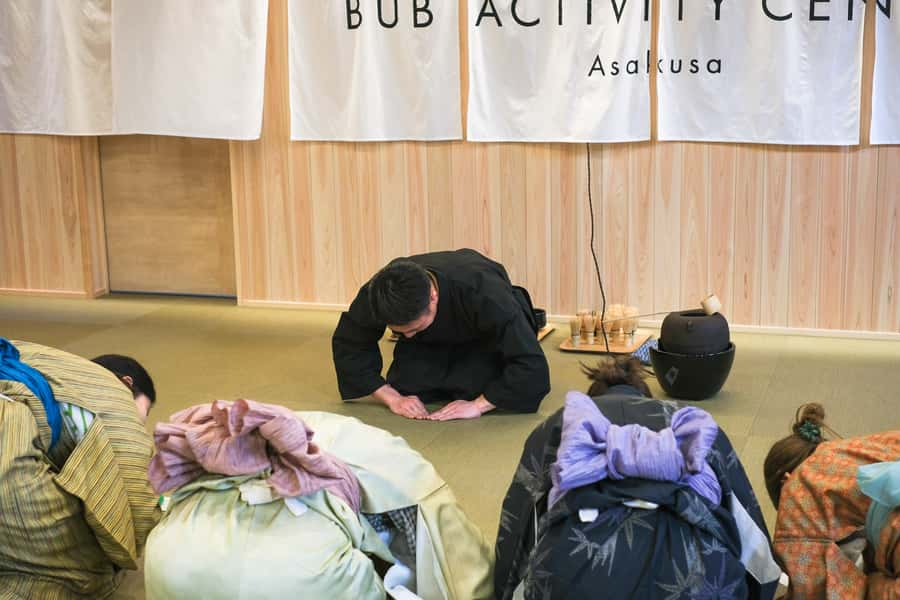
The fixed time is 3:30 to 4:30 p.m. That can work well after sightseeing, since you can spend earlier hours exploring Asakusa and arrive for the class in the afternoon. You must watch the clock, though. A late start could cut into dressing and the tea session.
Because the activity ends back at the meeting point, you do not need to arrange a separate return transfer. You are responsible for getting to the Heiwa Building and away from it afterward.
The directions are worth saving on your phone. Go to the fifth floor of the Heiwa Building by elevator. Look for the elevator beside Lawson, near the ramen shop and in the building with karaoke. The provider advises contacting them if you have trouble finding the place.
Alcohol and drugs are not allowed. This is a quiet cultural activity, so arrive ready to take part respectfully and follow the expert’s instructions.
Final Verdict: A Good Short Cultural Experience
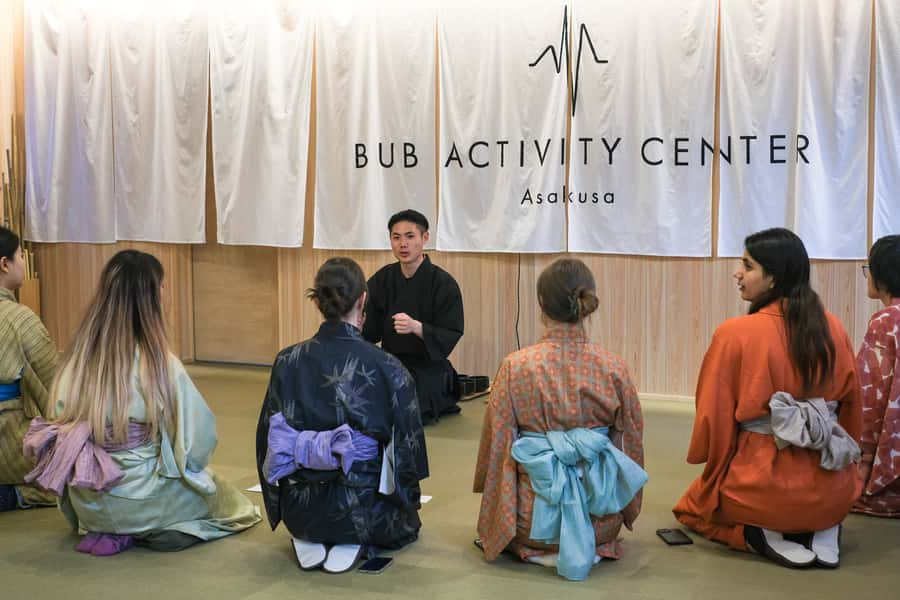
Book this class if you want to wear a kimono, make your own wagashi, and learn basic matcha preparation in a calm setting. The hands-on format gives you more to remember than a simple tea tasting, while the English-speaking expert makes conversation possible.
The strongest reasons to choose it are the personal sweet-making activity, the traditional clothing, and the chance to ask questions in a small setting. The main limit is the one-hour schedule. You will receive a pleasant introduction, not an exhaustive lesson in tea ceremony.
At $67, I would recommend it for visitors who value participation and atmosphere over length. If you want a relaxed taste of Japanese culture that fits neatly into an afternoon in Asakusa, this is a sensible booking. If you need a meal, transport, or extended photography time, choose a longer activity instead.
FAQ
Where does the tea ceremony and sweets class take place?
The activity takes place at the Heiwa Building in Asakusa. Take the elevator to the fifth floor. The elevator is beside the Lawson store, near ramen, in the same building as karaoke.
What time does the activity run?
The class lasts one hour, from 3:30 p.m. to 4:30 p.m.
How much does the experience cost?
The price is $67 per person.
Is kimono dressing included?
Yes. Kimono dressing is included, and staff assist you with choosing and putting on the kimono.
Do I need previous experience?
No. Prior experience is not necessary for the kimono dressing, wagashi making, or matcha session.
Is the activity conducted in English?
Yes. An English-speaking expert guide leads the experience and the cultural conversation.
Are the wagashi ingredients suitable for vegans and halal customers?
Yes. The provided information states that the ingredients and colorings used for the sweets are vegetable-based.
Is transportation included?
No. Transportation to the venue is not included. The activity ends back at the meeting point.
Can I cancel for a refund?
Yes. You can cancel up to 24 hours in advance for a full refund. You can also reserve the experience and pay later.
Fresh tea listings around Tokyo
- Yokohama : Tea Ceremony with Sweets and Souvenir★ 5.0 · 5 reviews
- Walking Tour: Yanaka,Nezu& Sendagi: Tea Ceremony & Old Tokyo★ 5.0 · 3 reviews
- Private Mochi・Matcha sweets Making Class Near Shibuya Area★ 5.0 · 22 reviews
- 2 Hours Mochi &Nerikiri Making & Matcha Class in Bunkyo★ 5.0 · 21 reviews
- Private Kimono and tea ceremony at local home near Tokyo Disney★ 5.0 · 6 reviews
- Kimono and Tea Ceremony in Asakusa Private Food Tour With Guide★ 5.0 · 4 reviews
- Tokyo: Tea Ceremony & Japanese Sweets Making★ 5.0 · 10 reviews
- Tokyo Sweets Tour: Hidden Gems & Matcha at an Old Tea House★ 5.0 · 6 reviews
Tea Ceremony Experiences, compared.
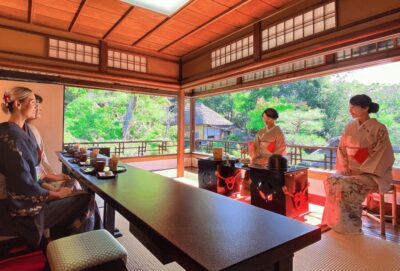
Kyoto: Tea Ceremony in a Traditional Tea House in Kiyomizu
Read our review →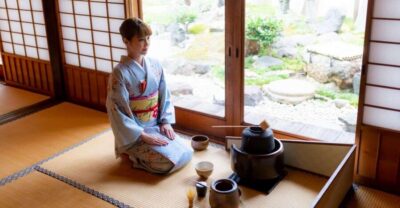
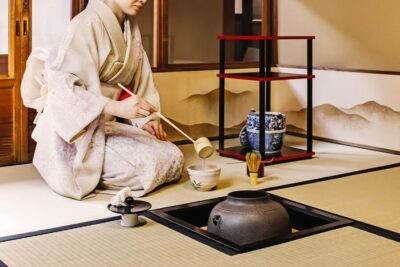
Kyoto: 45-Minute Tea Ceremony Lesson Experience
Read our review →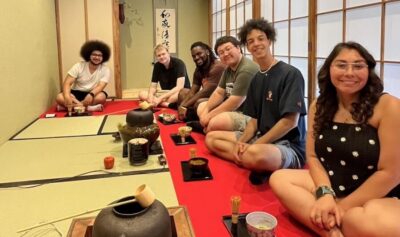
Kyoto: Table-Style Tea Ceremony at a Kyo-Machiya
Read our review →
Browse the lists this tour appears in