
Review · KIMONO & TEA CEREMONY
Tea ceremony experience with simple kimono in Okinawa
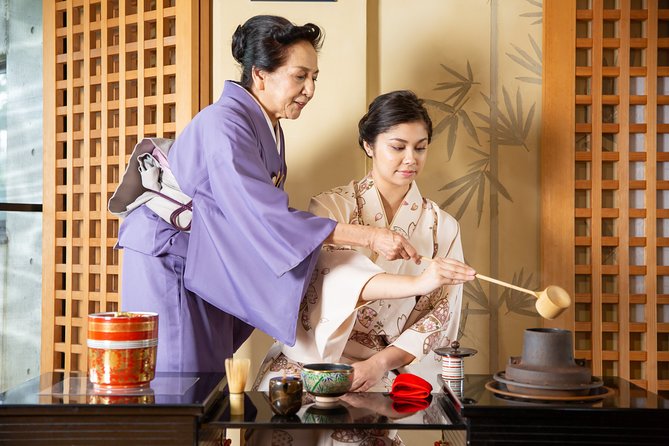
The most memorable part of this Onna experience is the move from a small traditional tea room to a Ryurei-style table, where you can take part in tea ceremony without needing to sit on the floor. You’ll wear a simple kimono, learn the meaning of the room’s details, and prepare your own matcha rather than just watch a demonstration.
I like the mix of hands-on practice and quiet ritual, and I like that Okinawan sweets share the table with Japanese tea traditions. The main consideration is timing: at about 75 minutes, this is a focused introduction, not a full study of tea ceremony, and you need to reserve at least three days ahead.
Key points to know before booking
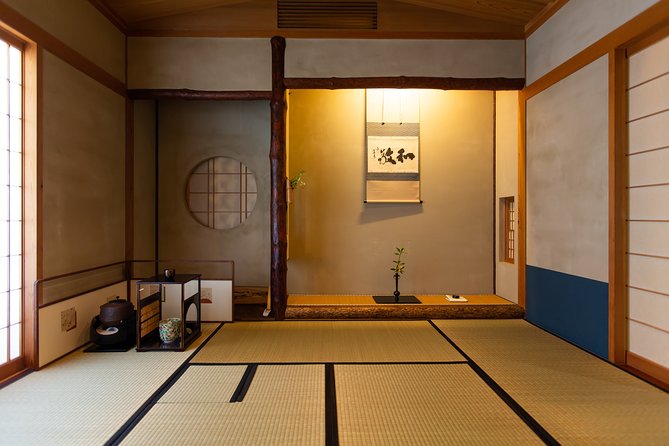
- The small tea room entrance is part of the lesson, showing respect for the tea space before the ceremony begins.
- You make your own matcha, including handling the tools, adding hot water, and tasting the finished tea.
- Simple kimono dressing is included, with a final photo opportunity in front of a gold folding screen.
- Okinawan and Japanese sweets are served, giving the experience a local touch.
- A tea master works with a translator, making the instructions accessible to people who do not speak Japanese.
- The group is small, though the supplied details give both a maximum of six and a maximum of eight, so confirm the exact group size when booking.
A traditional tea room in Okinawa
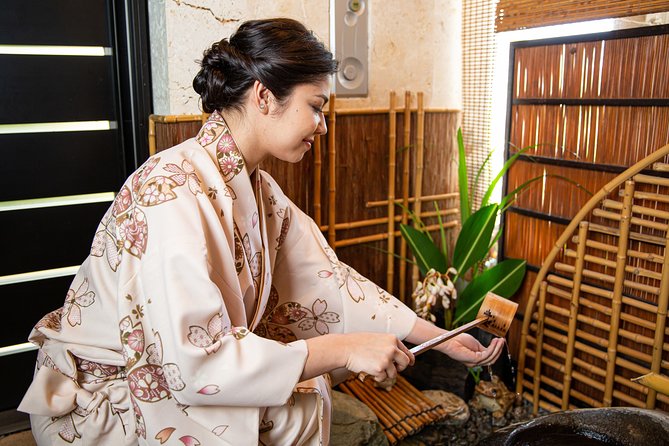
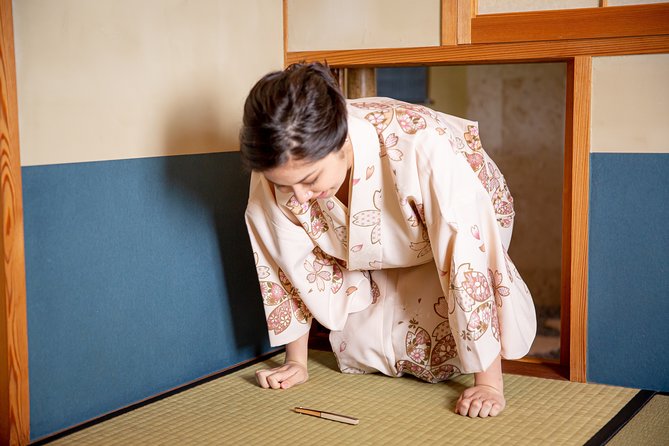
This is not a quick cup of green tea in a hotel lounge. At Sasagirian, the experience begins with the setting itself. You change into a simple kimono, cleanse your hands, and prepare to enter a traditional tea room through its small entrance.
That low doorway carries a practical lesson. It requires you to lower yourself as you enter, leaving ordinary outdoor behavior behind. The ceremony treats the tea room as a special place, and you are shown how to notice it before anyone serves tea.
Inside, you’ll learn about the hanging scroll, flowers, and tea utensils. These details are not just decoration. They help explain how Japanese tea ceremony gives attention to season, proportion, and respect. The quiet arrangement of the room is one reason this activity feels different from a standard cultural demonstration.
The ceremony also has an Okinawan setting. You are learning a Japanese tradition while staying on the main island of Okinawa, where local sweets and the surrounding culture add a regional note. If your trip is mainly about beaches and resort time, this gives you a slower cultural pause.
More Tea Ceremonies in Japan:
- Kyoto: Tea Ceremony in a Traditional Tea House in Kiyomizu
★ 4.9 · 3,519 reviews - Kyoto: Tea Ceremony Ju-An at Jotokuji Temple
★ 4.9 · 3,207 reviews - Kyoto: 45-Minute Tea Ceremony Lesson Experience
★ 4.3 · 2,378 reviews
Why the Ryurei-style table matters
After the introduction in the tea room, you move to a separate room arranged in the Ryurei style. This means tea ceremony takes place at tables and chairs rather than on the floor.
That detail makes a real difference. Traditional tea settings can involve kneeling or sitting in positions that are difficult for some people. Here, you can take part while seated at a table, and the activity specifically allows people who cannot sit up in the usual way to participate.
You should still expect a formal sequence. The table and chairs make the activity more comfortable, but they do not turn it into a casual tasting. You’ll be taught how to handle the silk cloth, cleanse the tea tools, and follow the basic manners of the ceremony.
I find this format especially useful for families with mixed ages, older adults, and anyone who wants the cultural detail without a physically demanding floor-based ritual. Children over four can participate, but children under three are not accepted.
Kimono dressing and the first steps
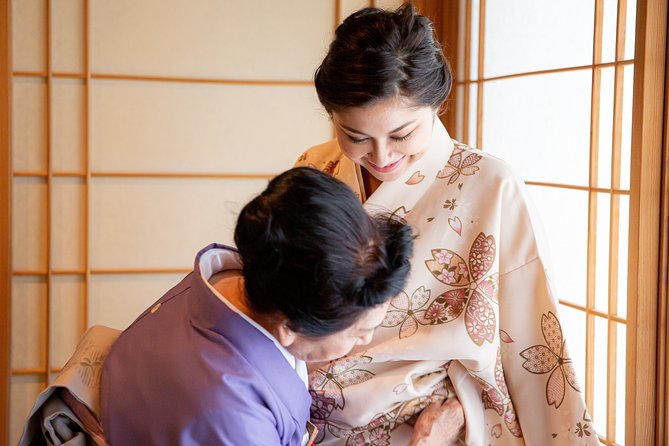
The simple kimono is not presented as a costume add-on. It helps set the mood and gives you a more direct connection to the ceremony. You change before the formal sequence begins and change back at the end.
Because this is a simple kimono, you should think of it as part of the experience rather than a full dressing service with elaborate styling. The supplied details do not promise hair arrangements, makeup, or a long photo session, so book this for the cultural lesson first and the outfit second.
The first formal steps are straightforward:
- Change into the simple kimono.
- Cleanse your hands.
- Enter the tea room.
- Learn how to appreciate the scroll, flowers, and utensils.
- Move to the Ryurei-style table.
This order is helpful. You are not rushed straight into whisking tea. First, you learn how to enter and observe. Then you sit down for the practical portion.
Okinawan sweets before the bitter tea
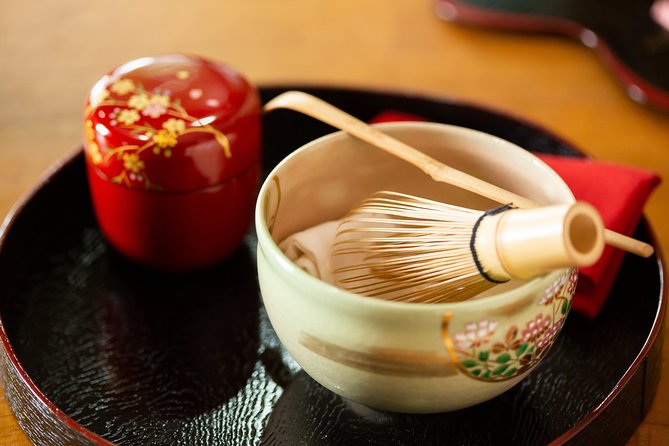
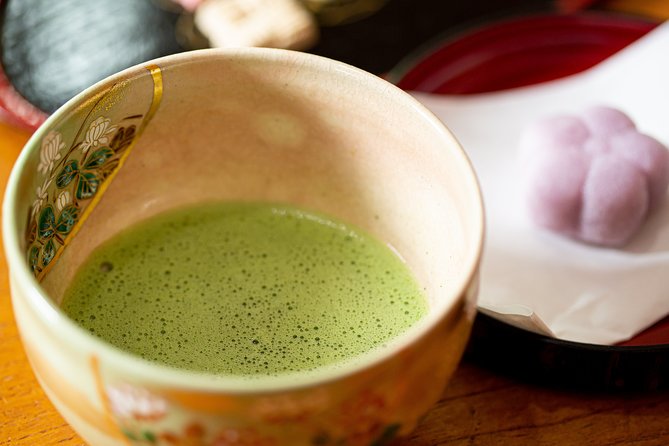
At the table, you’ll taste Japanese and Okinawan sweets before drinking the tea. This is an important part of the sequence because the sweetness prepares your palate for matcha’s sharper, more bitter flavor.
The Okinawan element gives this activity more local character than a basic tea ceremony class. The information does not specify the exact sweets served, so you should not expect a particular dessert. Instead, think of this as a chance to sample both the broader Japanese tradition and a taste associated with the region.
The order also makes the tea easier to appreciate. Matcha is not usually sweetened in the bowl, so drinking it after sweets gives the bitterness a clearer contrast. You’ll understand why the food is served first rather than treating it as a separate snack.
If you have dietary restrictions, ask about the sweets before booking or at the start of the experience. No allergy or menu information is provided, so this is one detail you should confirm directly.
More Kimono and Tea Ceremonies in Japan:
- Kimono Tea Ceremony at Kyoto Maikoya, NISHIKI
★ 5.0 · 911 reviews - Kimono Tea Ceremony at Tokyo, Asakusa Maikoya
★ 5.0 · 638 reviews - Kyoto: Kimono Tea Ceremony at Orizuruya Gion
★ 4.9 · 618 reviews - KYOTO Tea Ceremony with kimono near by Imamiya Jinjya Shrine
★ 5.0 · 343 reviews
Learning the tools, cloth, and matcha
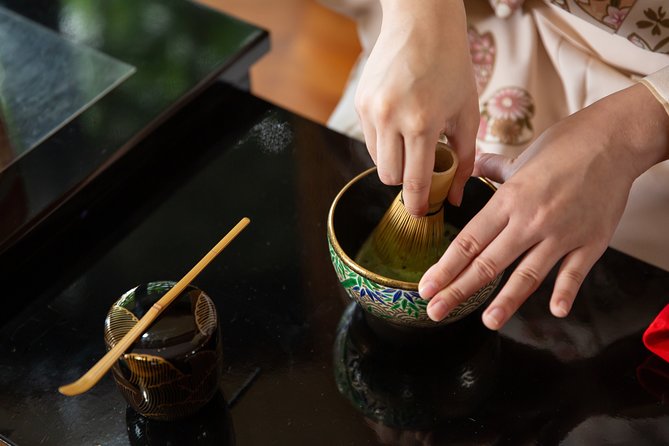
The heart of the session is the hands-on lesson. The tea master shows you how to treat each utensil, how to use the silk cloth, and how to cleanse the tea tools.
These actions can look small, but they are the point. Tea ceremony is less about making a drink quickly and more about careful movement. You’ll be asked to notice what you are doing, where each object goes, and how the tools are treated.
Then you make your own tea. You add matcha green tea and hot water to the tea bowl, follow the instructions, and taste the result. That gives you a clear sense of the method instead of leaving you as a spectator.
Do not worry about producing a perfect bowl on your first try. The value is in learning the sequence and understanding the care behind it. The class is designed for beginners, and the tea master works with a translator to explain what you need to do.
The bilingual support is important. The tea master leads the ceremony, while the translator fills in what you may not understand. This arrangement lets you focus on the movements rather than guessing at instructions.
A quiet photo finish
After tasting your own matcha, you can take photos in front of a gold folding screen. This is a practical ending because the kimono, formal setting, and screen come together in one place.
The photo opportunity is included in the stated sequence, but there is no promise of a professional photographer or unlimited time. Bring your own phone or camera if you want a keepsake. Since the group is small, the photo stop should be manageable, though the exact amount of time available will depend on the schedule.
I like that the photos come after the ceremony rather than replacing it. You first learn the meaning of the room and make tea, then take pictures. That keeps the activity focused on culture instead of turning it into a costume photo session.
How much value do you get for $85.39?
At $85.39 per person, this is not the cheapest way to spend 75 minutes in Okinawa. The price makes more sense if you value the complete package: kimono use, instruction from a tea master, translator support, sweets, access to a traditional tea room, hands-on matcha preparation, and photos.
You are paying for a small, guided cultural activity rather than a drink and a souvenir photo. The intimate format also matters. The supplied information gives a maximum of six people in one section and a maximum of eight in another, with a minimum of two. Because those numbers conflict, I would confirm the final group size before paying.
If the group is close to six, you should get more direct attention during the tea-tool practice. A larger group could make the lesson feel less personal, though the maximum remains fairly limited compared with a large bus tour.
The value is strongest for families, couples, and small groups who want a planned cultural activity in Onna. It is less suitable if you want a long ceremony, an advanced tea lesson, or a full kimono styling experience.
Who will enjoy this most?
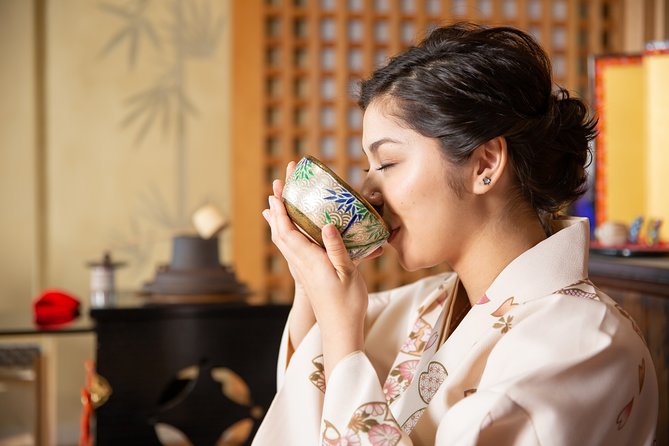
This activity suits first-time visitors to Japan who want an introduction to tea ceremony without committing half a day. The 75-minute format fits neatly into a day of sightseeing or a resort stay.
Families are another good match. The experience has been enjoyed by a wide age range, including adults in their fifties and children around eleven. Children must be at least four years old, and the formal steps give them something concrete to follow.
It also works well for relatives visiting Okinawa together. The translator support helps mixed-language groups, while the table-and-chair arrangement makes participation easier for people who cannot sit in the traditional floor position.
You should think twice if your main goal is an elaborate kimono shoot. The clothing is described as simple, and the experience is built around tea ceremony. You should also consider your schedule carefully because the reservation must be made at least three days in advance.
Getting there and planning the day
The meeting point is Japanese Cultural Experience Facility Sasagirian, at 1765-8 Nakama, Onna, Kunigami District, Okinawa 904-0401. The activity ends back at the same place.
The location is described as being near public transportation, which helps if you are not driving. No detailed directions or pickup service are provided, so allow time to reach the facility and find the entrance before the start time.
Mobile ticketing keeps the arrival simple. Confirmation is provided when you book, so keep the ticket available on your phone. Since the experience requires a reservation and has a small capacity, do not plan to arrive hoping for a same-day opening.
The activity requires good weather under its cancellation terms. If poor weather causes a cancellation, you can take a different date or receive a full refund. You can cancel for a full refund up to 24 hours before the start time, but late cancellations and changes are not accepted.
What the experience does especially well
The strongest part is the care given to atmosphere. The scroll, flowers, utensils, small doorway, silk cloth, and gold screen all add meaning to the sequence. None of these details needs to be loud to be memorable.
The second strength is participation. You do not simply watch the tea master prepare matcha. You learn the basic handling of the tools, add the tea and hot water yourself, and taste what you made.
The third is the human touch from the tea master and translator. Their roles make the lesson friendly and understandable without stripping away the formal character of the ceremony.
The limitation is scope. In 75 minutes, you can learn the main steps and enjoy the setting, but you will not become an expert in tea ceremony. The simple kimono also gives you the feel of traditional dress without offering the elaborate preparation that some visitors may expect.
Should you book the Sasagirian tea ceremony?
Book it if you want a calm, well-structured cultural experience in Onna, especially if you like trying things yourself. The combination of a simple kimono, traditional tea room, Okinawan sweets, translator support, and self-made matcha gives you plenty to remember without taking up an entire day.
I would particularly recommend it for families with children over four, small groups, couples, and anyone who would rather sit at a table than kneel on the floor. Confirm the group-size limit and any food concerns ahead of time.
Skip it if you are looking only for a quick photo in Japanese clothing or if $85.39 feels high for a 75-minute activity. For everyone else, this is a thoughtful way to add culture and quiet concentration to an Okinawa itinerary.
FAQ
Where does the tea ceremony take place?
It takes place at Japanese Cultural Experience Facility Sasagirian, 1765-8 Nakama, Onna, Kunigami District, Okinawa 904-0401, Japan.
How long does the experience last?
The tea ceremony experience lasts approximately 1 hour and 15 minutes.
What happens during the tea ceremony?
You change into a simple kimono, cleanse your hands, enter the tea room, learn about the scroll, flowers, and utensils, taste Japanese and Okinawan sweets, learn how to handle the tea tools, make matcha, drink it, take photos, and change clothes.
Do I have to sit on the floor?
No. The main tea ceremony takes place in a Ryurei-style room with tables and chairs. The activity also states that people who cannot sit up can participate.
Can children join the experience?
Children over four years old can participate. Children under three are not accepted.
Is the experience available in English?
A tea master conducts the ceremony with help from a translator who explains what you need to understand.
How many people can join?
The information states a minimum of two people. It gives a maximum of six in the additional details and a maximum of eight in the main description, so confirm the final group limit when booking.
Is public transportation available nearby?
Yes. The meeting point is described as being near public transportation.
Can I cancel for a refund?
Yes. You can cancel at least 24 hours before the start time for a full refund. Cancellations or changes made less than 24 hours before the experience are not accepted. If poor weather causes the activity to be canceled, you’ll be offered another date or a full refund.
Fresh tea listings around Japan
- Yokohama : Tea Ceremony with Sweets and Souvenir★ 5.0 · 5 reviews
- Walking Tour: Yanaka,Nezu& Sendagi: Tea Ceremony & Old Tokyo★ 5.0 · 3 reviews
- Visit local home for music and tea ceremony near Disney★ 4.9 · 13 reviews
- Yokohama: Sushi & Gyoza Cooking with Matcha & GreenTea Experience★ 5.0 · 3 reviews
- Trip to Kamakura & Enoshima: Shrines, Seaside, Temples &Tea★ 5.0 · 11 reviews
- Uji: Private immersion into Kyoto’s tea and reglious culture★ 5.0 · 17 reviews
- Uji Tea Ceremony and UNESCO Heritage Walking Tour★ 5.0 · 20 reviews
- Kyoto tea town for matcha lovers★ 5.0 · 16 reviews
Kimono & Tea Ceremony, compared.
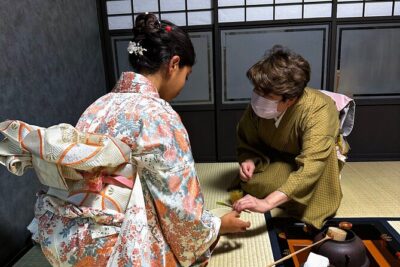
KYOTO Tea Ceremony with kimono near by Imamiya Jinjya Shrine
Read our review →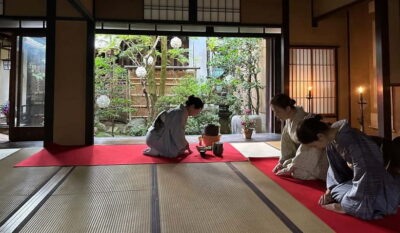
Kyoto: Kimono and Tea Ceremony Experience at Cultural Asset
Read our review →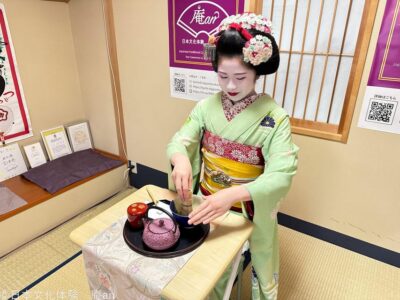
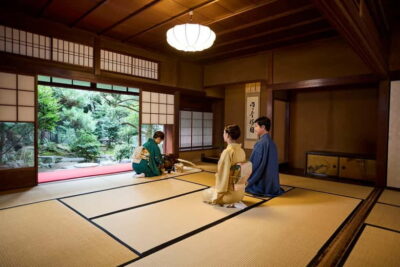
Kyoto: Kimono Tea Ceremony with Matcha and Sweet
Read our review →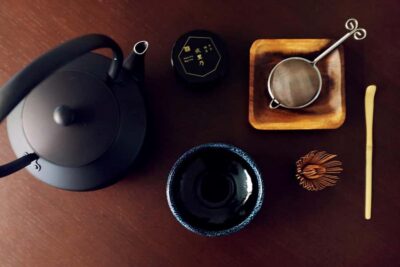
Browse the lists this tour appears in