

Review · KIMONO & TEA CEREMONY
Kimono Dressing & Tea Ceremony Experience at a Beautiful Garden
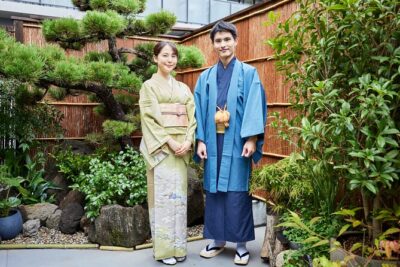
A kimono changes the way you see a garden. At Shorai-tei, you dress in traditional clothing, walk beside the pond and seasonal flowers at Mihama Garden, then sit down for matcha and Japanese sweets. I like the private format and Grace’s local connection to Chiba. She has lived here for about 18 years and raised her children here, so this is more personal than a quick photo stop.
I also like the choice of hakama for men, which gives the outfit a samurai-era look, plus Japanese-style cosplay options for women. The main consideration is time: two hours goes quickly, and the tea-room booking must be confirmed after you reserve. Check the date carefully, especially during a busy Japan trip.
Key points at a glance
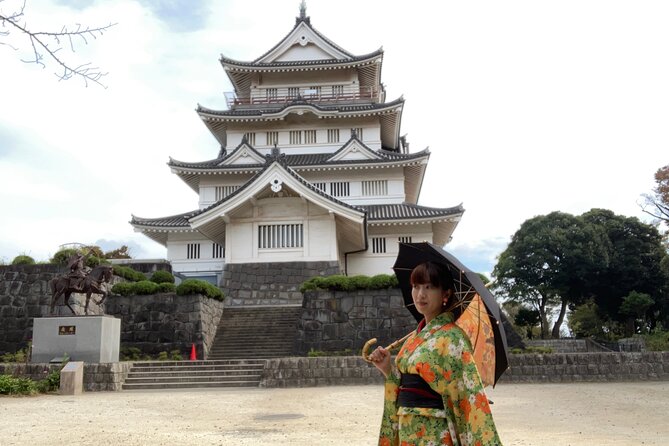
- Traditional setting: Dress at Shorai-tei, a tea room beside Mihama Garden where tea ceremonies are regularly held.
- Grace as your host: Your guide has lived in Chiba for about 18 years and focuses on local culture and personal interaction.
- Garden photographs: Wear your chosen outfit while walking around the pond and viewing seasonal flowers.
- Tea and sweets: The experience includes matcha green tea and traditional Japanese sweets selected for the season.
- Private two-hour visit: Only your group takes part, making this a good fit for couples, families, and friends.
- Simple cancellation terms: You receive a full refund if you cancel at least 24 hours before the start time.
Why this Chiba experience feels different
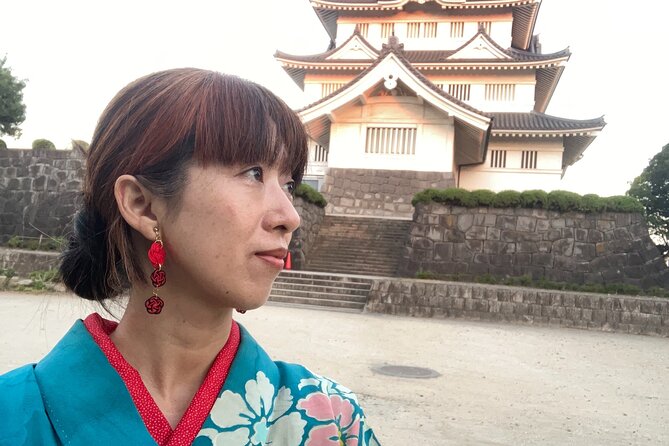
Many cultural activities in Japan ask you to watch, listen, and move on. This one gives you something to do with your hands and feet. You choose clothing, walk through a garden, pose for photographs, and take part in a tea ceremony. That makes the two hours feel active rather than like a short talk.
The setting matters. Shorai-tei is a traditional tea room by Mihama Garden, not just a decorated room prepared for tourists. The garden gives you space to see the kimono outdoors, with the pond and seasonal flowers providing a natural backdrop. Then the tea ceremony brings you back indoors for a quieter part of the visit.
I would not treat this as a formal lesson in every detail of Japanese tea culture. It is an introductory cultural experience. You get a taste of the clothing, garden setting, matcha, sweets, and manners connected with tea. For many visitors, that broad introduction is exactly right.
More Tea Ceremonies in Japan:
- Kyoto: Tea Ceremony in a Traditional Tea House in Kiyomizu
★ 4.9 · 3,519 reviews - Kyoto: Tea Ceremony Ju-An at Jotokuji Temple
★ 4.9 · 3,207 reviews - Kyoto: 45-Minute Tea Ceremony Lesson Experience
★ 4.3 · 2,378 reviews
Meeting Grace in Mihama Garden
Grace is a mother of two who has lived in Chiba for around 18 years. She raised her children in the city and clearly sees this activity as a way to share a place she knows personally. That local connection gives the visit a warmer focus than a standard costume rental.
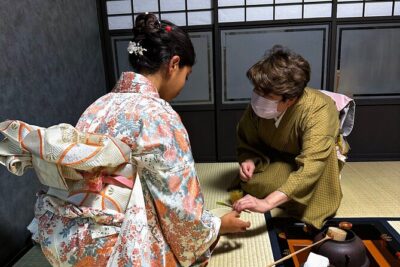
Ari may also assist with the dressing and preparations. One couple selected both kimono and hakama from a range of options, with Grace acting as host, cultural guide, and interpreter. That combination is useful if you have questions about what you are wearing or what happens during the ceremony.
The meeting point is listed as Shoraitei, 2-chōme-116 Hibino, Mihama Ward, Chiba, 261-0021, Japan. The activity ends at the same place. It is near public transportation, but the information provided does not specify a station, route, or walking time, so check your route before the day of your visit.
The provider asks to confirm the reservation after checking tea-room availability. You normally receive confirmation within 48 hours of booking, subject to that availability. If this is an important part of your schedule, do not leave the reservation until the last minute. The average booking lead time is about 27 days.
Choosing your kimono, hakama, or costume
The clothing is the centerpiece of the first half. The team provides the garments and dresses you in them, so you do not need to know how to put on a kimono yourself. The available choices include kimono for women and men, with men able to choose a hakama style.
Hakama are traditional trousers or divided skirts worn over a kimono. Here, the style is meant to create a look reminiscent of a samurai outfit. That makes the experience especially appealing for couples who want coordinated photographs, with one person in kimono and the other in hakama.
Women can also choose Japanese-style cosplay costumes in addition to kimono. This is an important detail if your group wants a playful photo session rather than a strictly traditional look. The costume choice may change the mood of the visit, so decide what matters most to you before dressing: traditional appearance, a samurai-style outfit, or a more theatrical Japanese look.
The available selection is described as a variety of options, but specific sizes, colors, and designs are not listed. If fit or a particular style is important to you, ask about the available choices when you book. That is a sensible step for anyone who wants a certain look for photographs.
Walking around the pond in traditional dress
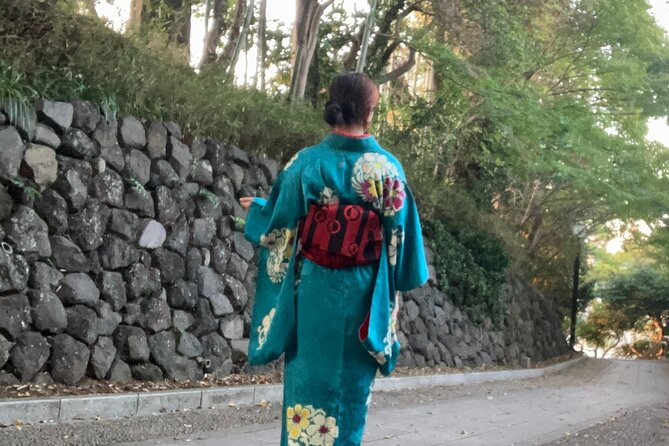
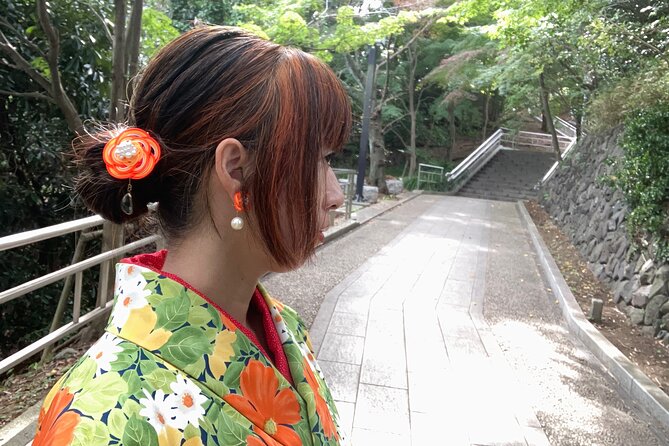
Once dressed, you walk through Mihama Garden and around the pond. This part gives the clothing a purpose. You are not simply standing in a studio for one portrait. You see how the outfit looks in an outdoor setting and have time to take photographs with the garden around you.
Seasonal flowers are part of the appeal, though the exact display depends on the date. A spring visit and an autumn visit will not look the same, and no fixed flower calendar is provided. I would plan around the garden atmosphere rather than a promise of one particular bloom.
Walking in a kimono can also make you more aware of your movements. You may find yourself taking smaller steps and paying attention to how you turn, sit, and pose. That is part of the cultural value. The clothing is not just a costume; it changes your physical experience of the garden.
The outdoor portion also has limits. A two-hour activity must include dressing, photographs, and the tea ceremony, so you should not expect a long garden tour. The emphasis is on a pleasant stroll and personal photographs, not a detailed botanical visit or extended historical walk.
More Kimono and Tea Ceremonies in Japan:
- Kimono Tea Ceremony at Kyoto Maikoya, NISHIKI
★ 5.0 · 911 reviews - Kimono Tea Ceremony at Tokyo, Asakusa Maikoya
★ 5.0 · 638 reviews - Kyoto: Kimono Tea Ceremony at Orizuruya Gion
★ 4.9 · 618 reviews - KYOTO Tea Ceremony with kimono near by Imamiya Jinjya Shrine
★ 5.0 · 343 reviews
A quiet tea ceremony at Shorai-tei
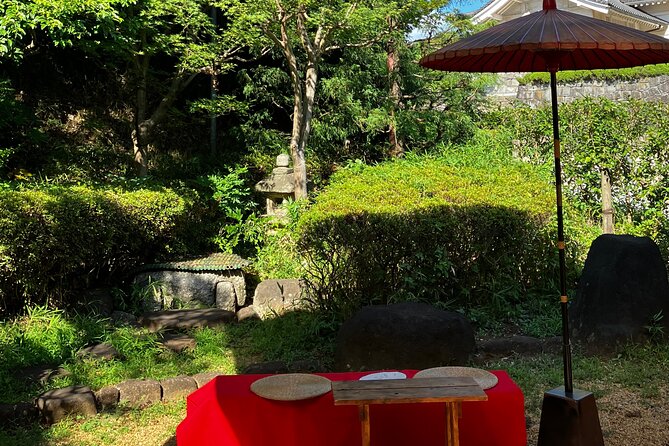
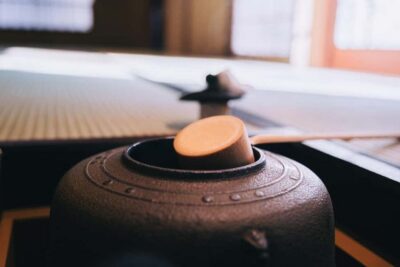
After the garden walk, you take part in a traditional tea ceremony in the tea room. Matcha is served with traditional Japanese sweets. The tea has a strong color, a distinctive aroma, and a flavor that balances bitterness with sweetness. If you are new to matcha, expect something more concentrated and earthy than ordinary green tea.
The sweets are not just a side snack. In a tea ceremony, their shape, color, and seasonal connection help balance the tea. The sweets served here are described as traditional and seasonally selected, so the exact item may vary.
This is the most reflective part of the experience. The garden walk gives you movement and photographs. The tea room asks you to slow down and pay attention to the setting, the tea, the sweet, and the customs being demonstrated. Even a short ceremony can help explain why tea preparation in Japan is treated as a cultural practice rather than a quick drink.
The activity is not presented as a full professional tea-school course. You should expect an accessible introduction, guided by the host, with the chance to experience the ceremony directly. That makes it suitable for first-time visitors who want cultural context without committing to a long formal class.
The tea room location changed from Gaihana-tei to Mihama-en in April 2025. The current information identifies Shorai-tei by Mihama Garden as the dressing and tea-ceremony location, so confirm the exact room when your booking is accepted. This is one detail worth checking because older directions may use a previous name.
What the two-hour schedule means for you
The activity lasts about two hours. The supplied schedule does not assign fixed minutes to dressing, the garden walk, and tea, so the pace may depend on your group and the tea-room booking.
In practical terms, you can expect three connected stages:
- Choosing and putting on your clothing
- Walking through the garden and taking photographs
- Sitting down for matcha, sweets, and the tea ceremony
That is enough time for a compact cultural visit. It is not enough time for a full afternoon in the garden or a slow photo session with unlimited outfit changes. If you want many different looks, ask about that before booking.
The private format helps. Only your group participates, so you are not sharing the ceremony with a large mixed crowd. You can ask questions, take family photographs, and move at a pace that suits your party. Families should still remember that the activity has a set duration and includes a quiet ceremony, so very young children may need help staying engaged.
Is the $80 price good value?
The cost is $80 per person. That is not the cheapest way to borrow Japanese clothing for photographs, but you are paying for more than a costume. The price includes dressing, the garden visit, a private host, the tea ceremony, matcha, and traditional sweets.
The value is strongest if you want several parts of Japanese culture in one short session. You receive photographs in a garden, an introduction to traditional clothing, and direct participation in a tea setting. Arranging those elements separately could take more planning and might not provide the same personal guidance.
The value is weaker if your only goal is a quick kimono photograph. In that case, a shorter rental or studio option may suit you better, though the information here does not compare prices with those alternatives.
I would also consider the size and interests of your group. A couple can make good use of the private setting. A family can create shared photographs and memories. Friends may enjoy choosing different outfits and comparing the garden portraits. A solo visitor can still benefit from the guided format, especially if cultural explanation matters more than having a large photo session.
Who should book this experience
I would recommend it to you if you want a personal cultural activity in Chiba and prefer doing something hands-on. It is a good match for first-time visitors who want to try kimono without spending a full day at a major tourist site.
It also suits couples. The combination of kimono and hakama gives you a clear way to create connected photographs without both people wearing the same style. Families may appreciate the private booking, since you can share the experience without being folded into a large group.
This is less suitable for you if you want a long history lecture, a full tea-school lesson, or a large garden tour. It is also not the best choice if you need a guaranteed specific costume, size, or flower display, since those details are not listed.
The activity has a perfect 5 out of 5 score from four posted ratings, including strong praise for Grace as host, historian, and interpreter. That is encouraging, but the sample is small. I would use the praise as a sign of the experience’s personal strength, not as proof that every visit will unfold in exactly the same way.
Booking, timing, and cancellation details
The price is listed in US dollars, at $80 per person. The activity uses a mobile ticket, which is convenient for a day of sightseeing when you do not want to carry printed paperwork.
Your booking is subject to tea-room availability, and confirmation arrives within 48 hours when available. The tour is near public transportation, but you should verify your route to Shoraitei before leaving. The meeting point and ending point are the same.
Cancellation is free up to 24 hours before the start time. Cancel at least 24 hours ahead for a full refund. Cancellations or changes made less than 24 hours before the start time are not accepted for a refund, and the cut-off uses local time in Japan.
My call: book it for culture, not just costumes
I would book this experience if I wanted a relaxed, private introduction to Japanese clothing and tea culture without leaving Chiba. Grace’s long connection to the city, the garden setting, the choice of hakama, and the tea ceremony give the visit more substance than a simple dress-up photograph.
Book it early enough to allow the tea room to confirm your reservation, and ask about clothing options if you have specific needs. Go in expecting a two-hour cultural snapshot, not a full lesson or an extended garden tour. If that sounds right, the combination of kimono, pond-side photographs, matcha, and seasonal sweets offers good value.
FAQ
How long does the kimono and tea ceremony experience last?
The experience lasts approximately two hours.
How much does the experience cost?
The listed price is $80 per person.
Where does the activity begin?
It begins at Shoraitei, 2-chōme-116 Hibino, Mihama Ward, Chiba, 261-0021, Japan.
Where does the activity end?
The activity ends back at the meeting point.
What clothing can women choose?
Women can choose a kimono. Japanese-style cosplay costumes are also available.
What can men wear?
Men can choose a kimono or a hakama-style outfit with a look reminiscent of traditional samurai attire.
What is included in the tea ceremony?
You receive matcha green tea and traditional Japanese sweets during the ceremony.
Is this a private activity?
Yes. Only your group participates.
When will the reservation be confirmed?
Confirmation is provided within 48 hours of booking, subject to tea-room availability.
Fresh tea listings around Japan
- Yokohama : Tea Ceremony with Sweets and Souvenir★ 5.0 · 5 reviews
- Walking Tour: Yanaka,Nezu& Sendagi: Tea Ceremony & Old Tokyo★ 5.0 · 3 reviews
- Visit local home for music and tea ceremony near Disney★ 4.9 · 13 reviews
- Trip to Kamakura & Enoshima: Shrines, Seaside, Temples &Tea★ 5.0 · 11 reviews
- Yokohama: Sushi & Gyoza Cooking with Matcha & GreenTea Experience★ 5.0 · 3 reviews
- Uji: Private immersion into Kyoto’s tea and reglious culture★ 5.0 · 17 reviews
- Uji Tea Ceremony and UNESCO Heritage Walking Tour★ 5.0 · 20 reviews
- Kyoto tea town for matcha lovers★ 5.0 · 16 reviews
Kimono & Tea Ceremony, compared.
KYOTO Tea Ceremony with kimono near by Imamiya Jinjya Shrine
Read our review →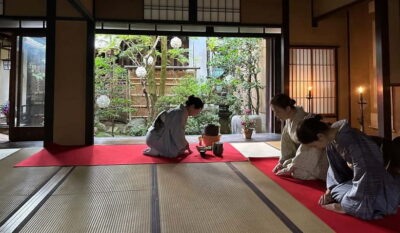
Kyoto: Kimono and Tea Ceremony Experience at Cultural Asset
Read our review →
Kyoto: Kimono Tea Ceremony with Matcha and Sweet
Read our review →
Browse the lists this tour appears in