
Review · TEA CEREMONY EXPERIENCES
Beijing Culture: Tea Ceremony, Heritage Instrument & Calligraphy
The most unusual part of this Beijing experience is that you do not simply watch Chinese culture from behind glass. You brew tea, write real characters, and place your fingers on the strings of a guqin, an ancient Chinese instrument. The setting is private, quiet, and air-conditioned, with a maximum of eight people.
I like the direct contact with three traditions in one sitting, especially the chance to play a complete guqin melody rather than hear only a performance. I also like the small-group format and the bilingual guide, who has an M.A. in History and Sociology and can explain the meaning behind the rituals in English.
The main consideration is the price: $78.60 per person is fair for a small workshop led by national-level cultural artists, but it is more than you would pay for a standard museum visit or short performance. You also need to make your own way to 813 Creative Park in Chaoyang.
Key points at a glance
- Play a full guqin melody: A heritage artist guides your fingers through a hands-on session with China’s most classical instrument.
- Brew and taste Chinese tea: A certified, national-level tea master leads the ceremony and explains its purpose.
- Write meaningful Chinese characters: The calligraphy session covers brush technique and the ancient roots of the characters.
- Small group of no more than eight: The limited size allows for individual help rather than a staged presentation.
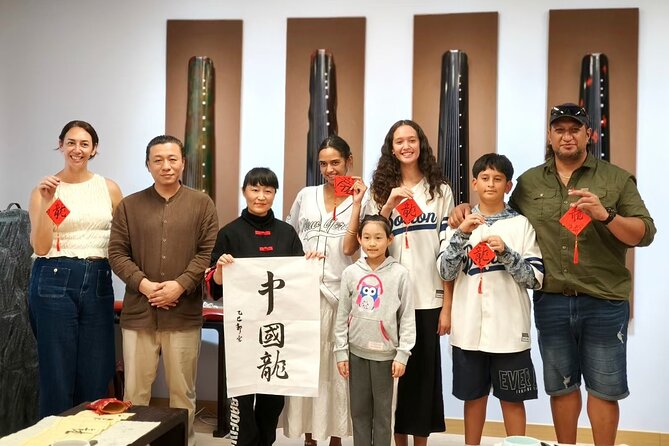
- Traditional clothing is available: You can wear period-style attire for ritual photographs and a final group picture.
- Three traditions in 2.5 hours: The workshop gives you a focused cultural introduction without taking an entire day.
A quiet start at 813 Creative Park
You meet at 813 Creative Park in Beijing’s Chaoyang district. Transportation is not included, so plan that part yourself. The venue is near public transportation, but the information provided does not specify the nearest station or the best route from your hotel. Give yourself extra time, especially if you are crossing Beijing during a busy sightseeing day.
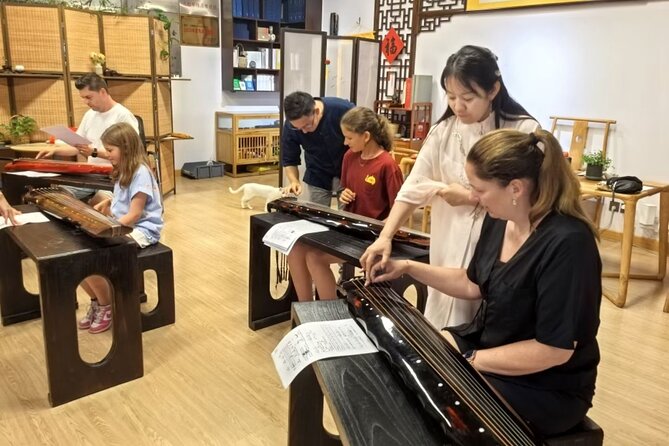
The workshop takes place in a private heritage venue closed to the general public. That matters. You are not being moved through a busy attraction with a crowd waiting behind you. The space is described as calm, air-conditioned, and decorated for cultural practice, which should make the two-and-a-half-hour session easier to enjoy in any season.
The experience is designed around quiet attention. That suits the subject. Tea ceremony, calligraphy, and guqin music all reward patience, and the small group should make it easier to ask questions or receive help with your hands and posture.
Traditional clothing is available for the ritual and photographs. It is an optional detail, but it adds a visual element to the session and gives you something more personal to take home than a standard snapshot.
More Tea Ceremonies in China
- Traditional Chinese Tea Ceremony Experience
★ 4.7 · 74 reviews - Chinese Tea ceremony in Beijing Hutong courtyard
★ 4.7 · 26 reviews - Beijing Culture Event: Tradition Music, Tea Ceremony, Calligraphy
★ 5.0 · 11 reviews
Tea ceremony with time to slow down
The tea portion is guided by a certified tea master described as a national-level cultural practitioner. You learn how to prepare and taste Chinese tea, with tea snacks included. The point is not just to drink a warm beverage. The method, pace, utensils, and gestures all carry meaning.
Expect the ceremony to be deliberate rather than rushed. You may handle the tea yourself, follow the master’s instructions, and taste the result. That practical role is one of the strongest reasons to choose this workshop over a performance. You are not merely seeing a ritual performed correctly. You are trying to understand how it feels to carry it out.
The English explanation is important here. Tea ceremony can look simple if you do not know what you are watching. A bilingual guide can explain why movements are measured, how the ceremony relates to ideas in Chinese philosophy, and why tea has such a central place in social life.
This part may be especially appealing if Beijing sightseeing has begun to feel noisy or hurried. The activity gives you a pause without requiring you to spend an entire afternoon at a spa or café. The tradeoff is that visitors who want a broad tasting of many teas may find the session more focused on ceremony and meaning than on sampling a large selection.
The guqin, from listening to playing
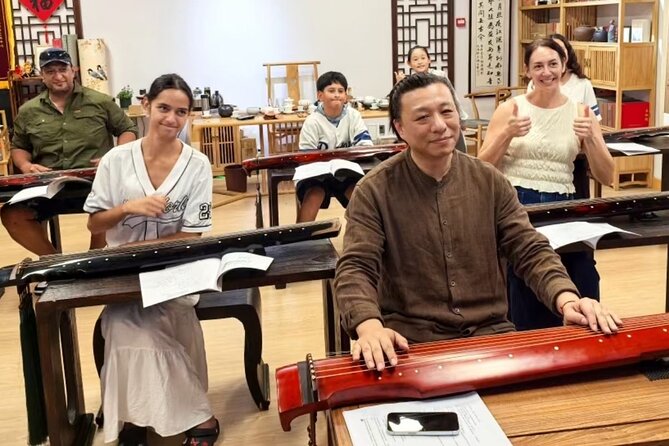
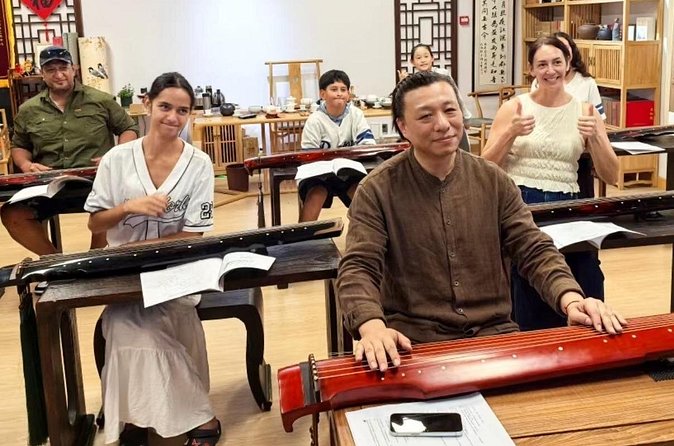
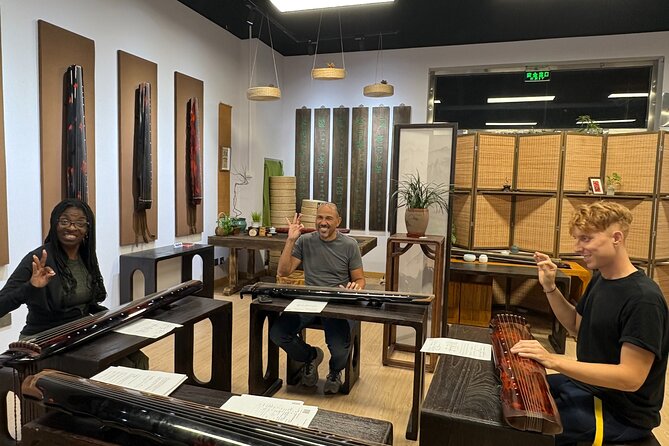
The guqin is the musical heart of the experience. A national-level heritage artist gives a live performance, then teaches you how to play. This is not a casual introduction to a modern tourist instrument. The guqin is one of China’s most respected classical instruments, with a long association with scholars, poetry, and refined artistic practice.
First hearing the instrument before touching it should help you understand its unusual sound. The music is quiet and finely controlled rather than dramatic. A peaceful room, warm tea, and live guqin create the most contemplative part of the workshop.
Then the focus shifts to your hands. You receive guidance as you try to produce notes and work through a melody. The supplied details describe a full melody, which makes this more substantial than simply plucking a string or posing beside the instrument. Still, keep your expectations sensible. You are learning one short piece in a group setting, not training as a musician.
The value lies in the physical connection. An old instrument can seem distant in a museum case. Here, you feel the strings and learn how much control even a simple phrase requires. If you have limited musical experience, the session remains approachable because the artist guides your fingers. If you already play an instrument, you may appreciate the different hand movements and restrained sound.
The guqin segment may be the best reason to book this activity. It is rare for a short Beijing workshop to combine a professional heritage performance with a chance for every participant to play.
Calligraphy that gives you something to keep
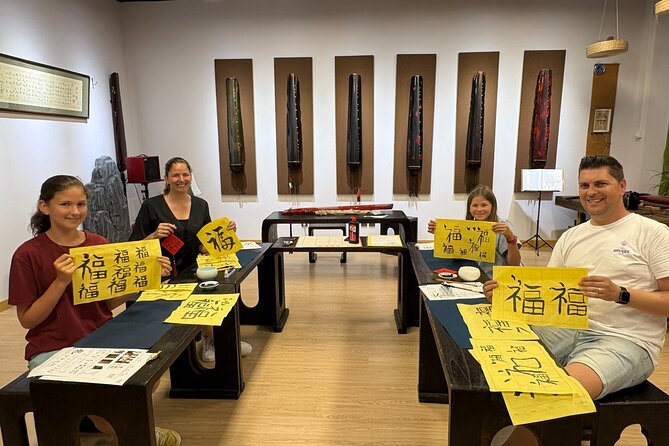
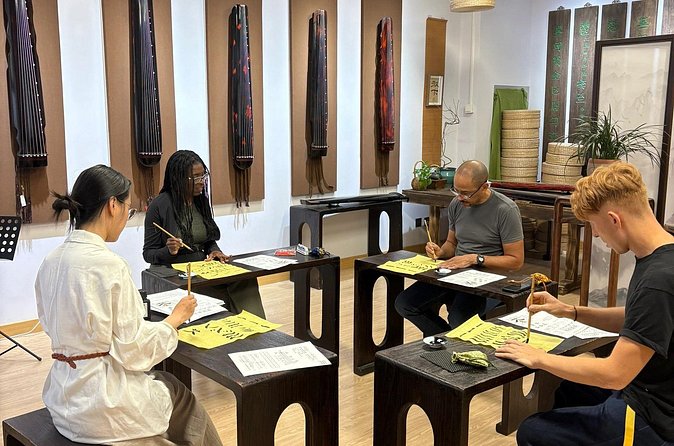
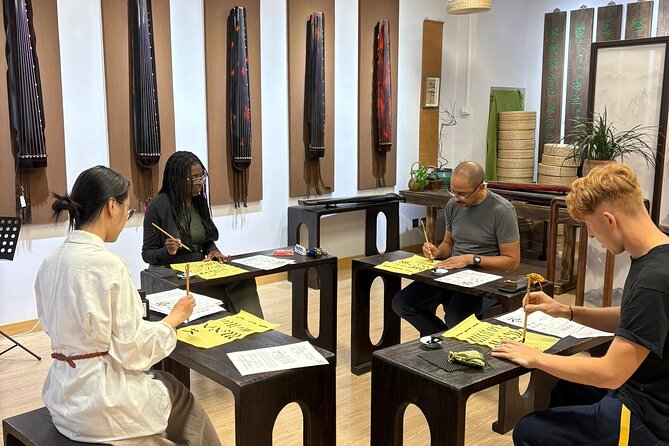
The calligraphy workshop brings the experience back to the page. With expert guidance, you write Chinese characters using a brush and learn about their ancient roots. The activity is hands-on, but it also gives you a small lesson in how written Chinese developed.
You do not need to arrive knowing Chinese. The teaching is designed to make the process approachable, and the group size should allow the instructor to correct your grip and brush movement. Calligraphy is harder than it looks. The ink may flow too quickly, the brush may feel unfamiliar, and a single stroke can change the balance of a character.
That difficulty is part of the appeal. You are not buying a printed souvenir with a generic phrase. You are creating something yourself. One especially useful detail is the chance to write your Chinese name, then take the paper home. It can become a framed keepsake, provided you resist the urge to judge it too harshly beside a professional artist’s work.
The calligraphy segment is also a good fit for families and first-time visitors because it leaves you with a clear result. The guqin is fleeting once the final note ends. Your calligraphy remains in your bag.
Same city, a very different cup:
- One-Day Hangzhou Dragon Well Tea Culture & West Lake Private Tour
★ 5.0 · 98 reviews - Tea Tasting and Pairing Concept Workshop
★ 5.0 · 57 reviews - Biking Real Shanghai& Tea Tasting Experience
★ 4.5 · 45 reviews - Tea Village in lost Town and Buddha 1 day tour
★ 5.0 · 32 reviews
What the English guide adds
The bilingual guide is described as having an M.A. in History and Sociology, with training in Chinese philosophy and history. That background should help connect the three activities rather than treating them as unrelated demonstrations.
A weaker cultural workshop might offer tea, music, and brush writing as separate photo opportunities. Here, the guide’s role is to explain the rituals and ideas behind them. You learn not only what to do, but why the gestures, sounds, and written forms matter.
Names of the individual instructors are not provided, so you should not book expecting a specific named teacher. The important distinction is the level of cultural experience promised: national-level tea and heritage artists, supported by English explanation.
Because the session is limited to eight people, you should have a better chance to ask questions than you would at a large cultural show. The setting is still a group class, though. If you want a private lesson with all the time devoted to your own technique, this may not be the right format.
How the $78.60 price measures up
At $78.60 per person, this is not Beijing’s cheapest cultural activity. You are paying for more than a cup of tea and a few minutes with a brush. The price includes the tea ceremony and tasting, live guqin performance, guqin instruction, calligraphy guidance, traditional clothing rental, tea snacks, and an English-speaking cultural guide.
The maximum group size of eight improves the value. Individual attention is more likely in a small workshop, particularly during calligraphy and the guqin lesson. The involvement of national-level artists also makes the price easier to justify for people who care about cultural preservation and serious instruction.
The value is weaker if you mainly want entertainment. A large performance may give you more music, more costumes, and a longer spectacle for less money. This workshop is a better purchase if you want to participate and leave with a skill, a written keepsake, and a clearer understanding of the traditions.
You should also consider the time. At about 2.5 hours, it fits neatly between other Beijing plans. It is long enough to cover three subjects without consuming a full day. Tea snacks are included, but this is not a meal, so do not arrive expecting lunch or dinner.
Who should book this experience
I would recommend it to you if you want a cultural activity that is calm, practical, and more personal than sightseeing from a distance. It suits first-time visitors who need an approachable introduction, as well as people who have already seen Beijing’s major monuments and want something less familiar.
It is also a strong option for anyone interested in Chinese philosophy, traditional arts, music, or calligraphy. The activity does not require prior knowledge, and the teaching is in English. Most people can participate, and service animals are allowed.
Families may enjoy the variety. One person can connect with tea, another with music, and another with writing. The group format and limited duration also make it easier than committing to a full-day class.
I would be more cautious if your priority is a famous historical site, a full meal, shopping, or a long concert. None of those are the focus. This is a compact workshop centered on attention and participation.
Booking details worth knowing
Confirmation is sent within 48 hours of booking, subject to availability. The activity has a maximum of eight participants, but it also requires a minimum number to operate. If that minimum is not met, you are offered another date or experience, or a full refund.
You can cancel for a full refund up to 24 hours before the local start time. Changes or cancellations inside that 24-hour window are not accepted for a refund. The experience also requires good weather under its stated policy, even though the venue is air-conditioned. If poor weather causes cancellation, you are offered another date or a full refund.
The activity starts and ends at the meeting point in 813 Creative Park. Since transport is not included, check your route before booking and allow time to find the exact venue within the creative park.
Should you book the tea, guqin, and calligraphy workshop?
Book it if you want to do more than take photographs. The strongest parts are the chance to play a full guqin melody, the personal help available in a group of eight, and the way tea, music, and calligraphy are tied together by an English-speaking cultural guide.
The price is justified for a small class with national-level artists, but it is not aimed at bargain hunters. You should also accept that this is a quiet, focused session rather than a big show. For a meaningful half-day break from Beijing’s major sights, it offers a rare kind of souvenir: something you made, played, and understood.
FAQ
Where does the experience begin and end?
It begins and ends at 813 Creative Park, VGP3+CCX, Chaoyang, China, 100124.
How long does the activity last?
The experience lasts approximately 2 hours and 30 minutes.
How many people can join the activity?
The group has a maximum of eight participants.
Is transportation included?
No. Transportation to and from the venue is not included, so you must arrange your own way to 813 Creative Park.
What does the tea portion include?
You receive a traditional tea ceremony and tea tasting led by a certified tea master. Tea snacks are included, but meals outside those snacks are not.
Can I play the guqin?
Yes. The experience includes a hands-on guqin lesson, along with a live performance by a national-level heritage artist.
Is calligraphy included?
Yes. The activity includes a Chinese calligraphy workshop with expert guidance.
Is traditional clothing provided?
Traditional outfit attire rental is included for the ritual and photographs.
What is the cancellation policy?
You can cancel at least 24 hours before the local start time for a full refund. Cancellations or changes made less than 24 hours before the start time are not refunded or accepted. If the activity is canceled because of poor weather or an insufficient minimum group, you are offered another date or a full refund.
More History Tours in China
- World Heritage Kyoto & Nara Uji Authentic Matcha Experience
★ 5.0 · 1,573 reviews - Uji: UNESCO Heritage & Tea Ceremony Walking Tour
★ 4.6 · 54 reviews - Slow Cycling Tour at Uji’s Matcha Green Tea Fields and Heritage
★ 5.0 · 25 reviews - Victoria Falls: Cultural Tour with High Tea
★ 4.8 · 12 reviews
More Tea and Calligraphy Workshops in China
- Beijing Hands-On Culture Tour: Tea, Instrument, Calligraphy
★ 5.0 · 6 reviews - Xi’an Calligraphy & Tea Ceremony – Dive into Ink & Brush Artistry
★ 5.0 · 4 reviews - Xi’an Chinese Calligraphy Workshop: Ink Art & Tea Tasting
★ 5.0 · 4 reviews - Beijing:Learn Calligraphy & Enjoy Kung Fu Tea Ceremony
★ 5.0 · 2 reviews
Fresh tea listings around China
- Chongqing 1941 theatre: Tea Art Performance with Folk Art★ 3.8 · 8 reviews
- Beijing:Learn Calligraphy & Enjoy Kung Fu Tea Ceremony★ 5.0 · 2 reviews
- Beijing: Temple Of Heaven+Tai Chi Class+Tea Ceremony★ 5.0 · 8 reviews
- Beijing Hands-On Culture Tour: Tea, Instrument, Calligraphy★ 5.0 · 6 reviews
- Beijing: Chinese Culture Tea Ceremony Reservation Service★ 4.8 · 4 reviews
- Qixianfeng Tea Plantation Tour in Yangshuo★ 4.6 · 4 reviews
- 3 hours Xi’an Mahjong Class with Local Tea★ 5.0 · 2 reviews
- Xi’an Calligraphy & Tea Ceremony – Dive into Ink & Brush Artistry★ 5.0 · 4 reviews
Tea Ceremony Experiences, compared.
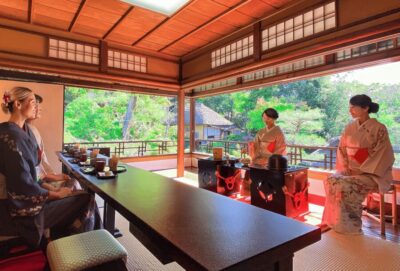
Kyoto: Tea Ceremony in a Traditional Tea House in Kiyomizu
Read our review →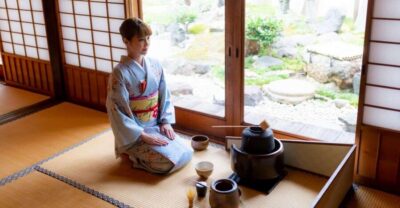
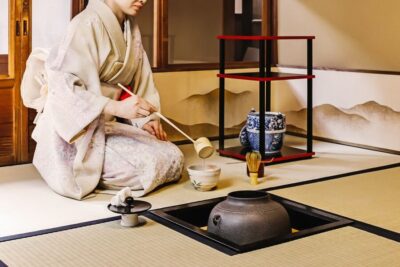
Kyoto: 45-Minute Tea Ceremony Lesson Experience
Read our review →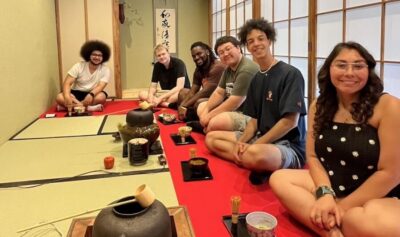
Kyoto: Table-Style Tea Ceremony at a Kyo-Machiya
Read our review →
Browse the lists this tour appears in