
Review · TEA CEREMONY EXPERIENCES
Beijing Culture Event: Tradition Music, Tea Ceremony, Calligraphy
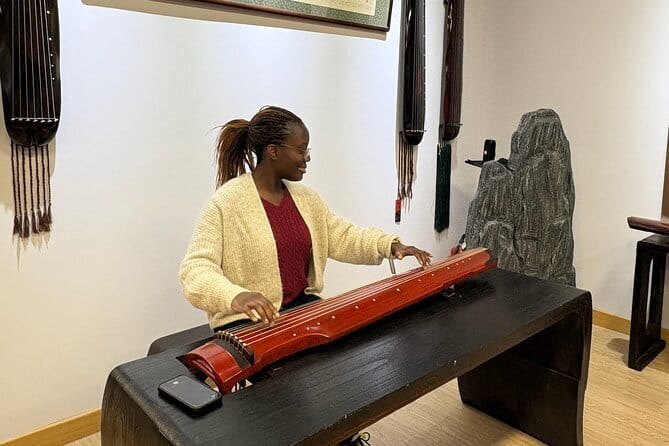
The most unusual part of this Beijing activity is the combination of tea ceremony, guqin music, and calligraphy in one small-group session. You are not simply watching a staged show. You learn how tea is prepared, hear a 2,000-year-old scholarly instrument, try a simple guqin melody from Crouching Tiger, Hidden Dragon, and write Chinese characters with a brush.
I like the hands-on format and the access to a performer from the Beijing Guqin Association. I also like the price: at $15 per person, it offers an unusually full cultural introduction for the cost of a casual coffee and snack. The main consideration is pace. This is a quiet, reflective activity, not a high-energy sightseeing tour, and the location is in the Chaoyang District rather than beside Beijing’s major historic sights.
- Three traditions in one session: Tea, guqin, and calligraphy form a connected introduction to Chinese culture.
- A specialist guqin performer: The music is presented by a master from the Beijing Guqin Association.
- Real participation: You can brew tea, try a guqin melody, and practice brush writing.
- Small group size: The maximum is 12 people, which should allow more room for questions and personal guidance.
- Strong value at $15: The price includes the cultural activities, English guidance, tea or coffee, and use of the instrument.
- A peaceful souvenir: Your own calligraphy piece gives you something personal to take away.
Three Chinese traditions in one quiet afternoon
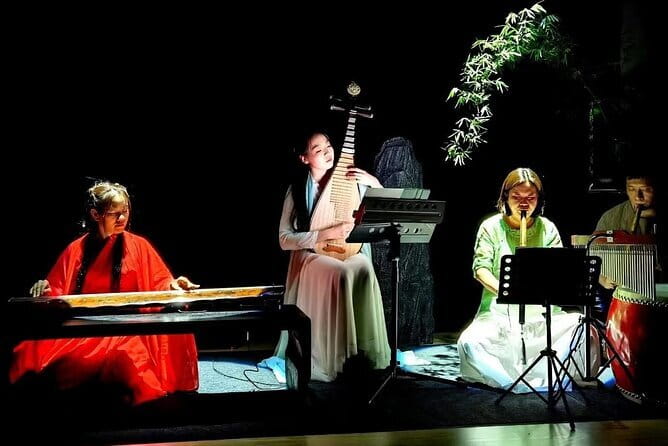
This experience works because the three activities belong together. Tea introduces manners and attention. Guqin music adds the sound and philosophy of the scholar’s study. Calligraphy gives you a physical way to practice patience and balance.
I like that you are not asked to absorb a long lecture before doing anything. You take part early. The format gives you a way to understand Chinese culture through your hands, ears, and taste, not only through explanations.
The session lasts about two to three hours and takes place at Huagong Road in Beijing’s Chaoyang District. It begins and ends at the same meeting point. Since the activity is near public transportation, you can fit it into a day based in eastern Beijing, but you should allow time to reach Huagong Road from the central sightseeing areas.
The English guide is important here. Tea etiquette and calligraphy can be hard to follow if you do not understand the cultural meaning behind each movement. The activity includes English guidance, so you can ask questions as the session unfolds rather than simply copy what someone else is doing.
Tea ceremony: start with attention and etiquette
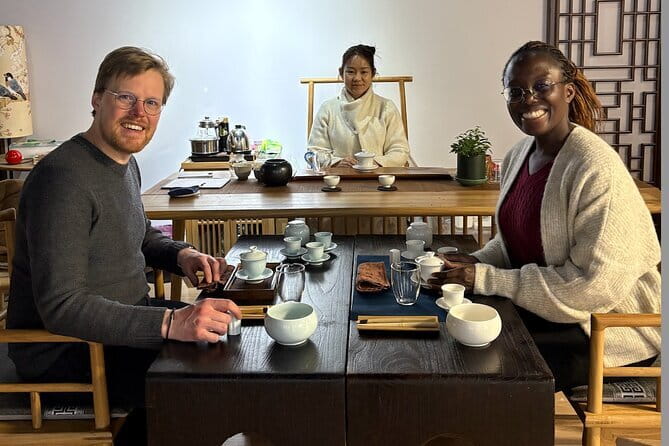
The tea portion opens the experience with a slower rhythm. You learn about tea preparation, the order of service, and the etiquette connected with offering and receiving tea. The point is not just to drink a cup. It is to understand why the preparation matters.
That makes this a useful introduction for someone who has never taken part in a Chinese tea ceremony. You may notice how much attention is given to the vessel, the water, the pouring, and the way the tea is received. Small movements carry meaning, and the guide explains the customs in English.
The tea ceremony also sets the mood for the music. Instead of moving straight from one unrelated activity to another, you begin with quiet concentration. The atmosphere is intended to be calm, and several parts of the experience include tea or coffee.
Do not expect a large tasting menu or a full meal. Lunch and dinner are not included, and personal purchases are separate. Think of this as a cultural tasting and demonstration, not a food tour. If you need substantial food, eat before or after the session.
The gentle pace may be a plus for you if you want a break from Beijing’s traffic and crowds. If you prefer rapid sightseeing with constant movement, this first section may feel slow. I would choose it for a relaxed afternoon rather than trying to squeeze it between several major monuments.
More Tea Ceremonies in China
- Traditional Chinese Tea Ceremony Experience
★ 4.7 · 74 reviews - Beijing Culture: Tea Ceremony, Heritage Instrument & Calligraphy
★ 5.0 · 57 reviews - Chinese Tea ceremony in Beijing Hutong courtyard
★ 4.7 · 26 reviews
Guqin music with a Beijing specialist
The guqin is the heart of the experience. It is a seven-stringed Chinese zither associated for centuries with scholars, officials, and refined study. The tradition connected with the instrument reaches back about 2,000 years, while the instrument used during the session is described as being more than 50 years old.
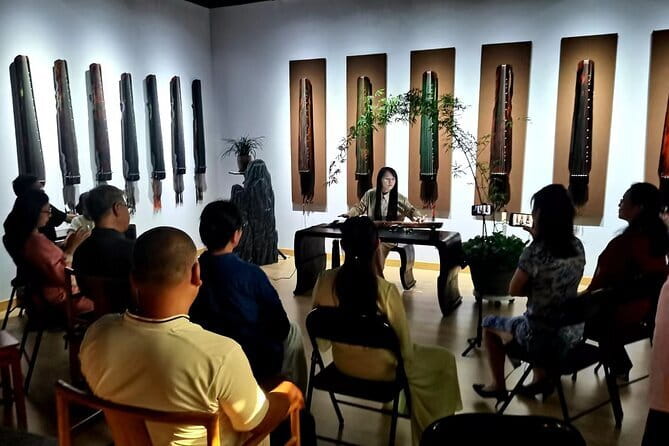
A performer from the Beijing Guqin Association leads the music portion. That detail matters. You are not receiving a generic introduction to an unfamiliar instrument from someone who happens to play it. The session is designed around a specialist who can explain the instrument’s place in Chinese culture as well as demonstrate its sound.
The guqin has a low, mellow tone. It is not a loud concert instrument, so the small group is a real advantage. With no more than 12 people, you should have a better chance of hearing the details and watching the performer’s technique.
The performance includes a simple tune from Crouching Tiger, Hidden Dragon, which gives you a familiar reference point. You then have the chance to try a basic melody yourself. No previous musical experience is required.
This is one of the most appealing parts for anyone who plays an instrument. Guqin notation is written with Chinese characters, a detail that opens a window into how music was recorded and taught in older Chinese traditions. You do not need to read Chinese to appreciate the idea, and the English guide can explain the unusual system.
The hands-on portion should be approached with modest expectations. You are not going to become a guqin player in one afternoon. You will, however, feel the spacing of the strings, learn how the instrument responds, and get a direct sense of the concentration involved in playing it.
Calligraphy gives you something personal to make
The final main activity turns from sound to writing. You learn basic brush techniques and practice a Chinese character, word, or short phrase. The guide helps you understand how to hold the brush and control the ink, then gives you a chance to create your own piece.
Calligraphy is often presented as decoration, but here it functions as a physical exercise in balance and restraint. A brush stroke cannot easily be corrected once it is made. That makes the activity both creative and slightly humbling, especially if you are used to writing with a pen or keyboard.
I like this part because it gives the session a clear takeaway. Photos of the tea ceremony and guqin are useful, but your own calligraphy can become a small personal reminder of the day. You may choose a meaningful word or phrase, though the exact selection and instruction will depend on the guide.
Families can enjoy the activity because it offers a simple task for different ages. Couples can write pieces for each other, making the session an unusual date activity without the formality of a dinner reservation. It also suits visitors who prefer a quiet cultural program to a crowded performance.
The calligraphy lesson will not turn you into a professional writer. Some of your strokes may be uneven, and that is part of the fun. The value comes from trying the technique and learning why brush movement matters, not from producing museum-quality work.
Hanfu and the feeling of a scholar’s studio
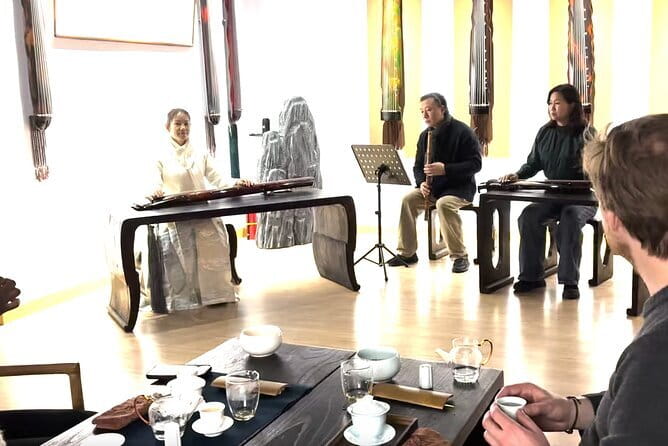
The supplied information also refers to hanfu, traditional Chinese clothing. You may have the opportunity to wear it during the session. This adds a visual element to the tea, music, and calligraphy, and it can make photographs feel more connected to the setting.
Hanfu is not listed as a separate guaranteed inclusion in the main tour details, so I would treat it as an available feature rather than the central reason to book. If wearing traditional clothing is especially important to you, confirm the arrangement when your booking is confirmed.
The clothing also helps explain the style of the activity. This is built around the image of the Chinese scholar’s study, where music, calligraphy, and tea were connected forms of personal cultivation. You do not need to share that background to enjoy the session, but knowing it gives the three activities more shape.
Same city, a very different cup:
- One-Day Hangzhou Dragon Well Tea Culture & West Lake Private Tour
★ 5.0 · 98 reviews - Tea Tasting and Pairing Concept Workshop
★ 5.0 · 57 reviews - Biking Real Shanghai& Tea Tasting Experience
★ 4.5 · 45 reviews - Tea Village in lost Town and Buddha 1 day tour
★ 5.0 · 32 reviews
Why the $15 price is unusually good value

At $15 per person, the cost is the strongest practical argument for this activity. The price includes the traditional instrument performance, use of the guqin, tea ceremony participation, tea or coffee, and an English guide. You also receive instruction in calligraphy and a chance to play a simple guqin melody.
Comparable cultural sessions can become expensive when tea tasting, music, and a workshop are booked separately. Here, the three parts are gathered into one two-to-three-hour visit. That makes it especially useful if you have limited time in Beijing and want more than a single demonstration.
Low cost does not mean you should expect a grand historic venue or a full-day program. The meeting point is on Huagong Road, and no famous palace, temple, or major attraction is included. You are paying for instruction and participation, not for admission to a major landmark.
That distinction helps set the right expectations. If your priority is the Forbidden City, the Great Wall, or a formal concert hall, choose another activity. If you want direct contact with traditional arts at a modest price, this offers plenty for the money.
Group size, timing, and getting there

The maximum group size is 12 people. That is small enough to make the hands-on sections workable, particularly when several people need help holding the brush or trying the guqin.
A small group also supports the quiet mood. You are less likely to feel as though you are watching from the back of a large room. The activity may be comfortable for people who do not enjoy loud or crowded programs.
The meeting point is Hua Gong Lu, Huagong Road, in Chaoyang District, Beijing. The activity ends back at the same place. It is near public transportation, but the information provided does not identify a specific station or give a transfer route, so check the exact meeting instructions after booking.
Confirmation is sent within 48 hours, subject to availability. The activity is booked, on average, 44 days ahead, which suggests that planning early is sensible if your Beijing dates are fixed. The maximum group size is limited, and the experience requires a minimum number of people to operate.
Service animals are allowed, and most people can participate. No special fitness level is stated. The main demands are sitting, listening, using a brush, and taking part in simple demonstrations.
Who will enjoy this Beijing cultural activity
I would recommend it most strongly to you if you want:
- A low-cost introduction to Chinese traditions
- A small-group activity away from major sightseeing crowds
- Hands-on cultural instruction rather than a performance alone
- A calm break during a busy Beijing itinerary
- A distinctive date or family activity
- An approachable first encounter with the guqin
- A personal calligraphy piece to keep
It is also a good choice for musicians. The guqin’s sound, construction, and character-based notation offer details that a standard tea tasting would not provide.
You may want to skip it if you need constant action, outdoor sightseeing, or a formal historical tour. The experience is deliberately measured. Its appeal lies in focus and quiet, so the wrong expectations could make it feel underpowered.
Booking details and cancellation advice

The activity is supplied by ChiNice Travel and uses a mobile ticket. You can cancel for a full refund if you do so at least 24 hours before the local start time. Cancellations made within 24 hours are not refunded, and changes during that period are not accepted.
If the minimum number of people is not reached and the activity is canceled, you are offered another date or experience, or a full refund. Keep the confirmation available on your phone and check the meeting instructions once the booking is confirmed.
Should you book it?
I would book this if you want a compact, affordable cultural session that lets you do more than watch. The strongest reasons are the specialist guqin performance, the chance to try the instrument, the calm tea instruction, and the calligraphy piece you make yourself.
The $15 price makes the decision easy for most visitors, provided you are already planning to be in the Chaoyang area. Just remember that this is not a landmark tour, a meal, or a full historical lecture. It is a focused introduction to three connected arts, best suited to a curious person who values quiet instruction and direct participation.
FAQ
Where does the experience take place?
It takes place at Huagong Road, Hua Gong Lu, in Chaoyang District, Beijing, China.
How long does the activity last?
The experience lasts approximately two to three hours. The scheduled itinerary lists three hours.
What activities are included?
You take part in a tea ceremony, watch a traditional guqin performance, try playing a simple melody, and practice Chinese calligraphy.
Is an English guide included?
Yes. An English guide is included.
How large is the group?
The activity has a maximum of 12 participants.
Is food included?
Tea and coffee are included, but lunch and dinner are not included. Personal purchases are also separate.
Can I cancel for a full refund?
Yes. You can receive a full refund if you cancel at least 24 hours before the local start time.
Is the activity suitable for most people?
Yes. Most people can participate, and service animals are allowed. The activity is near public transportation and ends back at the meeting point.
More Tea and Calligraphy Workshops in China
- Beijing Hands-On Culture Tour: Tea, Instrument, Calligraphy
★ 5.0 · 6 reviews - Xi’an Calligraphy & Tea Ceremony – Dive into Ink & Brush Artistry
★ 5.0 · 4 reviews - Xi’an Chinese Calligraphy Workshop: Ink Art & Tea Tasting
★ 5.0 · 4 reviews - Beijing:Learn Calligraphy & Enjoy Kung Fu Tea Ceremony
★ 5.0 · 2 reviews
Fresh tea listings around China
- Chongqing 1941 theatre: Tea Art Performance with Folk Art★ 3.8 · 8 reviews
- Beijing:Learn Calligraphy & Enjoy Kung Fu Tea Ceremony★ 5.0 · 2 reviews
- Beijing: Temple Of Heaven+Tai Chi Class+Tea Ceremony★ 5.0 · 8 reviews
- Beijing Hands-On Culture Tour: Tea, Instrument, Calligraphy★ 5.0 · 6 reviews
- Beijing: Chinese Culture Tea Ceremony Reservation Service★ 4.8 · 4 reviews
- Qixianfeng Tea Plantation Tour in Yangshuo★ 4.6 · 4 reviews
- 3 hours Xi’an Mahjong Class with Local Tea★ 5.0 · 2 reviews
- Xi’an Calligraphy & Tea Ceremony – Dive into Ink & Brush Artistry★ 5.0 · 4 reviews
Tea Ceremony Experiences, compared.
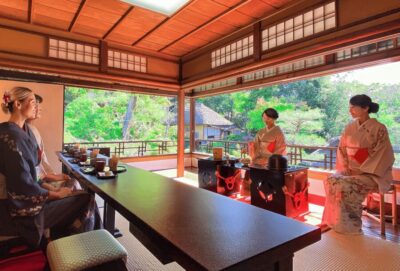
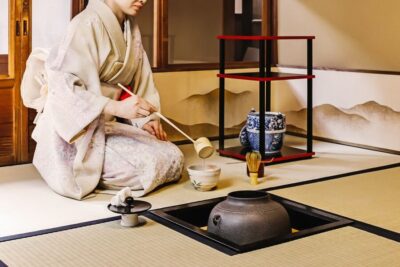
Kyoto: Tea Ceremony in a Traditional Tea House in Kiyomizu
Read our review →
Kyoto: 45-Minute Tea Ceremony Lesson Experience
Read our review →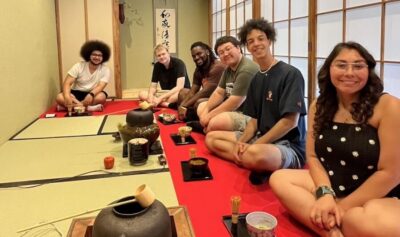
Kyoto: Table-Style Tea Ceremony at a Kyo-Machiya
Read our review →
Browse the lists this tour appears in