
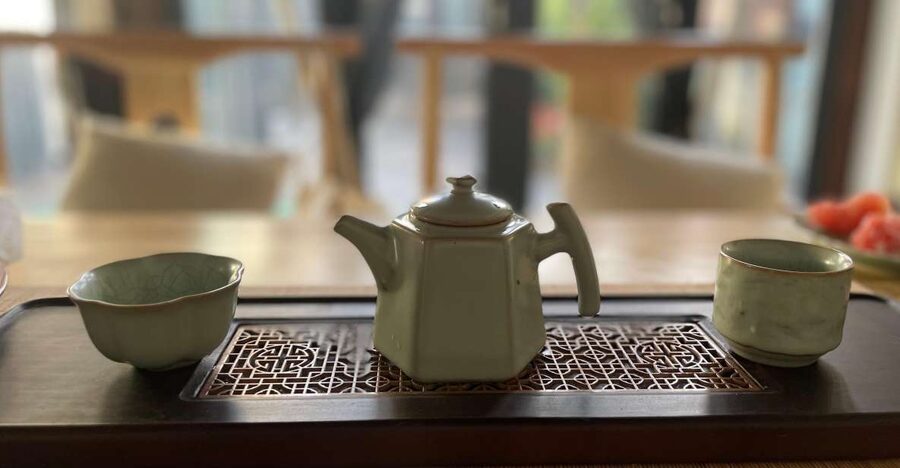
Review · TEA CEREMONY EXPERIENCES
Chinese Tea ceremony in Beijing Hutong courtyard
Near the Forbidden City, a quiet courtyard offers a welcome change from Beijing’s grand gates and crowded sightseeing routes. You sit with local hosts, choose a tea, and learn why Chinese tea is brewed in small pours rather than treated like a quick mug of hot water. The setting feels personal, with room for conversation about tea, Beijing, and daily life in a hutong.
I like the small maximum group of four, which gives the hosts time to show you how to hold the cup, rinse the leaves, and brew each tea properly. I also like the location: you are only a short walk from the Forbidden City, the Imperial Ancestral Temple, and the Pudusi inheritance area. The main drawback is practical rather than cultural: the listed price is $31 per person, but another detail says an extra 100 RMB per person may be charged, so confirm the final cost before booking.
Key points at a glance
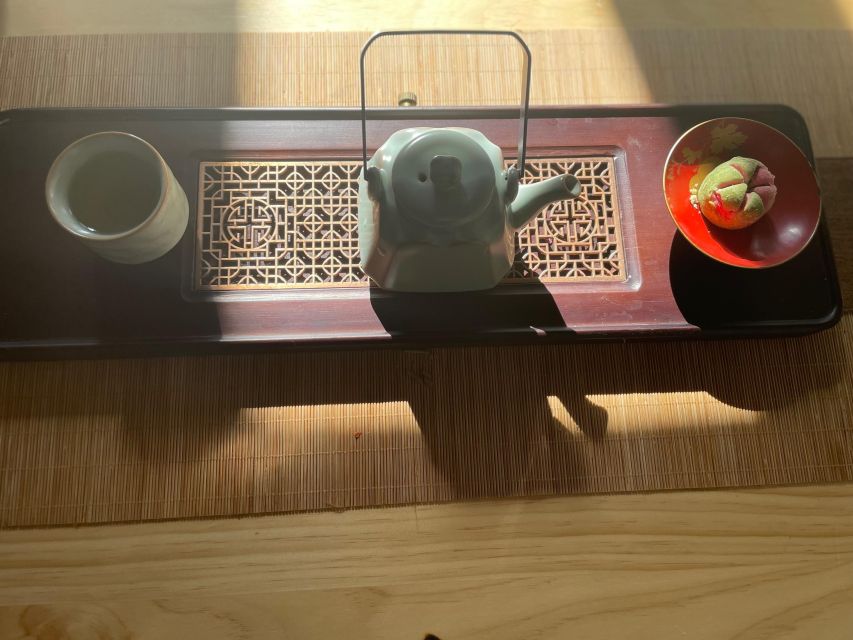
- Four tea styles to choose from: Try green, black, oolong, or Pu’er tea, depending on what appeals to you.
- A courtyard close to the Forbidden City: The tea workshop is described as about 150 meters from the Forbidden City’s east gate, while another meeting detail says 800 meters west of an exit gate. Confirm the exact meeting point.
- A real lesson, not just a tasting: You learn about brewing temperature, timing, cup handling, seasons, and the place tea holds in Chinese culture.
- Local family connection: The host family has lived in the hutong for generations, giving the conversation a useful link to Beijing life.
- One hour, small group: This fits neatly before or after sightseeing and limits the group to four participants.
- Complimentary snacks included: Tea is served with small snacks designed to accompany the tasting.
A quiet tea break beside Beijing’s biggest sights
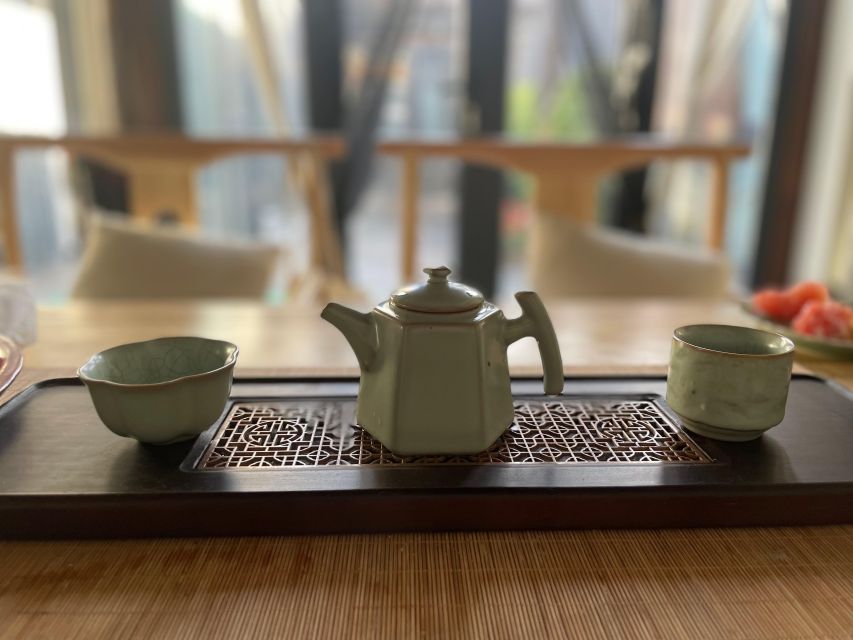
The appeal here is the contrast. The Forbidden City is one of Beijing’s great monumental sights, with broad courtyards, imperial halls, and a steady stream of people. A traditional hutong courtyard offers a much smaller view of the city: tea tools on a table, a host explaining a ritual, and a conversation about how local people live.
The workshop takes place in the center of Beijing, close to several historic sites. The stated location is 150 meters from the east gate of the Forbidden City. Another booking detail describes it as 800 meters west of the exit gate, so you should not rely on a vague map pin or assume every entrance is the same. Ask for the exact gate and meeting instructions before setting out.
That location makes the activity easy to pair with a day of sightseeing. You might schedule it before entering the Forbidden City, after your visit, or between nearby historic stops. Since the activity lasts only one hour, it does not require you to give up half a day.
The setting matters as much as the tea. You are not simply seated in a modern shop with a scripted tasting. The experience takes place in a hutong courtyard, a traditional residential form that offers a glimpse of Beijing beyond the imperial monuments. The hosts can also talk about local life, since their family has lived in the area for generations.
More Chinese Tea Ceremonies in China
- One-Day Hangzhou Dragon Well Tea Culture & West Lake Private Tour
★ 5.0 · 98 reviews - Traditional Chinese Tea Ceremony Experience
★ 4.7 · 74 reviews - Authentic Hangzhou Longjing Tea Culture Experience Tour
★ 5.0 · 32 reviews
Choosing between green, black, oolong, and Pu’er
You can choose from four broad tea types: green tea, black tea, oolong tea, and Pu’er tea. The exact selections can vary, but the range gives you a useful way to compare different flavors and brewing methods in one sitting.
Green tea is often associated with a lighter, fresher taste. Black tea tends to be fuller and more familiar to people who usually drink tea with milk or lemon, though the Chinese style may be served differently. Oolong sits between green and black in many tasting experiences, while Pu’er brings a more distinctive character and is often treated as a tea with its own traditions.
The point is not to rush through four cups. Chinese tea preparation often uses a smaller vessel and several short infusions. That means you can notice how the flavor changes as the leaves open and the water passes through them again.
One of the most useful lessons is that good tea is not made by pouring boiling water over leaves and waiting three minutes. The hosts explain that water temperature, steeping time, and the amount of tea all affect the result. You also get to try the method yourself, which makes the information easier to remember.
For someone who already loves tea, this is the strongest part of the activity. You can ask about flavor, brewing, and the difference between tea types without needing to spend hours in a formal class. For someone who is not a serious tea drinker, the tasting still works because it gives you a simple comparison rather than asking you to arrive with specialist knowledge.
Learning the small gestures of Chinese tea culture
A tea ceremony is not just about taste. The hosts explain how to hold the teacup with grace, how the tea is poured, and why certain movements matter. These details can seem small, but they help you understand that tea in China is also about courtesy, attention, and the relationship between host and guest.
You may learn about the seasons in which different teas are traditionally enjoyed and how tea is viewed in relation to the body. One session also covered the idea that some teas suit particular times of year. This adds context to the tasting, though it is best to treat health-related comments as cultural knowledge rather than medical advice.
The hosts also explain the history and meaning behind the ceremony. The lesson is delivered in English, and the experience is designed for a small group. That matters because tea preparation involves looking closely at the tools and asking questions as you go.
I like that the ceremony does not appear to be limited to watching. You are shown how to prepare the tea and then have the chance to try it yourself. By the end, you should have a practical method you can use at home, even if you do not buy any special equipment.
Meeting the local hosts in a generations-old hutong
The people are central to the experience. Bayi Teahouse uses English-speaking hosts, and Limeng is named as one of the hosts associated with the activity. The hosts are described as friendly and easy to talk with, which helps turn the tasting into a cultural exchange rather than a lecture.
The family connection to the hutong gives the conversation a useful anchor. You can ask about the neighborhood, the history of Beijing, and local daily life. The hosts also discuss traditional tea customs, so the hour moves between personal stories and broader cultural explanation.
That personal contact is especially valuable if you have already seen the main imperial sights. The Forbidden City explains the city from the viewpoint of emperors and court life. A hutong courtyard shows a more ordinary side of Beijing, even if only for a short time.
The small group limit of four helps here. A large group would make a courtyard tea ceremony feel less intimate and would give each person less time to handle the cups or ask questions. With four participants at most, you can expect a more direct exchange.
There is one point to keep in mind. A small-group experience depends partly on the mix of people who attend. If you are hoping for a completely private session, the activity is listed as a small group rather than an exclusive booking. Still, four people is a fairly intimate size.
More Tea Ceremonies in China
- Beijing Culture: Tea Ceremony, Heritage Instrument & Calligraphy
★ 5.0 · 57 reviews - Beijing Culture Event: Tradition Music, Tea Ceremony, Calligraphy
★ 5.0 · 11 reviews - Beijing: Temple Of Heaven+Tai Chi Class+Tea Ceremony
★ 5.0 · 8 reviews - Beijing: Chinese Culture Tea Ceremony Reservation Service
★ 4.8 · 4 reviews
Snacks that make the tasting feel complete
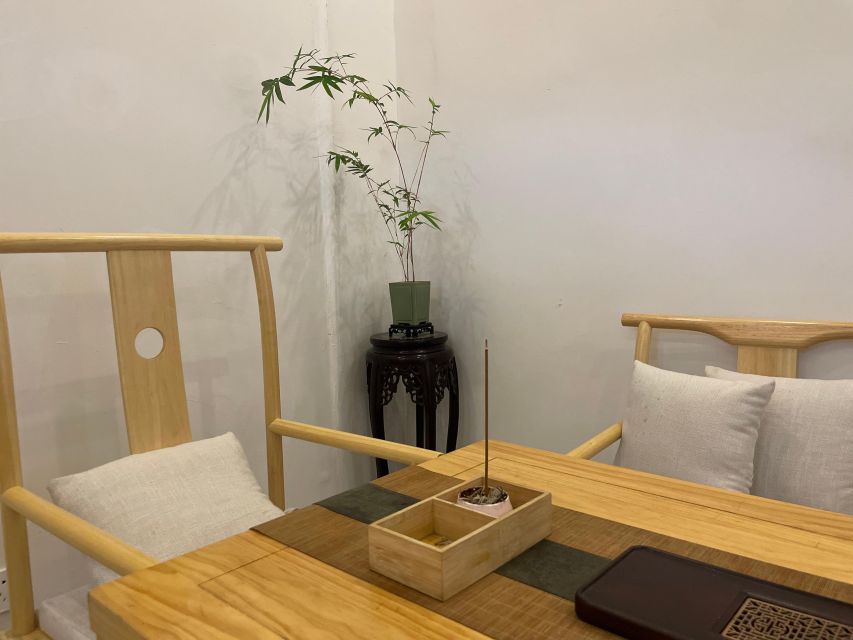
Complimentary snacks are served with the tea. They are not presented as a full meal, so plan to eat elsewhere if you are hungry. Their role is to accompany the tea and help you notice how different flavors work together.
One session included beautifully crafted tea snacks that matched the ceremony. Details of the snacks can change, but the addition is useful because a tea tasting can feel thin without something to eat. Snacks also give you a chance to pause between brews and continue the conversation.
I would treat them as part of the cultural presentation rather than a reason to book the activity on their own. The real value is the combination of tea, instruction, and setting.
Adding a short hutong walk
The experience can end with a short walk through a nearby hutong. One route led just steps from the Forbidden City into a quieter lane, giving the tea ceremony a stronger sense of place.
This walk is not a replacement for a full Beijing neighborhood tour. It is a brief extension of the courtyard visit, useful for helping you notice the contrast between the major monument and the residential lanes around it. If you have time, it can also help you orient yourself for nearby sightseeing.
The surrounding area includes the Imperial Ancestral Temple and the Pudusi inheritance area, along with other historic sites. Since the workshop is so central, you can build your own walking route around it. Check opening times and ticket requirements separately for any attraction you plan to visit.
How the $31 price measures up
At $31 per person, this is not the cheapest way to drink tea in Beijing. You could buy a cup of tea elsewhere for far less. The price makes more sense if you want a guided cultural lesson, a traditional courtyard setting, English explanation, snacks, and direct contact with a local host.
The group size improves the value. A four-person maximum means you are paying for more personal attention than you would receive at a large demonstration. The one-hour duration also makes the cost easier to fit into a busy sightseeing day.
A family of four may feel the price quickly, especially if the activity is treated as a simple tea stop. The experience is more worthwhile for people who care about the explanation, the brewing lesson, and the conversation with the hosts.
There is an important cost question to settle before booking. The main price is shown as $31 per person, while the activity details also say 100 RMB per person will be charged. Because those two figures are not explained together, ask whether the 100 RMB is already included, payable locally, or connected to a particular option.
Timing, access, and meeting details
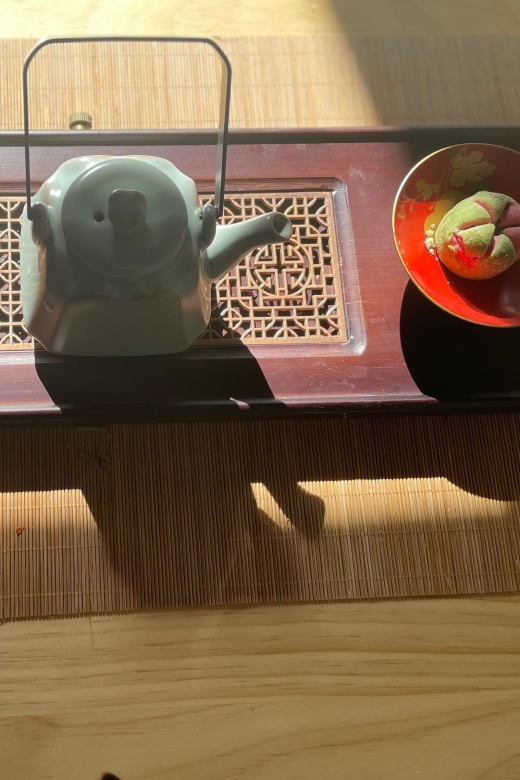
The activity lasts one hour, with starting times based on availability. That makes it easy to place around a Forbidden City visit, though you should allow extra time for walking to the correct gate and finding the courtyard.
Pickup is included, and you are asked to wait in your hotel lobby 10 minutes before the scheduled pickup time. The information also describes a central meeting location near the Forbidden City, so confirm whether your booking uses hotel pickup or a direct meeting point.
The experience is listed as wheelchair accessible. Still, a hutong courtyard and nearby lanes can have different surfaces and access points, so it is sensible to confirm the exact route and entrance if mobility is a concern.
English instruction is available. This is important because the value of the activity depends on the explanations. You are not only tasting tea, you are learning how to prepare it and what the ritual means.
Cancellation is free up to 24 hours in advance for a full refund. You can also reserve now and pay later, which is useful if your Beijing plans may change.
Who will enjoy this hour most
I would recommend this to you if you want a calm cultural activity close to the Forbidden City. It is a good fit for tea drinkers, curious first-time visitors, couples, solo visitors, and families who enjoy conversation more than a fast-moving tour.
It also suits people who like practical lessons. You leave with a better idea of how to brew tea properly, how to handle the cup, and how to compare tea types. That gives the experience more lasting value than a tasting where you simply drink and move on.
You do not need to be a tea expert. One attendee who was not especially interested in tea still enjoyed the flavors and valued the conversation with the hosts. The setting and personal exchange carry much of the experience.
I would be less likely to recommend it if you want a full meal, a long neighborhood walk, or an extensive tour of Beijing’s tea trade. This is a focused one-hour encounter, not a broad city tour.
My booking advice
Book this Chinese tea ceremony if you want to slow down near the Forbidden City and see a more personal side of Beijing. The strongest reasons are the small group, the generations-old hutong connection, the chance to brew the tea yourself, and the easy access to major historic sights.
Before paying, confirm three things: the exact meeting gate, whether hotel pickup applies to your booking, and how the additional 100 RMB charge relates to the $31 price. If those details are clear, the activity offers a thoughtful cultural break at a reasonable price for anyone who values local contact and useful instruction.
FAQ
Where does the Chinese tea ceremony take place?
The tea workshop is in a hutong courtyard in central Beijing, near the Forbidden City. The location is described as about 150 meters from the Forbidden City’s east gate, while another detail places it 800 meters west of an exit gate, so confirm the exact meeting point.
How long does the tea ceremony last?
The activity lasts one hour.
Which teas can I choose from?
You can choose from green tea, black tea, oolong tea, and Pu’er tea. The available choices may depend on the session.
Is the tea ceremony taught in English?
Yes. English instruction is available.
How many people are in each group?
The activity is limited to four participants.
Are snacks included?
Yes. Complimentary snacks are served with the tea.
Is hotel pickup included?
Pickup is included, and you should wait in your hotel lobby 10 minutes before the scheduled pickup time. Confirm the pickup details with the provider because the activity also gives a central meeting location.
Is the experience wheelchair accessible?
Yes, it is listed as wheelchair accessible.
Can I cancel for a full refund?
Yes. You can cancel up to 24 hours in advance for a full refund. You can also reserve now and pay later.
Fresh tea listings around China
- Chongqing 1941 theatre: Tea Art Performance with Folk Art★ 3.8 · 8 reviews
- Beijing:Learn Calligraphy & Enjoy Kung Fu Tea Ceremony★ 5.0 · 2 reviews
- Beijing: Temple Of Heaven+Tai Chi Class+Tea Ceremony★ 5.0 · 8 reviews
- Beijing Hands-On Culture Tour: Tea, Instrument, Calligraphy★ 5.0 · 6 reviews
- Beijing: Chinese Culture Tea Ceremony Reservation Service★ 4.8 · 4 reviews
- 3 hours Xi’an Mahjong Class with Local Tea★ 5.0 · 2 reviews
- Xi’an Calligraphy & Tea Ceremony – Dive into Ink & Brush Artistry★ 5.0 · 4 reviews
- Xi’an Noodle Making and Tea Tasting Experience★ 5.0 · 6 reviews
Tea Ceremony Experiences, compared.
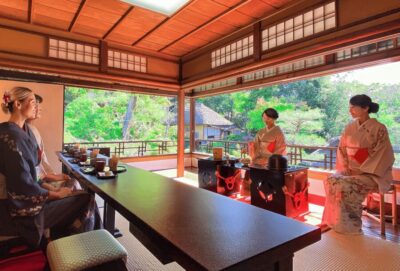
Kyoto: Tea Ceremony in a Traditional Tea House in Kiyomizu
Read our review →
Kyoto: 45-Minute Tea Ceremony Lesson Experience
Read our review →
Kyoto: Table-Style Tea Ceremony at a Kyo-Machiya
Read our review →
Browse the lists this tour appears in