
Review · TEA CEREMONY EXPERIENCES
Kyoto Gion Tea ceremony & Wabi-sabi Walking Tour
Kyoto’s tea ceremony is not simply a lesson in making matcha. This Gion walking tour uses temples, pottery, Japanese paintings, and a dry Zen garden to help you understand wabi-sabi before you sit down for tea. The idea is to notice quiet beauty, natural materials, age, and imperfection rather than simply admire a polished performance.
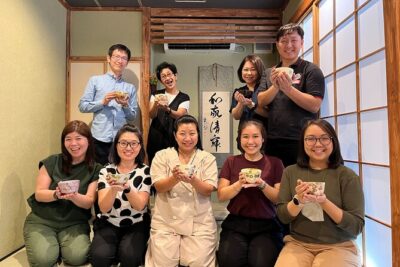
I like two things here: the walking route gives the ceremony context, and the small group lets you ask questions as you go. You also get temple admission, a seasonal sweet, a tea ceremony, and photos for $92, which is fair for a three-and-a-half-hour Kyoto experience.
The main concern is timing. One booking had conflicting start information, and the participant missed the tea ceremony after arriving with only 90 minutes available. Check your final meeting time carefully, arrive early, and do not expect a refund if you miss the group.
Key points before you book
- Kenninji and Entoku-in add substance: You see temples and art before learning how they relate to tea.
- Wabi-sabi is taught through objects: Expect tea bowls, paintings, a dry garden, and quiet observation rather than only a spoken lecture.
- The tea ceremony comes at the end: The earlier walk prepares you to notice the bowl, sweets, utensils, and movements.
- Groups are limited to seven: This suits you if you want room for questions without booking a private tour.
- Masa may lead your departure: He has been praised for clear explanations, a friendly manner, and helpful guidance.
- The route is not wheelchair-friendly: Some locations cannot accommodate wheelchairs or strollers, and the tour includes outdoor walking.
Why this Gion tea tour feels different
Many Kyoto tea experiences begin and end inside a tea room. This one takes a longer route. You meet outside Exit 5 of Gion-Shijo Station, then walk through Gion and Higashiyama before the formal ceremony.
That order matters. If you sit down with a bowl of matcha without any background, you may notice the taste and the graceful movements but miss the ideas behind them. Here, you first look at old streets, temple spaces, art, and pottery. By the time you reach the tea room, you have a better sense of why a simple bowl or a slightly uneven utensil can matter.
The guide explains tea culture in English, with attention to the relationship between nature, simplicity, and restraint. The aim is not to turn you into a tea expert in 210 minutes. It is to give you enough cultural footing to see the ceremony as more than a photo opportunity.
That makes this a good choice if you enjoy understanding why a tradition works. If you want only a quick cup of matcha and a short demonstration, this tour may feel longer than necessary.
More Tea Ceremonies in Kyoto
- Kyoto: Tea Ceremony in a Traditional Tea House in Kiyomizu
★ 4.9 · 3,519 reviews - Kyoto: Tea Ceremony Ju-An at Jotokuji Temple
★ 4.9 · 3,207 reviews - Kyoto: 45-Minute Tea Ceremony Lesson Experience
★ 4.3 · 2,378 reviews
Meeting at the Izumo no Okuni statue
The meeting point is the Izumo no Okuni statue, directly outside Exit 5 of Gion-Shijo Station on the Keihan Line. Look for a guide holding an orange Magical Trip signboard.
I would arrive early. The tour starts on time, and the conditions are strict if you miss the group. You cannot join later, reschedule, or receive a refund after missing the departure, so allow time to find the station exit and locate the statue.
The starting point is useful for a Gion walk because you begin near one of Kyoto’s best-known historic districts. You do not need to arrange separate transport between the main stops. The route is on foot, so wear shoes you can walk in and dress for the season.
Some departures may be led by Masa. He has earned praise for detailed explanations, practical help, and a warm personality. Guides can vary, but the experience is designed around an English-speaking local guide rather than a self-guided route.
Gion: a useful introduction to Kyoto tea culture
The first part of the walk takes about 30 minutes through Gion. This is not just a transfer to the temple. Your guide introduces the district and begins explaining how tea fits into Japanese culture.
Gion gives the tour a fitting opening. It is a historic Kyoto neighborhood where traditional architecture and long-standing customs still shape the atmosphere. The guide uses the streets to set up the larger theme of the day: Japanese beauty is not always loud, new, or decorative.
You may stop at a well-known matcha shop during this part of the route. The shop helps connect tea as a daily product with tea as a formal art. You can ask about matcha, its place in Kyoto, and the difference between drinking tea casually and taking part in a ceremony.
Do not expect a long shopping stop or a tasting menu. The point is to observe and learn before the formal tea service. The route also keeps moving, so comfortable shoes and weather-ready clothing matter.
Kenninji, Kyoto’s oldest Zen temple
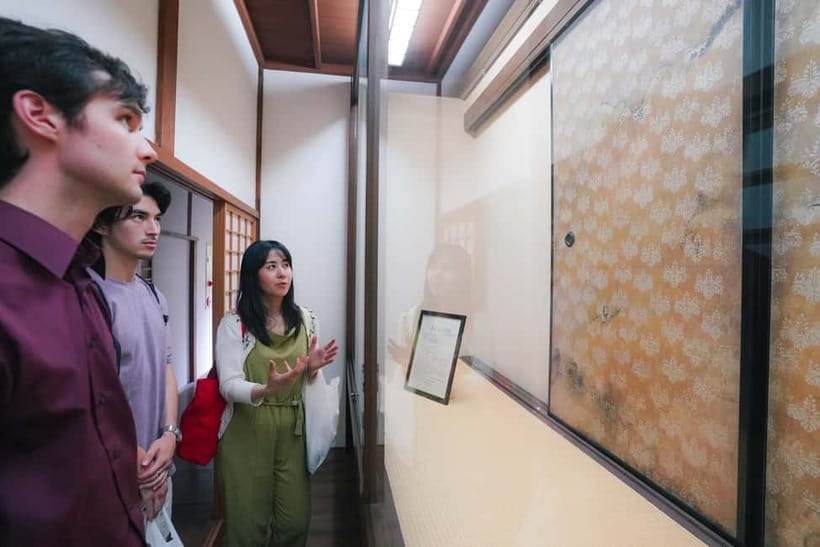
The next major stop is Kenninji, described as Kyoto’s oldest Zen temple. You spend about 30 minutes here with a guided visit.
Kenninji gives the tour a strong historical and spiritual setting. Zen ideas have influenced the development of Japanese arts, including tea, so this temple visit helps explain why quiet attention and disciplined movement matter in a tea room.
The temple is valuable here not simply because it is old. It gives you a place to slow down and consider the connection between architecture, gardens, art, and tea practice. Your guide explains the background rather than leaving you to guess why each detail matters.
As with any walking tour built around temples, the pace can be less predictable than a single-site visit. You are moving through public cultural sites, and the group may need to keep to a schedule. If you want a long, independent look at every room, you may prefer visiting Kenninji separately.
Still, the 30-minute stop is well chosen for this theme. It gives you enough time to understand the setting without allowing the temple visit to swallow the entire afternoon.
Same city, a very different cup:
- Kyoto: Table-Style Tea Ceremony at a Kyo-Machiya
★ 4.9 · 1,211 reviews - Kimono Tea Ceremony at Kyoto Maikoya, NISHIKI
★ 5.0 · 911 reviews - Kyoto: Kimono Tea Ceremony at Orizuruya Gion
★ 4.9 · 618 reviews - Kyoto: Tea Ceremony in 100-year-old Kyo-Machiya Townhouse
★ 4.8 · 546 reviews
Higashiyama stops: tea, pottery, and Japanese art
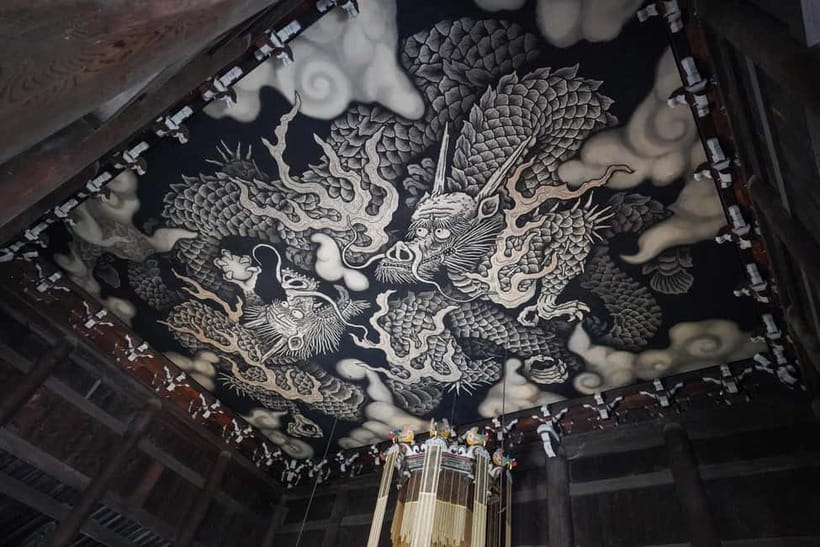
After Kenninji, the tour continues through Higashiyama, with several shorter stops of about 10 minutes each. These include a tea-related stop, a traditional pottery shop, and a place where you can view Japanese paintings and other art connected to the tea tradition.
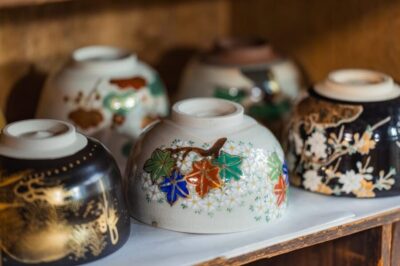
The pottery stop is especially important. Tea bowls are not disposable props. Their shape, texture, color, and seasonal character affect the experience. The guide explains wabi-sabi through the objects themselves, which is more useful than offering a quick dictionary definition.
You may see bowls that are valued for irregularity, simplicity, or signs of age. The point is not that every imperfect object is automatically beautiful. Rather, the tea tradition gives attention to materials, craftsmanship, use, and the passing of time.
The short shopping stop does not mean you must buy anything. You can treat it as a chance to look closely at the tools used in Japanese tea culture. If you like ceramics, this portion may be one of the most rewarding parts of the tour. If shopping is not your interest, it remains brief.
These Higashiyama stops also make the walk feel active. You are not sitting through a long lecture. You hear an explanation, look at an object or artwork, then continue through the neighborhood.
Entoku-in and the quiet side of wabi-sabi
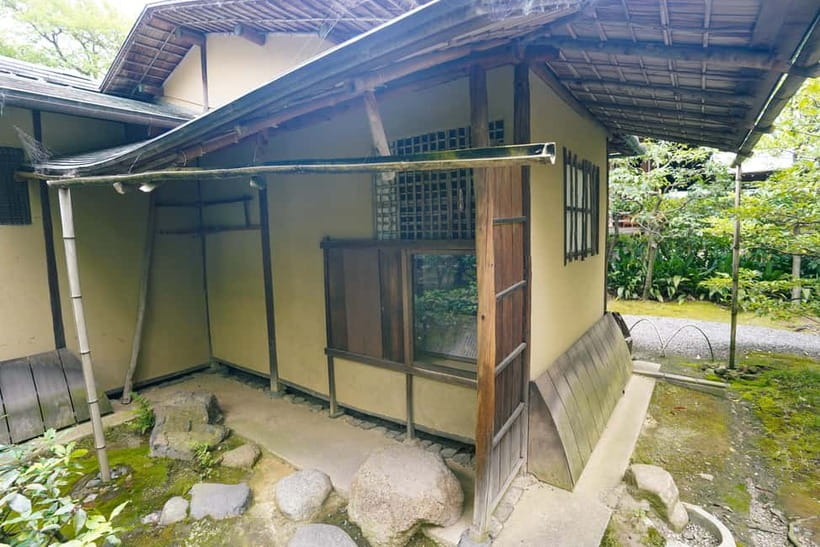
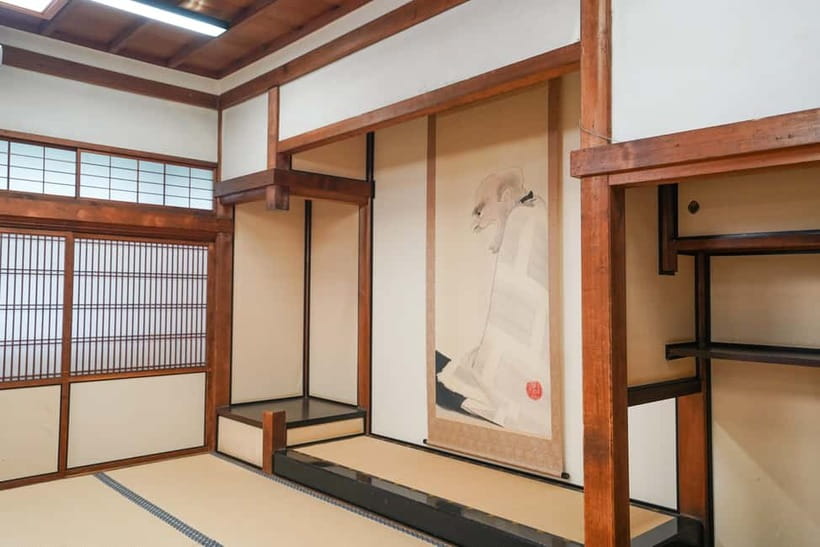
Entoku-in receives about 30 minutes of guided attention. This temple is a key stop because you view Japanese paintings and a karesansui, or dry Zen garden.
A dry garden has no flowing water, yet rocks and raked gravel suggest natural forms. That makes it a useful place to discuss wabi-sabi. You are encouraged to notice suggestion rather than spectacle, and restraint rather than decoration.
This is where the tour’s theme becomes easier to grasp. Wabi-sabi is often reduced to the idea of imperfect beauty, but the experience works better when you see it in several settings: an old temple, a quiet garden, a hand-shaped tea bowl, and a seasonal sweet.
The guide helps you connect those pieces. You do not need prior knowledge of Zen, Japanese art, or tea ceremony customs. The explanations are intended for first-time visitors, but the range of objects and places should still give experienced Japan visitors something to consider.
Entoku-in also provides a slower pause in the middle of the walk. Kyoto can become tiring, especially in hot or cold weather, and this temple stop offers a more reflective stretch before the final ceremony.
The 45-minute tea ceremony
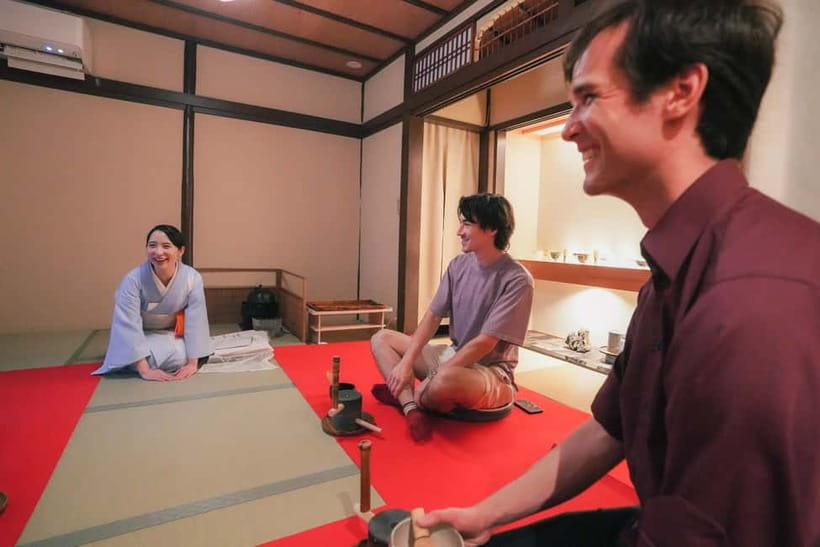
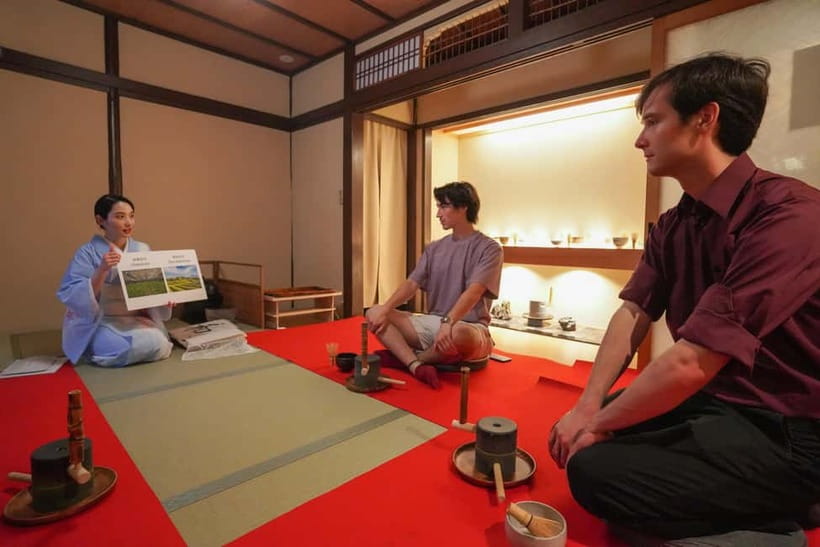
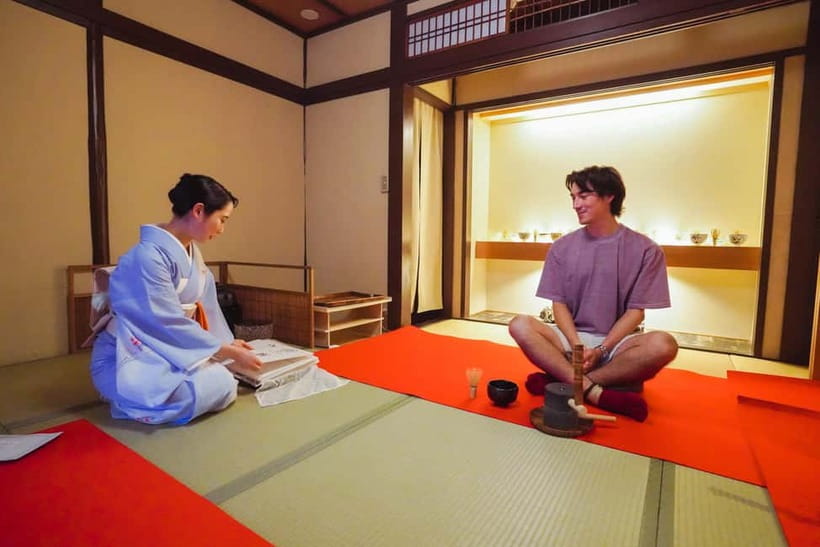
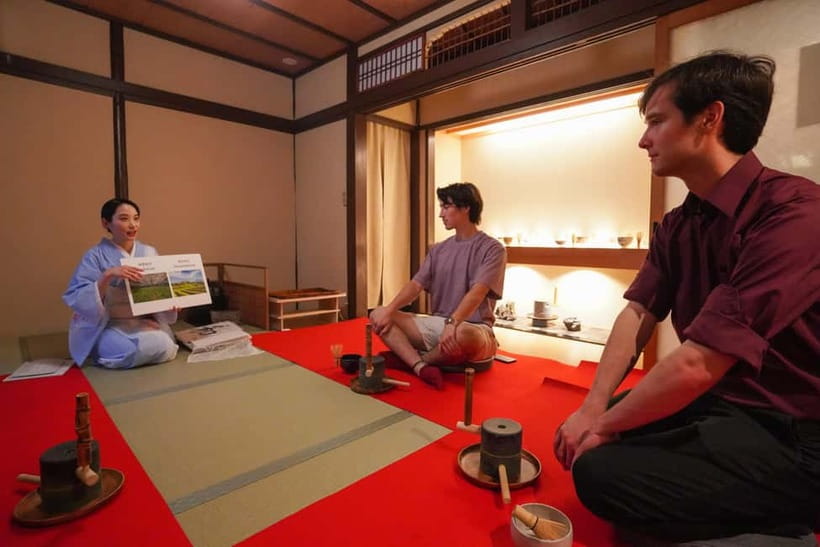
The tea ceremony lasts about 45 minutes and takes place in Higashiyama under a tea master. This is the emotional center of the tour, but it arrives after the city walk for a reason.
You choose a tea bowl according to the season and your taste. That small decision gives you a direct connection to the objects discussed earlier. Instead of hearing only that utensils matter, you handle the choice yourself.
A small seasonal Japanese sweet is served with the matcha. The sweet is not merely an extra snack. In the tea tradition, food balances the bitterness of the tea and helps mark the season. You receive the matcha and learn about the process while taking part in a formal setting.
The ceremony is authentic in the sense that it presents tea as a cultural practice with rules, gestures, utensils, and an underlying philosophy. It is not a full apprenticeship, and you should not expect to master every movement. Your role is to observe, listen, drink, and take part respectfully.
The earlier walk makes this final portion more satisfying. You have already seen bowls and gardens, heard about wabi-sabi, and considered how nature shapes Japanese aesthetics. The tea room then brings those ideas together in a small, focused space.
Children must be at least 6 years old to take part in the ceremony. Younger children can join the wider tour, but an adult must remain outside the tea facility with them during that portion.
What $92 includes, and what it does not
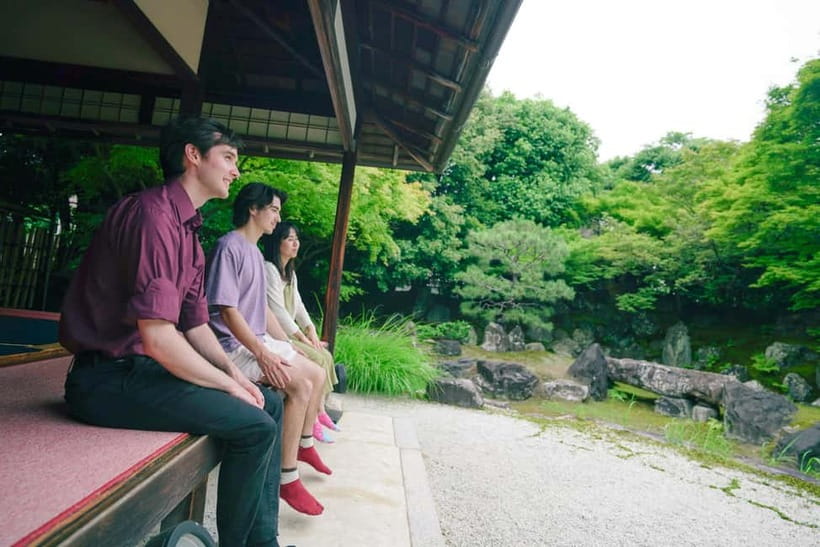
The price is $92 per person. For that amount, you receive a 210-minute guided experience, admission to two temples, the tea ceremony, matcha with a small seasonal snack, an English-speaking guide, and photos taken during the tour.
That is a reasonable package if you would otherwise pay separately for temple visits and a tea experience. You also get the benefit of a planned route through Gion and Higashiyama, plus explanations that connect the stops.
The value is strongest for first-time visitors who want cultural context. You are paying for the guide’s interpretation as much as for the tea itself. If you already know Japanese tea culture well and mainly want matcha, a shorter tea-only activity could cost less and suit you better.
The group size is limited to seven people. That is small enough for questions and personal guidance, while still being a shared tour rather than a private booking. The price does not require you to pay for the guide’s food or drinks.
A current rating of 4.5 from seven ratings suggests a generally strong experience, but the small number does not guarantee that every departure will feel identical. The guide and group mix can affect the pace.
Timing, weather, and walking conditions
The tour takes three and a half hours, so plan it as a substantial half-day activity. Do not schedule a tight lunch reservation, train departure, or another timed attraction immediately afterward.
The most important practical tip is to confirm the start time in your final booking details. One participant received conflicting time information and had only 90 minutes available, missing the tea ceremony. That problem is avoidable if you check the confirmation and arrive at the statue early.
Kyoto’s weather can be severe. Summer temperatures may reach 40°C, while winter temperatures can fall to -5°C. Wear suitable layers, carry what you need for the forecast, and bring water in hot weather.
The route includes locations that are not accessible to wheelchairs or strollers. It is not suitable for wheelchair users. If you have limited mobility, ask before booking because the problem is not limited to the walking distance. Temple grounds, entrances, and the tea facility may present access limits.
Free cancellation and rescheduling are available until 24 hours before the start time. After that point, missing the tour is a serious risk, especially because the group cannot wait for late arrivals.
Who should book this Kyoto experience?
I would recommend it to you if you want a cultural explanation alongside sightseeing. It suits first-time Kyoto visitors, tea-curious visitors, couples, solo visitors, and small groups who prefer a local guide to a large bus tour.
It is also a good fit if you enjoy ceramics, gardens, temples, and quiet observation. The tour asks you to pay attention to small details, so it rewards curiosity more than speed.
Families can book with children 6 and older for the ceremony. Younger children may join the walk, but the adult supervision rule makes the tea portion less convenient for families with small children.
You may want another option if you use a wheelchair, need a stroller-friendly route, dislike walking, or want a quick tea demonstration with little explanation. You should also avoid booking it on a day when extreme weather would make several hours outdoors unpleasant.
Should you book it?
Book this tour if you want the tea ceremony to make more sense. The combination of Gion, Kenninji, pottery, Japanese art, Entoku-in, and a seasonal tea service gives you a fuller picture than a ceremony alone.
The strongest feature is the order of the experience. You learn to look first, then sit down for tea. Just confirm the start time, arrive early, wear practical shoes, and prepare for the weather.
At $92, it offers solid value for a small group and a 210-minute route with two temple admissions. It is not the cheapest way to drink matcha in Kyoto, but it gives you much more than a cup of tea.
FAQ
Where does the tour meet?
Meet in front of the Izumo no Okuni statue, directly outside Exit 5 of Gion-Shijo Station on the Keihan Line. The guide will hold an orange signboard marked Magical Trip Tour.
How long does the experience last?
The tour lasts 210 minutes, or three and a half hours.
What language is the tour offered in?
The live tour guide speaks English.
How large is the group?
The group is limited to seven participants, although other participants may join your departure.
Is the tea ceremony included in the price?
Yes. The price includes the tea ceremony, matcha, and a small seasonal snack.
Are temple entrance fees included?
Yes. Admission to two temples is included.
Can children join the tea ceremony?
Children must be at least 6 years old to take part in the tea ceremony. Younger children may join the tour, but one adult must stay outside the facility with them during the ceremony.
Is the tour wheelchair accessible?
No. The tour is not suitable for wheelchair users, and some locations are also unsuitable for strollers.
More Walking Tours in Kyoto
- Kyoto Tea Ceremony & Kiyomizu-dera Temple Walking Tour
★ 5.0 · 115 reviews - The Way of Tea: Kyoto Crafts, Hidden Temples & Wabi-Sabi Walk
★ 5.0 · 41 reviews - Matcha Grinding Experience and Walking Tour in Uji Kyoto
★ 5.0 · 26 reviews - Kyoto Tea Ceremony & Kiyomizu-dera Temple Walking Tour
★ 4.5 · 4 reviews
Fresh tea listings around Kyoto
- Traditional Tea Ceremony in Kyoto★ 4.5 · 3 reviews
- Kyoto: Authentic Tea Ceremony in a Small Group★ 5.0 · 7 reviews
- Uji Walking Tour – Byodo-in temple and Tea Ceremony from Kyoto★ 3.5 · 3 reviews
- Tea ceremony at Kyoto’s Zen Temple Teahouse★ 5.0 · 2 reviews
- Tea Ceremony Experience in Traditional Kyoto Townhouse★ 5.0 · 19 reviews
- Tea Ceremony in 150 Years Old Townhouse with Tables and Chairs★ 5.0 · 22 reviews
- Sencha-do the Japanese Tea Ceremony Workshop in Kyoto★ 5.0 · 21 reviews
- Silent Beauty of Kyoto Zen Walk and Tea Experience★ 5.0 · 2 reviews
Tea Ceremony Experiences, compared.
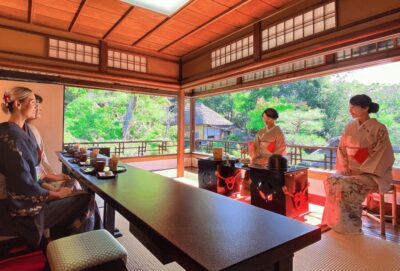
Kyoto: Tea Ceremony in a Traditional Tea House in Kiyomizu
Read our review →
Kyoto: 45-Minute Tea Ceremony Lesson Experience
Read our review →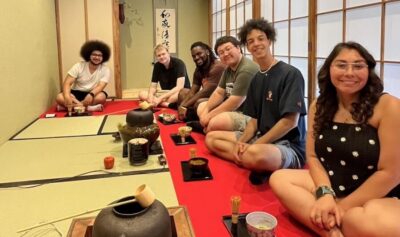
Kyoto: Table-Style Tea Ceremony at a Kyo-Machiya
Read our review →
Browse the lists this tour appears in