
Review · TEA CEREMONY EXPERIENCES
Kanazawa: Kenrokuen Tea Ceremony Experience
The best part of this one-hour Kenrokuen tea ceremony is the balance between watching and doing. You sit in a formal tea room at Kenrokutei, hear why each gesture matters, then prepare your own bowl of matcha with help. It is a short, visitor-friendly introduction rather than the three- or four-hour version practiced in full tea schools.
I like the clear English explanations, including the history tied to Lord Maeda, and the chance to taste wagashi from traditional confectioners. I also like the setting: you are inside Kenrokuen Garden, so you can pair a peaceful cultural lesson with one of Kanazawa’s essential sights. The main consideration is practical: the 320-yen garden admission is extra, and the tea room itself does not look out onto the garden.
Key points
- Watch a tea master perform the ceremony before trying the method yourself.
- Learn the meaning behind the movements, not only how to whisk matcha.
- Taste traditional wagashi sweets from established Japanese confectioners.
- Meet at historic Kenrokutei, once used to entertain important guests of the Maeda family.
- Request a chair if sitting on the floor is difficult.
- Allow time for Kenrokuen separately, since the tea room has no garden view.
What happens inside Kenrokutei
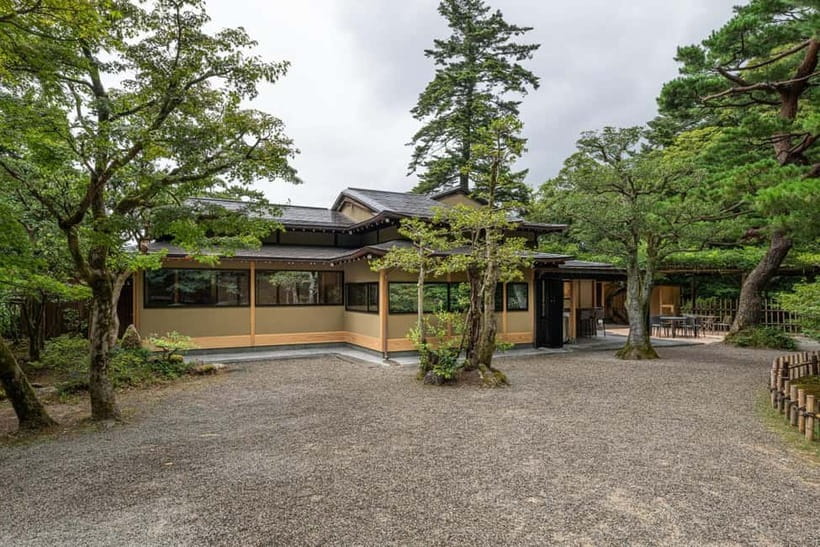
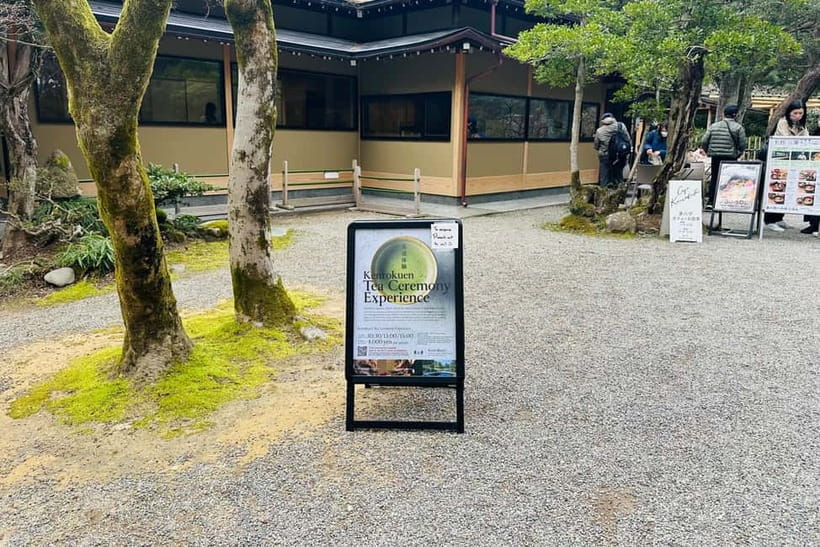
Find Kenrokutei in Kenrokuen Garden, in front of the fountain. The shop’s tea ceremony signboard gives further directions, so read it carefully when you arrive. The meeting-point wording can feel slightly broad, since the actual activity takes place inside the tea room rather than beside the fountain itself.
Kenrokutei is a historic building associated with the Maeda lords, who ruled the old Kaga domain. Important guests were entertained here, which gives the short activity a useful sense of place. You are not simply stopping at a modern café for a bowl of green tea. The room connects the ceremony to Kanazawa’s former ruling family and its long tradition of refined arts.
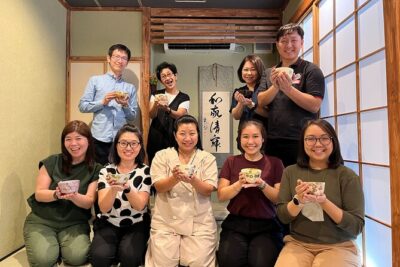
Once seated, an English-speaking guide explains the way of tea, including the basic behavior expected in the room. You do not need to arrive already knowing how to bow, where to place your hands, or how to receive the bowl. The instructions are designed for first-time participants.
The ceremony is held at the same time as other groups. That means this is not a private, silent lesson, but the format helps keep the experience affordable at $35 per person. The room is intended to remain calm, so children must be old enough to sit quietly and follow directions.
More Tea Ceremonies in Japan:
- Kyoto: Tea Ceremony in a Traditional Tea House in Kiyomizu
★ 4.9 · 3,519 reviews - Kyoto: Tea Ceremony Ju-An at Jotokuji Temple
★ 4.9 · 3,207 reviews - Kyoto: 45-Minute Tea Ceremony Lesson Experience
★ 4.3 · 2,378 reviews
Watching the master prepare matcha
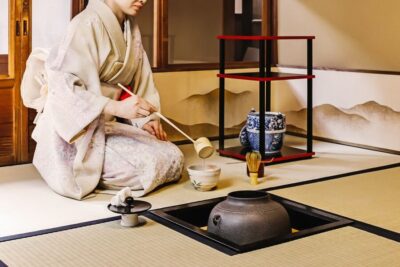
The central part of the experience is watching the tea master prepare matcha. This is where the ceremony differs from simply ordering powdered green tea in a café. The movements are deliberate, and the guide explains what you are seeing as it happens.
You will notice the care given to the bowl, whisk, scoop, and tea itself. The point is not speed. Each action helps create a moment of attention between the person making the tea and the person receiving it. The guide also explains the cultural meaning behind the gestures, which makes the ceremony easier to understand rather than leaving you to guess at the rules.
The English support has been especially strong in this activity. Guides such as Océane have been praised for clear explanations and well-timed help, while Nana has been noted for bringing energy and feeling to the presentation. The exact guide may vary, but you can expect an English instructor to explain the process before, during, and after the demonstration.
This guided format matters. A formal Japanese tea ceremony can look beautiful but confusing if nobody tells you why the host turns the bowl, cleans the tools, or presents the tea in a particular way. Here, the explanations give you a way to appreciate the ceremony without pretending you already understand its customs.
Wagashi first, matcha second
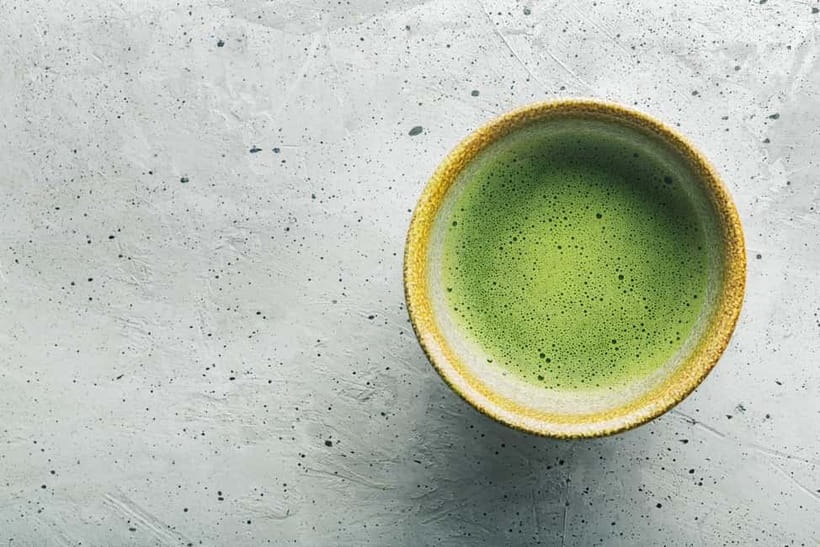
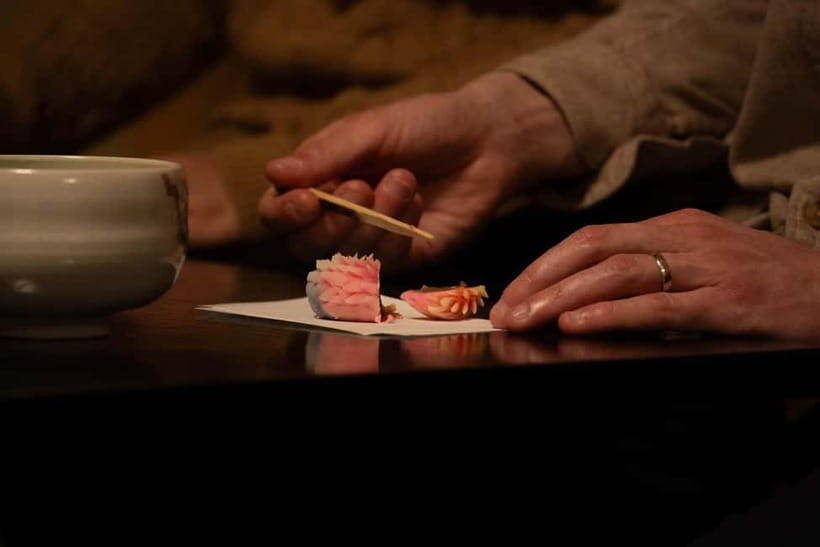
Traditional wagashi sweets are served as part of the experience. These are not just an extra snack. Sweetness prepares your palate for matcha, which has a fresh, grassy bitterness that can surprise people trying it for the first time.
The sweets come from traditional confectionery shops, including a renowned local maker. Their appearance and flavor can vary, but the role is the same: eat the wagashi before drinking the tea. The contrast makes the matcha taste smoother and more balanced.
This is one of the most useful details for a first-time visitor. If you have tried matcha and found it too sharp, do not judge it on an empty palate. The sweet is meant to be part of the pairing, and several people have found the matcha especially good alongside it.
You may receive sweets more than once, depending on the session. The focus remains on the ceremony, not on a large meal, so come expecting a small traditional tasting rather than dessert service.
Your turn to whisk the tea
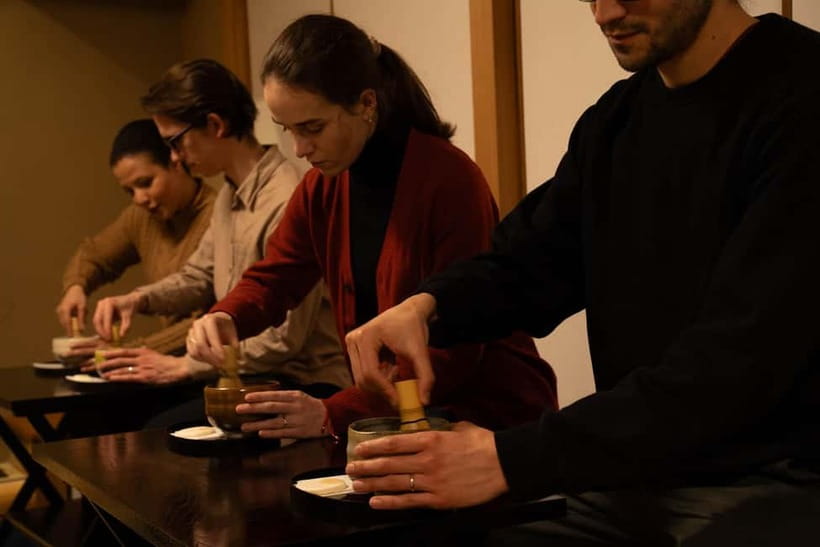
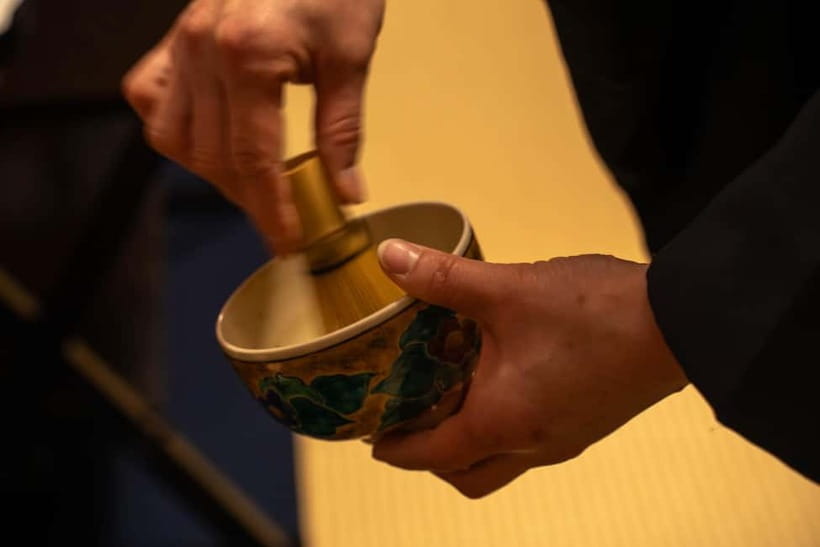
After watching the master, you get to make matcha yourself. The guide provides help and explains how to use the whisk, so you are not left to fumble through the process alone.
This hands-on section is a real strength. Watching an expert make a smooth bowl can make the task look easy. Once you hold the whisk yourself, you quickly learn that the right movement takes practice. That small surprise makes the ceremony more memorable and gives you a better respect for the skill involved.
You will then drink the tea you prepared. The point is not to produce a perfect bowl. It is to take part in the method, follow the etiquette, and notice how the ingredients, tools, and gestures work together.
The activity has enough structure to feel formal, but it is not intimidating. Guides answer questions and encourage beginners. You can ask about the preparation, the room, the history, or the meaning of the ceremony without needing specialist knowledge.
More tea experiences around Japan if you are still choosing
- World Heritage Kyoto & Nara Uji Authentic Matcha Experience
★ 5.0 · 1,573 reviews - Osaka: Tea Ceremony Experience
★ 4.9 · 1,426 reviews - Kyoto: Table-Style Tea Ceremony at a Kyo-Machiya
★ 4.9 · 1,211 reviews - Kimono Tea Ceremony at Kyoto Maikoya, NISHIKI
★ 5.0 · 911 reviews
Kenrokuen is part of the setting, not the view
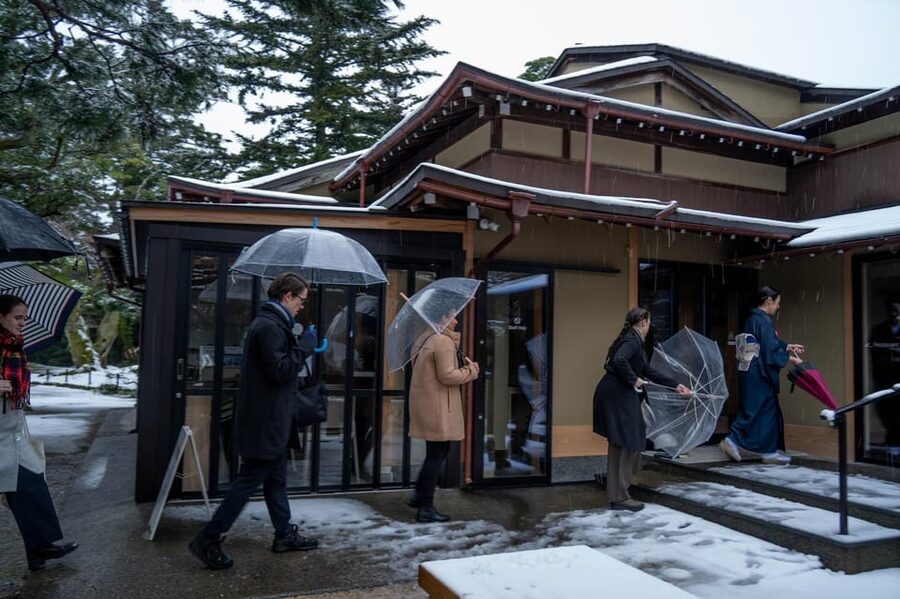
The tea ceremony takes place inside Kenrokuen Garden, one of Kanazawa’s major sights. This makes the activity easy to combine with a morning or afternoon walking through the garden.
There is one important catch: the garden is not visible from the tea room. You should not book this expecting to sip matcha while looking across the ponds or trees. Instead, plan to explore Kenrokuen before or after the ceremony.
The separate garden ticket costs 320 yen and remains useful beyond the tea session. It is required to reach Kenrokutei, and it is not included in the $35 activity price. I would arrive early enough to enjoy at least part of the garden first, then attend the ceremony at your reserved time.
This order also helps with punctuality. If you arrive more than 10 minutes late after the scheduled start, the reservation can be canceled. Kenrokuen is large enough that a relaxed garden walk can turn into a race, so allow time to find the fountain and Kenrokutei.
What the $35 price really buys you
At $35, this is a fair price for a short cultural activity in a major Japanese garden. You are paying for the tea ceremony, the English instruction, the sweets, the chance to prepare matcha, and a photograph. You are not paying for garden admission, so include the extra 320 yen when planning your budget.
The value is strongest if you want context. A cup of matcha alone costs less, but it will not show you the ceremony’s etiquette or let you practice the process. A longer formal tea lesson might offer more depth, but it would also take several hours and require more commitment.
The one-hour length works well in Kanazawa. You can fit it between Kenrokuen, Kanazawa Castle, the Higashi Chaya district, or another city sight. It is long enough to feel meaningful, but short enough that it will not take over your day.
The reserve-now, pay-later option also helps if your plans are still shifting. Free cancellation is available up to 24 hours in advance for a full refund. Check the booking terms at the time you reserve, since the key practical rule during the activity is punctuality.
Sitting on the floor and other practical points
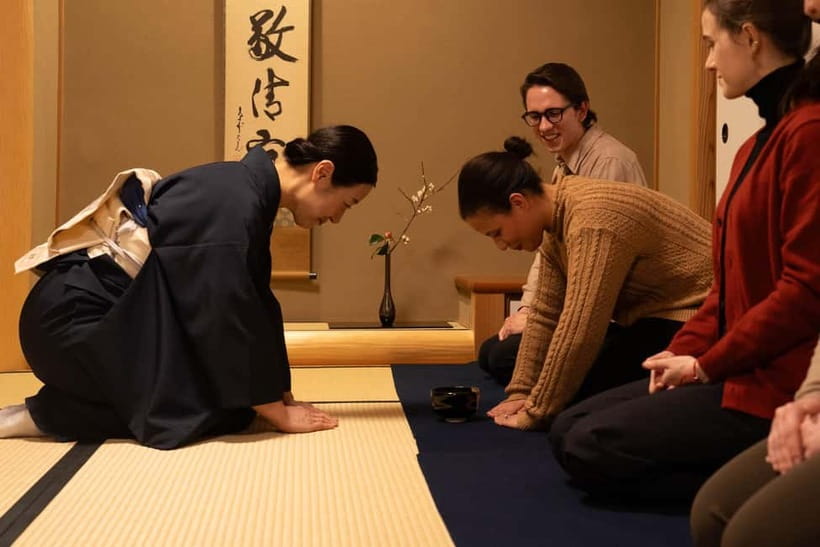
The traditional setup uses floor mats. You do not need to kneel for the entire time if that is uncomfortable. A chair can be requested, which is useful for anyone with knee, hip, or mobility concerns.
The activity is conducted in English. If you need translation from English into another language, a private reservation must be arranged by email. This is important because the regular session includes other groups, and extra translation during a shared ceremony could disturb the quiet atmosphere.
The age information needs care. One part of the activity details says participants must be at least seven, while another says children under eight are not suitable. If you are booking for a seven-year-old, confirm the accepted age directly before paying.
Photography is allowed, so you can keep a picture of the occasion. Use common sense during the actual ceremony and follow the guide’s instructions about when to take photographs. The activity includes a photograph, but it is not presented as a full photo session.
Who will enjoy this ceremony most
I would choose this for a first visit to Kanazawa, especially if you want a cultural activity that is calm, structured, and easy to understand in English. You get a genuine look at tea etiquette without committing to a full-length formal ceremony.
It is also a good fit if you have tried matcha in cafés and want to learn what the traditional preparation involves. The hands-on section turns a passive demonstration into a small lesson you can remember and repeat at home.
Families can consider it if their children meet the age requirement and can remain quiet in a shared room. The ceremony is not designed as a loud, hands-on children’s show. Its charm depends on patience and attention.
You may want to skip it if your main goal is a garden view during tea. The room faces away from the garden, and the experience is about the ritual rather than scenery. You should also think twice if you dislike sitting on mats, though the chair option solves much of that problem.
Small details that make the hour memorable
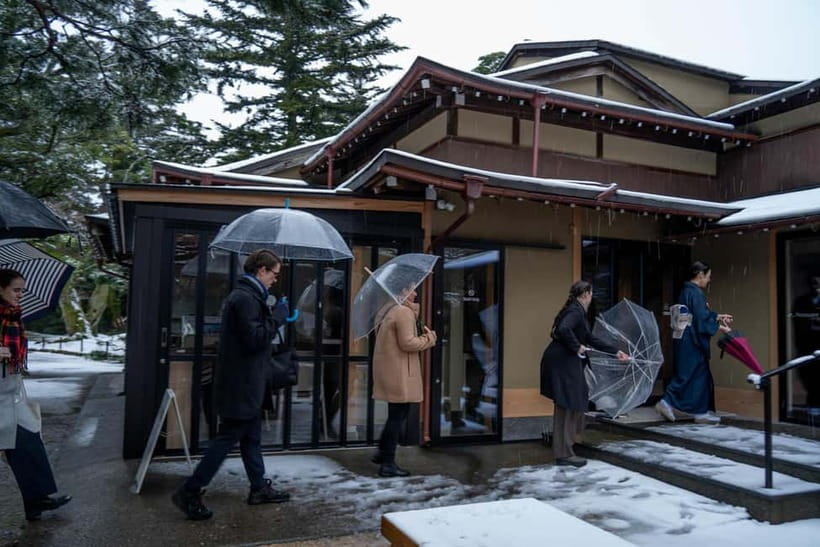
The ceremony works because it slows you down. Kanazawa has plenty of sights to cover, and it is easy to move from one temple, market, or garden to the next without giving any one place much thought. Here, the quiet room asks you to watch one careful action at a time.
The historical explanation adds depth without turning the session into a lecture. You learn about the Maeda connection, the role of tea in Japanese culture, and the reason behind the ceremony’s formal behavior. The best guides keep this information clear and light, with room for questions.
The sweets and matcha also provide a simple sensory lesson. You taste the wagashi, watch the whisking, feel the weight of the bowl, and then prepare tea yourself. That combination makes the ceremony easier to remember than a talk about tea culture alone.
Do not confuse the friendly English format with a casual shortcut. It is adapted for international visitors, but the demonstration still treats the ceremony with care. That balance is why the session feels approachable without becoming a staged photo opportunity.
Should you book the Kenrokuen tea ceremony?
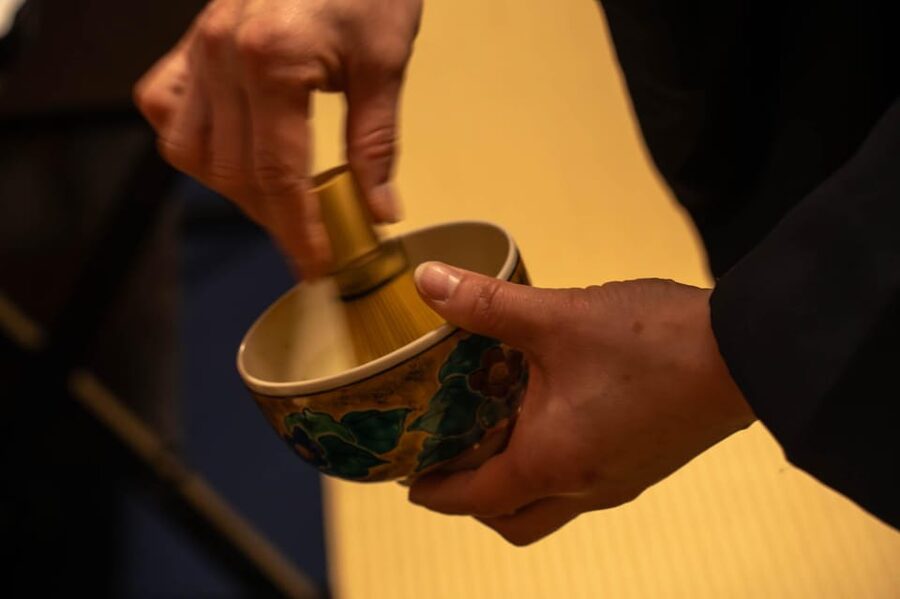
Book it if you want a compact, well-explained introduction to Japanese tea culture, especially if you value participation over simply watching. The English guidance, traditional sweets, historic room, and chance to whisk your own matcha make the $35 price sensible.
Plan around the extra garden fee, the 10-minute late-arrival rule, and the fact that the room has no garden view. Visit Kenrokuen before or after, request a chair if needed, and confirm the age rule for a seven-year-old.
For most visitors spending a day in Kanazawa, this is a worthwhile one-hour pause. It will not replace a full tea-school ceremony, but it gives you the essential shape of the tradition in a setting tied to the city’s past.
FAQ
Where does the tea ceremony take place?
It takes place at Kenrokutei inside Kenrokuen Garden in Kanazawa, Japan.
Where should I meet the guide?
Meet in front of the fountain in Kenrokuen Garden. Kenrokutei is located there, and you should read the tea ceremony signboard for arrival information.
Is the Kenrokuen entrance fee included?
No. You must pay the separate Kenrokuen Garden admission fee, listed as 320 yen.
How long does the experience last?
The tea ceremony lasts one hour.
Is the activity conducted in English?
Yes. English instruction is provided.
What is included in the price?
The activity includes the tea ceremony, Japanese sweets, and a photograph.
Can I make my own matcha?
Yes. After watching the tea master, you can prepare matcha yourself with guidance.
Can I take photographs?
Yes. Photography is allowed during the experience.
Can I sit on a chair instead of the floor?
Yes. You can request a chair if sitting on the floor is difficult.
What happens if I arrive late?
If you arrive more than 10 minutes after the scheduled starting time, your reservation will be canceled.
Are young children allowed?
The activity information says participants must be at least seven years old, while another section says children under eight are not suitable. Confirm the age rule directly if you plan to bring a seven-year-old.
Can I request translation into another language?
Yes, but translation from English into another language requires a private reservation arranged by email.
Fresh tea listings around Japan
- Cycling Tour at Uji’s Matcha Green Tea Fields and Heritage★ 5.0 · 10 reviews
- Authentic Japanese tea tasting: sencha, matcha and gyokuro★ 5.0 · 12 reviews
- Asakusa Cultural Walk & Matcha Making Tour★ 4.5 · 7 reviews
- Authentic Tea Ceremony & Sushi in The Museum of Kyoto★ 5.0 · 3 reviews
- At an Antique Shop, Tea Ceremony and Japanese Sweets Forming★ 5.0 · 5 reviews
- Authentic Japanese Tea Ceremony Experience in Kamakura★ 4.5 · 8 reviews
- Yokohama: Sushi & Gyoza Cooking with Matcha Experience★ 5.0 · 4 reviews
- Japanese Sweets Making & Tea Ceremony in Yokohama, suburban Tokyo★ 5.0 · 4 reviews
Tea Ceremony Experiences, compared.
Kyoto: Tea Ceremony in a Traditional Tea House in Kiyomizu
Read our review →
Kyoto: 45-Minute Tea Ceremony Lesson Experience
Read our review →
Kyoto: Table-Style Tea Ceremony at a Kyo-Machiya
Read our review →
Browse the lists this tour appears in