Review · MATCHA EXPERIENCES
Authentic Japanese tea tasting session: sencha, matcha, gyokuro
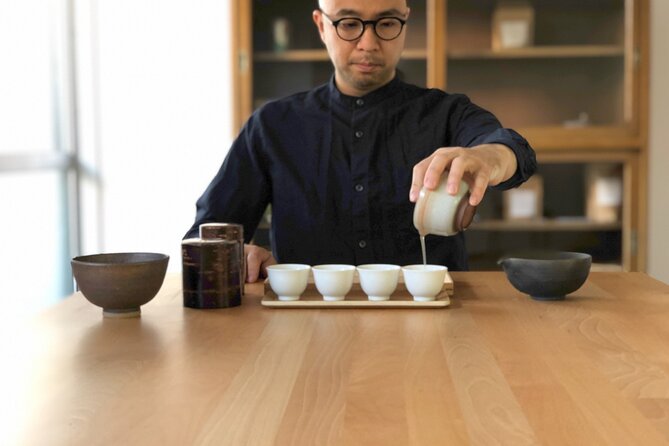
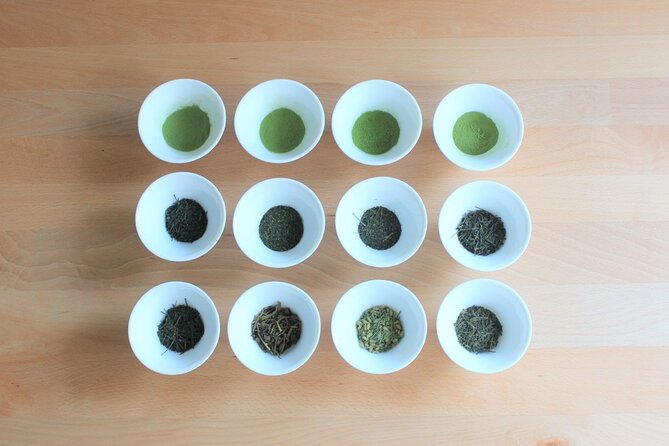
The star of this Tokyo experience is the chance to taste 12 types of Japanese tea side by side, rather than trying one cup and guessing what makes it special. Yosuke guides you through sencha, matcha, gyokuro, and other teas, explaining how each is grown, made, and traditionally used.
I like two things right away. First, the small maximum of four people should keep the session personal and make questions easy. Second, the tasting moves from everyday tea to rare premium examples, so you can compare quality instead of simply being told that one tea is better. The main consideration is that this is a focused class, not a polished tea ceremony or a broad sightseeing tour.
- Twelve teas in one sitting: Compare daily Japanese tea with high-end examples.
- Sencha, matcha, and gyokuro: Learn why these familiar names taste and behave so differently.
- Yosuke’s careful preparation: The guide explains temperature, production, regional differences, and history as you taste.
- A very small group: The activity accepts no more than four people, which suits curious tea drinkers who want room to ask questions.
- A 90-minute afternoon class: The session starts at 1:30 pm and returns to the same meeting point.
- A tasting, not a tea ceremony: The focus is flavor, farming, processing, and context rather than formal ritual.
Twelve Japanese teas, tasted side by side
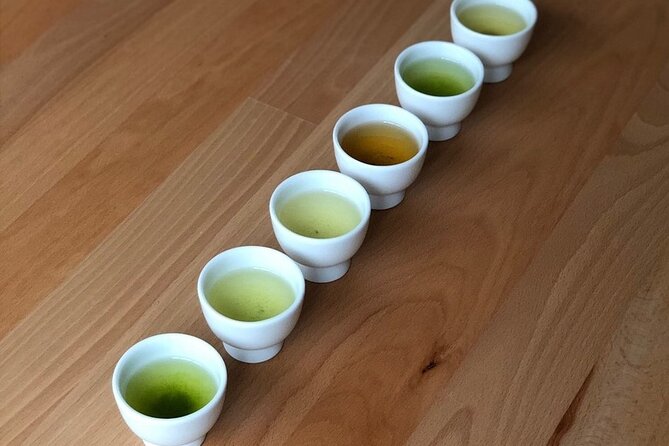
Most visitors encounter Japanese tea in a simple way: a green tea bag at breakfast, a bottle from a vending machine, or a small cup served with a meal. That is enough to make you curious, but not enough to explain the wide range of flavor and price.
This session gives you a useful comparison. Instead of tasting one tea in isolation, you work through 12 types and pay attention to how they differ. That might include changes in sweetness, bitterness, aroma, body, color, and aftertaste. The value is in the contrast. A tea that seemed ordinary a few minutes earlier may taste quite different after a refined premium tea.
I like this approach because Japanese tea can be confusing at first. Sencha is not simply one fixed product, matcha is not just powdered sencha, and gyokuro is not merely a more expensive green tea. Their growing and processing methods shape the cup. Tasting them together gives you a mental map you can use later in shops, cafés, and restaurants.
The supplied information describes 12 teas, while one tasting account refers to nine varieties. Tea selections can differ by session, so I would focus less on counting every cup and more on the chance to compare a wide range in one sitting.
Sencha, matcha, and gyokuro explained clearly
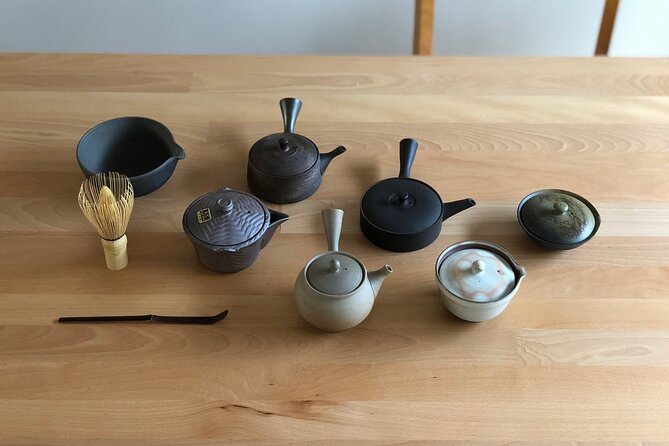
Sencha is likely to be your starting point for understanding everyday Japanese green tea. It is a leaf tea, and the brewing method matters greatly. Water temperature can change the balance between fresh aroma, bitterness, sweetness, and savory character.
Matcha gives you a completely different experience because you consume the powdered leaf rather than steeping leaves and discarding them. Its texture, strength, and preparation make it easy to recognize, but the session helps place it within the larger world of Japanese tea.
Gyokuro is the premium name many visitors have heard but few have properly compared. It is prized for its careful production and distinctive flavor. Tasting it after more familiar teas helps you notice why it costs more and why people treat it as a special drink.
I appreciate that the class does not reduce these teas to simple labels. You learn how tea is made, not only what it is called. That distinction matters. Two teas may both be green, yet the plant treatment, harvest, steaming, rolling, shading, and finishing can create very different results.
More Green Tea Tours in Japan
How production changes the flavor in your cup
The session places production at the center of the tasting. That is useful because Japanese tea names can sound like a list to memorize unless you understand the work behind them.
Yosuke explains how tea is farmed and processed, then prepares the samples in a measured way. The careful preparation is part of the lesson. Water temperature is especially important. Some teas show more sweetness and fragrance at lower temperatures, while hotter water can pull out stronger or more bitter notes.
You are also introduced to plantation locations and regional differences. This gives the tea a sense of place without turning the class into a geography lecture. Japan’s tea-producing areas do not all grow or process tea in the same way, and location helps explain differences that you can taste.
One practical benefit is that you leave with more than a favorite name. You begin to understand what to ask for. If you prefer a softer, sweeter cup, you can describe that. If you like a fresh, sharper green tea, you can look for it. The goal is to help you identify your own taste.
Why the small group makes a difference
The maximum group size is four people. For a tasting class, that is a real advantage. You are not lost at the back of a crowded demonstration, and there should be room to ask why one tea tastes more savory or why another requires different water.
The format also suits people with different levels of experience. You do not need to arrive knowing the difference between sencha and gyokuro. A beginner can follow the basic explanation, while an experienced tea drinker can ask more specific questions about processing or brewing.
Yosuke receives repeated praise for being organized, clear, patient, and generous with his explanations. Those qualities matter here because 12 teas could easily become a blur. His methodical preparation gives the session a steady rhythm: learn, taste, compare, and ask.
A nine-page handout has also been used with the class. That can be handy during the tasting, especially if you want to remember tea names, production details, or the points to notice in each cup. I would keep it for later, since the most useful part of the session may be the comparison you make after returning home.
A 90-minute afternoon in Morishita
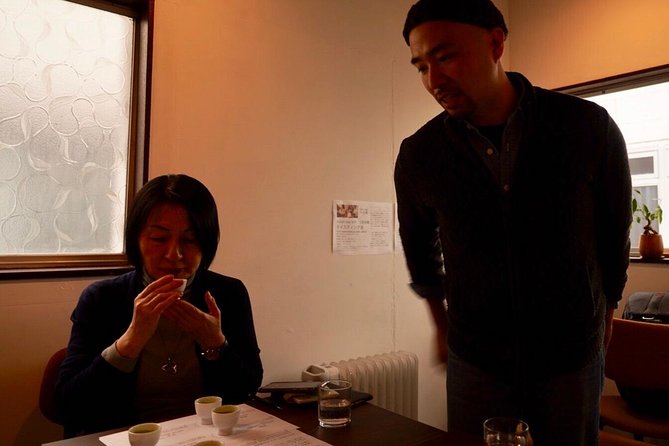
The meeting point is ShiZen Tea ExperienceJapan at 2-chōme 28-3 Morishita, Koto City, Tokyo, in the Morishita TM Mansion, room 202. The start time is 1:30 pm, and the activity ends back at the same place.
The session lasts about an hour and a half. That is long enough to cover a serious range of teas without taking up your whole afternoon. It also makes the experience easy to pair with other plans in Tokyo, though I would avoid scheduling something immediately afterward if you expect to ask many questions.
The location is near public transportation, but the address includes a building and room number, so check the details before setting out. A mobile ticket is provided, and booking confirmation arrives at the time of booking. I would save the address on your phone and allow enough time to find the correct building rather than arriving at 1:30 pm and starting the search then.
This is a neighborhood-based activity rather than a major attraction with a large entrance. That keeps the focus on tea, but it also means you should not expect signs and staff everywhere to guide you to the exact room.
More Matcha Experiences in Tokyo
- Matcha Making Class in Tokyo with Authentic Japanese Sweets Set
★ 5.0 · 744 reviews - Tokyo: Matcha Making Experience with Mochi Sweets in Asakusa
★ 4.9 · 388 reviews - Asakusa Cultural Walk & Matcha Making Tour
★ 5.0 · 245 reviews - Tokyo: Matcha and Kimono Experience
★ 4.7 · 219 reviews
What the tasting feels like from start to finish
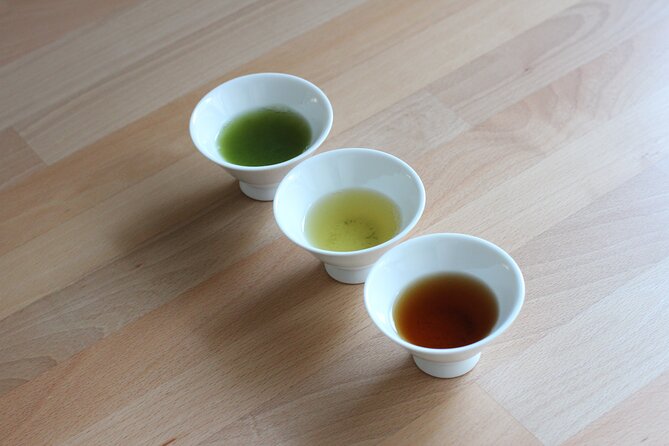
The class begins with an introduction to Japanese tea and the questions that bring most people in: What is sencha? What makes a premium tea different? Why does brewing temperature matter?
From there, Yosuke presents the teas one by one. You learn how each tea is produced and hear about its historical background before comparing it with the next sample. The exact order is not given, but the stated aim is to move through both daily tea and high-end tea so the differences become easier to see and taste.
The experience is not only about drinking. You are asked to notice how the tea changes in your mouth and how preparation affects the result. That makes it closer to a wine tasting class than a standard tea stop, though the setting and subject are distinctly Japanese.
At the end, you should have a clearer picture of the main tea categories and a better idea of what you personally like. That is a sensible goal. Tea appreciation becomes useful when it helps you choose what to buy and drink, not when it leaves you with a long list of unfamiliar names.
The history adds meaning without taking over
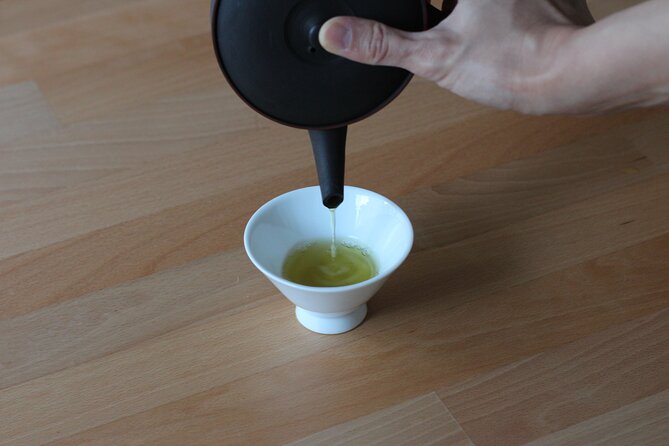
Every tea comes with an explanation of its historical background. I like that this is included because tea is tied to daily life, farming, trade, hospitality, and changing tastes in Japan.
Still, the focus remains on tasting and production. If you want a formal lesson in Japanese tea ceremony, this is not the right activity. The host specifically presents it as a tea experience rather than a ceremony, so you will not be spending the session learning formal gestures, ceremonial movements, or the full etiquette of chanoyu.
That distinction helps set expectations. You get a practical explanation of why Japanese tea looks, smells, and tastes the way it does. The history supports the tasting instead of replacing it.
Food and culture enthusiasts should find the balance useful. You can ask questions about tea as an agricultural product, a regional specialty, and part of Japanese life. But the session still gives you plenty of time with the cups in front of you.
Is $90.80 a fair price?
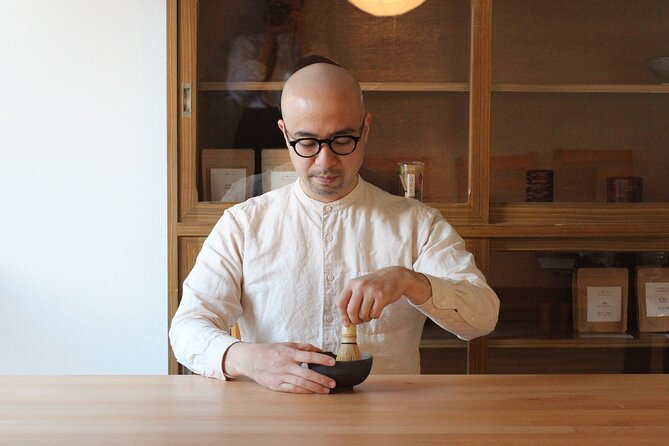
The listed cost is $90.80 per person. That is not a casual price for a cup of tea, so the value depends on what you want from the afternoon.
If you only want to drink matcha, you can find less expensive options in Tokyo. If you want a quick introduction with no explanation, this class may feel like more than you need. But if you want to taste 12 teas, compare everyday and premium grades, learn about production and regions, and ask questions in a group of no more than four, the price becomes easier to justify.
You are paying for access to a broad tasting, guided preparation, and structured instruction. Premium gyokuro and other special teas can be difficult to compare on your own, especially if you do not know the right brewing temperature or what qualities to notice.
I would view the session as a specialist food experience rather than a simple refreshment stop. It offers better value for people who will use the information afterward, perhaps when buying tea in Japan or choosing what to order at home.
Who should book this Tokyo tea experience?
I would recommend it most strongly to:
- Anyone who already drinks Japanese green tea and wants to understand it better.
- First-time visitors who want a focused cultural activity beyond temples and shopping.
- Food and drink enthusiasts who enjoy guided tastings.
- People interested in Japanese farming, production, and regional specialties.
- Visitors who prefer small groups and direct contact with a local expert.
It may be less suitable if you want a formal tea ceremony, a large social event, or a short photo stop. It is also worth thinking about caffeine. If you are sensitive, tell the provider before the session. That is especially important when tasting many teas in a single afternoon.
The activity is not designed as a family entertainment show, and there is no indication of a separate non-caffeinated option. I would contact ShiZen Tea in advance if caffeine is a serious concern.
Useful booking and cancellation details
The experience is booked, on average, 16 days ahead, so I would not leave it until the last day of your Tokyo stay. The small group limit means available places may be tighter than for a large bus tour.
Free cancellation is allowed until 24 hours before the start time for a full refund. Cancellations or changes made inside that window are not accepted for a refund, and the cut-off follows Tokyo local time.
The session begins at 1:30 pm, lasts about 90 minutes, and returns to the Morishita meeting point. You receive a mobile ticket, and confirmation arrives when you book.
Should you book ShiZen Tea?
Book it if you want to understand Japanese tea rather than simply consume it. The strongest parts are the side-by-side tasting, the mix of everyday and premium teas, Yosuke’s clear teaching, and the unusually small group.
Skip it if your main goal is a traditional tea ceremony or an inexpensive cup. For everyone else, $90.80 buys a focused afternoon with enough structure to make sencha, matcha, and gyokuro easier to recognize and enjoy. I would especially recommend it early in your Tokyo visit, when the lessons can guide your tea choices for the rest of your time in Japan.
FAQ
Where does the Japanese tea tasting take place?
It takes place at ShiZen Tea ExperienceJapan, 135-0004 Tokyo, Koto City, Morishita, 2-chōme 28-3, Morishita TM Mansion, room 202.
What time does the experience start?
The session starts at 1:30 pm.
How long does the tea tasting last?
The experience lasts approximately 1 hour and 30 minutes.
How many people can join?
The activity has a maximum of four travelers.
Is this a traditional Japanese tea ceremony?
No. The experience focuses on tasting, production methods, history, regional differences, and brewing. It is not a formal tea ceremony.
Which teas will be included?
The experience covers 12 different types of Japanese tea, including sencha, matcha, and gyokuro.
Can I cancel for a full refund?
Yes. You can cancel at least 24 hours before the local start time for a full refund. Cancellations or changes made less than 24 hours before the start time are not refunded or accepted.
More Green Tea Tours in Tokyo
- Uji: Green Tea Tour with Byodoin and Koshoji Temple Visits
★ 4.8 · 72 reviews - Scenic Green Tea Fields of Hidden Kyoto & Local Tea Exp (Private)
★ 5.0 · 32 reviews - Osaka; Japanese Tea ceremony experience, Macha and Sencha
★ 4.9 · 29 reviews - Kyoto Matcha Green Tea Tour
★ 4.7 · 28 reviews
More Tea Tastings in Japan
- Matcha Experience with of Japanese Tea Tasting in Tokyo
★ 5.0 · 31 reviews - Nara:5 Type of Tea Tasting & Mindful Tea Ceremony
★ 5.0 · 28 reviews - Nara:Tea Tasting&Private Tea Ceremony -Master Matcha Making-
★ 5.0 · 19 reviews - Small Group Japanese Green Tea Tasting in Shizuoka
★ 5.0 · 7 reviews
Fresh tea listings around Tokyo
- Yokohama : Tea Ceremony with Sweets and Souvenir★ 5.0 · 5 reviews
- Walking Tour: Yanaka,Nezu& Sendagi: Tea Ceremony & Old Tokyo★ 5.0 · 3 reviews
- Private Mochi・Matcha sweets Making Class Near Shibuya Area★ 5.0 · 22 reviews
- Private Kimono and tea ceremony at local home near Tokyo Disney★ 5.0 · 6 reviews
- 2 Hours Mochi &Nerikiri Making & Matcha Class in Bunkyo★ 5.0 · 21 reviews
- Tokyo: Tea Ceremony & Japanese Sweets Making★ 5.0 · 10 reviews
- Tokyo Sweets Tour: Hidden Gems & Matcha at an Old Tea House★ 5.0 · 6 reviews
- Kimono and Tea Ceremony in Asakusa Private Food Tour With Guide★ 5.0 · 4 reviews
Matcha Experiences, compared.
World Heritage Kyoto & Nara Uji Authentic Matcha Experience
Read our review →
Matcha Making Class in Tokyo with Authentic Japanese Sweets Set
Read our review →
Kyoto: Tea Museum Tickets and Matcha Grinding Experience
Read our review →
Matcha Making Class in Osaka with Authentic Japanese Sweets Set
Read our review →
Kyoto: Tea Ceremony Meditation – Make Matcha with Tea Master
Read our review →
Tokyo: Matcha Making Experience with Mochi Sweets in Asakusa
Read our review →
Kyoto: Kimono Tea Ceremony with Matcha and Sweet
Read our review →