
Review · KIMONO & TEA CEREMONY
KYOTO Tea Ceremony with kimono near by Imamiya Jinjya Shrine
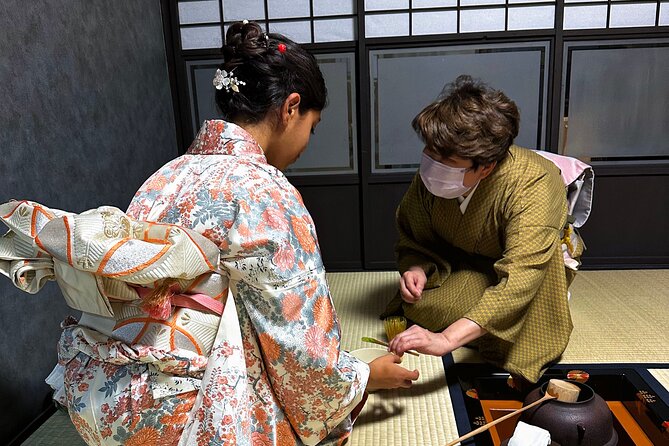
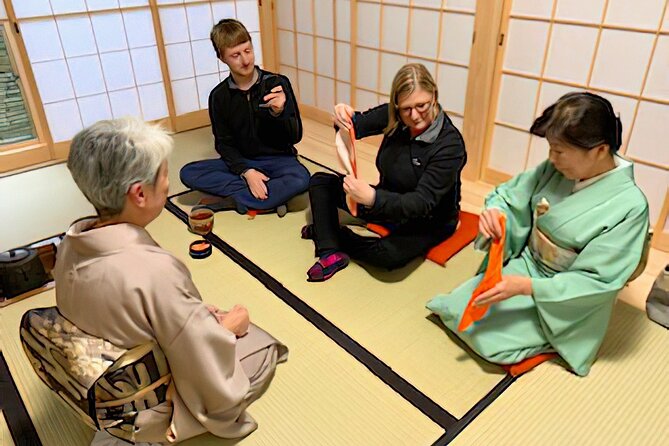
The most memorable part of this Kyoto experience is the careful transformation from street clothes into formal Japanese dress. You choose a kimono from a Nishijin collection, have your hair arranged, and learn why the layers, patterns, and accessories matter before entering a tea room used by three generations. I especially like the hands-on tea preparation and the chance to ask questions through an interpreter such as Akira. The staff also help with photos, so your pictures do not feel like an afterthought.
I also like the setting near Daitoku-ji, an area closely tied to Kyoto’s tea culture, and the small-group size of no more than 12 people. The main consideration is time: dressing and hair styling take part of a 90-minute program, so this is a focused introduction rather than a long, highly formal tea school lesson. The old tea room may also feel simple rather than polished.
Key points at a glance
- Nishijin kimono selection: Choose a color and pattern, then receive help with the many layers and ties required for proper dressing.
- Hair styling and photos: Women can have their hair arranged, and the staff help pose you for simple photographs before the ceremony.
- Tea master with 30 years of practice: Watch a traditional demonstration, learn the gestures, and prepare your own bowl of tea.
- Seasonal sweet with matcha: The ceremony includes a sweet before or alongside the tea, adding a small but important part of Japanese tea etiquette.
- Near Daitoku-ji and Imamiya Shrine: The location places the activity in northern Kyoto, an area with strong connections to temples and tea culture.
- Small group format: The maximum of 12 people gives you a better chance to follow the demonstration and take part.
Choosing a Kimono in Kyoto’s Nishijin Tradition
The experience begins with a practical but special choice: selecting a kimono from a collection associated with Nishijin, Kyoto’s famous textile district. You are asked to choose a color and pattern, so it helps to arrive with a general idea of what you like. If you wait until the last second, the selection process can feel rushed, especially if several people arrive together.
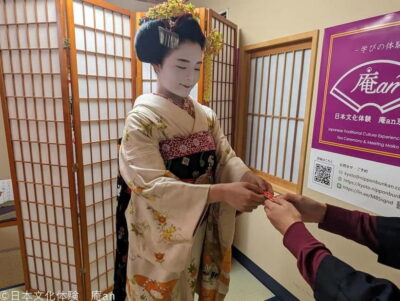
The staff then dress you in the kimono. This is not a quick costume change. Traditional dress involves multiple layers, careful tying, and adjustments around the waist and shoulders. That extra time is useful because it shows why a kimono is a form of skilled dress rather than a simple robe.
You will also learn, at least in a general way, that patterns and colors carry meaning. The program does not promise a long textile lecture, but the dressing process gives you a better feel for the care behind the clothing. I find this more valuable than simply renting a kimono for a street photo.
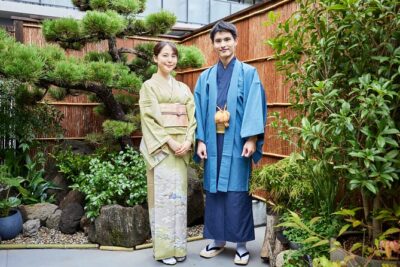
The staff dress both men and women. Women can have their hair arranged before the kimono goes on. The styling is described as simple, not a full salon appointment, but it helps complete the formal appearance. If you are traveling with family, this part works well for mixed-age groups, and the experience has been enjoyed by couples, families, solo participants, and teenagers.
More Kimono and Tea Ceremonies in Kyoto
- Kimono Tea Ceremony at Kyoto Maikoya, NISHIKI
★ 5.0 · 911 reviews - Kyoto: Kimono Tea Ceremony at Orizuruya Gion
★ 4.9 · 618 reviews - Kyoto: Kimono and Tea Ceremony Experience at Cultural Asset
★ 4.3 · 306 reviews
A Photo Session Before the Tea Room
Once you are dressed, the staff make time for a short photo session. This is a useful touch because moving in formal clothing takes some getting used to, and you may not know how to stand or position your sleeves. An interpreter or staff member can help with poses and take pictures for you.
Keep your expectations sensible. This is not presented as a professional studio shoot with elaborate lighting or a long list of edited portraits. It is a simple chance to record the moment while you are dressed properly, with staff who understand how to show the kimono clearly.
The photo stop also gives you a short pause before the ceremony begins. You can check that your clothing feels comfortable and ask questions about the layers or accessories. If photographs matter to you, arrive early enough for the dressing process to happen without a rush. When everyone arrives at once, the preparation area can become hectic.
Entering a Three-Generation Tea Room
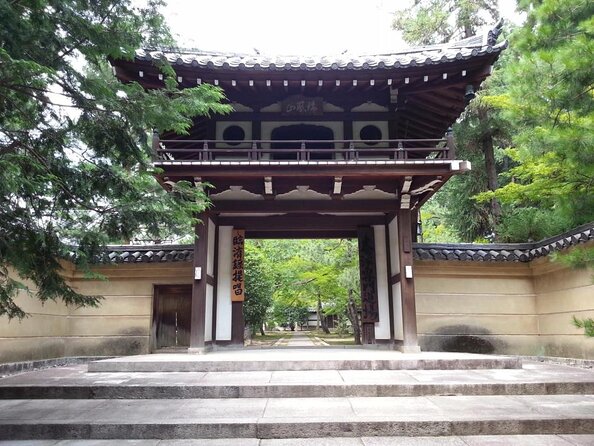
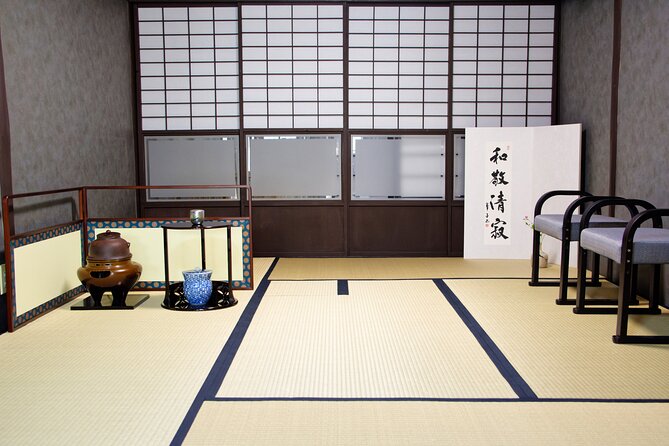
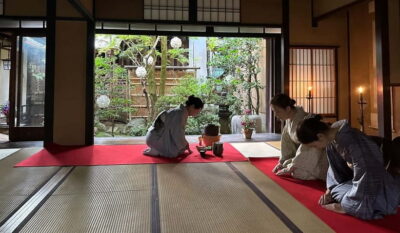
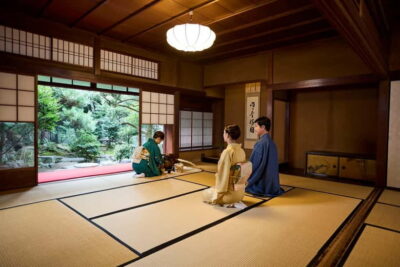
The tea room has been used by three generations, which gives the setting a sense of continuity. It is described as old, so do not expect a sleek modern venue. That is part of the appeal for some people, though anyone looking for a luxury interior may find it plain.
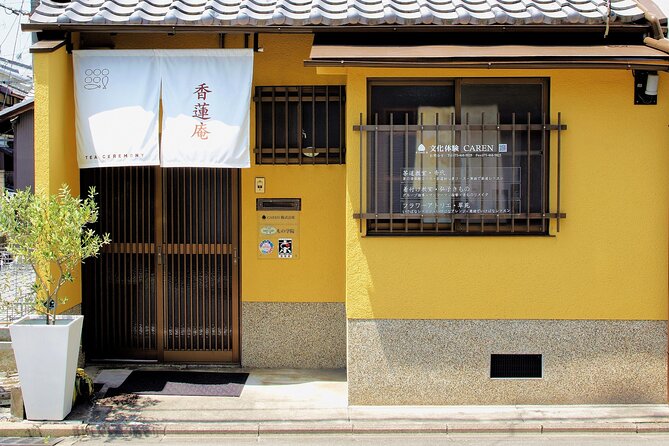
The room is near Daitoku-ji Temple, an important area for Kyoto’s tea culture. The meeting point is at Tea Ceremony Caren, 74-4 Murasakino Daitokujicho, in Kyoto’s Kita Ward. The activity also sits near Imamiya Shrine, and the location is close to public transportation, though private transportation is not included.
The program ends where it begins. That makes it easy to fit into a day in northern Kyoto, especially if you are already visiting Daitoku-ji or Imamiya Shrine. You should allow extra time to find the meeting point and arrive before the scheduled start, but no separate transport between stops is needed as part of the activity.
Watching the Tea Master’s Demonstration
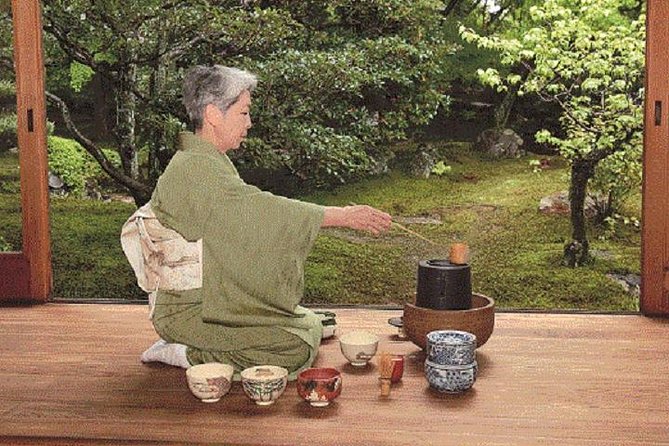
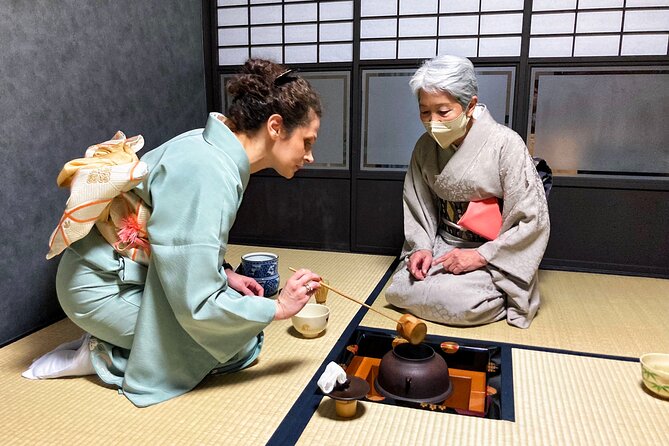
The central lesson comes from a tea master who has studied tea ceremony for 30 years. First, you watch the ceremony rather than being asked to perform it immediately. This matters because the gestures are precise, and the quiet rhythm is easier to understand after seeing the full sequence.
Your guide explains the background of tea ceremony and the manners involved. The interpretation makes the presentation accessible to English-speaking participants, and one interpreter named Akira has helped explain the process, history, and even details such as the use of the tea fan. Another staff member named Mera has also been praised for attentive explanations and assistance during the program.
The focus is not only on drinking tea. You learn how the bowl is handled, how to observe the person serving you, and how small movements show respect. These details can seem mysterious if you only watch a ceremony from a distance. Here, the explanations turn the gestures into understandable actions.
The tea master’s long experience is important, but you should not confuse this with formal training that qualifies you to conduct a full ceremony on your own. You receive an introduction and a chance to try the main steps. The goal is cultural understanding and participation, not certification.
More Tea Ceremonies in Kyoto
- Kyoto: Tea Ceremony in a Traditional Tea House in Kiyomizu
★ 4.9 · 3,519 reviews - Kyoto: Tea Ceremony Ju-An at Jotokuji Temple
★ 4.9 · 3,207 reviews - Kyoto: 45-Minute Tea Ceremony Lesson Experience
★ 4.3 · 2,378 reviews - Kyoto: Table-Style Tea Ceremony at a Kyo-Machiya
★ 4.9 · 1,211 reviews
Matcha, Seasonal Sweets, and Your Turn to Prepare Tea
After the demonstration, you receive matcha and a seasonal sweet. The sweet is not just a snack. In tea ceremony, food balances the bitterness of the tea and forms part of the order and manners of the gathering.
You then get to prepare tea yourself. Depending on the group and timing, you may make a bowl for another person, and another participant may prepare one for you. This is the part that turns the session from a performance into a lesson. You will probably be less precise than the tea master, but that is fine. The staff guide you through the movements and encourage you as you work.
The hands-on section is especially useful if you have never attended a Japanese tea ceremony. Watching a master can be beautiful, but holding the bowl and whisking the tea gives you a clearer sense of the care involved. It also provides a natural chance to meet the other people in the room.
The ceremony has a calm, measured quality. You will spend much of the session sitting and watching, so comfortable clothing underneath the kimono matters. Because the formal clothing limits large movements, this is not an activity for rushing in and out. Give yourself permission to slow down.
What the 90-Minute Schedule Really Means
The advertised duration is about one hour and 30 minutes. That sounds generous until you divide the time among kimono selection, dressing, hair styling, photos, explanations, the demonstration, tea, and your own practice.
You should think of this as a compact cultural session with several connected parts. The kimono preparation is not a separate add-on, and the tea ceremony is not a long standalone performance. Each section supports the next: the clothing prepares you for the setting, the explanation prepares you for the ceremony, and the demonstration prepares you to make tea.
The group can include up to 12 people. That is still small enough for a shared lesson, but it is not a private ceremony. If the group is full, the dressing area may feel busy and your opportunity to ask questions may be shorter. The upside is that the group setting can feel friendly, and the format allows family members or friends to participate together.
Solo visitors are not left out. The experience includes opportunities to prepare tea, and the staff can help with photographs even if you are attending alone. That makes it more flexible than a photo rental with no cultural instruction.
Is $99.49 a Fair Price?
At $99.49 per person, the cost is higher than simply renting a kimono for a walk around Kyoto. You are paying for several services in one visit: kimono use, assistance with dressing, hair styling for women, photographs, interpretation, a tea demonstration, matcha, a seasonal sweet, and hands-on instruction.
The price makes the most sense if you want both the visual experience and the cultural explanation. If you only want a kimono photo, a basic rental may cost less and give you more time outside. If you want a serious, private tea lesson, this small-group introduction may not go far enough.
I see the best value for families and first-time visitors who want an organized cultural activity without spending half a day. It also suits anyone who would feel unsure about handling a kimono or following tea etiquette alone. The staff do the practical work, leaving you free to pay attention to the meaning of the ceremony.
The professional instructor and long-practiced tea master add substance. You are not simply handed a bowl of matcha and told to copy a few gestures. At the same time, the old room and short schedule keep the experience from feeling like a luxury product. That balance is worth considering before you book.
Who Will Enjoy This Most
This is a strong choice if you want a direct introduction to Japanese customs and enjoy taking part rather than only watching. It is especially suitable for:
- Families looking for an activity that grandparents, parents, and teenagers can share
- Couples who want photographs and a quiet cultural memory
- Solo visitors who want guided interaction and help with pictures
- First-time visitors who have never worn a kimono or attended tea ceremony
- People already planning to visit Daitoku-ji or Imamiya Shrine
- Anyone interested in the details of clothing, manners, and seasonal tea
You may want to skip it if you dislike sitting quietly, formal clothing, group activities, or being photographed. The session also may not satisfy someone who already has extensive tea ceremony training. It is designed as an approachable first experience.
Practical Advice Before You Go
Arrive early. The dressing process involves more than one layer, and the staff need time to select clothing, arrange hair, and adjust the kimono. Arriving at the exact start time is possible, but it may add pressure if several people are checking in together.
Choose your kimono color with photos in mind, but also consider comfort. You will spend the ceremony in formal clothing, so a pattern you like is helpful, but feeling properly adjusted matters more.
The meeting point is near public transportation, but private transportation is not provided. Plan your route in advance, particularly if this is your first visit to the northern part of Kyoto. The activity returns to the meeting point, so you do not need to arrange a separate pickup at the end.
The mobile ticket is convenient, and booking confirmation is provided at the time of booking. The experience has free cancellation up to 24 hours before the local start time. Within 24 hours, changes and refunds are not accepted. Poor weather or too few bookings can also lead to cancellation, in which case you are offered another date or a full refund.
Should You Book This Tea Ceremony?
Book it if you want a well-organized first look at tea ceremony, with the added pleasure of wearing a real kimono and having your hair arranged. The strongest reasons are the tea master’s long practice, the chance to prepare tea yourself, and the thoughtful help with photos and etiquette.
I would choose this over a simple kimono rental if you want context, not just clothing. I would choose a longer or private lesson instead if you already know the basics or want an extended study of tea ceremony.
For most first-time visitors, the $99.49 price is reasonable because it combines dressing, styling, photographs, instruction, tea, and a seasonal sweet in one 90-minute visit. Go early, expect a shared group setting, and treat the old tea room as part of the experience rather than a flaw. If those terms suit you, this is a memorable way to connect a Kyoto photo with the customs behind it.
FAQ
Where does the tea ceremony take place?
The meeting point is Tea Ceremony Caren at 74-4 Murasakino Daitokujicho, Kita Ward, Kyoto, 603-8231, Japan. It is near Daitoku-ji Temple and Imamiya Shrine.
How long does the experience last?
The activity lasts approximately one hour and 30 minutes.
What is included in the price?
The experience includes use of a kimono, help putting it on, a professional instructor, tea, a seasonal sweet, commentary about tea ceremony, and the chance to prepare tea yourself.
Is hair styling included?
The program includes help setting your hair before you put on the kimono. The information specifically describes this service for women.
Do I get to choose my kimono?
Yes. You choose a kimono based on your preferred color and pattern from the available Nishijin collection.
Will I take photographs during the experience?
Yes. The program includes a simple photo session, and staff help you take photographs and pose while wearing the kimono.
Do I prepare tea myself?
Yes. After watching the tea master and learning the manners, you have the opportunity to prepare your own tea.
How many people can join the activity?
The maximum group size is 12 people.
Is transportation included?
Private transportation is not included. The meeting point is near public transportation, and the activity ends back at that same meeting point.
Can I cancel for a full refund?
You can cancel at least 24 hours before the local start time for a full refund. Cancellations or changes made less than 24 hours before the start are not accepted for a refund.
Fresh tea listings around Kyoto
- Cycling Tour at Uji’s Matcha Green Tea Fields and Heritage★ 5.0 · 10 reviews
- Authentic Tea Ceremony & Sushi in The Museum of Kyoto★ 5.0 · 3 reviews
- Kyoto Hidden Riverside Zen Mediation and Uji Matcha Experience★ 5.0 · 9 reviews
- Kyoto: Nighttime Zen Meditation and Matcha Tea Experience★ 5.0 · 7 reviews
- Kyoto Fushimiinari:Wagashi Making & Small Group Tea Ceremony★ 5.0 · 14 reviews
- 2 Types of Japanese Sweets making and Tea Ceremony★ 4.6 · 17 reviews
- Whisk Your Own Matcha: A Zen Matcha Experience at Temple★ 3.6 · 7 reviews
- Matcha Grinding Experience and Walking Tour in Uji Kyoto★ 5.0 · 26 reviews
Kimono & Tea Ceremony, compared.
Kyoto: Kimono and Tea Ceremony Experience at Cultural Asset
Read our review →
Kyoto: Kimono Tea Ceremony with Matcha and Sweet
Read our review →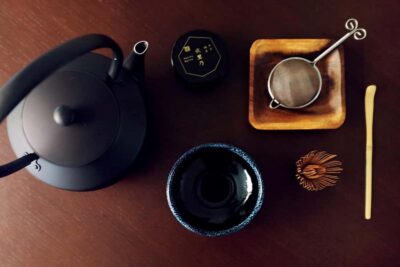
Browse the lists this tour appears in