Review · MATCHA EXPERIENCES
Zen Garden Making and Matcha Tasting in Handmade Pottery Shop
The unusual idea here is simple: you make a miniature Zen garden inside a Kyoto pottery shop, using sand patterns and vessels to create your own design. Then you sit in front of it with Ippodo matcha and a seasonal Japanese sweet, a small but pleasant way to connect food, craft, and temple-style garden design.
I like the hands-on activity because it needs no special skill or physical effort, and I like the chance to use handmade pottery in a more meaningful setting than a quick shop visit. The main caution is that the experience is still being refined. Matcha may be prepared in another room, and communication can feel a little awkward at times.
Key points to know before you book
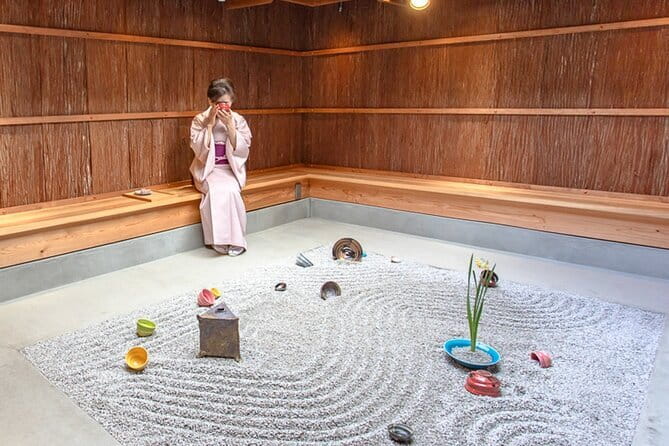
- You design your own small Zen garden with sand patterns and pottery vessels.
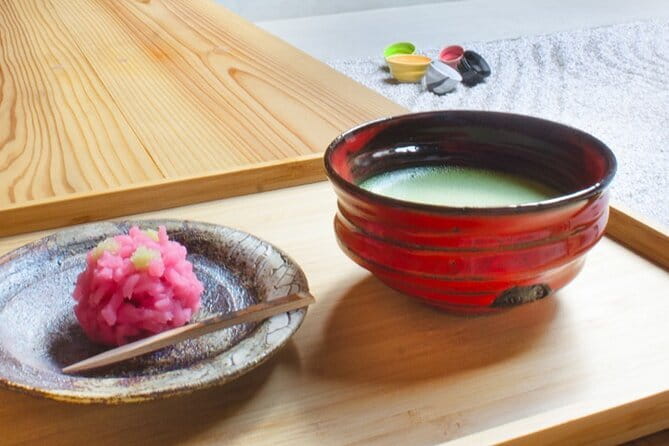
- Ippodo matcha and seasonal wagashi are served in front of the finished garden.
- Ninshu occupies a more than 100-year-old Kyoto machiya, adding a traditional setting to the visit.
- The group is capped at eight people, so the activity should remain fairly small.
- Handmade pottery is available to buy, with pieces designed to be dishwasher and microwave safe.
- The visit lasts about 30 minutes and costs about $14.12 per person.
Making a Zen garden in a Kyoto pottery shop
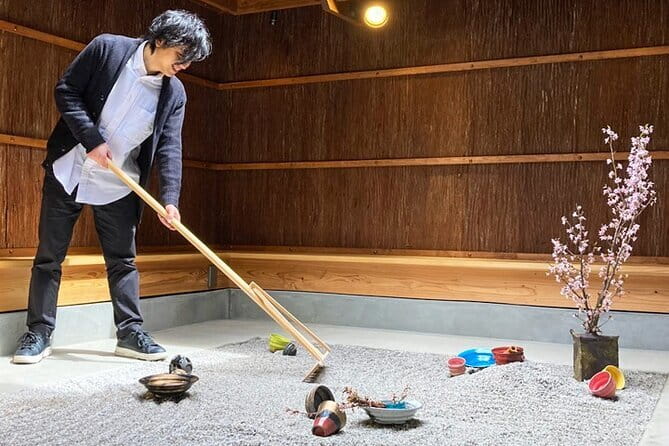
A temple Zen garden usually asks you to pause and look. Here, you get to handle the materials and make a small design of your own. At Ninshu, the pottery garden uses sand as the base, while vessels help you arrange color and form.
The scale matters. You are not building a full courtyard garden, and you should not expect the silence or grand setting of a famous Kyoto temple. Instead, this is a compact creative activity that fits neatly into a busy sightseeing day.
You create patterns in the sand and choose how to place the pottery pieces. The supplied details do not specify the exact number or type of vessels available, so the finished arrangement may depend on the day and the materials set out by the shop.
I like this format for families, older visitors, and anyone who wants a quiet break from temple crowds. There are no difficult movements, long walks, or demanding instructions involved. You can work at a gentle pace and focus on the pattern in front of you.
The activity also gives you a reason to look closely at pottery. A cup, bowl, or small vessel is not only a souvenir here. It becomes part of your garden design, showing how Japanese craft can be used in a simple visual composition.
More Matcha Experiences in Kyoto
- Kyoto: Tea Ceremony Meditation – Make Matcha with Tea Master
★ 4.8 · 406 reviews - Kyoto: Kimono Tea Ceremony with Matcha and Sweet
★ 4.9 · 249 reviews - Kyoto: Arashiyama Bamboo, Temple, Matcha, Monkeys & secret spots
★ 5.0 · 219 reviews
Matcha and wagashi beside your finished design
After you make the garden, you enjoy matcha from Ippodo, one of Kyoto’s best-known tea companies. Seasonal wagashi from Senbon Tamajushuken is served with it. Wagashi often changes with the season, so the exact sweet is not specified in advance.
This pairing is a good part of the visit because it gives the creative activity a calm finish. You can photograph yourself with the garden, tea, and sweet, making a small keepsake of your time in Kyoto. The garden you create becomes a backdrop rather than something you simply glance at and leave behind.
You should know one practical detail before booking: the matcha may be made in another room rather than prepared directly in front of you. If you are hoping for a detailed tea-making demonstration, this may feel limited. The focus is on tasting the tea and enjoying the setting, not on a formal tea ceremony.
The matcha and snack were well received in the available feedback, while the separate preparation of the tea was a clear disappointment for one person. That contrast is useful. Book this for a short taste of Kyoto tea culture, not for an in-depth lesson in tea preparation.
Some sweets may contain wheat, egg, or yams. Tell the shop about allergies in advance or at the start of the visit. The shop can provide sweets without those listed ingredients.
Inside the old Kyoto machiya
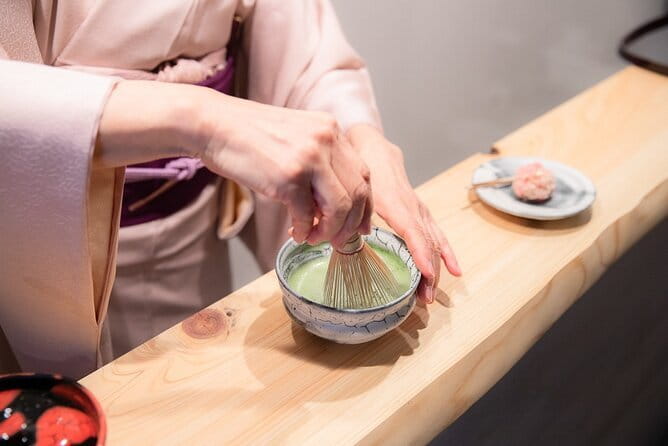
Ninshu is housed in a traditional Kyoto machiya said to be more than 100 years old. A machiya is a narrow traditional townhouse associated with Kyoto’s older commercial streets and residential areas. Here, the building forms part of the experience, even though the visit is focused on the garden, tea, and pottery.
The setting gives the activity a stronger sense of place than a modern cafe or a generic craft studio would. You are not simply making a sand design in an anonymous room. You are doing it in a shop connected to Kyoto pottery and an older style of local architecture.
The information available does not provide a detailed architectural route or name specific rooms, so you should not expect a full house tour. Think of the machiya as the setting for the activity and a glimpse of traditional Kyoto design.
That makes the visit especially useful when your sightseeing schedule already includes major temples and shrines. You get a quieter, more intimate cultural stop without committing to a long workshop.
Browsing and buying handmade pottery
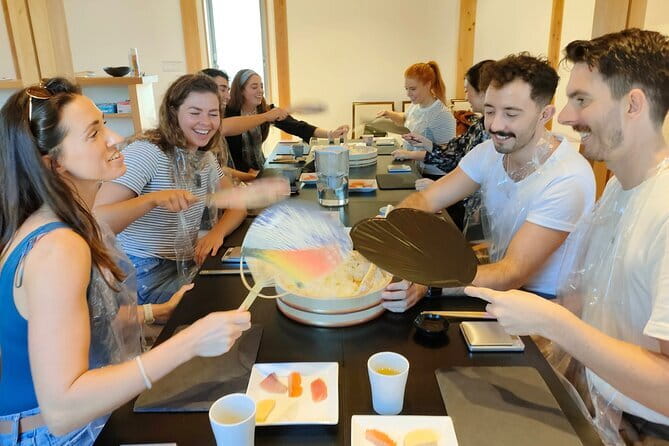
Ninshu is also a handmade pottery shop, so you can look at pieces after the garden activity. This is one of the better reasons to choose this experience instead of a simple tea tasting. You can connect the pottery used in the garden with the items available for purchase.
The shop says its pottery is dishwasher and microwave safe. That detail matters if you live outside Japan and want to use a piece at home rather than display it on a shelf. You can buy something tied to the experience while still choosing an item that fits ordinary daily life.
The supplied information does not give prices, shapes, sizes, or shipping arrangements for the pottery. Ask about those points at the shop if you are considering a purchase. Do not assume that every item has the same care instructions, even though the pottery is described as suitable for dishwasher and microwave use.
I like this part because it can turn a short activity into a more personal souvenir stop. A mass-produced charm may remind you of Kyoto for a few days. A handmade cup or bowl that you use at home can keep the memory in your daily routine.
More Tea and Calligraphy Workshops in Japan
- Kyoto Hidden Riverside Zen Mediation and Uji Matcha Experience
★ 5.0 · 9 reviews - Whisk Your Own Matcha: A Zen Matcha Experience at Temple
★ 3.6 · 7 reviews - Kyoto: Nighttime Zen Meditation and Matcha Tea Experience
★ 5.0 · 7 reviews - Kyoto: Make Zen Garden and Taste Matcha in Pottery Shop
★ 5.0 · 5 reviews
What the 30-minute schedule really means
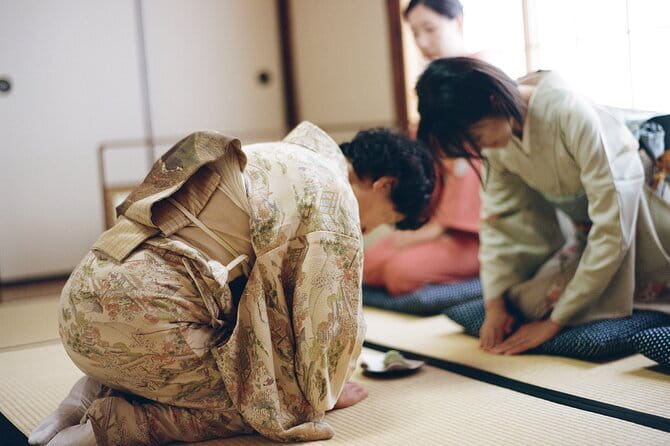
The advertised duration is about 30 minutes. That is enough time for a compact activity, tea, wagashi, and photographs, but it is not enough for a long pottery class or a careful study of Zen garden design.
You should arrive ready to follow a short sequence:
- Meet at Ninshu vessel shop and matcha cafe.
- Create sand patterns and arrange pottery vessels in your small garden.
- Enjoy Ippodo matcha and seasonal wagashi.
- Take photographs with your finished design.
- Browse the handmade pottery shop before leaving.
The exact amount of time spent on each stage is not specified. If you enjoy taking photographs or shopping, your overall stop may take longer than the formal 30-minute activity.
The short format works well between other Kyoto plans. You can fit it into an afternoon without giving up half a day. It also makes the price of about $14.12 per person easy to assess: you are paying for a brief guided cultural activity, tea, a sweet, and access to a distinctive shop setting.
For that price, I see good value if you want a light, low-pressure experience. The value is weaker if you expect a full workshop, a formal tea ceremony, or a detailed lesson about Zen garden construction.
Group size, communication, and the human side
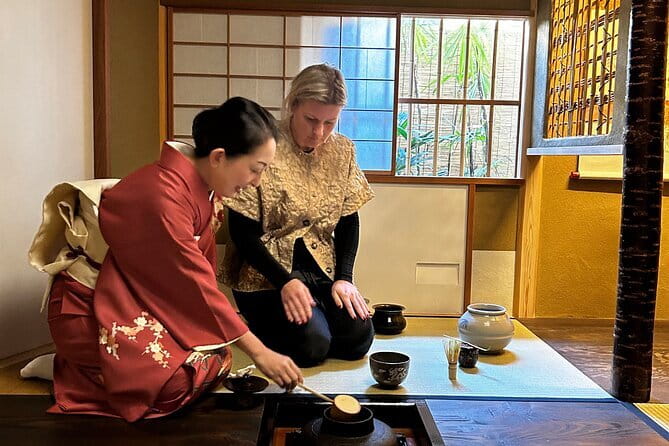
The maximum group size is eight people. That is small enough to keep the activity from feeling like a large class, though the actual atmosphere will depend on how many people book the same time.
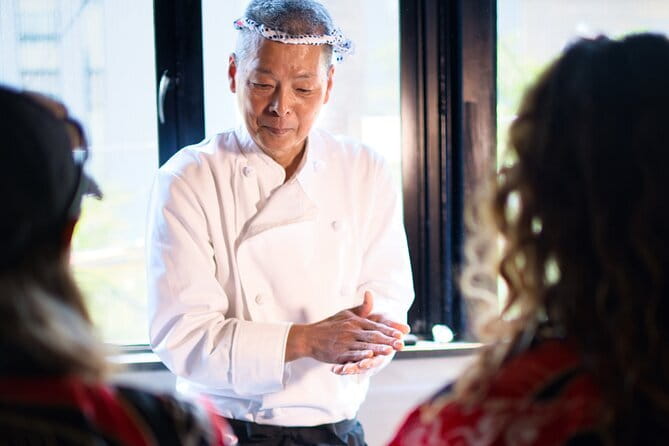
The staff are described as welcoming and kind, and that warmth was one of the strongest positive points in the available feedback. At the same time, communication was described as somewhat awkward, possibly because of the language barrier. That does not mean you cannot take part, but you should keep your expectations practical.
The instructions appear to be simple enough for a short activity, and the garden design does not require technical Japanese knowledge. Still, you may want to pay close attention to demonstrations or visual cues if explanations are brief.
No individual guide names are provided, so you cannot request a particular host. The provider is listed as 仁秀 器ギャラリー & 抹茶処, or Ninshu vessel shop and matcha cafe.
Who will enjoy this Kyoto stop most
I would recommend this experience to you if you want one or more of the following:
- A short cultural activity that does not require much walking.
- A family-friendly way to introduce children to Japanese design.
- A calm break between larger Kyoto sights.
- A chance to taste matcha without committing to a long tea ceremony.
- A handmade pottery souvenir that you can use at home.
- A photo with a personal connection to your activity.
Children can take part, and the lack of difficult movement makes it suitable for older adults as well. Service animals are allowed, and the shop is near public transportation.
You may want to skip it if your main goal is a serious tea lesson, a large traditional garden, or a hands-on pottery class involving clay and a kiln. This activity uses sand patterns and vessels. It is closer to a short cultural craft encounter than a full workshop.
It is also less suitable if you dislike brief, structured visits. The experience ends back at the meeting point, and the formal program is only about 30 minutes.
Location and cancellation details
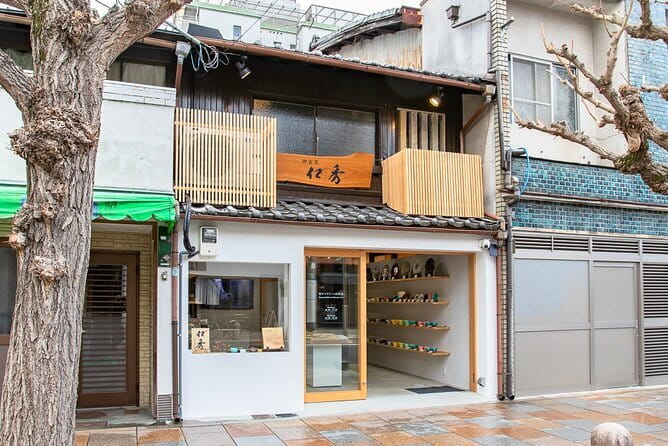
The meeting point is Ninshu vessel shop and matcha cafe at 18-1 Fujikicho, Nakagyo Ward, Kyoto, 604-0992, Japan. The activity begins and ends there. It is near public transportation, though no specific station or walking time is supplied, so check the route before you set out.
Confirmation is provided when you book. Mobile tickets are available, which makes entry straightforward if you keep the ticket easy to access on your phone.
Free cancellation is available up to 24 hours before the start time for a full refund. Cancellations or changes within 24 hours are not accepted for a refund. The experience requires good weather, and if poor weather causes a cancellation, you will be offered another date or a full refund.
The weather rule may seem unusual for a shop-based visit, but it is part of the stated policy. Check your plans on the day before the activity, especially if your Kyoto schedule is tightly packed.
Is the $14.12 price worth it?
At about $14.12 per person, this is one of the easier Kyoto experiences to add to a day of sightseeing. The price includes more than a drink: you make a garden, taste matcha and wagashi, use a traditional setting, and can browse handmade pottery.
The key question is how much structure you want. If you see the visit as a short, creative pause with a snack, the price is fair. If you expect a polished performance with extensive explanations, you may find the experience too basic.
The average booking time of 25 days in advance suggests that you should not leave it until the last minute if it fits an important Kyoto date. The group limit of eight also helps explain why advance planning may be useful.
I would treat the price as good value for families, first-time visitors looking for a gentle cultural activity, and people who enjoy buying useful local crafts. I would be more cautious if you are choosing between this and a formal tea ceremony, since the two offer different levels of instruction and ceremony.
Should you book the Zen garden and matcha experience?
Book it if you want a short, affordable Kyoto activity that combines design, tea, wagashi, and handmade pottery in an old machiya. The garden-making is the strongest feature because it gives you something personal to do, rather than asking you to sit and watch.
Go in with modest expectations. The visit lasts only about 30 minutes, the tea may be prepared out of sight, and communication may feel slightly awkward. Still, the kind hosts, good matcha, seasonal sweet, and chance to create a small garden give the experience a clear appeal.
For a quiet stop between temples, especially with children or older family members, I would book it. For a full tea lesson or a serious craft class, spend your time elsewhere.
FAQ
Where does the experience begin and end?
It begins and ends at Ninshu vessel shop and matcha cafe, 18-1 Fujikicho, Nakagyo Ward, Kyoto, 604-0992, Japan.
How long does the activity last?
The experience lasts approximately 30 minutes.
What do you do during the activity?
You create your own small sand garden using patterns and pottery vessels arranged in a Zen garden style.
Is matcha included?
Yes. You enjoy matcha from Ippodo, a famous Kyoto tea company, after making the garden.
Are Japanese sweets included?
Yes. Seasonal wagashi from Senbon Tamajushuken is served with the matcha.
Can I mention food allergies?
Yes. Some sweets may contain wheat, egg, or yams. Tell the provider about your allergies, and sweets without those listed ingredients can be served.
How many people can join?
The maximum group size is eight people.
Can I cancel for a full refund?
Yes, if you cancel at least 24 hours before the experience start time. Cancellations or changes within 24 hours are not refunded or accepted, and a weather cancellation offers a different date or full refund.
More Food and Drink Tours in Kyoto
- Private Tea Ceremony and Sake Tasting in Kyoto Samurai House
★ 5.0 · 163 reviews - Jakarta: Volcano, Tea/Rice Fields, Hot Spring, Local Food
★ 4.9 · 515 reviews - SF’s Chinatown: Tea & Dim Sum Food Tour – Includes full meal, 3hr
★ 5.0 · 153 reviews - Experience all of Japanese culture and Japanese food experience classes “origami, udon, Japanese food, green tea, calligraphy” in 4 hours
★ 5.0 · 105 reviews
More Tea and Calligraphy Workshops in Kyoto
- Kyoto Tea ceremony with Japanese Flower Arrangement Ikebana
★ 5.0 · 3 reviews - Tea ceremony at Kyoto’s Zen Temple Teahouse
★ 5.0 · 2 reviews - Silent Beauty of Kyoto Zen Walk and Tea Experience
★ 5.0 · 2 reviews
Fresh tea listings around Kyoto
- Traditional Tea Ceremony in Kyoto★ 4.5 · 3 reviews
- Kyoto: Authentic Tea Ceremony in a Small Group★ 5.0 · 7 reviews
- Uji Walking Tour – Byodo-in temple and Tea Ceremony from Kyoto★ 3.5 · 3 reviews
- Tea ceremony at Kyoto’s Zen Temple Teahouse★ 5.0 · 2 reviews
- Tea Ceremony Experience in Traditional Kyoto Townhouse★ 5.0 · 19 reviews
- Tea Ceremony in 150 Years Old Townhouse with Tables and Chairs★ 5.0 · 22 reviews
- Sencha-do the Japanese Tea Ceremony Workshop in Kyoto★ 5.0 · 21 reviews
- Silent Beauty of Kyoto Zen Walk and Tea Experience★ 5.0 · 2 reviews
Matcha Experiences, compared.
World Heritage Kyoto & Nara Uji Authentic Matcha Experience
Read our review →
Matcha Making Class in Tokyo with Authentic Japanese Sweets Set
Read our review →
Kyoto: Tea Museum Tickets and Matcha Grinding Experience
Read our review →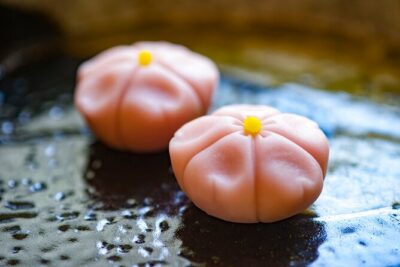
Matcha Making Class in Osaka with Authentic Japanese Sweets Set
Read our review →
Kyoto: Tea Ceremony Meditation – Make Matcha with Tea Master
Read our review →
Tokyo: Matcha Making Experience with Mochi Sweets in Asakusa
Read our review →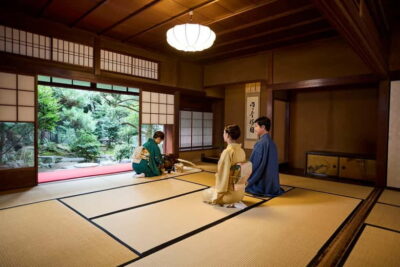
Kyoto: Kimono Tea Ceremony with Matcha and Sweet
Read our review →