
Review · MATCHA EXPERIENCES
Kyoto WAKIMIZU Half Day Tour: Secrets of Matcha & Wagashi Sweets
Kyoto’s finest matcha and wagashi begin with something simple: water. This 2-hour-40-minute walk follows spring sources linked to shrines, local customs, and the city’s underground water system, then ends with matcha and fresh sweets at Kameya Yoshinaga, a confectionery founded in 1803. You taste the water along the way, not just hear about it.
I like the intimate group size, capped at six, and the way the route connects shrine ritual with everyday food. I also like the final tasting, where you get matcha prepared with spring water and namagashi made specially for this experience. The main caution is that the tour needs at least two participants, and the nonrefundable policy makes booking timing important.
Key points at a glance
- Taste three different spring water sources: Visit Yasaka Shrine, Nishiki Tenmangu, and Hiyoketemmangu, with a chance to sample water at the sites.
- See Kyoto through its water supply: Learn why groundwater matters for tea preparation, confectionery, shrine customs, and local beliefs.
- Finish at Kameya Yoshinaga: The 1803 confectionery serves a bowl of matcha and special namagashi not normally available in the shop.
- Small group format: The maximum is six people, which suits a walking tour built around questions and close observation.
- Plan for a real city walk: Private transportation is not included, and the experience begins at 1:00 pm from Kyoto Station.
- Check the booking terms first: The tour is nonrefundable and can be canceled if the minimum group size is not reached.
Why Kyoto’s spring water matters
Wakimizu means spring water, and this tour treats it as more than a background detail. Kyoto sits in a basin with abundant groundwater, and that water has long supported daily life, tea ceremonies, and Japanese confectionery.
That gives the walk a clear theme. Instead of visiting several unrelated sights, you follow one idea from shrine traditions to the preparation of matcha and sweets. You also get to taste the water at its source, which makes the subject practical and sensory.
Water can affect tea in subtle ways, especially when it is used with finely powdered matcha. It also matters when making wagashi, where texture and finish are carefully controlled. The tour does not simply take you to a tea room for a sweet. It asks you to notice the role of water before the final bowl is served.
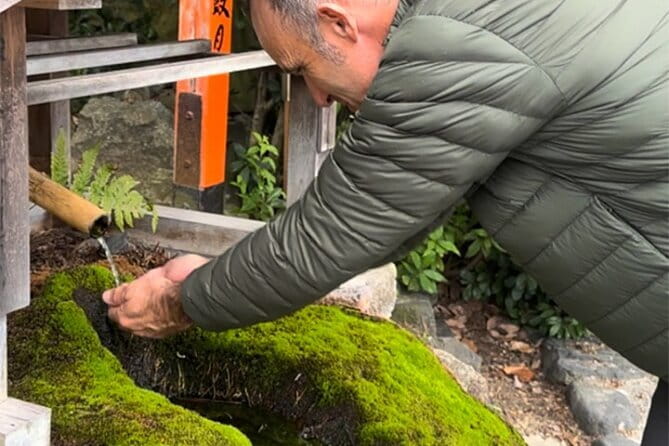
The religious side is just as important. Kyoto’s spring sources are tied to blessings, purification, protection, and local stories. You will encounter customs such as ritual hand washing at shrines, a detail that helps explain how water functions in Japanese sacred spaces.
More Matcha Experiences in Kyoto
- Kyoto: Tea Ceremony Meditation – Make Matcha with Tea Master
★ 4.8 · 406 reviews - Kyoto: Kimono Tea Ceremony with Matcha and Sweet
★ 4.9 · 249 reviews - Kyoto: Arashiyama Bamboo, Temple, Matcha, Monkeys & secret spots
★ 5.0 · 219 reviews
Yasaka Shrine and the first taste of wakimizu
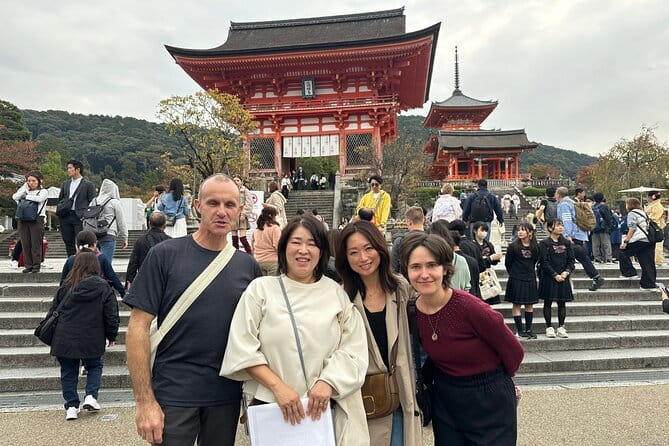
The walk begins at Yasaka Shrine, one of Kyoto’s major sacred sites. The shrine is connected with the eastern direction of the city and with the Azure Dragon in the traditional four-creature protection of Kyoto. Beneath the main hall, a mystical pond is said to be the dragon’s lair.
The spring water associated with this place is called Gion Shinsui, or Power Water. Another nearby source, Biyomizu, is linked with beauty and is used in a local custom involving a few drops after drinking the shrine water.
You can expect about 20 minutes here. That is enough time for the guide to explain the shrine’s beliefs and for you to take in the water-related customs without turning the stop into a long lecture. The admission cost is free, but the value comes from interpretation and context.
This is also the point where the tour’s approach becomes clear. You are not only looking at buildings and taking photographs. You are learning how religious ideas, local geography, and daily habits overlap.
If you have never visited a Japanese shrine, pay attention to the washing rituals. The water used for purification is not the same thing as a casual drinking fountain, so follow the guide’s instructions and local etiquette. The supplied information indicates that participants use ritual hand washing fountains during the route.
Nishiki Tenmangu and water linked to learning
The next spring stop is Nishiki Tenmangu, with about 10 minutes set aside. This shrine is dedicated to Tenjin, a deity associated with learning. Its spring water is believed to offer protection from misfortune, wisdom, and success in academic pursuits.
That makes this stop a good example of how water takes on meaning through the place where it appears. The water is not presented only as a mineral or taste. It carries a connection to prayer and personal hopes.
Ten minutes is brief, so you should expect a focused visit rather than a long tour of the shrine grounds. The stop works best if you listen closely to the explanation, observe how people approach the sacred water, and ask questions while the group is small.
The route also gives you a different view of central Kyoto. Major shrines and busy shopping streets can be close together, yet their purposes feel very different. This experience uses the spring sources to connect those parts of the city.
Hiyoketemmangu and the shrine that escaped fire
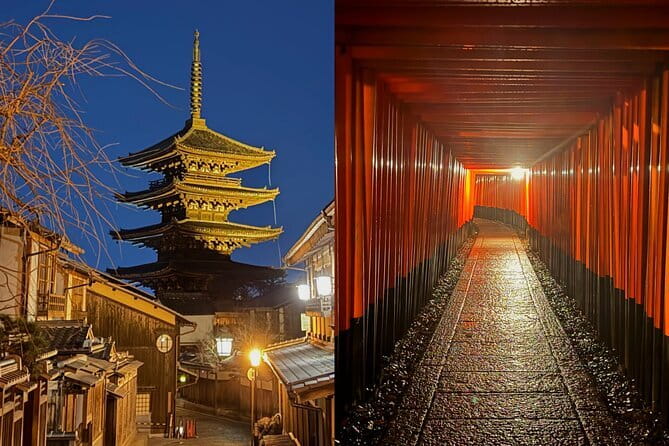
Hiyoketemmangu is the third spring water stop, also planned for about 10 minutes. The shrine is revered as a fire-preventing deity, and its story is tied to the Hamaguri-gomon Incident in the late Edo period.
According to the local tradition, the area escaped a major fire during that conflict. Stories of the shrine’s protection followed, and the site became associated with safety from fire.
This stop adds a historical layer to the walk without changing its main theme. You see how a dramatic event can shape the reputation of a sacred place, then connect that reputation to the water used there.
The three spring sources have different associations: power and beauty at Yasaka Shrine, learning at Nishiki Tenmangu, and fire prevention at Hiyoketemmangu. That variety keeps the walk from feeling like a series of identical fountains.
The schedule is fairly tight. With three shrine stops and a final confectionery visit packed into less than three hours, you will need to stay with the group. This is not a slow, open-ended wandering tour.
More Tea and Sweets Making in Kyoto
- Kyoto: Japanese Traditional Sweets Making and Tea Ceremony
★ 4.4 · 314 reviews - Kyoto: Traditional Tea Ceremony with Matcha & Sweets in Gion
★ 4.9 · 27 reviews - 2 Types of Japanese Sweets making and Tea Ceremony
★ 4.6 · 17 reviews - Kyoto near Fushimiinari Wagashi making&Small Group Tea Ceremony
★ 5.0 · 14 reviews
Kameya Yoshinaga and the matcha finale

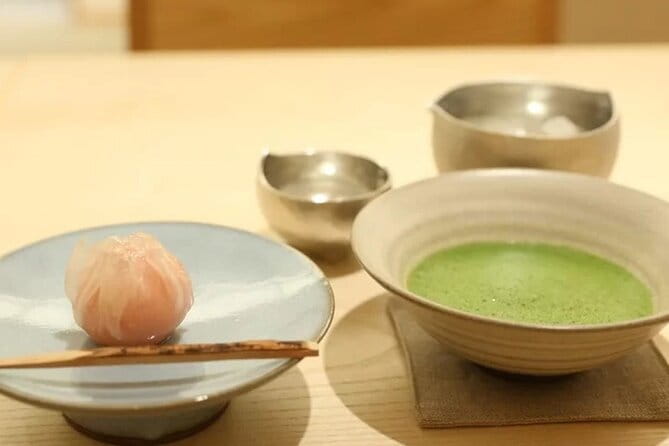
The final stop is Kameya Yoshinaga, a Japanese confectionery founded in 1803. Here the spring water theme reaches its most enjoyable point: you receive a bowl of matcha prepared with spring water and namagashi, or fresh Japanese wagashi.
The sweets are made specially for this experience and are not normally available in the shop. That detail matters. You are not simply buying a standard packaged souvenir. The tasting is designed as the conclusion to the walk and gives you a chance to connect the earlier explanations with what is on the table.
Namagashi are delicate fresh sweets, often made to reflect season, shape, and color. The supplied details do not specify the exact designs or flavors you will receive, so do not book this expecting one particular sweet. The point is the special preparation and the pairing with matcha.
About 30 minutes is planned here. That gives you time to enjoy the tea and sweets without rushing through the final stop. It also offers a welcome chance to sit after walking between several central Kyoto sites.
For many people, this will be the strongest part of the experience. The shrine stops provide the setting and context, but the tasting gives the theme a clear finish. You can compare the idea of water quality with the actual taste and texture of the tea and confectionery.
What the group size means for you
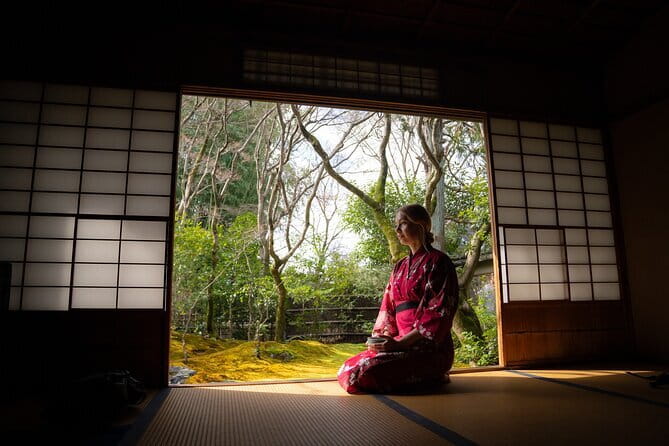
The maximum group size is six. That is a useful limit for a walk involving shrine etiquette, spring water, and food preparation. You should have a better chance to hear the guide and ask questions than you would in a large coach group.
The information provided does not give the guide’s name, so you cannot choose the experience based on a named host. The focus is clearly on local explanation, and previous comments highlight learning about Yasaka Shrine, shrine customs, and lesser-known sacred sites.
The minimum is two participants. If that number is not reached, the operator may cancel up to four days before departure, with a full refund offered. That rule is worth noting if you are building a tight Kyoto schedule.
The tour starts at 1:00 pm and ends back at Kyoto Station according to the stated meeting information. The exact walking route between stops is not detailed, and private transportation is not included. Plan on a city walking experience rather than a vehicle-based tour.
Is $80 a fair price?
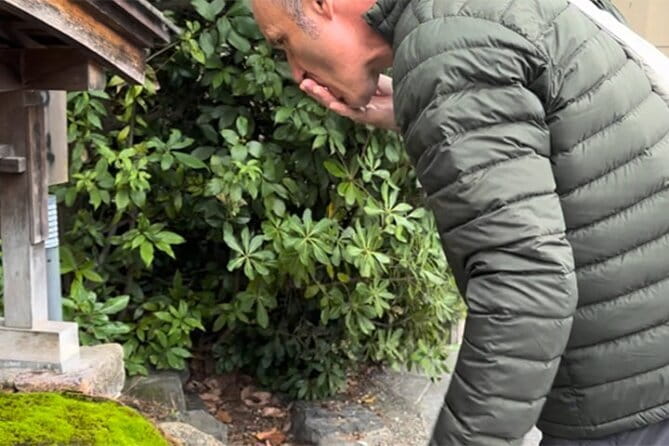
At $80 per person, this is not the cheapest way to visit a shrine or drink matcha in Kyoto. You are paying for a small group, a themed walking route, spring water tastings, guide interpretation, and a special matcha and wagashi service at a historic confectionery.
The value is strongest if you want context. You could visit Yasaka Shrine and a tea shop on your own for less, but you would not necessarily understand how the different spring sources connect with Kyoto’s beliefs and food traditions. You also might not find the tour-only namagashi at Kameya Yoshinaga.
The value is weaker if you mainly want a standard tea ceremony or a full shrine tour. This is not presented as a formal lesson in whisking matcha, and the shrine visits are short. It is a compact cultural walk with a tasting at the end.
I would compare the price with what you already have planned in Kyoto. If you are already visiting Yasaka Shrine, Nishiki Tenmangu, and nearby central sights, the tour may add useful interpretation and a special sweet. If your schedule is tight, the 1:00 pm start and 2-hour-40-minute length make it easier to fit around a morning visit.
Who will enjoy this Kyoto walk
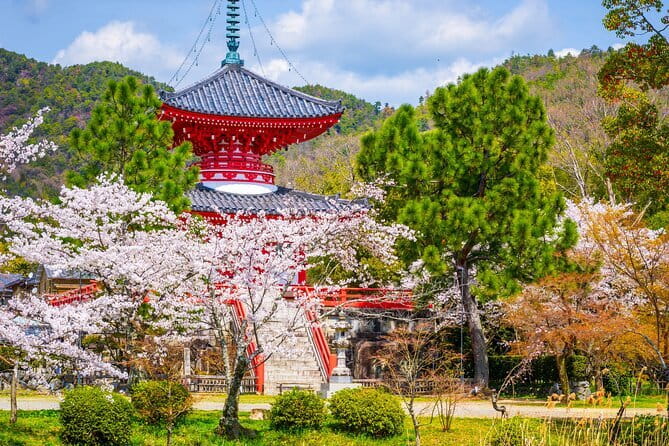
This experience suits you if you like food with a story behind it. The matcha and wagashi are not treated as isolated treats. You learn about the water used to prepare them and the sacred sources found across the city.
It also suits first-time visitors who want help with shrine customs. The stop at Yasaka Shrine introduces local beliefs, and the route includes ritual hand washing fountains and explanations of how to behave at sacred sites.
A small group makes the tour a good choice for solo bookers who prefer company, couples, and families with older children who can manage a city walk. The information says most people can participate, but it does not provide a detailed accessibility assessment.
You may want another experience if you need a fully private tour, private transportation, or a long sit-down tea ceremony. You should also think twice if you dislike fixed schedules. The three short shrine visits require you to move along on time.
Practical details before you book
The experience uses a mobile ticket, so keep your booking accessible on your phone. Confirmation is sent within 48 hours, subject to availability.
The starting point is listed as Kyoto Station, at Higashishiokoji Kamadonocho in Shimogyo Ward, Kyoto. The end point is also listed as Kyoto Station. Since the route includes several city sites and private transportation is not included, check the final meeting instructions carefully before departure.
The experience is offered by Tranquwell. It is near public transportation, begins at 1:00 pm, and lasts approximately 2 hours and 40 minutes.
The cancellation policy is strict. The experience is nonrefundable and cannot be changed for any reason. If the operator cancels because the minimum of two participants is not met, you will be offered another date or experience, or a full refund.
Should you book the wakimizu tour?
Book it if you want a small, focused introduction to Kyoto’s connection between spring water, shrine customs, matcha, and wagashi. The strongest reasons are the three distinct water sources, the compact group, and the final tasting at Kameya Yoshinaga with sweets made specially for the tour.
Skip it if you are seeking a formal tea ceremony, private transport, or a deep visit inside each shrine. The schedule is short, and the price depends on how much you value interpretation and the special confectionery tasting.
For the right visitor, this is a smart half-day choice. You finish with more than a sweet snack. You leave with a better sense of why water matters in Kyoto’s sacred places and on its tea table.
FAQ
How long does the Kyoto wakimizu tour last?
The tour lasts approximately 2 hours and 40 minutes.
What time does the tour start?
The stated start time is 1:00 pm.
Where does the tour begin and end?
The meeting information lists Kyoto Station as both the starting point and the end point, at Higashishiokoji Kamadonocho in Shimogyo Ward.
Which places are visited?
The route includes Yasaka Shrine, Nishiki Tenmangu, Hiyoketemmangu, and Kameya Yoshinaga.
Will I taste spring water during the tour?
Yes. The experience includes visits to three spring water sources, with water tasted at the locations.
Is matcha included?
Yes. A bowl of matcha and sweets is included at the final confectionery stop.
What kind of sweets are served?
You receive namagashi, or fresh Japanese wagashi sweets, specially made for this experience. They are not usually available in the shop.
How many people can join the tour?
The maximum group size is six people. At least two participants are required for the tour to operate.
Is private transportation included?
No. Private transportation is not included, so you should expect a walking experience between the listed stops.
Fresh tea listings around Kyoto
- Traditional Tea Ceremony in Kyoto★ 4.5 · 3 reviews
- Kyoto: Authentic Tea Ceremony in a Small Group★ 5.0 · 7 reviews
- Uji Walking Tour – Byodo-in temple and Tea Ceremony from Kyoto★ 3.5 · 3 reviews
- Tea Ceremony Experience in Traditional Kyoto Townhouse★ 5.0 · 19 reviews
- Tea Ceremony in 150 Years Old Townhouse with Tables and Chairs★ 5.0 · 22 reviews
- Tea ceremony at Kyoto’s Zen Temple Teahouse★ 5.0 · 2 reviews
- Silent Beauty of Kyoto Zen Walk and Tea Experience★ 5.0 · 2 reviews
- Sencha-do the Japanese Tea Ceremony Workshop in Kyoto★ 5.0 · 21 reviews
Matcha Experiences, compared.
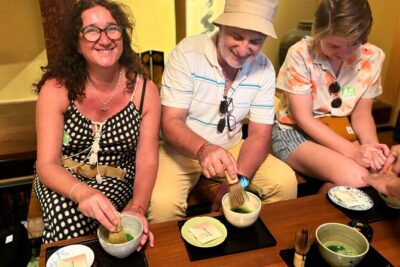
World Heritage Kyoto & Nara Uji Authentic Matcha Experience
Read our review →
Matcha Making Class in Tokyo with Authentic Japanese Sweets Set
Read our review →
Kyoto: Tea Museum Tickets and Matcha Grinding Experience
Read our review →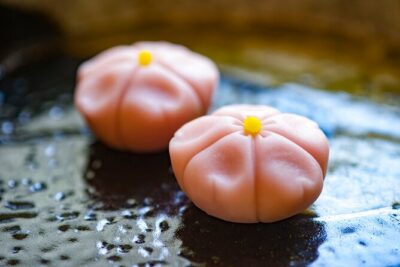
Matcha Making Class in Osaka with Authentic Japanese Sweets Set
Read our review →
Kyoto: Tea Ceremony Meditation – Make Matcha with Tea Master
Read our review →
Tokyo: Matcha Making Experience with Mochi Sweets in Asakusa
Read our review →
Kyoto: Kimono Tea Ceremony with Matcha and Sweet
Read our review →
Browse the lists this tour appears in