
Review · MATCHA EXPERIENCES
Tokyo: Matcha Tasting and Making Experience
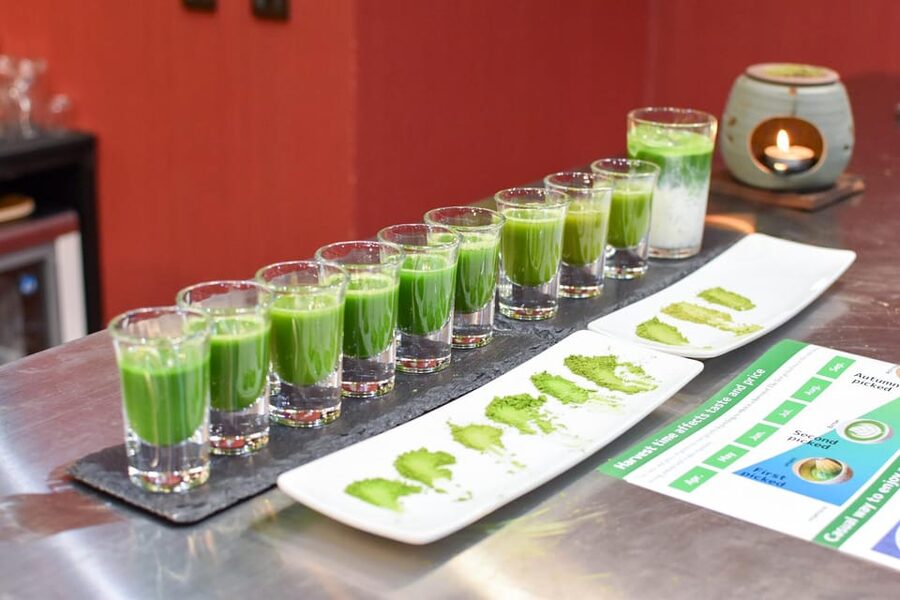
The best part of this matcha tasting in Asakusa is the side-by-side comparison. Instead of drinking one sweetened cup and calling it tea, you look at color, smell, and taste across matcha from five Japanese production areas. The session description lists 10 types overall, while the detailed run-down describes eight servings, so confirm the exact number when you book.
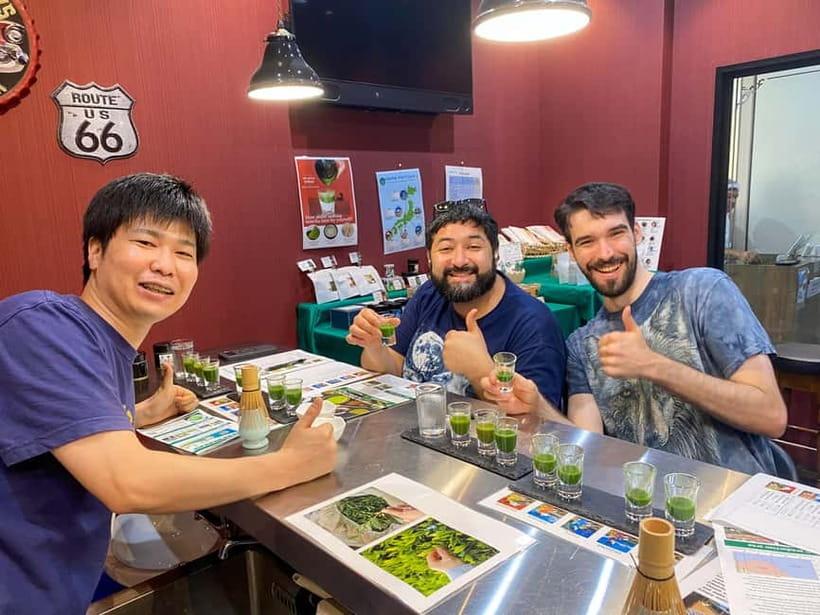
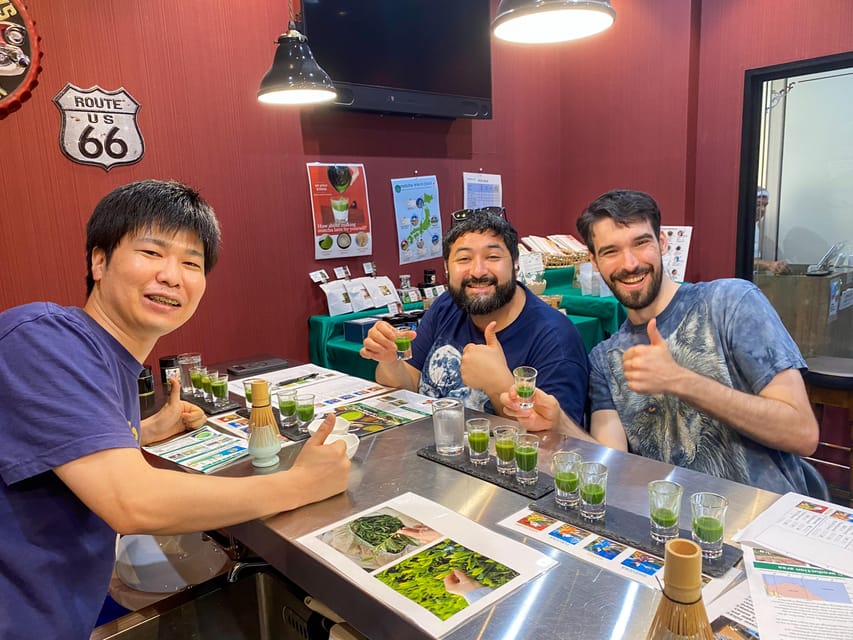
I like two things right away: the guide is a former tea farmer from Kyoto, and the group is limited to five people. That gives you a chance to ask practical questions about cultivation, grading, and preparation. I also like that you make your own cup with a bamboo whisk, then use the same matcha knowledge at home.
The main consideration is the price, $63 per person for 90 minutes. It is fair if you want a focused tea lesson with tastings and hands-on practice, but it is not simply a café stop. The class is designed for people who want to learn, so those looking only for a quick latte may find it more than they need.
Key points to know before you book
- Five production areas in one sitting: Compare Japanese matcha by region rather than treating all green tea powder as the same.
- A former Kyoto tea farmer leads the class: Chisei brings six years of practical growing experience to the lesson.
- Small portions make the tasting manageable: You can compare several teas without being asked to finish large bowls of strong matcha.
- You whisk your own ousucha: The bamboo tea whisk lesson gives you a skill you can use after returning home.
- The finish is milk-friendly: Try the host’s original matcha blend in a latte, along with hojicha latte and matcha sweets.
- The location is easy to identify: Enter Henn na Hotel Asakusa Tawaramachi, pass FamilyMart on the first floor, and go to the second floor.
Why this Asakusa matcha class is different
Many tea stops in Tokyo give you one prepared drink. This class asks you to compare several teas before choosing a favorite. That simple change matters. Matcha can vary in color, fragrance, bitterness, sweetness, and texture, and a row of small servings makes those differences easier to notice.
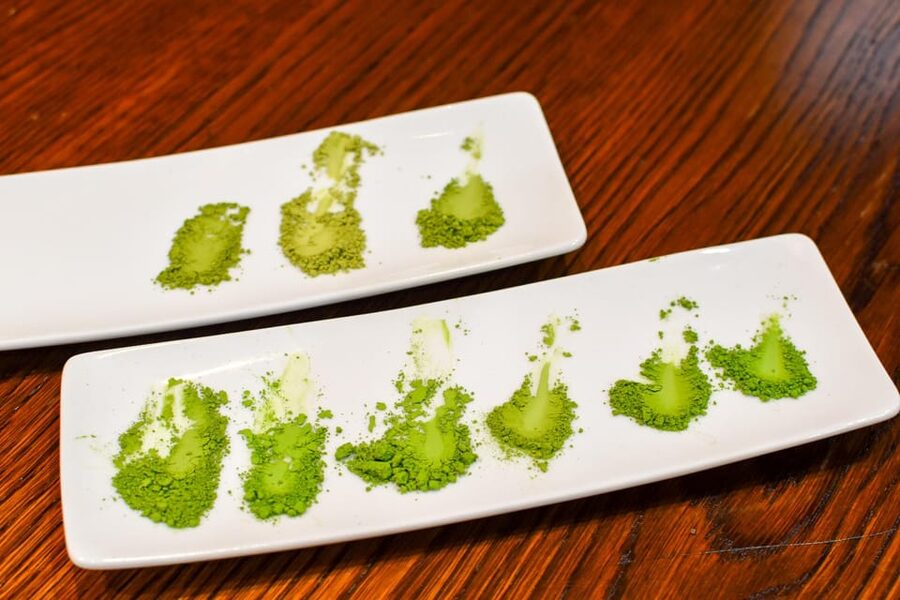
The class covers matcha from five representative production areas in Japan. You are not just told that the teas differ. You see the powder before water is added, then taste each preparation. The goal is to pay attention to the full cup, including the appearance, aroma, and flavor.
The detailed session plan refers to eight samples. Six are ceremonial-grade matcha, while two are products sold as matcha around the world but are not technically defined as matcha. The broader description says 10 types, so this is one detail I would clarify before making a special trip for a particular number of samples.
That distinction is useful for beginners. In many cafés and shops, matcha is used as a general term for green tea powder. Here, you get a basic explanation of what counts as matcha and what does not. You do not need prior tea knowledge, and you will not be expected to recognize technical terms before the class begins.
More Matcha Experiences in Tokyo
- Matcha Making Class in Tokyo with Authentic Japanese Sweets Set
★ 5.0 · 744 reviews - Tokyo: Matcha Making Experience with Mochi Sweets in Asakusa
★ 4.9 · 388 reviews - Asakusa Cultural Walk & Matcha Making Tour
★ 5.0 · 245 reviews
Meeting Chisei at Henn na Hotel
The class takes place at a café inside Henn na Hotel Asakusa Tawaramachi. The meeting point is specific: look for the FamilyMart on the first floor of the hotel, enter the building, and go to the second floor.
This is not a street-side tea farm or a traditional garden. You are learning in a central Tokyo hotel setting. That makes the experience practical for a day in Asakusa, though it also means the surroundings are modern and urban rather than rustic.
Your instructor is Chisei, a former tea farmer who grew tea in Kyoto for six years. That background gives the lesson a useful angle. You hear about matcha not only as a finished drink, but also as a crop that must be cultivated, processed, and prepared in a particular way.
I would arrive with one or two questions ready. You might ask how the production areas affect flavor, why one powder looks brighter than another, or what makes a matcha suitable for drinking with milk. With only five people in the class, there should be room for questions without turning the session into a large lecture.
The instruction is in English. The class is designed for general visitors, so you do not need to be a tea specialist. At the same time, the focus is educational. Commercial questions are not part of the session, and anyone booking for commercial purposes is asked to contact the provider first.
The welcome drink and the story behind matcha
The experience begins with a welcome drink. While you have it, Chisei explains the history and production of the matcha you will taste.
This opening gives the tasting some context before the cups arrive. You learn about the definition of matcha, cultivation methods, and the place of tea production in Japan. The value here is not just the amount of information. It is the chance to connect what you hear with what you are about to drink.
For a first-time visitor, this part can prevent a common mistake: assuming that every green powder is the same. Matcha is prepared and marketed in many ways, and the lesson separates the tea itself from the café drinks built around it.
The class is only 90 minutes, so the introduction cannot cover every part of Japanese tea culture. Think of it as a clear working lesson rather than a full history course. You will get enough background to make the tasting more meaningful and the home preparation less mysterious.
Comparing matcha from five Japanese regions
The central section serves small portions of matcha for comparison. The detailed plan calls for eight types from five tea areas, including six ceremonial-grade samples and two products commonly sold as matcha but not technically defined as matcha.
You first look at the color. This is a small but helpful step. Side-by-side cups let you see that matcha is not always the same shade of green. After the visual check, the teas are prepared and served so you can compare fragrance and flavor.
I like the order of this tasting. You are not asked to memorize a list of Japanese tea terms. Instead, you move through simple questions: What do you see? What do you smell? What do you taste? Which cup do you prefer?
The small portions are important. Matcha has a concentrated flavor, and several full bowls would be too much for many people. Small servings let you notice differences without making the class feel like a drinking challenge.
You also get to choose your favorite matcha at the end of the comparison. That choice gives the tasting a practical purpose. Rather than leaving with an abstract lesson about quality, you identify the style that suits your own palate.
Keep your expectations sensible. The experience does not promise a formal professional tasting certificate or a detailed tour of five growing regions. It offers a guided comparison, basic tea education, and enough information to help you understand what is in your cup.
Same city, a very different cup:
- Kimono Tea Ceremony at Tokyo, Asakusa Maikoya
★ 5.0 · 638 reviews - Tokyo: Traditional Tea Ceremony with a Tea Master
★ 5.0 · 528 reviews - Dynamic Tokyo: Tokyo Tower, Tea Experience, Bay Cruise Day Tour
★ 4.5 · 521 reviews - Tokyo: Matcha and Kimono Experience
★ 4.7 · 219 reviews
Whisking your own ousucha
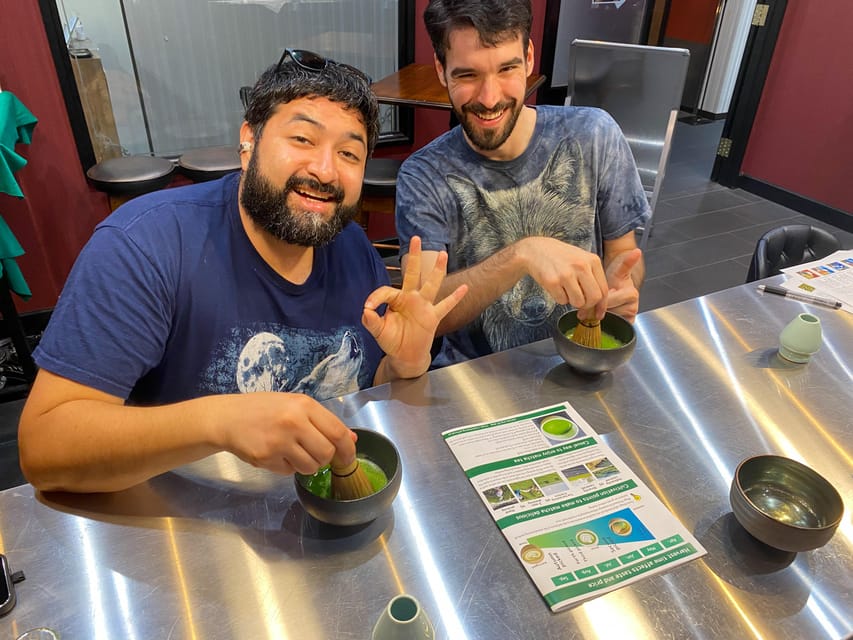
After tasting the samples, you choose one matcha and prepare it yourself. The final tea is ousucha, the thinner style of matcha commonly associated with whisked tea.
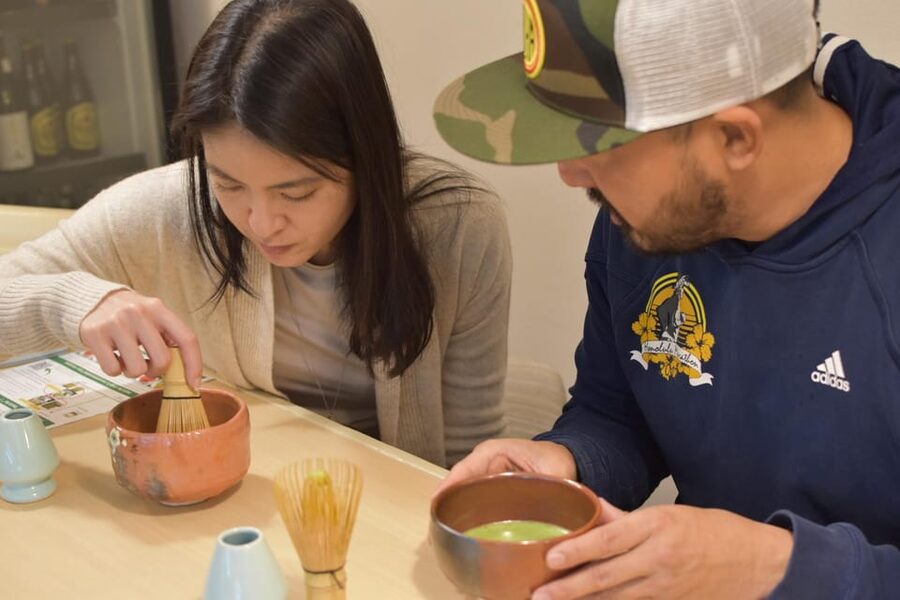
You use a bamboo tea whisk, called a chasen. The hands-on part is more valuable than watching another person prepare the drink because you get a feel for the movement, the water, and the texture. You do not need to produce a perfect layer of foam to benefit from it.
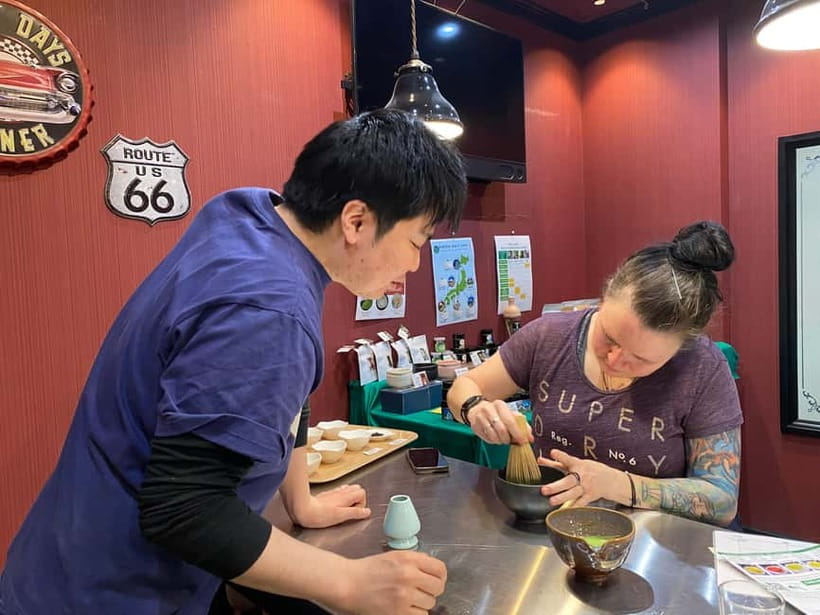
Chisei demonstrates the process, then gives you the chance to try. The class is small, so you can ask for help with the whisking motion or the consistency. This is also the point where the earlier comparison pays off. You are making a tea you already tasted, not choosing blindly from an unfamiliar menu.
The promise that you can make matcha at home is realistic, provided you buy the right tools and powder afterward. You will leave with a basic method and some confidence, but not necessarily a full home tea setup. The experience is a starting point, not a replacement for years of practice.
I would pay attention to the whisking technique and the feel of the bowl. Those details are easier to remember when you have tried them yourself. If you already make matcha at home, you may find the tasting more useful than the mechanics, but beginners should get the most from this section.
Matcha latte, hojicha latte, and sweets
The final food and drink portion shifts from traditional preparation to modern café flavors. You try an original matcha blend made to work well with milk, along with a matcha latte, a hojicha latte, and matcha sweets.
This is a smart finish for a mixed group. One person may enjoy the grassy, concentrated taste of plain matcha, while another may prefer a smoother latte. Hojicha, with its roasted tea character, gives you a different flavor from both matcha and milk-based matcha drinks.
The latte blend is not necessarily the same tea you selected for the plain tasting. That is worth noting. Matcha chosen for drinking straight and matcha designed to hold its flavor in milk can serve different purposes. The class shows you both uses rather than suggesting there is one perfect powder for everything.
The sweets add a gentle finish after several concentrated tea samples. They also make the experience friendlier for people who are curious about matcha but unsure about its bitterness.
This section is less about tea technique and more about how matcha appears in modern Japanese cafés. If you want only a traditional tea ceremony, the latte portion may feel too casual. If you want to understand both classic preparation and the drinks you see around Tokyo, it rounds out the class well.
Is $63 a fair price?
At $63 per person, this is not the cheapest way to drink matcha in Tokyo. You can buy a latte for far less. The price makes more sense when you count the full package: a 90-minute English-language lesson, matcha from five production areas, a former tea farmer as instructor, your own whisking practice, and drinks and sweets at the end.
The group limit matters here. With no more than five participants, the class can stay personal. You are not simply watching a demonstration from the back of a room. You have a chance to taste, choose, prepare, and ask questions.
I would consider the price good value for three types of visitors:
- You want a clearer understanding of Japanese matcha before buying it.
- You enjoy food and drink classes where you do something rather than only listen.
- You want an easy English-language activity in Asakusa that fits into a short block of your day.
The value is weaker if you already know a great deal about tea, own a good whisking routine, or mainly want a sweet café drink. In that case, the educational material and comparison may feel unnecessary.
The booking terms are useful for a changing Tokyo schedule. You can reserve now and pay later, and cancellation is free up to 24 hours before the activity for a full refund. Check the available starting times because the class lasts 90 minutes.
Who should book this experience?
I would recommend it to first-time matcha drinkers, curious home cooks, and anyone who wants more context than a café menu provides. The English instruction and five-person limit make it approachable, while the range of teas keeps it from feeling like a basic demonstration.
It is also a good choice for couples or small groups with different levels of interest. One person can focus on cultivation and regional differences, while another can enjoy the latte and sweets. The class has enough variety that you do not need to arrive as a committed tea fan.
Families should consider the age and attention span of their children, since the session is designed as a class rather than a quick tasting. The supplied information does not state a minimum age, so ask the provider if that matters for your group.
Tea experts may still enjoy the regional comparison, but should keep expectations in check. The experience offers a compact introduction, not a specialist seminar. The number of samples should also be confirmed because the general description and detailed schedule do not match exactly.
Should you book it?
Book this matcha experience if you want to understand what you are drinking, compare several Japanese teas, and learn a skill you can repeat at home. The former Kyoto tea farmer, small group, and hands-on whisking give it more substance than a standard matcha stop.
Skip it if your only goal is a quick latte or if you prefer to spend your Asakusa time outdoors and moving between sights. At $63, the class earns its price through instruction and tasting, not through the amount of food or drink alone.
For most visitors who are curious about Japanese tea but do not know where to begin, I would book it. Just confirm whether your session includes eight or 10 matcha samples, then arrive at the second floor of Henn na Hotel ready to taste slowly and ask questions.
FAQ
Where does the matcha experience take place?
It takes place at a café inside Henn na Hotel Asakusa Tawaramachi in Tokyo. FamilyMart is on the first floor, and you should enter the hotel and go to the second floor.
How long does the activity last?
The experience lasts 90 minutes. Starting times depend on availability.
How many people are in the group?
The group is limited to five participants.
Is the class taught in English?
Yes. The listed language for the instructor and activity is English.
What matcha will I taste?
You will compare matcha from five Japanese production areas. The detailed schedule describes eight types, including six ceremonial-grade matcha and two products sold as matcha but not technically defined as matcha. The broader description says 10 types, so confirm the exact number when booking.
Do I make matcha myself?
Yes. You choose a favorite from the tasting and prepare ousucha using a bamboo tea whisk.
Are drinks and sweets included?
Yes. The experience includes a welcome drink, matcha tasting, matcha latte, hojicha latte, and matcha sweets. Transportation to the location is not included.
More Food and Drink Tours in Tokyo
- Experience all of Japanese culture and Japanese food experience classes “origami, udon, Japanese food, green tea, calligraphy” in 4 hours
★ 5.0 · 105 reviews - Tokyo Sushi Making Class : Sake Ceremony & Matcha Experience
★ 5.0 · 44 reviews - Matcha Experience with of Japanese Tea Tasting in Tokyo
★ 5.0 · 31 reviews - Authentic Japanese tea tasting: sencha, matcha and gyokuro
★ 5.0 · 12 reviews
Fresh tea listings around Tokyo
- Yokohama : Tea Ceremony with Sweets and Souvenir★ 5.0 · 5 reviews
- Walking Tour: Yanaka,Nezu& Sendagi: Tea Ceremony & Old Tokyo★ 5.0 · 3 reviews
- Private Mochi・Matcha sweets Making Class Near Shibuya Area★ 5.0 · 22 reviews
- Private Kimono and tea ceremony at local home near Tokyo Disney★ 5.0 · 6 reviews
- 2 Hours Mochi &Nerikiri Making & Matcha Class in Bunkyo★ 5.0 · 21 reviews
- Tokyo: Tea Ceremony & Japanese Sweets Making★ 5.0 · 10 reviews
- Tokyo Sweets Tour: Hidden Gems & Matcha at an Old Tea House★ 5.0 · 6 reviews
- Kimono and Tea Ceremony in Asakusa Private Food Tour With Guide★ 5.0 · 4 reviews
Matcha Experiences, compared.
World Heritage Kyoto & Nara Uji Authentic Matcha Experience
Read our review →
Matcha Making Class in Tokyo with Authentic Japanese Sweets Set
Read our review →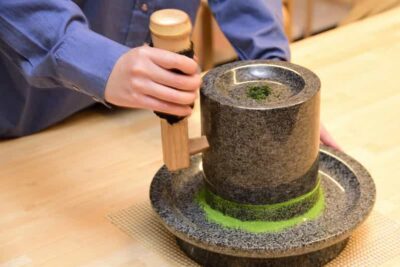
Kyoto: Tea Museum Tickets and Matcha Grinding Experience
Read our review →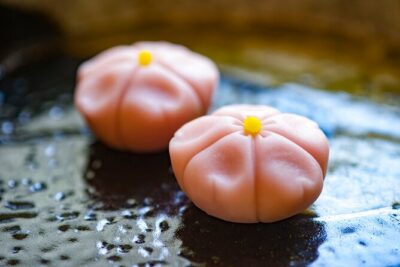
Matcha Making Class in Osaka with Authentic Japanese Sweets Set
Read our review →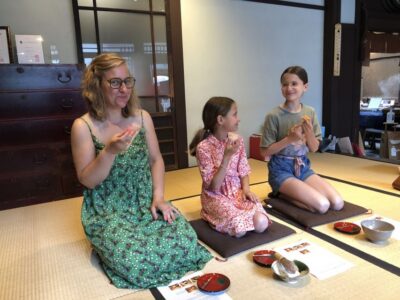
Kyoto: Tea Ceremony Meditation – Make Matcha with Tea Master
Read our review →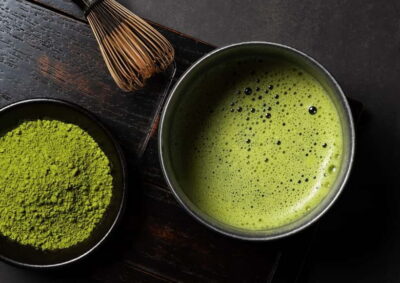
Tokyo: Matcha Making Experience with Mochi Sweets in Asakusa
Read our review →
Kyoto: Kimono Tea Ceremony with Matcha and Sweet
Read our review →
Browse the lists this tour appears in