
Review · TEA CEREMONY EXPERIENCES
Japanese Traditional Breakfast and Tea Ceremony
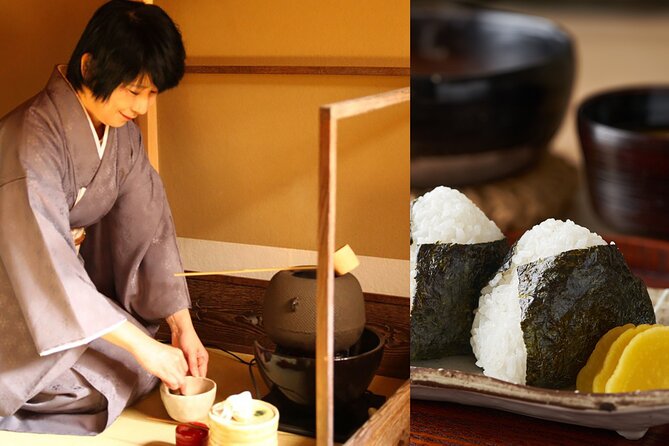
The best part of this Tokyo experience is that you do more than watch a tea ceremony. You begin with a light Japanese breakfast, including rice balls and sweets, then learn how to prepare matcha yourself under the guidance of a bilingual licensed tea master with at least five years of experience. I like the practical format, and I like that the ceremony includes a short meditation and an explanation of Zen ideas rather than treating the ritual as a photo opportunity.
The second strong point is the chance to meet a tea master and handle the process yourself. The main consideration is the meeting point: one person had trouble finding the venue, so you should allow extra time to locate Kikai Shinkō Kaikan in Shibakōen. The group can reach 28 people, which may feel less personal than a small private lesson.
Key points to know before booking
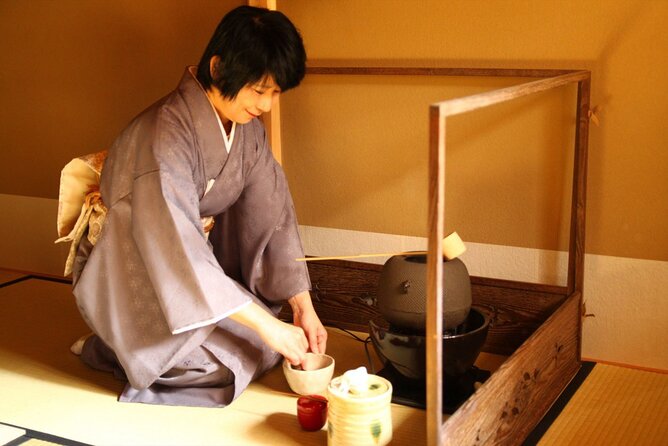
- You make your own matcha: The tea master demonstrates the process, then gives you instruction for a second tea ceremony that you perform yourself.
- Breakfast includes onigiri and sweets: This is a light morning meal, not a large buffet or full restaurant breakfast.
- Zen is part of the lesson: You’ll hear about meditation, a hanging scroll, tea utensils, and the ideas behind the ceremony.
- The guide speaks English: A bilingual, licensed tea master leads the session, with a nationally certified guide interpreter providing hospitality.
- The experience lasts about 90 minutes: It begins at 9:00 a.m. and returns to the same meeting point.
- The group may be fairly large: The maximum is 28 people, so the atmosphere may depend on the day’s attendance.
Starting the morning with a Japanese breakfast
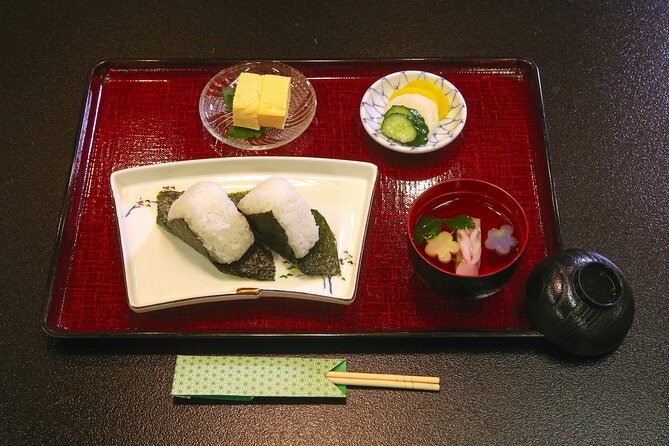
This experience begins at 9:00 a.m. in Tokyo’s Minato City, at Kikai Shinkō Kaikan, 3-chōme-5-8 Shibakōen. That early start is useful if you want to make something of your morning instead of eating a routine hotel breakfast and rushing into sightseeing.
The meal is described as a light Japanese breakfast. You can expect rice balls, also called onigiri, along with other local flavors and traditional Japanese sweets. One of the most appealing parts is that the food is not just placed in front of you. The session gives you a chance to make onigiri yourself, then eat it with the other breakfast items.
I like this because onigiri is simple, familiar, and practical. It is also an easy Japanese food to understand: rice shaped by hand, often prepared with fillings or seasonings. The supplied details do not specify every ingredient or filling, so you should not book this expecting a fixed menu with a long list of dishes.
The breakfast helps explain what a modest Japanese morning meal can look like. It is less about quantity and more about setting the mood for the tea lesson. If you usually need a substantial breakfast, you may want to eat something small before arriving or plan another meal afterward. Extra food and drinks are not included.
More Tea Ceremonies in Tokyo
- Kimono Tea Ceremony at Tokyo, Asakusa Maikoya
★ 5.0 · 638 reviews - Tokyo: Traditional Tea Ceremony with a Tea Master
★ 5.0 · 528 reviews - Tea Ceremony Workshop in Tokyo by the Experienced Instrucor
★ 5.0 · 189 reviews
A calm introduction to tea ceremony and Zen
After the breakfast portion, the experience turns toward the tea ceremony. You’ll hear how the ceremony works and why certain objects matter. The host explains the tea utensils, the hanging scroll, and the connection between the ceremony and Zen practice.
The short meditation is an important detail. It gives you a quiet pause before the tea preparation begins and helps show why the ceremony values attention, restraint, and calm movement. This is not presented as a lecture about religion or philosophy. Instead, the meditation and commentary give you enough context to understand what you are seeing.
The hanging scroll also adds a useful visual lesson. You’ll be told about the scroll that expresses the spirit of Zen, rather than simply being asked to admire it as decoration. That kind of explanation can make a formal tea room feel less mysterious and help you notice the meaning behind the setting.
I especially like this part for first-time visitors to Japan. Many cultural activities show you an object or ritual without explaining how it fits into daily life and artistic practice. Here, the explanation of the scroll and utensils gives the ceremony a clear framework.
The session is still short, though. In 90 minutes, you will get an introduction rather than a full study of tea history, Zen, or Japanese aesthetics. If you want an extended formal ceremony with many courses and highly detailed etiquette instruction, this is probably too brief.
Meeting the bilingual tea master at 9:00 a.m.
The ceremony is led by a bilingual licensed tea master with at least five years of experience. A nationally certified guide interpreter also provides hospitality. That combination matters because the ceremony has many small actions that can be hard to follow without clear instructions.
You’ll receive an explanation in English of the tea ceremony, Zen practices, the hanging scroll, and the utensils. The host then prepares matcha using high-quality matcha green tea. This is a useful distinction from simply ordering matcha at a café. You are learning about the preparation, the tools, and the manners around drinking it.
The atmosphere is intended to be relaxed and friendly rather than stiff. That makes the session a good choice if you are curious about Japanese customs but worried about getting every movement right. You are there to learn, not to perform a perfect ceremony on your first try.
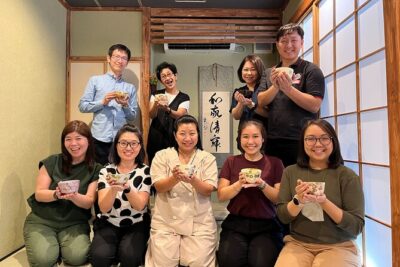
The group size can reach 28 people. That is the main tradeoff. A larger group can make the activity more social and keep the price reasonable, but it may limit one-on-one attention. If you are hoping for a quiet, highly personal lesson, check the expected group size when booking if that information is available.
Watching the first ceremony, then making your own tea
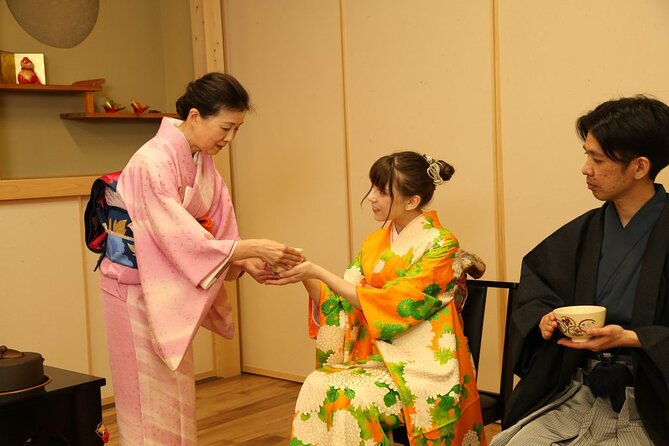
The experience includes a tea ceremony performed by the tea master, followed by a second ceremony that you perform with instruction. This two-step format is one of the strongest reasons to book.
During the first ceremony, you can watch the sequence without having to worry about your own movements. Pay attention to how the host handles the utensils, prepares the matcha, and presents the bowl. The commentary should help you understand the purpose behind the actions.
Then you get your own turn. The tea master guides you through making matcha, giving you a direct way to remember the ritual after you leave Tokyo. The practical element also makes the session more useful at home. You can recreate the basic matcha ritual rather than only remembering that you once watched one.
The experience includes authentic matcha green tea and traditional Japanese sweet confections. The sweetness is an important part of the tea service because it balances the sharp, grassy taste of matcha. You should expect matcha to taste more bitter and concentrated than a sweetened green tea drink.
That contrast is part of the lesson. The sweet confection prepares your palate, while the matcha gives you a chance to notice texture, aroma, and bitterness. If you normally avoid unsweetened tea, keep an open mind, but also know that the experience does not promise alternative beverages.
Same city, a very different cup:
- Matcha Making Class in Tokyo with Authentic Japanese Sweets Set
★ 5.0 · 744 reviews - Dynamic Tokyo: Tokyo Tower, Tea Experience, Bay Cruise Day Tour
★ 4.5 · 521 reviews - Tokyo: Matcha Making Experience with Mochi Sweets in Asakusa
★ 4.9 · 388 reviews - Asakusa Cultural Walk & Matcha Making Tour
★ 5.0 · 245 reviews
What makes the onigiri lesson worthwhile
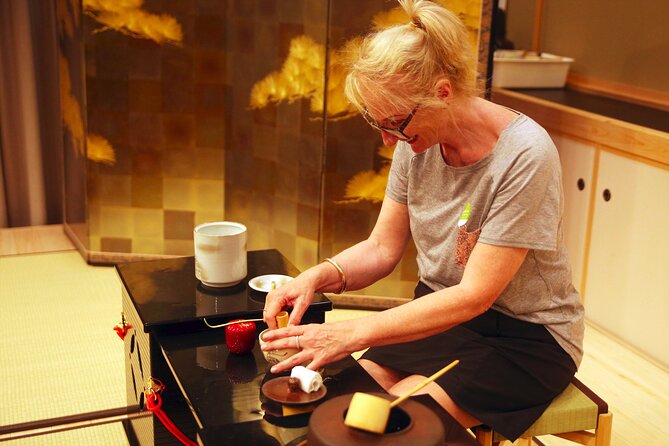
The onigiri portion gives the morning a hands-on food element before the more formal tea ceremony. You are not only eating a traditional breakfast. You get to shape the rice yourself, then serve it as part of the meal.
That small task is particularly good for families. The activity offers a clear job for children and adults alike, and the finished food becomes part of the breakfast. It also breaks up the formality of the tea ceremony with something tactile and relaxed.
The details do not state that you prepare every dish from scratch or choose from a range of fillings. I would think of the onigiri as a short practical activity, not a full cooking class. The tea ceremony remains the main focus.
For couples and families, the food portion can make the experience feel more shared. You can compare your shaping technique and enjoy the result together. For solo visitors, it offers an easy way to take part without needing much prior knowledge of Japanese food.
Finding Kikai Shinkō Kaikan in Shibakōen
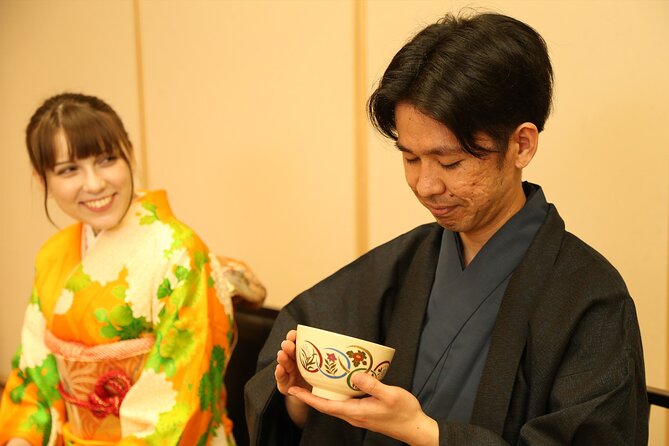
The meeting point is Kikai Shinkō Kaikan, 3-chōme-5-8 Shibakōen, Minato City, Tokyo 105-0011. The activity is near public transportation, but the exact station, exit, and walking route are not provided.
Because the start time is 9:00 a.m., I would not leave navigation until the last minute. One person had difficulty finding the venue, so you should check the address carefully, allow extra time, and have the location ready on your phone. A mobile ticket is available, which is convenient, but a mobile ticket does not replace planning the route.
The activity ends back at the meeting point. There is no hotel pickup or drop-off, so you handle your own transportation in both directions. The central location in Minato City may fit well with a morning in the Shibakōen area, but the experience itself does not include nearby sightseeing or transportation between stops.
Arriving early also gives you a buffer if you need to ask for directions. A late arrival could be awkward because the opening meditation and breakfast set the pace for the rest of the session.
Is the $60.81 price fair?
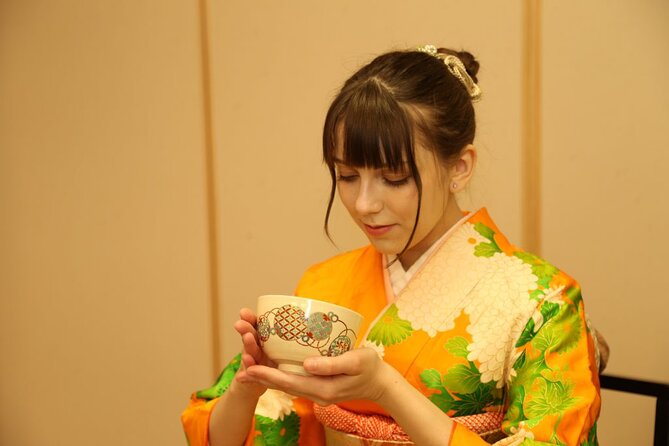
At $60.81 per person, this is not the cheapest breakfast in Tokyo. You could buy a simple meal for much less. The value comes from the instruction, the bilingual tea master, the guided ceremony, the matcha, the sweets, and the chance to prepare your own tea.
You are also paying for a structured cultural lesson at a convenient morning time. The tea master explains the ceremony in English, introduces Zen ideas, discusses the hanging scroll and utensils, and gives you a chance to practice. That makes the price easier to justify than a basic tea tasting where you simply drink and leave.
The included breakfast adds value, especially if you would otherwise pay for a hotel meal. Still, it is described as light, and extra food or drinks cost more. I would book this for the cultural instruction, with breakfast as a welcome part of the package, not as the main reason to spend the money.
Group discounts are available, which may improve the price for families or larger parties. Since the group can include up to 28 people, the cost also reflects a shared experience rather than a private tea ceremony.
Who will enjoy this Tokyo experience most?
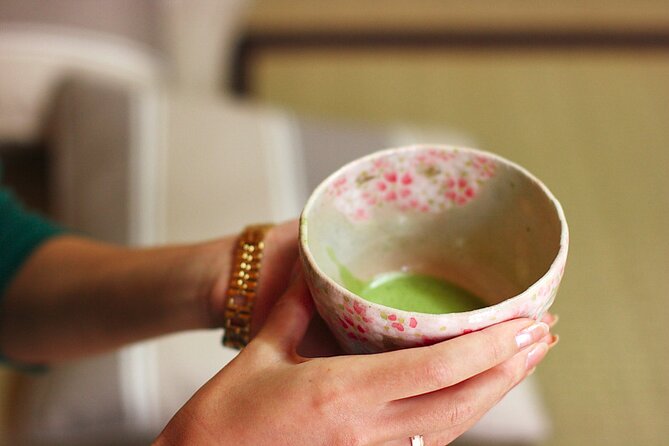
I would recommend this activity to you if you want a short, well-organized introduction to Japanese customs. It suits first-time visitors, families, couples, and anyone who wants a cultural activity that does not take up an entire day.
It is also a good fit if you prefer to learn by doing. You will eat onigiri, hear about Zen, watch a tea ceremony, taste matcha with a sweet, and prepare your own tea. The variety keeps the 90 minutes moving.
Families may appreciate the relaxed setting and the shared breakfast. The hands-on onigiri and tea steps give children something to do, although the supplied information does not specify a minimum age or child pricing.
You may want to choose another activity if you need a large breakfast, dislike matcha, want a private lesson, or prefer a long formal ceremony. The group size may reach 28, and the experience is designed as an introduction rather than an advanced course.
Timing, cancellations, and weather rules
Confirmation is sent within 48 hours of booking, subject to availability. The activity is usually booked about 53 days in advance, so booking ahead is sensible if your Tokyo schedule is tight.
You can cancel for a full refund up to 24 hours before the 9:00 a.m. start time. Cancellations or changes made less than 24 hours before the start are not refunded or accepted. Cutoff times use Tokyo local time, so check the clock carefully if you are arranging the activity from another time zone.
The experience requires good weather. If poor weather causes a cancellation, you are offered another date or a full refund. The activity also requires a minimum number of participants. If that minimum is not reached, you are offered another date or experience, or a full refund.
My advice on booking this breakfast and tea ceremony
I would book it if you want a manageable morning activity that combines food, etiquette, Zen ideas, and hands-on practice. The strongest feature is the progression from watching the tea master to making your own matcha. The breakfast and onigiri add a friendly, practical touch, while the English explanations make the ceremony easier to understand.
Before booking, make sure a light breakfast is enough for you, confirm that you are comfortable with a group of up to 28, and plan your route to Kikai Shinkō Kaikan carefully. At $60.81, the experience earns its price through instruction and participation rather than food quantity.
If you want to begin your Tokyo day with something calm and distinctly Japanese, this is a sensible choice. If you want a private, highly formal ceremony or a full meal, look elsewhere.
FAQ
How much does the Japanese Traditional Breakfast and Tea Ceremony cost?
The price is $60.81 per person. Group discounts are available.
How long does the experience last?
The activity lasts approximately 1 hour and 30 minutes.
What time does the experience begin?
The start time is 9:00 a.m.
Where does the experience begin?
It begins at Kikai Shinkō Kaikan, 3-chōme-5-8 Shibakōen, Minato City, Tokyo 105-0011, Japan.
Where does the experience end?
The activity ends back at the meeting point.
What is included in the price?
The experience includes breakfast, traditional Japanese sweets, authentic matcha, an explanation of the tea ceremony and Zen practices in English, a tea ceremony performed by the tea master, and a second ceremony that you perform yourself with instruction. Tea utensils and the hanging scroll are also explained.
How many people can join the experience?
The maximum group size is 28 travelers.
Can I cancel for a full refund?
Yes. You can cancel up to 24 hours before the experience start time for a full refund. Cancellations or changes made less than 24 hours before the start are not accepted or refunded.
Fresh tea listings around Tokyo
- Yokohama : Tea Ceremony with Sweets and Souvenir★ 5.0 · 5 reviews
- Walking Tour: Yanaka,Nezu& Sendagi: Tea Ceremony & Old Tokyo★ 5.0 · 3 reviews
- Private Mochi・Matcha sweets Making Class Near Shibuya Area★ 5.0 · 22 reviews
- Private Kimono and tea ceremony at local home near Tokyo Disney★ 5.0 · 6 reviews
- 2 Hours Mochi &Nerikiri Making & Matcha Class in Bunkyo★ 5.0 · 21 reviews
- Kimono and Tea Ceremony in Asakusa Private Food Tour With Guide★ 5.0 · 4 reviews
- Tokyo: Tea Ceremony & Japanese Sweets Making★ 5.0 · 10 reviews
- Tokyo Sweets Tour: Hidden Gems & Matcha at an Old Tea House★ 5.0 · 6 reviews
Tea Ceremony Experiences, compared.
Kyoto: Tea Ceremony in a Traditional Tea House in Kiyomizu
Read our review →
Kyoto: 45-Minute Tea Ceremony Lesson Experience
Read our review →
Kyoto: Table-Style Tea Ceremony at a Kyo-Machiya
Read our review →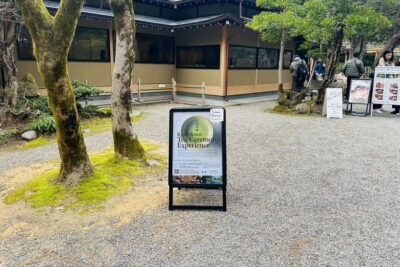
Browse the lists this tour appears in