
Review · TEA CEREMONY EXPERIENCES
Japanese Tea Ceremony at Private Home in Yokohama, suburban Tokyo
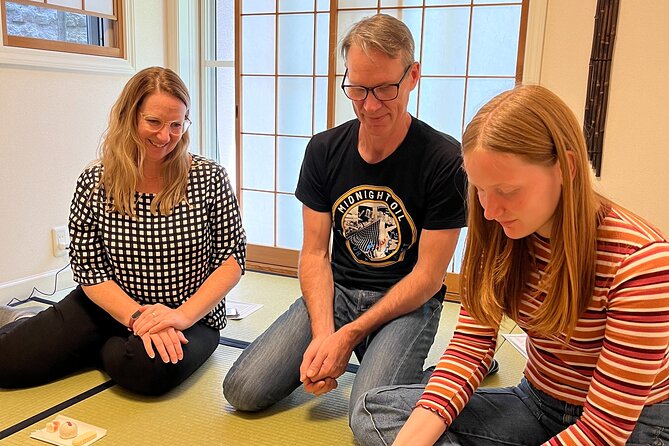
The most unusual part of this experience is its setting: a private Japanese home, not a shop or staged cultural center. In a traditional tatami room, the tea master demonstrates the ceremony, heats water with charcoal, explains the customs, and then lets you prepare your own matcha.
I like the chance to see a rare charcoal procedure, something even many Japanese people never encounter, and the handmade wagashi chosen for the season. The main consideration is location: you must travel to suburban Yokohama, and you need socks to enter the tatami room.
Key points
- A private home in Azamino: You experience the ceremony in a real household setting in Yokohama, away from central Tokyo.
- A tea master with 40 years of study: The instructor has practiced tea ceremony for more than 40 years and taught for more than 15.
- Two cups of matcha: You watch the demonstration, then mix and drink your own tea.
- Rare charcoal procedure: See the traditional method of adding charcoal to heat the water.
- Seasonal handmade wagashi: Sweets may include nerikiri, gyuhi, or manjyu, with vegan and gluten-free options available.
- A private 90-minute session: Only your group takes part, leaving room for questions and conversation.
A real tea room in suburban Yokohama
This experience gives you something many short cultural demonstrations cannot: time and space to understand what you are seeing. The ceremony takes place inside the tea master’s private Japanese home, in a special tatami room set aside for tea.
That setting changes the mood. You are not simply watching someone whisk green tea at a counter while other groups wait behind you. You enter a room with its own rules, rhythms, and manners. The tea master shows you how to behave as a guest, then explains why those actions matter.
The location is in Aoba Ward, Yokohama, near Azamino. It is suburban rather than central, so you should allow time for the journey from Tokyo’s main sightseeing districts. The tradeoff is worthwhile if you want a quieter encounter with everyday Japanese culture rather than another activity in a busy tourist neighborhood.
The exact meeting point is listed at Dresse Azamino Gardens, at 〒225-0023 in Yokohama’s Aoba Ward. Public transportation is nearby, and pickup is offered. Since the experience takes place at a private home, check the pickup details and meeting instructions carefully after booking.
More Tea Ceremonies in Japan:
- Kyoto: Tea Ceremony in a Traditional Tea House in Kiyomizu
★ 4.9 · 3,519 reviews - Kyoto: Tea Ceremony Ju-An at Jotokuji Temple
★ 4.9 · 3,207 reviews - Kyoto: 45-Minute Tea Ceremony Lesson Experience
★ 4.3 · 2,378 reviews
What happens during the 90 minutes
The session lasts about one and a half hours. That is long enough to see a complete demonstration, learn basic etiquette, taste sweets, make matcha, and ask questions without turning the activity into a full-day commitment.
The tea master begins by demonstrating the ceremony. Pay attention to the small gestures: how the tea is presented, how you receive it, and how the bowl is handled. You are not expected to arrive knowing the rules. The point is to learn how to be a respectful tea ceremony guest.
The demonstration gives you a useful frame for the rest of the visit. Instead of being handed a bowl of matcha with little explanation, you see the process before trying it yourself. That makes the later hands-on part easier to follow.
A charcoal procedure is also included. The tea master adds charcoal to heat the water used for the tea. This is an old-fashioned method and a particularly interesting part of the session because it is not something most people see in ordinary tea shops or casual matcha workshops.
The charcoal step also slows the experience down. You get a sense that tea ceremony is not only about the finished drink. Heat, timing, tools, movement, and attention all form part of the preparation.
Learning to be a tea ceremony guest
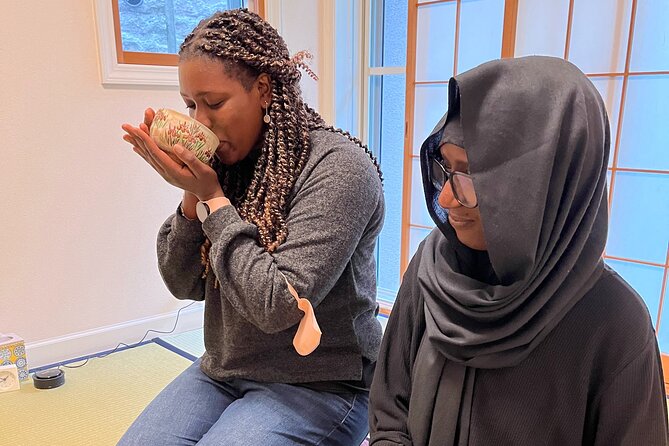
Many visitors focus on making matcha, but the guest etiquette is just as useful. In Japanese tea ceremony, the person drinking the tea has responsibilities too. You learn how to receive the bowl and take part in the exchange with proper care.
The instructions are practical rather than abstract. You watch first, then follow along with guidance from the tea master. This makes the experience suitable for beginners who may feel nervous about making a mistake.
The private format helps here. Only your group participates, so you can ask questions without worrying about holding up a larger class. If you are visiting with family or friends, you can also learn at your own pace.
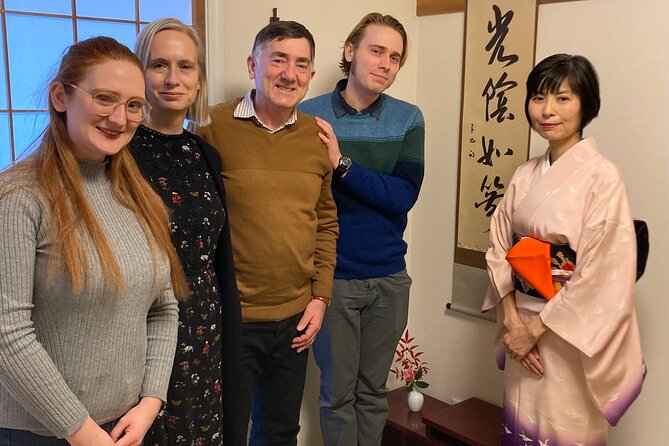
The session has a personal quality that suits people who enjoy conversation. The tea master explains the history of the ceremony and invites questions about tea culture. A review of the experience describes an enjoyable conversation with the Kono family, including a family visit with a baby. That detail suggests the host household is comfortable making the meeting feel warm and personal rather than stiff.
Still, remember that this is a traditional activity. You should be prepared to follow household and tea room customs, including removing shoes and wearing socks. Bring clean socks specifically for the tatami room. This is required, not just a style suggestion.
Handmade wagashi matched to the season
The sweets are an important part of the ceremony. The tea master prepares wagashi by hand and chooses the type according to the season.
You might receive nerikiri, a carefully shaped sweet often associated with formal tea service. Other possibilities include gyuhi, a soft mochi-style sweet, or manjyu. The exact selection changes, so you should not book expecting one particular item.
The sweets balance the bitter edge of matcha. That contrast is one reason the food is served before or alongside the tea. Wagashi is not merely a snack added to fill out the booking. It helps you understand how Japanese tea service considers flavor, texture, appearance, and season together.
The included food is suitable for vegan and gluten-free diets, according to the experience details. If you have a serious allergy or strict dietary requirement, it is still sensible to confirm the ingredients before arrival. The available description supports vegan and gluten-free options, but it does not list every ingredient or guarantee protection against cross-contact.
Dried Japanese sweets are also prepared for the session. These give you another taste and texture beside the handmade wagashi. Since the tea master decides what to serve, the food portion has an element of surprise that fits the seasonal nature of the ceremony.
More tea experiences around Japan if you are still choosing
- World Heritage Kyoto & Nara Uji Authentic Matcha Experience
★ 5.0 · 1,573 reviews - Osaka: Tea Ceremony Experience
★ 4.9 · 1,426 reviews - Kyoto: Table-Style Tea Ceremony at a Kyo-Machiya
★ 4.9 · 1,211 reviews - Kanazawa: Kenrokuen Tea Ceremony Experience
★ 4.8 · 1,139 reviews
Making and drinking your own matcha
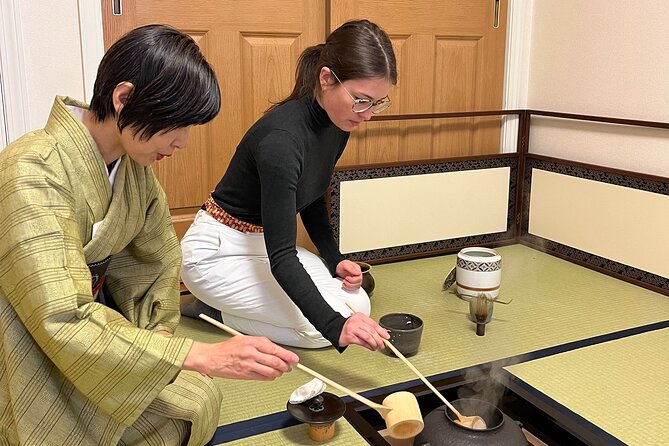
After watching the tea master, you get to prepare matcha yourself. You mix the powdered green tea and drink the result, with instructions provided along the way.
You should expect two cups of matcha in total. One is prepared for you during the demonstration, and the second comes from your own attempt. That structure works well because you first see the correct method, then have a chance to try it without the pressure of having to perform immediately.
Making matcha is simple in principle, but the technique benefits from careful instruction. The whisking, water, and powder need to come together properly. Your cup may not look exactly like the tea master’s, and that is part of the point. This is a workshop, not a test.
If you already drink matcha, you may appreciate the preparation more than the flavor alone. If you are new to it, remember that matcha is stronger and more bitter than sweetened green tea. The wagashi helps balance it, and the tea master can explain the customs around drinking it.
The experience does not promise a large meal. The included food is tea sweets and snacks, so plan to eat elsewhere if you need lunch or dinner afterward.
Why the charcoal procedure matters
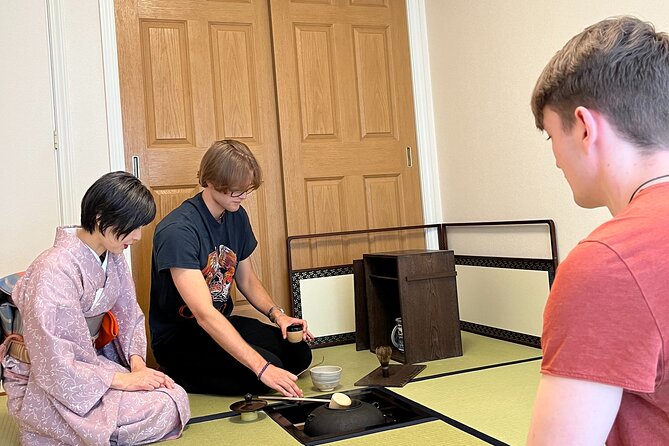
The charcoal procedure is the most distinctive technical feature of this activity. Water is heated by adding charcoal, rather than by using a modern electric kettle hidden from view.
That does not mean every moment is theatrical. In fact, its value comes from being a working part of the ceremony. You see how the tea master manages heat as part of the preparation, rather than treating the water as a background detail.
The experience description notes that this is rare even for Japanese people to see. That makes it especially useful for anyone who wants more than a basic introduction to matcha. You are not only learning how to whisk a drink. You are seeing one traditional method used in a proper tea setting.
The charcoal step may also appeal to visitors interested in craft, tools, and process. It adds a quiet, material quality to the session. You watch the preparation unfold instead of rushing straight to the final cup.
The value of a private 90-minute session
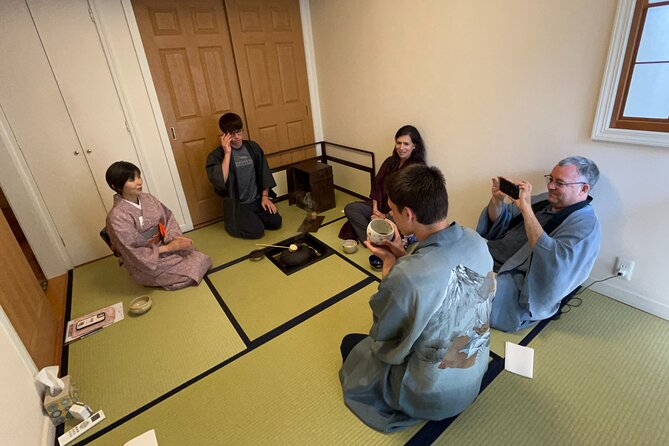
The price is about $52.71 per person. For that fee, you receive roughly 90 minutes of instruction, a private tea ceremony, two cups of matcha, handmade wagashi, dried Japanese sweets, a history lesson, and the chance to ask questions.
I consider that a fair price for a private session led by someone with more than 40 years of tea ceremony experience and over 15 years of teaching. You are paying not only for the tea and sweets, but also for access to a real home setting and individual attention.
The value depends on what you want from a cultural activity. If you only want to taste matcha quickly, a café will cost less and take less time. If you want to understand guest etiquette, watch a traditional preparation, and ask questions in a small setting, this experience offers much more.
The private format is especially useful for families, couples, and small groups with different levels of interest. One person can ask about history while another focuses on the practical steps. The host can address your questions directly rather than following a fixed script for a large crowd.
The activity is usually booked about 38 days ahead. That suggests you should plan early, particularly if your Yokohama visit falls on a specific date. Confirmation is sent within 48 hours of booking, subject to availability.
Getting there from Tokyo and combining the visit
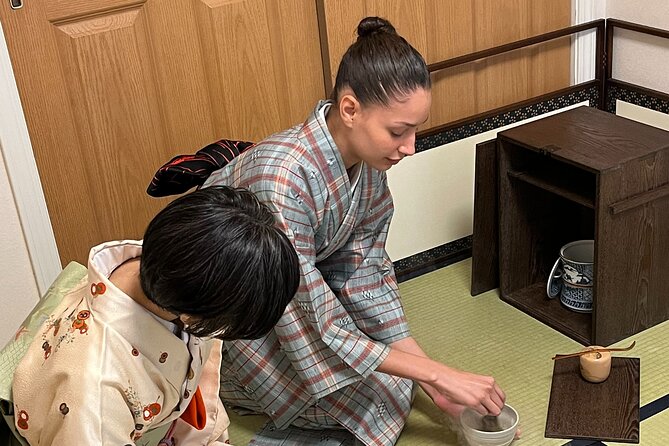
Azamino is in suburban Yokohama, not in the center of Tokyo. You should treat the journey as part of your day rather than trying to squeeze this session between two tightly timed central Tokyo attractions.
The meeting point is close to public transportation, and pickup is offered. The supplied information does not spell out the exact pickup route or vehicle arrangement, so confirm that point before relying on pickup. Otherwise, follow the meeting instructions for Dresse Azamino Gardens.
The area also gives you a possible way to build a day around the experience. The activity information points to the Shin-Yokohama Ramen Museum and notes that it is about 15 minutes from Azamino Station to the closest Shin-Yokohama Station by Yokohama subway.
That pairing can work well if you want to combine a quiet traditional activity with a more casual food stop. The tea ceremony itself is not a meal, so visiting the ramen museum afterward may help fill out your day. Give yourself enough time between plans, since the tea session can include questions and conversation.
Do not assume the tea ceremony ends at a central Tokyo station. It returns to the meeting point in Yokohama, so account for the return journey when planning evening reservations.
Who will enjoy this experience most
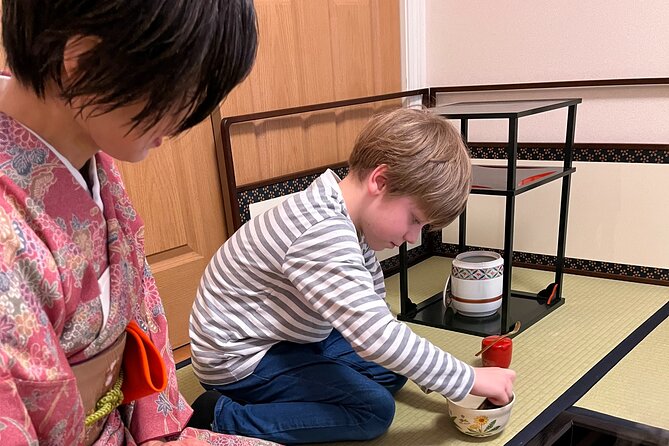
I would choose this for you if you care about how Japanese customs work, not just how they look. The session suits first-time visitors because the tea master explains the rules and demonstrates the process before asking you to try it.
It is also a good match for anyone who prefers small, personal activities. Only your group takes part, and the private home setting allows more direct conversation than a large public workshop.
Families can benefit from the relaxed format, though each family should decide if a quiet tatami room suits their children. The mention of a visit with a baby suggests the host family is accustomed to welcoming families, but the supplied details do not set a minimum age or promise child-specific activities.
Food-conscious visitors have useful options because the included wagashi and snacks are described as suitable for vegan and gluten-free diets. Confirm personal dietary needs in advance if they are medically important.
I would think twice if your schedule is packed with central Tokyo sightseeing. The trip to suburban Yokohama takes planning, and the activity rewards patience. It is less suited to someone who wants a quick photo, a large meal, or a broad sightseeing tour.
Practical details before you book
Wear or bring socks. You will enter a tatami room, and socks are required. Clean, comfortable socks are the safest choice.
The experience is mobile-ticket friendly, and confirmation arrives within 48 hours when space is available. It is near public transportation, but the exact journey depends on your starting point.
Free cancellation is available if you cancel at least 24 hours before the local start time. Cancellations or changes made within 24 hours are not accepted for a refund.
The activity ends back at the meeting point. Pickup is offered, but confirm how it applies to your booking rather than assuming door-to-door service.
Should you book the Yokohama tea ceremony?
Book it if you want a quiet, personal cultural lesson led by an experienced tea master. The charcoal procedure, seasonal handmade wagashi, guest etiquette, and chance to make two cups of matcha give the 90-minute session real substance.
Skip it if your priority is staying in central Tokyo or finding a fast, inexpensive drink. This is a suburban Yokohama outing in a private home, and its value comes from the time, instruction, and traditional setting.
For the right visitor, the $52.71 price is reasonable. You leave with more than a taste of matcha: you learn how to enter the tea room, receive the tea, understand the ceremony’s purpose, and take part in it yourself.
FAQ
Where does the tea ceremony take place?
It takes place at a private Japanese home in Aoba Ward, Yokohama, near Azamino. The listed meeting point is Dresse Azamino Gardens, 〒225-0023 Kanagawa, Yokohama, Aoba Ward, Obacho.
How long does the experience last?
The tea ceremony workshop lasts approximately one hour and 30 minutes.
How much does the experience cost?
The listed price is $52.71 per person.
Is the tea ceremony private?
Yes. Only your group participates in the activity.
How much matcha will I drink?
You can drink two cups of matcha. The tea master prepares one during the demonstration, and you prepare one yourself.
Can I make matcha myself?
Yes. After watching the tea master, you can mix the matcha and drink the cup you prepare.
What food is included?
Matcha, handmade wagashi, and dried Japanese sweets are included. The wagashi may include nerikiri, gyuhi, or manjyu, depending on the season.
Are vegan and gluten-free options available?
The included wagashi and snacks are described as suitable for vegan and gluten-free diets. Confirm details in advance if you have a serious allergy or strict dietary requirement.
Do I need to bring anything?
Bring socks because you must wear them when entering the tatami room. The activity also offers a mobile ticket and is near public transportation.
Fresh tea listings around Japan
- Cycling Tour at Uji’s Matcha Green Tea Fields and Heritage★ 5.0 · 10 reviews
- Authentic Japanese tea tasting: sencha, matcha and gyokuro★ 5.0 · 12 reviews
- Asakusa Cultural Walk & Matcha Making Tour★ 4.5 · 7 reviews
- Authentic Tea Ceremony & Sushi in The Museum of Kyoto★ 5.0 · 3 reviews
- At an Antique Shop, Tea Ceremony and Japanese Sweets Forming★ 5.0 · 5 reviews
- Authentic Japanese Tea Ceremony Experience in Kamakura★ 4.5 · 8 reviews
- Yokohama: Sushi & Gyoza Cooking with Matcha Experience★ 5.0 · 4 reviews
- Japanese Sweets Making & Tea Ceremony in Yokohama, suburban Tokyo★ 5.0 · 4 reviews
Tea Ceremony Experiences, compared.
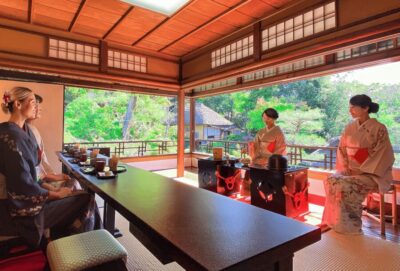
Kyoto: Tea Ceremony in a Traditional Tea House in Kiyomizu
Read our review →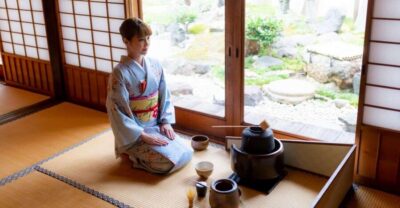
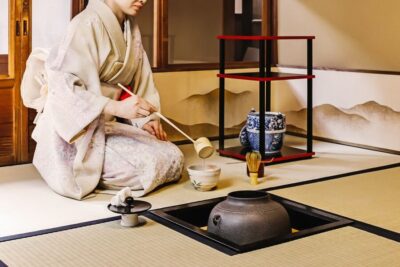
Kyoto: 45-Minute Tea Ceremony Lesson Experience
Read our review →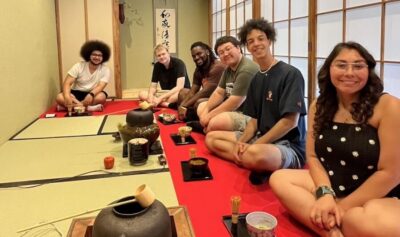
Kyoto: Table-Style Tea Ceremony at a Kyo-Machiya
Read our review →
Browse the lists this tour appears in