
Review · TEA CEREMONY EXPERIENCES
Experience Japanese calligraphy & tea ceremony at a traditional house in Nagoya
Nagoya’s best cultural moments may happen behind a paper door. At a traditional kominka farmhouse, you sit on tatami, listen to the story of the Sengoku period, make Japanese calligraphy, and learn to prepare matcha. The setting is a real home, not a purpose-built attraction. Yuzo Mori and his wife host the experience in English.
I like the slow, hands-on format. You do not simply watch someone write or whisk tea. You grind your own ink, choose a meaningful Japanese character, and prepare tea yourself. I also like the small maximum of six people, which should leave room for questions and patient instruction. The main drawback is the price: at $179.63 per person, it is a serious spend for two and a half hours, and the non-refundable policy makes last-minute changes costly.
Key points at a glance
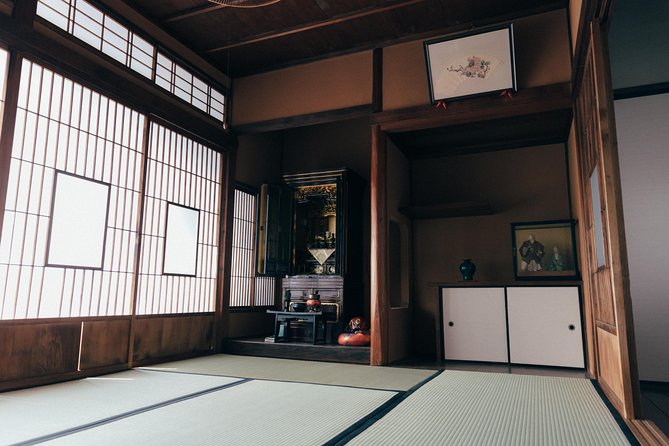
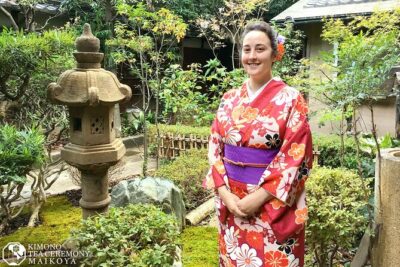
- A real Nagoya farmhouse: Enter a kominka with tatami mats, shoji paper walls, and a traditional garden.
- Sengoku-era context: Hear a roughly 15-minute slide presentation about Nagoya and the Samurai period.
- Calligraphy with a lasting souvenir: Grind an ink-stick, practice brush control, and take home a framed clean copy of your work.
- Tea ceremony participation: Drink a bowl of matcha with Japanese sweets, then try serving tea yourself.
- Small English-speaking group: The activity accepts no more than six people and is led by Yuzo Mori and his wife.
- A fixed meeting point: Start and finish at 4-chōme-32 Yamawakichō in Showa Ward, near public transportation.
Why this Nagoya experience feels different
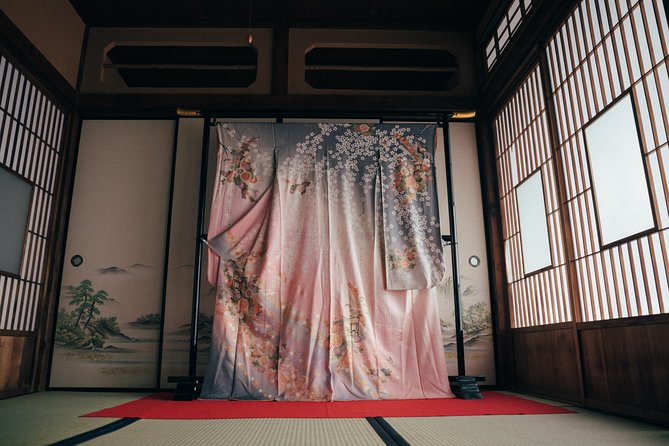
Many cultural activities take place in polished visitor centers. This one uses a traditional house where people actually lived, which changes the mood from the moment you enter. Tatami, shoji, and a garden are not just decoration here. They form the setting for the lesson.
The quiet matters. Calligraphy requires attention to the brush, ink, paper, and your breathing. Tea ceremony asks for the same calm focus. In a busy sightseeing day, this gives you a welcome change of pace. You are not rushing from one display to the next.
The house also gives the experience a useful sense of place. Nagoya is often treated as a transport hub between Tokyo and Kyoto, but the city has a strong connection to Japan’s Samurai past. The Owari district, which includes Nagoya, produced major Sengoku-period figures such as Oda Nobunaga, Toyotomi Hideyoshi, and Tokugawa Ieyasu.
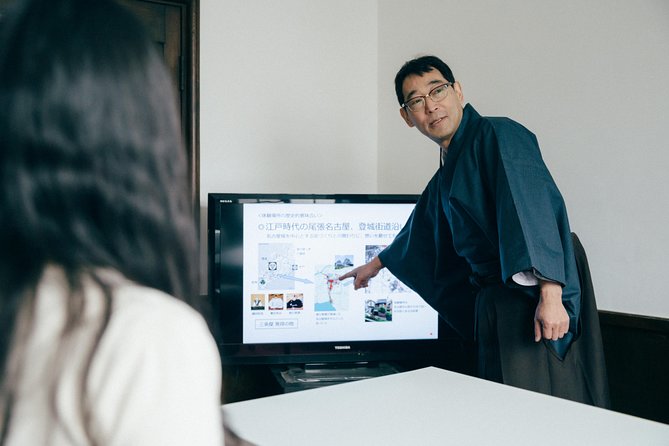
You will not receive a university lecture. Instead, the hosts use a simple slide presentation for about 15 minutes. That makes the history easy to follow, especially if this period is new to you. The short introduction prepares you for the customs that follow without taking over the activity.
More Tea and Calligraphy Workshops in Japan
- Kyoto: Tea Ceremony Meditation – Make Matcha with Tea Master
★ 4.8 · 406 reviews - Osaka: Tea Ceremony, Calligraphy, and Kimono Experience
★ 4.9 · 130 reviews - Tokyo: Practicing Zen with a Japanese Tea Ceremony
★ 4.7 · 105 reviews
A short lesson on Nagoya’s Sengoku past
The session begins with background on the Sengoku period, the era when powerful feudal lords competed for control of Japan. Nagoya and the surrounding Owari district were closely linked to this period, so the introduction gives local meaning to the experience.
I appreciate this order. Without context, calligraphy and tea can become attractive but disconnected rituals. Knowing something about Samurai-era Nagoya helps you see the house and customs as part of a longer story.
The presentation lasts about 15 minutes, so it should not feel like a history class. You will likely get the basic names, setting, and historical frame needed for the hands-on portions. If you already know the period, the talk may be familiar, but it still helps connect the activity to Nagoya rather than to Japan in general.
The history portion is also useful for families and first-time visitors. Children may not follow every detail, but a short visual presentation can make the later activities easier to understand. The experience is not limited to history specialists.
Grinding ink and creating your calligraphy
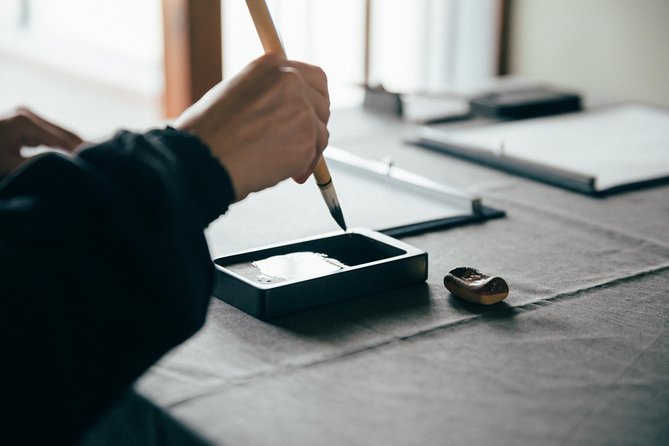
The calligraphy lesson begins with an action that many quick workshops skip: preparing the ink. You drip water onto an inkstone and rub an ink-stick slowly. The process creates a distinctive ink smell and forces you to work at a measured pace.
That preparation is part of the lesson, not wasted time. You begin to understand that Japanese calligraphy is more than writing attractive symbols with a brush. The tools, the ink, the posture, and the controlled movement all matter.
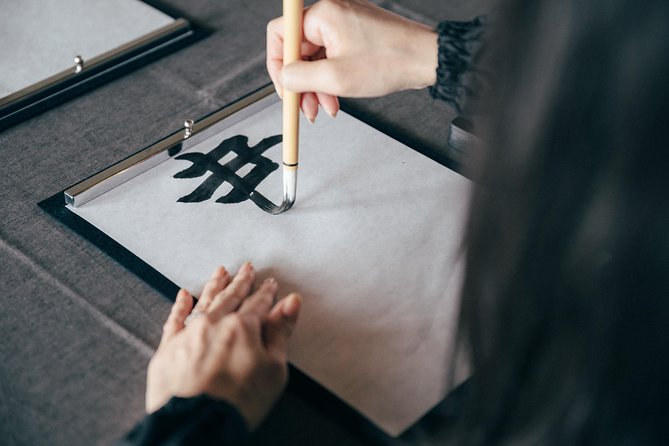
You learn the basics of holding and moving the brush before choosing a character or symbol. Samples help you select a design with a meaning you like. The provided information does not promise that you can write any phrase you wish, so expect to choose from the available examples rather than request an unlimited custom design.
The clean copy of your work is framed as a souvenir. That is a strong feature for the price because you leave with something connected to your own effort. It may not look perfect, and that is part of the charm. A slightly uneven stroke tells the story better than a shop-bought decoration.
You should also expect to concentrate. Calligraphy is not a loud, social activity with constant conversation. The quiet atmosphere is one of its best features, but anyone looking for a fast, playful workshop may find the pace formal.
Preparing matcha in the tea room
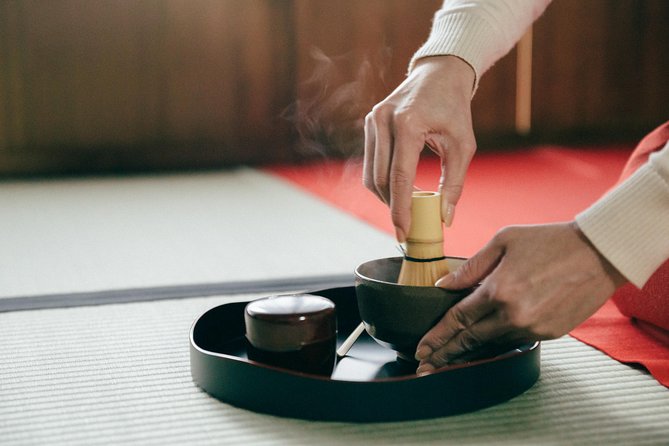
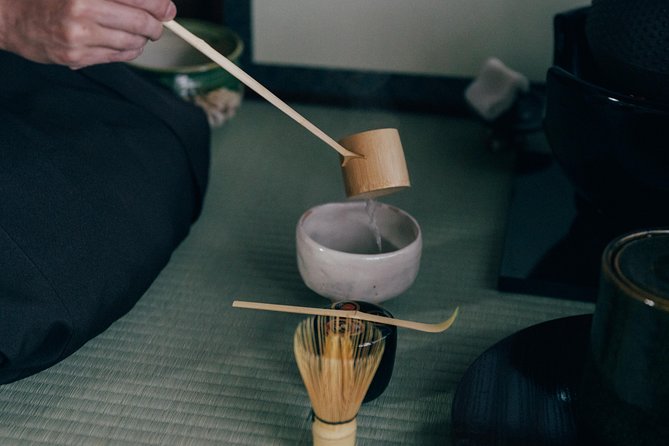
After calligraphy, you move into the tea room. The hosts explain the room’s arrangement and the utensils before serving you a bowl of matcha with Japanese sweets.
The first cup lets you watch and settle into the etiquette. You are not expected to know how to behave before you arrive. Once you are more comfortable, you try serving tea yourself. This is the point where the activity becomes more than a demonstration.
The process encourages a calm mind and careful movement. You will learn through simple steps rather than through a long technical explanation. The hosts guide you through the setting, the utensils, and the act of preparing tea.
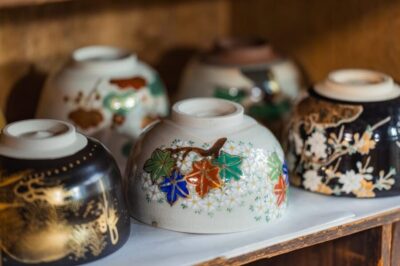
Matcha can surprise first-time drinkers. It has a strong, earthy taste, while the Japanese sweets provide a contrast. The experience includes one bowl of matcha and some sweets. Additional food, a meal, or a larger tea tasting is not part of the stated package.
The tea ceremony may be the more formal half of the experience. You sit within a carefully arranged room and follow customs that can feel unfamiliar at first. That is why being able to try the host’s role is useful. You do not just watch a ritual from outside. You gain a basic sense of the attention and hospitality behind it.
More Tea Ceremonies in Japan:
- Kyoto: Tea Ceremony in a Traditional Tea House in Kiyomizu
★ 4.9 · 3,519 reviews - Kyoto: Tea Ceremony Ju-An at Jotokuji Temple
★ 4.9 · 3,207 reviews - Kyoto: 45-Minute Tea Ceremony Lesson Experience
★ 4.3 · 2,378 reviews - Osaka: Tea Ceremony Experience
★ 4.9 · 1,426 reviews
What the small group changes
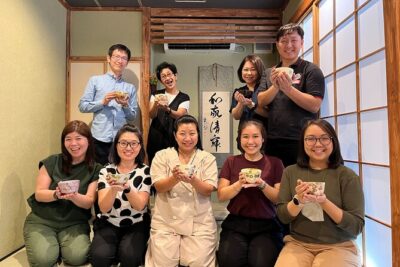
The maximum group size is six people. That is small enough to make instruction practical, especially when you are holding a brush or trying to handle tea utensils.
A small group also suits the house. A traditional room can lose its calm when filled with a large tour party. Six or fewer people should make it easier to see the demonstration, hear the English explanations, and ask questions.
The hosts, Yuzo Mori and his wife, create the personal feel that this activity promises. A direct review praised the warm hosting, the history briefing, the writing session, the tea flavor, and the fact that the location was reasonably easy to find. Another account described the couple as very welcoming and highlighted the traditional house and the amount learned about Japanese history.
Those details point to the experience’s main strength: the hosts are not simply supervising a craft table. They are sharing their home and explaining customs within it. That personal setting also means you should treat the visit with the same care you would show in any private home.
The $179.63 price: what are you paying for?
At $179.63 per person, this is not a budget activity. The price is easier to justify if you value personal instruction, a small group, and a souvenir you make yourself. It also includes all calligraphy tools, a bowl of matcha, and Japanese sweets.
The cost covers more than materials. You are paying for access to a traditional home, English-language guidance, the historical presentation, and time with the hosts. A short demonstration in a commercial setting would likely cost less, but it would not offer the same combination of house, history, calligraphy, and tea.
Still, you should compare the experience with your own priorities. If you mainly want to taste matcha or take photos of a traditional interior, this is probably more than you need. If you want to understand the customs and take part in them, the price has a clearer purpose.
The activity runs for about two and a half hours. That is long enough for the session to feel unhurried, but not so long that it takes a full day from Nagoya sightseeing. I would place it on a day when you want a quiet cultural break rather than stacking it between several timed attractions.
The activity is booked, on average, 17 days ahead. That suggests planning early, especially if your schedule in Nagoya is tight. Confirmation is normally provided at booking, but bookings made within seven days of the activity may require up to 48 hours for confirmation and remain subject to availability.
Getting to the house and planning your visit
The meeting point is 4-chōme-32 Yamawakichō, Showa Ward, Nagoya, Aichi 466-0063. The activity begins and ends at this same location, and public transportation is nearby.
One useful tip is to allow time to find the house. The location was described as reasonably easy to reach, but this is a residential setting rather than a large attraction with a prominent entrance. Have the address ready on your phone and avoid arriving at the last minute.
The ticket is mobile, so you can show your booking on your phone. The tour lasts approximately two hours and 30 minutes. Since the activity includes sitting, writing, drinking tea, and moving between rooms, comfortable clothing is sensible, though no special dress requirement is stated.
The house has traditional features such as tatami mats and shoji. Those details are central to the setting, but they may also make the experience less suitable for anyone who cannot comfortably participate in a floor-based traditional room. The information says most people can take part, but it does not provide detailed accessibility specifications, so contact the provider if you need particular arrangements.
If you have food allergies, tell the provider in advance. Japanese sweets are provided, and the hosts specifically ask to know about allergies ahead of time.
Who will enjoy this activity most?
I would recommend it most strongly to visitors who want active cultural learning. You write, prepare tea, listen, and handle traditional tools. You are not only watching a staged performance.
It is a good fit for couples, solo visitors, families, and small groups who prefer a calm setting. The six-person limit keeps the session personal, and the English explanations make it approachable for people without prior experience of Japanese calligraphy or tea ceremony.
History-minded visitors will appreciate the Sengoku introduction, especially those interested in Oda Nobunaga, Toyotomi Hideyoshi, or Tokugawa Ieyasu. Art-minded visitors will value the brush practice and framed work. Anyone curious about Japanese manners will get more from the tea ceremony than from simply ordering matcha in a café.
I would be more cautious about recommending it to someone with only a short stop in Nagoya who wants several major sights in one day. The location, fixed schedule, and two-and-a-half-hour duration require a deliberate time commitment. I would also think twice if you are not comfortable with a non-refundable booking.
How this fits into a Nagoya itinerary
This activity works best when you give it room before and after. It begins and ends at the same address, so you can plan another stop around it without arranging a second pickup point.
The timing is especially useful as a slower block in a busy Japan itinerary. After crowded stations, shopping streets, and large attractions, the quiet house offers a different kind of cultural encounter. You leave with a framed piece rather than another disposable souvenir.
Do not expect a full tour of Nagoya. The historical talk focuses on the Sengoku period, and the main purpose is participation in calligraphy and tea ceremony. The activity gives you a focused look at Japanese culture, not a broad city orientation.
The mobile ticket makes entry simple, but the non-refundable terms matter. Once you book, the payment cannot be returned, and changes are not accepted for any reason. Book only after your Nagoya schedule is firm.
Should you book this Nagoya calligraphy and tea experience?
Book it if you want a personal, small-group introduction to Japanese traditions in a real home. The framed calligraphy, the chance to prepare matcha, the short Sengoku history lesson, and the warm hosting by Yuzo Mori and his wife give the activity a clear identity.
Skip it if you are looking for a low-cost cultural stop, a large theatrical show, or a flexible booking. At $179.63, the value rests in the setting and personal instruction rather than in the amount of food or the number of attractions covered.
For the right visitor, this is a thoughtful way to spend half a day in Nagoya. You slow down, use your hands, learn why the rituals matter, and leave with a small piece of your own work.
FAQ
Where does the experience take place?
It takes place at a traditional Japanese farmhouse, or kominka, at 4-chōme-32 Yamawakichō, Showa Ward, Nagoya, Aichi 466-0063, Japan.
How long does the activity last?
The experience lasts approximately two hours and 30 minutes.
Where does the activity finish?
It finishes back at the same meeting point where it begins.
What historical period is covered?
The introduction focuses on the Sengoku period and Nagoya’s connection to major Samurai-era figures including Oda Nobunaga, Toyotomi Hideyoshi, and Tokugawa Ieyasu.
Is the experience conducted in English?
Yes. The activity includes English-language explanations of the history, calligraphy, and tea ceremony.
What happens during the calligraphy session?
You learn how to prepare ink, hold and move the brush, and select a symbol or design from samples. A clean copy of your work is framed as a souvenir.
Is matcha included?
Yes. The experience includes one bowl of matcha tea and some Japanese sweets.
Can I try preparing the tea myself?
Yes. You first receive matcha as a guest, then have the opportunity to try serving tea yourself.
How many people can join the activity?
The maximum group size is six people.
What should I do if I have a food allergy?
Tell the provider in advance because sweets are provided during the activity.
Is the booking refundable?
No. The experience is non-refundable and cannot be changed for any reason.
Fresh tea listings around Japan
- Yokohama : Tea Ceremony with Sweets and Souvenir★ 5.0 · 5 reviews
- Walking Tour: Yanaka,Nezu& Sendagi: Tea Ceremony & Old Tokyo★ 5.0 · 3 reviews
- Visit local home for music and tea ceremony near Disney★ 4.9 · 13 reviews
- Yokohama: Sushi & Gyoza Cooking with Matcha & GreenTea Experience★ 5.0 · 3 reviews
- Trip to Kamakura & Enoshima: Shrines, Seaside, Temples &Tea★ 5.0 · 11 reviews
- Uji: Private immersion into Kyoto’s tea and reglious culture★ 5.0 · 17 reviews
- Uji Tea Ceremony and UNESCO Heritage Walking Tour★ 5.0 · 20 reviews
- Kyoto tea town for matcha lovers★ 5.0 · 16 reviews
Tea Ceremony Experiences, compared.
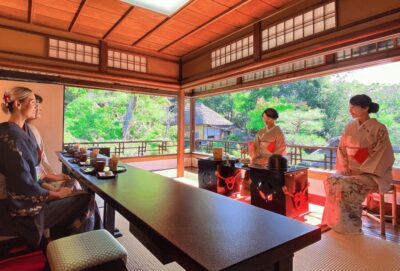
Kyoto: Tea Ceremony in a Traditional Tea House in Kiyomizu
Read our review →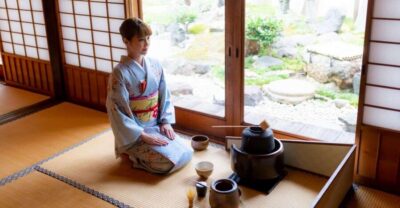
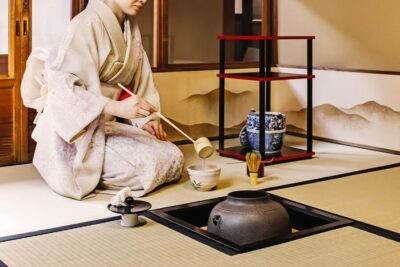
Kyoto: 45-Minute Tea Ceremony Lesson Experience
Read our review →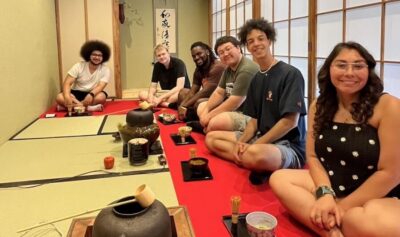
Kyoto: Table-Style Tea Ceremony at a Kyo-Machiya
Read our review →
Browse the lists this tour appears in