
Review · TEA CEREMONY EXPERIENCES
Tea Ceremony in a Century-old Japanese Town House
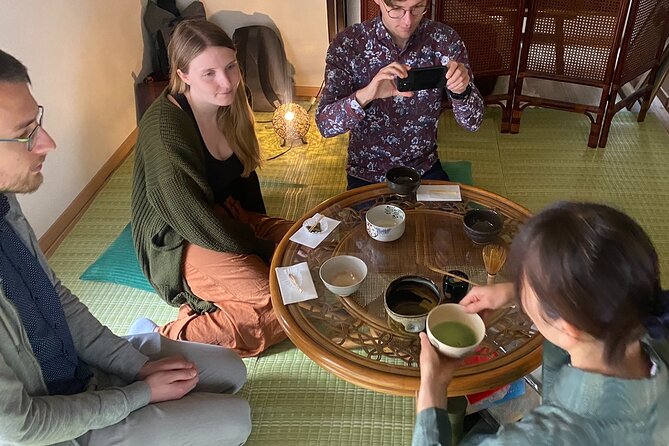
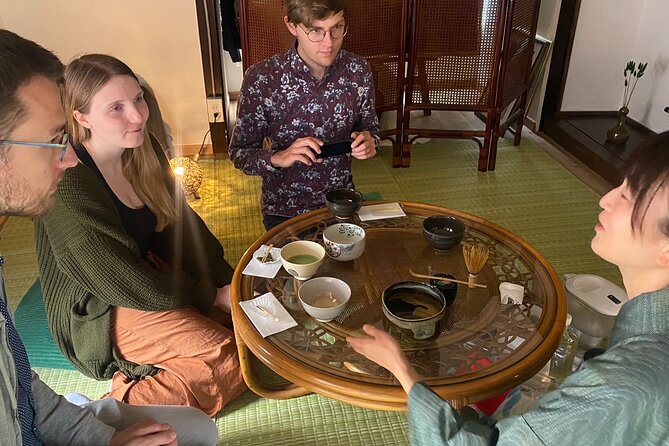
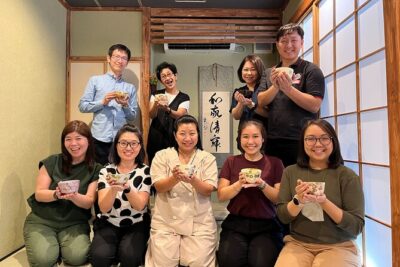
The most interesting part of this Beppu experience is the setting: a century-old Japanese town house now used as a community space. You get a close look at tea ceremony customs, then try the movements yourself with help from an interpreter and a local instructor in kimono.
I like the patient, hands-on teaching and the clear English support. I also like that the experience focuses on one proper bowl of matcha, rather than turning the ceremony into a general tea tasting. The main drawback is that the interior has been modernized, so you should not expect an untouched traditional tea room or several kinds of tea.
- A century-old town house: Learn in a historic Beppu building that now serves as Space Beppu.
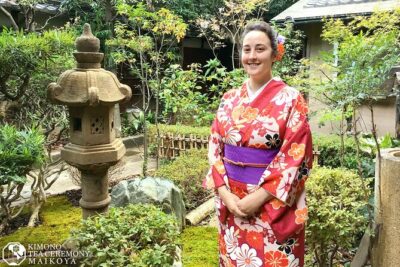
- A kimono-clad instructor: Watch a local professional demonstrate the ceremony step by step.
- English interpretation: Follow the meaning, etiquette, and cultural details without guessing.
- Your own bowl of matcha: Prepare the tea yourself after watching the demonstration.
- A small Japanese sweet: Taste a local delicacy with the matcha.
- A one-hour private activity: Your group participates together, with the experience ending where it begins.
A One-Hour Introduction to Japanese Tea Ceremony
Japanese tea ceremony is not simply a matter of whisking green tea. It is a set of careful movements shaped by hospitality, respect, timing, and attention to small details.
At Space Beppu, you learn those ideas in a compact one-hour session. The English-speaking interpreter explains the background and etiquette while a local instructor demonstrates the process. That combination matters. Watching the motions alone can leave you wondering what each gesture means. Listening to an explanation alone can feel like a lecture. Here, the two parts work together.
You should expect a guided cultural lesson rather than a long formal ceremony. The tone appears friendly and practical, with room for mistakes and questions. One especially useful detail is the patient instruction. If your whisking, handling, or bowing is not perfect, you are guided through it instead of being left to copy movements blindly.
This makes the activity a good choice if you want an introduction to tea ceremony without committing to a formal, highly specialized ritual. It is also well suited to first-time visitors who want some cultural context before trying the tea themselves.
Space Beppu and the Old Town House Setting
The meeting point is Space Beppu at 12-9 Chiyomachi, Beppu, Oita 874-0942. The activity begins and ends there, which keeps the logistics simple. It is near public transportation, and you do not need to arrange separate transport between several stops.
The building is more than a convenient room. It is over a century old, a rare survival in Japan, and that gives the activity a sense of place. You are not attending in a generic hotel conference room.
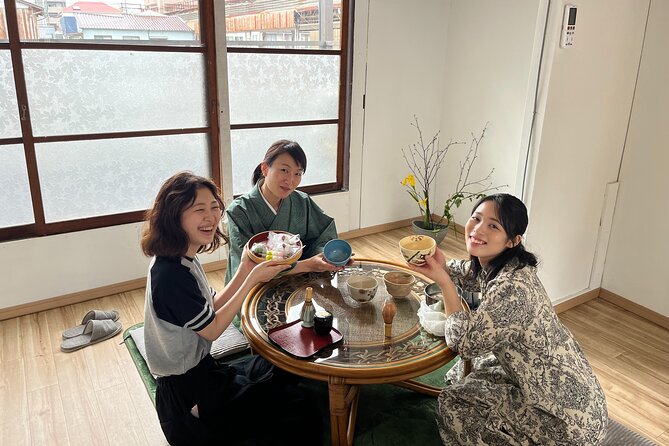
Still, keep your expectations measured. The town house has been recently modernized, especially inside. If you picture tatami, old wooden walls, and a perfectly preserved tea room, the actual setting may feel more contemporary than expected.
I see this as a tradeoff rather than a dealbreaker. The age of the building adds character, while the modern updates likely make the space easier to use. But the setting will not satisfy you if your main goal is a formal ceremony in an untouched traditional interior.
More Tea Ceremonies in Japan:
- Kyoto: Tea Ceremony in a Traditional Tea House in Kiyomizu
★ 4.9 · 3,519 reviews - Kyoto: Tea Ceremony Ju-An at Jotokuji Temple
★ 4.9 · 3,207 reviews - Kyoto: 45-Minute Tea Ceremony Lesson Experience
★ 4.3 · 2,378 reviews
Watching the Demonstration in Kimono
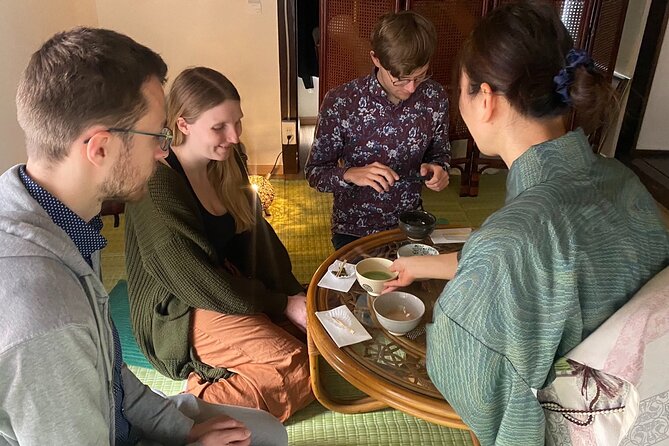
The local instructor conducts the demonstration in traditional kimono. That visual detail helps set the tone and gives you a direct connection to Japanese ceremony practice.
The demonstration is the foundation of the session. You watch the order of the actions before attempting them yourself. The interpreter explains the history, etiquette, and cultural importance as the instructor works through the steps.
Pay attention to the small actions. Tea ceremony is built around preparation and presentation, not speed. The way the tea is made, handled, and served is part of the lesson. Even if you forget some of the sequence later, you will come away with a better sense of why the ceremony values calm, care, and respect.
The interpreter also helps bridge a cultural gap that can be easy to miss. A gesture that looks decorative may have a specific purpose. A pause that looks unnecessary may be part of the ceremony’s rhythm. Good interpretation turns those details into something you can understand rather than merely watch.
You should not expect the instructor to perform a long ceremony while you remain silent. The format moves toward participation, which is the most useful part for many people.
Making Your Own Matcha
After the demonstration, you prepare your own cup of matcha. This is where the activity becomes more than a sightseeing stop.
You will have already seen the sequence, so you can try to reproduce it with guidance. The instruction is designed for beginners, and the atmosphere allows for errors. That matters because the movements can feel unfamiliar at first. The point is not to produce a perfect bowl on your first attempt. The point is to understand the process through your hands.
The experience serves one cup of matcha, not a flight of different teas. This is important when you consider the price and your expectations. If you want to compare matcha with sencha, roasted tea, or other Japanese varieties, this is not that kind of activity.
At the same time, serving one type of tea is consistent with the basic idea of a traditional tea ceremony. The focus is on the preparation and the act of serving, not on sampling a menu.
The matcha is paired with a Japanese sweet. This is not just a snack on the side. Sweets are commonly used to balance the bitterness of matcha, so the pairing helps you understand how the tea is meant to be enjoyed.
What the Interpreter Adds
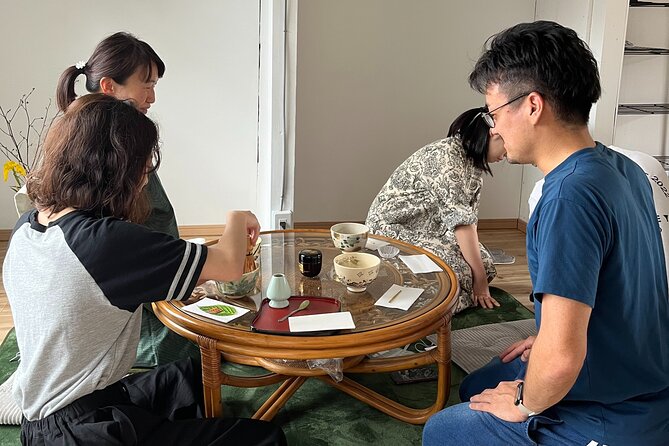
The English-speaking interpreter is central to the experience. Without that help, you could watch a series of precise movements and miss the ideas behind them.
You learn about the ceremony’s history and etiquette, as well as its cultural importance. The explanation should help you understand why participants behave in certain ways and why the process is deliberately measured.
This is also where the experience becomes more useful for families, couples, and small private groups. You can ask for clarification during the activity rather than trying to remember questions for later. The interpreter can help keep the lesson moving while making sure the basic instructions are clear.
The teaching style is patient rather than stern. That makes a difference if you feel awkward using the whisk or handling the utensils. A relaxed setting lets you pay attention to what you are doing instead of worrying about getting every motion right.
More tea experiences around Japan if you are still choosing
- World Heritage Kyoto & Nara Uji Authentic Matcha Experience
★ 5.0 · 1,573 reviews - Osaka: Tea Ceremony Experience
★ 4.9 · 1,426 reviews - Kyoto: Table-Style Tea Ceremony at a Kyo-Machiya
★ 4.9 · 1,211 reviews - Kanazawa: Kenrokuen Tea Ceremony Experience
★ 4.8 · 1,139 reviews
Private Participation and Group Size
This is a private activity, so only your group takes part. That gives the session a more personal feel than a large demonstration with strangers.
A private format can be especially useful if your group has mixed interests. Someone can ask about history, another person can focus on etiquette, and everyone gets a chance to try making matcha. You are not simply watching from the back of a crowded room.
The experience also offers group discounts. Since the listed price is $45.61 per person, check the final group rate when booking. The value improves if several people in your party can share the session and the price reduction applies.
The one-hour duration is another practical point. You can fit the activity into a morning or afternoon in Beppu without giving up half a day. It is long enough to include explanation, demonstration, preparation, and the sweet, but short enough to pair with other plans.
The short length has a limit. You will receive an introduction, not an extensive study of tea schools, utensils, regional customs, or advanced preparation. If you want a deep formal lesson, you may find the session too brief.
Is $45.61 Good Value?
At $45.61 per person, this is not a cheap cup of tea. You are paying for instruction, interpretation, a private group format, the historic setting, hands-on preparation, matcha, and a Japanese sweet.
The price makes more sense if you value context and participation. A drink in a café would cost much less, but it would not show you how the tea is prepared or explain the customs around it. A museum visit might tell you about tea ceremony, but it would not let you try the process.
The value is weaker if you mainly want variety or a dramatic traditional room. You receive one type of tea and one sweet. The modernized interior may also feel less special than the price suggests.
I would compare this activity with the cost of a short cultural class rather than with the price of a beverage. You are buying an introduction taught in English, with a local instructor and a private group. That is the right standard for judging it.
The high advance-booking pattern is worth noting. It is booked, on average, 41 days ahead, so you should not assume you can arrange it at the last minute, especially if your dates in Beppu are fixed.
Who Will Enjoy This Best
I would recommend the experience to you if:
- You are new to Japanese tea ceremony.
- You want a hands-on activity rather than a performance only.
- You value English explanation during a cultural lesson.
- You are traveling with family, friends, or a private group.
- You have about one hour available in Beppu.
- You are comfortable with a modernized historic building.
- You want to learn about matcha without committing to a full-day class.
You may want to skip it if you expect a preserved traditional tea room, several kinds of tea, or a long formal ceremony. You may also feel the price is high if your main goal is simply to taste matcha.
The activity works best when you approach it with the right aim: learning the basics and trying the ritual yourself. It is less suitable if you are looking for a theatrical cultural show or a tea tasting.
Timing, Arrival, and Cancellation Details
Arrive on time at Space Beppu. Late arrivals without advance notice can result in a cancellation charge of up to 50 percent of the activity fee. Since the session lasts only about an hour, arriving late could also mean missing the explanation that makes the demonstration easier to follow.
Confirmation is sent within 48 hours of booking, subject to availability. Mobile tickets are available, which keeps the entry process straightforward.
Free cancellation is available if you cancel at least 24 hours before the start time. Cancellations or changes made less than 24 hours before the activity are not refunded or accepted, and the cut-off follows local time in Beppu.
Should You Book the Tea Ceremony?
Book this experience if you want a short, private, English-supported introduction to Japanese tea ceremony, with a chance to make matcha yourself. The patient teaching and kimono-clad demonstration are the strongest reasons to choose it.
Think carefully if the room itself is central to your expectations. The building is century-old, but the interior has been modernized. You should also expect one cup of matcha with a Japanese sweet, not a selection of teas.
For first-time visitors to Beppu who want a cultural activity that fits neatly into a busy day, I think it is a sensible choice. Just arrive promptly, book ahead, and judge the $45.61 price as payment for instruction and participation, not for tea alone.
FAQ
Where does the tea ceremony take place?
The activity takes place at Space Beppu, located at 12-9 Chiyomachi, Beppu, Oita 874-0942, Japan.
How long does the activity last?
The tea ceremony lasts approximately one hour.
Does the activity start and end at the same place?
Yes. The activity ends back at the Space Beppu meeting point.
Is the activity conducted in English?
An English-speaking interpreter guides you through the history, etiquette, and cultural importance of the tea ceremony.
Will I make my own matcha?
Yes. After watching the local instructor’s demonstration, you are invited to prepare your own cup of matcha.
Is food included?
A Japanese sweet local delicacy is served alongside the matcha.
Is this a private activity?
Yes. Only your group participates in the activity.
What happens if I arrive late?
If you arrive late without prior notice, up to 50 percent of the total activity fee may be charged as a cancellation fee.
Can I cancel for a refund?
You can receive a full refund if you cancel at least 24 hours before the experience starts. Cancellations or changes made less than 24 hours before the start time are not accepted or refunded.
Fresh tea listings around Japan
- Yokohama : Tea Ceremony with Sweets and Souvenir★ 5.0 · 5 reviews
- Walking Tour: Yanaka,Nezu& Sendagi: Tea Ceremony & Old Tokyo★ 5.0 · 3 reviews
- Visit local home for music and tea ceremony near Disney★ 4.9 · 13 reviews
- Trip to Kamakura & Enoshima: Shrines, Seaside, Temples &Tea★ 5.0 · 11 reviews
- Yokohama: Sushi & Gyoza Cooking with Matcha & GreenTea Experience★ 5.0 · 3 reviews
- Uji: Private immersion into Kyoto’s tea and reglious culture★ 5.0 · 17 reviews
- Uji Tea Ceremony and UNESCO Heritage Walking Tour★ 5.0 · 20 reviews
- Kyoto tea town for matcha lovers★ 5.0 · 16 reviews
Tea Ceremony Experiences, compared.
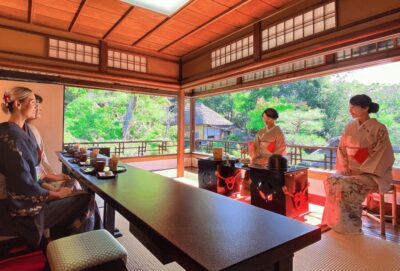
Kyoto: Tea Ceremony in a Traditional Tea House in Kiyomizu
Read our review →
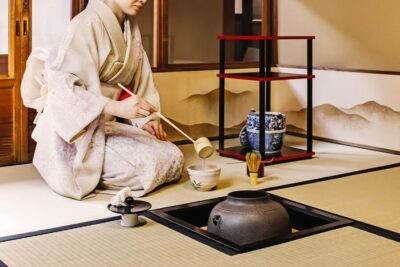
Kyoto: 45-Minute Tea Ceremony Lesson Experience
Read our review →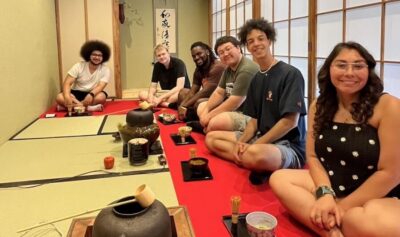
Kyoto: Table-Style Tea Ceremony at a Kyo-Machiya
Read our review →
Browse the lists this tour appears in