
Review · MATCHA EXPERIENCES
Osaka: Matcha Making Experience with Japanese Sweets
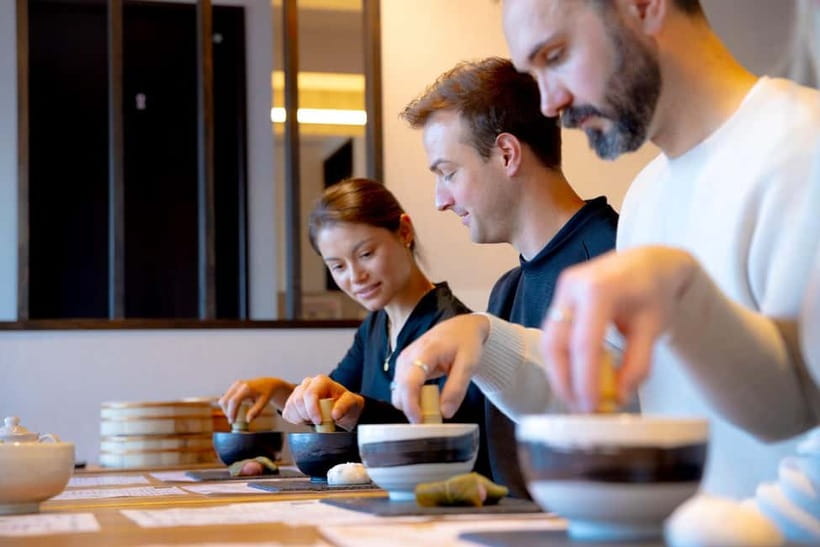
The best part of this Osaka activity is that you do not just drink matcha, you learn to make it. In a small group of no more than six, an English-speaking instructor leads a light quiz on matcha history, then shows you how to whisk the powder with a bamboo tool until it turns smooth and frothy.
I like the hands-on format and the relaxed teaching style. Instructors including Fujiko, Yui, Reika, Matty, Serin, and Takara have been praised for clear English, humor, and patience. I also like the setting near Dotonbori and Shinsaibashi, where this one-hour class gives you a quiet break from Osaka’s crowds.
The main consideration is scale. At $22, you receive a cup of matcha and Japanese sweets, not a full meal or a long formal tea ceremony. The room can also be a little hard to find, so allow time to reach the third floor of the Galleria Acca Building.
Key points at a glance
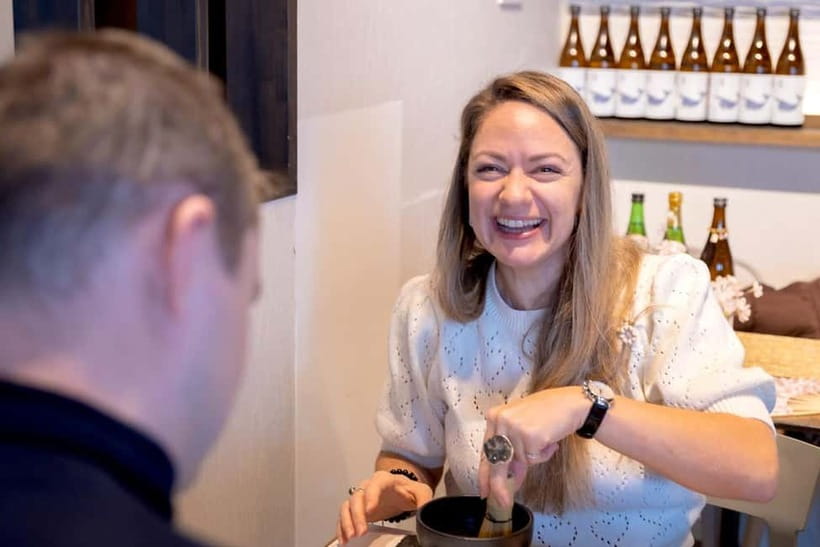
- A six-seat class: The small group gives you plenty of help while you whisk and taste your tea.
- A playful history lesson: A quiz makes matcha culture easier to follow than a long lecture.
- Traditional tools, modern comfort: You use a bamboo whisk and tea bowl at a table designed so you do not need to kneel.
- A central Osaka location: The class is about five minutes from Shinsaibashi Station and close to Dotonbori.
- Good for first-time matcha drinkers: No previous experience is needed, and the instructor guides each step.
- A short, well-priced activity: One hour and $22 make this easy to fit between shopping, sightseeing, and meals.
Making matcha beside Dotonbori
Osaka is famous for food, bright streets, and a wonderfully direct approach to eating. This class adds a quieter taste of Japan without sending you far from the action.
The meeting point is on the third floor of the Galleria Acca Building, roughly five minutes on foot from Shinsaibashi Station. The location puts you within easy reach of Dotonbori and Shinsaibashi, so you can pair the class with shopping, street food, or an evening walk along the canal.
The building itself is not presented as a grand tea house. That is part of the appeal. You are entering a practical central Osaka venue made for teaching, with a clean, pleasant room and a compact setup. One useful tip: the entrance can be easy to miss, so check the building name and go upstairs rather than assuming the class is at street level.
This is a useful activity for a hot or rainy afternoon. You sit indoors, slow down for an hour, and then return to Osaka’s fast-moving streets with a new skill in your pocket.
More Matcha Experiences in Osaka
- Matcha Making Class in Osaka with Authentic Japanese Sweets Set
★ 5.0 · 509 reviews - Osaka Temple Cool Foot Bath & Matcha Experience〈45min〉
★ 4.9 · 82 reviews - Osaka Temple Head Spa &Matcha Facial – Refresh & Glow〈90min〉
★ 5.0 · 24 reviews
The first lesson: matcha history through a quiz
The class begins with an introduction to matcha and its place in Japanese culture. Instead of asking you to sit through a long speech, the instructor uses an interactive quiz and questions to get the group involved.
That format matters. Matcha can seem simple at first: green powder, hot water, whisk. The quiz helps explain why the drink has a special place in Japan and gives you a little context before you pick up the tools.
The instructors use English, and the teaching style is light. Fujiko has been singled out for her humor and clear English, while Yui, Serin, Reika, Matty, Takara, Shota, and others have guided groups through the class at different times. The exact instructor depends on the date, but the format stays focused on clear explanations and participation.
You should expect questions and conversation rather than a stiff presentation. If you are curious about flavor, preparation, tea culture, or how matcha differs from ordinary green tea, this is a good time to ask. Several instructors also share practical Osaka suggestions, including places to eat after class.
For children, the quiz gives the lesson a bit of play. Families with school-age children have found the activity approachable, and one family attended with an eight-year-old. A parent also brought a nine-month-old, though the class is still a seated cultural activity rather than a special baby program.
Whisking your own tea with traditional tools
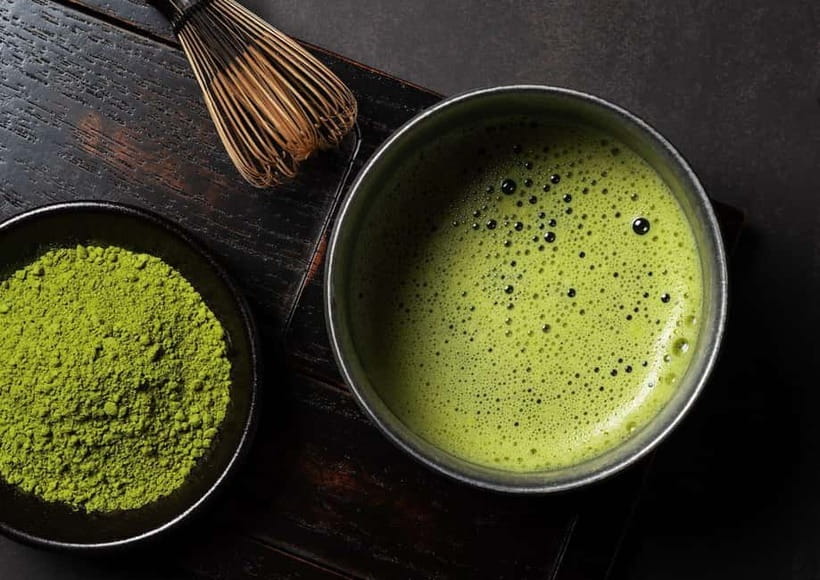
The hands-on section is the heart of the experience. You receive the ingredients and tools, including the bamboo whisk used to mix matcha with water. The instructor demonstrates the process, then helps you prepare your own bowl.
You do not need a steady hand or prior tea experience. The point is not to perform a flawless ceremony. It is to learn the basic movement, see how the powder dissolves, and create a smoother drink than you might manage by simply stirring with a spoon.
The instructor explains the stages, from adding and dissolving the powder to whisking and tasting. You will likely notice that the whisking motion affects the texture. Done well, the matcha becomes smoother and lightly foamy.
This is where the small group makes a real difference. With a maximum of six people, the instructor can watch each person and offer help. You are not lost in a large workshop, waiting for attention while everyone else works.
The setup also removes one common concern about traditional Japanese activities. The table has a traditional feel, but you do not have to kneel on the floor. That makes the class more comfortable for families, older visitors, and anyone who would rather focus on the tea than on their knees.
Do not expect to leave with a professional tea ceremony qualification. You are learning the basic craft of making and drinking matcha in a friendly class. For most people, that is the right level for a one-hour Osaka activity.
Drinking matcha with Japanese sweets
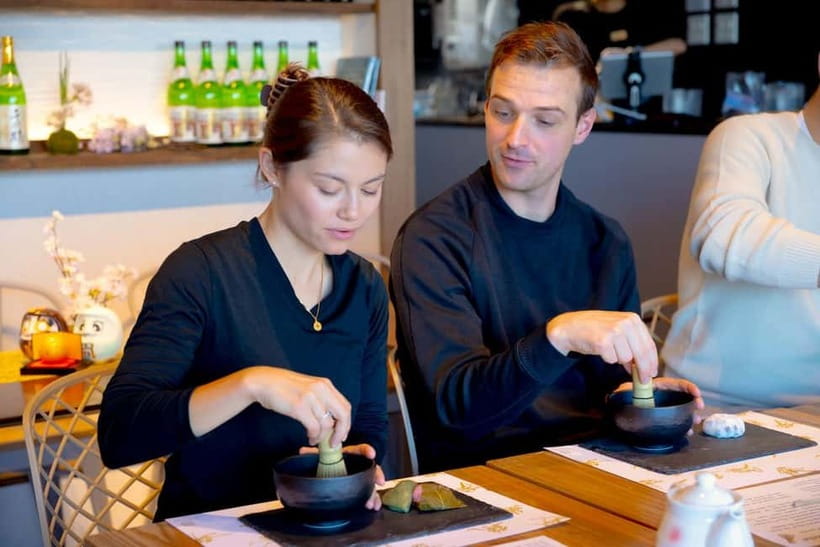
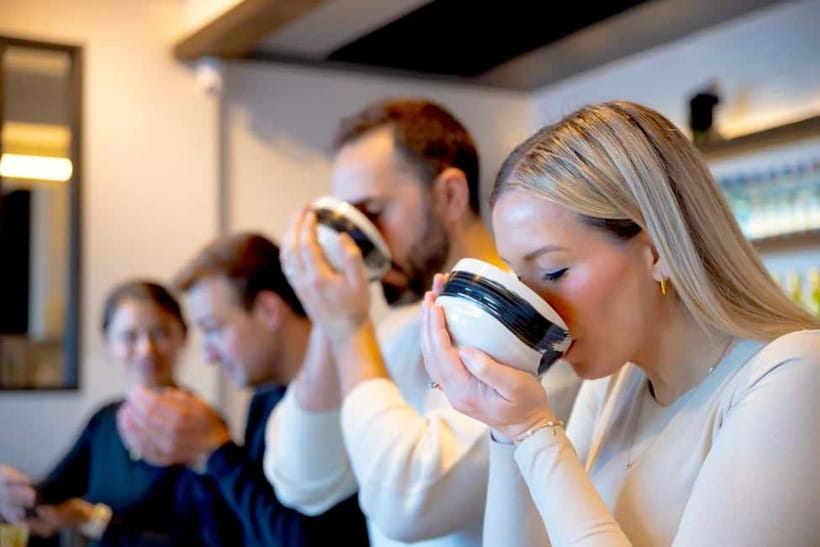
After preparing the tea, you drink it with Japanese sweets. This pairing is not just a nice extra. Sweet food helps balance matcha’s earthy, slightly bitter flavor and gives you a better sense of how the drink is traditionally enjoyed.
The sweets are described as delicious and well matched to the tea, though the portion is modest. This is a tasting and cultural activity, not a dessert buffet or afternoon meal. Plan to eat before or after if you are hungry.
The final tasting is also the calmest part of the class. You can see how your own preparation turned out, compare the experience with what you usually order in cafes, and ask follow-up questions. One useful observation from the class format is that you are not only shown a finished bowl. You make it yourself, then drink the result.
A few people have wished for more time to sit with the tea. That is fair. The full activity lasts about an hour, and the lesson, preparation, and tasting all share that time. If you want a long, silent tea setting, this may feel brief. If you want a compact introduction with something to do, the pace works well.
Same city, a very different cup:
- Osaka: Tea Ceremony Experience
★ 4.9 · 1,426 reviews - Tea Ceremony Experience in Osaka Doutonbori
★ 5.0 · 754 reviews - Osaka: Tea Ceremony, Calligraphy, and Kimono Experience
★ 4.9 · 130 reviews - Osaka: Japanese Traditional Sweets Making and Tea Ceremony
★ 4.7 · 118 reviews
What the $22 price really buys you
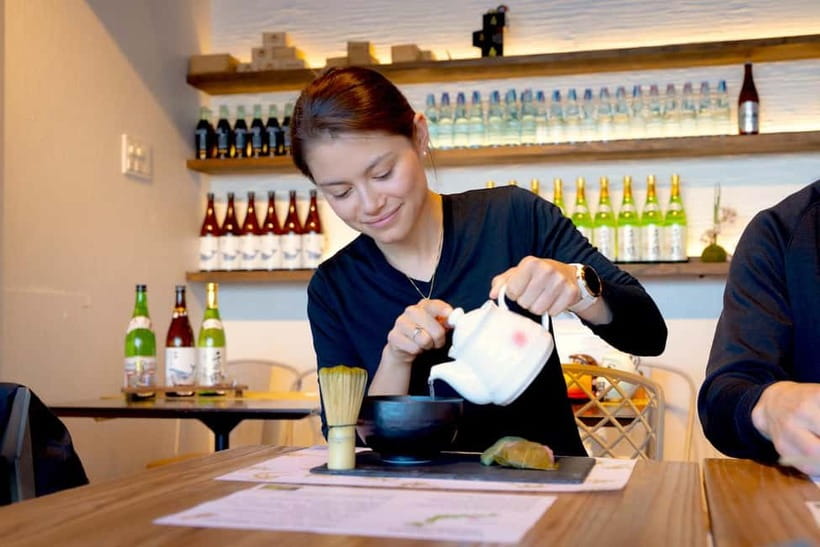
At $22 per person, this is a strong value for a central Osaka activity. The price includes the cooking class, ingredients, instructor, matcha, and Japanese sweets. You are paying for instruction and cultural context as much as for the drink itself.
The class also gives you a practical skill you can repeat at home. Several people have enjoyed learning the correct way to whisk matcha and planned to try it again after returning home. That makes the experience more useful than a simple tasting.
Still, keep the limits in mind. You are not buying a large serving of food, a take-home tea set, or hotel transportation. One person bought a distinctive chawan bowl during the experience, but you should treat that as an optional purchase rather than part of the package.
The value is strongest if you want a short cultural activity in a very central location. It is less suitable if your priority is a full meal, a long formal ceremony, or an extended lesson on Japanese tea schools.
Why the small group changes the experience
A group limit of six is one of the most important details here. Matcha preparation is simple to watch but more useful when someone can correct your technique.
In a larger class, you might spend much of the lesson looking at a demonstration. Here, you take part. The instructor can answer personal questions, help you adjust your whisking, and keep the mood relaxed.
The small room also makes the experience social without making it noisy. Solo visitors can join a shared activity without needing to organize a private group. Couples, families, and friends can work side by side, while the instructor keeps the lesson moving.
The atmosphere is casual rather than solemn. That suits first-time visitors who want to learn about Japanese culture without worrying about making a mistake. You can ask basic questions, laugh at an imperfect bowl of foam, and try again without feeling out of place.
The tradeoff is that this is not an anonymous drop-in tasting. You are part of a small class, and the pace is shared with the other participants. That is usually a benefit, but anyone seeking complete privacy should take note.
Guides who make the lesson work
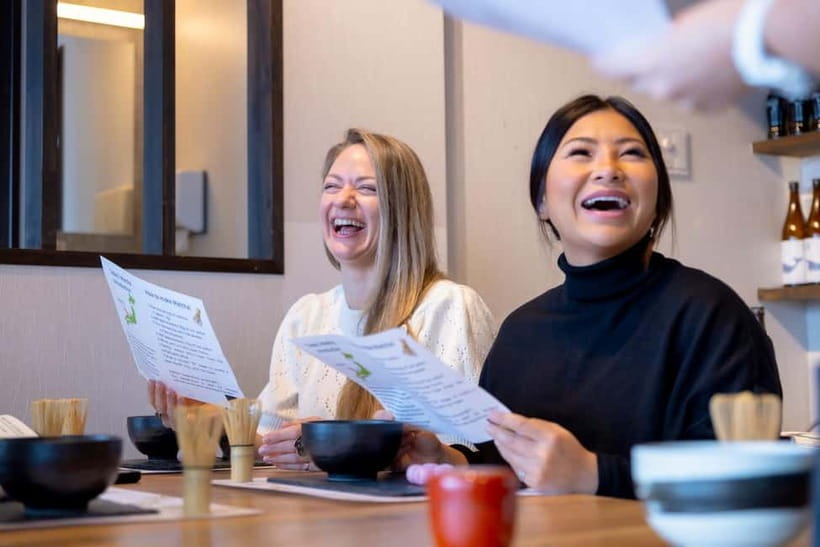
The strongest part of this class is the human instruction. The experience depends on the guide explaining unfamiliar customs in plain English and making beginners comfortable with the tools.
Fujiko has been praised for being funny, friendly, and easy to understand. Yui has helped with both the matcha lesson and wider Osaka suggestions. Reika, Serin, Matty, Takara, Shota, Harita, Hinata, Moe, Lala, and others have also led sessions, so the name of your instructor may differ.
The consistent qualities to look for are patience, energy, and a willingness to answer questions. The class is not built around a silent display of expert technique. It is built around interaction.
That makes the experience especially useful if this is your first matcha. You learn what to do, why you are doing it, and how the finished drink should feel. You also have an English-speaking person nearby who can explain cultural details that may otherwise be difficult to pick up during a regular cafe visit.
Who should book this Osaka activity
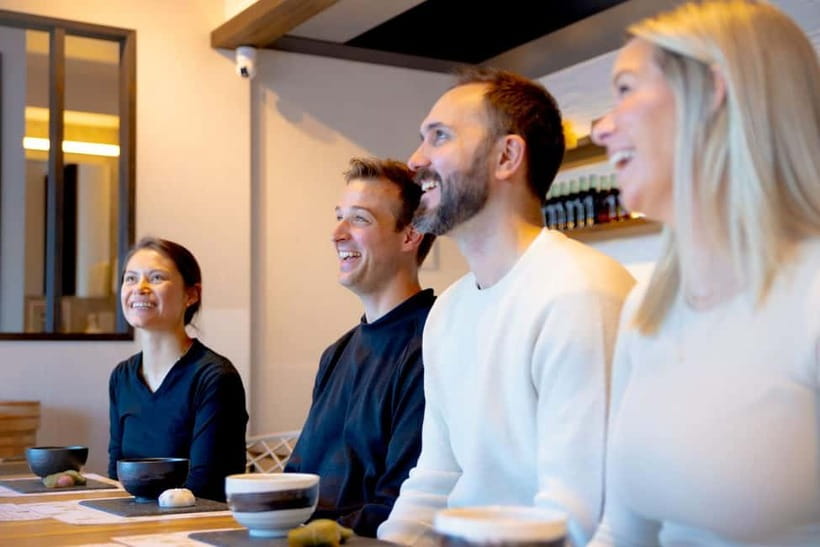
I would recommend this class to first-time matcha drinkers, families with children, couples, solo visitors, and anyone who wants a short indoor activity near Osaka’s main shopping and food areas.
It is particularly good for:
- First-time visitors to Japan: You get a clear introduction to one part of Japanese food culture without needing prior knowledge.
- Families: Children can take part in the quiz and hands-on whisking, while the no-kneeling table is more comfortable than a floor-based setup.
- Solo visitors: The six-person limit makes it easy to join a group without feeling lost.
- Food-focused visitors: You can pair the class with Dotonbori and Shinsaibashi eating stops.
- People escaping the heat: The one-hour indoor format gives you a useful pause during a hot day.
- Anyone curious about matcha at home: You learn a preparation method you can repeat later.
I would think twice if you want a filling food tour, a lengthy tea ceremony, or a completely formal setting. The activity is friendly and practical, not austere. It teaches the basics and lets you enjoy the result.
Timing, arrival, and cancellation details
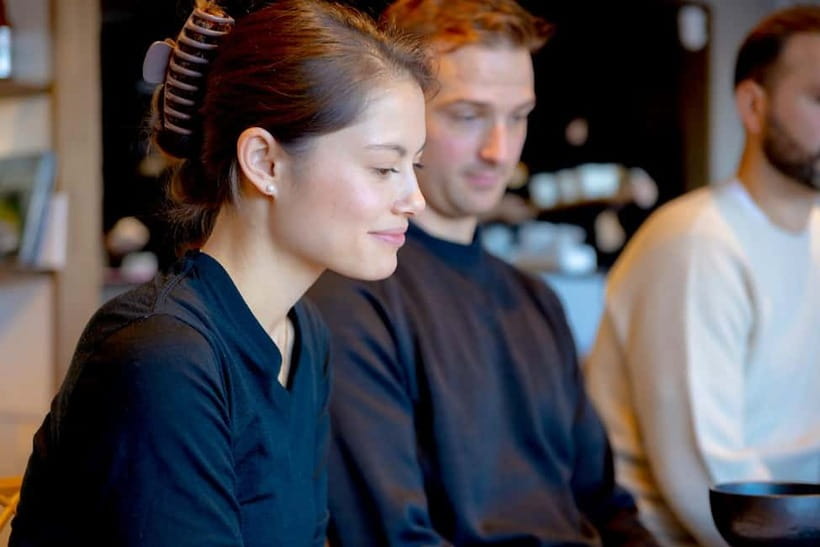
The class lasts one hour, with starting times based on availability. Since the venue is on the third floor and can be a little hard to spot, arrive with enough time to find the Galleria Acca Building near Shinsaibashi Station.
The meeting point is approximately five minutes from the station, at coordinates 34.6723159, 135.5024459. There is no hotel pickup or drop-off, so you make your own way there.
English is the listed teaching language. The activity accepts solo participants and groups, with space limited to six people. You can cancel up to 24 hours in advance for a full refund, and the reserve-now, pay-later option lets you hold a place without paying immediately.
Should you book the matcha class?
Book it if you want a short, hands-on cultural activity that fits neatly into a day around Dotonbori and Shinsaibashi. The $22 price is reasonable because it covers the instruction, tools, ingredients, tea, sweets, and a skill you can use again.
The class is best understood as an introduction, not a full tea ceremony or meal. You will learn matcha history, whisk your own bowl, taste it with Japanese sweets, and spend time with an English-speaking local instructor in a small group.
For most visitors, that is exactly why it works. It is easy to fit into an Osaka itinerary, welcoming to beginners, and more memorable than simply ordering a green drink at a cafe. If you have an hour free near Shinsaibashi, I would make room for it.
FAQ
Where is the matcha-making class held?
It is held on the third floor of the Galleria Acca Building, about a five-minute walk from Shinsaibashi Station in central Osaka. The venue is near Dotonbori and Shinsaibashi.
How long does the experience last?
The activity lasts one hour.
How many people are in each group?
The class is limited to six participants.
Is the class taught in English?
Yes. The listed teaching language is English, and English-speaking local instructors lead the activity.
Do I need previous matcha-making experience?
No. Previous experience is not needed. The instructor explains the process and guides you through whisking your own matcha.
What is included in the price?
The $22 price includes the cooking class, ingredients, instructor, matcha preparation, and Japanese sweets. Hotel pickup and drop-off are not included.
Can I cancel the booking?
Yes. You can cancel up to 24 hours in advance for a full refund. A reserve-now, pay-later option is also available.
More Tea and Sweets Making in Osaka
- Matcha Making Class in Tokyo with Authentic Japanese Sweets Set
★ 5.0 · 744 reviews - Tokyo: Matcha Making Experience with Mochi Sweets in Asakusa
★ 4.9 · 388 reviews - Kyoto: Japanese Traditional Sweets Making and Tea Ceremony
★ 4.4 · 314 reviews - Make Traditional Nerikiri Sweets & Matcha experience in Shibuya
★ 5.0 · 130 reviews
Fresh tea listings around Osaka
- Osaka Temple Head Spa &Matcha Facial – Refresh & Glow〈90min〉★ 5.0 · 24 reviews
- Premium Kimono Dressing, Tea Ceremony, Calligraphy, Samurai show★ 5.0 · 18 reviews
- Samurai dress-up and shows, plus Tea Ceremony & Calligraphy★ 5.0 · 27 reviews
- Osaka; Japanese Tea ceremony experience, Macha and Sencha★ 4.9 · 29 reviews
- Osaka: Private Tea Ceremony and Calligraphy Experience★ 5.0 · 50 reviews
- Samurai Show, Tea Ceremony, Japanese Traditional Activities★ 5.0 · 56 reviews
- Osaka Temple Cool Foot Bath & Matcha Experience〈45min〉★ 4.9 · 82 reviews
- Osaka: Japanese Traditional Sweets Making and Tea Ceremony★ 4.7 · 118 reviews
Matcha Experiences, compared.
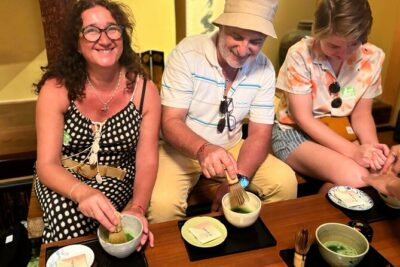
World Heritage Kyoto & Nara Uji Authentic Matcha Experience
Read our review →
Matcha Making Class in Tokyo with Authentic Japanese Sweets Set
Read our review →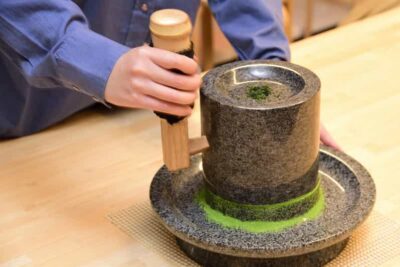
Kyoto: Tea Museum Tickets and Matcha Grinding Experience
Read our review →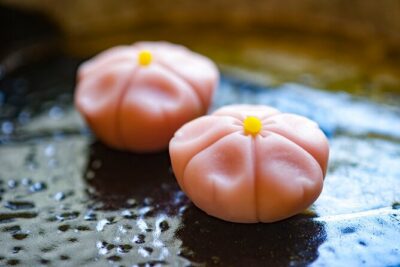
Matcha Making Class in Osaka with Authentic Japanese Sweets Set
Read our review →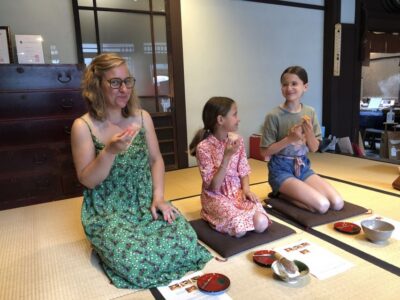
Kyoto: Tea Ceremony Meditation – Make Matcha with Tea Master
Read our review →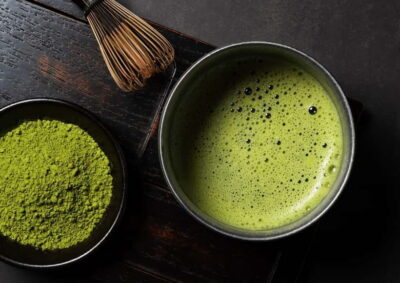
Tokyo: Matcha Making Experience with Mochi Sweets in Asakusa
Read our review →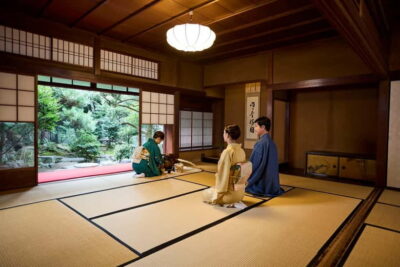
Kyoto: Kimono Tea Ceremony with Matcha and Sweet
Read our review →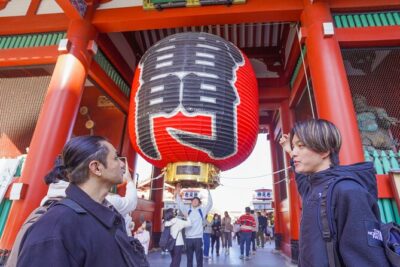
Browse the lists this tour appears in