Review · KIMONO & TEA CEREMONY
Osaka: Castle, Tea Ceremony, Calligraphy, and Samurai Armor!
Osaka Castle, calligraphy, tea, samurai armor, and Dōtonbori make this a lively introduction to the city. I like the mix of major sights and hands-on culture, and I like that children can join the samurai session in specially made armor. The local train rides between stops add a useful taste of getting around Osaka.
The main catch is that the armor and kimono options cost an extra ¥4,820, and the tour is not suitable for people with back problems or those over 70. At $135, it is best for you if you want several cultural activities in one guided day, not if you prefer to explore each place slowly on your own.
Key points at a glance
- Osaka Castle comes first: Visit the castle and its museum for photographs, city history, and a clear sense of Osaka’s importance.
- Tea and calligraphy are hands-on: You do more than watch, with a traditional tea ceremony and a chance to practice Japanese calligraphy.
- Samurai extras cost more: Armor or women’s kimono rental is ¥4,820, with special armor available for children.
- Traditional music is part of the cultural session: You may play instruments including the Shamisen, Koto, and Shinobue.
- Dōtonbori adds food and neon: End among Osaka’s famous restaurants, shops, signs, and street-food stalls.
- The meeting point is central: Begin and finish at the Osaka JOINER base in B1 of Namba Walk, near Exit B23.
Why this Osaka tour works
Many Osaka tours force you to choose between history, food, and traditional culture. This one attempts to cover all three in a single outing. You begin with a famous landmark, move into quieter cultural activities, then finish in Dōtonbori, where Osaka’s appetite takes over.
That range is the tour’s strongest feature. You can take castle photographs in the morning, learn the careful movements of a tea ceremony, put brush to paper, and then compare that calm setting with the bright signs and food counters of Dōtonbori.
I would choose this tour for a first visit, especially if you want a guide to organize the day. It also suits families who want activities beyond museum displays. The samurai armor option gives children something physical and playful to do, while calligraphy and tea offer a slower look at Japanese customs.
You should keep your expectations sensible. This is a sampler, not a specialist course in tea, calligraphy, samurai history, or Japanese music. Its value comes from the variety and the guidance between stops.
More Kimono and Tea Ceremonies in Osaka
- Osaka: Tea Ceremony, Calligraphy, and Kimono Experience
★ 4.9 · 130 reviews - Samurai Show, Tea Ceremony, Japanese Traditional Activities
★ 5.0 · 56 reviews - Samurai dress-up and shows, plus Tea Ceremony & Calligraphy
★ 5.0 · 27 reviews
Meeting at Namba Walk near Exit B23
The tour starts at the Osaka JOINER base on the B1 level of Namba Walk, an underground shopping street. Look for the shop near Exit B23, between the Mizuno shop and the Docomo Shop. If you are coming from Starbucks, go to the other side of the passage.
This detail matters. Namba has a maze of underground passages, shops, and exits, so allow enough time to find the correct section. You will also return to this meeting point at the end of the activity.
Bring cash. You may need it for the optional armor or kimono activity, and carrying some money is useful for snacks or food in Dōtonbori. Smoking indoors is not allowed.
An English-speaking guide leads the experience. Canned is the guide named in the available tour feedback, and the day is described as including help with the local train system. That support can make the transfers less stressful, especially if you are still learning how Osaka’s stations fit together.
Osaka Castle: a grand start with a museum inside
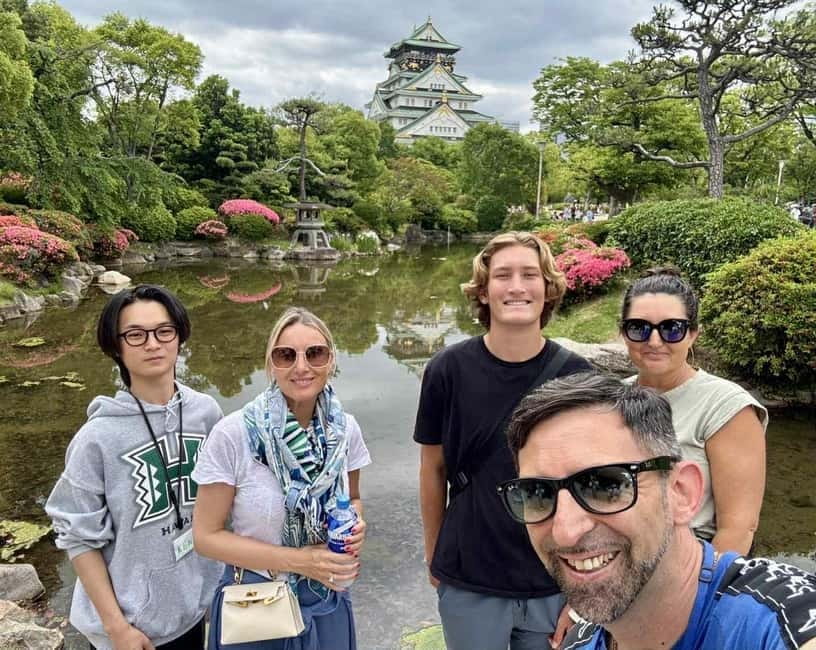
Osaka Castle is the tour’s big historical stop. It is one of Japan’s best-known landmarks and gives you the classic castle photographs many people want from Osaka.
The visit includes entry to the castle and its museum. That makes the stop more than a quick look at the outside walls. You can see the building, take photographs, and spend time with displays about the castle and Osaka’s past.
The castle is also a useful anchor for the rest of the day. The later tea, calligraphy, and samurai activities make more sense after you have seen one of Japan’s major historic symbols. The castle sets the scene, while the hands-on activities show how Japanese culture is presented through ceremony, writing, dress, and martial tradition.
The tradeoff is pace. Because the tour continues to several other activities, you should not expect an unhurried castle visit with time for every display. If the museum is your main reason for booking, a separate visit would let you stay longer. If you want an introduction followed by several different experiences, the guided stop is well judged.
Take your best castle photos here, but do not assume the entire day is built around photography. The real appeal is the combination of the building and the cultural session that follows.
Tea ceremony: a quiet change of rhythm
After the castle, the tour shifts from large-scale history to a traditional Japanese tea ceremony. This change of pace is one of the day’s best features.
A tea ceremony is not simply a cup of tea. The value is in the sequence, the manners, and the attention given to each movement. You will get a short look at a custom built around preparation and formality, then experience the ceremony as part of the group.
For many people, this will be their first organized tea ceremony in Japan. A guide can explain what you are seeing and help you follow along without worrying about every small rule. The setting gives you a chance to slow down after the castle and train connections.
This part may suit you less if you want a long, highly detailed lesson in tea practice. The experience combines tea with calligraphy, samurai activities, and music, so it is designed as a broad cultural introduction. Still, the tea ceremony adds something that a standard sightseeing route often misses.
I like that this activity is paired with calligraphy rather than treated as a separate sightseeing stop. Both ask you to pay attention to movements, form, and presentation, but they feel very different in practice.
More Tea and Calligraphy Workshops in Japan
- Osaka: Private Tea Ceremony and Calligraphy Experience
★ 5.0 · 50 reviews - Premium Kimono Dressing, Tea Ceremony, Calligraphy, Samurai show
★ 5.0 · 18 reviews - Learn Zen in a class of making Matcha tea near Osaka Castle
★ 4.8 · 17 reviews - Osaka:Zen Tea Ceremony and Foot Bath Experience<45min>
★ 5.0 · 7 reviews
Calligraphy: take home a personal souvenir
The calligraphy session gives you a chance to use a brush and create your own piece of Japanese writing. That makes it more memorable than simply looking at written characters in a museum.
You do not need to arrive as an artist. The point is to try the tools and understand something of the discipline behind Japanese calligraphy. A guide can help you follow the basic process and make the session approachable for beginners.
This is also a practical souvenir. Instead of buying another mass-produced item, you can leave with something you made during the tour. Keep in mind that the supplied details do not promise a particular character, phrase, or finished presentation, so the exact result depends on the activity provided that day.
Families may find calligraphy a good balance to the armor session. Adults can take it seriously, while children get a creative activity that does not depend on prior knowledge of Japanese culture.
Samurai armor and music: optional extras with a clear price
The samurai portion includes a show, photographs, and traditional instruments. You may have the chance to try the Shamisen, Koto, or Shinobue. These instruments give the cultural session more variety and help break up the day with something you can hear and touch.
Trying on samurai armor is optional and costs ¥4,820. Women can also choose a kimono experience for the same additional fee. The price is listed as valid until the end of August, so confirm the current amount before booking or message the operator through WhatsApp if you want the extra arranged.
You can also tell the guide on the day. I would not leave this decision until the last minute if wearing armor or a kimono is important to you. Letting the operator know ahead of time should make the arrangement clearer.
Children can take part in the samurai experience with armor made for them. That is a useful family detail, since adult-sized costume experiences do not always work well for younger children.
The armor option can add a strong visual element to the day, especially if you enjoy photographs. It also changes the experience from watching a show to taking part. But it is not included in the $135 price, so your total cost will be higher if you select it.
The same applies to the women-only kimono option. If you want a traditional outfit photograph, budget for the extra charge rather than assuming it comes with the tour.
Dōtonbori: finish with Osaka food and lights
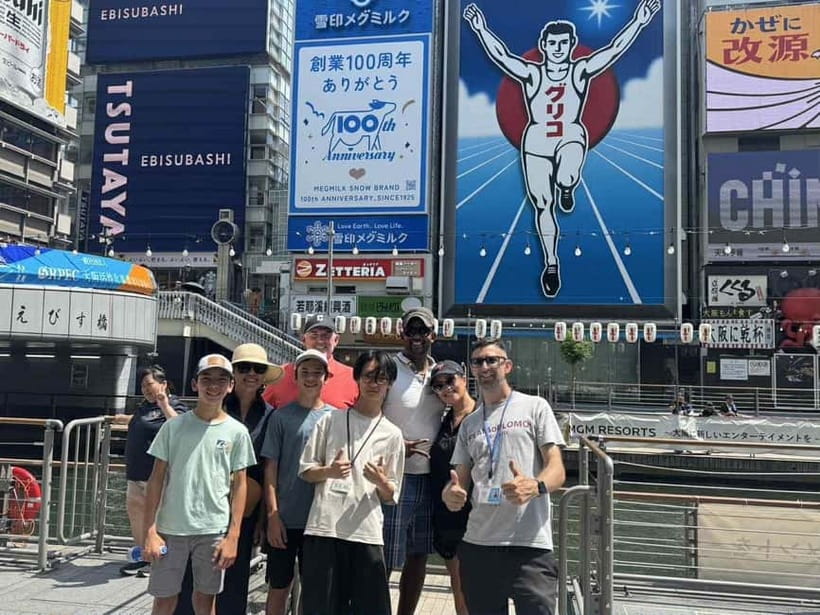
The final stop is Dōtonbori, Osaka’s famous entertainment and street-food district. This is where the tour moves from formal tradition to everyday pleasure.
You can use the time for photographs, shopping, or local food. Dōtonbori is known for its large signs, restaurants, and snack counters, so it gives you a strong visual finish to the day. It is also a good place to ask your guide what to eat if you do not know the local specialties.
The stop is valuable because it shows another side of Osaka. The castle presents the city through its past. Tea and calligraphy show formal customs. Dōtonbori shows Osaka as a food-loving commercial center.
The drawback is that food is not listed as included. Plan to pay for your own dishes and snacks, and keep some cash with you. Your free time may also feel short if you want a full meal, shopping, and photographs all at once.
The activity ends back at the Osaka JOINER meeting point, so you are not left to work out a separate return route. That is handy after an evening in the crowded Namba and Dōtonbori area.
Is $135 a fair price?
At $135 per person, this is not the cheapest way to see Osaka Castle. You are paying for the combination of castle entry, a guide, tea, calligraphy, samurai entertainment, traditional instruments, transport guidance, and Dōtonbori.
The value improves if you would otherwise book several separate activities. A castle visit, tea ceremony, calligraphy class, and costume experience can quickly add up when arranged independently. Here, the guide provides a single framework and helps connect the stops.
The value is weaker if you only want Osaka Castle and Dōtonbori. You could visit those areas independently and spend less, though you would give up the organized cultural activities and help with the local train system.
Remember the extra charges. Samurai armor and women’s kimono cost ¥4,820 each, and food in Dōtonbori is also your responsibility. The advertised price is therefore a starting point for a culture-heavy day, not necessarily your final spending total.
The tour has a small amount of public feedback, but the comments consistently praise the friendly and professional guide service, the castle, the cultural activities, and the reasonable price. One person specifically enjoyed the train connections, castle visit, samurai session, calligraphy, and tea ceremony as a memorable full-day mix. That matches the tour’s main strength: you get many different experiences without having to plan each one yourself.
Who should book this experience?
I would recommend it to first-time visitors who want a broad introduction to Osaka. It works especially well for couples, families, and anyone who likes guided activities rather than reading about customs alone.
It is also a good match if you want photographs. Osaka Castle, samurai armor, kimono, and Dōtonbori all offer different visual settings. Choose the costume option if those photographs are central to your plans.
Families should note the child-friendly armor option. Calligraphy and music add variety, so the day is less dependent on children enjoying only one type of sightseeing.
You may want to skip it if you have back problems, are over 70, or prefer a slow schedule with long stretches at one location. The tour includes several distinct parts and local train travel, so it asks you to keep moving.
It may also not suit visitors who already know Osaka well and want specialist instruction. The tea, calligraphy, music, and samurai sections are introductions rather than advanced lessons.
Booking and cancellation details
You can reserve now and pay later, which helps if your Osaka plans are still shifting. Cancellation is allowed up to 24 hours in advance for a full refund.
The tour is conducted in English. Optional activities require an additional payment, and the listed armor and kimono fee is ¥4,820 until the end of August. Confirm the current price when you book.
Should you book this Osaka cultural tour?
Book it if you want one organized experience that joins Osaka Castle with tea, calligraphy, samurai culture, and Dōtonbori. The strongest reasons are the variety, the hands-on activities, the child-sized samurai armor, and the guide’s help with the city’s train system.
Skip it if your priority is a long castle museum visit, a serious tea lesson, or a low-cost day of independent sightseeing. For everyone else, $135 is a reasonable price for a packed introduction, provided you budget separately for the ¥4,820 costume options and Dōtonbori food.
FAQ
Where does the tour start?
It starts at the Osaka JOINER base on the B1 floor of Namba Walk, near Exit B23. The shop is between the Mizuno shop and Docomo Shop.
How do I find the meeting point?
If you are coming from Starbucks, go to the other side of the underground shopping street. The meeting point is near Exit B23.
Where does the tour finish?
The activity ends back at the Osaka JOINER meeting point.
Is Osaka Castle included?
Yes. The tour includes a visit to Osaka Castle and entry to the castle museum.
Is the tea ceremony included?
Yes. A Japanese tea ceremony is included in the experience.
Is calligraphy included?
Yes. The tour includes a Japanese calligraphy session.
Is samurai armor included in the $135 price?
No. Wearing samurai armor is an optional extra costing ¥4,820. The listed price is valid until the end of August.
Is kimono wearing included?
No. Women can choose a kimono-wearing option for an additional ¥4,820.
Can children wear samurai armor?
Yes. Specially designed armor is available for children.
What language is the tour conducted in?
The tour is conducted in English.
What should I bring?
Bring cash. Smoking indoors is not allowed.
Is the tour suitable for people with back problems?
No. The activity is listed as unsuitable for people with back problems.
Is the tour suitable for people over 70?
No. The activity is listed as unsuitable for people over 70.
Can I cancel for a full refund?
Yes. You can cancel up to 24 hours in advance for a full refund.
More Tea Ceremonies in Osaka
- Osaka: Tea Ceremony Experience
★ 4.9 · 1,426 reviews - Tea Ceremony Experience in Osaka Doutonbori
★ 5.0 · 754 reviews - Osaka: Japanese Traditional Sweets Making and Tea Ceremony
★ 4.7 · 118 reviews - Osaka; Japanese Tea ceremony experience, Macha and Sencha
★ 4.9 · 29 reviews
More Tea and Calligraphy Workshops in Osaka
- Osaka: Tea Ceremony, Calligraphy, and Kimono Experience
★ 5.0 · 6 reviews - ZEN therapy | Shiatsu-style massage, EnergyTherapy & Japanese Tea
★ 5.0 · 5 reviews - Tea and Calligraphy Session at a Table in Osaka
★ 5.0 · 4 reviews
Fresh tea listings around Osaka
- Osaka:Zen Tea Ceremony and Foot Bath Experience<45min>★ 5.0 · 7 reviews
- Nara Deer Park, Uji Matcha, & Hot Spring Full-Day Tour from Osaka★ 4.0 · 21 reviews
- Osaka: Tea Ceremony, Calligraphy, and Kimono Experience★ 5.0 · 6 reviews
- Osaka: Nara, Todaiji, Uji Matcha, and Hot Spring Tour★ 4.0 · 7 reviews
- Discover Japanese Tea Blending Techniques in Osaka★ 5.0 · 19 reviews
- Osaka Japanese Cooking And Matcha Class near Osaka Castle★ 5.0 · 22 reviews
- Craft Sushi and Matcha Ice Cream in Central Osaka (3-Course Meal)★ 5.0 · 2 reviews
- ZEN therapy | Shiatsu-style massage, EnergyTherapy & Japanese Tea★ 5.0 · 5 reviews
Kimono & Tea Ceremony, compared.
KYOTO Tea Ceremony with kimono near by Imamiya Jinjya Shrine
Read our review →
Kyoto: Kimono and Tea Ceremony Experience at Cultural Asset
Read our review →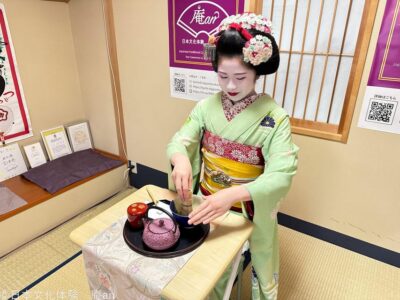
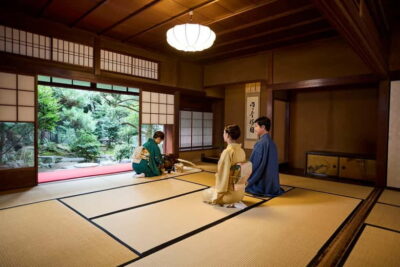
Kyoto: Kimono Tea Ceremony with Matcha and Sweet
Read our review →