Review · KIMONO & TEA CEREMONY
Premium Kimono Dressing, Tea Ceremony, Calligraphy, Samurai show
The most memorable part of this Osaka cultural outing is the chance to take part, not simply watch. You can be dressed in a carefully arranged kimono, prepare matcha, practice calligraphy, and see a samurai sword performance in one three-hour visit. Hands-on activities make the customs easier to understand.
I especially like the patient explanations built into each activity and the chance to leave with your own calligraphy work. The quiet courtyard and gallery also give you a pleasant setting for photos. The main thing to check is the armor option, since armor dressing is not included in the listed price and may cost extra.
Key points to know before booking
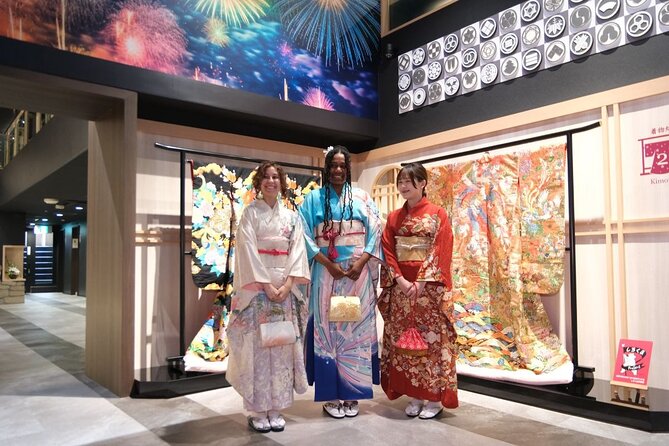
- Four cultural activities in one visit: Kimono dressing for women, tea ceremony, calligraphy, and traditional Japanese music are included.
- Samurai atmosphere: You can watch a sword performance, with armor dressing mentioned separately as an extra option.
- Boutique-style setting: The program takes place at Shinsaibashi ARTY Inn, with a courtyard and historical gallery for photos and browsing.
- About three hours: The pace allows time for instruction, dressing, performances, and hands-on practice.
- Good public transport access: The venue is near public transportation, and a mobile ticket is provided.
- Check the extras carefully: Armor dressing is not included, and a souvenir is listed at ¥10,000 per person.
A full afternoon of Japanese tradition in Osaka
This is a compact cultural program for anyone who wants more than a quick photo in a rented kimono. Over about three hours, you move through several parts of Japanese tradition: clothing, tea, writing, music, and samurai performance.
That variety is the strongest reason to consider it. A tea ceremony alone can feel formal if you do not know what is happening. Calligraphy alone may be brief. Put together, the activities give you several ways to understand how Japanese culture values movement, presentation, focus, and respect.
You are not expected to arrive with prior knowledge. The staff explain the steps and the meaning behind them, which matters when customs are not obvious to a first-time visitor. You will have room to ask questions and take part rather than simply sit in an audience.
The setting at Shinsaibashi ARTY Inn adds to the mood. Along with the activity rooms, you can see a serene courtyard and a historical gallery. That gives you more visual interest than a plain classroom and creates natural moments for photographs.
More Kimono and Tea Ceremonies in Osaka
- Osaka: Tea Ceremony, Calligraphy, and Kimono Experience
★ 4.9 · 130 reviews - Samurai Show, Tea Ceremony, Japanese Traditional Activities
★ 5.0 · 56 reviews - Samurai dress-up and shows, plus Tea Ceremony & Calligraphy
★ 5.0 · 27 reviews
Kimono dressing for women
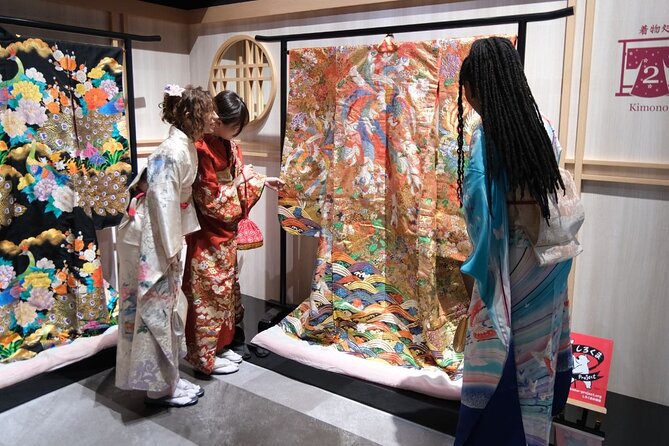
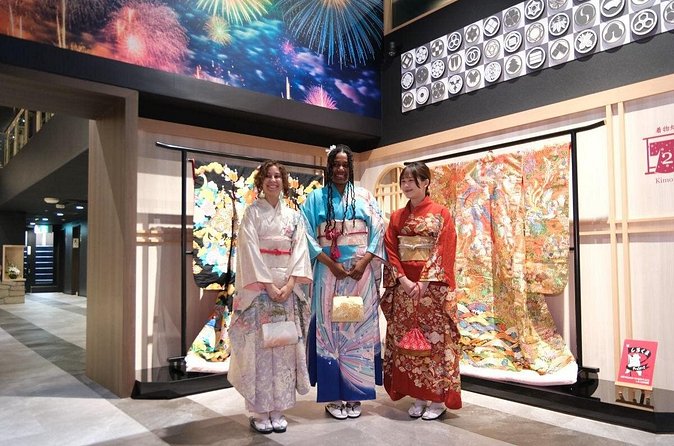
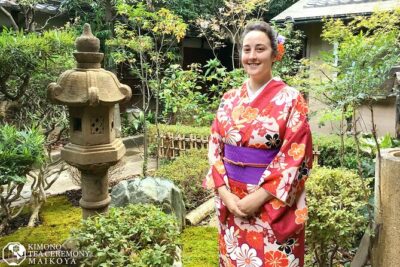
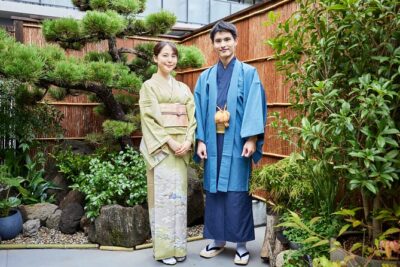
The kimono portion is included for women and is one of the main draws of the visit. The staff handle the dressing, explaining the various steps as the layers and accessories are arranged.
This is useful because kimono dressing is not just putting on a robe. The appearance depends on how the garment is wrapped, secured, and finished. Having the process explained helps you see the care behind the final look.
You should allow time for the outfit to be fitted properly. The clothing is part of the activity, not merely a costume placed on you for a fast photograph. The attention given to each step is one reason this program feels more personal than a standard photo stop.
The kimono option is specifically listed for women. Men should not assume that a kimono fitting is included for them. If your group includes men who want to dress up, ask the operator in advance about available options.
The courtyard and historical gallery provide useful backdrops for photos. You can take pictures while also seeing the garment in a setting that suits it. Still, the supplied details do not promise a professional photo session, so plan to use your own phone or camera.
Tea ceremony and the making of matcha
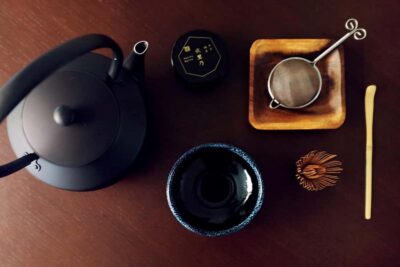
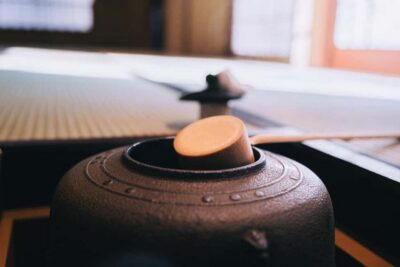
The tea ceremony is not presented as a lecture. You take part in the process, including making your own matcha. That small action changes the feel of the lesson. You begin to notice the careful order of movements and the calm pace expected during tea preparation.
For many visitors, this is the activity that offers the clearest look at Japanese etiquette. The ceremony gives meaning to simple actions such as handling the bowl, preparing the tea, and paying attention to the person serving it.
I like this part because it gives you something to do with your hands while staff explain the custom. You are less likely to lose focus than during a long talk, and you leave with a clearer sense of why the ceremony is performed in such a deliberate way.
Matcha has a bitter, grassy flavor that is not to everyone’s taste. The activity is about the method and manners as much as the drink, so do not book it expecting a sweet tea break.
Calligraphy you can take home
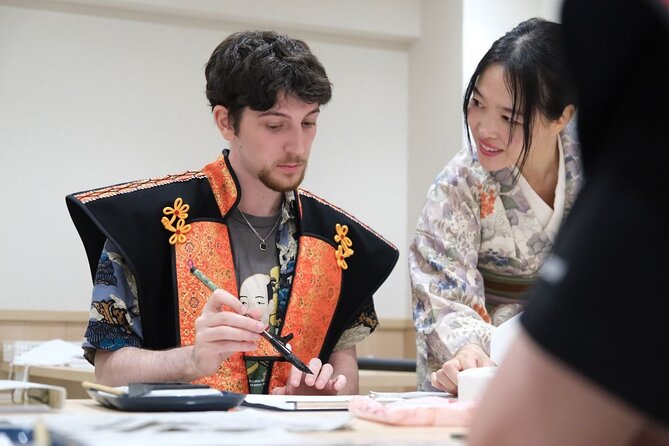
The calligraphy lesson adds a creative piece to the program. You practice writing Japanese characters and produce your own attempt, which you can keep. One participant planned to have the work framed, a nice reminder that this part can become more than a quick souvenir.
Calligraphy rewards patience. The finished character depends on brush control, pressure, and the order of the strokes. You will not produce museum-quality work in a short session, but that is not the point. The value is in seeing how writing can be treated as a visual art as well as a way to communicate.
The lesson also gives you a physical record of the day. Photos fade into the thousands of images on a phone. A sheet of your own calligraphy has a different feel and can be displayed at home.
If you have never handled a calligraphy brush, expect a learning curve. Your first effort may look rough. That is part of the charm, and the instruction helps you understand the basics rather than judging the result only by appearance.
More Tea and Calligraphy Workshops in Japan
- Osaka: Private Tea Ceremony and Calligraphy Experience
★ 5.0 · 50 reviews - Kyoto: Tea Ceremony Meditation – Make Matcha with Tea Master
★ 4.8 · 406 reviews - Tokyo: Practicing Zen with a Japanese Tea Ceremony
★ 4.7 · 105 reviews - Experience all of Japanese culture and Japanese food experience classes “origami, udon, Japanese food, green tea, calligraphy” in 4 hours
★ 5.0 · 105 reviews
Traditional music and samurai sword action
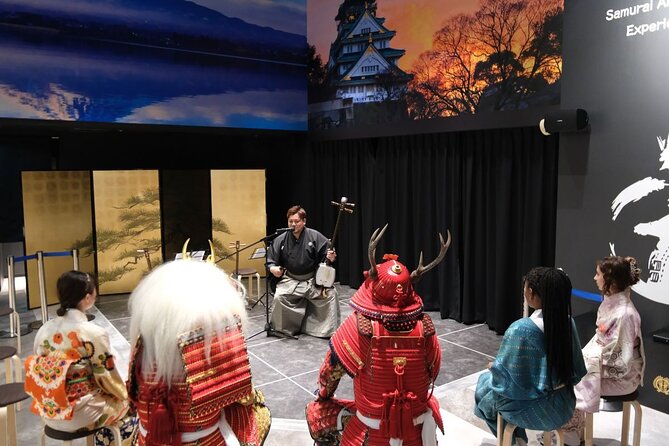
The program includes a Japanese traditional music performance and a samurai sword performance. The music offers a quieter view of Japanese culture, while the sword presentation brings movement and drama.
You can watch the performances as part of the program, and the description also refers to viewing and participating in traditional music and samurai sword activities. The exact amount of audience participation is not specified, so confirm what you will be asked to do if active participation is important to you.
The samurai element is likely to be the most immediately exciting part for families and visitors who want a visual show. It connects the clothing and gallery setting with Japan’s warrior tradition without requiring a separate day trip.
The word samurai can cover many kinds of staged cultural demonstrations. This is a live performance within a broader cultural program, not a full historical tour of samurai warfare. You will get a focused presentation rather than an extended account of military history.
Armor dressing and the extra cost
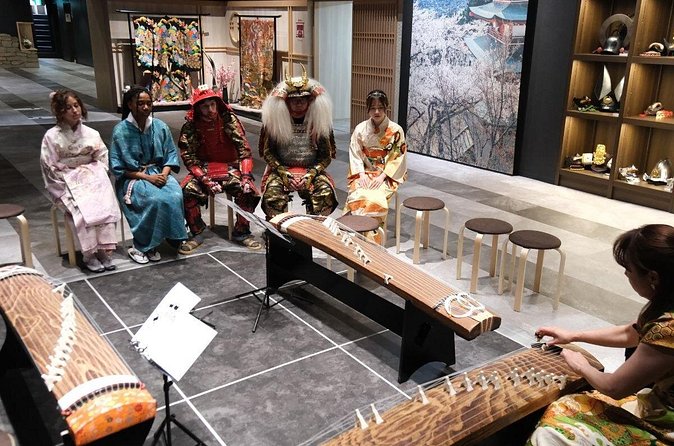
Armor dressing needs careful attention before you pay. It is mentioned as an option, but it is not included in the stated price of $123.49 per person. The additional information lists armor dressing separately, and the souvenir price is listed as ¥10,000 per person.
Because the program description and guest comments both refer to armor, you should contact -michi- before booking if wearing armor is central to your plans. Ask whether armor dressing is available on your chosen date, what it costs, and whether it changes the length of the session.
This is the clearest potential source of disappointment. Someone expecting kimono and armor in the base rate could arrive with the wrong idea. The safest approach is to treat armor as an optional add-on until the operator confirms otherwise.
The extra charge for a souvenir is also worth noting. A ¥10,000 purchase is not a minor add-on, so decide ahead of time whether you want to buy anything. You can enjoy the activities without assuming you must purchase a keepsake.
What the $123.49 price gets you
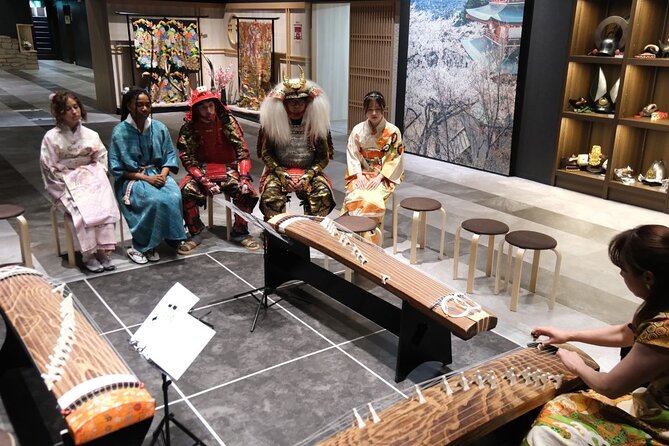
At $123.49 per person, this is not the cheapest way to spend three hours in Osaka. Its value comes from combining several structured activities in one place.
You are paying for the kimono dressing, tea ceremony, calligraphy, and traditional music performance. The program also includes the samurai performance described in the overall offering. You save the effort of arranging separate bookings, finding instructors, and working out how the activities fit together.
The staff attention is another part of the value. The strongest praise focuses on warm service, careful explanations, and a welcoming approach. That matters when you are trying customs for the first time and want to understand what each action means.
I would compare this cost with what you want from the day. If your goal is a quick kimono photograph, it may feel expensive. If you want several guided cultural activities and a keepsake calligraphy piece, the price makes more sense.
The program is also a practical choice for a short Osaka stay. You do not need to spend a full day outside the city to try tea, calligraphy, music, and samurai performance. You get a broad introduction in one visit.
Location, timing, and booking details
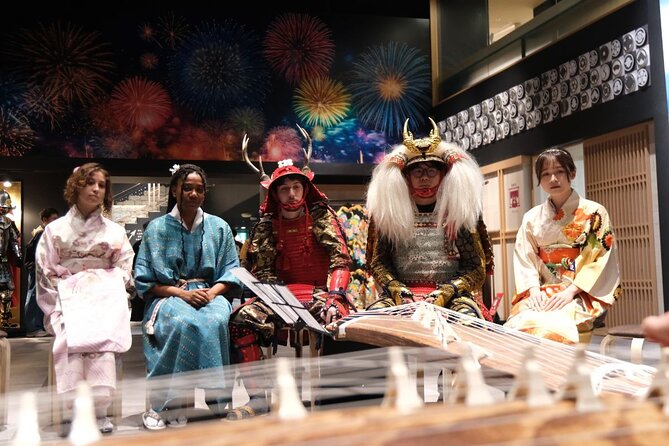
The meeting point is Shinsaibashi ARTY Inn in Osaka. The venue is near public transportation, which makes it easier to fit into a day of sightseeing around the Shinsaibashi area.
The activity lasts about three hours. That is long enough to require a real place in your schedule, but short enough to combine with other Osaka plans. Avoid booking it at the exact edge of another timed attraction, since dressing and instruction are not activities you want to rush through.
The program is commonly booked about 42 days ahead. That suggests you should reserve early if your Osaka dates are fixed, especially if you want a particular time. A mobile ticket is supplied, and confirmation arrives when you book.
Most people can participate. The supplied details do not give a full accessibility description, so contact the operator if you have mobility needs, require seating arrangements, or need help with dressing.
Free cancellation is available when you cancel at least 24 hours before the local start time. Cancellations or changes inside that window are not refunded or accepted. That policy is fairly flexible, but put the deadline in your schedule.
Who will enjoy this most
I would recommend this for a first visit to Japan, families with older children, couples, solo visitors who want guided cultural context, and anyone who prefers making something rather than only looking at sights.
It also suits people who want a polished cultural introduction without leaving central Osaka. The range of activities keeps the session moving, and the staff’s explanations help you understand the customs instead of treating them as props.
It may be less suitable if you dislike being dressed by staff, have little interest in formal traditions, or want an in-depth historical tour. The kimono option is for women, and armor requires separate confirmation. Visitors seeking a long samurai history lesson should also look elsewhere.
The program is a good fit for photographers, but remember that the photos are part of your own visit. There is no stated promise of a professional photographer or edited images.
What I like most, and what I would check
The two strongest features are the range of activities and the personal instruction. You can learn, make, watch, and take pictures in a single session. The calligraphy gives you something tangible to keep, while the tea ceremony gives the afternoon a calm center.
The warm staff also matter. Cultural activities can feel awkward when instructions are rushed or unexplained. Here, the emphasis is on showing the meaning behind each step, which helps you take part with more confidence.
My main caution is the difference between what is included and what may be available as an extra. Kimono dressing for women, tea ceremony, calligraphy, and traditional music are included. Armor dressing is not included in the stated price, and the souvenir cost is listed separately.
I would also confirm the exact performance schedule before booking if the samurai show is your main reason for going. The overall description includes it, but the included-items list names the traditional music performance more clearly.
Should you book this Osaka cultural experience?
Book it if you want a friendly, structured introduction to several Japanese traditions and value active participation over sightseeing from the sidelines. The combination of kimono dressing, matcha preparation, calligraphy, music, and samurai action gives you a full three-hour cultural session.
Before paying, confirm the armor option and any extra fees. If you are happy with the included activities, the $123.49 price can be fair for the amount of instruction and variety packed into one central Osaka visit.
FAQ
Where does the activity take place?
The activity takes place at Shinsaibashi ARTY Inn in Osaka.
How long does the experience last?
The experience lasts approximately three hours.
What activities are included?
The listed inclusions are women’s kimono dressing, a tea ceremony, calligraphy, and a Japanese traditional music performance. The overall program also includes a samurai sword performance.
Is kimono dressing available for everyone?
The included kimono dressing is specified for women only.
Is armor dressing included in the price?
No. Armor dressing is listed separately from the included activities. Confirm availability and cost with the operator before booking.
How much does the activity cost?
The listed price is $123.49 per person.
Is the activity near public transportation?
Yes. The venue is described as being near public transportation.
Do I receive a mobile ticket?
Yes. The activity includes a mobile ticket, and confirmation is received at the time of booking.
Can I cancel for a full refund?
Yes, if you cancel at least 24 hours before the experience start time. Cancellations or changes made within 24 hours are not refunded or accepted.
More Tea and Calligraphy Workshops in Osaka
- An Amazing set of Cultural experience: Kimono, Tea Ceremony and Calligraphy
★ 5.0 · 69 reviews - Beijing Culture: Tea Ceremony, Heritage Instrument & Calligraphy
★ 5.0 · 57 reviews - Cultural Activities :Kimono, tea ceremony, Calligraphy and Amulet
★ 5.0 · 44 reviews - Shizuoka Shore Excursion: Zen, Matcha & Calligraphy Shimizu Port
★ 5.0 · 14 reviews
More Tea Ceremonies in Osaka
- Osaka: Tea Ceremony Experience
★ 4.9 · 1,426 reviews - Tea Ceremony Experience in Osaka Doutonbori
★ 5.0 · 754 reviews - Osaka: Japanese Traditional Sweets Making and Tea Ceremony
★ 4.7 · 118 reviews - Osaka; Japanese Tea ceremony experience, Macha and Sencha
★ 4.9 · 29 reviews
Fresh tea listings around Osaka
- Osaka Temple Head Spa &Matcha Facial – Refresh & Glow〈90min〉★ 5.0 · 24 reviews
- Samurai dress-up and shows, plus Tea Ceremony & Calligraphy★ 5.0 · 27 reviews
- Osaka; Japanese Tea ceremony experience, Macha and Sencha★ 4.9 · 29 reviews
- Osaka: Private Tea Ceremony and Calligraphy Experience★ 5.0 · 50 reviews
- Samurai Show, Tea Ceremony, Japanese Traditional Activities★ 5.0 · 56 reviews
- Osaka Temple Cool Foot Bath & Matcha Experience〈45min〉★ 4.9 · 82 reviews
- Osaka: Tea Ceremony, Calligraphy, and Kimono Experience★ 4.9 · 130 reviews
- Osaka: Japanese Traditional Sweets Making and Tea Ceremony★ 4.7 · 118 reviews
Kimono & Tea Ceremony, compared.
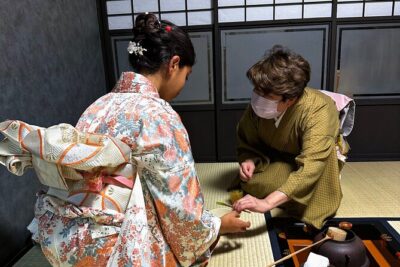
KYOTO Tea Ceremony with kimono near by Imamiya Jinjya Shrine
Read our review →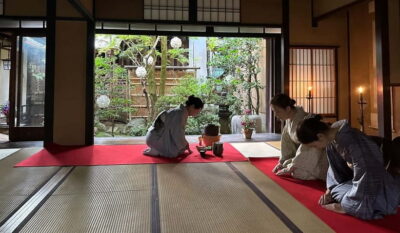
Kyoto: Kimono and Tea Ceremony Experience at Cultural Asset
Read our review →
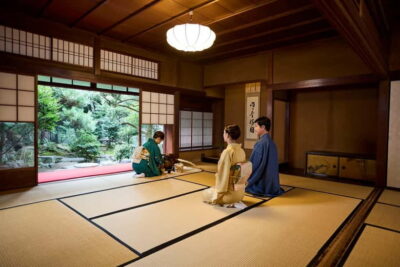
Kyoto: Kimono Tea Ceremony with Matcha and Sweet
Read our review →