
Review · MATCHA EXPERIENCES
Asakusa Cultural Walk & Matcha Making Tour
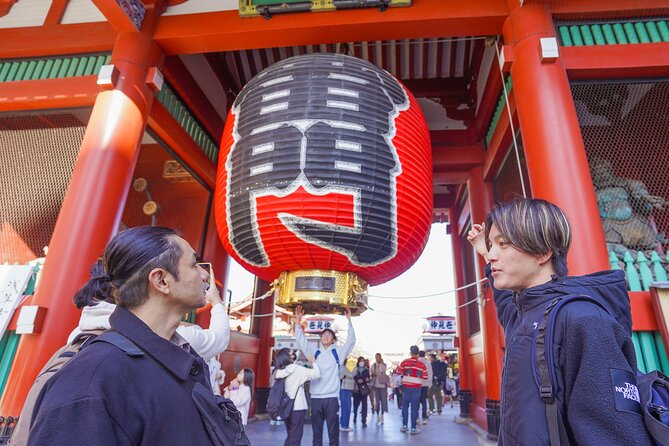
Asakusa is much more than a quick photo at Kaminarimon Gate and a walk through Nakamise. This tour gives you a local guide, a small group, a hands-on matcha session, and lunch where you cook your own Japanese savory pancake. I especially like the mix of sightseeing and doing. You are not only looking at temples, you are learning customs, tasting tea, and handling the hot plate yourself.
I also like the timing. The tour runs from 11 a.m. to about 2 p.m., leaving you the afternoon to revisit shops or keep exploring Asakusa. The main drawback is food flexibility: the meal may be okonomiyaki instead of the advertised monjayaki, and the tour cannot guarantee allergy-free food. You should also avoid arriving late, since the group cannot wait or reschedule missed departures.
Key points to know before booking
- Small groups of up to eight: You get more room to ask questions and talk with your guide than on a large sightseeing bus.
- Matcha is a real activity: At Kaminari Issa, you make powdered green tea and taste a highly ranked matcha selection.
- Lunch is cooked by you: The meal includes okonomiyaki or monjayaki, one drink, and a vegetarian option.
- Asakusa beyond the main street: The guide explains temple customs, local life, shopping, and food rather than simply pointing out famous buildings.
- Three useful midday hours: The 11 a.m. start leaves time for more Asakusa exploring after the tour.
- Food limits matter: The meal is not suitable for people with gluten intolerance, and vegan or allergy-safe meals cannot be promised.
Why this Asakusa tour is more than a Sensoji stop
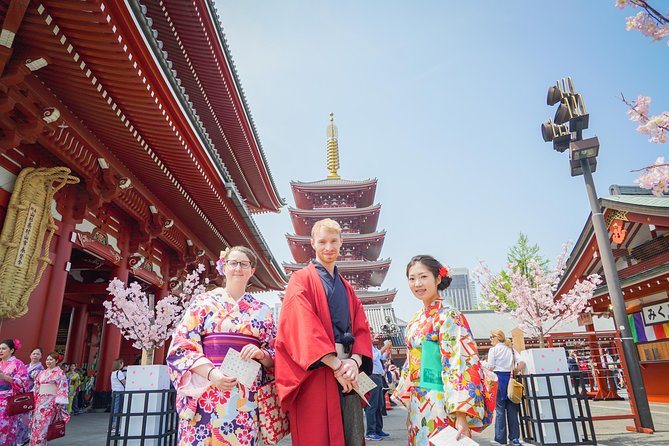
Asakusa is one of Tokyo’s easiest districts to visit on your own, but it is also easy to experience only its busiest, most obvious side. You can walk through the main gate, follow the crowd down Nakamise, take a few pictures at Sensoji, and leave without learning much about the customs around you.
This tour is designed to slow that process down. Your English-speaking guide explains what you are seeing, how temple visits work, what local people buy, and which foods matter in Asakusa. The difference is useful: instead of treating the neighborhood as a photo stop, you get an introduction to how the district is enjoyed through food, tea, and everyday traditions.
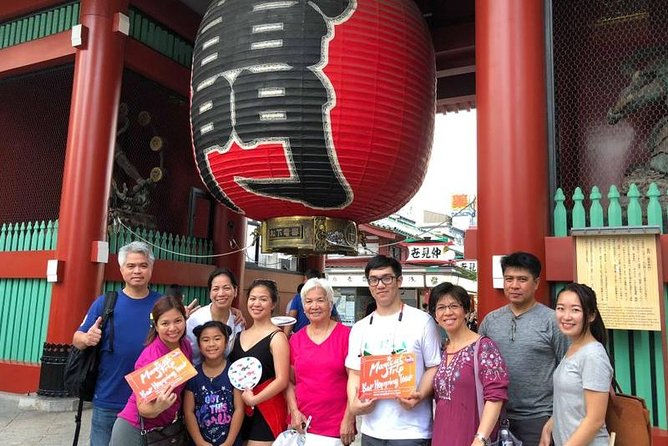
The group is capped at eight people. That size matters in a narrow shopping street, at a teahouse, and around a restaurant hot plate. You can ask questions without calling across a crowd, and the guide has a better chance to adjust explanations to your interests.
The experience costs $88 per person. That is not the cheapest way to walk around Asakusa, but the fee includes three hours with a local guide, a matcha-making experience, lunch, one drink, a small snack, and tour photos. If you would otherwise pay separately for a tea activity and a guided food stop, the price is reasonable. The value depends on using the guide well. If you only want to see Sensoji from the outside, you can spend much less on your own.
More Matcha Experiences in Japan:
- World Heritage Kyoto & Nara Uji Authentic Matcha Experience
★ 5.0 · 1,573 reviews - Matcha Making Class in Tokyo with Authentic Japanese Sweets Set
★ 5.0 · 744 reviews - Kyoto: Tea Museum Tickets and Matcha Grinding Experience
★ 4.9 · 739 reviews
Meeting near Kaminarimon and starting at the temple district
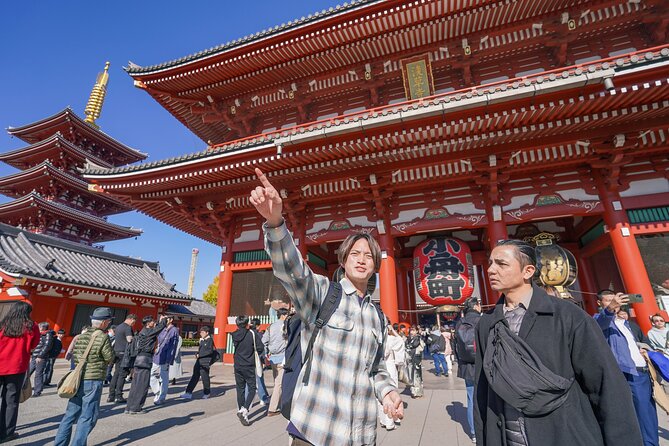
The meeting point is in front of the Kaminarimon Police Box at Sensoji, about three minutes from Asakusa Station’s Ginza Line Exit 1. Look for the guide holding a red or orange sign.
This is a practical starting place because you do not waste time crossing Tokyo before the walking begins. It is also a spot where being on time matters. The tour must start as scheduled, and if you arrive after the group leaves, you cannot join, receive a refund, or move your booking to another time.
Large bags and luggage are not allowed. Bring only what you need for three hours of walking, tea, lunch, and photographs. The itinerary includes places that are not accessible by wheelchair or stroller, so check carefully before booking if either is important for your group.
The first stop is listed as Asakusa Shrine for about 20 minutes. That gives your guide room to explain the setting and the customs connected with Japanese temples and shrines. The tour also includes another longer Asakusa Shrine visit, so you should expect the religious sites to receive real attention rather than being quick photo pauses.
Asakusa Shrine and the customs behind the visit
A local explanation can help at a shrine because the actions are not always obvious to someone seeing them for the first time. The guide discusses important traditions and local ways of life, giving you context for what people are doing around the temple grounds.
The two shrine portions are scheduled for about 20 and 25 minutes. That is enough time to look around without turning the experience into a long lecture. You will need to stay with the group, though, so this is not the right tour if you want to spend an hour photographing every detail at your own pace.
The guide can also answer practical questions about what to buy and what to eat in Asakusa. That information is one of the stronger reasons to book a local-led walk early in your Tokyo stay. You can use the rest of the afternoon to return to shops or try places that caught your attention.
Nakamise, the shopping street with a local guide
The walk includes about 20 minutes at Nakamise. This is the approach to Sensoji known for its shops and food, and it is often where first-time visitors follow the crowd without knowing what they are looking at.
Twenty minutes will not cover every store. Instead, think of this stop as an introduction to the shopping street, its traditional products, and the kinds of food associated with the area. The guide can point out what is worth noticing and help you separate useful local purchases from items that simply catch your eye because they are colorful.
One useful expectation: the included snack is part of the package, but the exact snack experience may vary. A previous booking did not include the promised snack, so I would not choose this tour solely for that one bite. The included lunch and matcha activity are the more substantial parts of the food program.
More Walking Tours in Japan:
- Asakusa Cultural Walk & Matcha Making Tour
★ 5.0 · 245 reviews - Kyoto Tea Ceremony & Kiyomizu-dera Temple Walking Tour
★ 5.0 · 115 reviews - Uji: UNESCO Heritage & Tea Ceremony Walking Tour
★ 4.6 · 54 reviews - The Way of Tea: Kyoto Crafts, Hidden Temples & Wabi-Sabi Walk
★ 5.0 · 41 reviews
Making matcha at Kaminari Issa
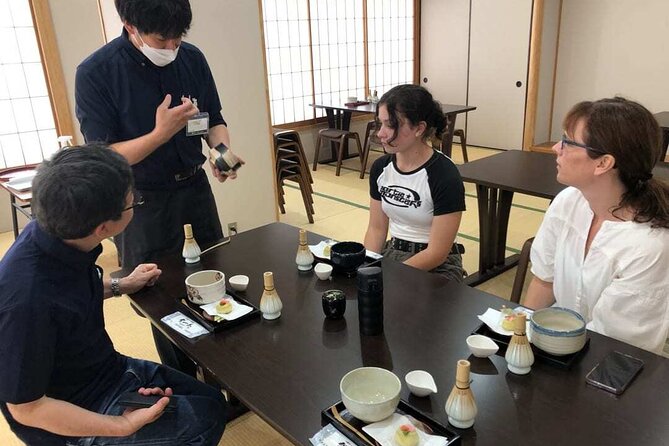
The most distinctive stop is Kaminari Issa, where you spend about 55 minutes making matcha. This is not simply a cup handed to you at the end. You learn the preparation process, make the powdered tea, and taste the result.
The activity offers a calm change of pace after walking through the temple district. Matcha has a strong place in Japanese customs, and preparing it yourself makes the tradition easier to understand than a short explanation on a street corner. You can also ask questions as you work rather than trying to remember them while moving through a crowded sight.
The experience is promoted around a highly ranked matcha, but the important point is the process. You get to see how powdered tea is handled and learn why preparation matters. The stop suits couples, families, solo bookers, and friends, especially if you want one quieter cultural activity in the middle of a city day.
The guides can make a big difference here. Hina has led the tea session with careful, step-by-step instruction and a warm manner. Nori has also received strong praise as a guide who made the overall tour enjoyable. The names are useful to know, but guide assignments can vary, so you should not assume you will receive a particular person.
Hoppy Street and a hands-on Japanese lunch
After the teahouse, the walk includes about 15 minutes around Hoppy Street. The area is associated with casual food and drinks, and it gives you another side of Asakusa after the formal temple grounds and tea setting.
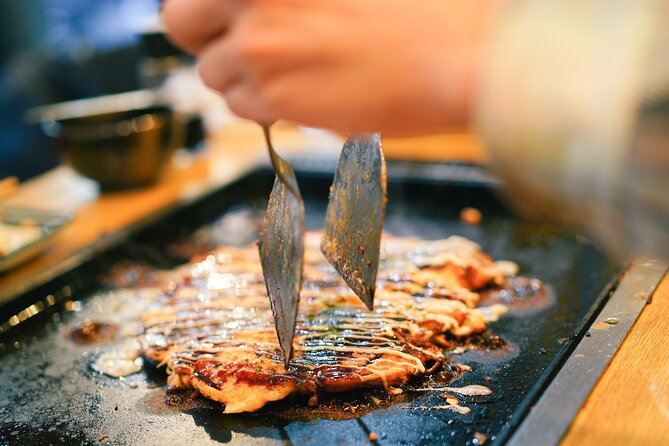
Lunch follows at a local café and lasts about 40 minutes. You receive okonomiyaki or monjayaki, one drink, and a vegetarian option. Vegan and gluten-free meals are not available, and people with gluten intolerance should not book this experience.
The fun is in preparing the meal yourself. Okonomiyaki is a savory Japanese pancake, while monjayaki has a softer, more fluid texture and is closely associated with Tokyo. Cooking at the table turns lunch into a cultural lesson, since you learn by handling the food rather than simply ordering a finished dish.
There is one important qualification. The planned dish may change. One booking expected monjayaki but received okonomiyaki instead, which was disappointing because monjayaki was a main reason for choosing the tour. If tasting monjayaki is your top priority, ask about the current lunch plan before paying, and understand that substitutions may occur.
The meal includes a drink, but additional food and drinks cost extra. You do not need to pay for the guide’s food or drinks. That small detail keeps the lunch simple and prevents an awkward surprise when the bill arrives.
What the three-hour schedule means for your day
The 11 a.m. start works well if you want a relaxed morning before meeting the group. The tour ends around 2 p.m. at Hoppy Street, putting you in a useful position for an afternoon in Asakusa.
You can revisit Nakamise, continue around Sensoji, shop for items the guide pointed out, or stay near Hoppy Street for more food. The finish point is not a distant transport hub, so plan to continue exploring rather than treating the end as a long transfer.
Three hours is enough for an introduction, but it is not an all-day Asakusa history course. The schedule moves through several stops, and each one has a fixed time. You get variety, but you will not have endless free time at any single location.
Bad weather can also change the plan. The provided information says a rickshaw ride may be replaced by a Ninja Experience in Asakusa in poor weather, although the main schedule does not list a rickshaw stop. Treat that as a possible adjustment rather than a guaranteed part of the tour.
Food, access, and group considerations
This experience suits most ages and works for families, couples, friends, and solo bookers. The small group makes it easier to meet other people without the forced feel of a large group excursion.
The vegetarian menu is a useful option, but the food cannot be guaranteed free of allergens. The kitchens belong to the local restaurants, not the tour company, and substitutions may not be possible at every stop. If you have serious dietary restrictions, this is a poor choice even if a vegetarian option seems suitable.
Wheelchair and stroller access is limited at some points. The route includes temple and shopping areas, a teahouse, and a restaurant, but the full itinerary is not described as accessible. Ask before booking if you need a fully step-free route.
The walking itself is part of the experience. Wear comfortable shoes and keep your belongings light. Large luggage is not allowed, and carrying a suitcase through the temple district would make the day harder for you and the group.
Is $88 a fair price for Asakusa?
I think the price is fair for the right person. You receive a guide for three hours, a small snack, lunch with a drink, matcha preparation, and photos. The combination would be difficult to reproduce with the same structure by simply wandering around.
The price is less attractive if you are mainly interested in architecture and shopping. Asakusa’s major sights are easy to reach independently, and you can choose your own restaurants. You are paying for the explanations, the arranged cultural activity, and the chance to cook lunch in a local setting.
The strongest value comes from the guide. Hina’s careful tea instruction, Nori’s friendly presence, and Ramesh’s energetic approach show how much the experience depends on who leads it. A good guide turns a familiar Tokyo district into a more personal outing. The guide assignment is not guaranteed, so book for the format and inclusions rather than a specific name.
Who should book this Asakusa experience?
Book it if you are visiting Asakusa for the first time and want help making sense of the area. It is especially useful if you want a balance of temple customs, shopping, tea, and food without planning every stop yourself.
It also suits you if you prefer activities over passive sightseeing. Making matcha and cooking lunch give the day a practical feel. Families and small groups can enjoy the hands-on parts, while solo bookers have a natural way to meet others.
Think twice if you need strict control over your menu, want a vegan or gluten-free meal, use a stroller or wheelchair, or care only about eating monjayaki. The snack may not always appear, and the main dish can change to okonomiyaki.
Should you book the Asakusa Cultural Walk and Matcha Making Tour?
I would book this tour if you want an easy, social introduction to Asakusa with genuine participation built in. The matcha-making session and small-group format give it more character than a basic temple walk, while the included lunch keeps the day moving.
I would skip it if you prefer independent wandering or have serious dietary and mobility needs. Also, confirm the current lunch arrangement if monjayaki is the deciding factor. For most first-time visitors who want local explanations, Japanese customs, and a meal they help prepare, $88 is a sensible spend.
FAQ
How long does the Asakusa Cultural Walk and Matcha Making Tour last?
The tour lasts three hours, beginning at 11 a.m. and ending around 2 p.m.
Where does the tour meet?
You meet in front of the Kaminarimon Police Box at Sensoji, about three minutes from Asakusa Station’s Ginza Line Exit 1. The guide holds a red or orange sign.
What food is included?
The tour includes a small snack, lunch of okonomiyaki or monja-yaki, and one drink. Additional food and drinks can be purchased separately.
Is a vegetarian meal available?
Yes, a vegetarian menu is available. Vegan and gluten-free meals are not available.
Is the tour suitable for people with gluten intolerance?
No. People with gluten intolerance should not book this tour.
Is the matcha activity included in the price?
Yes. The matcha-making experience is included, along with the local guide and tour photos.
What happens if I arrive late?
The tour must start on time. If you arrive after the group has left, you cannot join the tour, receive a refund, or reschedule.
Fresh tea listings around Japan
- Authentic Japanese tea tasting: sencha, matcha and gyokuro★ 5.0 · 12 reviews
- Authentic Tea Ceremony & Sushi in The Museum of Kyoto★ 5.0 · 3 reviews
- At an Antique Shop, Tea Ceremony and Japanese Sweets Forming★ 5.0 · 5 reviews
- Authentic Japanese Tea Ceremony Experience in Kamakura★ 4.5 · 8 reviews
- Japanese Sweets Making & Tea Ceremony in Yokohama, suburban Tokyo★ 5.0 · 4 reviews
- Matcha tasting for all five senses at Hotel Yokohama★ 5.0 · 7 reviews
- Yokohama: Sushi & Gyoza Cooking with Matcha Experience★ 5.0 · 4 reviews
- Kyoto: Nighttime Zen Meditation and Matcha Tea Experience★ 5.0 · 7 reviews
Matcha Experiences, compared.
World Heritage Kyoto & Nara Uji Authentic Matcha Experience
Read our review →
Matcha Making Class in Tokyo with Authentic Japanese Sweets Set
Read our review →
Kyoto: Tea Museum Tickets and Matcha Grinding Experience
Read our review →
Matcha Making Class in Osaka with Authentic Japanese Sweets Set
Read our review →
Kyoto: Tea Ceremony Meditation – Make Matcha with Tea Master
Read our review →
Tokyo: Matcha Making Experience with Mochi Sweets in Asakusa
Read our review →
Kyoto: Kimono Tea Ceremony with Matcha and Sweet
Read our review →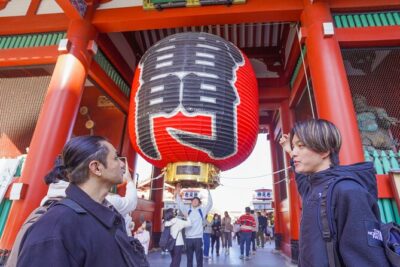
Browse the lists this tour appears in