
Review · TEA CEREMONY EXPERIENCES
Kyoto Fushimiinari:Wagashi Making & Small Group Tea Ceremony
Making your own wagashi, then eating it with matcha in an authentic tatami room, is the heart of this 75-minute Kyoto experience. I like the hands-on sweet-making class and the quiet move through a tiny garden into a traditional Japanese room.
The group is limited to six, and the English-speaking instructors explain the ritual without making it stiff or intimidating. The main drawback is that you must sit on the floor unless you request a chair in advance, and the session is not suitable for children under eight or wheelchair users.
Key points at a glance
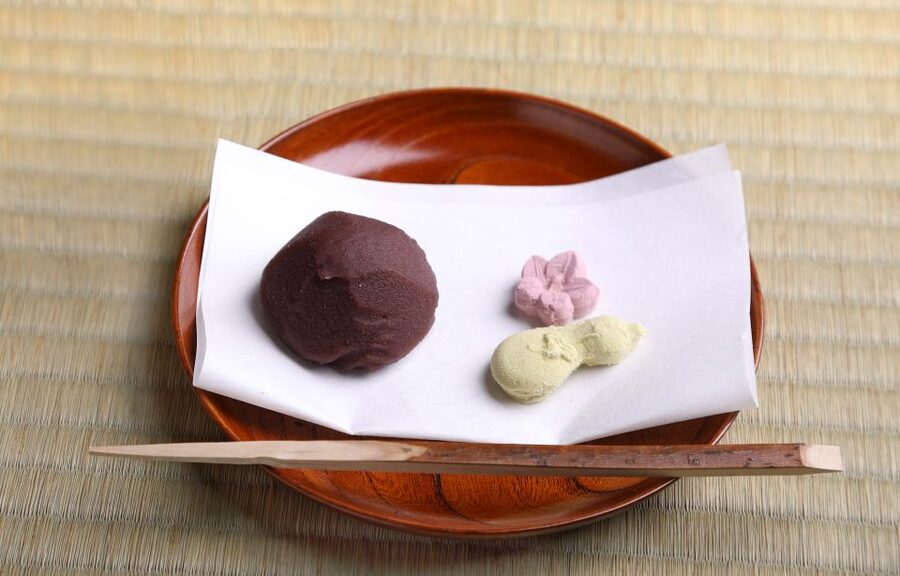
- Make your own wagashi: Shape one type of Japanese sweet by hand, often mochi with red bean or white bean paste, though the design changes with the season.
- Prepare your own matcha: You make one of the two bowls of matcha included, using a bamboo whisk.
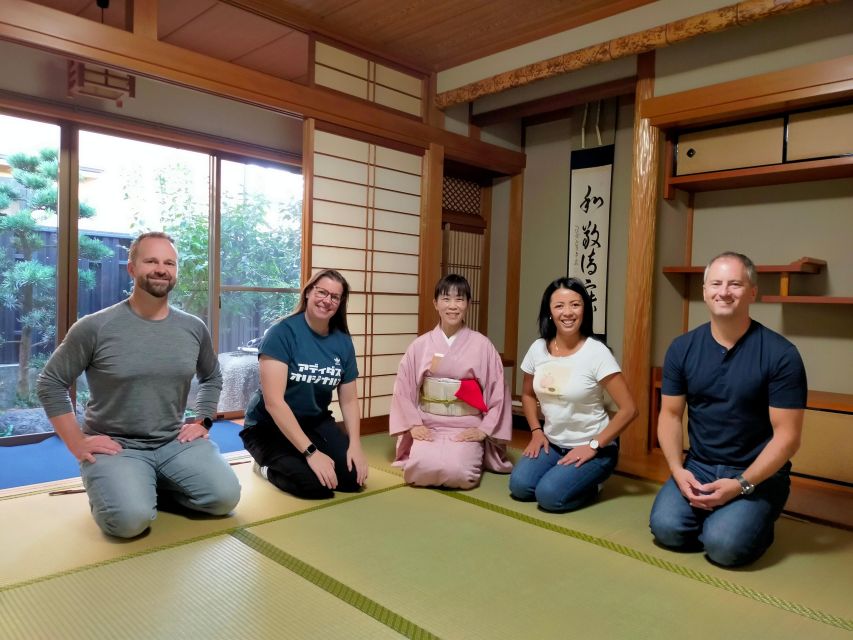
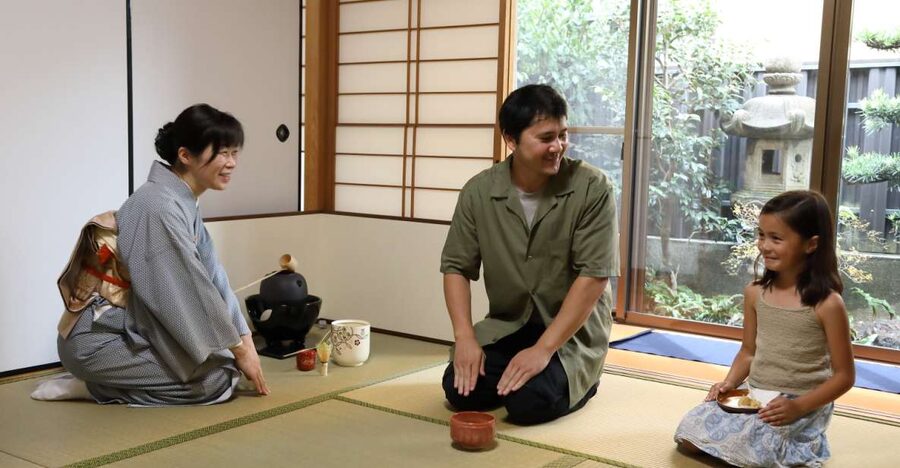
- Enter a real tatami room: The ceremony takes place in a Japanese-style room with a garden view when weather allows.
- Learn the meaning behind the ritual: Your instructor explains tea history, manners, the alcove, and the hanging scroll.
- Enjoy personal instruction: The group has no more than six participants, and the instructors are licensed guide interpreters who speak English.
- Plan for floor seating: Chairs and tables can be arranged if you request them ahead of time, but bare feet are not allowed.
A quiet Japanese home near Fushimi Inari
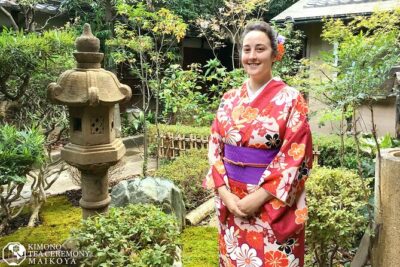
This experience offers something many Kyoto sightseeing days lack: a short pause. You enter a local house with Japanese-style rooms and a garden, leaving the noise and crowds outside for a calm lesson in sweets and tea.
The setting matters. Tea ceremony is not simply a lesson in how to whisk green tea. The room, the movements, the sweets, the scroll in the alcove, and the way you sit all help create the occasion. Even in a 75-minute session, you get a clear sense of how these details work together.
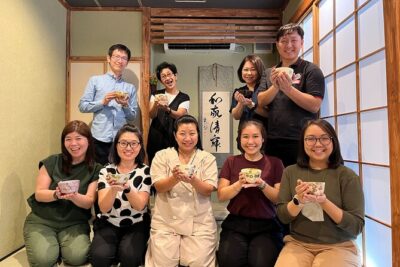
The activity is offered in a small group of no more than six people. That is a useful size for this type of class. You can see the demonstration, ask questions, and get help with the whisk without feeling as if you are in a large workshop.
The experience is provided by iroHa cooking studio. Miho is named as one of the hosts, and the tea master works alongside her during the ceremony. The instructors are licensed guide interpreters, so the cultural explanations are part of the activity rather than an afterthought.
More Tea and Sweets Making in Kyoto
- Kyoto: Japanese Traditional Sweets Making and Tea Ceremony
★ 4.4 · 314 reviews - Kyoto: Traditional Tea Ceremony with Matcha & Sweets in Gion
★ 4.9 · 27 reviews - 2 Types of Japanese Sweets making and Tea Ceremony
★ 4.6 · 17 reviews
Making wagashi with your own hands
When you arrive, an English-speaking host welcomes you and leads you into the kitchen. The first section is a practical class, not a demonstration from across the room.
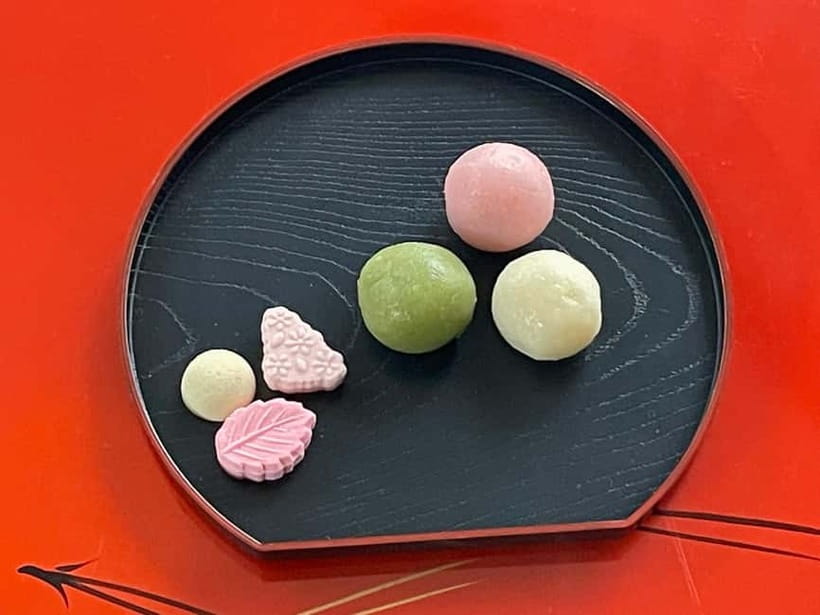
You learn to make one type of wagashi, a traditional Japanese confection. The exact sweet depends on the season, so the item shown in a booking photo may not be the one prepared during your visit. One session included mochi with both red bean paste and white bean paste, but you should treat that as an example rather than a fixed menu.
This is a good choice for you if you like food activities that leave you with a skill, not just a taste. The shaping process gives you something to do right away, and the instructor can show you how to handle the ingredients and form the sweet.
Wagashi often balances sweetness with the slightly bitter taste of matcha. That pairing becomes clearer later, when you eat the sweet during the tea ceremony. The confection is not just a snack placed beside the tea. It prepares your palate for the drink.
The class also gives the experience a friendly start. You are doing something with your hands before moving into the more formal tea room. That makes the transition into the ceremony less awkward, especially if you have never taken part in Japanese tea customs before.
Food restrictions and allergies should be shared in advance. The activity includes one type of Japanese confection, but no alternative menu is specified, so it is sensible to ask before booking if you have strict dietary needs.
Walking through the garden into the tea room
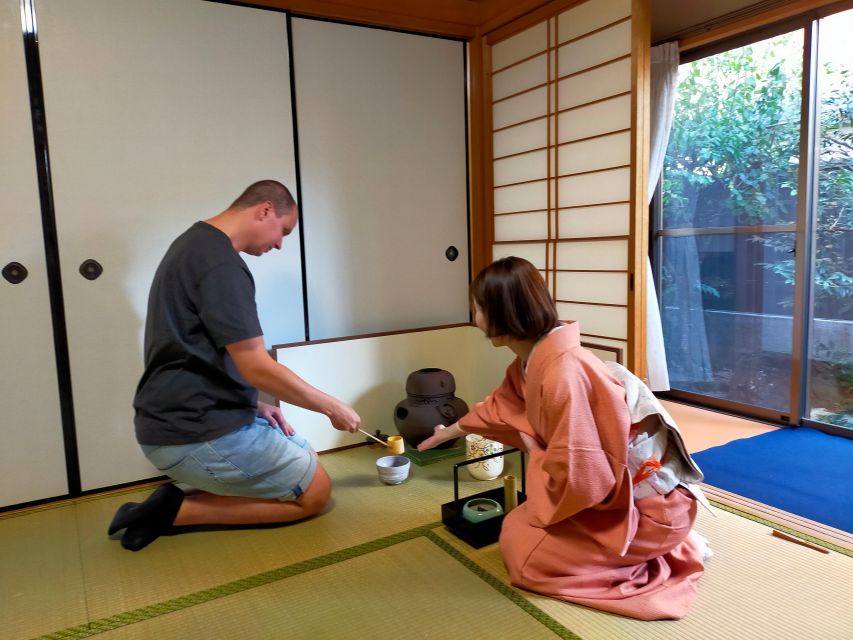
After the wagashi class, the host explains how to attend the ceremony and reviews basic manners for the Japanese room. When the weather is dry, you walk outside through a tiny garden before entering the authentic Japanese-style room.
That short walk is a small but important part of the experience. It creates a change of pace between the kitchen and the ceremony. You are not simply moving to another table. You are being shown a traditional sequence that treats the garden and room as part of the preparation.
If it rains, the outdoor walk may not happen. The ceremony itself still takes place, but you should not expect the garden route in poor weather.
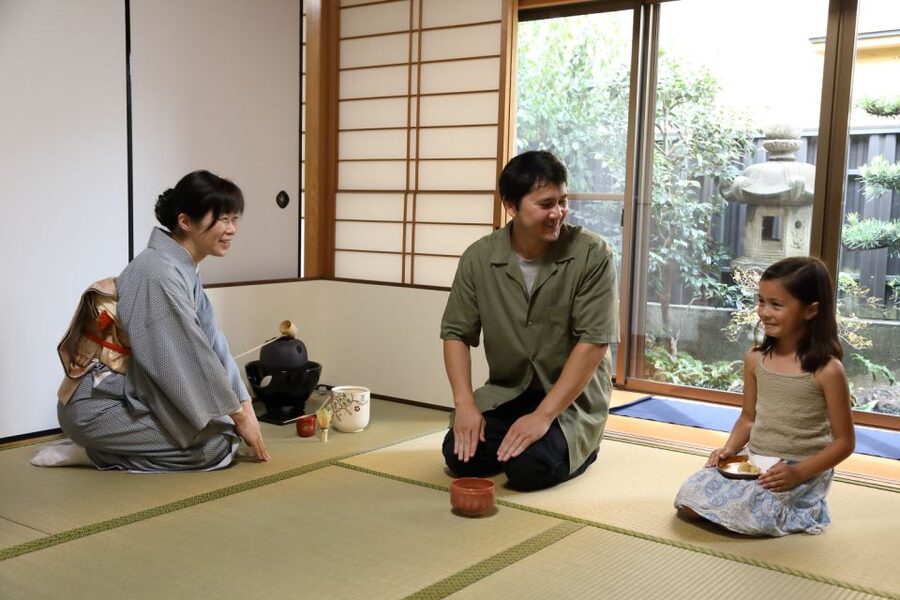
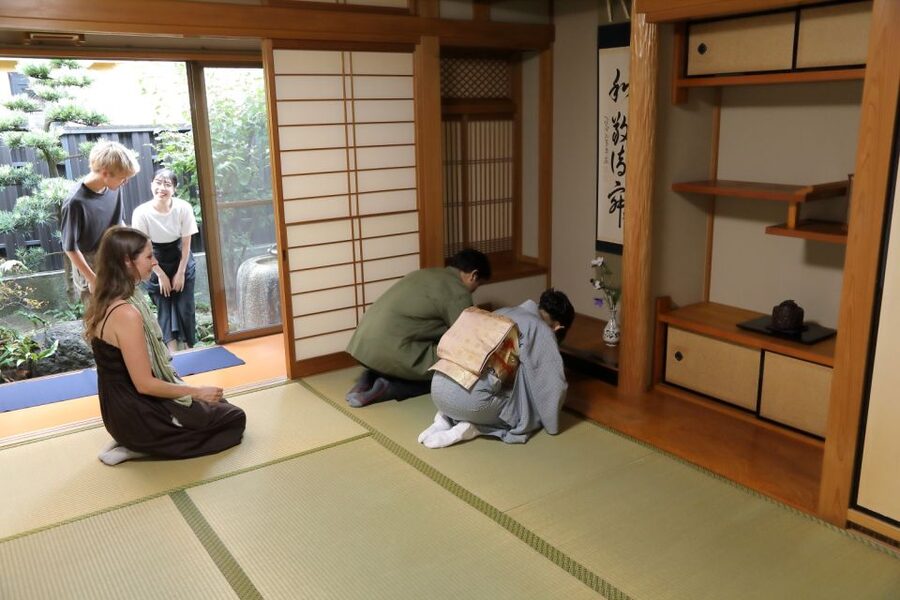
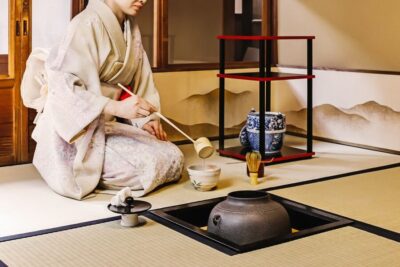
Inside, you sit on a tatami floor. The instructor explains the history of tea, the tea ceremony, and the meaning of the hanging scroll displayed in the alcove. These explanations help you read the room instead of treating it as a pretty backdrop.
You do not need prior knowledge of tea ceremony. The steps and manners are explained during the session, and the tone is relaxed enough for beginners to participate at their own pace. That balance is important. A ceremony that is too strict can make first-time participants nervous, while a ceremony without explanation can feel like a short photo stop.
Learning how to drink and prepare matcha
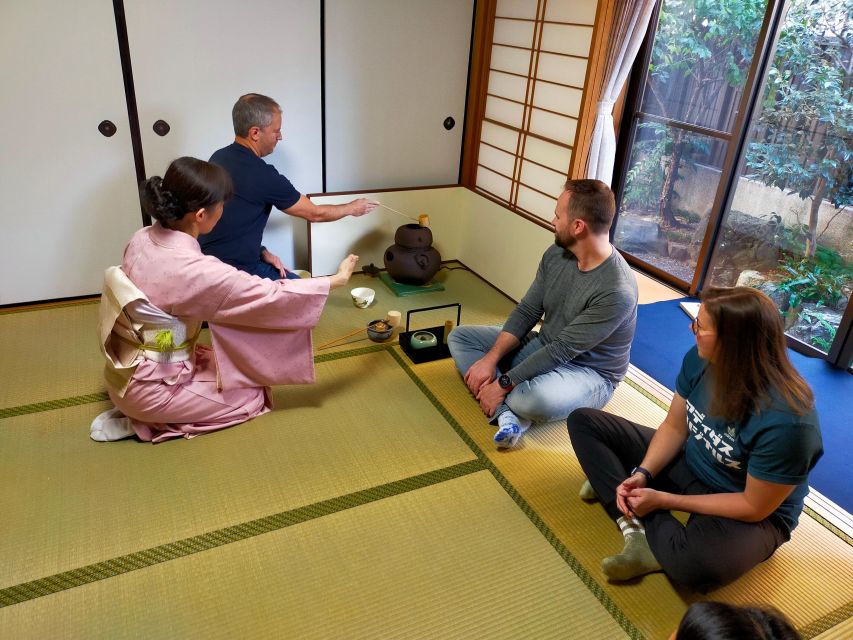
The tea portion begins with a demonstration. Your instructor shows how to drink a bowl of matcha and explains how to eat the sweet correctly. You then enjoy the wagashi you just made while watching the tea preparation.
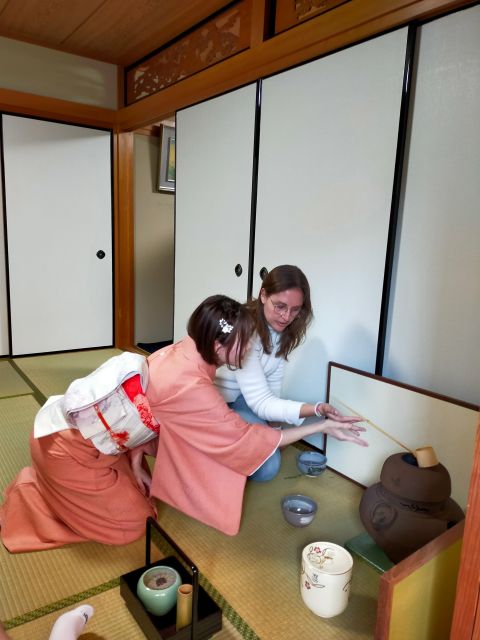
The host next demonstrates the ceremonial preparation of matcha. This gives you a chance to watch the full movement before trying it yourself. The process is not reduced to simply stirring powdered tea in hot water. You see how the bowl, whisk, and gestures fit into the larger ceremony.
You receive two bowls of matcha in total. One is prepared for you, and you prepare the other using a bamboo tea whisk. That makes the experience more useful than a ceremony where you only watch someone else work.
Your own bowl may not look perfect, and that is part of the fun. The point is to learn the basic method and understand the care involved. By the end, you should be able to prepare matcha and serve it properly to friends or family.
The instructors also answer questions about Japanese culture. Samir specifically enjoyed the way Miho and the tea master explained the steps and responded to questions, while the class remained friendly rather than overly formal. That is the right approach for a short introductory session.
More Tea Ceremonies in Kyoto
- Kyoto: Tea Ceremony in a Traditional Tea House in Kiyomizu
★ 4.9 · 3,519 reviews - Kyoto: Tea Ceremony Ju-An at Jotokuji Temple
★ 4.9 · 3,207 reviews - Kyoto: 45-Minute Tea Ceremony Lesson Experience
★ 4.3 · 2,378 reviews - Kyoto: Table-Style Tea Ceremony at a Kyo-Machiya
★ 4.9 · 1,211 reviews
Why the small group size matters
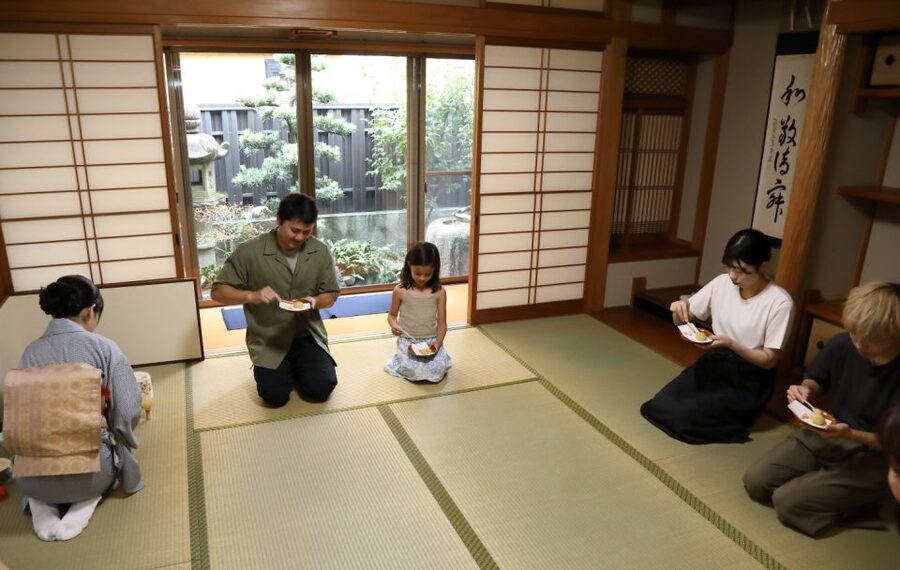
A six-person limit works especially well here. Tea ceremony has many small actions, and you need a clear view of the instructor’s hands. In a large group, it would be easy to miss how the whisk is held or how the bowl is handled.
A small group also gives the session room for conversation. The instruction is in English, and the guides are licensed interpreters, so you can ask why a particular gesture matters instead of memorizing movements without context.
The relaxed format does not mean the ceremony loses its structure. You still learn how to enter the room, sit, eat the wagashi, drink matcha, and prepare your own bowl. But the instructors do not expect you to perform every movement with the precision of a tea student.
That makes this a strong first introduction. You can take the cultural meaning seriously without worrying that a small mistake will ruin the experience.
The $55 price and what it includes
At $55 per person, this is not the cheapest way to taste matcha in Kyoto. It is also more than a quick café stop because you are paying for instruction, a private-style setting, the wagashi class, two bowls of matcha, the Japanese sweets, and the cultural explanation.
I think the value is strongest if you want an activity rather than a simple drink. You are learning to make one sweet, preparing matcha yourself, and entering a traditional room with a garden setting. The small group and English instruction add practical value, especially if this is your first tea ceremony.
The price includes all fees and taxes. Hotel pickup, drop-off, and taxi arrangements are not included, and gratuity is also separate. You should plan your own way to the meeting point and allow enough time to arrive without rushing. Exact transport instructions are not provided here, so check the meeting details carefully after booking.
For a family or group that wants a cultural activity with a clear start and finish, the 75-minute length is convenient. It fits more easily around sightseeing near Fushimi Inari than a longer cooking class or full formal tea event.
Sitting on tatami and other practical details
You need to wear socks. Bare feet are not allowed, which is easy to overlook during a summer visit. Comfortable clothing that allows you to sit on the floor will make the session easier.
Chairs and tables are available for anyone who finds floor seating difficult, but you must request them in advance. This option improves comfort, though the activity is not suitable for wheelchair users.
Photography is limited. Flash photography and video recording are not allowed, and you may be asked not to photograph parts of the session so everyone can focus on the ceremony. You should think of this as a cultural lesson first and a photo opportunity second.
You can likely take some photos where permitted, but follow the host’s instructions. The room, garden, wagashi, and tea tools are attractive subjects, yet constant camera use would work against the quiet mood the activity is designed to create.
The experience is not suitable for children under eight. Older children may enjoy the sweet-making more than the formal tea explanation, so consider your child’s interest in quiet instruction and floor seating before reserving.
Who will enjoy this experience most
I would choose this activity for you if you want to understand what tea ceremony means, not just see someone whisk matcha. It is also a good fit if you enjoy Japanese food, small classes, and direct contact with a local host.
It suits first-time visitors particularly well. You do not need to know the etiquette in advance, and the instructors explain the sequence clearly. The relaxed tone helps you take part without feeling that you are being tested.
Couples, solo visitors, and small groups of friends can all benefit from the six-person limit. The hands-on wagashi lesson also gives solo participants an easy way to interact with others.
You may want to skip it if you dislike floor seating, cannot follow restrictions around photography, or want a long, highly formal tea ceremony. The session is an introduction, not an advanced study of tea practice. Its strength is the combination of clear teaching, personal participation, and a peaceful setting within a short time.
Booking flexibility and timing
The activity lasts 75 minutes, with starting times available based on the date you select. You can reserve now and pay later, which helps if your Kyoto schedule is still changing.
Free cancellation is available up to 24 hours in advance for a full refund. That gives you some protection when planning around weather or a busy sightseeing day, although it is still wise to check the exact terms at booking.
Because the outdoor garden walk depends on weather, a rainy day may change the sequence slightly. The tea room and indoor instruction remain the main parts of the experience.
Should you book the Kyoto wagashi and tea ceremony?
Book it if you want a calm, practical cultural experience near Fushimi Inari. The strongest reasons are the hands-on wagashi class, the chance to whisk your own matcha, and the small authentic room where the ceremony is explained rather than simply performed.
I would especially recommend it for first-time visitors who want a souvenir they can repeat at home. You leave with more than a sweet taste and a few photographs. You learn how to make one Japanese confection and prepare a bowl of matcha for friends or family.
Skip it if you need wheelchair access, cannot sit on tatami, or prefer a fast, informal food tasting. For everyone else, $55 is a fair price for a focused 75-minute class with English instruction, two bowls of tea, and a genuine look at the manners and meaning behind Japanese tea ceremony.
FAQ
How long does the wagashi and tea ceremony experience last?
The experience lasts 75 minutes.
Where does the activity take place?
It takes place in a local Japanese-style house in the Fushimi Inari area of Kyoto, on Honshu. The ceremony is held in an authentic Japanese-style room with a garden view when weather allows.
How many people are in the group?
The group is limited to six participants.
Is the instruction offered in English?
Yes. The activity includes an English-speaking instructor, and the instructors are licensed guide interpreters.
How much matcha is included?
You receive two bowls of matcha. One is prepared for you, and you prepare the other yourself using a bamboo tea whisk.
What kind of wagashi will I make?
You learn to make one type of Japanese traditional sweet. The design and ingredients may change with the season. One example is mochi with red bean paste and white bean paste.
What should I bring or wear?
You must wear socks because bare feet are not allowed. Tell the host in advance if you need a chair and table instead of sitting on the tatami floor.
Can I take photos or record the ceremony?
Flash photography and video recording are not allowed. You may also be asked not to take photographs during some parts of the session so everyone can focus on the ceremony.
Fresh tea listings around Kyoto
- Cycling Tour at Uji’s Matcha Green Tea Fields and Heritage★ 5.0 · 10 reviews
- Authentic Tea Ceremony & Sushi in The Museum of Kyoto★ 5.0 · 3 reviews
- 2 Types of Japanese Sweets making and Tea Ceremony★ 4.6 · 17 reviews
- Kyoto Hidden Riverside Zen Mediation and Uji Matcha Experience★ 5.0 · 9 reviews
- Whisk Your Own Matcha: A Zen Matcha Experience at Temple★ 3.6 · 7 reviews
- Kyoto: Nighttime Zen Meditation and Matcha Tea Experience★ 5.0 · 7 reviews
- Matcha Grinding Experience and Walking Tour in Uji Kyoto★ 5.0 · 26 reviews
- Stunning Private Tea Ceremony: Camellia Garden Teahouse★ 5.0 · 28 reviews
Tea Ceremony Experiences, compared.
Kyoto: Tea Ceremony in a Traditional Tea House in Kiyomizu
Read our review →
Kyoto: 45-Minute Tea Ceremony Lesson Experience
Read our review →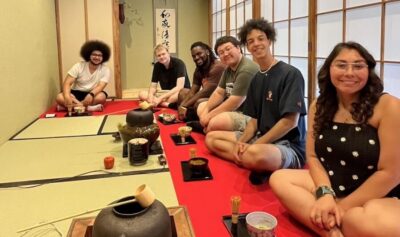
Kyoto: Table-Style Tea Ceremony at a Kyo-Machiya
Read our review →
Browse the lists this tour appears in