
Review · MATCHA EXPERIENCES
Kyoto: Nighttime Zen Meditation and Matcha Tea Experience
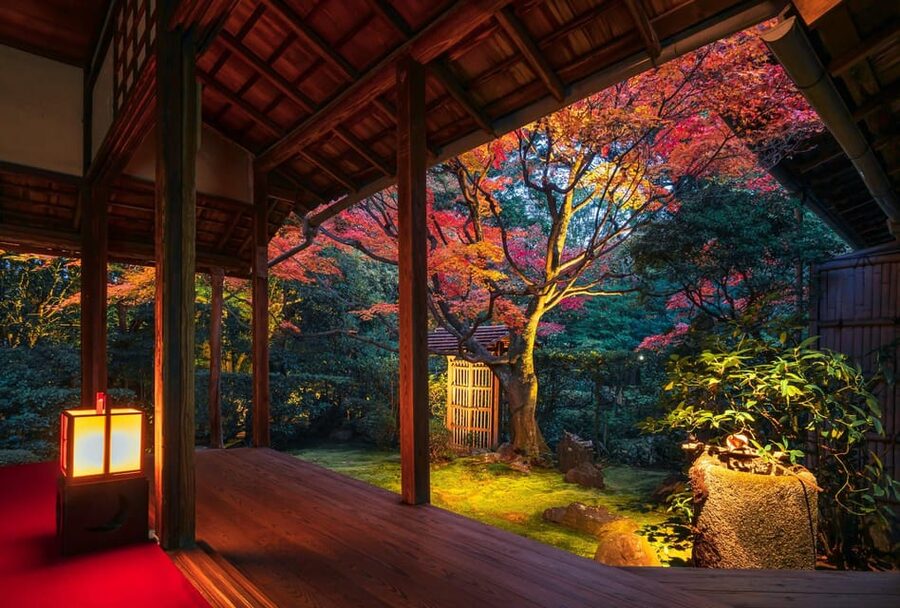
Kyoto’s Keishunin Temple takes on a different character after dark. You’ll walk through four nationally designated gardens under soft lighting, visit the small Sehakuan tea room, and sit for zazen meditation led by Deputy Chief Priest Yasumasa Arashima.
I like the mix of quiet temple time and hands-on practice, not just a guided walk past old buildings. I also like the personal scale: this is a private group, with English or Chinese support, and the 90-minute format fits neatly into an evening.
The main consideration is the $206 per-person price. That is a serious spend for 90 minutes, so this suits you best if you value direct access, a small group, and a calm cultural experience more than a long sightseeing program.
Key points at a glance
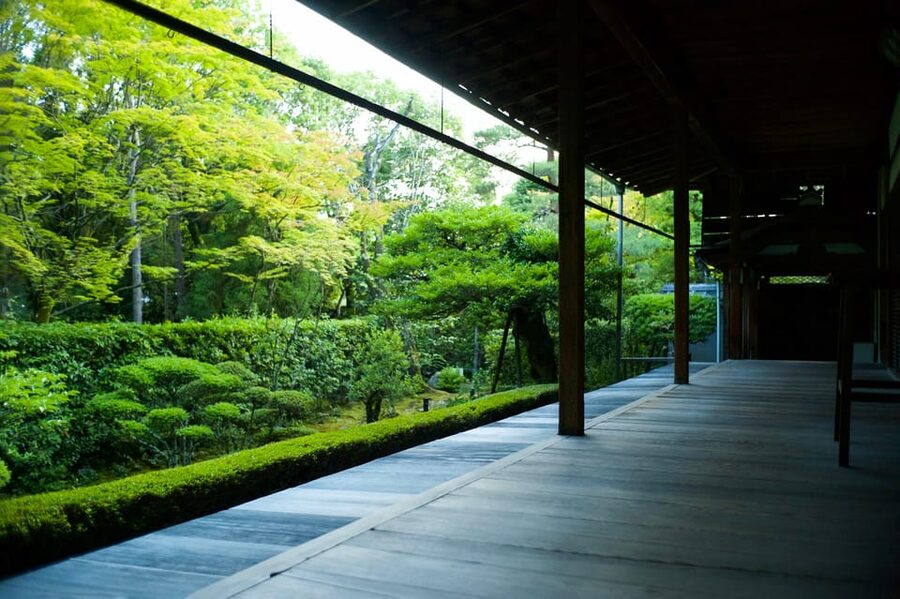
- Nighttime garden visit: See all four Keishunin gardens illuminated after sunset.
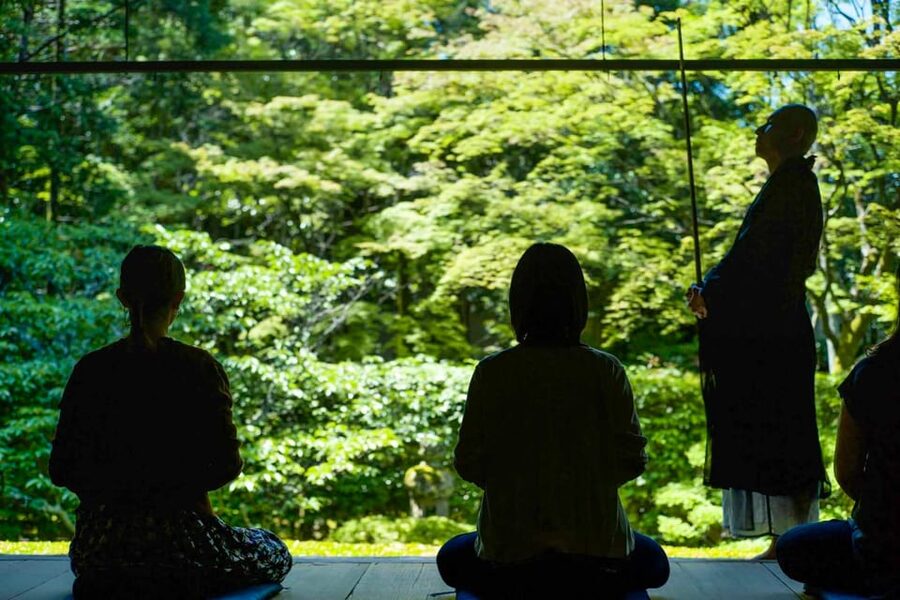
- A real zazen session: Deputy Chief Priest Yasumasa Arashima guides the meditation and explains the customs around practice.
- Rare interior sights: Visit the Sehakuan tea room and view Kano Sansetsu’s fusuma paintings.
- Matcha with a sweet: Finish with traditional tea and a Japanese confection.
- Private and language-supported: Choose an English- or Chinese-speaking guide for your group.
- Quiet, not casual: Warm clothing, modest comfortable clothes, and respectful behavior matter here.
Entering Keishunin after dark
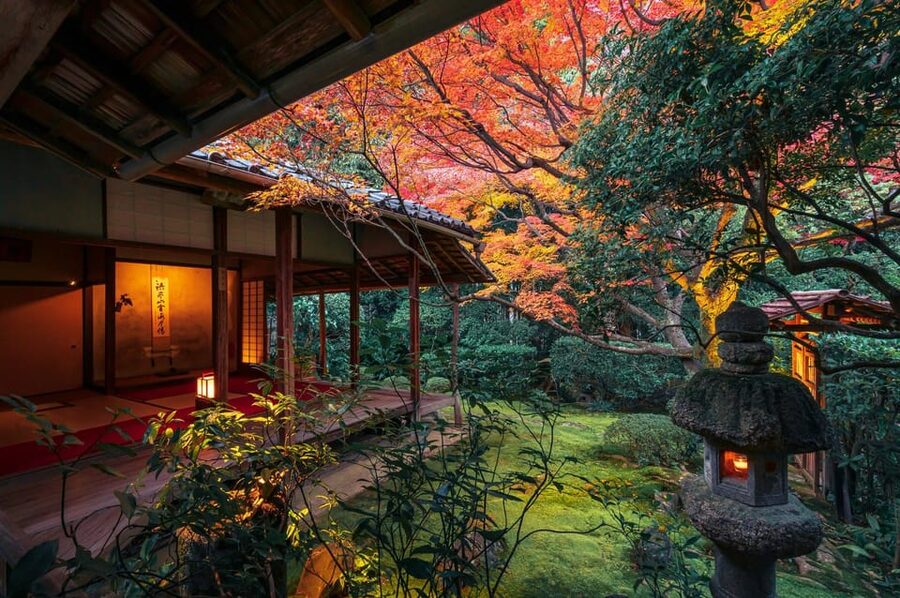
Keishunin is a sub-temple of Myoshinji Temple in Kyoto, and this experience gives you access during a special nighttime visit. The timing changes how you see the place. Instead of arriving during a busy sightseeing day, you enter when the gardens are lit and the temple setting feels more hushed.
You meet your guide at the temple. From there, the visit is built around looking closely rather than rushing from one attraction to the next. Your guide introduces Keishunin’s history and culture while leading you through its four gardens, the tea room, and the painted sliding doors.
I appreciate that the temple itself remains the focus. There is no long list of stops or extra transportation to manage. You spend the full 90 minutes in one carefully chosen place, which makes this a good evening choice after a day of larger Kyoto sights.
The private-group setup also matters. You are not being folded into a large crowd, and the guide can help explain customs as you go. English and Chinese tours are available, but you should select the language you need when booking.
More Matcha Experiences in Kyoto
- Kyoto: Tea Ceremony Meditation – Make Matcha with Tea Master
★ 4.8 · 406 reviews - Kyoto: Kimono Tea Ceremony with Matcha and Sweet
★ 4.9 · 249 reviews - Kyoto: Arashiyama Bamboo, Temple, Matcha, Monkeys & secret spots
★ 5.0 · 219 reviews
Four gardens under evening light
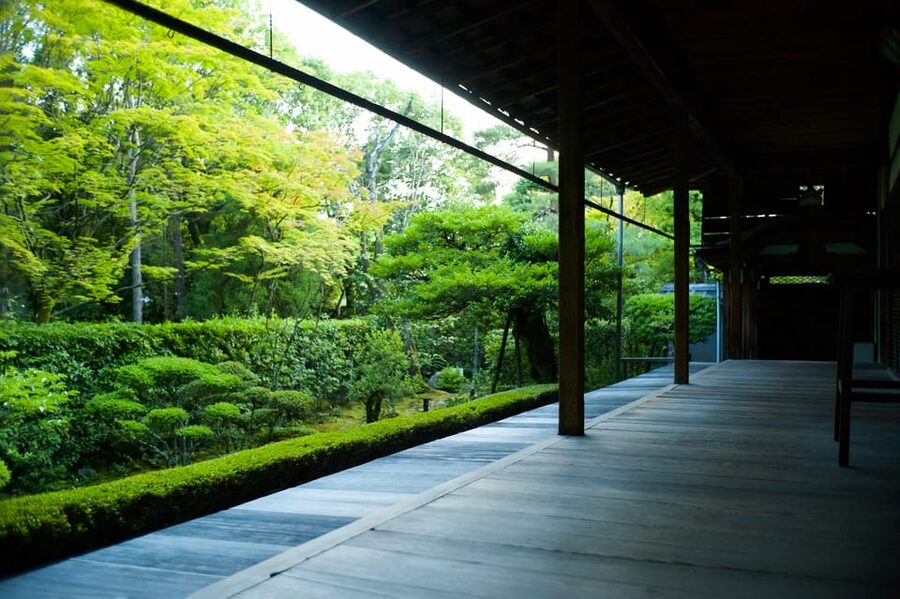
The four gardens are designated as nationally designated historical sites and scenic spots. Their importance is not just visual. In a Japanese temple, a garden can frame meditation, guide the eye toward particular views, and create a place for quiet thought. At night, the lighting gives you a more focused way to notice shapes, paths, stones, and planting.
You should expect an unhurried walk through the grounds, with your guide explaining what you are seeing. The lighting is described as fantastic and atmospheric, but do not treat it like a nighttime photo show. Flash photography is not allowed, and the setting calls for attention rather than constant picture-taking.
This part will suit you if you enjoy gardens and traditional design. If you prefer a busy evening with many attractions, the pace may feel slow. That is not a flaw, but it is central to the experience. The purpose is to give you time to settle down before meditation.
Bring warm clothing. Evening temperatures can be cooler than you expect, and you may spend time outside before sitting still. Comfortable clothes are also important because the visit includes meditation.
The Sehakuan tea room and Kano Sansetsu’s paintings
The tour includes a visit to Sehakuan, described as a hidden tea room. Its small scale and tucked-away character help explain the private feeling of the evening. A tea room is not simply a place to drink tea. Its design reflects restraint, careful movement, and attention to the meeting between host and guest.
You will also see fusuma paintings by Kano Sansetsu. Fusuma are sliding panels that divide rooms, so the artwork is part of the architecture rather than a separate picture on a gallery wall. Seeing these paintings in their temple setting gives you a better sense of how art, rooms, and daily religious life connect.
Your guide provides the context that makes these details easier to notice. Without explanation, you might see attractive paintings and an old tea room. With explanation, you can pay attention to why the room is arranged as it is and how the artwork fits the space.
Flash photography is forbidden. That rule protects the atmosphere and the interiors, but it also means you should arrive ready to look with your own eyes instead of relying on your phone.
What zazen feels like in practice
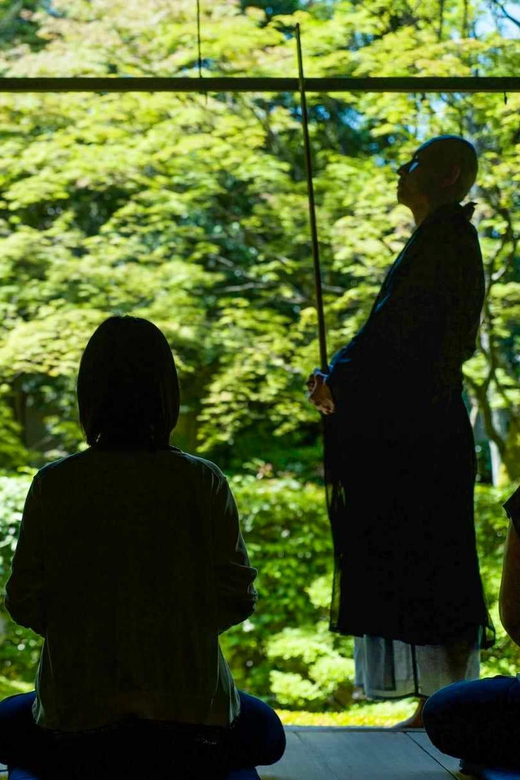
The meditation portion is guided by Deputy Chief Priest Yasumasa Arashima. Zazen is seated Zen meditation, and this experience lets you try the practice rather than only hear about it.
You do not need to be an experienced meditator. The point is to receive instruction, sit quietly, and notice how the temple changes when you stop moving from sight to sight. A short guided session can be surprisingly different from simply sitting on a bench in a garden because the posture, silence, and formal setting all ask for your attention.
One particularly interesting custom concerns what happens when a practitioner becomes too tired and needs a reminder to continue. The activity information does not promise that every participant will receive this reminder, but the practice may be explained or demonstrated. If you are curious and comfortable with a more traditional meditation setting, you can ask your guide about it.
The experience is not designed as medical care or a wellness treatment. It is a cultural and religious encounter. You should approach it respectfully, follow instructions, and understand that quiet concentration is more important than getting a perfect result.
Children under 12 are not suitable for this activity. Primary school students and older children may attend under the stated conditions, and anyone under junior high school age must be accompanied by a parent or guardian. The sitting portion may also be less comfortable for a child who expects constant action.
More Tea and Calligraphy Workshops in Japan
- Kyoto Hidden Riverside Zen Mediation and Uji Matcha Experience
★ 5.0 · 9 reviews - Whisk Your Own Matcha: A Zen Matcha Experience at Temple
★ 3.6 · 7 reviews - Osaka: Tea Ceremony, Calligraphy, and Kimono Experience
★ 4.9 · 130 reviews - Experience all of Japanese culture and Japanese food experience classes “origami, udon, Japanese food, green tea, calligraphy” in 4 hours
★ 5.0 · 105 reviews
Matcha, sweets, and a quieter finish
After meditation, you try matcha and a traditional Japanese sweet. This gives the evening a gentle closing point. Matcha is more than a green drink served in a cup. The preparation and serving connect to the tea culture introduced earlier through Sehakuan.
The sweet provides a small taste of Japan alongside the tea. Do not expect a full meal. The food is a modest part of the visit, meant to complement the conversation and meditation rather than replace dinner.
A brief exchange about your impressions may follow. The experience description presents this as a chance to refresh both mind and body, and the sequence supports that aim: garden walk, cultural explanation, meditation, then tea and a sweet.
I like this order because the tea does not appear as a disconnected tasting. You first learn about the setting, then sit in it quietly, then share tea in a way that makes the earlier visit to the tea room more meaningful.
Why the private format affects the value
The price is $206 per person for 90 minutes. That is expensive compared with a standard temple admission or an ordinary garden visit. You are paying for more than entry, though: the fee includes the special nighttime access, a private group, a live guide, the four-garden tour, the tea room, the fusuma paintings, zazen, matcha, and a sweet.
The strongest value comes if you want direct guidance and a quiet setting. An English- or Chinese-speaking guide can explain customs that are easy to miss, and the private format gives your group a more personal pace.
The value is weaker if you mainly want photographs, a broad tour of Kyoto, or a long meditation session. The program lasts only 90 minutes, and flash photography is prohibited. You will not cover a large part of the city or spend an entire evening at the temple.
For the right person, the price can make sense as a special occasion activity. For a budget-conscious visitor, I would compare it with your other Kyoto plans and ask whether the combination of nighttime access, priest-led meditation, and private guidance is worth the premium.
Practical details that shape the evening
Transportation to and from the meeting place is not included, so plan your route separately. The start time varies, and you need to check availability for the date you want. Reservations are required.
The activity does not operate during Obon and New Year holidays. Cancellation is free up to 72 hours before the start. From three days before the activity until the day before, the charge is 20 percent. The charge is 50 percent on the day, and non-participation without notice or leaving after the activity has begun results in a 100 percent charge.
Wear warm, comfortable clothing. The tour includes outdoor garden time and seated meditation, so clothing that allows you to sit at ease is a sensible choice.
Smoking and flash photography are not allowed. Wheelchair users cannot take part, and children under 12 are not suitable. These restrictions are worth checking before you pay, especially if your group has mobility needs or young children.
Who will enjoy this Kyoto experience most
I would recommend this to you if you want a calm evening away from Kyoto’s busiest sightseeing areas. It suits people who enjoy Japanese gardens, Buddhist temples, tea culture, art, and guided cultural activities.
It is also a good pick if you have already seen several major temples and want a more focused experience. Rather than adding another quick stop to your list, you get time to sit, listen, and understand a few parts of temple culture.
The activity can work well for couples, families with older children, or small private groups. A parent or guardian must accompany each participant under junior high school age, and children under 12 should not attend.
I would think twice if you dislike quiet activities, have difficulty sitting comfortably, or need step-free access. I would also skip it if your main goal is nightlife, shopping, or a large cultural show. This is a restrained experience, and its value depends on your willingness to slow down.
Should you book the Keishunin night visit?
Book it if you want a small-scale, reflective Kyoto experience that combines gardens, art, tea, and meditation in one place. The illuminated gardens and access to Sehakuan give the evening visual interest, while Yasumasa Arashima’s zazen session gives it a clear cultural center.
At $206 per person, this is not a casual add-on. It is best reserved for a meaningful evening, especially if the private format and language support matter to you. Skip it if you want a low-cost temple visit or a fuller sightseeing itinerary.
For visitors who value stillness and personal guidance, Keishunin offers something many standard temple stops cannot: time to stop looking at Kyoto and actually sit with it.
FAQ
How long does the Keishunin experience last?
The experience lasts 90 minutes.
Where does the activity take place?
It takes place at Keishunin, a sub-temple of Myoshinji Temple in Kyoto, on Honshu.
What is included in the tour?
The activity includes a special nighttime visit, a tour of four gardens, a visit to the Sehakuan tea room, viewing of Kano Sansetsu’s fusuma paintings, zazen meditation, matcha tea, and a traditional Japanese sweet.
Is the activity available in English?
Yes. Live guides are available in English and Chinese.
Is this a private tour?
Yes. The group type is private.
What should I wear?
Wear warm, comfortable clothing. You may spend time in the illuminated gardens and will also take part in seated meditation.
Can children participate?
Primary school students and older children may participate under the stated conditions. Each participant under junior high school age must be accompanied by a parent or guardian. Children under 12 are listed as unsuitable for the activity.
Can I cancel for free?
You can cancel for a full refund up to 72 hours before the activity. Charges apply closer to the start time: 20 percent from three days before until the day before, 50 percent on the day, and 100 percent for no-shows or participation after the activity has started.
More Tea and Calligraphy Workshops in Kyoto
- Tokyo: Practicing Zen with a Japanese Tea Ceremony
★ 4.7 · 105 reviews - An Amazing set of Cultural experience: Kimono, Tea Ceremony and Calligraphy
★ 5.0 · 69 reviews - Beijing Culture: Tea Ceremony, Heritage Instrument & Calligraphy
★ 5.0 · 57 reviews - Osaka: Private Tea Ceremony and Calligraphy Experience
★ 5.0 · 50 reviews
Fresh tea listings around Kyoto
- Cycling Tour at Uji’s Matcha Green Tea Fields and Heritage★ 5.0 · 10 reviews
- Authentic Tea Ceremony & Sushi in The Museum of Kyoto★ 5.0 · 3 reviews
- Kyoto Hidden Riverside Zen Mediation and Uji Matcha Experience★ 5.0 · 9 reviews
- Whisk Your Own Matcha: A Zen Matcha Experience at Temple★ 3.6 · 7 reviews
- Kyoto Fushimiinari:Wagashi Making & Small Group Tea Ceremony★ 5.0 · 14 reviews
- 2 Types of Japanese Sweets making and Tea Ceremony★ 4.6 · 17 reviews
- Matcha Grinding Experience and Walking Tour in Uji Kyoto★ 5.0 · 26 reviews
- Kyoto Matcha Green Tea Tour★ 4.7 · 28 reviews
Matcha Experiences, compared.
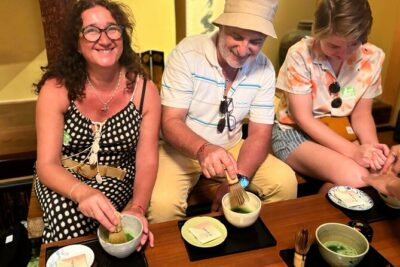
World Heritage Kyoto & Nara Uji Authentic Matcha Experience
Read our review →
Matcha Making Class in Tokyo with Authentic Japanese Sweets Set
Read our review →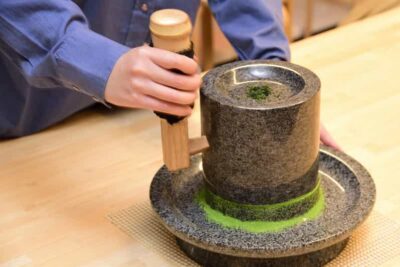
Kyoto: Tea Museum Tickets and Matcha Grinding Experience
Read our review →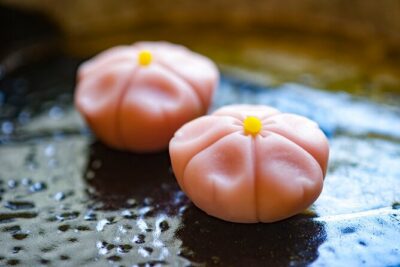
Matcha Making Class in Osaka with Authentic Japanese Sweets Set
Read our review →
Kyoto: Tea Ceremony Meditation – Make Matcha with Tea Master
Read our review →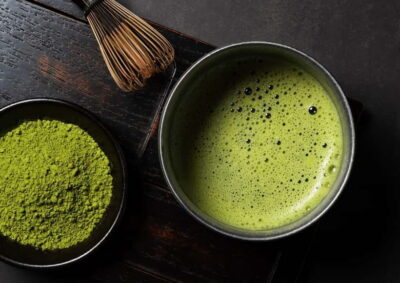
Tokyo: Matcha Making Experience with Mochi Sweets in Asakusa
Read our review →
Kyoto: Kimono Tea Ceremony with Matcha and Sweet
Read our review →
Browse the lists this tour appears in